Prevod
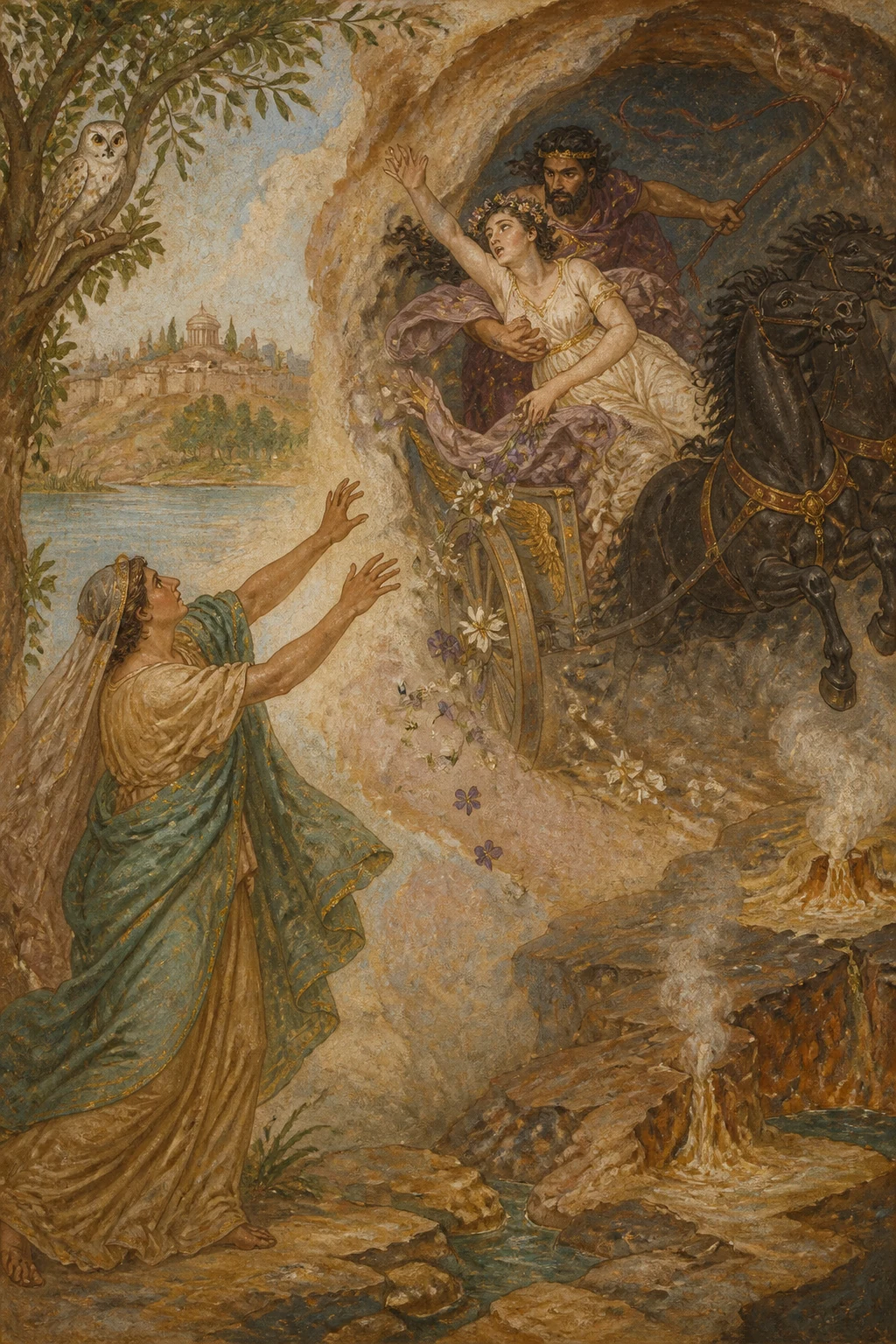
1. Pluto fell in love with Persephone and, with Zeus’s help, secretly carried her off. Demeter wandered over the whole earth, searching for her by torchlight night and day. When she learned from the people of Hermione that Pluto had abducted her, she left heaven in anger at the gods and, taking the form of a woman, came to Eleusis. First she sat on the rock beside the well called Callichoron, which was named the Mirthless Rock after her. Then she went to Celeus, who was king of the Eleusinians at that time. There were women in his house, and as they invited her to sit beside them, an old woman named Iambe made jests at the goddess and brought a smile to her face. This, they say, is why the women exchange jests at the Thesmophoria. Metaneira, the wife of Celeus, had a young child, whom Demeter took into her care and nursed. Wishing to make him immortal, she would place the infant in the fire at night and strip away his mortal flesh. As Demophon—for that was the child’s name—grew at an extraordinary rate from day to day, Praxithea kept watch, and when she discovered him hidden in the fire, she cried out. The infant was therefore consumed by the flames, and the goddess revealed herself.
2. For Triptolemus, the eldest of Metaneira’s sons, she made a chariot drawn by winged serpents and gave him wheat, which he sowed throughout the inhabited world as he soared through the sky. Panyasis, however, says that Triptolemus was the son of Eleusis, for he says that Demeter came to him. Pherecydes says that he was the son of Oceanus and Earth.
3. When Zeus ordered Pluto to send the Maiden back up, Pluto gave her a pomegranate seed to eat, so that she would not remain long with her mother. Not foreseeing what would happen, she ate it. Ascalaphus, the son of Acheron and Gorgyra, bore witness against her, and Demeter laid a heavy rock upon him in Hades. Persephone was compelled to spend a third of each year with Pluto, and the rest among the gods.