Waltey
Ustanovitev Troje in izvor paladija
Apolodorjeva knjižnica · ApolodorO besedilu
Ustanovitev Troje in izvor paladija
- Vir
- Apolodorjeva knjižnica
- Avtor
- Apolodor
- Jezik branja
- English
- Jezik izvirnika
- Ancient Greek
- Čas branja
- 8 min branja
- Obseg
- 7 strani
- Naslov izvirnika
- Book 3 chapter 12
O izvirniku
Apolodorjeva knjižnica
Strnjen zemljevid grških mitov, rodov, junakov in pošasti. Bralni jezik je English, izvirnik pa prihaja iz vira Apolodorjeva knjižnica v jeziku Ancient Greek.
Besedilo
Ustanovitev Troje in izvor paladija
1. Electra, daughter of Atlas, bore Zeus two sons, Iasion and Dardanus. Iasion fell in love with Demeter and, for attempting to violate the goddess, was struck by a thunderbolt. Dardanus, grieving over his brother’s death, left Samothrace and crossed to the mainland opposite. Its king was Teucer, son of the river Scamander and the nymph Idaea; after him the inhabitants of the country were called Teucrians. Welcomed by the king, Dardanus received a portion of the land and the king’s daughter Bateia, and founded the city of Dardanus. When Teucer died, he named the whole country Dardania.
2. Dardanus had two sons, Ilus and Erichthonius. Ilus died childless, but Erichthonius succeeded to the throne, married Astyoche, daughter of Simois, and fathered Tros. On inheriting the kingdom, Tros named the country Troy after himself. He married Callirrhoe, daughter of Scamander, and had a daughter, Cleopatra, and three sons, Ilus, Assaracus, and Ganymede. Because of Ganymede’s beauty, Zeus carried him off by means of an eagle and appointed him cupbearer to the gods in heaven. Assaracus and Hieromneme, daughter of Simois, had a son, Capys; and Capys and Themiste, daughter of Ilus, had Anchises. Aphrodite, moved by desire, lay with Anchises and bore Aeneas and Lyrus, who died childless.
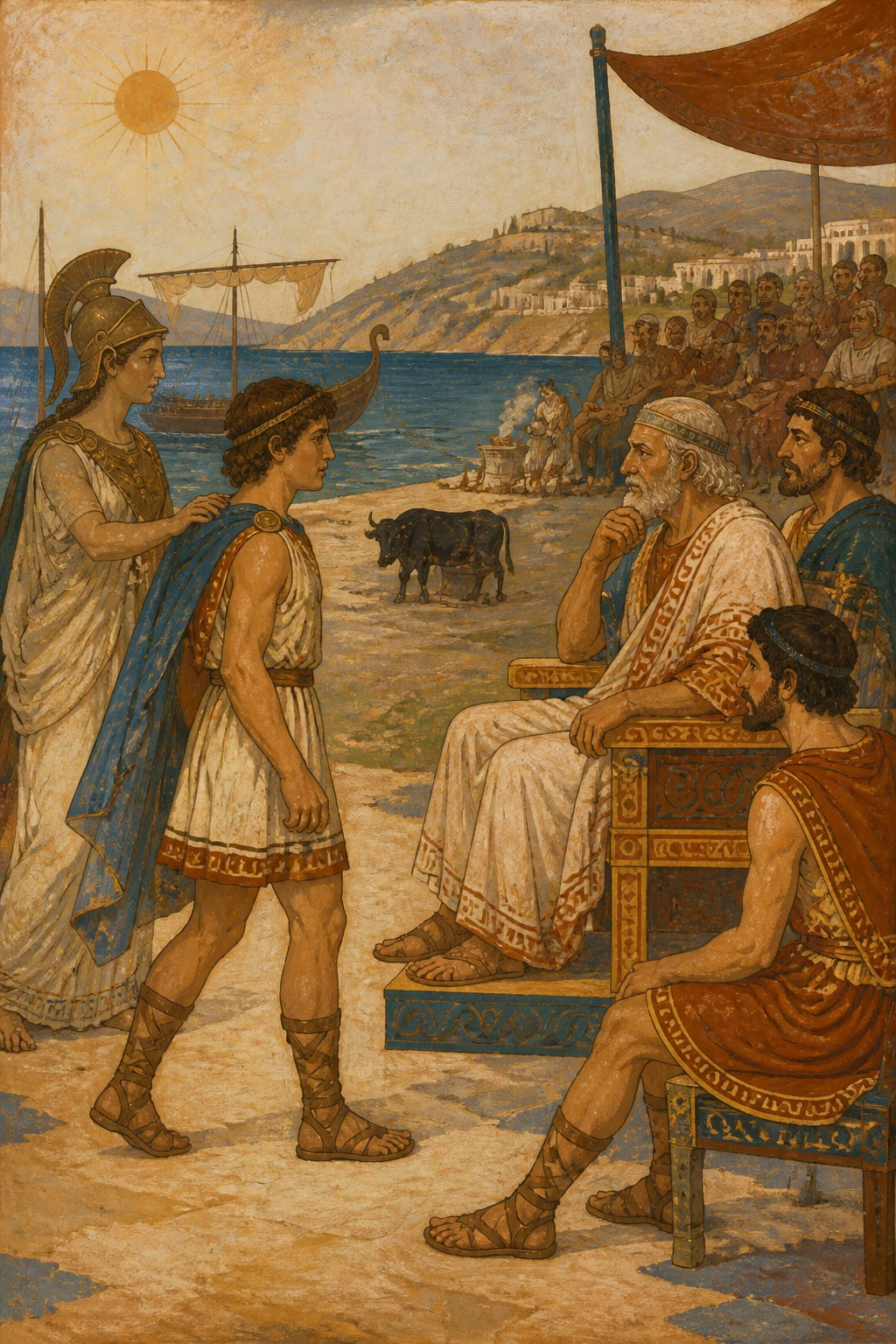
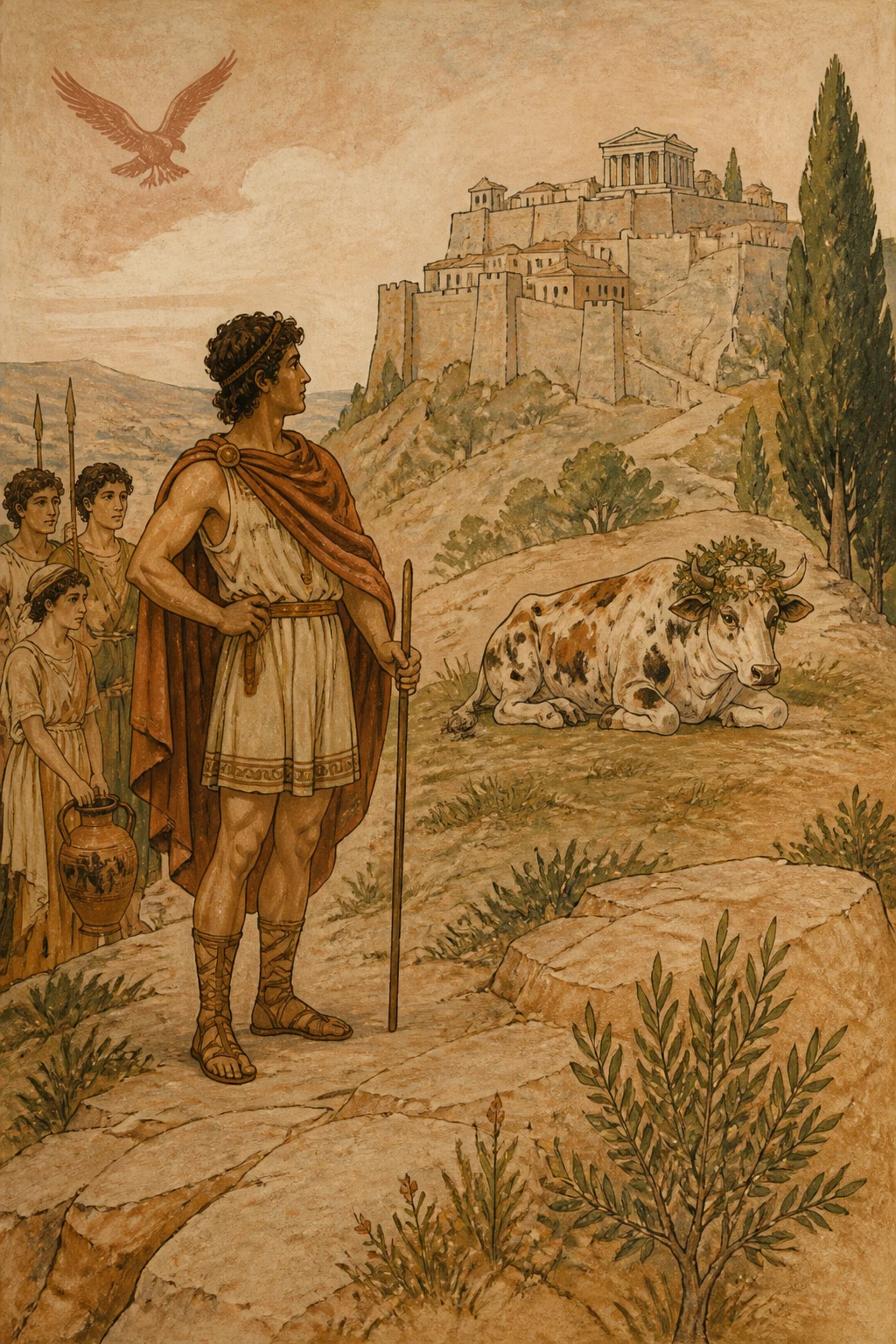
3. Ilus went to Phrygia and, finding that the king there was holding games, won the wrestling contest. As his prize he received fifty young men and as many maidens. In obedience to an oracle, the king also gave him a dappled cow and told him to found a city wherever she lay down. So Ilus followed the cow. She came to what is called the Hill of Ate in Phrygia and lay down there. On that spot Ilus founded a city and named it Ilium. He prayed to Zeus for a sign, and the next day saw the heaven-sent Palladium lying before his tent. It was three cubits tall, with its feet together, a spear raised in its right hand, and a distaff and spindle in the other. The following story is told about the Palladium. They say that after her birth Athena was brought up by Triton, who had a daughter named Pallas. The two girls trained in the arts of war, and once their practice turned into a quarrel.
As Pallas was about to strike, Zeus, alarmed for Athena, held out the aegis. Pallas looked up in fear, and at that moment Athena struck and killed her. Deeply grieved at her death, Athena made a wooden image in her likeness, placed about its breast the aegis that had frightened her, and set it up beside Zeus, where she paid it honor.
Later, when Electra took refuge at the image while Zeus was attempting to violate her, he cast both Ate and the Palladium down into the land of Ilium. Ilus built a temple for the image and honored it. Such is the story of the Palladium. Ilus married Eurydice, daughter of Adrastus, and fathered Laomedon. Laomedon married Strymo, daughter of Scamander—or, according to some, Placia, daughter of Otreus, or, according to others, Leucippe—and had five sons, Tithonus, Lampus, Clytius, Hicetaon, and Podarces, and three daughters, Hesione, Cilla, and Astyoche. By the nymph Calybe he also had Bucolion.
4. Eos fell in love with Tithonus, carried him off to Ethiopia, and there lay with him and bore two sons, Emathion and Memnon.
5. After Heracles captured Ilium, as we related a little earlier, Podarces, who was called Priam, became king. He first married Arisbe, daughter of Merops, who bore him a son, Aesacus. Aesacus married Asterope, daughter of Cebren, and, mourning her death, was transformed into a bird. Priam gave Arisbe in marriage to Hyrtacus and took as his second wife Hecuba, daughter of Dymas—or, as some say, of Cisseus, or, as others maintain, of the river Sangarius and Metope. Her firstborn was Hector. When her second child was about to be born, Hecuba dreamed that she gave birth to a blazing firebrand, which spread through the whole city and burned it. On hearing the dream from Hecuba, Priam sent for his son Aesacus, who had learned to interpret dreams from his maternal grandfather Merops. Aesacus declared that the child would bring about the destruction of his native land and urged that the infant be exposed. So, when the child was born, Priam gave him to a servant to carry to Mount Ida and expose. The servant’s name was Agelaus. After he had abandoned the infant, a she-bear suckled him for five days. Finding him still alive, Agelaus took him up and carried him home to his farm, where he raised him as his own son and named him Paris. When Paris grew into a young man, surpassing many in beauty and strength, he was also given the name Alexander because he beat off robbers and defended the flocks—that is, came to their aid. Not long afterward he discovered his parents. After him Hecuba bore four daughters, Creusa, Laodice, Polyxena, and Cassandra. Apollo, wishing to lie with Cassandra, promised to teach her the art of prophecy. But once she had learned it, she refused him; Apollo therefore deprived her prophecies of the power to persuade. Hecuba also bore sons: Deiphobus, Helenus, Pammon, Polites, Antiphus, Hipponous, Polydorus, and Troilus. This last she is said to have borne to Apollo. By other women Priam had the following sons: Melanippus, Gorgythion, Philaemon, Hippothous, Glaucus, Agathon, Chersidamas, Evagoras, Hippodamas, Mestor, Atas, Doryclus, Lycaon, Dryops, Bias, Chromius, Astygonus, Telestas, Evander, Cebriones, Mylius, Archemachus, Laodocus, Echephron, Idomeneus, Hyperion, Ascanius, Democoon, Aretus, Deiopites, Clonius, Echemmon, Hyperochus, Aegeoneus, Lysithous, and Polymedon; and daughters, Medusa, Medesicaste, Lysimache, and Aristodeme.
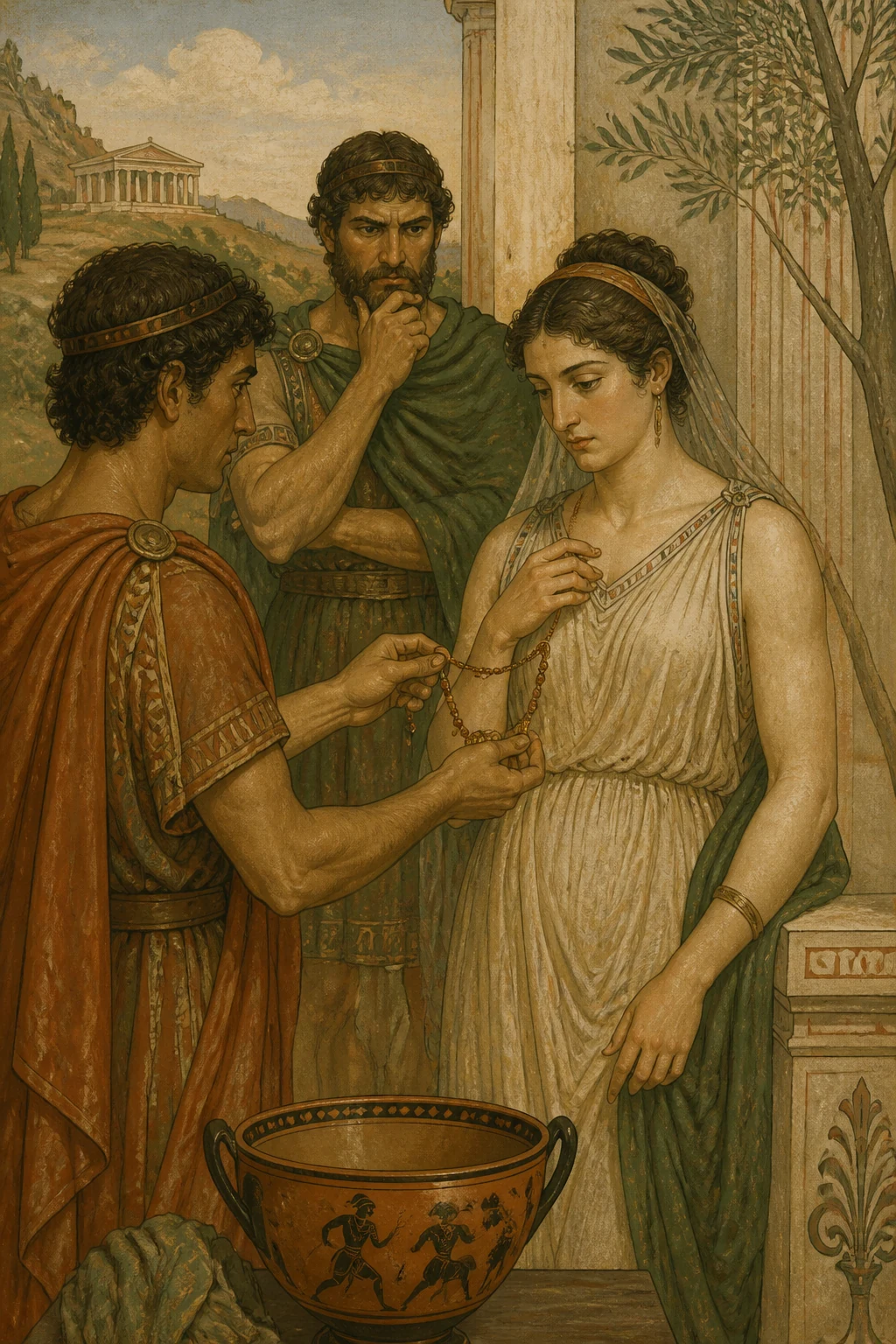
6. Hector married Andromache, daughter of Eetion, and Alexander married Oenone, daughter of the river Cebren. Having learned the art of prophecy from Rhea, Oenone warned Alexander not to sail in pursuit of Helen. When she could not persuade him, she told him to come to her if he were wounded, for she alone could heal him. Alexander carried Helen off from Sparta, and during the war against Troy he was wounded by Philoctetes with the bow of Heracles and returned to Oenone on Mount Ida. But she, nursing her resentment, refused to heal him. Alexander died as he was being carried back to Troy. Oenone changed her mind and brought medicines to cure him, but, finding him dead, hanged herself. The river Asopus was a son of Oceanus and Tethys, though Acusilaus calls him a son of Pero and Poseidon, and some say he was a son of Zeus and Eurynome. He married Metope, daughter of the river Ladon, who bore him two sons, Ismenus and Pelagon, and twenty daughters. One of these, Aegina, was carried off by Zeus. Searching for her, Asopus came to Corinth and learned from Sisyphus that Zeus was her abductor. As Asopus pursued him, Zeus struck him with a thunderbolt and drove him back to his own stream; for this reason, even to this day, pieces of charcoal are carried down by its waters. Zeus took Aegina to the island then called Oenone, but now named Aegina after her, and lay with her; she bore him a son, Aeacus. Since Aeacus was alone on the island, Zeus turned its ants into people for him. Aeacus married Endeis, daughter of Sciron, and by her had two sons, Peleus and Telamon. Pherecydes, however, says that Telamon was not Peleus’s brother but his friend, and that he was a son of Actaeus and Glauce, daughter of Cychreus. Aeacus also lay with Psamathe, daughter of Nereus, who had changed herself into a seal because she did not wish to lie with him; she bore him a son, Phocus. Aeacus was the most pious of all men. When Greece was afflicted with barrenness because of Pelops—who, while at war with Stymphalus, king of the Arcadians, had been unable to conquer Arcadia and so had feigned friendship, killed Stymphalus, cut him to pieces, and scattered his limbs—the oracles of the gods declared that Greece would be freed from its troubles if Aeacus prayed on its behalf. Aeacus offered his prayers, and Greece was delivered from the blight. Even after his death Aeacus is honored by Pluto and keeps the keys of Hades. Because Phocus excelled in athletic contests, his brothers Peleus and Telamon plotted against him. The lot fell to Telamon, who killed him with a blow to the head from a discus while they were exercising together. He and Peleus then carried off the body and hid it in a wood. When the murder was discovered, Aeacus drove them into exile from Aegina.
7. Telamon went to Salamis, to Cychreus, son of Poseidon and Salamis, daughter of Asopus. Cychreus had become king of the island after killing a serpent that was ravaging it, and, dying childless, he bequeathed the kingdom to Telamon. Telamon married Periboea, daughter of Alcathous, son of Pelops. Heracles prayed that he might have a son, and after the prayer an eagle appeared; so Telamon named the child who was born Ajax. He also campaigned against Troy with Heracles and received as his prize Hesione, daughter of Laomedon, who bore him Teucer.
Izvirnik
Book 3 chapter 12
Naslednje strani prikazujejo izvirno besedilo za primerjavo.
Source ID: apollodorus_bib_3_12 Citation: Apollodorus, Bibliotheca 3.12 1. Ἠλέκτρας δὲ τῆς Ἄτλαντος καὶ Διὸς Ἰασίων καὶ Δάρδανος ἐγένοντο. Ἰασίων μὲν οὖν ἐρασθεὶς Δήμητρος καὶ θέλων καταισχῦναι τὴν θεὸν κεραυνοῦται, Δάρδανος δὲ ἐπὶ τῷ θανάτῳ τοῦ ἀδελφοῦ λυπούμενος, Σαμοθρᾴκην ἀπολιπὼν εἰς τὴν ἀντίπερα ἤπειρον ἦλθε. ταύτης δὲ ἐβασίλευε Τεῦκρος ποταμοῦ Σκαμάνδρου καὶ νύμφης Ἰδαίας· ἀφʼ οὗ καὶ οἱ τὴν χώραν νεμόμενοι Τεῦκροι προσηγορεύοντο. ὑποδεχθεὶς δὲ ὑπὸ τοῦ βασιλέως, καὶ λαβὼν μέρος τῆς γῆς καὶ τὴν ἐκείνου θυγατέρα Βάτειαν, Δάρδανον ἔκτισε πόλιν· τελευτήσαντος δὲ Τεύκρου τὴν χώραν ἅπασαν Δαρδανίαν ἐκάλεσε.
2. γενομένων δὲ αὐτῷ παίδων Ἴλου καὶ Ἐριχθονίου, Ἶλος μὲν ἄπαις ἀπέθανεν, Ἐριχθόνιος δὲ διαδεξάμενος τὴν βασιλείαν, γήμας Ἀστυόχην τὴν Σιμόεντος, τεκνοῖ Τρῶα. οὗτος παραλαβὼν τὴν βασιλείαν τὴν μὲν χώραν ἀφʼ ἑαυτοῦ Τροίαν ἐκάλεσε, καὶ γήμας Καλλιρρόην τὴν Σκαμάνδρου γεννᾷ θυγατέρα μὲν Κλεοπάτραν, παῖδας δὲ Ἶλον καὶ Ἀσσάρακον καὶ Γανυμήδην. τοῦτον μὲν οὖν διὰ κάλλος ἀναρπάσας Ζεὺς διʼ ἀετοῦ θεῶν οἰνοχόον ἐν οὐρανῷ κατέστησεν· Ἀσσαράκου δὲ καὶ Ἱερομνήμης τῆς Σιμόεντος Κάπυς, τοῦ δὲ καὶ Θεμίστης τῆς Ἴλου Ἀγχίσης, ᾧ διʼ ἐρωτικὴν ἐπιθυμίαν Ἀφροδίτη συνελθοῦσα Αἰνείαν ἐγέννησε καὶ Λύρον, ὃς ἄπαις ἀπέθανεν.
3. Ἶλος δὲ εἰς Φρυγίαν ἀφικόμενος καὶ καταλαβὼν ὑπὸ τοῦ βασιλέως αὐτόθι τεθειμένον ἀγῶνα νικᾷ πάλην· καὶ λαβὼν ἆθλον πεντήκοντα κόρους καὶ κόρας τὰς ἴσας, δόντος αὐτῷ τοῦ βασιλέως κατὰ χρησμὸν καὶ βοῦν ποικίλην, καὶ φράσαντος ἐν ᾧπερ ἂν αὐτὴ κλιθῇ τόπῳ πόλιν κτίζειν, εἵπετο τῇ βοΐ. ἡ δὲ ἀφικομένη ἐπὶ τὸν λεγόμενον τῆς Φρυγίας Ἄτης λόφον κλίνεται· ἔνθα πόλιν κτίσας Ἶλος ταύτην μὲν Ἴλιον ἐκάλεσε, τῷ δὲ Διὶ σημεῖον εὐξάμενος αὐτῷ τι φανῆναι, μεθʼ ἡμέραν τὸ διιπετὲς παλλάδιον πρὸ τῆς σκηνῆς κείμενον ἐθεάσατο. ἦν δὲ τῷ μεγέθει τρίπηχυ, τοῖς δὲ ποσὶ συμβεβηκός, καὶ τῇ μὲν δεξιᾷ δόρυ διηρμένον ἔχον τῇ δὲ ἑτέρᾳ ἠλακάτην καὶ ἄτρακτον. ἱστορία δὲ ἡ περὶ τοῦ παλλαδίου τοιάδε φέρεται· φασὶ γεννηθεῖσαν τὴν Ἀθηνᾶν παρὰ Τρίτωνι τρέφεσθαι, ᾧ θυγάτηρ ἦν
Παλλάς· ἀμφοτέρας δὲ ἀσκούσας τὰ κατὰ πόλεμον εἰς φιλονεικίαν ποτὲ προελθεῖν. μελλούσης δὲ πλήττειν τῆς Παλλάδος τὸν Δία φοβηθέντα τὴν αἰγίδα προτεῖναι, τὴν δὲ εὐλαβηθεῖσαν ἀναβλέψαι, καὶ οὕτως ὑπὸ τῆς Ἀθηνᾶς τρωθεῖσαν πεσεῖν. Ἀθηνᾶν δὲ περίλυπον ἐπʼ αὐτῇ γενομένην, ξόανον ἐκείνης ὅμοιον κατασκευάσαι, καὶ περιθεῖναι τοῖς στέρνοις ἣν ἔδεισεν αἰγίδα, καὶ τιμᾶν ἱδρυσαμένην παρὰ τῷ Διί.
ὕστερον δὲ Ἠλέκτρας κατὰ τὴν φθορὰν τούτῳ προσφυγούσης, Δία ῥῖψαι μετʼ Ἄτης καὶ τὸ παλλάδιον εἰς τὴν Ἰλιάδα χώραν, Ἶλον δὲ τούτῳ ναὸν κατασκευάσαντα τιμᾶν. καὶ περὶ μὲν τοῦ παλλαδίου ταῦτα λέγεται. Ἶλος δὲ γήμας Εὐρυδίκην τὴν Ἀδράστου Λαομέδοντα ἐγέννησεν, ὃς γαμεῖ Στρυμὼ τὴν Σκαμάνδρου, κατὰ δέ τινας Πλακίαν τὴν Ὀτρέως, κατʼ ἐνίους δὲ Λευκίππην, καὶ τεκνοῖ παῖδας μὲν Τιθωνὸν Λάμπον Κλυτίον Ἱκετάονα Ποδάρκην, θυγατέρας δὲ Ἡσιόνην καὶ Κίλλαν καὶ Ἀστυόχην, ἐκ δὲ νύμφης Καλύβης Βουκολίωνα.
4. Τιθωνὸν μὲν οὖν Ἠὼς ἁρπάσασα διʼ ἔρωτα εἰς Αἰθιοπίαν κομίζει, κἀκεῖ συνελθοῦσα γεννᾷ παῖδας Ἠμαθίωνα καὶ Μέμνονα. 5. μετὰ δὲ τὸ αἱρεθῆναι Ἴλιον ὑπὸ Ἡρακλέους, ὡς μικρὸν πρόσθεν ἡμῖν λέλεκται, ἐβασίλευσε Ποδάρκης ὁ κληθεὶς Πρίαμος· καὶ γαμεῖ πρώτην Ἀρίσβην τὴν Μέροπος, ἐξ ἧς αὐτῷ παῖς Αἴσακος γίνεται, ὃς ἔγημεν Ἀστερόπην τὴν Κεβρῆνος θυγατέρα, ἣν πενθῶν ἀποθανοῦσαν ἀπωρνεώθη. Πρίαμος δὲ Ἀρίσβην ἐκδοὺς Ὑρτάκῳ δευτέραν ἔγημεν Ἑκάβην τὴν Δύμαντος, ἢ ὥς τινές φασι Κισσέως, ἢ ὡς ἕτεροι λέγουσι Σαγγαρίου ποταμοῦ καὶ Μετώπης. γεννᾶται δὲ αὐτῇ πρῶτος μὲν Ἕκτωρ· δευτέρου δὲ γεννᾶσθαι μέλλοντος βρέφους ἔδοξεν Ἑκάβη καθʼ ὕπνους δαλὸν τεκεῖν διάπυρον, τοῦτον δὲ πᾶσαν
ἐπινέμεσθαι τὴν πόλιν καὶ καίειν. μαθὼν δὲ Πρίαμος παρʼ Ἑκάβης τὸν ὄνειρον, Αἴσακον τὸν υἱὸν μετεπέμψατο· ἦν γὰρ ὀνειροκρίτης παρὰ τοῦ μητροπάτορος Μέροπος διδαχθείς. οὗτος εἰπὼν τῆς πατρίδος γενέσθαι τὸν παῖδα ἀπώλειαν, ἐκθεῖναι τὸ βρέφος ἐκέλευε. Πρίαμος δέ, ὡς ἐγεννήθη τὸ βρέφος, δίδωσιν ἐκθεῖναι οἰκέτῃ κομίσαντι εἰς Ἴδην· ὁ δὲ οἰκέτης Ἀγέλαος ὠνομάζετο. τὸ δὲ ἐκτεθὲν ὑπὸ τούτου βρέφος πένθʼ ἡμέρας ὑπὸ ἄρκτου ἐτράφη. ὁ δὲ σωζόμενον εὑρὼν ἀναιρεῖται, καὶ κομίσας ἐπὶ τῶν χωρίων ὡς ἴδιον παῖδα ἔτρεφεν, ὀνομάσας Πάριν. γενόμενος δὲ νεανίσκος καὶ πολλῶν διαφέρων κάλλει τε καὶ ῥώμῃ αὖθις Ἀλέξανδρος προσωνομάσθη, λῃστὰς ἀμυνόμενος καὶ τοῖς ποιμνίοις ἀλεξήσας , ὅπερ ἐστὶ βοηθήσας . καὶ μετʼ οὐ πολὺ τοὺς γονέας ἀνεῦρε. μετὰ τοῦτον ἐγέννησεν Ἑκάβη θυγατέρας μὲν Κρέουσαν Λαοδίκην Πολυξένην
Κασάνδραν, ᾗ συνελθεῖν βουλόμενος Ἀπόλλων τὴν μαντικὴν ὑπέσχετο διδάξειν. ἡ δὲ μαθοῦσα οὐ συνῆλθεν· ὅθεν Ἀπόλλων ἀφείλετο τῆς μαντικῆς αὐτῆς τὸ πείθειν. αὖθις δὲ παῖδας ἐγέννησε Δηίφοβον Ἕλενον Πάμμονα Πολίτην Ἄντιφον Ἱππόνοον Πολύδωρον Τρωίλον· τοῦτον ἐξ Ἀπόλλωνος λέγεται γεγεννηκέναι. ἐκ δὲ ἄλλων γυναικῶν Πριάμῳ παῖδες γίνονται Μελάνιππος Γοργυθίων Φιλαίμων Ἱππόθοος Γλαῦκος, Ἀγάθων Χερσιδάμας Εὐαγόρας Ἱπποδάμας Μήστωρ, Ἄτας Δόρυκλος Λυκάων Δρύοψ Βίας, Χρομίος Ἀστύγονος Τελέστας Εὔανδρος Κεβριόνης, Μύλιος Ἀρχέμαχος Λαοδόκος Ἐχέφρων Ἰδομενεύς, Ὑπερίων Ἀσκάνιος Δημοκόων Ἄρητος Δηιοπίτης, Κλονίος Ἐχέμμων Ὑπείροχος Αἰγεωνεὺς Λυσίθοος Πολυμέδων, θυγατέρες δὲ Μέδουσα Μηδεσικάστη Λυσιμάχη Ἀριστοδήμη.
6. Ἕκτωρ μὲν οὖν Ἀνδρομάχην τὴν Ἠετίωνος γαμεῖ, Ἀλέξανδρος δὲ Οἰνώνην τὴν Κεβρῆνος τοῦ ποταμοῦ θυγατέρα. αὕτη παρὰ Ῥέας τὴν μαντικὴν μαθοῦσα προέλεγεν Ἀλεξάνδρῳ μὴ πλεῖν ἐπὶ Ἑλένην. μὴ πείθουσα δὲ εἶπεν, ἐὰν τρωθῇ, παραγενέσθαι πρὸς αὐτήν· μόνην γὰρ θεραπεῦσαι δύνασθαι. τὸν δὲ Ἑλένην ἐκ Σπάρτης ἁρπάσαι, πολεμουμένης δὲ Τροίας τοξευθέντα ὑπὸ Φιλοκτήτου τόξοις Ἡρακλείοις πρὸς Οἰνώνην ἐπανελθεῖν εἰς Ἴδην. ἡ δὲ μνησικακοῦσα θεραπεύσειν οὐκ ἔφη. Ἀλέξανδρος μὲν οὖν εἰς Τροίαν κομιζόμενος ἐτελεύτα, Οἰνώνη δὲ μετανοήσασα τὰ πρὸς θεραπείαν φάρμακα ἔφερε, καὶ καταλαβοῦσα αὐτὸν νεκρὸν ἑαυτὴν ἀνήρτησεν. ὁ δὲ Ἀσωπὸς ποταμὸς Ὠκεανοῦ καὶ Τηθύος, ὡς δὲ Ἀκουσίλαος λέγει, Πηροῦς καὶ Ποσειδῶνος, ὡς δέ τινες, Διὸς καὶ Εὐρυνόμης. τούτῳ Μετώπη
γημαμένη (Λάδωνος δὲ τοῦ ποταμοῦ θυγάτηρ αὕτη) δύο μὲν παῖδας ἐγέννησεν, Ἰσμηνὸν καὶ Πελάγοντα, εἴκοσι δὲ θυγατέρας, ὧν μὲν μίαν Αἴγιναν ἥρπασε Ζεύς. ταύτην Ἀσωπὸς ζητῶν ἧκεν εἰς Κόρινθον, καὶ μανθάνει παρὰ Σισύφου τὸν ἡρπακότα εἶναι Δία. Ζεὺς δὲ Ἀσωπὸν μὲν κεραυνώσας διώκοντα πάλιν ἐπὶ τὰ οἰκεῖα ἀπέπεμψε ῥεῖθρα (διὰ τοῦτο μέχρι καὶ νῦν ἐκ τῶν τούτου ῥείθρων ἄνθρακες φέρονται), Αἴγιναν δὲ κομίσας εἰς τὴν τότε Οἰνώνην λεγομένην νῆσον, νῦν δὲ Αἴγιναν ἀπʼ ἐκείνης κληθεῖσαν, μίγνυται, καὶ τεκνοῖ παῖδα ἐξ αὐτῆς Αἰακόν. τούτῳ Ζεὺς ὄντι μόνῳ ἐν τῇ νήσῳ τοὺς μύρμηκας ἀνθρώπους ἐποίησε. γαμεῖ δὲ Αἰακὸς Ἐνδηίδα τὴν Σκείρωνος, ἐξ ἧς αὐτῷ παῖδες ἐγένοντο Πηλεύς τε καὶ Τελαμών. Φερεκύδης δέ φησι Τελαμῶνα φίλον, οὐκ ἀδελφὸν Πηλέως εἶναι, ἀλλʼ Ἀκταίου παῖδα καὶ Γλαύκης τῆς Κυχρέως. μίγνυται δὲ αὖθις Αἰακὸς Ψαμάθῃ τῇ Νηρέως εἰς φώκην ἠλλαγμένῃ διὰ τὸ μὴ βούλεσθαι συνελθεῖν, καὶ τεκνοῖ παῖδα Φῶκον. ἦν δὲ εὐσεβέστατος πάντων Αἰακός. διὸ καὶ τὴν
Ἑλλάδα κατεχούσης ἀφορίας διὰ Πέλοπα, ὅτι Στυμφάλῳ τῷ βασιλεῖ τῶν Ἀρκάδων πολεμῶν καὶ τὴν Ἀρκαδίαν ἑλεῖν μὴ δυνάμενος, προσποιησάμενος φιλίαν ἔκτεινεν αὐτὸν καὶ διέσπειρε μελίσας, χρησμοὶ θεῶν ἔλεγον ἀπαλλαγήσεσθαι τῶν ἐνεστώτων κακῶν τὴν Ἑλλάδα, ἐὰν Αἰακὸς ὑπὲρ αὐτῆς εὐχὰς ποιήσηται ποιησαμένου δὲ εὐχὰς Αἰακοῦ τῆς ἀκαρπίας ἡ Ἑλλὰς ἀπαλλάττεται. τιμᾶται δὲ καὶ παρὰ Πλούτωνι τελευτήσας Αἰακός, καὶ τὰς κλεῖς τοῦ Ἅιδου φυλάττει. διαφέροντος δὲ ἐν τοῖς ἀγῶσι Φώκου, τοὺς ἀδελφοὺς Πηλέα καὶ Τελαμῶνα ἐπιβουλεῦσαι· καὶ λαχὼν κλήρῳ Τελαμὼν συγγυμναζόμενον αὐτὸν βαλὼν δίσκῳ κατὰ τῆς κεφαλῆς κτείνει, καὶ κομίσας μετὰ Πηλέως κρύπτει κατά τινος ὕλης. φωραθέντος δὲ τοῦ φόνου φυγάδες ἀπὸ Αἰγίνης ὑπὸ Αἰακοῦ ἐλαύνονται.
7. καὶ Τελαμὼν μὲν εἰς Σαλαμῖνα παραγίνεται πρὸς Κυχρέα τὸν Ποσειδῶνος καὶ Σαλαμῖνος τῆς Ἀσωποῦ. κτείνας δὲ ὄφιν οὗτος ἀδικοῦντα τὴν νῆσον αὐτῆς ἐβασίλευε, καὶ τελευτῶν ἄπαις τὴν βασιλείαν παραδίδωσι Τελαμῶνι. ὁ δὲ γαμεῖ Περίβοιαν τὴν Ἀλκάθου τοῦ Πέλοπος· καὶ ποιησαμένου εὐχὰς Ἡρακλέους ἵνα αὐτῷ παῖς ἄρρην γένηται, φανέντος δὲ μετὰ τὰς εὐχὰς αἰετοῦ, τὸν γεννηθέντα ἐκάλεσεν Αἴαντα. καὶ στρατευσάμενος ἐπὶ Τροίαν σὺν Ἡρακλεῖ λαμβάνει γέρας Ἡσιόνην τὴν Λαομέδοντος θυγατέρα, ἐξ ἧς αὐτῷ γίνεται Τεῦκρος.
Nadaljuj z branjem