Prevod
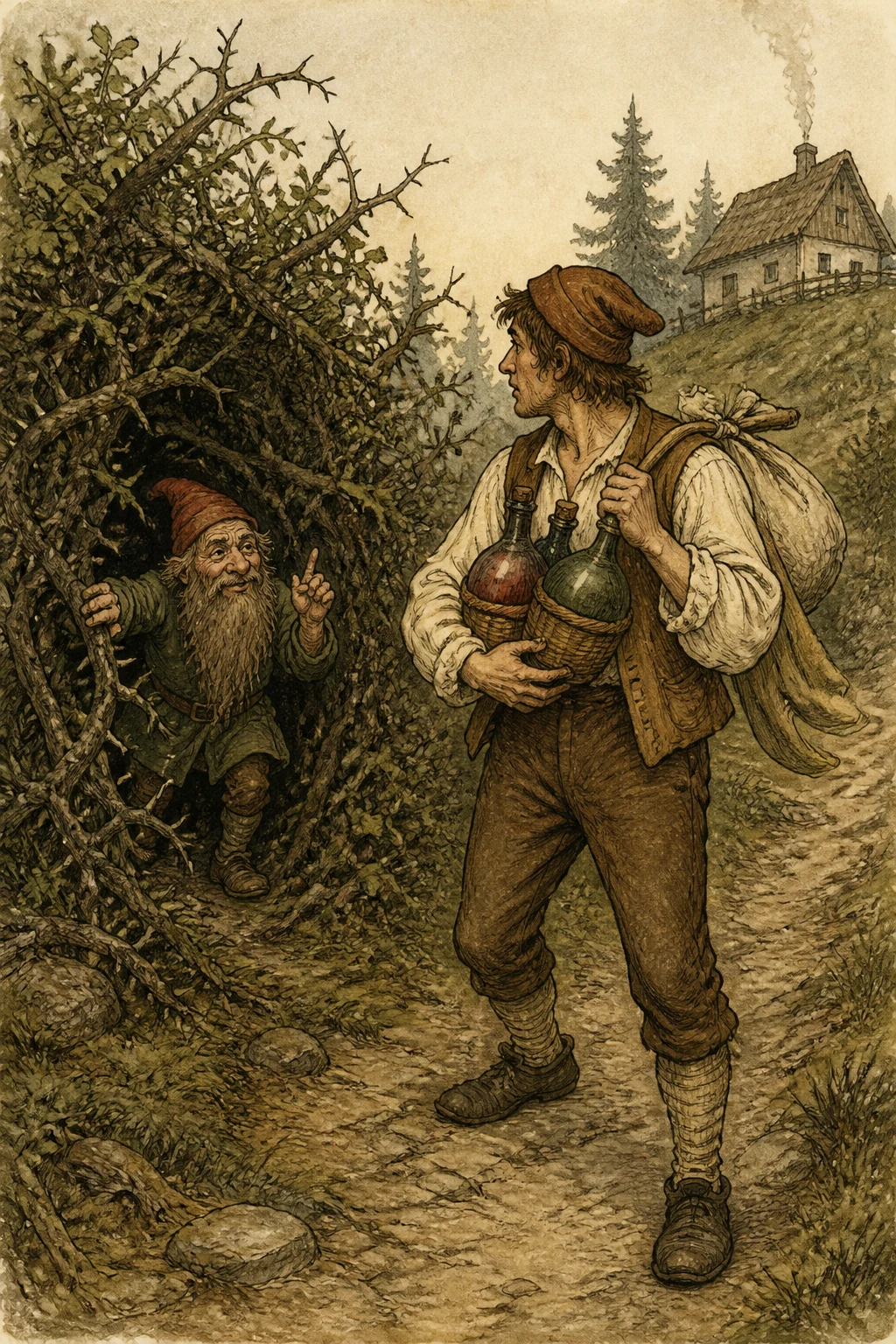
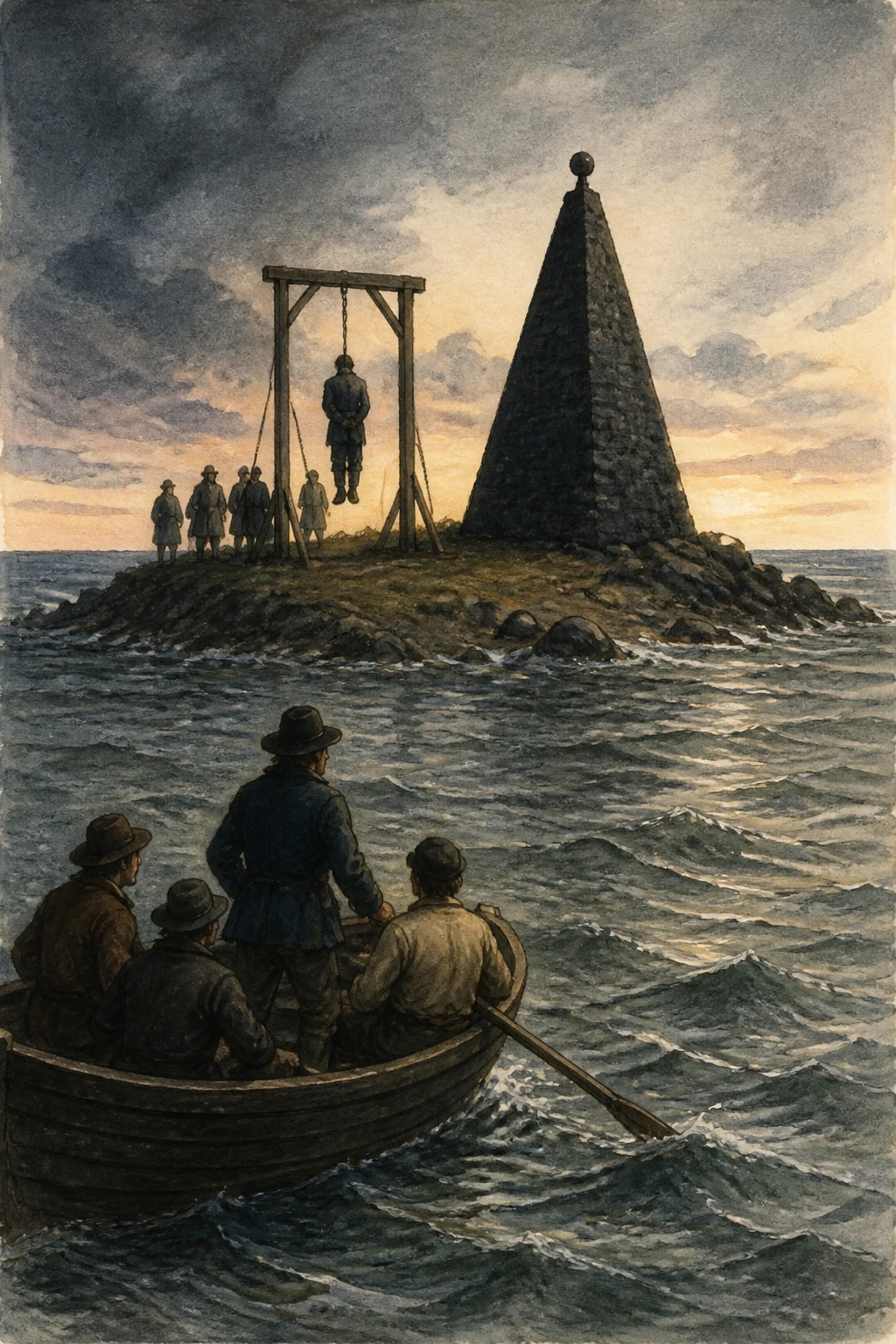
There were once three journeymen who had agreed to stay together on their travels and always work in the same town. But after a time their masters had no more work for them, until at last their clothes were in rags and they had nothing to live on. Then one of them said, “What are we to do? We cannot stay here any longer. Let us take to the road again, and if we find no work in the next town, we will arrange with the innkeeper to write and tell him where we are, so that we can hear news of one another, and then we will part.” The others thought this best too. They set off, and on the road they met a richly dressed man who asked who they were. “We are journeymen looking for work. We have kept together until now, but if we can find no more work, we mean to part.” “There is no need for that,” said the man. “If you will do as I tell you, you shall lack neither money nor work. Indeed, you shall become great gentlemen and ride in carriages.” One of them said, “If it does no harm to our souls or our salvation, we will gladly do it.” “No,” answered the man, “I lay no claim to you.” But another had looked down at his feet, and when he saw one horse’s hoof and one human foot, he wanted nothing to do with him. The devil, however, said, “Set your minds at ease. It is not you I am after, but the soul of another, who is half mine already and whose measure of wickedness need only be filled.” Now that they felt safe, they agreed, and the devil told them what he required. The first was to answer every question with “All three of us,” the second with “For the money,” and the third with “And that was right.” They were always to say these words one after another, but must not speak a single word besides. If they broke this command, all their money would vanish at once; as long as they obeyed it, however, their pockets would always be full. To begin with, he gave them as much money as they could carry, and told them to go to a certain inn in the town. They went in, and the innkeeper came to meet them and asked, “Would you like something to eat?” The first answered, “All three of us.” “Yes,” said the innkeeper, “that is what I meant.” The second said, “For the money.” “That goes without saying,” said the innkeeper. The third said, “And that was right.” “Quite right, indeed,” said the innkeeper. They were brought good food and drink and waited on handsomely. When they had eaten, it was time to pay, and the innkeeper handed one of them the bill. He said, “All three of us,” the second, “For the money,” and the third, “And that was right.” “Of course it is right,” said the innkeeper. “All three must pay, and I cannot give anything without money.” But they paid him even more than he had asked. The other guests saw this and said, “Those fellows must be mad.” “Yes, so they are,” said the innkeeper. “They are not quite right in the head.” So they stayed at the inn for a time and said nothing but “All three of us,” “For the money,” and “And that was right.” Yet they saw and understood everything that went on there. Now it happened that a wealthy merchant arrived with a great deal of money, and he said, “Innkeeper, keep my money safe for me. Those three foolish journeymen might steal it.” The innkeeper did as he asked. As he carried the travelling bag into his room, he felt that it was heavy with gold. Then he gave the three journeymen a place to sleep downstairs, while the merchant was put in a private room upstairs. At midnight, when the innkeeper thought they were all asleep, he came with his wife, carrying an axe, and together they struck the rich merchant dead. When the murder was done, they went back to bed. In the morning there was a great uproar: the merchant lay dead in his bed, in a pool of his own blood. All the guests came running, but the innkeeper said, “The three mad journeymen have done this.” The guests agreed, saying, “It can have been no one else.” The innkeeper had the three summoned and said to them, “Did you kill the merchant?” “All three of us,” said the first. “For the money,” said the second. “And that was right,” said the third. “There, you hear it,” said the innkeeper. “They confess it themselves.” So they were taken to prison and were to stand trial. When they saw how serious matters had become, they grew frightened after all, but in the night the devil came and said, “Hold out just one more day, and do not throw away your good fortune. Not a hair of your heads shall be harmed.” The next morning they were brought before the court, and the judge said, “Are you the murderers?” “All three of us.” “Why did you kill the merchant?” “For the money.” “You villains,” said the judge, “did you not shrink from such a sin?” “And that was right.” “They have confessed and are still defiant,” said the judge. “Take them straight to their execution.” So they were led out, and the innkeeper too had to step inside the ring of onlookers. Just as the executioner’s men seized them and led them up onto the scaffold, where the executioner stood with his drawn sword, a carriage suddenly came racing along, drawn by four blood-red chestnut horses, so fast that sparks flew from the stones. Someone was waving a white handkerchief from its window. Then the executioner said, “A pardon is coming,” and from the carriage came the cry, “Pardon! Pardon!” The devil stepped out, looking like a very grand gentleman in splendid clothes, and said, “You three are innocent. You may speak now. Tell them what you have seen and heard.” Then the eldest said, “We did not kill the merchant. The murderer is standing there among you,” and he pointed to the innkeeper. “For proof, go down into his cellar. Many others whom he has murdered are still hanging there.” The judge sent the executioner’s men to the cellar, and they found everything just as he had said. When they reported this to the judge, he had the innkeeper led up onto the scaffold and his head struck off. Then the devil said to the three, “Now I have the soul I wanted. But you are free, and you have money enough to last you all your lives.”
Izvirnik
Ein Märchen der Brüder Grimm
Es waren drei Handwerksburschen, die hatten es verabredet, auf ihrer Wanderung beisammen zu bleiben und immer in einer Stadt zu arbeiten. Auf eine Zeit aber fanden sie bei ihren Meistern kein Verdienst mehr, so daß sie endlich ganz abgerissen waren und nichts zu leben hatten. Da sprach der eine 'was sollen wir anfangen? hier bleiben können wir nicht länger, wir wollen wieder wandern, und wenn wir in der Stadt, wo wir hinkommen, keine Arbeit finden, so wollen wir beim Herbergsvater ausmachen, daß wir ihm schreiben, wo wir uns aufhalten, und einer vom andern Nachricht haben kann, und dann wollen wir uns trennen;' das schien den andern auch das beste. Sie zogen fort, da kam ihnen auf dem Weg ein reich gekleideter Mann entgegen, der fragte, wer sie wären. 'Wir sind Handwerksleute und suchen Arbeit: wir haben uns bisher zusammengehalten, wenn wir aber keine mehr finden, so wollen wir uns trennen.' 'Das hat keine Not,' sprach der Mann, 'wenn ihr tun wollt, was ich euch sage, solls euch an Geld und Arbeit nicht fehlen; ja ihr sollt große Herren werden und in Kutschen fahren.' Der eine sprach ,wenns unserer Seele und Seligkeit nicht schadet, so wollen wirs wohl tun.' 'Nein,' antwortete der Mann, 'ich habe keinen Teil an euch.' Der andere aber hatte nach seinen Füßen gesehen, und als er da einen Pferdefuß und einen Menschenfuß erblickte, wollte er sich nicht mit ihm einlassen. Der Teufel aber sprach 'gebt euch zufrieden, es ist nicht auf euch abgesehen, sondern auf eines anderen Seele, der schon halb mein ist, und dessen Maß nur vollaufen soll.' Weil sie nun sicher waren, willigten sie ein, und der Teufel sagte ihnen, was er verlangte, der erste sollte auf jede Frage antworten 'wir alle drei,' der zweite 'ums Geld,' der dritte 'und das war recht.' Das sollten sie immer hintereinander sagen, weiter aber dürften sie kein Wort sprechen, und überträten sie das Gebot, so wäre gleich alles Geld verschwunden: solange sie es aber befolgten, sollten ihre Taschen immer voll sein. Zum Anfang gab er ihnen auch gleich soviel, als sie tragen konnten, und hieß sie in die Stadt in das und das Wirtshaus gehen. Sie gingen hinein, der Wirt kam ihnen entgegen und fragte 'wollt ihr etwas zu essen?' Der erste antwortete 'wir alle drei.' 'Ja,' sagte der Wirt, 'das mein ich auch.' Der zweite 'ums Geld.' 'Das versteht sich,' sagte der Wirt. Der dritte 'und das war recht.' 'Jawohl wars recht,' sagte der Wirt. Es ward ihnen nun gut Essen und Trinken gebracht und wohl aufgewartet. Nach dem Essen mußte die Bezahlung geschehen, da hielt der Wirt dem einen die Rechnung hin' der sprach 'wir alle drei,' der zweite 'ums Geld,' der dritte 'und das war recht.' 'Freilich ists recht,' sagte der Wirt, 'alle drei bezahlen, und ohne Geld kann ich nichts geben.' Sie bezahlten aber noch mehr, als er gefordert hatte. Die Gäste sahen das mit an und sprachen 'die Leute müssen toll sein.' 'Ja, das sind sie auch,' sagte der Wirt, 'sie sind nicht recht klug.' So blieben sie eine Zeitlang in dem Wirtshaus und sprachen kein ander Wort als 'wir alle drei, ums Geld, und das war recht.' Sie sahen aber und wußten alles, was darin vorging. Es trug sich zu, daß ein großer Kaufmann kam mit vielem Geld, der sprach 'Herr Wirt, heb er mir mein Geld auf, da sind die drei närrischen Handwerksbursche, die möchten mirs stehlen.' Das tat der Wirt. Wie er den Mantelsack in seine Stube trug, fühlte er, daß er schwer von Gold war. Darauf gab er den drei Handwerkern unten ein Lager, der Kaufmann aber kam oben hin in eine besondere Stube. Als Mitternacht war und der Wirt dachte, sie schliefen alle, kam er mit seiner Frau, und sie hatten eine Holzaxt und schlugen den reichen Kaufmann tot; nach vollbrachtem Mord legten sie sich wieder schlafen. Wies nun Tag war, gabs großen Lärm, der Kaufmann lag tot im Bett und schwamm in seinem Blut. Da liefen alle Gäste zusammen, der Wirt aber sprach 'das haben die drei tollen Handwerker getan.' Die Gä ste bestätigten es und sagten 'niemand anders kanns gewesen sein. Der Wirt aber ließ sie rufen und sagte zu ihnen 'habt ihr den Kaufmann getötet?' 'Wir alle drei,' sagte der erste, 'ums Geld,' der zweite, 'und das war recht,' der dritte. 'Da hört ihrs nun,' sprach der Wirt, 'sie gestehens selber.' Sie wurden also ins Gefängnis gebracht, und sollten gerichtet werden. Wie sie nun sahen, daß es so ernsthaft ging, ward ihnen doch angst, aber nachts kam der Teufel und sprach 'haltet nur noch einen Tag aus' und verscherzt euer Glück nicht, es soll euch kein Haar gekrümmt werden.' Am andern Morgen wurden sie vor Gericht geführt: da sprach der Richter 'seid ihr die Mörder?' 'Wir alle drei.' 'Warum habt ihr den Kaufmann erschlagen?' 'Ums Geld.' 'Ihr Bösewichter,' sagte der Richter, 'habt ihr euch nicht der Sünde gescheut?' 'Und das war recht.' 'Sie haben bekannt und sind noch halsstarrig dazu,' sprach der Richter, 'führt sie gleich zum Tod.' Also wurden sie hinausgebracht, und der Wirt mußte mit in den Kreis treten. Wie sie nun von den Henkersknechten gefaßt und oben aufs Gerüst geführt wurden, wo der Scharfrichter mit bloßem Schwerte stand, kam auf einmal eine Kutsche mit vier blutroten Füchsen bespannt, und fuhr, daß das Feuer aus den Steinen sprang, aus dem Fenster aber winkte einer mit einem weißen Tuche. Da sprach der Scharfrichter 'es kommt Gnade,' und ward aus dem Wagen 'Gnade! Gnade!' gerufen. Da trat der Teufel heraus als ein sehr vornehmer Herr, prächtig gekleidet, und sprach 'ihr drei seid unschuldig; ihr dürft nun sprechen, sagt heraus, was ihr gesehen und gehört habt.' Da sprach der älteste 'wir haben den Kaufmann nicht getötet, der Mörder steht da im Kreis,' und deutete auf den Wirt, 'zum Wahrzeichen geht hin in seinen Keller, da hängen noch viele andere, die er ums Leben gebracht.' Da schickte der Richter die Henkersknechte hin, die fanden es, wies gesagt war, u nd als sie dem Richter das berichtet hatten, ließ er den Wirt hinaufführen und ihm das Haupt abschlagen. Da sprach der Teufel zu den dreien 'nun hab ich die Seele, die ich haben wollte, ihr seid aber frei und habt Geld für euer Lebtag.'