O besedilu
Jud v trnju
- Vir
- Grimmove pravljice
- Avtor
- Jacob in Wilhelm Grimm
- Jezik branja
- English
- Jezik izvirnika
- Deutsch
- Čas branja
- 9 min branja
- Obseg
- 7 strani
- Naslov izvirnika
- Der Jude im Dorn
O izvirniku
Grimmove pravljice
Gozdovi, čarobni predmeti in ljudska logika evropske pripovedne tradicije. Bralni jezik je English, izvirnik pa prihaja iz vira Grimmove pravljice v jeziku Deutsch.
Besedilo
Jud v trnju
Once upon a time there was a rich man who had a servant who worked for him faithfully and diligently. Every morning he was the first out of bed, and every evening the last to get into it; and whenever there was some hard task that no one wanted to tackle, he was always the first to set to work. Yet he never complained, but was content with everything and always cheerful. When his year was up, his master paid him no wages, thinking, “That is the cleverest way: I save a little money, and he will not leave me, but stay quietly in my service.” The servant said nothing, and worked through the second year just as he had the first. When, at the end of it, he again received no wages, he accepted this too and stayed on. When the third year was over as well, the master thought for a moment and reached into his pocket, but brought nothing out. At last the servant spoke up and said, “Master, I have served you faithfully for three years. Be so good as to give me what is rightfully mine. I should like to go away and see a little more of the world.” The miser answered, “Yes, my dear servant, you have served me tirelessly, and you shall be generously rewarded.” He reached into his pocket again and counted out three hellers to the servant, one by one. “There you are, a heller for each year. That is a handsome and plentiful wage, such as few masters would have paid you.” The good servant, who understood little about money, pocketed his fortune and thought, “Now you have plenty in your pocket. Why should you worry and wear yourself out with hard work any longer?”
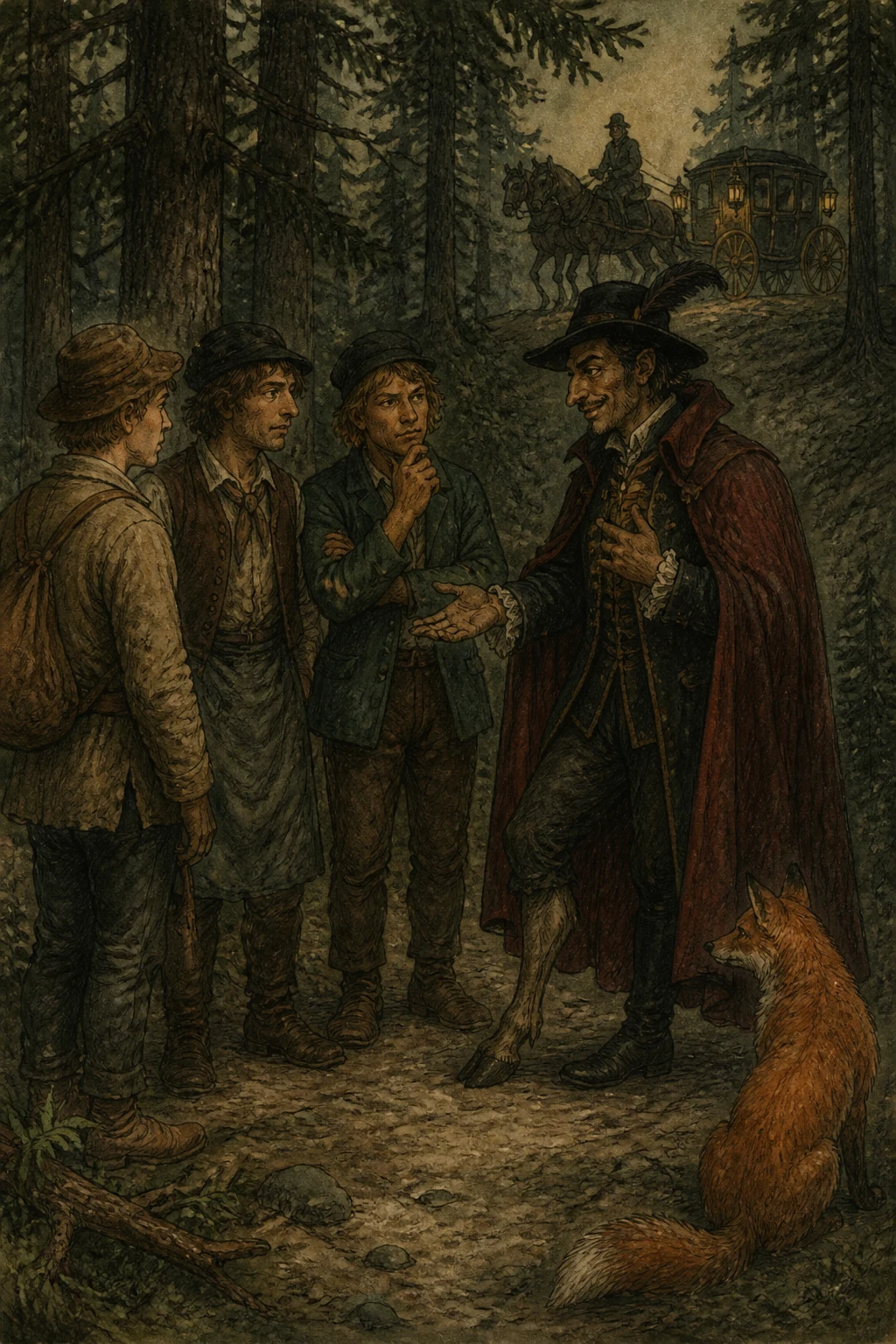
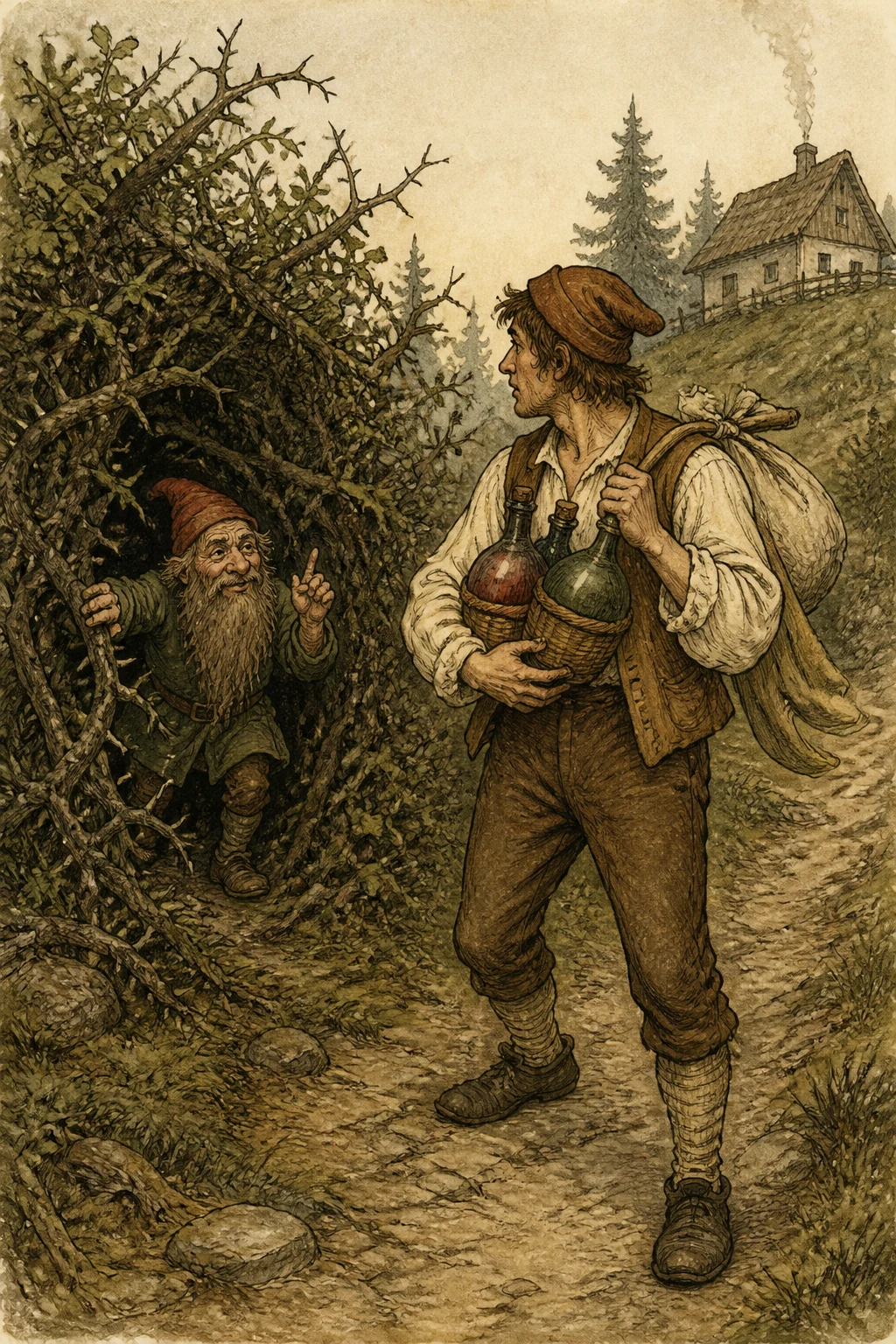
So off he went, uphill and down, singing and skipping to his heart’s content. Now, as he was passing a thicket, a little man stepped out and called to him, “Where are you bound, Brother Merry? I can see your cares do not weigh heavily on you.” “Why should I be sad?” answered the servant. “I have more than enough. Three years’ wages are jingling in my pocket.” “And how much is this treasure of yours?” the little man asked. “How much? Three good hellers, properly counted.” “Listen,” said the dwarf, “I am a poor, needy man. Give me your three hellers. I can no longer work, but you are young and can easily earn your bread.” Since the servant had a kind heart and felt sorry for the little man, he handed him his three hellers and said, “In God’s name, take them. I shall not go without.” Then the little man said, “Since I see how kind your heart is, I will grant you three wishes, one for each heller, and they shall all come true.” “Aha,” said the servant, “you are one of those who can work wonders. Well then, if that is how it is to be, first I wish for a fowling piece that will hit whatever I aim at; second, a fiddle that will make everyone who hears it dance whenever I play; and third, whenever I ask anyone a favor, he must not refuse it.” “You shall have all three,” said the little man. He reached into the bushes, and just imagine, there lay a fiddle and a fowling piece ready and waiting, as though they had been ordered in advance. He gave them to the servant and said, “Whatever you may ask for, no one in the world shall refuse you.”
“Well, heart, what more could you desire?” the servant said to himself, and went merrily on his way. Soon afterward he came upon a Jew with a long goatee, who stood listening to the song of a bird perched high in the treetop. “God’s wonders!” he exclaimed. “Such a little creature, and such a fearfully mighty voice! If only it were mine! If only someone could sprinkle salt on its tail!” “If that is all,” said the servant, “the bird will soon be down.” He took aim and hit it squarely, and the bird fell into a thorn hedge. “Go, you sly dog,” he said to the Jew, “and fetch your bird out.” “Why,” said the Jew, “leave out the ‘sly,’ sir, and a dog will come running. I will pick up the bird, since you have shot it.” He lay down on the ground and began working his way into the hedge. When he was right in the middle of the thorns, a mischievous urge seized the good servant, and he took down his fiddle and began to play. At once the Jew began lifting his legs and leaping into the air, and the more the servant played, the livelier the dance became. But the thorns tore his shabby coat, combed his goatee, and pricked and pinched him all over. “Oh!” cried the Jew. “What do I want with your fiddling? Stop playing, sir! I have no wish to dance.” But the servant paid no heed and thought, “You have fleeced people enough; now the thorn hedge shall treat you no better.” He began fiddling afresh, so that the Jew had to leap higher and higher, leaving scraps of his coat hanging on the thorns. “Oh, woe is me!” cried the Jew. “I will give you whatever you ask, sir, if only you stop fiddling—a whole purse of gold!” “If you are so generous,” said the servant, “I will gladly stop my music. But I must give you this much credit: you certainly put your heart into the dancing.” Then he took the purse and went on his way.
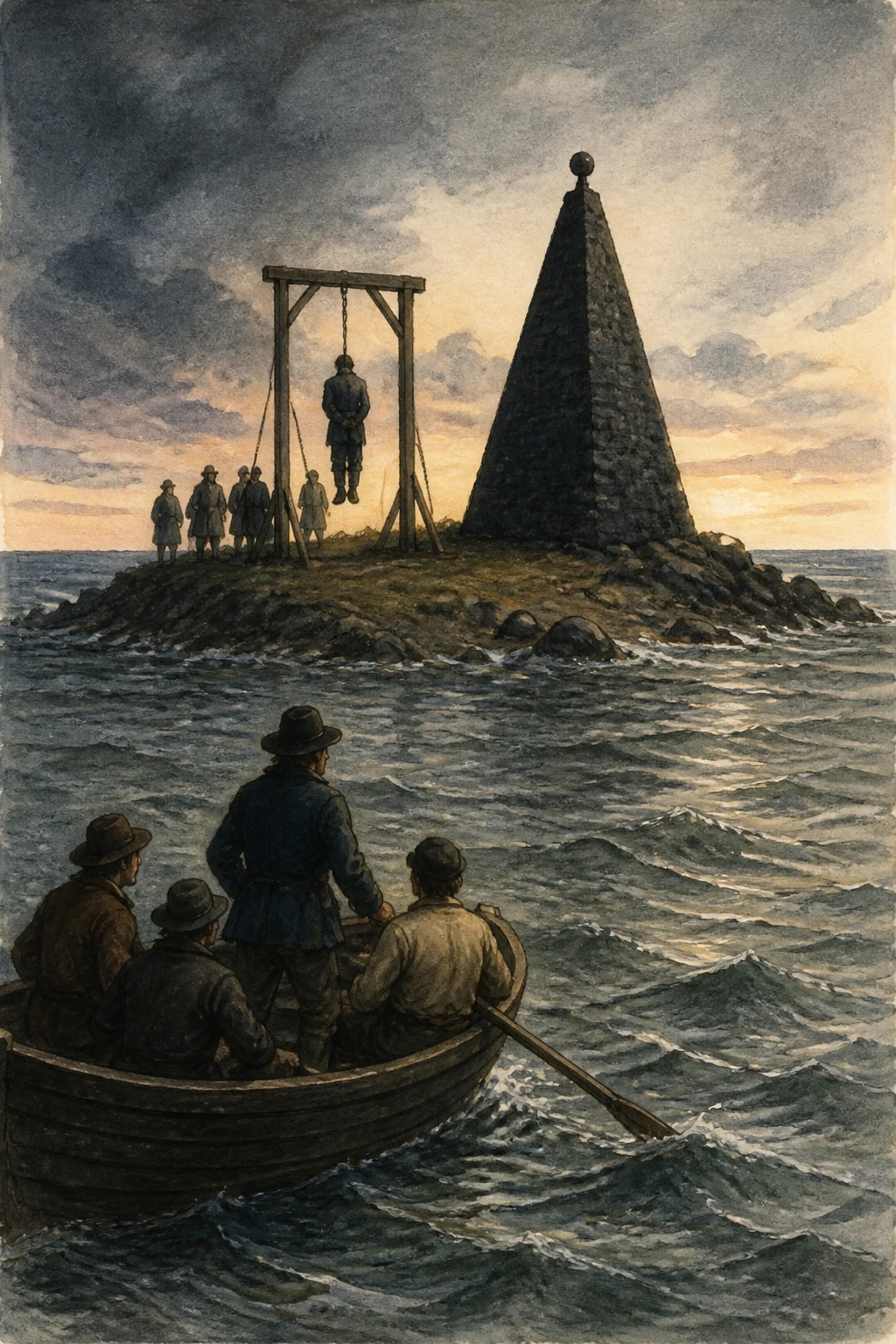
The Jew stood watching him and kept quiet until the servant was far away and quite out of sight. Then he shouted at the top of his voice, “You miserable musician, you tavern fiddler! Just wait till I catch you alone! I will chase you till the soles fall off your shoes! You scoundrel, put a groschen in your mouth, and then you will be worth six hellers!” And he went on hurling every insult he could think of. When he had comforted himself a little in this way and vented his anger, he ran into town to the judge. “Your Honor, oh, woe is me! Look how a godless fellow has robbed and maltreated me on the open highway! A stone lying on the ground would take pity on me! My clothes torn to shreds! My body pricked and scratched! My poor little savings taken, purse and all! Nothing but ducats, each one finer than the next! For God’s sake, have the fellow thrown into prison!” The judge said, “Was it a soldier who mauled you so with his saber?” “Heaven forbid!” said the Jew. “He had no drawn sword, but he had a gun hanging on his back and a fiddle round his neck. The villain is easy to recognize.” The judge sent his men after him. They found the good servant, who had been strolling slowly along, and they found the purse of gold on him as well. When he was brought before the court, he said, “I did not touch the Jew or take his money. He offered it to me of his own free will, if only I would stop fiddling, because he could not bear my music.” “Heaven forbid!” cried the Jew. “He snatches lies out of the air like flies off a wall!” The judge did not believe him either and said, “That is a poor excuse. No Jew would do such a thing.” And he sentenced the good servant to the gallows for committing robbery on the open highway. As he was led away, the Jew shouted after him, “You lazy lout, you dog of a fiddler! Now you will get the reward you deserve!” The servant climbed the ladder quite calmly with the hangman, but on the last rung he turned round and said to the judge, “Grant me one last request before I die.” “Yes,” said the judge, “provided you do not ask for your life.” “Not for my life,” answered the servant. “I ask only that you let me play my fiddle once more, for the last time.” The Jew raised a terrible outcry. “For God’s sake, do not allow it! Do not allow it!” But the judge said, “Why should I deny him this brief pleasure? He has been granted it, and that is that.” Nor could he have refused him, because of the gift bestowed upon the servant. But the Jew cried, “Oh, woe! Oh, woe! Tie me up! Tie me fast!” Then the good servant took the fiddle from his neck and set it in position. At the first stroke of his bow, everyone began to sway and reel—the judge, the clerks, and the court officers—and the rope fell from the hand of the man who was about to tie up the Jew. At the second stroke, they all lifted their legs, and the hangman let go of the good servant and made ready to dance. At the third stroke, everyone leaped into the air and began dancing, with the judge and the Jew at the front, leaping best of all. Soon everyone who had come to the marketplace out of curiosity was dancing too, old and young, fat and thin, all together. Even the dogs that had come running along rose onto their hind legs and joined in the hopping. And the longer he played, the higher the dancers leaped, until they knocked their heads together and began to cry out pitifully. At last the judge, quite out of breath, shouted, “I grant you your life! Only stop fiddling!” The good servant relented, lowered his fiddle, hung it round his neck again, and climbed down the ladder. Then he went over to the Jew, who lay on the ground gasping for breath, and said, “Rascal, now confess where you got the money, or I shall take my fiddle down and start playing again.” “I stole it! I stole it!” he cried. “But you have earned it honestly.” Then the judge had the Jew taken to the gallows and hanged as a thief.
Izvirnik
Der Jude im Dorn
Naslednje strani prikazujejo izvirno besedilo za primerjavo.
Ein Märchen der Brüder Grimm
Es war einmal ein reicher Mann, der hatte einen Knecht, der diente ihm fleißig und redlich, war alle Morgen der erste aus dem Bett und Abends der letzte hinein, und wenns eine saure Arbeit gab, wo keiner anpacken wollte, so stellte er sich immer zuerst daran. Dabei klagte er nicht, sondern war mit allem zufrieden, und war immer lustig. Als sein Jahr herum war, gab ihm der Herr keinen Lohn und dachte: "Das ist das gescheidtste, so spare ich etwas, und er geht mir nicht weg, sondern bleibt hübsch im Dienst." Der Knecht schwieg auch still, that das zweite Jahr wie das erste seine Arbeit, und als er am Ende desselben abermals keinen Lohn bekam, ließ er sichs gefallen und blieb noch länger. Als auch das dritte Jahr herum war, bedachte sich der Herr, griff in die Tasche, holte aber nichts heraus. Da fieng der Knecht endlich an und sprach: "Herr, ich habe euch drei Jahre redlich gedient, seid so gut und gebt mir was mir von Rechtswegen zukommt: ich wollte fort und mich gerne weiter in der Welt umsehen." Da antwortete der Geizhals: "Ja, mein lieber Knecht, du hast mir unverdrossen gedient, dafür sollst du mildiglich belohnet werden," griff abermals in die Tasche und zählte dem Knecht drei Heller einzeln auf, "da hast du für jedes Jahr einen Heller, das ist ein großer und reichlicher Lohn, wie du ihn bei wenigen Herrn empfangen hättest." Der gute Knecht, der vom Geld wenig verstand, strich sein Capital ein und dachte: "Nun hast du vollauf in der Tasche, was willst du sorgen und dich mit schwerer Arbeit länger plagen."
Da zog er fort, bergauf, bergab, sang und sprang nach Herzenslust. Nun trug es sich zu, als er an ein Buschwerk vorüber kam, daß ein kleines Männchen hervortrat und ihn anrief: "Wo hinaus, Bruder Lustig? ich sehe du trägst nicht schwer an deinen Sorgen." - "Was soll ich traurig sein," antwortete der Knecht, "ich habe vollauf, der Lohn von drei Jahren klingelt in meiner Tasche." - "Wie viel ist denn deines Schatzes?" fragte ihn das Männchen. "Wie viel? drei baare Heller, richtig gezählt." - "Höre," sagte der Zwerg, "ich bin ein armer bedürftiger Mann, schenke mir deine drei Heller: ich kann nichts mehr arbeiten, du aber bist jung und kannst dir dein Brot leicht verdienen." Und weil der Knecht ein gutes Herz hatte und Mitleid mit dem Männchen fühlte, so reichte er ihm seine drei Heller und sprach: "In Gottes Namen, es wird mir doch nicht fehlen." Da sprach das Männchen: "Weil ich dein gutes Herz sehe, so gewähre ich dir drei Wünsche, für jeden Heller einen, die sollen dir in Erfüllung gehen." - "Aha," sprach der Knecht, "du bist einer, der blau pfeifen kann. Wohlan, wenns doch sein soll, so wünsche ich mir erstlich ein Vogelrohr, das alles trifft, wonach ich ziele: zweitens eine Fidel, wenn ich darauf streiche, so muß alles tanzen, was den Klang hört: und drittens, wenn ich an jemand eine Bitte thue, so darf er sie nicht abschlagen." - "Das sollst du alles haben" sprach das Männchen, griff in den Busch, und, denk einer, da lag schon Fidel und Vogelrohr in Bereitschaft, als wenn sie bestellt wären. Er gab sie dem Knecht und sprach: "Was du dir immer erbitten wirst, kein Mensch auf der Welt soll dirs abschlagen."
"Herz, was begehrst du nun?" sprach der Knecht zu sich selber und zog lustig weiter. Bald darauf begegnete er einem Juden mit einem langen Ziegenbart, der stand und horchte auf den Gesang eines Vogels, der hoch oben in der Spitze eines Baumes saß. "Gottes Wunder!" rief er aus, "so ein kleines Thier hat so eine grausam mächtige Stimme! wenns doch mein wäre! wer ihm doch Salz auf den Schwanz streuen könnte!" - "Wenns weiter nichts ist," sprach der Knecht, "der Vogel soll bald herunter sein," legte an und traf aufs Haar, und der Vogel fiel herab in die Dornhecken. "Geh, Spitzbub," sagte er zum Juden, "und hol dir den Vogel heraus." - "Mein," sprach der Jude, "laß der Herr den Bub weg, so kommt ein Hund gelaufen; ich will mir den Vogel auflesen, weil ihr ihn doch einmal getroffen habt," legte sich auf die Erde und fieng an sich in den Busch hinein zu arbeiten. Wie er nun mitten in dem Dorn steckte, plagte der Muthwille den guten Knecht, daß er seine Fidel abnahm und anfieng zu geigen. Gleich fieng auch der Jude an die Beine zu heben und in die Höhe zu springen: und je mehr der Knecht strich, desto besser gieng der Tanz. Aber die Dörner zerrissen ihm den schäbigen Rock, kämmten ihm den Ziegenbart und stachen und zwickten ihn am ganzen Leib. "Mein," rief der Jude, "was soll mir das Geigen! laß der Herr das Geigen, ich begehre nicht zu tanzen." Aber der Knecht hörte nicht darauf und dachte: "Du hast die Leute genug geschunden, nun soll dirs die Dornhecke nicht besser machen," und fieng von neuem an zu geigen, daß der Jude immer höher aufspringen mußte, und die Fetzen von seinem Rock an den Stacheln hängen blieben. "Au weih geschrien!" rief der Jude, "geb ich doch dem Herrn, was er verlangt, wenn er nur das Geigen läßt, einen ganzen Beutel mit Gold." - "Wenn du so spendabel bist," sprach der Knecht, "so will ich wohl mit meiner Musik aufhören, aber das muß ich dir nachrühmen, du machst deinen Tanz noch mit, daß es eine Art hat;" nahm darauf den Beutel und gieng seiner Wege.
Der Jude blieb stehen und sah ihm nach und war still bis der Knecht weit weg und ihm ganz aus den Augen war, dann schrie er aus Leibeskräften: "Du miserabler Musikant, du Bierfiedler: wart, wenn ich dich allein erwische! ich will dich jagen, daß du die Schuhsohlen verlieren sollst: du Lump, steck einen Groschen ins Maul, daß du sechs Heller werth bist," und schimpfte weiter was er nur los bringen konnte. Und als er sich damit etwas zu Gute gethan und Luft gemacht hatte, lief er in die Stadt zum Richter. "Herr Richter, au weih geschrien! seht wie mich auf offener Landstraße ein gottloser Mensch beraubt und übel zugerichtet hat: ein Stein auf dem Erdboden möcht sich erbarmen: die Kleider zerfetzt! der Leib zerstochen und zerkratzt! mein bischen Armuth sammt dem Beutel genommen! lauter Dukaten, ein Stück schöner als das andere: um Gotteswillen, laßt den Menschen ins Gefängnis werfen." Sprach der Richter: "Wars ein Soldat, der dich mit seinem Säbel so zugerichtet hat?" - "Gott bewahr!" sagte der Jude, "einen nackten Degen hat er nicht gehabt, aber ein Rohr hat er gehabt auf dem Buckel hängen und eine Geige am Hals; der Bösewicht ist leicht zu erkennen." Der Richter schickte seine Leute nach ihm aus, die fanden den guten Knecht, der ganz langsam weiter gezogen war, und fanden auch den Beutel mit Gold bei ihm. Als er vor Gericht gestellt wurde, sagte er: "Ich habe den Juden nicht angerührt und ihm das Geld nicht genommen, er hat mirs aus freien Stücken angeboten, damit ich nur aufhörte zu geigen, weil er meine Musik nicht vertragen konnte." - "Gott bewahr!" schrie der Jude, "der greift die Lügen wie Fliegen an der Wand." Aber der Richter glaubte es auch nicht und sprach: "Das ist eine schlechte Entschuldigung, das thut kein Jude," und verurtheilte den guten Knecht, weil er auf offener Straße einen Raub begangen hätte, zum Galgen. Als er aber abgeführt ward, schrie ihm noch der Jude zu: "Du Bärenhäuter, du Hundemusikant, jetzt kriegst du deinen wohlverdienten Lohn." Der Knecht stieg ganz ruhig mit dem Henker die Leiter hinauf, auf der letzten Sproße aber drehte er sich um und sprach zum Richter: "Gewährt mir noch eine Bitte, eh ich sterbe." - "Ja," sprach der Richter, "wenn du nicht um dein Leben bittest." - "Nicht ums Leben," antwortete der Knecht, "ich bitte, laßt mich zu guter Letzt noch einmal auf meiner Geige spielen." Der Jude erhob ein Zetergeschrei: "Um Gotteswillen, erlaubts nicht, erlaubts nicht." Allein der Richter sprach: "Warum soll ich ihm die kurze Freude nicht gönnen: es ist ihm zugestanden, und dabei soll es sein Bewenden haben." Auch konnte er es ihm nicht abschlagen wegen der Gabe, die dem Knecht verliehen war. Der Jude aber rief: "Au weih! au weih! bindet mich an, bindet mich fest." Da nahm der gute Knecht seine Geige vom Hals, legte sie zurecht, und wie er den ersten Strich that, fieng alles an zu wabern und zu wanken, der Richter, die Schreiber, und die Gerichtsdiener: und der Strick fiel dem aus der Hand, der den Juden fest binden wollte: beim zweiten Strich hoben alle die Beine, und der Henker ließ den guten Knecht los und machte sich zum Tanze fertig: bei dem dritten Strich sprang alles in die Höhe und fieng an zu tanzen, und der Richter und der Jude waren vorn und sprangen am besten. Bald tanzte alles mit, was auf den Markt aus Neugierde herbei gekommen war, alte und junge, dicke und magere Leute untereinander: sogar die Hunde, die mitgelaufen waren, setzten sich auf die Hinterfüße und hüpften mit. Und je länger er spielte, desto höher sprangen die Tänzer, daß sie sich einander an die Köpfe stießen und anfiengen jämmerlich zu schreien. Endlich rief der Richter ganz außer Athem: "Ich schenke dir dein Leben, höre nur auf zu geigen." Der gute Knecht ließ sich bewegen, setzte die Geige ab, hing sie wieder um den Hals und stieg die Leiter herab. Da trat er zu dem Juden, der auf der Erde lag und nach Athem schnappte, und sagte: "Spitzbube, jetzt gesteh wo du das Geld her hast, oder ich nehme meine Geige vom Hals und fange wieder an zu spielen." - "Ich habs gestohlen, ich habs gestohlen," schrie er, "du aber hasts redlich verdient." Da ließ der Richter den Juden zum Galgen führen und als einen Dieb aufhängen.
Nadaljuj z branjem