Prevod
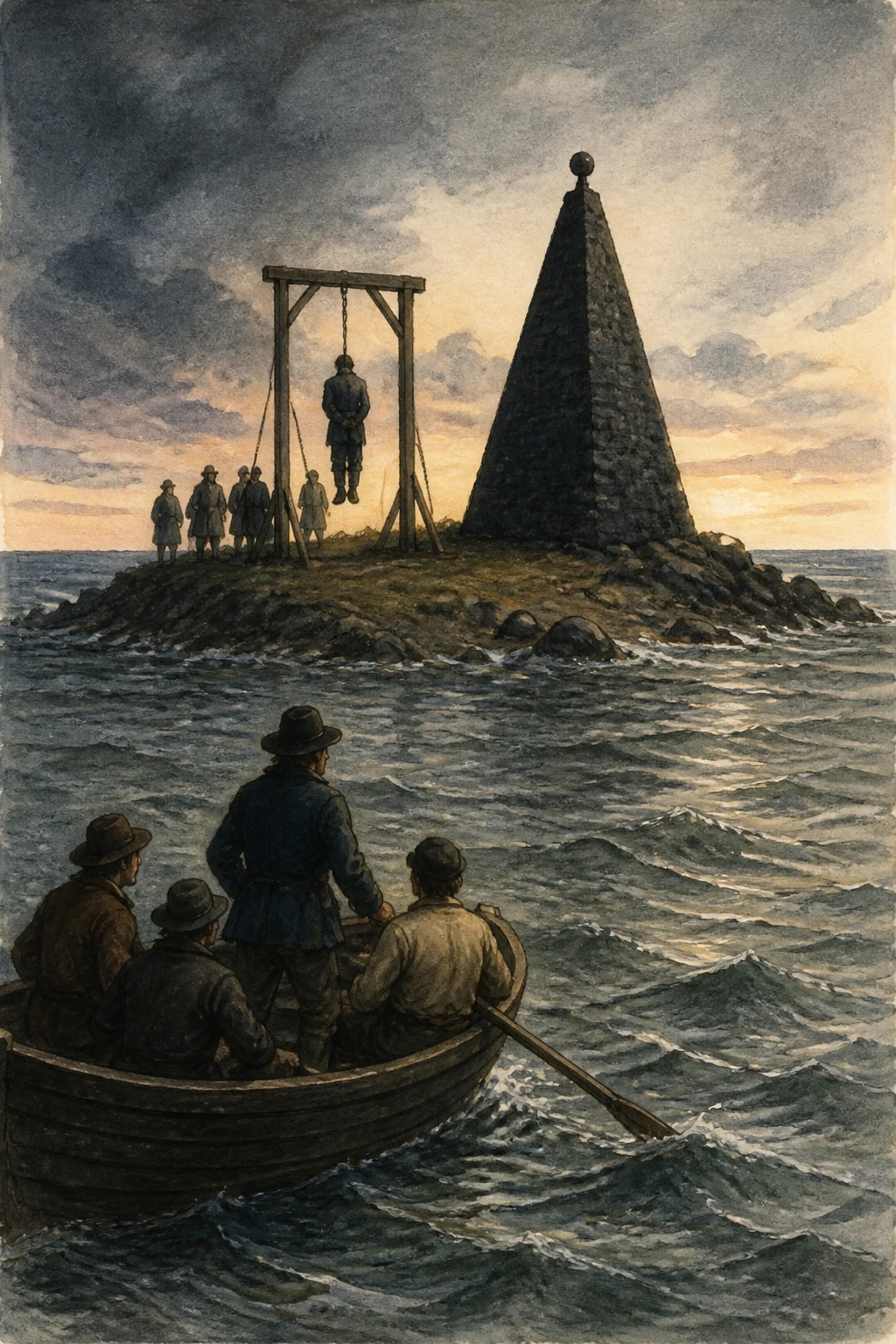
There were once three journeymen who had agreed to stay together on their travels and always work in the same town. But after a time their masters had no more work for them, until at last their clothes were in rags and they had nothing to live on. Then one of them said, “What are we to do? We cannot stay here any longer. Let us take to the road again, and if we find no work in the next town, we will arrange with the innkeeper to write and tell him where we are, so that we can hear news of one another, and then we will part.” The others thought this best too. They set off, and on the road they met a richly dressed man who asked who they were. “We are journeymen looking for work. We have kept together until now, but if we can find no more work, we mean to part.” “There is no need for that,” said the man. “If you will do as I tell you, you shall lack neither money nor work. Indeed, you shall become great gentlemen and ride in carriages.” One of them said, “If it does no harm to our souls or our salvation, we will gladly do it.” “No,” answered the man, “I lay no claim to you.” But another had looked down at his feet, and when he saw one horse’s hoof and one human foot, he wanted nothing to do with him. The devil, however, said, “Set your minds at ease. It is not you I am after, but the soul of another, who is half mine already and whose measure of wickedness need only be filled.” Now that they felt safe, they agreed, and the devil told them what he required. The first was to answer every question with “All three of us,” the second with “For the money,” and the third with “And that was right.” They were always to say these words one after another, but must not speak a single word besides. If they broke this command, all their money would vanish at once; as long as they obeyed it, however, their pockets would always be full. To begin with, he gave them as much money as they could carry, and told them to go to a certain inn in the town. They went in, and the innkeeper came to meet them and asked, “Would you like something to eat?” The first answered, “All three of us.” “Yes,” said the innkeeper, “that is what I meant.” The second said, “For the money.” “That goes without saying,” said the innkeeper. The third said, “And that was right.” “Quite right, indeed,” said the innkeeper. They were brought good food and drink and waited on handsomely. When they had eaten, it was time to pay, and the innkeeper handed one of them the bill. He said, “All three of us,” the second, “For the money,” and the third, “And that was right.” “Of course it is right,” said the innkeeper. “All three must pay, and I cannot give anything without money.” But they paid him even more than he had asked. The other guests saw this and said, “Those fellows must be mad.” “Yes, so they are,” said the innkeeper. “They are not quite right in the head.” So they stayed at the inn for a time and said nothing but “All three of us,” “For the money,” and “And that was right.” Yet they saw and understood everything that went on there. Now it happened that a wealthy merchant arrived with a great deal of money, and he said, “Innkeeper, keep my money safe for me. Those three foolish journeymen might steal it.” The innkeeper did as he asked. As he carried the travelling bag into his room, he felt that it was heavy with gold. Then he gave the three journeymen a place to sleep downstairs, while the merchant was put in a private room upstairs. At midnight, when the innkeeper thought they were all asleep, he came with his wife, carrying an axe, and together they struck the rich merchant dead. When the murder was done, they went back to bed. In the morning there was a great uproar: the merchant lay dead in his bed, in a pool of his own blood. All the guests came running, but the innkeeper said, “The three mad journeymen have done this.” The guests agreed, saying, “It can have been no one else.” The innkeeper had the three summoned and said to them, “Did you kill the merchant?” “All three of us,” said the first. “For the money,” said the second. “And that was right,” said the third. “There, you hear it,” said the innkeeper. “They confess it themselves.” So they were taken to prison and were to stand trial. When they saw how serious matters had become, they grew frightened after all, but in the night the devil came and said, “Hold out just one more day, and do not throw away your good fortune. Not a hair of your heads shall be harmed.” The next morning they were brought before the court, and the judge said, “Are you the murderers?” “All three of us.” “Why did you kill the merchant?” “For the money.” “You villains,” said the judge, “did you not shrink from such a sin?” “And that was right.” “They have confessed and are still defiant,” said the judge. “Take them straight to their execution.” So they were led out, and the innkeeper too had to step inside the ring of onlookers. Just as the executioner’s men seized them and led them up onto the scaffold, where the executioner stood with his drawn sword, a carriage suddenly came racing along, drawn by four blood-red chestnut horses, so fast that sparks flew from the stones. Someone was waving a white handkerchief from its window. Then the executioner said, “A pardon is coming,” and from the carriage came the cry, “Pardon! Pardon!” The devil stepped out, looking like a very grand gentleman in splendid clothes, and said, “You three are innocent. You may speak now. Tell them what you have seen and heard.” Then the eldest said, “We did not kill the merchant. The murderer is standing there among you,” and he pointed to the innkeeper. “For proof, go down into his cellar. Many others whom he has murdered are still hanging there.” The judge sent the executioner’s men to the cellar, and they found everything just as he had said. When they reported this to the judge, he had the innkeeper led up onto the scaffold and his head struck off. Then the devil said to the three, “Now I have the soul I wanted. But you are free, and you have money enough to last you all your lives.”