Prevod
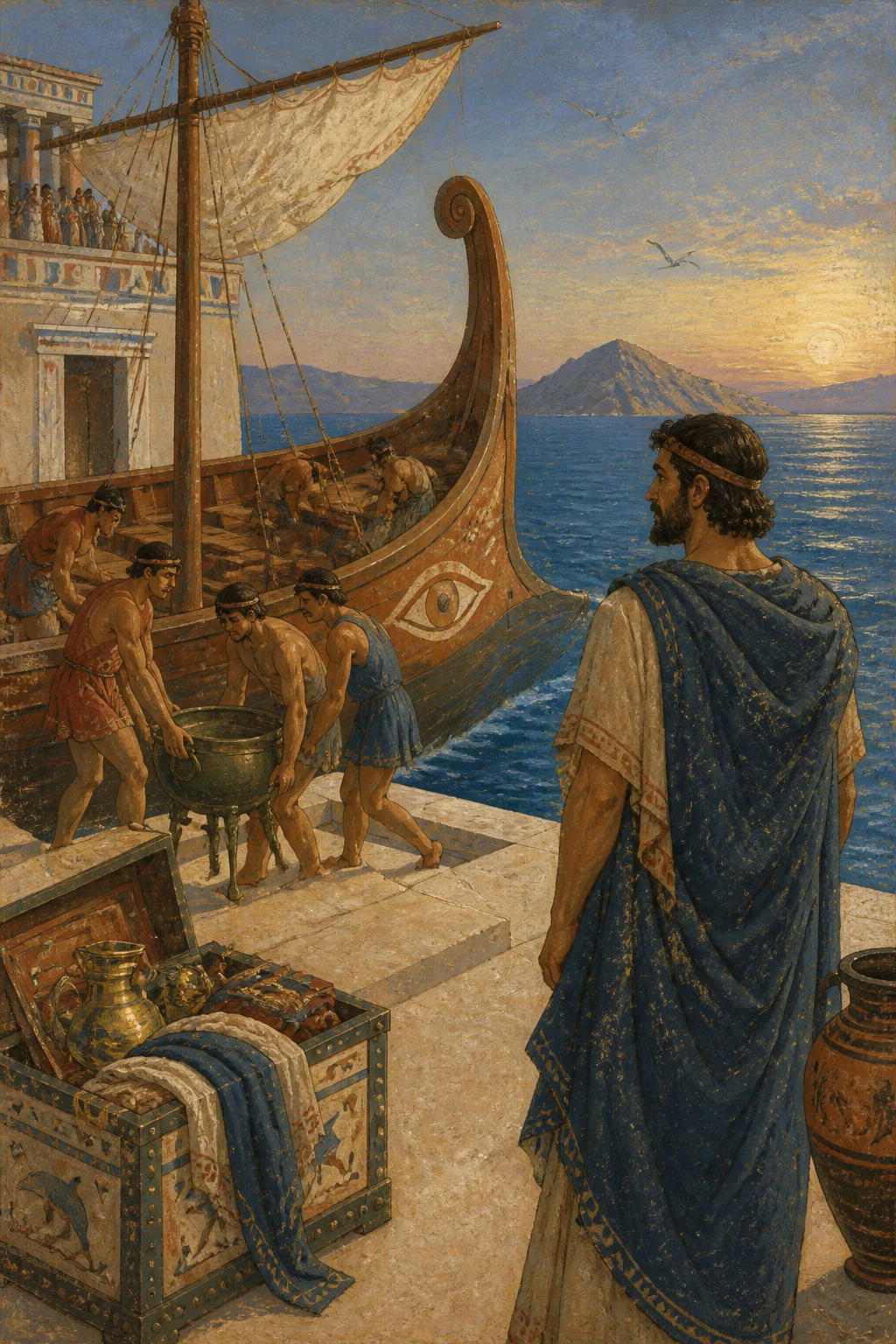
A father once called his three sons before him and gave the eldest a cock, the second a scythe, and the third a cat. “I am old now,” he said, “and my death is near, so I wanted to provide for you before my end. I have no money, and what I am giving you may seem of little worth, but it all depends on your using it wisely. Just find yourselves a country where such things are still unknown, and your fortunes will be made.” After his father’s death, the eldest set out with his cock, but wherever he went, cocks were already known. In the towns he could see them from afar, perched on the towers and turning with the wind; in the villages he heard more than one crowing, and nobody thought there was anything remarkable about the bird. It did not look as though he would make his fortune with it. At last, however, he happened upon an island where the people knew nothing of cocks and did not even know how to reckon the time. They knew well enough when it was morning or evening, but at night, unless they slept right through, no one could tell what hour it was. “Look,” he said, “what a proud creature this is! He has a ruby-red crown on his head and wears spurs like a knight. Three times in the night he calls out to you at fixed hours, and when he calls for the last time, the sun will soon rise. But if he calls in broad daylight, be prepared, for the weather is sure to change.” The people were well pleased with this. They stayed awake a whole night and listened with great delight as the cock proclaimed the hour loud and clear at two, four, and six o’clock. They asked whether the bird was for sale and how much he wanted for it. “About as much gold as a donkey can carry,” he answered. “A mere trifle for so precious a creature!” they all cried, and gladly gave him what he had asked.
When he came home with his riches, his brothers were astonished, and the second said, “Then I shall set out too and see whether I can sell my scythe to such good advantage.” But the prospects were not promising, for everywhere he went he met peasants with scythes on their shoulders just like his own. At last, though, he too had his stroke of luck on an island where the people knew nothing of scythes. When their corn was ripe, they brought cannons up to the fields and shot it down. This was an uncertain business: one man fired over the top, another struck the ears instead of the stalks and shot them away. A great deal was wasted, and besides, it made a dreadful din. So the young man stepped forward and mowed the corn down so quietly and swiftly that the people gaped in amazement. They were willing to give him whatever he asked, and he received a horse laden with as much gold as it could carry.
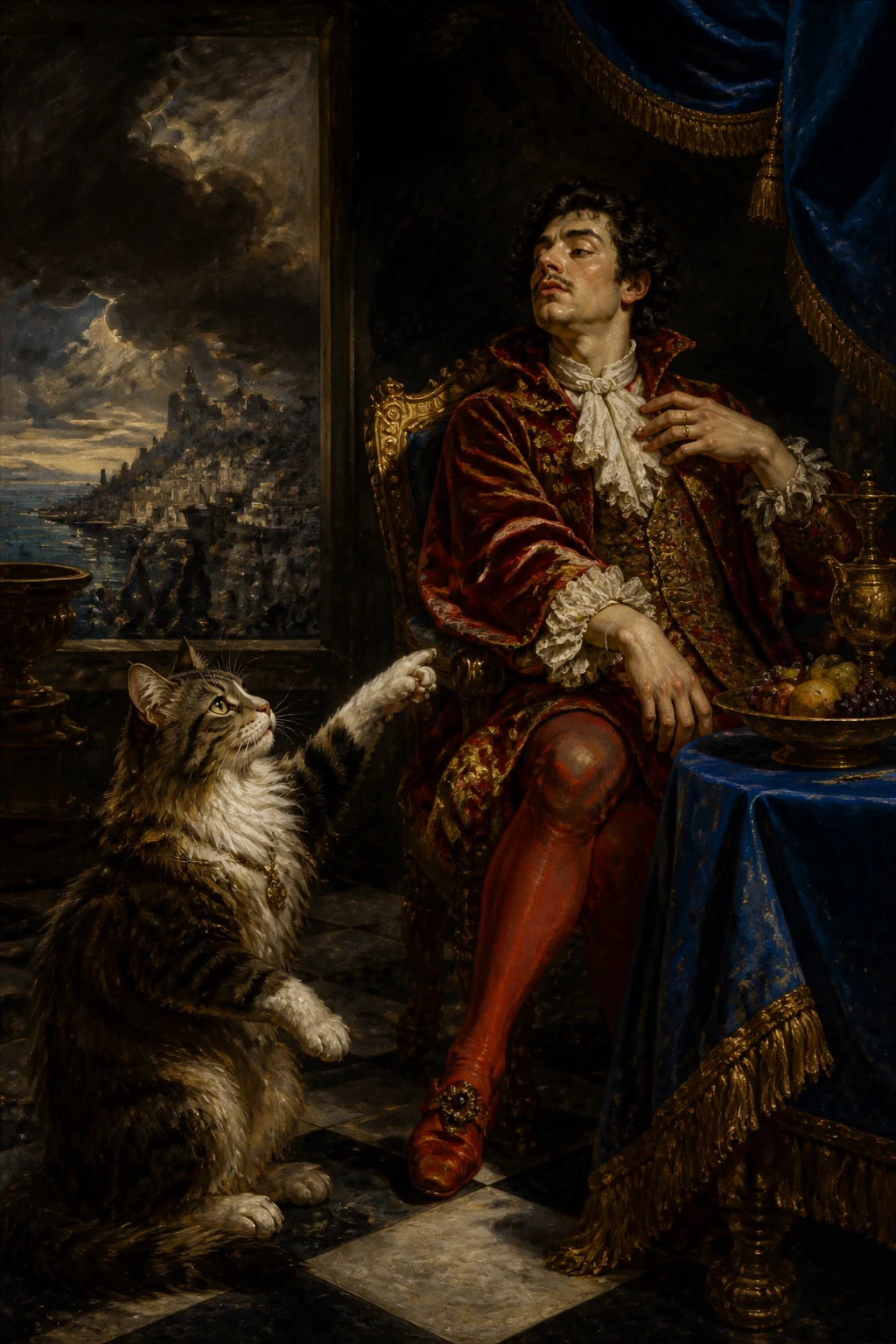
Now the third brother wanted to find the right buyer for his cat. He fared just like the others: as long as he stayed on the mainland, there was nothing to be done. There were cats everywhere, and so many of them that most newborn kittens were drowned. At last he had himself ferried over to an island, and luckily it turned out that no cat had ever been seen there, though the mice had multiplied to such an extent that they danced about on the tables and benches whether the master of the house was at home or not. The people lamented bitterly over the plague, and even the king in his palace could find no way to escape it. Mice squeaked in every corner and gnawed whatever they could get their teeth into. The cat now began her hunt and soon cleared a couple of halls, and the people begged the king to buy the wondrous creature for his kingdom. The king gladly paid the price that was asked—a mule laden with gold—and the third brother came home with the greatest treasure of all.
The cat had a splendid time with the mice in the royal palace and killed so many that they could no longer be counted. At last she grew hot from her labors and became thirsty. She stopped, raised her head, and cried, “Meow, meow.” When the king and all his people heard this strange cry, they took fright and fled from the palace in terror. Outside, the king held council on what was best to be done. At last it was decided to send a herald to the cat, ordering her to leave the palace or expect to be driven out by force. The councillors said, “We would rather be plagued by mice, an evil we are used to, than put our lives at the mercy of such a monster.” A page had to go up and ask the cat whether she would leave the palace of her own free will. But the cat, whose thirst had only grown worse, merely answered, “Meow, meow.” The page understood this to mean “Certainly, certainly not,” and carried the answer back to the king. “Then,” said the councillors, “she must yield to force.” Cannons were brought up, and the palace was bombarded until it caught fire. When the flames reached the hall where the cat was sitting, she leaped safely out of the window; but the besiegers did not stop until the whole palace had been battered to the ground.