Waltey
Spor Atene in Pozejdona za Atiko
Apolodorjeva knjižnica · ApolodorO besedilu
Spor Atene in Pozejdona za Atiko
- Vir
- Apolodorjeva knjižnica
- Avtor
- Apolodor
- Jezik branja
- English
- Jezik izvirnika
- Ancient Greek
- Čas branja
- 7 min branja
- Obseg
- 6 strani
- Naslov izvirnika
- Book 3 chapter 14
O izvirniku
Apolodorjeva knjižnica
Strnjen zemljevid grških mitov, rodov, junakov in pošasti. Bralni jezik je English, izvirnik pa prihaja iz vira Apolodorjeva knjižnica v jeziku Ancient Greek.
Besedilo
Spor Atene in Pozejdona za Atiko
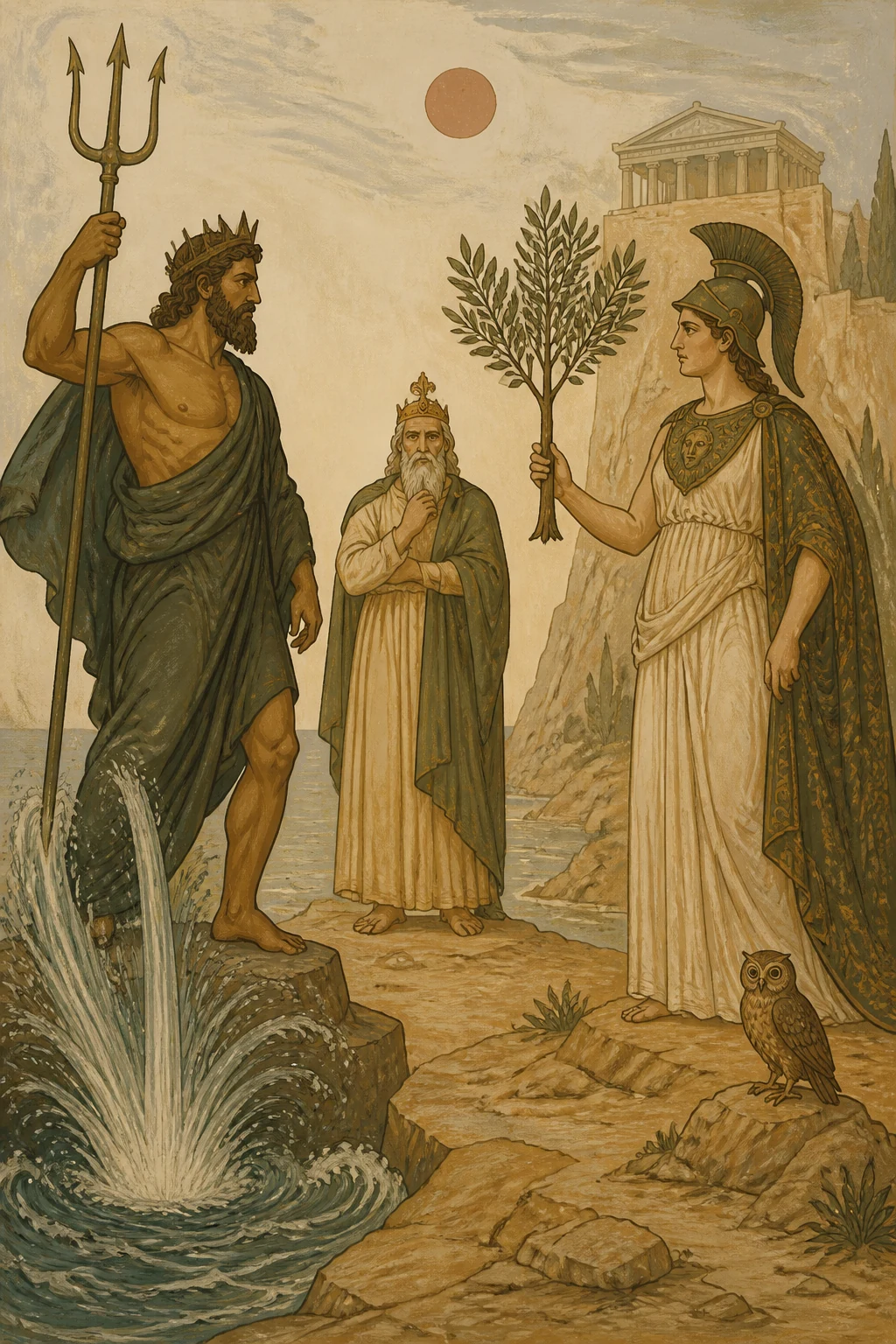
1. Cecrops, a son of the earth whose body combined the forms of a man and a serpent, was the first king of Attica. He named the land Cecropia after himself, though it had previously been called Acte. In his time, they say, the gods resolved to take possession of cities in which each would receive honors of their own. Poseidon was therefore the first to come to Attica, and, striking the middle of the Acropolis with his trident, he brought forth a pool of seawater, which is now called the Erechtheis.
After him came Athena. Taking Cecrops as witness to her claim, she planted an olive tree, which is still shown in the sanctuary of Pandrosus. When the two fell into a dispute over the country, Zeus intervened and appointed judges—not Cecrops and Cranaus, nor Erysichthon, as some have said, but the twelve gods. By their judgment the country was awarded to Athena, after Cecrops testified that she had been the first to plant the olive tree. Athena therefore named the city Athens after herself, while Poseidon, furious with anger, flooded the Thriasian plain and submerged Attica beneath the sea.
2. Cecrops married Agraulus, daughter of Actaeus, and had a son, Erysichthon, who died childless, and three daughters, Agraulus, Herse, and Pandrosus. Agraulus and Ares had a daughter, Alcippe. When Halirrhothius, the son of Poseidon and the nymph Euryte, attempted to rape her, Ares caught him and killed him. Poseidon brought charges against Ares, who was tried on the Areopagus before the twelve gods and acquitted.
3. Herse and Hermes had a son, Cephalus. Eos fell in love with him and carried him off; after lying with him in Syria, she bore a son, Tithonus. His son was Phaethon, whose son was Astynous, whose son was Sandocus. Sandocus came from Syria to Cilicia, founded the city of Celenderis, and married Pharnace, daughter of Megassares, king of the Hyrieans, by whom he had a son, Cinyras. Cinyras came to Cyprus with a company of followers and founded Paphos. There he married Metharme, daughter of Pygmalion, king of Cyprus, and fathered Oxyporus and Adonis, as well as three daughters, Orsedice, Laogore, and Braesia. Through the wrath of Aphrodite, these daughters lay with foreign men and ended their lives in Egypt.
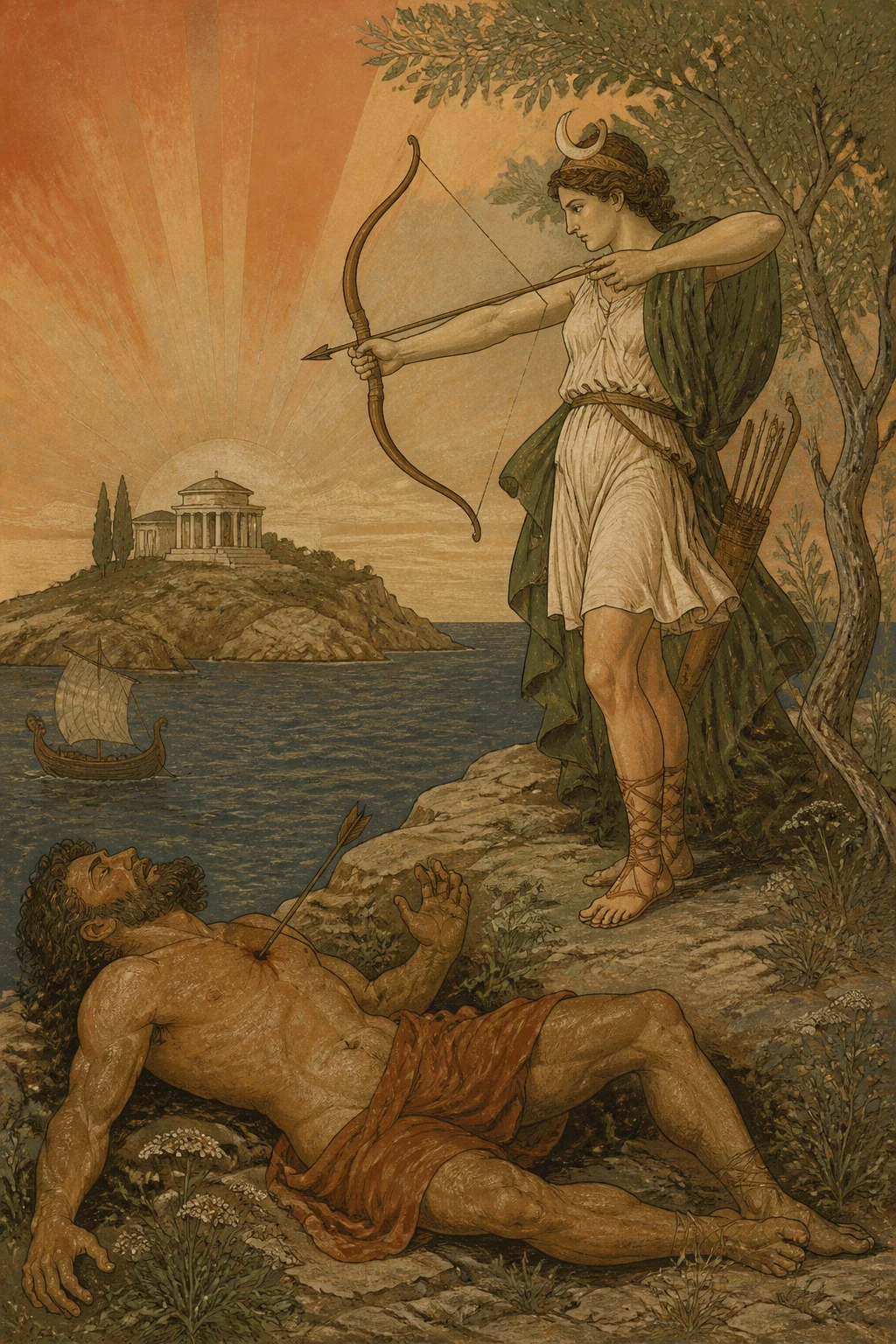
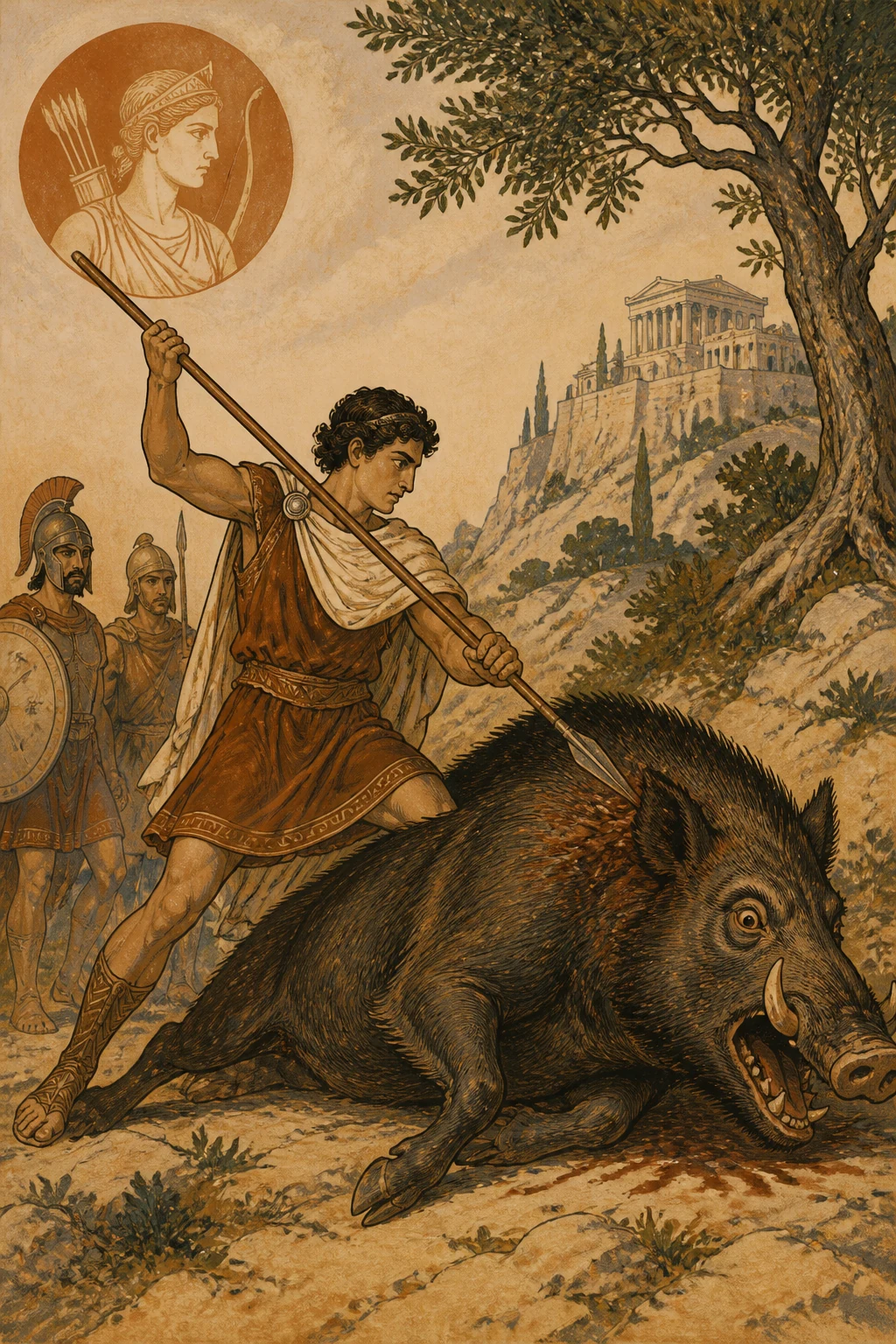
4. While Adonis was still a boy, he was struck by a boar while hunting and died through the anger of Artemis. Hesiod, however, says that he was the son of Phoenix and Alphesiboea, while Panyasis says that he was the son of Theias, king of the Assyrians, who had a daughter named Smyrna. Through the wrath of Aphrodite, whom she failed to honor, Smyrna fell in love with her father. With her nurse as an accomplice, she shared her father's bed for twelve nights without his knowing who she was. When he discovered the truth, he drew his sword and pursued her. As he was about to overtake her, she prayed to the gods to make her disappear. Taking pity on her, the gods changed her into the tree they call myrrh. Ten months later, the tree split open, and the child called Adonis was born. Because of his beauty, Aphrodite hid him in a chest while he was still an infant and, without the other gods' knowledge, entrusted him to Persephone. But when Persephone saw him, she refused to give him back. The dispute was brought before Zeus, who divided the year into three parts and decreed that Adonis should spend one part as he pleased, one with Persephone, and the third with Aphrodite. Adonis gave his own share to Aphrodite as well. Later, while hunting, Adonis was struck by a boar and died.
5. After Cecrops died, Cranaus, another son of the earth, became king. It was during his reign, they say, that the flood of Deucalion occurred. He married Pedias, daughter of Mynes, from Lacedaemon, and had three daughters, Cranae, Cranaechme, and Atthis. When Atthis died, still a maiden, Cranaus named the country Atthis after her.
6. Amphictyon drove out Cranaus and became king. Some say he was a son of Deucalion, others that he sprang from the earth. After he had reigned for twelve years, Erichthonius drove him out. Some say that Erichthonius was the son of Hephaestus and Atthis, daughter of Cranaus; others that he was the son of Hephaestus and Athena, in the following way. Athena came to Hephaestus because she wanted weapons made. He, having been abandoned by Aphrodite, was overcome with desire for Athena and began to pursue her, but she fled. When, with great difficulty—for he was lame—he caught up with her, he tried to force himself upon her. Being chaste and a virgin, she resisted him, but he spilled his seed upon the goddess's leg.
In disgust, she wiped the seed off with a piece of wool and threw it to the ground. As she fled and the seed fell upon the earth, Erichthonius was born. Athena reared him in secret from the other gods, wishing to make him immortal. She placed him in a chest and entrusted it to Pandrosus, daughter of Cecrops, forbidding her to open it. But Pandrosus's sisters opened it out of curiosity and saw a serpent coiled beside the infant. Some say they were killed by the serpent itself; others say that Athena's anger drove them mad and they threw themselves from the Acropolis. Reared by Athena herself in her sanctuary, Erichthonius drove out Amphictyon and became king of Athens. He set up the wooden image of Athena on the Acropolis, established the festival of the Panathenaea, and married Praxithea, a naiad nymph, by whom he had a son, Pandion.
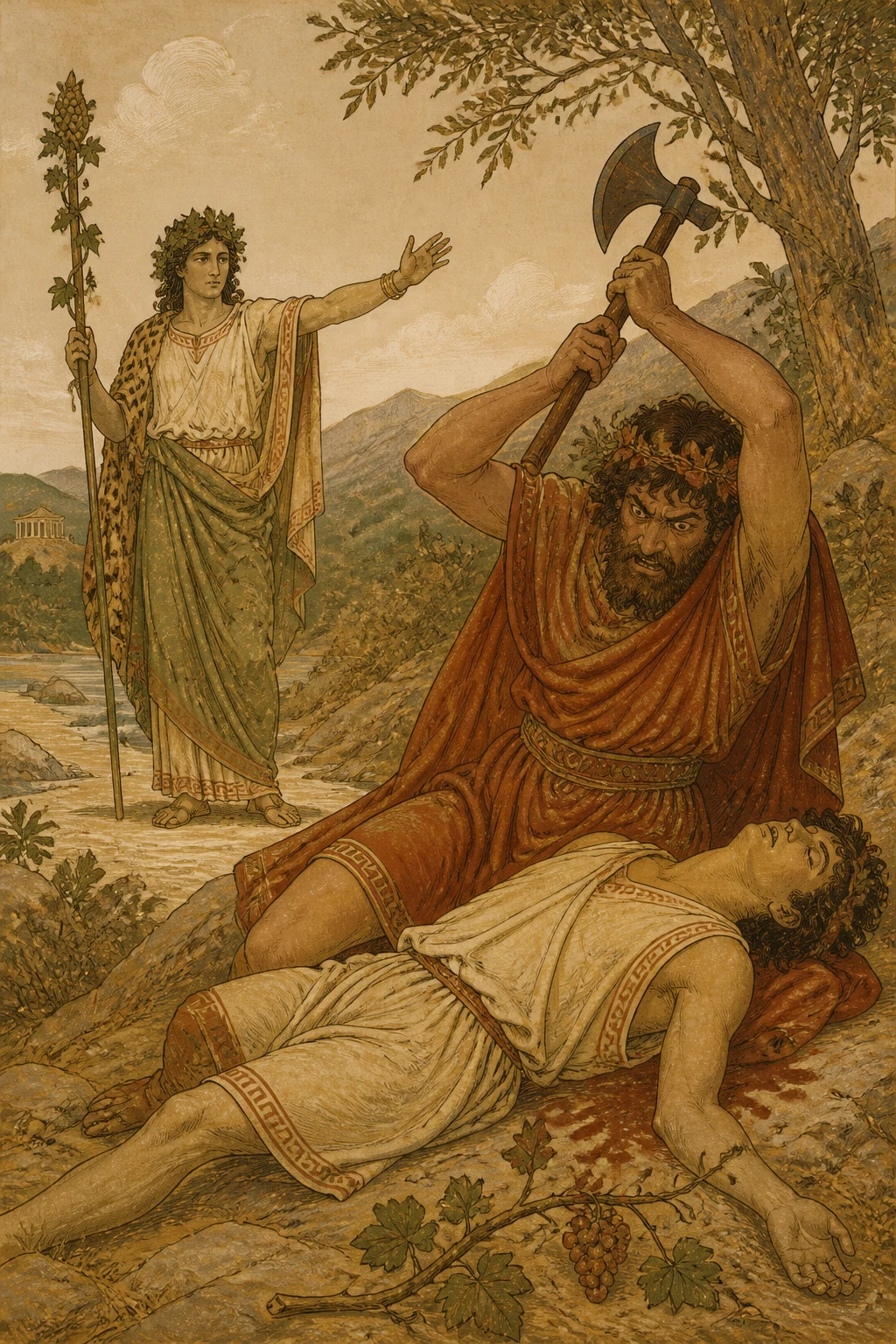
7. When Erichthonius died and was buried in that same sanctuary of Athena, Pandion became king. During his reign Demeter and Dionysus came to Attica. Celeus welcomed Demeter at Eleusis, while Icarius welcomed Dionysus, who gave him a vine cutting and taught him how to make wine. Wishing to share the god's gifts with mankind, Icarius went to some shepherds. They tasted the drink and, delighted by it, drank freely without mixing it with water; then, believing they had been poisoned, they killed him. When daylight came, they realized what they had done and buried him. His daughter Erigone went in search of her father, and his faithful dog Maera, who had accompanied Icarius, showed her where his body lay. After mourning her father bitterly, she hanged herself.
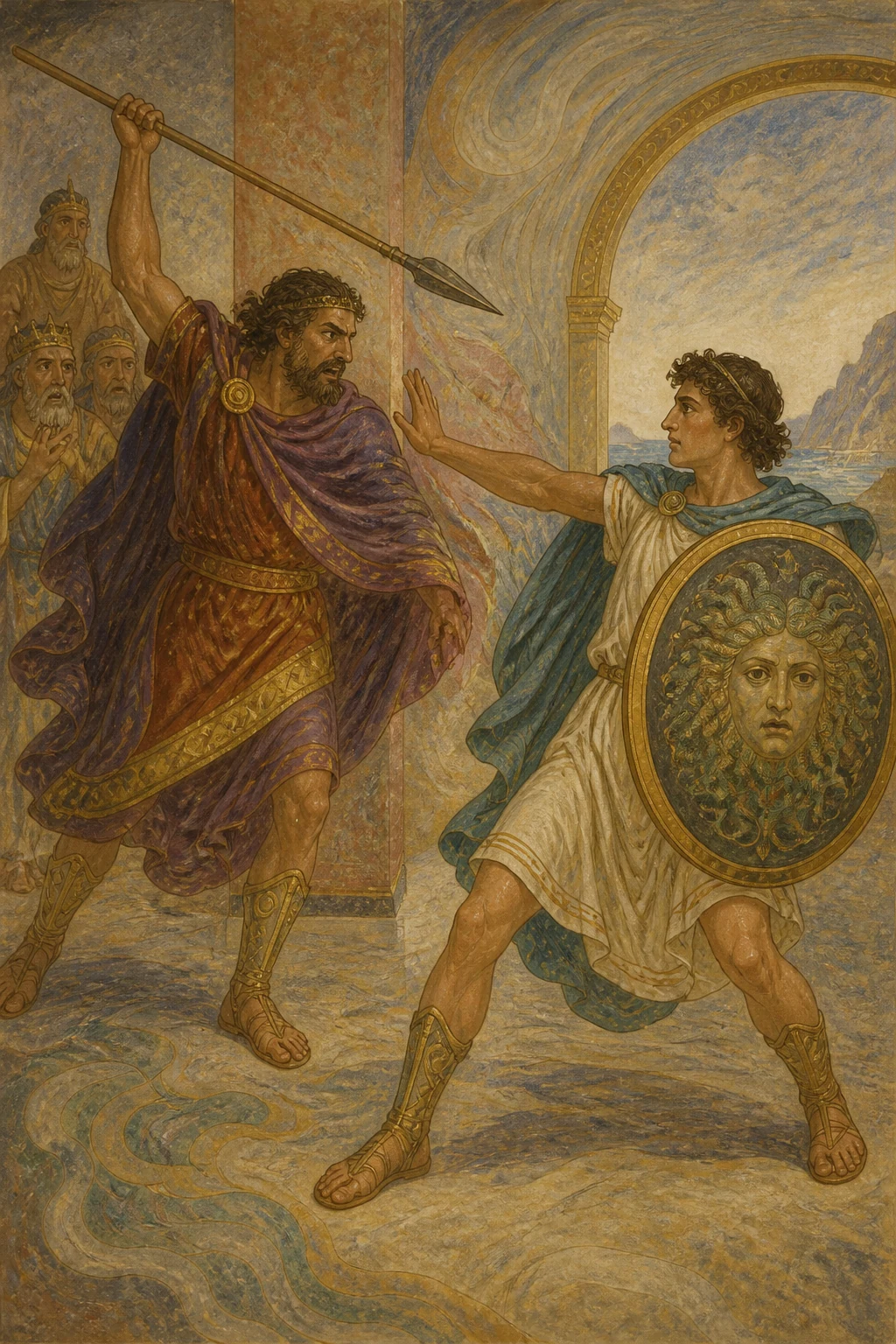
8. Pandion married Zeuxippe, his mother's sister, and had two daughters, Procne and Philomela, and twin sons, Erechtheus and Butes. When war broke out with Labdacus over the boundaries of their lands, he called upon Tereus, son of Ares, to come from Thrace to help him. With his aid he won the war and gave Tereus his daughter Procne in marriage. Tereus had a son by her, Itys, but then fell in love with Philomela and violated her too, saying that Procne was dead, though he was keeping her hidden in the countryside. He then married Philomela and shared her bed, and cut out her tongue. But she wove letters into a robe and through them made her sufferings known to Procne. Procne sought out her sister, killed her son Itys, boiled him, and served him to Tereus for dinner without his knowing what he ate. Then she fled in haste with her sister. When Tereus discovered what had happened, he seized an axe and pursued them. Overtaken at Daulia in Phocis, they prayed to the gods to turn them into birds. Procne became a nightingale and Philomela a swallow; Tereus too was transformed into a bird and became a hoopoe.
Izvirnik
Book 3 chapter 14
Naslednje strani prikazujejo izvirno besedilo za primerjavo.
Source ID: apollodorus_bib_3_14 Citation: Apollodorus, Bibliotheca 3.14 1. Κέκροψ αὐτόχθων, συμφυὲς ἔχων σῶμα ἀνδρὸς καὶ δράκοντος, τῆς Ἀττικῆς ἐβασίλευσε πρῶτος, καὶ τὴν γῆν πρότερον λεγομένην Ἀκτὴν ἀφʼ ἑαυτοῦ Κεκροπίαν ὠνόμασεν. ἐπὶ τούτου, φασίν, ἔδοξε τοῖς θεοῖς πόλεις καταλαβέσθαι, ἐν αἷς ἔμελλον ἔχειν τιμὰς ἰδίας ἕκαστος. ἧκεν οὖν πρῶτος Ποσειδῶν ἐπὶ τὴν Ἀττικήν, καὶ πλήξας τῇ τριαίνῃ κατὰ μέσην τὴν ἀκρόπολιν ἀπέφηνε θάλασσαν, ἣν νῦν Ἐρεχθηίδα καλοῦσι.
μετὰ δὲ τοῦτον ἧκεν Ἀθηνᾶ, καὶ ποιησαμένη τῆς καταλήψεως Κέκροπα μάρτυρα ἐφύτευσεν ἐλαίαν, ἣ νῦν ἐν τῷ Πανδροσείῳ δείκνυται. γενομένης δὲ ἔριδος ἀμφοῖν περὶ τῆς χώρας, διαλύσας Ζεὺς κριτὰς ἔδωκεν, οὐχ ὡς εἶπόν τινες, Κέκροπα καὶ Κραναόν, οὐδὲ Ἐρυσίχθονα, θεοὺς δὲ τοὺς δώδεκα. καὶ τούτων δικαζόντων ἡ χώρα τῆς Ἀθηνᾶς ἐκρίθη, Κέκροπος μαρτυρήσαντος ὅτι πρώτη τὴν ἐλαίαν ἐφύτευσεν. Ἀθηνᾶ μὲν οὖν ἀφʼ ἑαυτῆς τὴν πόλιν ἐκάλεσεν Ἀθήνας, Ποσειδῶν δὲ θυμῷ ὀργισθεὶς τὸ Θριάσιον πεδίον ἐπέκλυσε καὶ τὴν Ἀττικὴν ὕφαλον ἐποίησε.
2. Κέκροψ δὲ γήμας τὴν Ἀκταίου κόρην Ἄγραυλον παῖδα μὲν ἔσχεν Ἐρυσίχθονα, ὃς ἄτεκνος μετήλλαξε, θυγατέρας δὲ Ἄγραυλον Ἕρσην Πάνδροσον. Ἀγραύλου μὲν οὖν καὶ Ἄρεος Ἀλκίππη γίνεται. ταύτην βιαζόμενος Ἁλιρρόθιος, ὁ Ποσειδῶνος καὶ νύμφης Εὐρύτης, ὑπὸ Ἄρεος φωραθεὶς κτείνεται. Ποσειδῶνος δὲ εἰσάγοντος ἐν Ἀρείῳ πάγῳ κρίνεται δικαζόντων τῶν δώδεκα θεῶν Ἄρης καὶ ἀπολύεται.
3. Ἕρσης δὲ καὶ Ἑρμοῦ Κέφαλος, οὗ ἐρασθεῖσα Ἠὼς ἥρπασε καὶ μιγεῖσα ἐν Συρίᾳ παῖδα ἐγέννησε Τιθωνόν, οὗ παῖς ἐγένετο Φαέθων, τούτου δὲ Ἀστύνοος, τοῦ δὲ Σάνδοκος, ὃς ἐκ Συρίας ἐλθὼν εἰς Κιλικίαν, πόλιν ἔκτισε Κελένδεριν, καὶ γήμας Φαρνάκην τὴν Μεγασσάρου τοῦ Ὑριέων βασιλέως ἐγέννησε Κινύραν. οὗτος ἐν Κύπρῳ, παραγενόμενος σὺν λαῷ, ἔκτισε Πάφον, γήμας δὲ ἐκεῖ Μεθάρμην, κόρην Πυγμαλίωνος Κυπρίων βασιλέως, Ὀξύπορον ἐγέννησε καὶ Ἄδωνιν, πρὸς δὲ τούτοις θυγατέρας Ὀρσεδίκην καὶ Λαογόρην καὶ Βραισίαν. αὗται δὲ διὰ μῆνιν Ἀφροδίτης ἀλλοτρίοις ἀνδράσι συνευναζόμεναι τὸν βίον ἐν Αἰγύπτῳ μετήλλαξαν.
4. Ἄδωνις δὲ ἔτι παῖς ὢν Ἀρτέμιδος χόλῳ πληγεὶς ἐν θήρᾳ ὑπὸ συὸς ἀπέθανεν. Ἡσίοδος δὲ αὐτὸν Φοίνικος καὶ Ἀλφεσιβοίας λέγει, Πανύασις δέ φησι Θείαντος βασιλέως Ἀσσυρίων, ὃς ἔσχε θυγατέρα Σμύρναν. αὕτη κατὰ μῆνιν Ἀφροδίτης (οὐ γὰρ αὐτὴν ἐτίμα) ἴσχει τοῦ πατρὸς ἔρωτα, καὶ συνεργὸν λαβοῦσα τὴν τροφὸν ἀγνοοῦντι τῷ πατρὶ νύκτας δώδεκα συνευνάσθη. ὁ δὲ ὡς ᾔσθετο, σπασάμενος τὸ ξίφος ἐδίωκεν αὐτήν· ἡ δὲ περικαταλαμβανομένη θεοῖς ηὔξατο ἀφανὴς γενέσθαι. θεοὶ δὲ κατοικτείραντες αὐτὴν εἰς δένδρον μετήλλαξαν, ὃ καλοῦσι σμύρναν. δεκαμηνιαίῳ δὲ ὕστερον χρόνῳ τοῦ δένδρου ῥαγέντος γεννηθῆναι τὸν λεγόμενον Ἄδωνιν, ὃν Ἀφροδίτη διὰ κάλλος ἔτι νήπιον κρύφα θεῶν εἰς λάρνακα κρύψασα Περσεφόνῃ παρίστατο. ἐκείνη δὲ ὡς
ἐθεάσατο, οὐκ ἀπεδίδου. κρίσεως δὲ ἐπὶ Διὸς γενομένης εἰς τρεῖς μοίρας διῃρέθη ὁ ἐνιαυτός, καὶ μίαν μὲν παρʼ ἑαυτῷ μένειν τὸν Ἄδωνιν, μίαν δὲ παρὰ Περσεφόνῃ προσέταξε, τὴν δὲ ἑτέραν παρʼ Ἀφροδίτῃ· ὁ δὲ Ἄδωνις ταύτῃ προσένειμε καὶ τὴν ἰδίαν μοῖραν. ὕστερον δὲ θηρεύων Ἄδωνις ὑπὸ συὸς πληγεὶς ἀπέθανε. 5. Κέκροπος δὲ ἀποθανόντος Κραναὸς ἐβασίλευσεν αὐτόχθων ὤν, ἐφʼ οὗ τὸν ἐπὶ Δευκαλίωνος λέγεται κατακλυσμὸν γενέσθαι. οὗτος γήμας ἐκ Λακεδαίμονος Πεδιάδα τὴν Μύνητος ἐγέννησε Κρανάην καὶ Κραναίχμην καὶ Ἀτθίδα, ἧς ἀποθανούσης ἔτι παρθένου τὴν χώραν Κραναὸς Ἀτθίδα προσηγόρευσε.
6. Κραναὸν δὲ ἐκβαλὼν Ἀμφικτύων ἐβασίλευσε· τοῦτον ἔνιοι μὲν Δευκαλίωνος, ἔνιοι δὲ αὐτόχθονα λέγουσι. βασιλεύσαντα δὲ αὐτὸν ἔτη δώδεκα Ἐριχθόνιος ἐκβάλλει. τοῦτον οἱ μὲν Ἡφαίστου καὶ τῆς Κραναοῦ θυγατρὸς Ἀτθίδος εἶναι λέγουσιν, οἱ δὲ Ἡφαίστου καὶ Ἀθηνᾶς, οὕτως· Ἀθηνᾶ παρεγένετο πρὸς Ἥφαιστον, ὅπλα κατασκευάσαι θέλουσα. ὁ δὲ ἐγκαταλελειμμένος ὑπὸ Ἀφροδίτης εἰς ἐπιθυμίαν ὤλισθε τῆς Ἀθηνᾶς, καὶ διώκειν αὐτὴν ἤρξατο· ἡ δὲ ἔφευγεν. ὡς δὲ ἐγγὺς αὐτῆς ἐγένετο πολλῇ ἀνάγκῃ (ἦν γὰρ χωλός), ἐπειρᾶτο συνελθεῖν. ἡ δὲ ὡς σώφρων καὶ παρθένος οὖσα οὐκ ἠνέσχετο· ὁ δὲ ἀπεσπέρμηνεν εἰς τὸ σκέλος τῆς θεᾶς.
ἐκείνη δὲ μυσαχθεῖσα ἐρίῳ ἀπομάξασα τὸν γόνον εἰς γῆν ἔρριψε. φευγούσης δὲ αὐτῆς καὶ τῆς γονῆς εἰς γῆν πεσούσης Ἐριχθόνιος γίνεται. τοῦτον Ἀθηνᾶ κρύφα τῶν ἄλλων θεῶν ἔτρεφεν, ἀθάνατον θέλουσα ποιῆσαι· καὶ καταθεῖσα αὐτὸν εἰς κίστην Πανδρόσῳ τῇ Κέκροπος παρακατέθετο, ἀπειποῦσα τὴν κίστην ἀνοίγειν. αἱ δὲ ἀδελφαὶ τῆς Πανδρόσου ἀνοίγουσιν ὑπὸ περιεργίας, καὶ θεῶνται τῷ βρέφει παρεσπειραμένον δράκοντα· καὶ ὡς μὲν ἔνιοι λέγουσιν, ὑπʼ αὐτοῦ διεφθάρησαν τοῦ δράκοντος, ὡς δὲ ἔνιοι, διʼ ὀργὴν Ἀθηνᾶς ἐμμανεῖς γενόμεναι κατὰ τῆς ἀκροπόλεως αὑτὰς ἔρριψαν. ἐν δὲ τῷ τεμένει τραφεὶς Ἐριχθόνιος ὑπʼ αὐτῆς Ἀθηνᾶς, ἐκβαλὼν Ἀμφικτύονα ἐβασίλευσεν Ἀθηνῶν, καὶ τὸ ἐν ἀκροπόλει ξόανον τῆς Ἀθηνᾶς ἱδρύσατο, καὶ τῶν Παναθηναίων τὴν ἑορτὴν συνεστήσατο, καὶ
Πραξιθέαν νηίδα νύμφην ἔγημεν, ἐξ ἧς αὐτῷ παῖς Πανδίων ἐγεννήθη. 7. Ἐριχθονίου δὲ ἀποθανόντος καὶ ταφέντος ἐν τῷ αὐτῷ τεμένει τῆς Ἀθηνᾶς Πανδίων ἐβασίλευσεν, ἐφʼ οὗ Δημήτηρ καὶ Διόνυσος εἰς τὴν Ἀττικὴν ἦλθον. ἀλλὰ Δήμητρα μὲν Κελεὸς εἰς τὴν Ἐλευσῖνα ὑπεδέξατο, Διόνυσον δὲ Ἰκάριος· ὃς λαμβάνει παρʼ αὐτοῦ κλῆμα ἀμπέλου καὶ τὰ περὶ τὴν οἰνοποιίαν μανθάνει. καὶ τὰς τοῦ θεοῦ δωρήσασθαι θέλων χάριτας ἀνθρώποις, ἀφικνεῖται πρός τινας ποιμένας, οἳ γευσάμενοι τοῦ ποτοῦ καὶ χωρὶς ὕδατος διʼ ἡδονὴν ἀφειδῶς ἑλκύσαντες, πεφαρμάχθαι νομίζοντες ἀπέκτειναν αὐτόν. μεθʼ ἡμέραν δὲ νοήσαντες ἔθαψαν αὐτόν. Ἠριγόνῃ δὲ τῇ θυγατρὶ τὸν πατέρα μαστευούσῃ κύων συνήθης ὄνομα Μαῖρα, ἣ τῷ Ἰκαρίῳ συνείπετο, τὸν νεκρὸν ἐμήνυσε· κἀκείνη κατοδυραμένη τὸν
πατέρα ἑαυτὴν ἀνήρτησε. 8. Πανδίων δὲ γήμας Ζευξίππην τῆς μητρὸς τὴν ἀδελφὴν θυγατέρας μὲν ἐτέκνωσε Πρόκνην καὶ Φιλομήλαν, παῖδας δὲ διδύμους Ἐρεχθέα καὶ Βούτην. πολέμου δὲ ἐνστάντος πρὸς Λάβδακον περὶ γῆς ὅρων ἐπεκαλέσατο βοηθὸν ἐκ Θρᾴκης Τηρέα τὸν Ἄρεος, καὶ τὸν πόλεμον σὺν αὐτῷ κατορθώσας ἔδωκε Τηρεῖ πρὸς γάμον τὴν ἑαυτοῦ θυγατέρα Πρόκνην. ὁ δὲ ἐκ ταύτης γεννήσας παῖδα Ἴτυν, καὶ Φιλομήλας ἐρασθεὶς ἔφθειρε καὶ ταύτην, εἰπὼν τεθνάναι Πρόκνην, κρύπτων ἐπὶ τῶν χωρίων. αὖθις δὲ γήμας Φιλομήλαν συνηυνάζετο, καὶ τὴν γλῶσσαν ἐξέτεμεν αὐτῆς. ἡ δὲ ὑφήνασα ἐν πέπλῳ γράμματα διὰ τούτων ἐμήνυσε Πρόκνῃ τὰς ἰδίας συμφοράς. ἡ δὲ ἀναζητήσασα τὴν ἀδελφὴν κτείνει τὸν παῖδα Ἴτυν, καὶ καθεψήσασα Τηρεῖ δεῖπνον ἀγνοοῦντι παρατίθησι· καὶ μετὰ
τῆς ἀδελφῆς διὰ τάχους ἔφυγε. Τηρεὺς δὲ αἰσθόμενος, ἁρπάσας πέλεκυν ἐδίωκεν. αἱ δὲ ἐν Δαυλίᾳ τῆς Φωκίδος γινόμεναι περικατάληπτοι θεοῖς εὔχονται ἀπορνεωθῆναι, καὶ Πρόκνη μὲν γίνεται ἀηδών, Φιλομήλα δὲ χελιδών· ἀπορνεοῦται δὲ καὶ Τηρεύς, καὶ γίνεται ἔποψ.
Nadaljuj z branjem