Waltey
Meleager in lov na kalidonskega merjasca
Apolodorjeva knjižnica · ApolodorO besedilu
Meleager in lov na kalidonskega merjasca
- Vir
- Apolodorjeva knjižnica
- Avtor
- Apolodor
- Jezik branja
- English
- Jezik izvirnika
- Ancient Greek
- Čas branja
- 6 min branja
- Obseg
- 5 strani
- Naslov izvirnika
- Book 1 chapter 8
O izvirniku
Apolodorjeva knjižnica
Strnjen zemljevid grških mitov, rodov, junakov in pošasti. Bralni jezik je English, izvirnik pa prihaja iz vira Apolodorjeva knjižnica v jeziku Ancient Greek.
Besedilo
Meleager in lov na kalidonskega merjasca
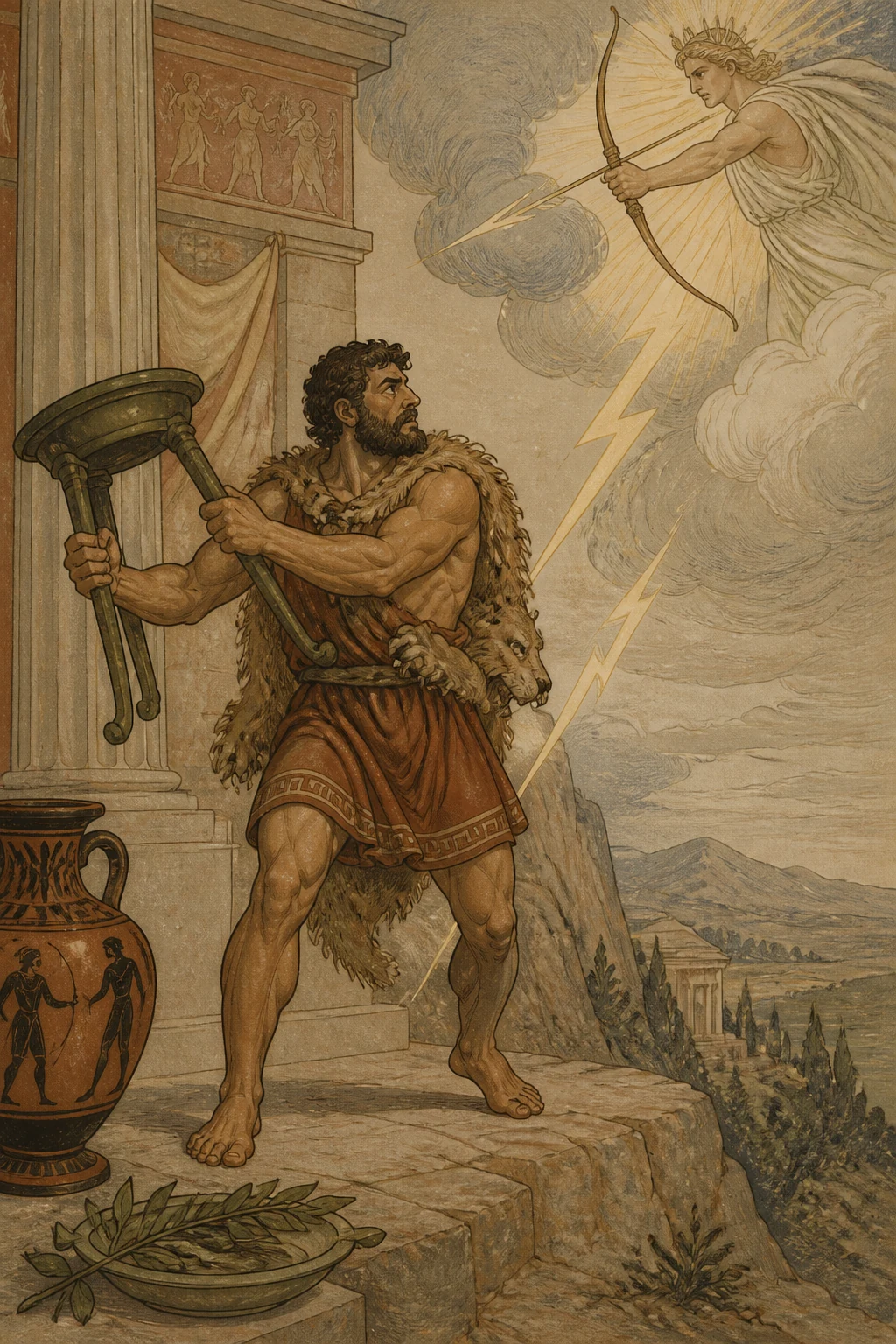
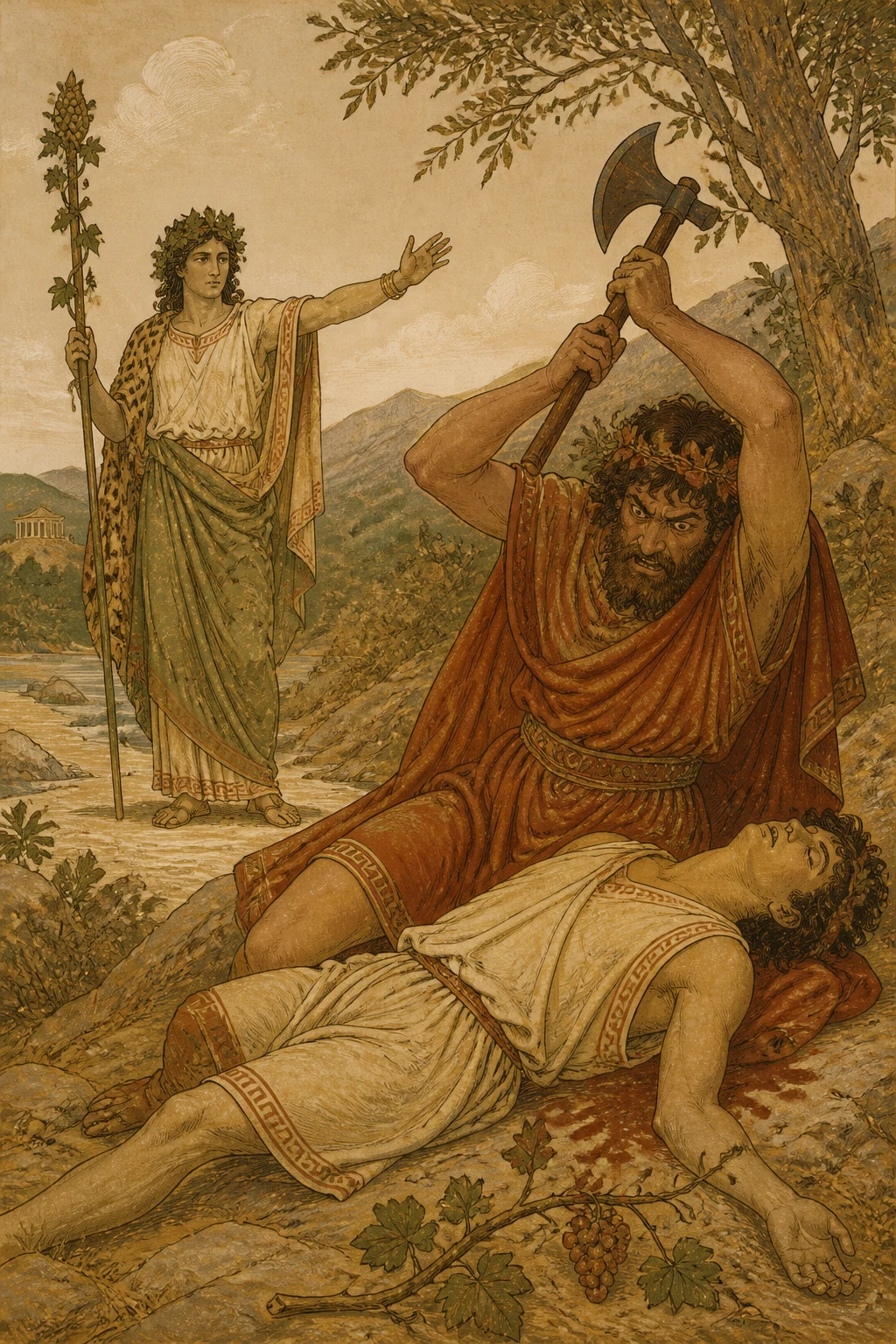
1. Oeneus, king of Calydon, was the first to receive a vine plant from Dionysus. He married Althaea, daughter of Thestius, and fathered Toxeus, whom he himself killed for leaping over the ditch; besides him, he had Thyreus and Clymenus, and a daughter, Gorge, whom Andraemon married, and Deianira, whom Althaea is said to have borne to Dionysus. Deianira drove a chariot and practised the arts of war, and Heracles wrestled with Achelous for her hand.
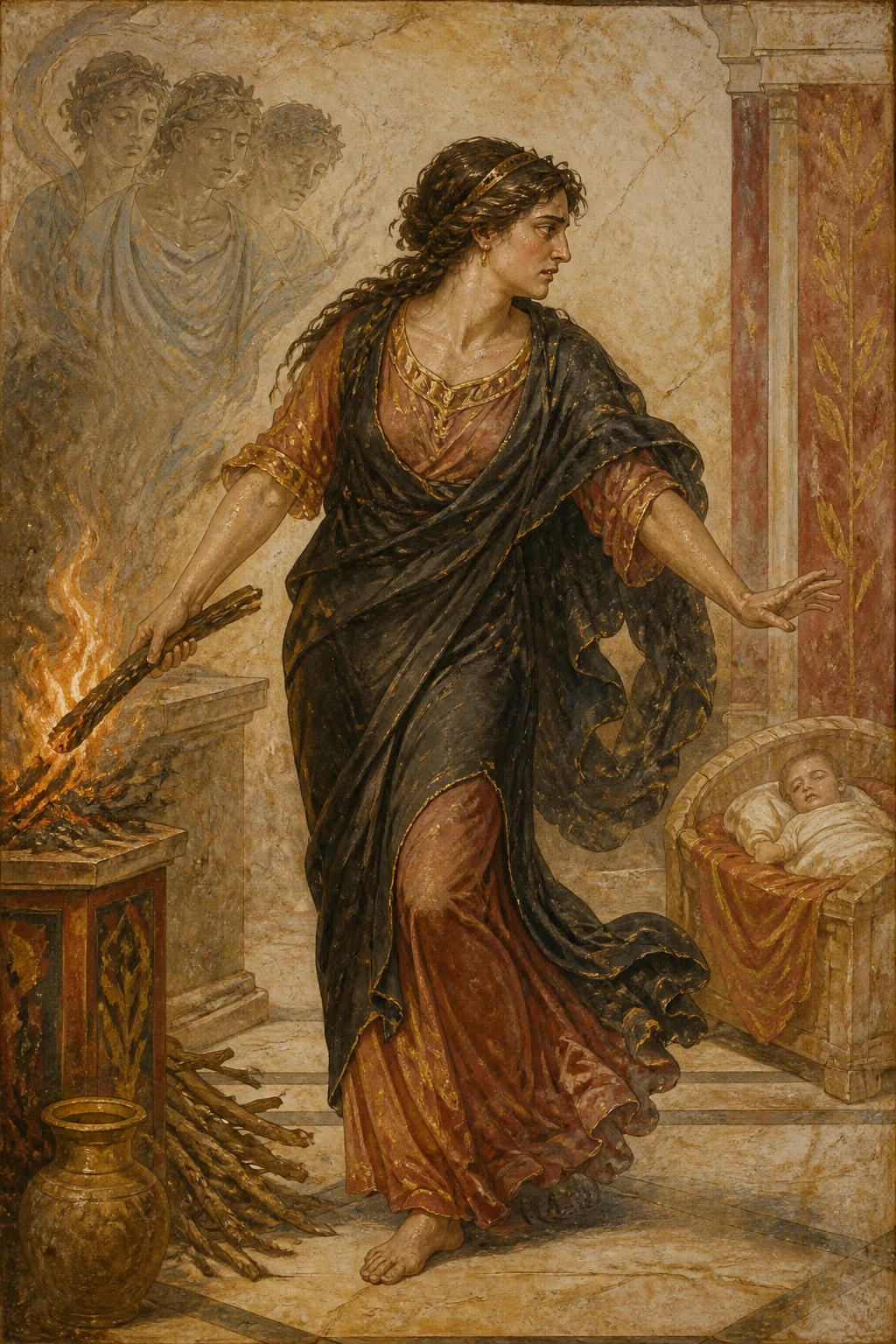
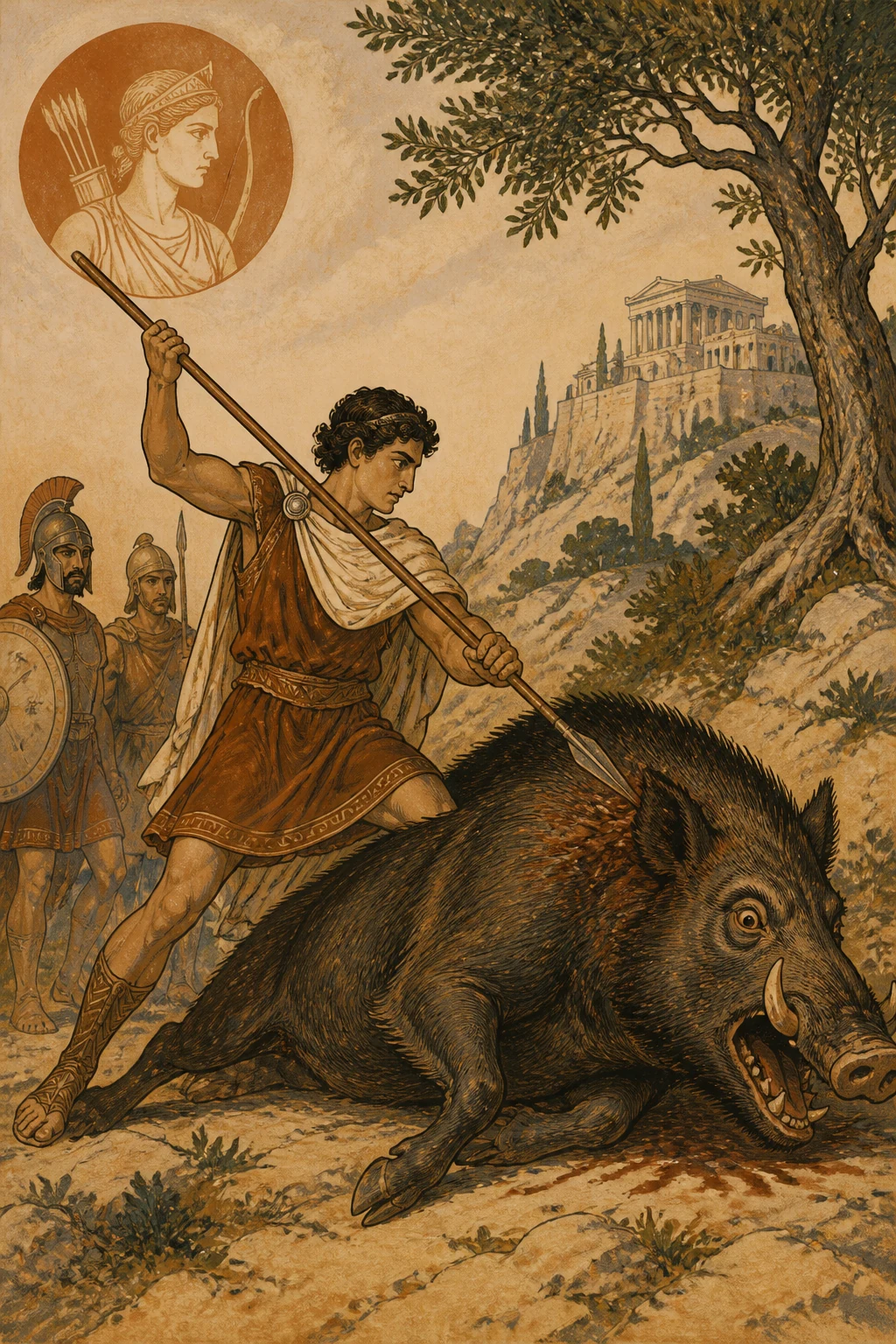
2. Althaea also bore Oeneus a son, Meleager, though they say that his father was Ares. When he was seven days old, the Fates are said to have appeared and declared that Meleager would die when the brand burning on the hearth had been consumed. On hearing this, Althaea took up the brand and laid it in a chest. Meleager grew into a brave man, invulnerable to wounds, but met his death in the following way. When the year's crops had ripened in the country, Oeneus offered the first fruits to all the gods, but forgot Artemis alone. In her anger she sent a boar of extraordinary size and strength, which made the land impossible to sow and destroyed the cattle and anyone it encountered. To hunt this boar, Oeneus summoned all the finest men in Greece and promised to give its hide as a prize to whoever killed the beast. Those who assembled for the boar hunt were these: Meleager, son of Oeneus, and Dryas, son of Ares, both from Calydon; Idas and Lynceus, sons of Aphareus, from Messene; Castor and Polydeuces, sons of Zeus and Leda, from Lacedaemon; Theseus, son of Aegeus, from Athens; Admetus, son of Pheres, from Pherae; Ancaeus and Cepheus, sons of Lycurgus, from Arcadia; Jason, son of Aeson, from Iolcus; Iphicles, son of Amphitryon, from Thebes; Pirithous, son of Ixion, from Larissa; Peleus, son of Aeacus, from Phthia; Telamon, son of Aeacus, from Salamis; Eurytion, son of Actor, from Phthia; Atalanta, daughter of Schoeneus, from Arcadia; and Amphiaraus, son of Oicles, from Argos. The sons of Thestius came with them as well. Once they had gathered, Oeneus entertained them for nine days. On the tenth, Cepheus, Ancaeus, and some of the others disdained to go hunting with a woman. But Meleager, though married to Cleopatra, daughter of Idas and Marpessa, wished to have children by Atalanta as well, and compelled them to join her in the hunt. When they surrounded the boar, Hyleus and Ancaeus were killed by the beast, and Peleus accidentally struck Eurytion dead with his javelin. Atalanta was the first to hit the boar, shooting it in the back, and Amphiaraus struck it next, in the eye. Meleager killed it with a blow to the flank, then took the hide and gave it to Atalanta.
But the sons of Thestius, thinking it a disgrace that a woman should receive the prize of valour when men were present, took the hide from her, saying that it belonged to them by right of kinship if Meleager chose not to keep it.
3. Enraged, Meleager killed the sons of Thestius and gave the hide to Atalanta. Grieving over the loss of her brothers, Althaea set fire to the brand, and Meleager died at once. Some, however, say that Meleager did not die in this way. According to them, the sons of Thestius disputed possession of the hide on the grounds that Iphiclus had struck the first blow, and war broke out between the Curetes and the Calydonians. Meleager went out to fight and killed some of the sons of Thestius, whereupon Althaea cursed him, and in his anger he remained at home. When the enemy was already approaching the walls and the citizens were begging him to come to their aid, his wife at last prevailed upon him to go out. He killed the remaining sons of Thestius and died fighting. After Meleager's death, Althaea and Cleopatra hanged themselves, and the women who mourned over his body were transformed into birds.
4. After Althaea's death, Oeneus married Periboea, daughter of Hipponous. The author of the Thebaid says that Oeneus received her as a prize of war when Olenus was conquered. Hesiod, however, says that after she had been seduced by Hippostratus, son of Amarynceus, her father Hipponous sent her from Olenus in Achaea to Oeneus, who lived far away in Greece, with instructions to put her to death.
5. Others say that Hipponous, on discovering that his own daughter had been seduced by Oeneus, sent her to him pregnant. By her Oeneus had a son, Tydeus. Peisander, however, says that Tydeus was born to Gorge, for by the will of Zeus Oeneus had fallen in love with his own daughter. Tydeus grew into a brave man, but was exiled for murder. According to some, he had killed Alcathous, the brother of Oeneus; according to the author of the Alcmaeonid, he had killed the sons of Melas, who were plotting against Oeneus—Pheneus, Euryalus, Hyperlaus, Antiochus, Eumedes, Sternops, Xanthippus, and Sthenelaus; but according to Pherecydes, he had killed his own brother Olenias.
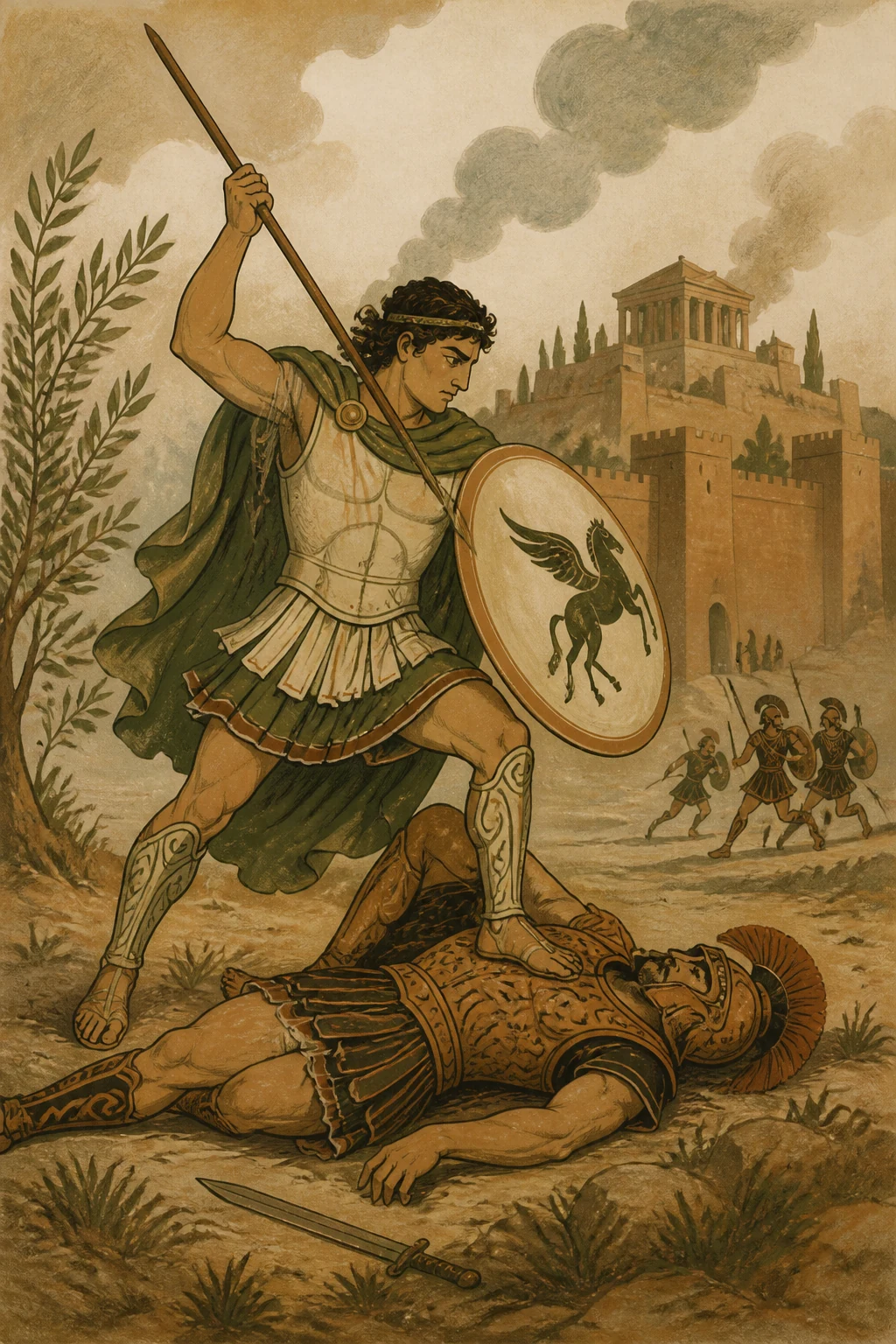
When Agrius brought charges against him, Tydeus fled to Adrastus at Argos, married his daughter Deipyle, and fathered Diomedes. Later, Tydeus marched against Thebes with Adrastus and died of a wound inflicted by Melanippus.
6. The sons of Agrius—Thersites, Onchestus, Prothous, Celeutor, Lycopeus, and Melanippus—took the kingdom from Oeneus and gave it to their father. They also imprisoned Oeneus and tormented him while he was still alive. Later, Diomedes secretly came from Argos with Alcmaeon and killed all the sons of Agrius except Onchestus and Thersites, who had already fled to the Peloponnese. Since Oeneus was old, Diomedes gave the kingdom to Andraemon, who had married Oeneus's daughter, and took Oeneus with him to the Peloponnese.
But the surviving sons of Agrius lay in wait near the Hearth of Telephus in Arcadia and killed the old man. Diomedes brought his body to Argos and buried it where the city now called Oenoe takes its name from him. He married Aegialia, daughter of Adrastus—or, as some say, of Aegialeus—and marched against both Thebes and Troy.
Izvirnik
Book 1 chapter 8
Naslednje strani prikazujejo izvirno besedilo za primerjavo.
Source ID: apollodorus_bib_1_8 Citation: Apollodorus, Bibliotheca 1.8 1. Οἰνεὺς δὲ βασιλεύων Καλυδῶνος παρὰ Διονύσου φυτὸν ἀμπέλου πρῶτος ἔλαβε. γήμας δὲ Ἀλθαίαν τὴν Θεστίου γεννᾷ Τοξέα, ὃν αὐτὸς ἔκτεινεν ὑπερπηδήσαντα τὴν τάφρον, καὶ παρὰ τοῦτον Θυρέα καὶ Κλύμενον, καὶ θυγατέρα Γόργην, ἣν Ἀνδραίμων ἔγημε, καὶ Δηιάνειραν, ἣν Ἀλθαίαν λέγουσιν ἐκ Διονύσου γεννῆσαι. αὕτη δʼ ἡνιόχει καὶ τὰ κατὰ πόλεμον ἤσκει, καὶ περὶ τῶν γάμων αὐτῆς Ἡρακλῆς πρὸς Ἀχελῷον ἐπάλαισεν.
2. ἐγέννησε δὲ Ἀλθαία παῖδα ἐξ Οἰνέως Μελέαγρον, ὃν ἐξ Ἄρεος γεγεννῆσθαί φασι. τούτου δʼ ὄντος ἡμερῶν ἑπτὰ παραγενομένας τὰς μοίρας φασὶν εἰπεῖν, ὅτι τότε τελευτήσει Μελέαγρος, ὅταν ὁ καιόμενος ἐπὶ τῆς ἐσχάρας δαλὸς κατακαῇ. τοῦτο ἀκούσασα τὸν δαλὸν ἀνείλετο Ἀλθαία καὶ κατέθετο εἰς λάρνακα. Μελέαγρος δὲ ἀνὴρ ἄτρωτος καὶ γενναῖος γενόμενος τόνδε τὸν τρόπον ἐτελεύτησεν. ἐτησίων καρπῶν ἐν τῇ χώρᾳ γενομένων τὰς ἀπαρχὰς Οἰνεὺς θεοῖς πᾶσι θύων μόνης Ἀρτέμιδος ἐξελάθετο. ἡ δὲ μηνίσασα κάπρον ἐφῆκεν ἔξοχον μεγέθει τε καὶ ῥώμῃ, ὃς τήν τε γῆν ἄσπορον ἐτίθει καὶ τὰ βοσκήματα καὶ τοὺς ἐντυγχάνοντας διέφθειρεν. ἐπὶ τοῦτον τὸν κάπρον τοὺς ἀρίστους ἐκ τῆς Ἑλλάδος πάντας συνεκάλεσε, καὶ τῷ κτείναντι τὸν θῆρα τὴν δορὰν δώσειν ἀριστεῖον ἐπηγγείλατο. οἱ δὲ συνελθόντες ἐπὶ τὴν τοῦ κάπρου θήραν ἦσαν οἵδε· Μελέαγρος
Οἰνέως, Δρύας Ἄρεος, ἐκ Καλυδῶνος οὗτοι, Ἴδας καὶ Λυγκεὺς Ἀφαρέως ἐκ Μεσσήνης, Κάστωρ καὶ Πολυδεύκης Διὸς καὶ Λήδας ἐκ Λακεδαίμονος, Θησεὺς Αἰγέως ἐξ Ἀθηνῶν, Ἄδμητος Φέρητος ἐκ Φερῶν, Ἀγκαῖος καὶ Κηφεὺς Λυκούργου ἐξ Ἀρκαδίας, Ἰάσων Αἴσονος ἐξ Ἰωλκοῦ, Ἰφικλῆς Ἀμφιτρύωνος ἐκ Θηβῶν, Πειρίθους Ἰξίονος ἐκ Λαρίσης, Πηλεὺς Αἰακοῦ ἐκ Φθίας, Τελαμὼν Αἰακοῦ ἐκ Σαλαμῖνος, Εὐρυτίων Ἄκτορος ἐκ Φθίας, Ἀταλάντη Σχοινέως ἐξ Ἀρκαδίας, Ἀμφιάραος Ὀικλέους ἐξ Ἄργους· μετὰ τούτων καὶ οἱ Θεστίου παῖδες. συνελθόντας δὲ αὐτοὺς Οἰνεὺς ἐπὶ ἐννέα ἡμέρας ἐξένισε· τῇ δεκάτῃ δὲ Κηφέως καὶ Ἀγκαίου καί τινων ἄλλων ἀπαξιούντων μετὰ γυναικὸς ἐπὶ τὴν θήραν ἐξιέναι, Μελέαγρος ἔχων γυναῖκα Κλεοπάτραν τὴν Ἴδα καὶ Μαρπήσσης θυγατέρα, βουλόμενος δὲ καὶ ἐξ Ἀταλάντης τεκνοποιήσασθαι, συνηνάγκασεν αὐτοὺς ἐπὶ τὴν θήραν μετὰ ταύτης
ἐξιέναι. περιστάντων δὲ αὐτῶν τὸν κάπρον, Ὑλεὺς μὲν καὶ Ἀγκαῖος ὑπὸ τοῦ θηρὸς διεφθάρησαν, Εὐρυτίωνα δὲ Πηλεὺς ἄκων κατηκόντισε. τὸν δὲ κάπρον πρώτη μὲν Ἀταλάντη εἰς τὰ νῶτα ἐτόξευσε, δεύτερος δὲ Ἀμφιάραος εἰς τὸν ὀφθαλμόν· Μελέαγρος δὲ αὐτὸν εἰς τὸν κενεῶνα πλήξας ἀπέκτεινε, καὶ λαβὼν τὸ δέρας ἔδωκεν Ἀταλάντῃ. οἱ δὲ Θεστίου παῖδες, ἀδοξοῦντες εἰ παρόντων ἀνδρῶν γυνὴ τὰ ἀριστεῖα λήψεται, τὸ δέρας αὐτῆς ἀφείλοντο, κατὰ γένος αὑτοῖς προσήκειν λέγοντες, εἰ Μελέαγρος λαμβάνειν μὴ προαιροῖτο.
3. ὀργισθεὶς δὲ Μελέαγρος τοὺς μὲν Θεστίου παῖδας ἀπέκτεινε, τὸ δὲ δέρας ἔδωκε τῇ Ἀταλάντῃ. Ἀλθαία δὲ λυπηθεῖσα ἐπὶ τῇ τῶν ἀδελφῶν ἀπωλείᾳ τὸν δαλὸν ἧψε, καὶ ὁ Μελέαγρος ἐξαίφνης ἀπέθανεν. οἱ δέ φασιν οὐχ οὕτω Μελέαγρον τελευτῆσαι, ἀμφισβητούντων δὲ τῆς δορᾶς τῶν Θεστίου παίδων ὡς Ἰφίκλου πρώτου βαλόντος, Κούρησι καὶ Καλυδωνίοις πόλεμον ἐνστῆναι, ἐξελθόντος δὲ Μελεάγρου καί τινας τῶν Θεστίου παίδων φονεύσαντος Ἀλθαίαν ἀράσασθαι κατʼ αὐτοῦ· τὸν δὲ ὀργιζόμενον οἴκοι μένειν. ἤδη δὲ τῶν πολεμίων τοῖς τείχεσι προσπελαζόντων καὶ τῶν πολιτῶν ἀξιούντων μεθʼ ἱκετηρίας βοηθεῖν, μόλις πεισθέντα ὑπὸ τῆς γυναικὸς ἐξελθεῖν, καὶ τοὺς λοιποὺς κτείναντα τῶν Θεστίου παίδων ἀποθανεῖν μαχόμενον. μετὰ δὲ τὸν Μελεάγρου θάνατον Ἀλθαία καὶ Κλεοπάτρα ἑαυτὰς ἀνήρτησαν,
αἱ δὲ θρηνοῦσαι τὸν νεκρὸν γυναῖκες ἀπωρνεώθησαν. 4. Ἀλθαίας δὲ ἀποθανούσης ἔγημεν Οἰνεὺς Περίβοιαν τὴν Ἱππονόου. ταύτην δὲ ὁ μὲν γράψας τὴν Θηβαΐδα πολεμηθείσης Ὠλένου λέγει λαβεῖν Οἰνέα γέρας, Ἡσίοδος δὲ ἐξ Ὠλένου τῆς Ἀχαΐας, ἐφθαρμένην ὑπὸ Ἱπποστράτου τοῦ Ἀμαρυγκέως, Ἱππόνουν τὸν πατέρα πέμψαι πρὸς Οἰνέα πόρρω τῆς Ἑλλάδος ὄντα, ἐντειλάμενον ἀποκτεῖναι. 5. εἰσὶ δὲ οἱ λέγοντες Ἱππόνουν ἐπιγνόντα τὴν ἰδίαν θυγατέρα ἐφθαρμένην ὑπὸ Οἰνέως, ἔγκυον αὐτὴν πρὸς τοῦτον ἀποπέμψαι.
ἐγεννήθη δὲ ἐκ ταύτης Οἰνεῖ Τυδεύς. Πείσανδρος δὲ αὐτὸν ἐκ Γόργης γενέσθαι λέγει· τῆς γὰρ θυγατρὸς Οἰνέα κατὰ τὴν βούλησιν Διὸς ἐρασθῆναι. Τυδεὺς δὲ ἀνὴρ γενόμενος γενναῖος ἐφυγαδεύθη, κτείνας, ὡς μέν τινες λέγουσιν, ἀδελφὸν Οἰνέως Ἀλκάθοον, ὡς δὲ ὁ τὴν Ἀλκμαιωνίδα γεγραφώς, τοὺς Μέλανος παῖδας ἐπιβουλεύοντας Οἰνεῖ, Φηνέα Εὐρύαλον Ὑπέρλαον Ἀντίοχον Εὐμήδην Στέρνοπα Ξάνθιππον Σθενέλαον, ὡς δὲ Φερεκύδης φησίν, Ὠλενίαν ἀδελφὸν ἴδιον.
Ἀγρίου δὲ δίκας ἐπάγοντος αὐτῷ φυγὼν εἰς Ἄργος ἧκε πρὸς Ἄδραστον, καὶ τὴν τούτου γήμας θυγατέρα Δηιπύλην ἐγέννησε Διομήδην. Τυδεὺς μὲν οὖν ἐπὶ Θήβας μετʼ Ἀδράστου στρατευσάμενος ὑπὸ Μελανίππου τρωθεὶς ἀπέθανεν· 6. οἱ δὲ Ἀγρίου παῖδες, Θερσίτης Ὀγχηστὸς Πρόθοος Κελεύτωρ Λυκωπεὺς Μελάνιππος, ἀφελόμενοι τὴν Οἰνέως βασιλείαν τῷ πατρὶ ἔδοσαν, καὶ προσέτι ζῶντα τὸν Οἰνέα καθείρξαντες ᾐκίζοντο. ὕστερον δὲ Διομήδης ἐξ Ἄργους παραγενόμενος μετʼ Ἀλκμαίωνος κρύφα τοὺς μὲν Ἀγρίου παῖδας, χωρὶς Ὀγχηστοῦ καὶ Θερσίτου, πάντας ἀπέκτεινεν (οὗτοι γὰρ φθάσαντες εἰς Πελοπόννησον ἔφυγον), τὴν δὲ βασιλείαν, ἐπειδὴ γηραιὸς ἦν ὁ Οἰνεύς, Ἀνδραίμονι τῷ τὴν θυγατέρα τοῦ Οἰνέως γήμαντι δέδωκε, τὸν δὲ Οἰνέα εἰς Πελοπόννησον ἦγεν.
οἱ δὲ διαφυγόντες Ἀγρίου παῖδες ἐνεδρεύσαντες περὶ τὴν Τηλέφου ἑστίαν τῆς Ἀρκαδίας τὸν πρεσβύτην ἀπέκτειναν. Διομήδης δὲ τὸν νεκρὸν εἰς Ἄργος κομίσας ἔθαψεν ἔνθα νῦν πόλις ἀπʼ ἐκείνου Οἰνόη καλεῖται, καὶ γήμας Αἰγιάλειαν τὴν Ἀδράστου, ἢ ὡς ἔνιοι φασι τὴν Αἰγιαλέως, ἐπί τε Θήβας καὶ Τροίαν ἐστράτευσε.
Nadaljuj z branjem