Prevod
She had finished, and the wondrous tale had held them spellbound. Some denied that it could have happened; others declared that true gods could do anything—but they did not count Bacchus among them. When her sisters fell silent, Alcithoe was called upon. Passing her shuttle through the warp of the upright loom, she said, “I shall leave untold the well-known love of the shepherd Daphnis of Ida, whom a nymph, enraged by a rival, turned to stone—so fierce a pain burns in lovers’ hearts.
Nor shall I tell how Sithon, the laws of nature strangely altered, once shifted between the sexes, now a man, now a woman. You too I pass over, Celmis, now adamant, once the most faithful friend of infant Jupiter; the Curetes, born from a mighty downpour; and Crocus, changed with Smilax into tiny flowers. Instead, I shall hold your hearts with the charm of something new.
Learn why Salmacis is infamous, why its enfeebling waters sap the strength and soften the limbs they touch. The cause lies hidden; the spring’s power is known far and wide. A boy born to Mercury and the goddess of Cythera was reared by naiads in the caves of Ida. In his face both mother and father could be recognized, and from them both he took his name. As soon as he had reached his fifteenth year, he left his native mountains and Ida, where he had been nursed, delighting in wandering through unknown lands and seeing unfamiliar rivers, his eagerness lightening the toil.
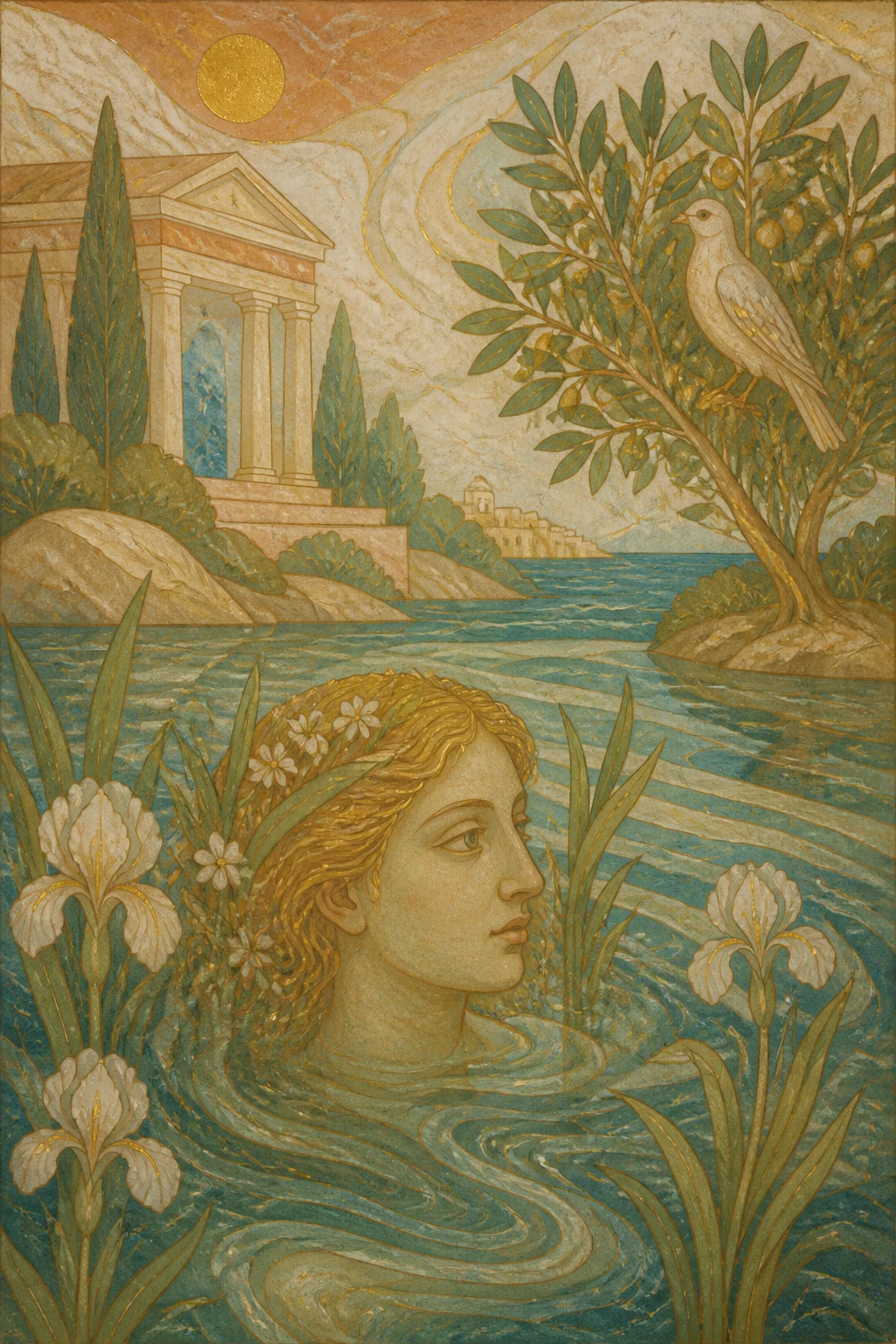
He visited the cities of Lycia and the Carians who dwell nearby. Here he saw a pool whose water shone clear to the very bottom. No marsh reeds grew there, no barren sedge, no rushes with their pointed tips. The water was transparent, but the pool’s edges were ringed with living turf and grasses always green. A nymph dwelt there, but she had no taste for hunting, nor was she accustomed to bending the bow or racing on foot: alone among the naiads, she was unknown to swift Diana.
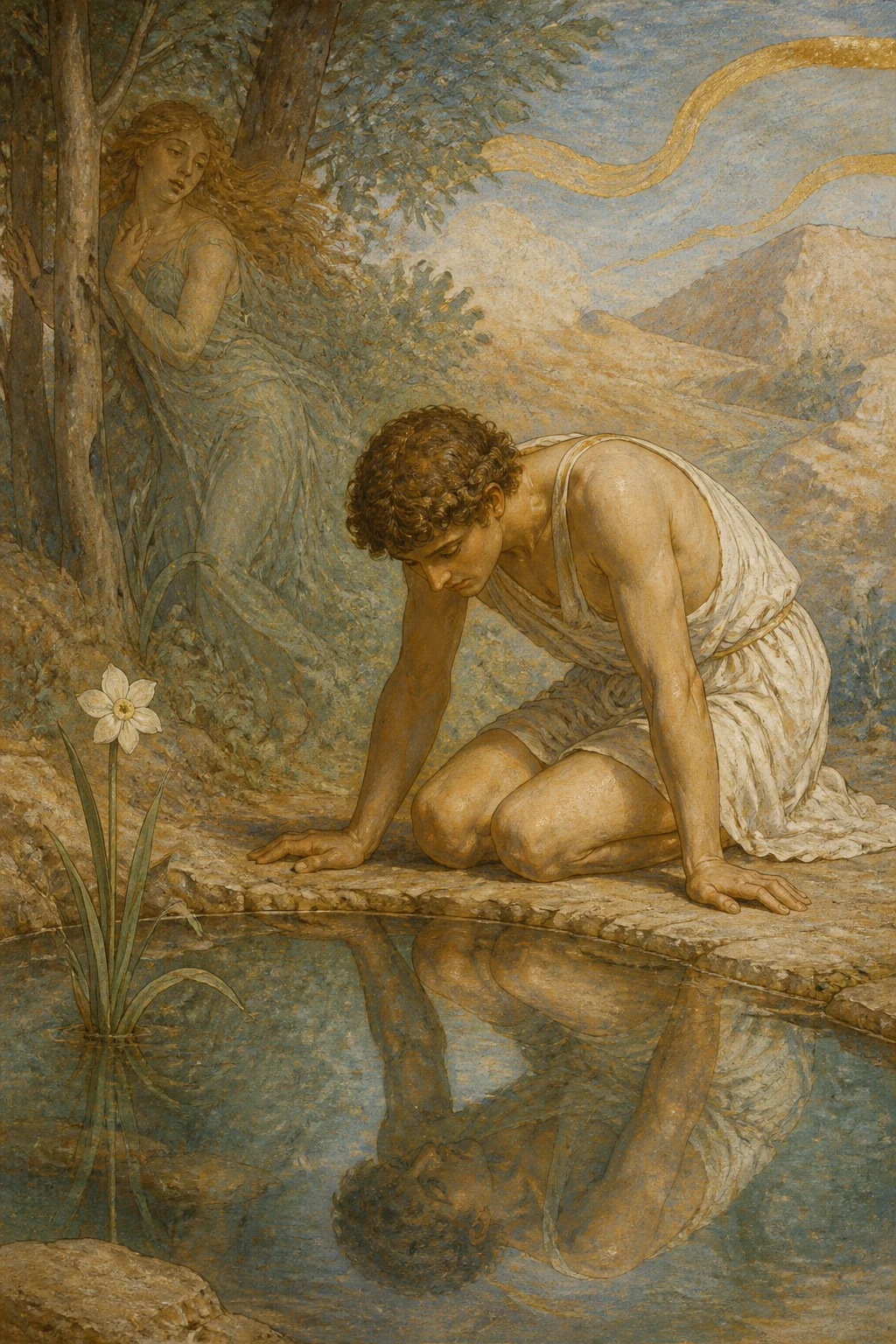
Often, they say, her sisters told her: “Salmacis, take up a javelin or a painted quiver, and temper your idleness with the rigors of the hunt.” But she took up neither javelin nor painted quiver, nor tempered her idleness with the rigors of the hunt. Instead, she would bathe her lovely limbs in her own spring, often drawing a comb of Cytorian boxwood through her hair, and consulting her reflection in the water to see what suited her.
Or, with her body wrapped in a translucent robe, she would recline on soft leaves or soft grass. Often she gathered flowers, and she happened to be gathering them when she saw the boy—and, seeing him, longed to have him. Yet, eager though she was to approach him, she did not go until she had composed herself, inspected her robe, arranged her expression, and made sure she deserved to seem beautiful.
Then she began: “Boy, most worthy to be thought a god, if you are a god, you must be Cupid; if mortal, blessed are those who brought you into the world, happy your brother, and fortunate indeed any sister you may have, and the nurse who gave you her breast. But far, far happier than all of them is she, if you have a bride, if you deem anyone worthy of marriage. If there is such a woman, let mine be a secret pleasure; if there is none, let me be yours, and let us share one marriage bed.”
With this the naiad fell silent. A blush marked the boy’s cheeks, for he did not know what love was; yet even blushing became him. Such is the color of apples hanging on a sunlit tree, or of tinted ivory, or of the moon when a reddish hue flushes her pale face and bronze clashes vainly to her aid. The nymph kept begging for at least a sister’s kisses, and was already reaching for his ivory neck, when he said, “Will you stop? Or I shall run away and leave you to all this.”
Salmacis grew frightened. “I surrender this place to you, stranger,” she said, and turned as though to leave, still looking back. Then, hidden in a thicket of shrubs, she crouched down on bended knees. But he, believing himself alone and unobserved on the deserted grass, wandered here and there, and in the rippling water dipped his toes and then his feet up to the ankles.
Soon, charmed by the soothing warmth of the water, he stripped the soft garments from his youthful body. Then indeed he pleased her, and desire for his naked beauty set Salmacis ablaze. The nymph’s eyes too shone with fire, just as when the sun, dazzling in a cloudless sky, flashes back from a mirror held to catch its image. She could scarcely bear to wait, scarcely postpone her pleasure; already she longed to embrace him, scarcely restraining her frenzy.
He slapped his body briskly with cupped palms and plunged into the pool. As he drew his arms in alternating strokes, his body gleamed through the clear water, like ivory statues or white lilies enclosed in transparent glass. “I have won! He is mine!” cried the naiad, and, flinging all her clothes aside, she plunged into the heart of the pool. She held him as he fought, snatching kisses as he struggled, slipping her hands beneath him and touching his unwilling breast, twining herself about the boy, now on this side, now on that.
At last, as he resisted and tried to slip away, she entwined him like a serpent that the royal eagle has caught and carried high: hanging in the air, it binds the bird’s head and feet and coils its tail around the outspread wings; or like ivy winding itself around tall trunks, or an octopus beneath the waves, holding its captured prey with tentacles reaching out on every side.
The descendant of Atlas held firm, denying the nymph the pleasure she hoped for. She pressed against him, clinging with her whole body, and said, “Struggle as you may, cruel boy, you shall not escape. Grant this, you gods: let no day ever part him from me, or me from him!” Her prayers found gods to hear them: their two bodies, mingling, fused together, and one form enfolded them both.
Just as someone grafting branches beneath a single bark sees them join as they grow and mature together, so, when their limbs united in that clinging embrace, they were no longer two, but a twofold form, which could be called neither woman nor boy: they seemed neither and both. When he saw that the clear waters he had entered as a man had left him only half a man, and that his limbs had softened there, Hermaphroditus stretched out his hands and spoke, though no longer in a man’s voice: “Father and mother, grant this gift to your son, who bears the names of both of you: whatever man comes into this spring, let him leave it half a man, suddenly softened by the touch of its waters.”
Both parents, moved, made their two-formed son’s words come true, and tainted the spring with a corrupting power.”