Prevod
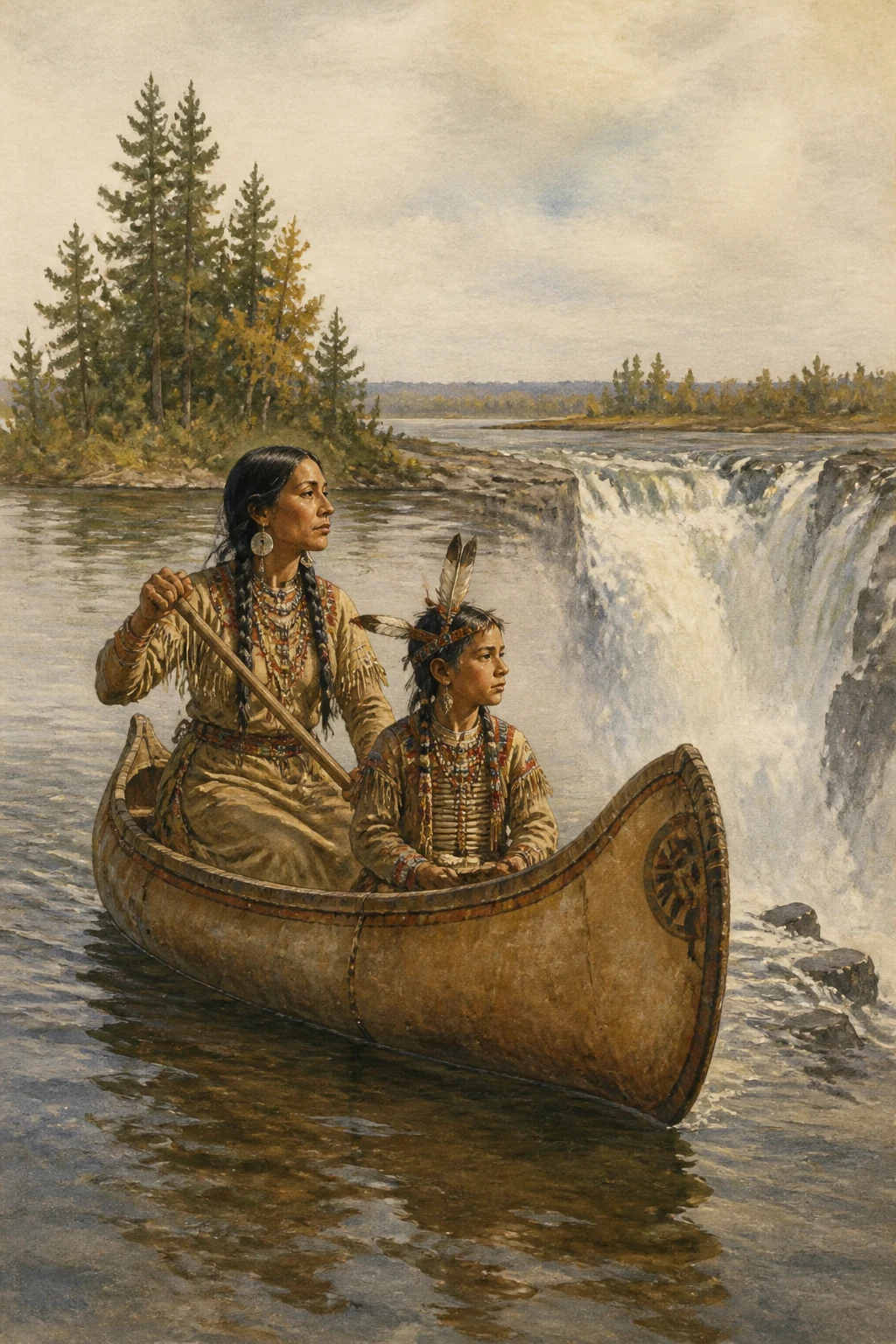
Na otoku nad slapovi reke Androscoggin pri Lewistonu v Mainu je na začetku osemnajstega stoletja živel belski samotar. Domačini, ki so imeli tehtne razloge za nezaupanje do vseh bledoličnežev, niso mogli misliti nič dobrega o človeku, ki je tako živel med njimi, vendar ne z njimi. Pogosto so se zbirali na bregu, zrli čez vodo v njegovo samotno svečo, ki je migetala med listjem, in se spraševali, kakšno zlo jim utegne pripravljati. Kjer je veliko zarotnikov, se vselej najde kak klepetavec ali izdajalec; ko so se torej domačini odločili, da ga umorijo, je nekako izvedel za njihov namen in sklenil, da jim ga prepreči. Tako zelo so se bali tega samotnega moža in zlobnih sil, ki bi jih utegnil priklicati na pomoč, da se je odpravi pridružilo skoraj petdeset Indijancev, da bi drug drugemu vlivali pogum.
Nameravali so se odpraviti nekoliko više po reki in se nato spustiti s tokom, da bi se izognili pljuskanju vesel, ki bi ga samotar utegnil slišati, če bi reko prečkali naravnost. Ko se je povsem stemnilo, so odrinili in kanuje med plovbo usmerjali proti luči, ki je brlela nad vodo. Toda pretkani puščavnik tisto noč v svoji koči ni imel ognja. Zakuril ga je na rtu pod svojim bivališčem in iz skrivališča med skalami opazoval njihovo flotilo, ki je, medla in tiha kakor sence, drsela mimo njega proti varljivi luči.
Kmalu se je razlegel krik. Divjaki so prešli mejo, do katere je bila plovba še varna; svojih čolnov niso mogli več obvladovati. Pozabili so na svoj namen in upali le še, da si rešijo življenje, toda zaman so skušali doseči breg: tok jih je vrtinčil pogubi naproti. Kriki in smrtne pesmi so se mešali z vse silnejšim bučanjem vode, lahki čolni so dosegli slap in poleteli v zrak. Nato je noč spet utihnila, le vodovje je še grmelo. Niti eden od Indijancev, ki so se odpravili na ta smrtonosni pohod, ni preživel puščavnikove zvijače.
Izvirnik
On an island above the falls of the Androscoggin, at Lewiston, Maine, lived a white recluse at the beginning of the eighteenth century. The natives, having had good reason to mistrust all palefaces, could think no good of the man who lived thus among but not with them. Often they gathered at the bank and looked across at his solitary candle twinkling among the leaves, and wondered what manner of evil he could be planning against them. Wherever there are many conspirators one will be a gabbler or a traitor; so, when the natives had resolved on his murder, he, somehow, learned of their intent and set himself to thwart it. So great was their fear of this lonely man, and of the malignant powers he might conjure to his aid, that nearly fifty Indians joined the expedition, to give each other courage.
Their plan was to go a little distance up the river and come down with the current, thus avoiding the dip of paddles that he might hear in a direct crossing. When it was quite dark they set off, and keeping headway on their canoes aimed them toward the light that glimmered above the water. But the cunning hermit had no fire in his cabin that night. It was burning on a point below his shelter, and from his hiding-place among the rocks he saw their fleet, as dim and silent as shadows, go by him on the way to the misguiding beacon.
Presently a cry arose. The savages had passed the point of safe sailing; their boats had become unmanageable. Forgetting their errand, their only hope now was to save themselves, but in vain they tried to reach the shore: the current was whirling them to their doom. Cries and death-songs mingled with the deepening roar of the waters, the light barks reached the cataract and leaped into the air. Then the night was still again, save for the booming of the flood. Not one of the Indians who had set out on this errand of death survived the hermit's stratagem.