Waltey
Ptič Dam
Norske Folkeeventyr · Peter Christen Asbjørnsen in Jørgen MoeO besedilu
Ptič Dam
- Vir
- Norske Folkeeventyr
- Avtor
- Peter Christen Asbjørnsen in Jørgen Moe
- Jezik branja
- English
- Jezik izvirnika
- Norsk
- Čas branja
- 20 min branja
- Obseg
- 16 strani
- Naslov izvirnika
- 003 Fugl Dam
O izvirniku
Norske Folkeeventyr
Norveške ljudske pravljice o gozdu, gorah, prebrisanih junakih in nevarnih bitjih. Bralni jezik je English, izvirnik pa prihaja iz vira Norske Folkeeventyr v jeziku Norsk.
Besedilo
Ptič Dam
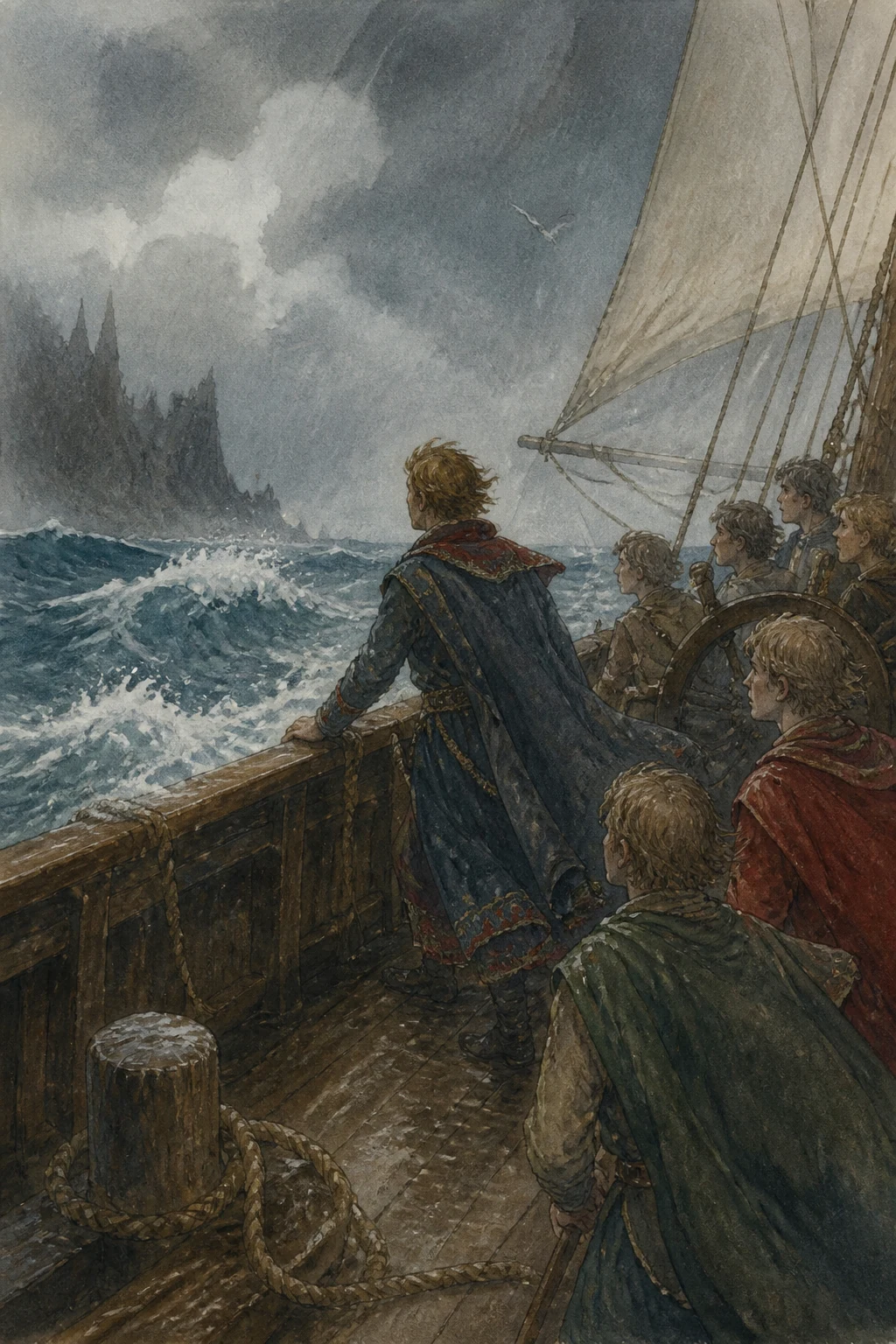
Once upon a time there was a king who had twelve daughters, and he loved them so dearly that he wanted them with him almost all the time; but every day at noon, while the king slept, the princesses went out for a walk. Once, while the king was taking his midday nap and the princesses were out, they vanished without a trace and never came back. Then there was great grief and sorrow throughout the land, but the king was the most sorrowful of all. He sent messengers through his own kingdom and foreign lands, and had inquiries made at every church and all the bells in the country rung for them; but the princesses were gone and stayed gone, and no one knew what had become of them, so it seemed plain that some enchantment must have spirited them away. Before long the news spread far and wide, through town and countryside and across many lands, until at last the rumour reached a king in a faraway country who had twelve sons. When they heard of the twelve princesses, they begged their father’s leave to go out and search for them. He was loath to let them go, for he feared he might never see them again; but they knelt before him and pleaded so long that in the end he had to give his consent. He fitted out a ship for them and appointed Knight Red, who knew the seas well, to steer it. For a long time they sailed about, going ashore in every country they came to, searching and asking after the princesses; but they could find no word or trace of them. They had sailed for seven years all but a few days when a fierce storm arose, with such dreadful weather that they thought they would never reach land again, and they all had to work so hard that they got not a wink of sleep for as long as the storm lasted. But towards the end of the third day the wind dropped, and all at once there was a dead calm. They were all so worn out by their labour and the rough weather that they fell asleep at once; but the youngest prince could find no rest and could not sleep at all. As he was pacing up and down the deck, the ship came to a little island, where a little dog ran about, barking and yelping at the ship as though it wanted to come aboard. The prince walked along the deck, coaxing and whistling to the dog, but it only barked and yelped all the more.
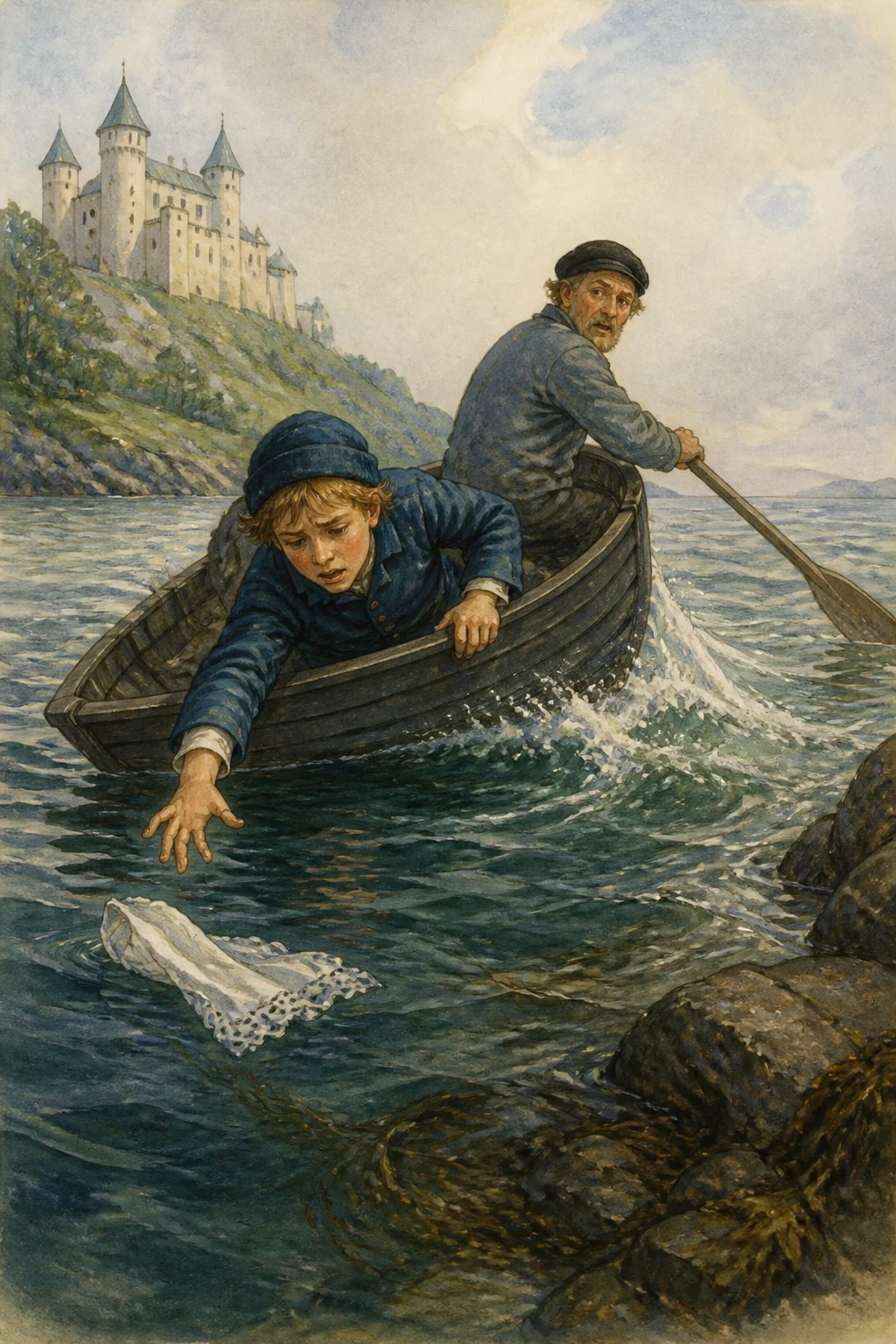
He thought it a pity to leave it there to perish, for he supposed it might have come from a ship wrecked in the storm; yet he could see no way to help it, for he did not think he could launch the boat alone, and the others were sleeping so soundly that he did not want to wake them for the dog’s sake. But the sea was so smooth and still that he thought, “You must go ashore and save the dog after all”;
and so he set about launching the boat, which proved easier than he had expected. He rowed ashore and went up to the dog, but every time he reached for it, it sprang aside, and so it went on until, before he knew it, he found himself inside a great, splendid castle. There the dog suddenly turned into a beautiful princess, and on a bench sat a man so huge and hideous that the prince was quite terrified. “You need not be afraid,” said the man—and the prince grew more frightened still when he heard his voice—“for I know well enough what you want. There are twelve princes in your company, and you are searching for the twelve princesses who disappeared. I know where they are: they are with my master, each sitting on her own chair, picking the lice from his hair, for he has twelve heads. You have been sailing for seven years now, but you will have to sail seven years more before you find them. As for you, you would be welcome to stay here,” he said, “and marry my daughter; but first you must kill him;
for he is a harsh master to us, and we are all weary of him, and when he is dead I shall be king in his place. But now try whether you can wield the sword,” said the troll. The prince took hold of an old rusty sword hanging on the wall, but he could scarcely stir it. “Then you must take a draught from this bottle,” said the troll. When he had done so, he could move it, and after another draught he could lift it, and after a third he could swing the sword as easily as if it had been his own.
“When you get aboard,” said the troll prince, “you must hide the sword well in your berth, so that Knight Red does not see it. He cannot wield it himself, to be sure, but he will hate you for it all the same and seek your life. When another seven years have passed, all but three days,” he went on, “the very same thing will happen as has happened now: a fierce storm will come upon you, and when it is over you will all grow sleepy;
then you must take the sword and row ashore. You will come to a castle guarded by all manner of beasts—wolves and bears and lions—but you need not be afraid of them;
for they will all fall at your feet. When you enter the castle, you will find him sitting in a splendid chamber, grandly dressed and decked out in all his finery; but he has twelve heads, and the princesses sit on their chairs, each picking the lice from one head. You may be sure they do not care for such work. Then you must hurry and cut off one head after another, for if he wakes and sees you, he will swallow you alive.” The prince went aboard with the sword, taking care to remember everything he had been told. The others were still asleep, and he hid the sword in his berth so that neither Knight Red nor any of the rest saw it. Now the wind began to blow again, and he woke the others, saying he thought they ought not to sleep any longer when there was such a fair wind. No one noticed that he had been away. When the seven years had passed, all but three days, everything happened just as the troll had said. A fierce storm arose and raged for three days, and when it was over they were all sleepy from their labours and lay down; but the youngest prince rowed ashore, and the beasts on guard fell at his feet, and so he came to the castle.
When he entered the chamber, the king sat there asleep, just as the troll prince had said, and the twelve princesses sat on their chairs, each picking the lice from one head. The prince beckoned to the princesses to move out of the way; they pointed to the troll and motioned back that he should go away and hurry to safety, but he kept signalling to them to move aside. At last they understood that he meant to rescue them, and quietly moved away, one after another, and just as quickly he struck the heads off the troll king, until the blood flowed like a great stream. When the troll was dead, he rowed back to the ship and hid the sword. He thought he had done enough now, and since he could not manage to carry away the body, he wanted the others to lend a hand.
So he woke them and said it was a disgrace that they should lie there sleeping while he had found the princesses and rescued them from the troll. The others only laughed at him and said he had surely slept as soundly as they had, if not more soundly, and dreamed that he was such a fine fellow. If anyone had rescued the princesses, it was far more likely to have been one of them. But the youngest prince described everything that had happened, and when they went ashore with him and saw first the stream of blood, then the castle and the troll and the twelve heads and the princesses, they realised that he had told the truth, and helped him throw the heads and the whole body into the sea. Now they were all happy and content, but no one was happier than the princesses, who no longer had to sit picking lice from the troll all day. Of all the gold and silver and precious things there, they took as much as the ship could carry, and then they all went aboard, princes and princesses alike. But when they had sailed some way out to sea, the princesses said that in their joy they had forgotten their golden crowns. They were in a cupboard, and they would dearly like to have them. When none of the others would fetch them, the youngest prince said, “I have risked so much already that I may as well go back for the golden crowns too, if you will lower the sails and wait until I return.” Yes, they promised they would. But when he was so far away that they could no longer see him, Knight Red, who wanted all the honour for himself and wished to marry the youngest princess, said there was no use lying there waiting for him, for they could be sure he would never return. They knew, he said, that the king had given him, Knight Red,
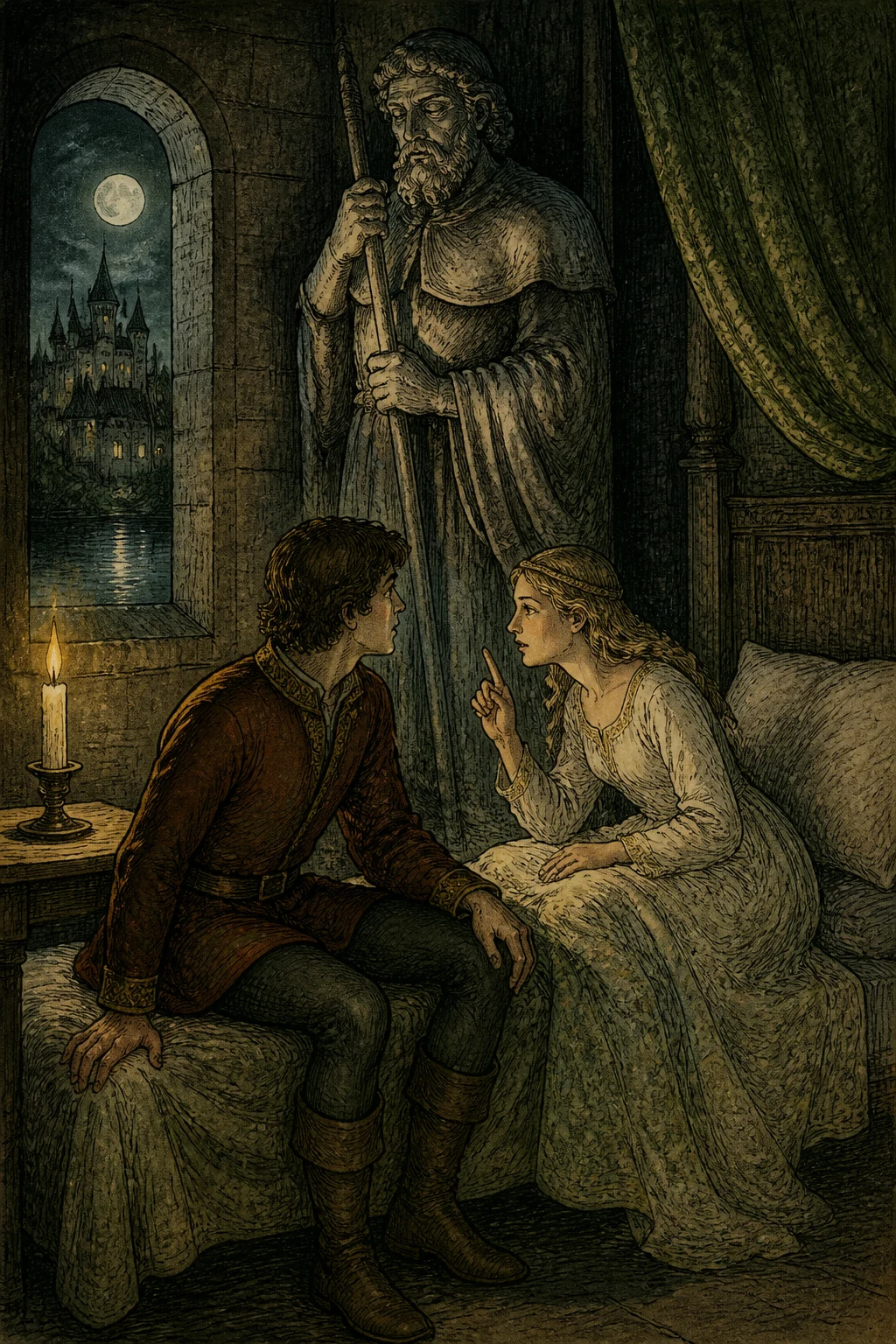
power and authority, so he would sail whenever he chose, and they must say that he had rescued the princesses; if anyone said otherwise, he would pay with his life. The princes therefore dared do nothing but obey Knight Red, and they sailed away. Meanwhile, the youngest prince rowed ashore, went up to the castle, found the cupboard with the golden crowns inside, and toiled until he had got it down into the boat. But when he reached the place from which he should have been able to see the ship, it was gone. When he could see no sign of it in any direction, he understood well enough what had happened. There was no use rowing after it now, so he had to turn back and row ashore again. He was afraid to spend the night alone in the castle, but there was no other shelter to be had, so he plucked up his courage, locked all the doors and gates, and lay down in a room where there was a bed ready made. Still, he was anxious and afraid; and he grew more frightened yet when, after he had lain there a while, the roof and walls began to creak and crack as though the whole castle were about to split apart. All at once something landed beside the bed with a thud like a whole load of hay. Then all was quiet again, but he heard a voice telling him not to be afraid and saying:
“I am Bird Dam, and I shall help you on your way. But first thing when you wake tomorrow, you must go to the storehouse and fetch me four barrels of rye. I must have that much for breakfast, or I can do nothing.” When he woke, he saw an enormous bird with a feather at the back of its neck as thick as a half-grown timber spruce. The prince went to the storehouse and fetched four barrels of rye for Bird Dam, and when the bird had eaten them, it told him to hang the cupboard with the golden crowns on one side of its neck, and to take enough gold and silver to balance it and hang that on the other side. Then it told him to climb onto its back and hold tight to its neck feather. Away they went, rushing through the air, and before long they flew past the ship. The prince wanted to go aboard for the sword, for he was afraid someone might see it, and the troll had said that must not happen; but Bird Dam said it was out of the question. “Knight Red will not see it,” said the bird, “but if you go aboard he will seek your life, for he wants to marry the youngest princess;
but you need have no fears for her, for every night she lays a naked sword before her in the bed.” At last they reached the troll prince, and the welcome the prince received there knew no bounds. The troll prince could not do enough for him, because he had killed his master and made him king.
The prince could have had his daughter and half his kingdom for the asking. But by now he had grown so fond of the youngest of the twelve princesses that he could never rest, and time and again he insisted on setting out. The troll, however, begged him to be patient a little longer, saying that they still had nearly seven years to sail before they reached home. Of the princess, the troll said the same as Bird Dam: “You need have no fears for her, for she lays a naked sword before her in the bed. And if you do not believe me,” said the troll, “you may go aboard when they sail past here and see for yourself, and fetch the sword; I must have that back in any case.” When they sailed past, there had been another storm, and when the prince went aboard they were all asleep. Each princess lay beside her prince, but the youngest lay alone with a naked sword before her in the bed, and Knight Red lay on the floor in front of it. The prince took the sword and rowed ashore again without any of them noticing that he had been aboard. Yet still he could find no peace, and often wanted to be off, until at last, as the seven years drew to a close and there were only about three weeks left, the troll king said, “Now you may prepare to leave, since you will not stay with us. I shall lend you an iron boat that goes of its own accord: you need only say, ‘Boat, go forward!’ In the boat there is an iron club, and when you see the ship straight ahead of you, you must lift it a little; then they will get such a wind that they will forget to look out for you. When you come alongside the ship, lift the iron club again, and such a storm will arise that they will have other things to do than watch you. When you have passed them, lift the club a third time; but you must always lay it down gently again, or such weather will break upon you that both you and they will be wrecked. Once you have reached land, you need not trouble yourself any further about the boat;
just push it out, turn it round, and say, ‘Boat, go home again!’” When he set off, he was given so much gold and silver, so many other precious things, and so many clothes and linen garments that the troll princess had sewn for him during his long stay, that he was far richer than any of his brothers. No sooner had he sat down in the boat and said, “Boat, go forward!” than the boat set off, and when he saw the ship straight ahead, he lifted the club;
then they got such a wind that they forgot to look out for him. When he was alongside the ship, he lifted the iron club again, and such a storm arose, with such dreadful weather, that white foam flew all around the ship and the waves broke over the deck, so they certainly had other things to do than watch him. When he had passed them, he lifted the club for the third time, and then they had so much to keep them busy that they had no time at all to see who he was. He reached land long, long before the ship, and when he had taken all his belongings out of the boat, he pushed it out again, turned it round, and said, “Boat, go home again!” And away went the boat.
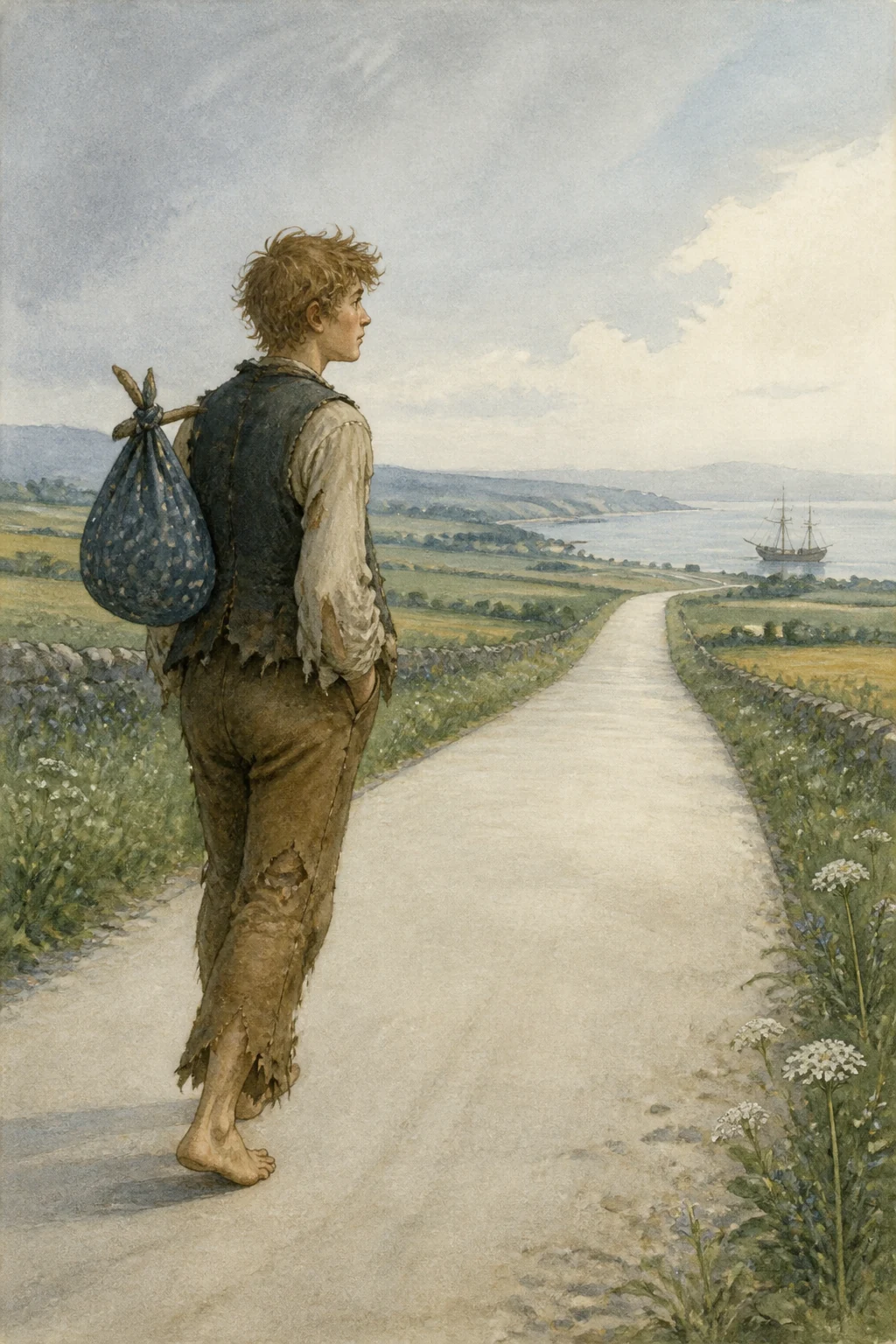
He disguised himself as a sailor—whether the troll king had taught him that trick or it was his own idea, I shall leave unsaid—and went up to a wretched little cottage where an old woman lived. He persuaded her that he was a poor sailor who had been aboard a great ship that had foundered, and that he was the only one saved; then he asked whether she would give shelter to him and the things he had salvaged. “Heaven help me,” said the woman, “I cannot put anyone up. You can see what it is like here;
I have nothing to sleep on myself, much less anything for another person.” That did not matter, said the sailor; so long as he had a roof over his head, it made no difference what he slept on. Surely she could not refuse him shelter if he was willing to make do with things as they were.
That evening he moved his belongings in, and at once the old woman, who was eager for news to carry about, began asking who he was, where he came from, where he had been, where he was going, what he had with him, what business he was travelling on, and whether he had heard anything of the twelve princesses who had disappeared so many long years ago, along with a great many other things it would take too long to tell.
But he said he felt so ill, and his head ached so badly after the dreadful weather they had had, that he could make sense of nothing. She must leave him in peace for a few days until he had recovered from his hard labour in the storm, and then she should hear everything she wanted to know. The next day the old woman began questioning and prying again, but the sailor’s head still ached so much after the storm that he could give no account of anything. Every now and then, however, he let fall a word to suggest that he did know a little about the princesses. At once the old woman ran off with what she had learned to all the gossips in the neighbourhood, and now they came hurrying in one after another to ask about the princesses—whether he had seen them, whether they would be home soon, whether they were on their way, and so on. He still complained that his head ached after the storm, so that he could not answer all their questions, but he did say this much: if they had not been wrecked in the terrible storm there had been, they would arrive in about a fortnight, or perhaps sooner. But he could not say for certain whether they were still alive, for though he had indeed seen them, they might well have perished in the storm since then. One of the old women now ran to the palace with this news, saying that there was a sailor staying in such-and-such a woman’s cottage who had seen the princesses, and that they would probably arrive in a fortnight, or perhaps a week. When the king heard this, he sent word to the sailor to come and tell him himself. “I am not fit to be seen,” said the sailor, “for I have no clothes suitable for appearing before him.” But the king’s messenger said he must come all the same: the king wished to speak to him and speak to him he must, whatever he looked like, for no one had yet been able to bring him any news of the princesses. So at last he went to the palace and was brought before the king, who asked whether it was true that he had seen anything of the princesses. “Yes, I have,” said the sailor, “but I cannot tell whether they are still alive, for when I saw them there was such terrible weather that we were wrecked;
but if they are still alive, they will probably arrive in a fortnight, or perhaps sooner.” When the king heard this, he was almost beside himself with joy, and as the time the sailor had named drew near, the king went down to the shore in all his finery to meet them. There was great rejoicing throughout the land when the ship arrived with the princesses and the princes and Knight Red, but no one was happier than the old king, who had his daughters back again. The eleven eldest princesses were happy and merry too, but the youngest, who was to marry Knight Red, who claimed to have rescued them and killed the troll, wept and was always sorrowful. The king was displeased at this and asked why she was not cheerful and merry like the other princesses. Surely she had nothing to grieve over now that she had escaped the troll and was to have such a husband as Knight Red. She dared say nothing, for Knight Red had said he would kill anyone who told what had really happened.
But one day, while they were busy sewing their wedding finery, someone came in wearing a great sailor’s coat, with a pedlar’s cabinet on his back, and asked whether the princesses would like to buy some ornaments from him for the wedding. He had so many rare and precious things, in both gold and silver. Yes, perhaps they would. They looked at his wares, and they looked at him, for they thought they recognised both him and many of the things he carried. “Someone who has so many splendid things,” said the youngest princess, “surely has something more splendid still, which would suit us even better.” “That may well be,” said the pedlar. But the others hushed her and told her to remember what Knight Red had promised.
Some time later, as the princesses were sitting by the window one day, the prince returned in his great sailor’s coat, carrying the cupboard with the golden crowns on his back. When he entered the great hall of the palace, he opened the cupboard for the princesses, and when each recognised her own golden crown, the youngest said, “I think it only right that the man who rescued us should have the reward he has earned. And that is not Knight Red, but the man who has brought our golden crowns—he is the one who rescued us.” Then the prince threw off his sailor’s coat and stood there far more splendidly dressed than all the others, and the old king had Knight Red put to death. Now at last there was true rejoicing at the palace. Each prince took his bride, and such a wedding followed that news of it was heard and told throughout twelve kingdoms.
Izvirnik
003 Fugl Dam
Naslednje strani prikazujejo izvirno besedilo za primerjavo.
Der var engang en Konge, som havde tolv Døttre, og dem holdt han saameget af, at de næsten bestandig maatte være hos ham; men hver Middag, naar Kongen sov, gik Prindsesserne ud at spadsere. Engang da Kongen tog sig sin Middagsluur, og Prindsesserne vare ude, bleve de borte med det samme og kom ikke igjen. Da blev der stor Sorg og Bedrøvelse over hele Landet; men mest bedrøvet af Alle var Kongen. Han lod udgaae Bud baade i sit Rige og i fremmede, og lod lyse efter dem ved alle Kirker og ringe efter dem med alle Klokker over hele Landet; men Prindsesserne vare borte og bleve borte, og Ingen vidste, hvor det var blevet af dem; saa kunde man da vide, at de maatte være tagne ind af noget Troldskab. Det
varede ikke længe førend dette spurgtes vidt og bredt baade i By og Bygd, ja over mange Lande, og saa kom Rygtet om det ogsaa til en Konge langt borte i Landene, som havde tolv Sønner. Da disse fik høre om de tolv Kongsdøttre, bade de sin Fader om Lov til at reise ud og lede efter dem. Han vilde nødig give dem Lov til at reise; thi han var bange, for, at han aldrig skulde faae see dem igjen; men de gjorde Knæfald for Kongen og bade saalænge, saa han tilsidst maatte lade dem reise alligevel. Han udrustede et Skib til dem og satte Ridder Rød, som var vel kjendt paa Vandet, til Styrmand. I lange Tider seilede de omkring og vare oppe i alle Lande, de kom til, og ledte og spurgte efter Prindsesserne; men de fik hverken hørt eller spurgt dem. Der manglede nu kun nogle Dage, saa havde
de seilet i syv Aar, da blev det en Dag en stærk Storm og sligt et Veir, at de troede, de aldrig skulde komme til Land mere, og Alle maatte de arbeide saaledes, at de ikke fik Søvn paa sine Øine, saalænge Uveiret varede. Men da det led paa den tredie Dag, lagde Vinden sig, og med Et blev det blikstille. Alle vare de nu saa trætte af Arbeidet og af det haarde Veir, at de søvnede strax; men den yngste Kongssøn havde ingen Ro og kunde slet ikke sove. Medens han derfor gik frem og tilbage paa Dækket, kom Skibet til en liden Ø, og paa Øen løb der en liden Hund og gjøede og knistrede mod Skibet, ligesom om den vilde ud paa det. Kongssønnen gik paa Dækket og lokkede og lokkede og fløitede til Hunden; desmere gjøede og knistrede den.
Han syntes at det var Synd, den skulde gaae der og omkomme, thi han troede at den kunde være kommen fra et Skib, der var forliist i Stormen; men han syntes ikke, han kunde hjælpe den heller, for han troede ikke, han var istand til at sætte Baaden ud alene, og de Andre sov saa godt, at han ikke vilde vække dem for Hundens Skyld. Men Veiret var saa blankt og stille, saa tænkte han: du faaer alligevel i Land og frelse Hunden; og saa tog han paa at sætte Baaden ud, og det gik lettere end han havde troet. Han roede i Land, og gik op til Hunden, men hvergang han greb efter den, sprang Hunden til Side, og saaledes blev det ved, til han var kommen inde i et stort gjildt Slot, førend han vidste Ordet af det. Der blev Hunden med Eet forvandlet til en deilig Prindsesse, og i Bænken sad der en
Mand saa stor og fæl, at han blev reent forskrækket. „Du behøver ikke at blive ræd,“ sagde Manden, — endda ræddere blev Kongssønnen, da han hørte hans Maal — „for jeg veed vel hvad det er, du vil: der er tolv Prindser af Jer, og I lede efter de tolv Prindsesser, som blev borte. Jeg veed nok hvor de ere henne; de ere hos Husbonden min; der sidde de paa hver sin Stol og lyske ham, for han har tolv Hoveder. Nu har I seilet i syv Aar, men I komme til at seile i syv Aar til, førend I finde dem. Du for din Deel kunde gjerne blive her,“ sagde han, „og faae min Datter; men du maa først slaae ham ihjel; thi han er en streng Herre mod os, som vi alle ere kjede af, og naar han er død, bliver jeg Konge i hans Sted. Men
prøv nu om du kan svinge Sværdet,“ sagde Troldet. Kongssønnen tog fat i et gammelt rustent Sværd, som hang paa Væggen, men han kunde neppe rugge det. „Saa faaer du tage dig en Slurk af denne Flaske,“ sagde Troldet. Da han havde gjort det, kunde han rugge det, og da han havde taget en til, kunde han løfte det, og da han havde taget endda en, kunde han svinge Sværdet lige saa let, som det havde været hans eget.
„Naar du nu kommer ombord,“ sagde Troldprindsen, „saa maa du skjule Sværdet vel i Køien din, saa at Ridder Rød ikke faaer see det; han er vel ikke god for at svinge det, men han vil endda blive hadsk paa dig og staae dig efter Livet. Naar saa syv Aar ere omme, paa tre Dage nær,“ sagde han videre, „saa gaaer det akkurat ligesom nu: der kommer et stærkt Veir over Jer med Storm, og naar det er forbi, blive I søvnige allesammen; da maa du tage Sværdet og roe i Land, saa kommer du til et Slot, hvor der staaer alle Slags Vagter, baade Ulve og Bjørne og Løver; men du behøver ikke at være bange for dem; thi de falde dig til Fode allesammen. Men naar du kommer ind paa Slottet, saa seer du, han sidder i et prægtigt Kammer gjild og tilstadset; men tolv Hoveder har han, og Prindsesserne sidde
paa hver sin Stol og lyske hvert sit Hoved. Og det Arbeide kan du nok vide, de ikke synes godt om. Saa maa du skynde dig at hugge af det ene Hoved efter det andet; thi vaagner han og faaer see dig, saa sluger han dig levende.“ Kongesønnen gik ombord med Sværdet, og det han havde faaet vide, huskede han vel paa. De Øvrige laae og sov endda, og han gjemte Sværdet i sin Køie, saaat hverken Ridder Rød eller nogen af de Øvrige fik see det. Nu begyndte det at blæse igjen, og han vækkede da de Andre og sagde, at han syntes at det ikke gik an, at de skulde sove længere nu, da det var saadan en god Vind. Der var Ingen, som mærkede, at han havde været borte. Da nu de syv Aar var forbi paa tre Dage nær, saa gik det, som Troldet
havde sagt. Der kom et stærkt Uveir og Storm, som varede i tre Dage, og da det var forbi, bleve de Alle søvnige efter Arbeidet og lagde sig; men den yngste Kongesøn roede i Land, og Vagterne faldt ham til Fode, og saaledes kom han til Slottet. Da han kom ind i Kammeret, sad Kongen og sov som Troldprindsen havde sagt, og de tolv Prindsesser sad hver paa sin Stol og lyskede hvert sit Hoved. Kongssønnen vinkede til Prindsesserne, at de skulde flytte sig af Veien; de pegede paa Troldet og vinkede til ham igjen, at han skulde gaae sin Vei og skynde sig bort, men han blev ved at gjøre Miner til dem at de skulde flytte sig af Veien, og saa forstode de da, at han vilde frelse dem og flyttede sig sagte bort, den Ene efter den Anden, og
ligesaa fort hug han Hovederne af Troldkongen, saaat Blodet tilsidst strømmede som en stor Bæk. Da Troldet var dræbt, roede han ombord igjen og skjulte Sværdet; han syntes nu, at han havde gjort nok, og da han ikke kunde raade med at faae Liget bort, saa vilde han, at de Øvrige ogsaa skulde hjælpe lidt til. Han vækkede dem derfor og sagde, at det var Skam, at de skulde ligge og sove, medens han havde fundet Prindsesserne og frelst dem fra Troldet. De Øvrige loe kun ad ham og sagde, at han nok havde sovet ligesaa godt som de og vel det, og drømt at han var slig en Karl; dersom Nogen skulde frelst Prindsesserne, da var det meget rimeligere, at En af dem havde gjort det. Men den yngste Kongssøn beskrev hvorledes Alt var gaaet
til, og da de fulgte med i Land, og de først fik see Blodbækken, og saa Slottet og Troldet, og de tolv Hoveder, og Prindsesserne, da saae de nok, at han havde sagt sandt, og nu hjalp de til med at kaste Hovederne og hele Kroppen i Søen. Alle vare de nu glade og fornøiede; men Ingen var gladere, end Prindsesserne, som slap at sidde og lyske Troldet hele Dagen. Af alt det Guld og Sølv og de kostbare Ting, som var der, tog de med sig Saameget som Skibet kunde bære, og saa gik de ombord allesammen — baade Prindserne og Prindsesserne. Men da de vare komne et Stykke ud paa Søen, sagde Prindsesserne, at de i Glæden havde glemt Guldkronerne sine; de laae i et Skab, og dem vilde de gjerne have med. Da ingen af de Øvrige vilde hente dem, sagde den yngste Kongssøn: „Jeg har
sagtens vovet Saameget før, saa jeg vel kan reise efter Guldkronerne ogsaa, hvis I vil tage ned Seilene og vente til jeg kommer igjen.“ Ja det skulde de. Men da han var kommen saa langt bort, at de ikke saae mere til ham, sagde Ridder Rød, som gjerne selv vilde være den fornemste og have den yngste Prindsesse, at det ikke kunde nytte at ligge stille og bie paa ham, for det kunde de nok vide, at han aldrig kom igjen; de vidste, sagde han, at Kongen havde givet ham (Ridder Rød) Magt og Myndighed, saaat han seilede, naar han vilde, og de skulde sige, at han havde reddet Prindsesserne, og hvis Nogen sagde Andet, skulde han miste Livet. Prindserne turde derfor ikke Andet end gjøre, som Ridder Rød vilde, og saa seilede de
afsted. Imidlertid roede den yngste Kongesøn til Land, gik op i Slottet, fandt Skabet med Guldkronerne i og trællede til han fik det ned i Baaden; men da han kom der, hvor han kunde seet Skibet, var det borte. Da han nu slet ikke saa det paa nogen Kant, saa kunde han nok skjønne, hvorledes det var gaaet til; at roe efter kunde nu ikke nytte, og han maatte derfor vende om og roe tillands igjen. Han var vel bange for at være alene Natten over i Slottet, men der var ikke andet Huus at faae, og saa skjød han da Hjertet op i Livet, læste alle Døre og Porte i Laas og lagde sig i et Værelse, hvor der stod en opredt Seng. Men angst og bange var han; og endda ræddere blev han, da han havde ligget en Stund, og det begyndte at knage og brage i Tage og Vægge, som om hele Slottet skulde
revne. Med Eet duskede det ned ved Siden af Sengen som et heelt Hølæs. Saa blev det stille igjen; men han hørte en Stemme, der bad ham ikke være ræd og sagde: „Jeg er Fugl Dam, Som skal hjælpe dig fram. Men det Første du vaagner i Morgen, maa du gaae paa Stabburet efter fire Tønder Rug til mig, det maa jeg have tillivs til Frokost; ellers kan jeg ikke gjøre Noget.“ Da han vaagnede, fik han see en forfærdelig stor Fugl, som havde en Fjær i Nakken, saa tyk som en halvvoxen Bjelkegran. Kongssønnen gik nu paa Stabburet efter fire Tønder Rug til Fugl Dam, og da den havde sat dem til Livs, bad den Kongesønnen at hænge Skabet
med Guldkronerne paa den ene Side af Halsen paa den og tage saameget Guld og Sølv, som kunde veie ligt imod, og hænge paa den anden Side, ogsaa bad den ham, at sætte sig selv op paa Ryggen og holde sig vel fast i Nakkefjæren. Saa gik det afsted, saa at det susede igjennem Luften, og det varede ikke længe førend de fore forbi Skibet. Kongesønnen vilde været ombord efter Sværdet, fordi han var bange for at Nogen skulde faae see det, og det havde Troldet sagt, ikke maatte skee; men Fugl Dam sagde, at det ikke gik an. „Ridder Rød faaer vel ikke see det,“ sagde Fuglen; „men kommer du ombord, saa staaer han dig efter Livet, for han vil gjerne have den yngste Prindsesse; men hende kan du være ganske rolig for, thi hun lægger
et nøgent Sværd foran sig i Sengen hver Nat.“ Langt om længe kom de til Troldprindsen, og der blev nu Kongssønnen saa vel modtagen, at der ikke var nogen Ende paa det. Troldprindsen vidste ikke alt det Gode, han vilde gjøre ham, fordi han havde slaaet hans Huusbond ihjel, og gjort ham til Konge. Kongssønnen havde gjerne faaet hans Datter og det halve Land og Rige. Men han havde nu fattet saadan Godhed for den yngste af de tolv Prindsesserne, at han aldrig havde Ro, men vilde endelig afsted den ene Gang efter den anden. Men Troldet bad ham være rolig endnu en Stund og sagde, at de havde næsten syv Aar at seile i, førend de kom hjem. Om Prindsessen sagde Troldet det Samme som Fugl Dam: „For hende kan du nok være rolig; thi hun lægger et nøgent Sværd foran sig i
Sengen. Og hvis du ikke troer mig,“ sagde Troldet, „saa kan du gaae ombord, naar de seile her forbi og selv see efter, og hente Sværdet; det maa jeg saa have igjen alligevel.“ Da de seilede der forbi, havde det igjen været Uveir, og da Kongssønnen kom ombord, sov de Allesammen, og hver af Prindsesserne laa med sin Prinds; men den yngste laa alene med et nøgent Sværd foran sig i Sengen, og paa Gulvet foran Sengen laa Ridder Rød. Kongssønnen tog nu Sværdet og roede i Land igjen, uden at Nogen af dem havde mærket at han havde været ombord. Men endda var ikke Kongssønnen rolig og han vilde ofte afsted, og da det endelig led mod Enden af de syv Aar og der kun var som en tre Uger igjen, sagde Troldkongen: „Nu
kan du lave dig til at reise, siden du ikke vil blive hos os; du skal faae laant en Jernbaad af mig, som gaaer af sig selv, bare du siger: „Baad gaae frem!“ I Baaden er der en Jernklubbe, og den Jernklubben skal du lette paa, naar du faaer see Skibet lige foran dig, saa faae de saadan Bør, at de glemme at see efter dig; naar du kommer ved Siden af Skibet, skal du lette paa Jernklubben igjen, saa bliver der en saadan Storm, at de nok faae Andet at bestille, end at kige efter dig, og naar du er forbi dem, skal du lette paa Klubben tredie Gang; men du maa altid lægge den forsigtigt ned igjen, ellers bliver der saadan et Veir, at baade du og de forlise. Naar du saa er kommen til Lands, behøver du ikke at bryde dig videre om Baaden;
men bare skyde den ud og vende den, og sige: „Baad gaae hjem igjen!“ — Da han nu reiste, fik han saa meget Guld og Sølv, saameget andet Kostbart og Klæder og Linned, som Troldprindsessen havde syet til ham i den lange Tid, saa at han var meget rigere end nogen af Brødrene sine. Han havde ikke før sat sig i Baaden og sagt: „Baad gaae frem,“ saa gik Baaden, og da han fik see Skibet midt foran sig, lettede han paa Klubben; saa fik de saadan Bør, at de glemte at see efter ham. Da han var ved Siden af Skibet, lettede han paa Jernklubben igjen, og da blev der saadan en Storm og sligt et Veir, at hvide Skummet stod rundt om Skibet og Bølgerne slog over Dækket, saa at de nok havde Andet at bestille, end at kige efter ham, og da han
var forbi dem, lettede han paa Klubben tredie Gang, og saa fik de saa rundelig nok at bestille, at de slet ingen Tid havde til at see efter hvad han var for En. Han kom til Land længe, længe før Skibet, og da han havde faaet alt Sit ud af Baaden, skjød han den ud igjen, og vendte den om, og sagde: „Baad gaa hjem igjen!“ og saa gik Baaden. Selv klædte han sig ud som en Sømand, — om Troldkongen havde lært ham det, eller det var hans eget Paafund, skal jeg lade være usagt — og gik op i en ussel Hytte til en gammel Kjærring, som han indbildte, at han var en Stakkels Matros, han havde været paa et stort Skib, der var forliist, og at han var den Eneste, som var bleven reddet; og saa bad han,
om hun ikke vilde laane ham Huus for sig og de Ting, han havde bjerget. „Gud bedre mig,“ sagde Konen; „jeg kan nok ikke lade Nogen faae Huus, I seer hvorledes det seer ud her; jeg har ikke Noget at ligge paa selv, og endnu mindre Noget at lade Andre ligge paa.“ Ja det var det Samme, sagde Sømanden, naar han bare fik Tag over Hovedet saa fik det være det Samme, hvorledes han laa; Huus kunde hun da ikke negte ham, naar han vilde tage tiltakke, saaledes som hun havde det.
Om Aftenen flyttede han ind sine Sager, og strax begyndte Kjærringen, som gjerne vilde vide Nyt at rende med, at spørge, hvad han var for En, hvor han var fra, hvor han havde været henne, hvor han skulde hen, hvad det var, han havde med sig, hvad Ærend han reiste i, og om han ikke havde hørt noget til de tolv Prindsesser, som vare blevne borte for mange Herrens Aar siden, og endda meget Andet, som det blev for seent at fortælle.
Men han sagde, at han var saa daarlig og havde saa ondt i Hovedet af det forskrækkelige Veir, der havde været, at han ikke vidste Rede paa nogen Ting. Hun maatte endelig lade ham have Ro i nogle Dage til han var kommen sig efter det svære Arbeide, han havde havt i Uveiret, saa skulde hun faae vide Alt, hvad hun vilde. Dagen efter begyndte Kjærringen igjen at spørge og grave, men Sømanden havde endnu saa ondt i Hovedet efter Veiret, at han ikke vidste Rede paa Noget; men ret som det var, saa lod han alligevel falde et Ord om, at han nok vidste Lidt om Prindsesserne. Strax foer Kjærringen afsted med det, hun havde faaet vide, til Alle de Sladderkjærringer, som fandtes deromkring, og nu kom den Ene rendende efter den Anden og
spurgte om Prindsesserne, om han havde seet dem, om de kom snart, om de var paa Veien o. s. v. Han klagede endda over, at han havde ondt i Hovedet efter Veiret, saa at han ikke kunde give Besked om Alt, men saa Meget sagde han, at hvis de ikke vare forliste i det svære Uveir, som havde været, saa kom de om en fjorten Dages Tid eller kanskee før, men han kunde ikke sige vist om de vare i Live endda, for han havde nok seet dem, men de kunde gjerne være omkomne i Uveiret siden. En af Kjærringerne løb nu til Kongsgaarden med dette og sagde, at der var en Sømand i Hytten hos den og den Kjærring, som havde seet Prindsesserne, og de kom nok om en fjorten Dages Tid eller kanskee om otte. Da Kongen hørte dette, sendte han Bud til
Sømanden, at han skulde komme og fortælle ham det selv. — „Jeg seer ikke saaledes ud,“ sagde Matrosen, „for jeg har ikke saadanne Klæder, at jeg kan komme frem for ham.“ Men Kongens Ærendsvend sagde, at han endelig skulde komme; Kongen vilde og maatte tale med ham, enten han var slig eller slig, for der var endnu ikke Nogen, som havde kunnet bringe ham nogen Underretning om Prindsesserne. Saa gik han da endelig til Kongsgaarden og kom ind til Kongen, som spurgte ham om det var sandt, at han havde seet Noget til Prindsesserne. „Ja, det har jeg,“ sagde Sømanden, „men jeg kan ikke vide, om de leve endnu, for da jeg saa dem, var der saadant Uveir, at vi forliste; men hvis de endnu ere til, komme de nok om en fjorten Dages Tid og kanskee før.“
Da Kongen hørte det, blev han næsten ude af sig selv af Glæde, og da Tiden nærmede sig, som Sømanden havde sagt, de skulde komme, drog Kongen i Møde med dem ned til Stranden i fuld Stads, og der var stor Glæde over hele Landet, da Skibet kom med Prindsesserne og Prindserne og Ridder Rød; men ingen var gladere end den gamle Konge, der havde faaet sine Døttre igjen. De elleve ældste Prindsesser vare ogsaa glade og lystige, men den yngste, som skulde have Ridder Rød, der sagde, at han havde frelst dem og dræbt Troldet, hun græd og var bestandig sørgmodig; Kongen syntes ilde om dette, og spurgte, hvorfor hun ikke var munter og lystig, som de andre Prindsesser; hun havde da Intet at være bedrøvet for nu,
da hun var sluppen fra Troldet og skulde faae en saadan Mand som Ridder Rød. Hun turde ikke sige Noget, for Ridder Rød havde sagt, han vilde tage Livet af den, som fortalte, hvorledes det var gaaet til. Men en Dag, da de holdt paa at sye paa Bryllupsstadsen, kom der En ind i en stor Matroskjole, med et Kræmmerskab paa Ryggen, og spurgte om Prindsesserne ikke skulde handle Stads af ham til Bryllupet; han havde saa mange rare og kostbare Ting, baade af Guld og Sølv. Jo, det kunde nok hænde det. De saae da paa Varerne, og de saae paa ham, for de syntes at de droge Kjendsel baade paa ham og mange af de Ting, han havde. — „Den som har saamegen prægtig Stads,“ sagde den yngste Prindsesse, „har vist Noget, som er endda prægtigere,
og som kunde passe endda bedre for os.“ „Det kunde nok være,“ sagde Kræmmeren. Men de Øvrige tyssede paa hende og bad hende huske paa, hvad Ridder Rød havde lovet. Nogen Tid efter, sad Prindsesserne ved Vinduet en Dag, og saa kom Kongssønnen igjen med den store Matroskjole paa sig og Skabet med Guldkronerne i paa Ryggen. Da han kom ind i Storstuen i Kongsgaarden, lukkede han Skabet op for Prindsesserne og da de nu kjendte igjen hver sin Guldkrone, sagde den yngste: „Jeg synes, det er Ret, at den, som har frelst os, faaer den Løn, han har fortjent, og det er ikke Ridder Rød, men ham, som kom med Guldkronerne vore, — han har frelst os.“ Da kastede Kongssønnen Matroskjolen af sig, og stod der
meget prægtigere end alle de Øvrige; og saa lod den gamle Konge Ridder Rød aflive. Nu blev der først rigtig Glæde paa Kongsgaarden; Hver tog Sin, og saa blev der Bryllup, saa det hørtes og spurgtes over tolv Kongeriger.
Nadaljuj z branjem