Waltey
Grad Soria Moria
Norske Folkeeventyr · Peter Christen Asbjørnsen in Jørgen MoeO besedilu
Grad Soria Moria
- Vir
- Norske Folkeeventyr
- Avtor
- Peter Christen Asbjørnsen in Jørgen Moe
- Jezik branja
- English
- Jezik izvirnika
- Norsk
- Čas branja
- 19 min branja
- Obseg
- 15 strani
- Naslov izvirnika
- 027 Soria Moria Slot
O izvirniku
Norske Folkeeventyr
Norveške ljudske pravljice o gozdu, gorah, prebrisanih junakih in nevarnih bitjih. Bralni jezik je English, izvirnik pa prihaja iz vira Norske Folkeeventyr v jeziku Norsk.
Besedilo
Grad Soria Moria
Once upon a time there was a couple who had a son named Halvor. Ever since he was a little boy, he had refused to do any work, but only sat poking about in the ashes. His parents sent him away to learn all sorts of trades, but Halvor never stayed anywhere, for after a few days he would run away from his apprenticeship, hurry home, and settle down in the hearth to rake through the ashes again. But one day a skipper came along and asked Halvor whether he would like to go to sea with him and see foreign lands. Yes, Halvor would like that, and he was ready in no time.
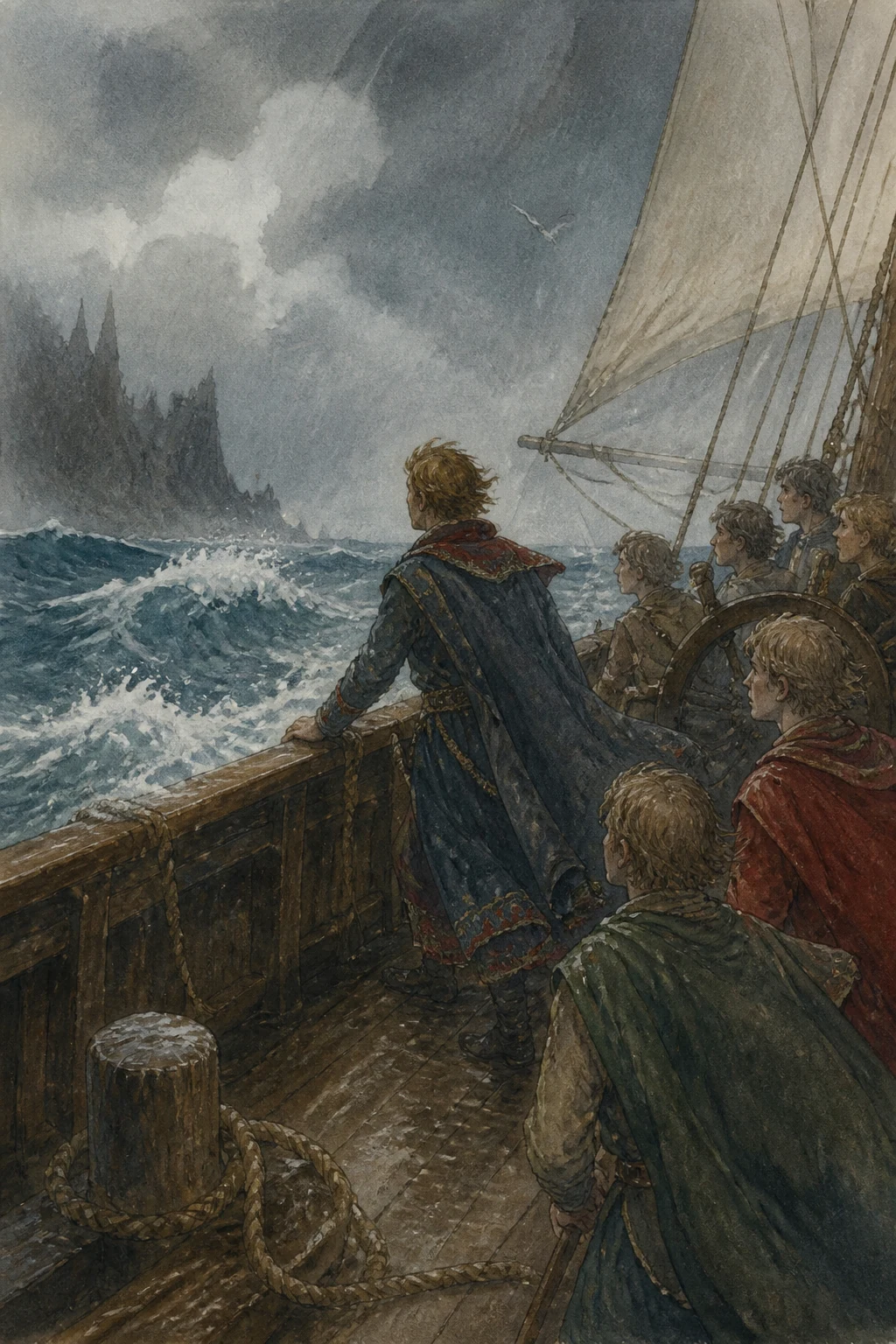
How long they sailed I cannot tell, but at last a great storm arose, and when it was over and the sea was calm again, they had no idea where they were. They had been driven to a foreign shore that none of them knew.
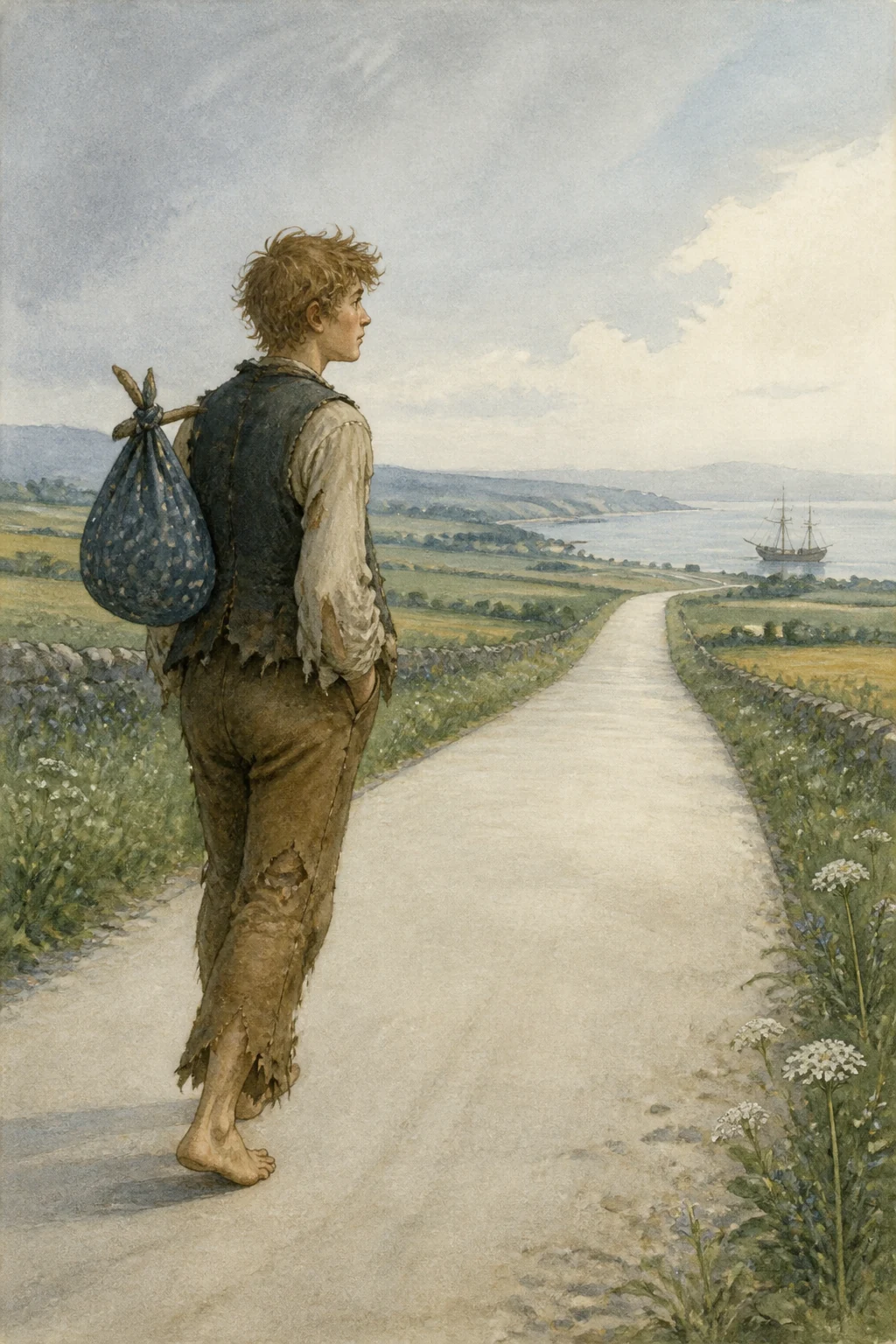
As there was no wind at all, they lay becalmed there, and Halvor asked the skipper if he might go ashore and look about, for he would rather walk than lie sleeping. “Do you think you are fit to show yourself among people?” said the skipper. “You have nothing to wear but the rags you stand up in.” But Halvor would not give in, and at last he was given leave, though he was to come back as soon as the wind began to blow. So he went ashore, and it was a beautiful country. Wherever he went, there were broad, level fields and meadows, but not a soul did he see. Then the wind began to blow, but Halvor felt he had not seen enough yet, and wanted to go a little farther to see whether he could find anyone. After a while he came to a great road, so smooth and level that you could have rolled an egg along it. Halvor followed this road, and towards evening he saw a great castle far away, all gleaming with light.
Now, he had walked all day with scarcely any food in his bag, and he was very hungry; but the nearer he came to the castle, the more frightened he grew.
A fire was burning in the castle, and Halvor went into the kitchen, which was finer than any kitchen he had ever seen. There were vessels of both gold and silver, but not a soul was there. When Halvor had stood there a while and no one appeared, he went over and opened a door;
inside sat a princess, spinning at a wheel. “Oh, no!” she cried. “How dare any Christian soul come here? You had better go away again, unless you want the troll to swallow you, for a troll with three heads lives here.” “I would not care if he had four; I should like to see the fellow,” said the lad. “And I am not going away. I have done no harm. But you must get me something to eat, for I am terribly hungry.” When Halvor had eaten his fill, the princess told him to try whether he could wield the sword hanging on the wall. No, he could not wield it; he could not even lift it. “Well,” said the princess, “then you must take a drink from the bottle hanging beside it, for that is what the troll does when he is going out to use the sword.” Halvor took a drink, and at once he could swing the sword as though it weighed nothing. Now, he thought, the troll could not come soon enough. All at once the troll came rushing up, and Halvor slipped behind the door. “Huff, huff! I smell Christian blood!” said the troll, thrusting its head through the doorway. “Yes, and you shall know it!” said Halvor, and cut off all its heads. The princess was so happy to be saved that she danced and sang, but then she thought of her sisters, and said, “If only my sisters were saved too!” “Where are they?” asked Halvor. So she told him:
one was held captive by a troll in a castle six miles away, and the other was held in a castle nine miles farther on.
“But now,” she said, “you must first help me get this carcass out of here.” Halvor was strong enough for that; he dragged everything away and soon had the place clean and tidy. Then he ate and drank well and made himself comfortable, and next morning he set off at daybreak;
he could not rest, but walked and ran all day. When he caught sight of the castle, he grew a little frightened again. It was far grander than the first, but here too there was not a soul to be seen. Halvor went into the kitchen, and did not linger there either, but went straight on inside. “How dare any Christian soul come here?” cried the princess. “I do not know how long I have been here, but in all that time I have never seen a Christian soul. You had better make your way out again, for a troll with six heads lives here.” “No, I am not going,” said Halvor, “even if he had six more.” “He will swallow you alive!” said the princess. But it was no use; Halvor would not go. He was not afraid of the troll;
but he wanted food and drink, for he was hungry after his journey. He was given as much as he wanted, but then the princess tried to make him leave again. “No,” said Halvor, “I am not going, for I have done no harm, and I have nothing to fear.” “He will not trouble about that,” said the princess, “for he will take you without right or reason. But since you will not go, try whether you can wield the sword the troll uses in battle.” He could not wield the sword, but then the princess told him to take a drink from the bottle hanging beside it, and when he had done so, he could swing it.
All at once the troll came home. It was so huge and bulky that it had to turn sideways to get through the door. As soon as the troll put its first head inside, it cried, “Huff, huff! I smell Christian blood!” At that very moment Halvor struck off the first head, and then all the others. The princess was overjoyed, but then she thought of her sisters and wished that they too might be saved. Halvor thought that could surely be managed, and wanted to set off at once; but first he had to help the princess carry away the troll’s body, and so he took to the road the following morning. It was a long way to the castle, and he both walked and ran to reach it in time. Towards evening he saw the castle, and it was far grander than either of the others. Now he was scarcely frightened at all, but went through the kitchen and straight inside. There sat a princess so beautiful that there was no describing her. She told him, just as the others had, that no Christian soul had been there since she came, and begged him to go away, or the troll would swallow him alive. It had nine heads, she said. “Well, even if it had nine more on top of those nine, and another nine besides, I am not going,” said Halvor, and took his stand by the stove. The princess begged him as sweetly as she could to leave, so that the troll would not eat him, but Halvor said, “Let him come whenever he likes.” Then she gave him the troll’s sword and told him to take a drink from the bottle, so that he could wield it.
All at once the troll came rushing home with a roar. It was even bigger and bulkier than the other two, and it too had to turn sideways to get through the door;
when it put its first head inside, it said, just like the others, “Huff, huff! I smell Christian blood!” At once Halvor struck off the first head, and then all the others, but the last was the toughest of them all, and cutting it off was the hardest work Halvor had ever done, though he had certainly thought he had strength enough.
Then all the princesses gathered at that castle, and they were happier than they had ever been in their lives. They were all fond of Halvor, and he of them, and he could have whichever one he liked best; but the youngest loved him most of all. Yet Halvor went about behaving rather strangely, so gloomy and quiet that at last the princess asked what he was longing for, and whether he did not like living with them. Yes, he liked it well enough, for they had plenty to live on and he was well cared for there; but he longed so much for home, for his parents were still alive, and he dearly wished to visit them. They thought that could easily be arranged. “You shall get there and back unharmed, if you will follow our advice,” said the princesses. Yes, he would do just as they wished. Then they dressed him up as finely as a king’s son, and put a ring on his finger that would let him wish himself there and back again. But they told him he must not throw it away or speak their names, for then all his good fortune would be over;
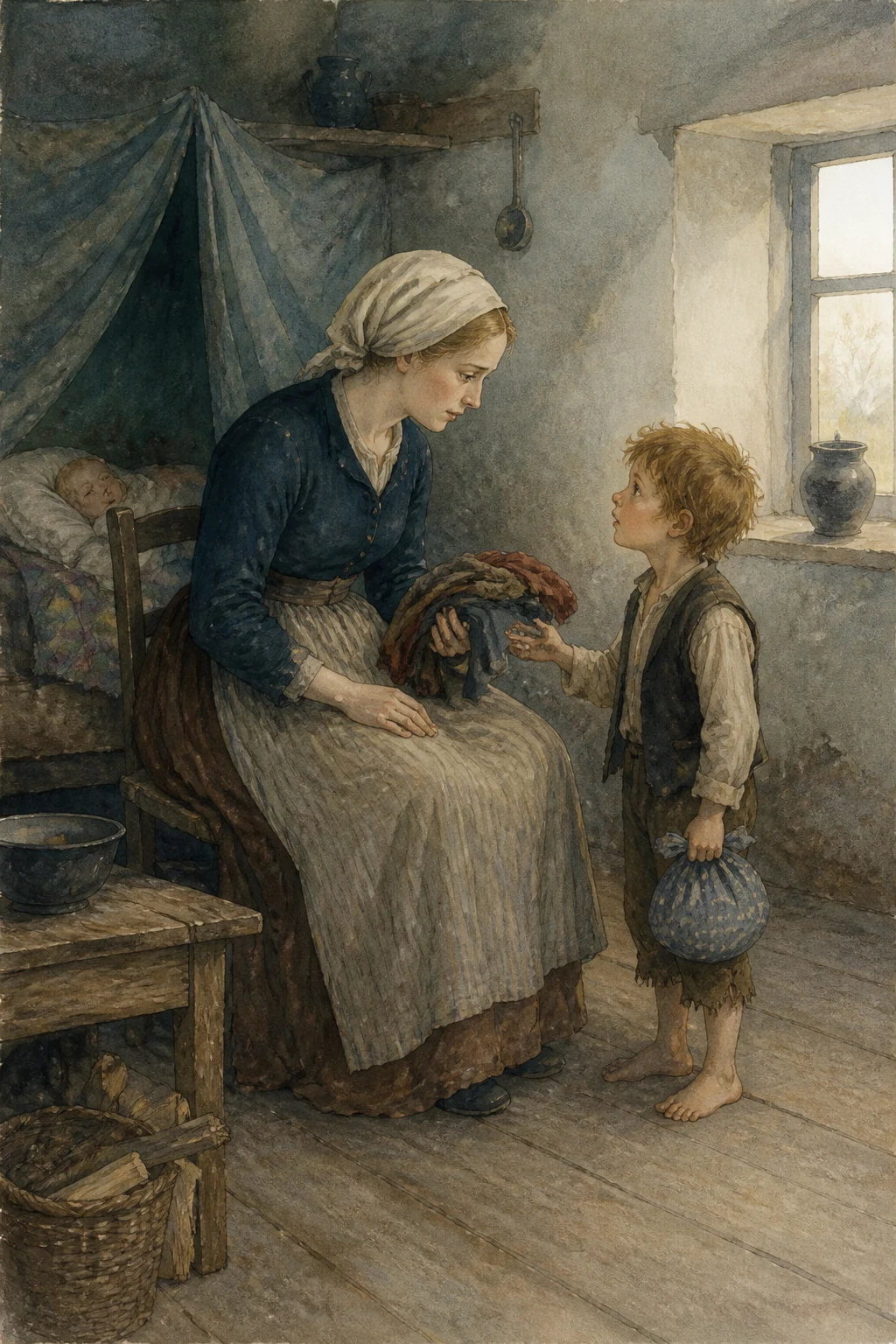
and he would never see them again. “How happy I should be if I were home now!” said Halvor, and no sooner had he wished it than it came true. Before he knew it, Halvor was standing outside his parents’ cottage. Dusk was falling, and when they saw such a fine, splendid gentleman come in, they were so startled that they began bowing and curtsying. Halvor asked whether he might stay there and have a roof over his head for the night. No, that was quite impossible. “We have no place fit for you,” they said, “for we have neither this nor that to suit such a gentleman. You had best go up to the farm. It is not far—you can see the chimney from here—and they have plenty of everything.” Halvor did not like that at all and insisted on staying, but the old couple kept telling him to go up to the farm, where he could get both food and drink, while they did not even have a chair to offer him.
“No,” said Halvor, “I will not go there until tomorrow morning. Let me stay here tonight; I can sit in the hearth.” They could find no objection to that, so Halvor sat down in the hearth and began digging in the ashes, just as he had done when he idled away his days at home.
They talked of all sorts of things and told Halvor about this and that, and then he asked whether they had ever had a child. Yes, they had had a boy named Halvor, but they did not know where he roamed, or even whether he was dead or alive. “Could I not be he?” said Halvor. “A likely story!” said the old woman, half rising from her seat. “Our Halvor was so idle and lazy that he never did a thing, and he was so ragged that one tatter slapped another senseless. He could never have become such a fine man as you, sir.” A little later the old woman went over to stir the fire, and when the glow of the embers shone on Halvor, just as it used to when he sat at home raking through the ashes, she knew him again.
“Why, Halvor, it really is you!” she said. Then the old parents were beside themselves with joy, and he had to tell them all that had happened to him. The old woman was so proud of him that she wanted to take him up to the farm that very moment and show him off to the girls, who had always been so full of themselves. So she went on ahead, and Halvor followed. When she got there, she told them Halvor had come home again, and they ought to see how splendid he was. He looked like a prince, she said.
“A likely story!” said the girls, tossing their heads. “He is surely the same ragged good-for-nothing he always was.” Just then Halvor came in, and the girls were so flustered that they left their shifts behind in the hearth, where they had been sitting picking off fleas, and rushed out in nothing but their skirts. When they came back in, they were so ashamed that they scarcely dared look at Halvor, whom they had always treated so proudly and scornfully before. “Yes, you have always thought yourselves so pretty and lovely that no one could equal you, but you should just see the eldest princess I have saved,” said Halvor. “Beside her you look like mere herdswomen, and the middle one is lovelier still; but the youngest, who is my sweetheart, is fairer than both sun and moon;
I only wish they were here, so you could see,” said Halvor. No sooner had he said it than there they stood, and then he was terribly distressed, for he remembered what they had told him. At the farm they made a feast for the princesses and treated them with great honour, but they would not stay. “We want to go down to your parents’ house,” they said to Halvor, “and then we want to look about.” So he went with them.
Then they came to a great lake beyond the farm. Beside the lake was a lovely green slope, and there the princesses wanted to sit and rest a while, for it was so beautiful to sit looking out over the water, they said.
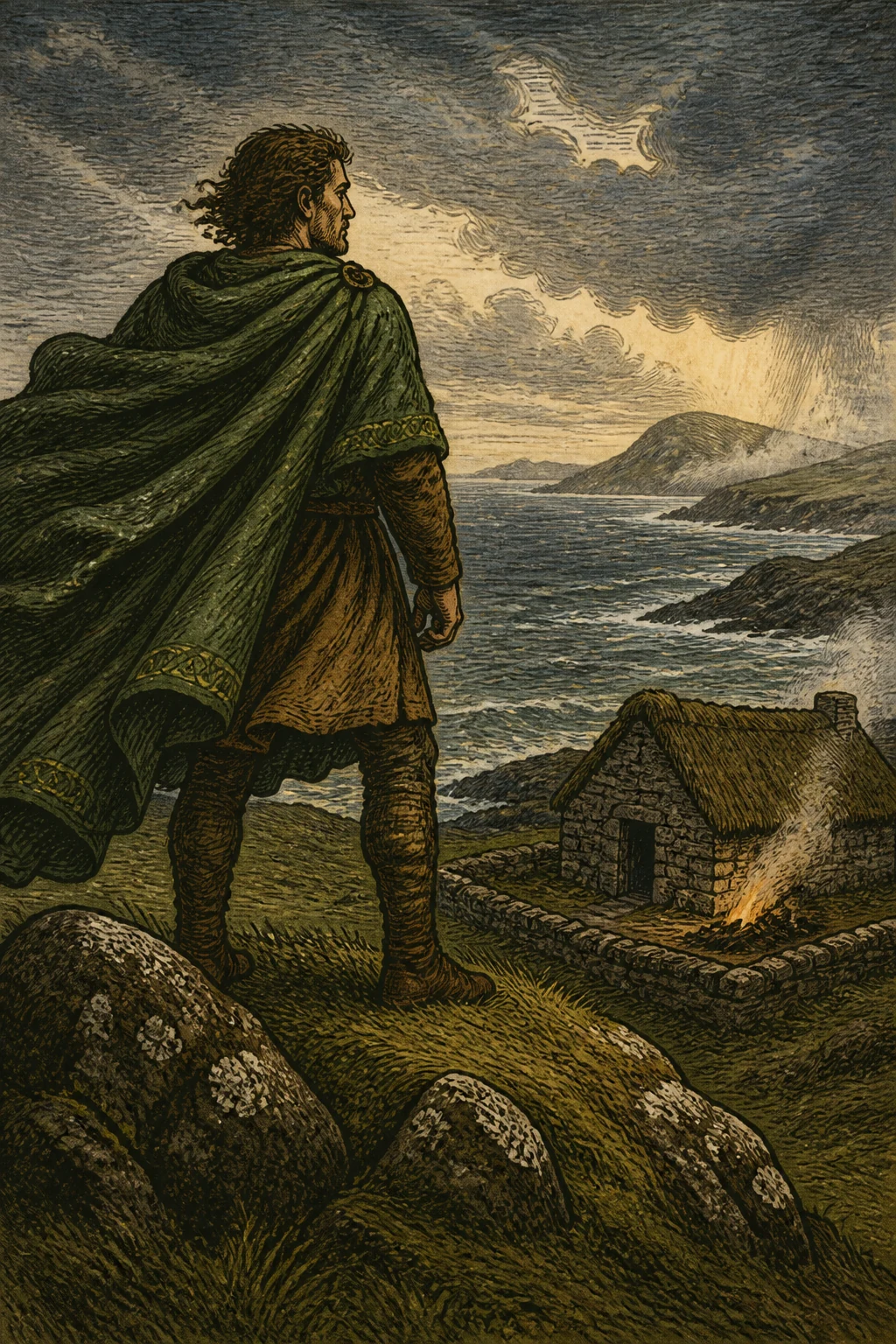
So they sat down there, and after a while the youngest princess said, “I think I shall pick through your hair a little, Halvor.” Halvor laid his head in her lap, and she picked through his hair, and before long he was asleep. Then she took the ring off his finger and put another in its place, and said, “Now all of you hold on to me—and may we be at Soria Moria Castle!” When Halvor woke, he knew well enough that he had lost the princesses, and began to weep and lament. He was so utterly heartbroken that no one could comfort him. Though his parents begged him, he would not stay, but said farewell and told them he would surely never see them again, for if he could not find the princesses, he did not think life worth living.
He had three hundred dollars left; he put them in his pocket and set off. When he had gone some way, he met a man with a decent horse. He wanted to buy it, and began bargaining with the man. “Well, I had not really thought of selling it,” said the man, “but if we could agree on a price, then perhaps—” Halvor asked what he wanted for it. “I did not give much for it, and it is not worth much. It is a good horse to ride, but not much use for pulling. Still, it can certainly carry your bag of food, and you as well, if you walk part of the way,” said the man.
At last they agreed on a price, and Halvor put his bag on the horse, and sometimes he walked and sometimes he rode. Towards evening he came to a grassy bank where a great tree stood, and sat down beneath it. There he turned the horse loose, and instead of lying down to sleep, he took out his bag of food. As soon as day dawned he set off again, for he felt he could not rest. So he walked and rode all day through a great forest, where many green clearings shone beautifully among the trees.
He did not know where he was or where he was heading, but he took no more time to rest than the horse needed to graze a little and he himself to open his food bag when they came to one of the green clearings. He walked and he rode, and it seemed the forest would never end.
But at dusk on the second day he saw a light shining through the trees. “If only there are people still up, so I can warm myself and get something to eat,” thought Halvor. When he reached it, he found a poor little cottage, and through the window he saw an old couple inside. They were so old and as grey-headed as doves, and the old woman had such a long nose that she sat by the hearth using it to rake the embers. “Good evening!” “Good evening!” said the old woman. “But what brings you here?” she asked. “No Christian soul has been here for more than a hundred years.” Halvor told her he was going to Soria Moria Castle, and asked if she knew the way. “No,” said the old woman, “I do not, but the Moon will be along presently, and I shall ask it. It is sure to know, for it must see the place, since it shines on everything.” When the Moon stood bright and clear above the treetops, the old woman went outside.
“Moon, Moon!” she cried. “Can you tell me the way to Soria Moria Castle?” “No,” said the Moon, “I cannot, for when I shone there, a cloud stood in my way.” “Wait a little longer,” said the old woman to Halvor. “The West Wind will be along presently. He is sure to know, for he gusts and blows into every corner.” “Well, well, have you a horse too?” said the old woman when she came back in. “Oh, turn the poor creature out into the pasture, and do not leave it standing here at the door to starve! But would you trade it with me?” she said;
“we have a pair of old boots here that will carry you fifteen quarter-miles at every step. You shall have them for the horse, and then you will reach Soria Moria Castle all the sooner.” Halvor agreed at once, and the old woman was so pleased with the horse that she was ready to dance. “Now I too can ride to church,” she said. Halvor could not rest and wanted to leave at once, but the old woman said there was no hurry.
“Lie down on the bench and get a little sleep, for we have no bed for you,” said the old woman. “I shall keep watch for the West Wind.” All at once the West Wind came roaring up till the walls creaked. Out went the old woman. “West Wind! West Wind! Can you tell me the way to Soria Moria Castle?
There is someone here who wants to go there.” “Yes, I know it well,” said the West Wind. “I am just going there to dry clothes for the wedding that is to be held. If he is quick on his feet, he can come with me.” Out came Halvor. “You will have to hurry if you want to keep up,” said the West Wind, and away they went, far over moors and hills and mountains, with Halvor hard put to it to keep pace. “Now I have no time to go with you any farther,” said the West Wind, “for I must blow down a stretch of spruce forest before I go to the bleaching green to dry the clothes. But if you follow the ridge, you will come to some girls washing clothes, and then you will not have far to go to Soria Moria Castle.” A little later Halvor came to the girls who stood washing, and they asked whether he had seen anything of the West Wind, who was supposed to come and dry the clothes for the wedding.
“Yes,” said Halvor, “he has only gone to blow down a stretch of spruce forest. He will be here before long.” Then he asked them the way to Soria Moria Castle. They set him on the right road, and when he approached the castle, the place was swarming with horses and people. But Halvor was so ragged and torn from following the West Wind through bushes and thickets that he kept out of sight and would not come forward until the last day, when they were to sit down to dinner. Now, as was the custom, they were to drink the health of the bride and bridegroom and wish them happiness, and the cupbearer was to offer the toast to everyone, knights and squires alike. At long last he came to Halvor too. Halvor drank the toast, slipped into the glass the ring the princess had put on his finger as he lay beside the lake, and asked the cupbearer to take it to the bride with his greetings. At once the princess rose from the table. “Who has best earned the right to marry one of us,” she said, “the man who saved us, or the man sitting here as bridegroom?” Everyone agreed there could be only one answer to that, and when Halvor heard it, he was not long in throwing off his beggar’s rags and dressing himself as a bridegroom. “Yes, there is the right one!” cried the youngest princess when she saw him. Then she sent the other fellow packing and celebrated her wedding with Halvor.
Izvirnik
027 Soria Moria Slot
Naslednje strani prikazujejo izvirno besedilo za primerjavo.
Der var engang et Par Folk, som havde en Søn, der hedte Halvor. Lige fra han var en liden Gut vilde han ikke bestille Noget, men sad bare og ragede i Asken. Forældrene satte ham bort til at lære mange Ting; men Halvor stansede ingensteds, for naar han havde været borte i nogle Dage, rømte han af Læren, løb hjem og satte sig i Skorstenen til at grave i Asken igjen. Men saa kom der engang en Skipper, og spurgte Halvor om han ikke havde Lyst til at være med ham og fare til Søs og see fremmede Lande. Jo det havde Halvor Lyst til, da var han ikke længe ufærdig.
Hvorlænge de nu seilede, veed jeg ingen Beskeed om, men langt om længe opkom der en stærk Storm, og da den var forbi og det blev stille igjen, vidste de ikke hvor de vare henne; de vare drevne hen til en fremmed Kyst, som Ingen af dem var kjendt paa. Da det nu slet ingen Vind var, bleve de liggende stille her og Halvor bad Skipperen om han fik Lov at gaae i Land at besee sig, for han vilde heller gaae end ligge og sove. „Synes du, du kan vise dig for Folk?“ sagde Skipperen, „du har jo ikke Andet til Klæder end de Fillerne, du staaer og gaaer i.“ Halvor blev ved Sit han, og saa fik han endelig Lov, men han skulde komme tilbage igjen, naar det begyndte at blæse. Han gik da
og det var et deiligt Land; overalt hvor han kom frem, var der store, slette Agre og Enge, men Folk saa han ingen af. Saa begyndte det at blæse, men Halvor syntes ikke han havde seet nok endnu, og han vilde gjerne gaae lidt længere for at see om han ikke kunde træffe Folk. Om en Stund kom han da paa en stor Vei, som var saa jævn og slet, at man gjerne kunde trille et Æg paa den. Denne gik nu Halvor efter, og da det led mod Kvelden, saa han et stort Slot langt borte, som det lyste af.
Da han nu havde gaaet hele Dagen og ikke havt noget Videre til Niste med sig, var han dygtig sulten, men jo nærmere han kom til Slottet desto mere bange blev han ogsaa. I Slottet brændte det paa Varmen og Halvor gik ind i Kjøkkenet, som var saa gjildt, at han aldrig havde seet saa gjildt et Kjøkken; der var Kjørreler baade af Guld og Sølv, men Folk var der ingen af. Da nu Halvor havde staaet der en Stund og der Ingen kom ud, saa gik han hen og lukkede paa en Dør; der inde sad en Prindsesse, som spandt paa en Rok. „Nei, nei da!“ raabte hun, „tør der komme kristne Folk hid? Men det er nok bedst at du gaaer igjen, hvis ikke Troldet skal sluge dig, for her boer et Trold med tre Hoveder.“
„Jeg er lige glad, om han havde fire og, saa skulde jeg have Lyst til at see den Karlen“, sagde Gutten, „og jeg gaaer ikke; jeg har intet Ondt gjort; men Mad maa du skaffe mig, for jeg er fælt sulten.“ Da Halvor havde spiist sig mæt, sagde Prindsessen til ham, at han fik prøve om han kunde svinge Sværdet, som hang paa Væggen; nei han kunde ikke svinge det; han kunde ikke løfte det engang. „Ja“, sagde Prindsessen, „saa faaer du tage dig en Slurk af den Flasken, som hænger ved Siden, for det gjør Troldet, naar han skal ud og bruge Sværdet“. Halvor tog sig en Slurk, og strax kunde han svinge Sværdet som ingen Ting. Nu meente han skulde Troldet komme tidsnok. Ret som det var, saa kom Troldet susende; Halvor bag Døren. „Hutetu,
her lugter saa kristen Mands Blod!“ sagde Troldet, og satte Hovedet ind igjennem Døren. „Ja det skal du blive vaer!“ sagde Halvor og hug alle Hovederne af det. Prindsessen blev nu saa glad over at hun var frelst, at hun baade dansede og sang, men saa kom hun til at tænke paa Søstrene sine, og saa sagde hun: „Gid nu Søstrene mine ogsaa vare frelste!“ „Hvor er de?“ spurgte Halvor. Ja saa fortalte hun ham det: den ene var indtaget af et Trold paa et Slot, som var sex Miil borte, og den anden var indtaget paa et Slot, som var ni Miil borten for det igjen.
„Men nu“, sagde hun „nu faaer du først hjælpe mig at faae ud dette Skroget her.“ Ja, Halvor var saa stærk; han subbede Alting bort og gjorde det ryddigt og reent i en Hast. Saa levede han godt og vel, og den næste Morgen lagde han afsted i Graalysningen; han havde ingen Ro paa sig, men han gik og løb hele Dagen. Da han fik see Slottet, blev han lidt bange igjen; det var meget gjildere end det andet, men her var der heller ikke et Menneske at see. Saa gik Halvor ind i Kjøkkenet, og han standsede ikke der heller, men gik lige ind. „Nei tør der komme kristne Folk hid da?“ raabte Prindsessen. „Jeg veed ikke, hvor længe det er siden jeg kom hid, men i al den Tid har jeg ikke seet et kristent Menneske; det er nok bedst, at du seer at komme afsted
igjen, for her boer et Trold, som har sex Hoveder.“ „Nei, jeg gaaer ikke,“ sagde Halvor, „om han nu havde sex til“. „Han tager og sluger dig levende!“ sagde Prindsessen. Men det hjalp ikke; Halvor vilde ikke gaae; han var ikke bange for Troldet; men Mad og Drikke vilde han have, for han var sulten efter Reisen. Ja deraf fik han saa Meget han vilde have, men saa vilde Prindsessen have ham til at gaae igjen. „Nei“, sagde Halvor, „jeg gaaer ikke, for jeg har intet Ondt gjort, og jeg har Intet at være ræd for.“ „Han spørger ikke efter det,“ sagde Prindsessen, „for han tager dig baade uden Lov og Ret, men siden du ikke vil gaae, saa prøv om du kan svinge det Sværdet, som Troldet bruger i Krigen.“ Han kunde ikke svinge Sværdet,
men saa sagde Prindsessen, at han skulde tage sig en Slurk af Flasken, som hang ved Siden af det, og da han havde gjort det, kunde han svinge det. Ret som det var, saa kom Troldet, det var saa stort og digert, at det maatte gaae paa Siden for at komme ind igjennem Døren. Da Troldet fik det første Hoved ind, saa raabte det: „Hutetu! her lugter saa kristen Mands Blod!“ Med det samme hug Halvor det første Hoved af, og saa alle de øvrige. Prindsessen blev nu overmaade glad, men saa kom hun til at tænke paa Søstrene sine, og saa ønskede hun, at de ogsaa vare frelste. Halvor meente, der nok kunde blive Raad til det og vilde afsted strax; men først maatte han nu hjælpe
Prindsessen med at faae bort Kroppen af Troldet, og saa gav han sig paa Veien den anden Morgen. Det var langt til Slottet, og han baade gik og løb for at komme frem i Tide. Mod Kvelden saa han Slottet, og det var meget gjildere end begge de andre. Nu var han næsten ikke det mindste bange, men gik gjennem Kjøkkenet og lige ind. Der sad den Prindsesse, som var saa vakker, at der ikke var Maade med det. Hun sagde nu lige eens som de Andre, at der ikke havde været kristne Folk, siden hun kom der, og bad ham gaae igjen, for ellers slugte Troldet ham levende, det havde ni Hoveder, sagde hun. „Ja om det nu har ni til de ni, og endda ni til, saa gaaer ikke jeg“, sagde Halvor og gav sig til at staae ved Ovnen. Prindsessen bad ham saa vakkert at han skulde gaae, for at Troldet ikke
skulle æde ham, men Halvor sagde: „Lad ham komme, mens han vil“. Saa gav hun ham Troldsværdet og bad ham tage en Slurk af Flasken, saa at han kunde svinge det. Ret som det var, saa kom Troldet, saa det suste af det; det var endnu større og digrere end begge de andre to, og det maatte ogsaa gaae paa Siden for at komme ind igjennem Døren; da det fik det første Hoved ind, saa sagde det ligesom de andre „Huttetu! her lugter saa kristen Mands Blod!“ Med det samme hug Halvor det første Hoved af og siden alle de øvrige, men det sidste var det seigeste af dem alle, og det var det tungeste Arbeide, Halvor havde gjort, at faae det af, endda han nok syntes han skulde have Kræfter ogsaa.
Da kom alle Prindsesserne sammen paa det Slottet, og de vare saa fornøiede som de aldrig før havde været i al sin Tid, og de vare glade i Halvor og han i dem, og han kunde faae den han bedst kunde lide; men den yngste var mest glad i ham af alle tre. Men Halvor gik der og var saa rar af sig, han var saa stuur og stille; saa spurgte Prindsessen hvad det var han stundede efter, og om han ikke syntes om at være hos dem. Jo, det syntes han nok om, for de havde jo nok at leve af og han havde det godt der, men han stundede saa hjem, for han havde Forældre i Live, og dem havde han stor Lyst til at besøge. Det meente de, vel kunde lade sig gjøre; „du skal komme uskadt baade frem og tilbage igjen, dersom du vil lide vort Raad,“ sagde
Prindsesserne. Ja, han skulde ikke gjøre Andet end hvad de vilde. Saa klædte de ham op, saa han blev saa gjild som en Kongssøn, og saa satte de en Ring paa Fingeren hans, og den var saadan, at han kunde ønske sig baade frem og tilbage med den, men de sagde, at han ikke maatte kaste den bort og ikke nævne deres Navn, for saa var det forbi med al Herligheden; og da vilde han aldrig faae see dem mere.
„Stod jeg nu hjemme, skulde jeg være glad!“ sagde Halvor, og saa som han havde ønsket, gik det ogsaa; Halvor stod udenfor Stuen hos Forældrene sine, førend han vidste Ordet af det. Det var i Mørkningen om Kvelden, og da de saae der kom ind saadan en gjild, stadselig Herre, blev de saa forskrækkede, at de begyndte baade at bukke og neie. Halvor spurgte nu, om han ikke kunde blive der og faae Huus Natten over. Nei, det kunde han slet ikke, „vi har det ikke saaledes,“ sagde de, „for vi har hverken det Ene eller det Andet, som en saadan Herre kan være tjent med, men det er bedst, han gaaer op i Gaarden, det er ikke langt Stykket, han kan see Skorsteenspiben herfra, der har de fuldt op av Alting.“ Halvor syntes slet ikke om det, han vilde endelig blive, men Folkene bleve ved Sit at han skulde gaae
op til Gaarden, for der kunde han faae baade Mad og Drikke, mens de ikke engang havde en Stol at byde ham at sidde paa. „Nei,“ sagde Halvor, „derop vil jeg ikke, førend i Morgen tidlig, men lad mig nu faae være her i Nat, jeg kan jo sidde i Peisen.“ Det kunde de da ikke sige Noget imod, og saa satte Halvor sig i Peisen til at grave i Asken, saaledes som han gjorde, da han laa hjemme og ladede sig.
De snakkede nu Mangt og Meget og fortalte Halvor baade om det Ene og det Andet, og saa spurgte han dem, om de aldrig havde havt noget Barn. „Jo, de havde da havt en Gut, som hedte Halvor, men de vidste ikke hvor han vandrede, og heller ikke enten han var død eller levende.“ „Kunde ikke det være mig da?“ sagde Halvor. „Det veed jeg vist“ sagde Kjærringen, og lettede paa sig, „han Halvor var saa lad og doven at han aldrig gjorde nogen Ting, og saa var han saa fillet at den ene Fillen slog den anden i Svime paa ham, der kunde aldrig blevet slig Karl af ham, som I er, Faer.“ Om lidt skulde Kjærringen bort til Skorstenen og rage i Varmen, og da Gloskinnet lyste paa Halvor ligesom da han
var hjemme og karede i Asken, saa kjendte Kjærringen ham igjen. „Jamen er det dig da Halvor!“ sagde hun, og der blev saadan Glæde paa de gamle Forældrene at det ikke var Maade paa det, og han maatte nu fortælle, hvorledes det havde gaaet ham, og Kjærringen var saa glad i ham, at hun vilde have ham op paa Gaarden strax paa Timen og vise ham frem for Gjenterne, som altid havde været saa kaute paa det. Hun gik da for i Veien og Halvor efter. Da hun saa kom derop, fortalte hun, at Halvor var kommen hjem igjen, og nu skulde de bare see hvor gjild han var; han saa ud som en Prinds, sagde hun.
„Det veed jeg vist,“ sagde Gjenterne og slog paa Nakken, „han er vel den samme Fillefanten, han altid har været.“ I det samme kom Halvor ind, og saa blev Gjenterne saa forfjamsede, at de glemte igjen Særken i Peisen, hvor de sad og loppede sig, og fløi ud i bare Stakken. Da de saa kom ind igjen, vare de saa skamfulde, at de næsten ikke turde see paa Halvor, som de altid havde været stolte og overmodige mod før. „Ja I har nu altid syntes, I var saa pene og vakkre I, at Ingen kunde være Jeres Lige, men I skulde bare see den ældste Prindsessen, som jeg har frelst,“ sagde Halvor; „mod hende seer I ud som Gjætergjenter, og den mellemste er endda vakkrere, men den yngste, som er Kjæresten min, er vakkrere end baade Sol og Maane;
Gud give de bare var her, saa skulde I see,“ sagde Halvor. Han havde ikke før sagt det, førend de stod der, men da blev han saa ilde ved, for nu kom han i Hu, hvad de havde sagt. — Paa Gaarden blev der nu baade holdt Gjæstebud for Prindsesserne og gjort Stads af dem; men de vilde ikke standse der. „Vi vil ned til Forældrene dine,“ sagde de til Halvor „og saa vil vi ud at see os om.“ Han fulgte da med dem.
Saa kom de til et stort Vand udenfor Gaarden. Tæt ved det Vandet var der saadan en deilig grøn Bakke; der vilde Prindsesserne sidde og hvile en Stund, for de syntes det var saa vakkert at sidde og see ud over Vandet, sagde de. De satte sig da der og da de havde siddet en Stund, sagde den yngste Prindsessen: „Jeg faaer vel lyske dig lidt jeg, Halvor.“ Ja, Halvor lagde Hovedet i hendes Favn, saa lyskede hun ham og det varede ikke længe førend Halvor sov; derpaa tog hun Ringen af ham og satte en anden i Stedet, og saa sagde hun: „Hold nu i mig Allesammen, — og gid vi saa var paa Soria Moria Slot!“ Da Halvor vaagnede, kunde han nok skjønne at han havde
mistet Prindsesserne og begyndte at græde og bære sig, og han var saa reent mistrøstig, at de slet ikke kunde stagge ham. Alt det Forældrene bade ham, vilde han ikke standse, men tog Farvel og sagde, at han vist aldrig fik see dem mere, for fandt han ikke Prindsesserne igjen, syntes han ikke det var værdt at leve. Trehundrede Daler havde han igjen; dem tog han i Lommen og gav sig paa Veien. Da han havde gaaet et Stykke, mødte han en Mand med en skikkelig Hest; den vilde han kjøbe, og begyndte at akkordere med Manden. „Ja, jeg har rigtignok ikke tænkt at sælge den“ sagde Manden, „men naar vi kunde blive forligte saa — .“ Halvor spurgte da, hvad han vilde have for den. „Ikke Meget har jeg givet for den, og ikke Meget
er den værd; det er en brav Hest at ride paa, men til at trække duer den ikke stort, men altid saa orker den nok Madsækken Jeres og Jer ogsaa, naar I gaaer stykomtil,“ sagde Manden. Tilsidst bleve de da enige om Prisen, og Halvor lagde Sækken sin paa den, og saa gik han stykomtil og stykomtil red han. Om Kvelden kom han til en grøn Vold, hvor der stod et stort Træ, som han satte sig ved. Der slap han Hesten, og han lagde sig ikke til at sove, men tog frem Madsækken sin. Da det lyste af Dagen, drog han afsted igjen, for han syntes ikke, han kunde havde nogen Ro paa sig. Saa gik han og saa red han hele Dagen bort igjennem en stor Skov, hvor der var mange grønne Flækker, som lyste saa deiligt borte imellem Træerne.
Ikke vidste han hvor han var henne og ikke vidste han hvor det bar hen, men han gav sig ikke mere Tid til at hvile, end naar Hesten fik Lidt i sig og han selv fik op Skræppen sin, naar de kom til en af de grønne Flækkerne. Han gik og han red, og aldrig syntes han der blev nogen Ende paa Skoven. Men i Mørkningen den anden Dag, saa han det lyste frem imellem Træerne. „Gid der nu var Folk oppe, saa jeg kunde faae varmet mig og Lidt at leve af,“ tænkte Halvor. Da han kom did, saa var det en liden ussel Stue, og igjennem Ruden saa han et Par gamle Folk derinde; de vare saa gamle og graae i Hovedet som en Due, og Kjærringen havde en Næse saa lang, at hun sad ved Peisen og brugte den til Glorage. „God Kveld!“
„God Kveld!“ sagde Kjærringen. „Men hvad Ærende har I da, som kommer hid?“ sagde Kjærringen; „her har ikke været kristne Folk paa over hundrede Aar.“ Ja, Halvor fortalte da at han skulde til Soria Moria Slot, og spurgte om hun vidste Veien did. „Nei,“ sagde Kjærringen, „det veed jeg ikke, men retnu kommer vel Maanen, saa skal jeg spørge den, og den veed det nok, den maa vel see det, for den skinner jo paa Alting.“ Da saa Maanen stod lys og blank over Trætopperne, gik Kjærringen ud.
„Du Maane, du Maane,“ skreg hun, „kan du sige mig Veien til Soria Moria Slot?“ „Nei,“ sagde Maanen, „det kan jeg ikke, for dengang jeg skinnede der, stod der en Sky for mig.“ „Vent lidt endnu," sagde Kjærringen til Halvor „retnu kommer vel Vestenvinden; han veed det vist, for han guster og blæser i hver Krog". „Nei, nei, har du Hest ogsaa du?“ sagde Kjærringen, da hun kom ind igjen, „aa, slip det stakkels Kreatur ud i Havnehagen, og lad det ikke staae her ved Døren og sulte!“ „Men vil du ikke bytte bort den til mig?“ sagde hun; „vi har et Par gamle Støvler her, som du kan tage femten Fjerdinger i hvert Skridt med; dem skal du faae for Hesten, saa kommer du før til Soria Moria Slot.“ Det var Halvor strax villig til, og Kjærringen var saa glad i Hesten, at hun var
færdig at dandse, „for nu kan jeg da komme til at ride til Kirken, jeg ogsaa,“ sagde hun. Halvor havde ingen Ro paa sig og vilde afsted strax, men Kjærringen sagde, det havde ingen Hast. „Læg dig paa Krakken du og sov lidt, for nogen Seng har vi ikke til dig,“ sagde Kjærringen, „jeg skal nok passe paa, naar Vestenvinden kommer.“ Ret som det var, saa kom Vestenvinden durende, saa det knagede i Væggen. Kjærringen ud. „Du Vestenvind! du Vestenvind! kunde du sige mig Veien til Soria Moria Slot?
her er En som skal did.“ „Ja den veed jeg vel,“ sagde Vestenvinden, „nu skal jeg netop did at tørke Klæder til Brylluppet, som skal staae; er han rask til Beens, kan han være med mig.“ Halvor ud. „Du faaer skynde dig, vil du holde Følge,“ sagde Vestenvinden, og afsted bar det langt bort baade over Heier og Aaser og Fjeld, og Halvor havde nok med at følge. „Ja, nu har ikke jeg Tid at være med dig længer,“ sagde Vestenvinden, „for jeg skal bort og rive ned et Stykke Granskov først, førend jeg kommer til Blegevolden og tørker Klæderne; men naar du gaaer langs med Aaskanten, saa kommer du til nogle Gjenter, som staae og vaske Klæder, og da har du ikke langt igjen til Soria Moria Slot.“ En Stund efter kom Halvor til Gjenterne, som stod og
vadskede, og de spurgte, om han ikke havde seet noget til Vestenvinden, han skulde komme did og tørke Klæder til Brylluppet. „Jo,“ sagde Halvor, „han er bare borte og bryder ned et Stykke Granskov, det varer ikke længe, før han er her,“ og saa spurgte han dem om Veien til Soria Moria Slot. De satte ham da paa den, og da han kom frem mod Slottet, saa var der fuldt af Heste og Folk, at det yrede. Men Halvor var saa fillet og itureven af det, han havde fulgt Vestenvinden baade igjennem Buske og Kjær, at han holdt sig afsides og ikke vilde gaae frem, før den sidste Dagen, da de skulde spise Middag. Da de nu, som Skik og Brug var, skulde drikke Brudens og Brudgommens Skaal og ønske dem til Lykke, og Skjænkeren skulde drikke dem
til allesammen, baade Riddere og Svende, saa kom han da ogsaa langt om længe til Halvor. Han drak Skaalen, slap Ringen, som Prindsessen havde sat paa fingeren hans, da han laa ved Vandet, i Glasset og bad Skjænkeren skulde hilse Bruden og bære frem den til hende. Da stod Prindsessen strax op fra Bordet. „Hvem har vel bedst fortjent at faae en af os,“ sagde hun, „enten den som har frelst os, eller den som sidder Brudgom?“ Det kunde der ikke være mere end een Mening om, meente Alle, og da Halvor hørte det, var han ikke længe om at faa Fantefillerne af sig og pynte sig til Brudgom. „Ja der er den Rette!“ raabte den yngste Prindsessen, da hun fik see ham, og saa skjød hun den anden for Glug og holdt Bryllup med Halvor.
Nadaljuj z branjem