O besedilu
Voda življenja
- Vir
- Grimmove pravljice
- Avtor
- Jacob in Wilhelm Grimm
- Jezik branja
- English
- Jezik izvirnika
- Deutsch
- Čas branja
- 12 min branja
- Obseg
- 9 strani
- Naslov izvirnika
- Das Wasser des Lebens
O izvirniku
Grimmove pravljice
Gozdovi, čarobni predmeti in ljudska logika evropske pripovedne tradicije. Bralni jezik je English, izvirnik pa prihaja iz vira Grimmove pravljice v jeziku Deutsch.
Besedilo
Voda življenja
Once upon a time there was a king who was ill, and no one thought he would survive. He had three sons, who were so distressed that they went down into the castle garden and wept. There they met an old man, who asked what troubled them. They told him their father was so ill that he would surely die, for nothing seemed to help him. Then the old man said, “I know of a remedy: the Water of Life. If he drinks it, he will be well again, but it is hard to find.” The eldest said, “I shall find it.” He went to the sick king and begged permission to set out in search of the Water of Life, for it alone could cure him. “No,” said the king, “the danger is too great. I would rather die.” But he begged so long that at last the king consented. In his heart the prince thought, “If I bring back the water, I shall be my father’s dearest son and inherit the kingdom.”
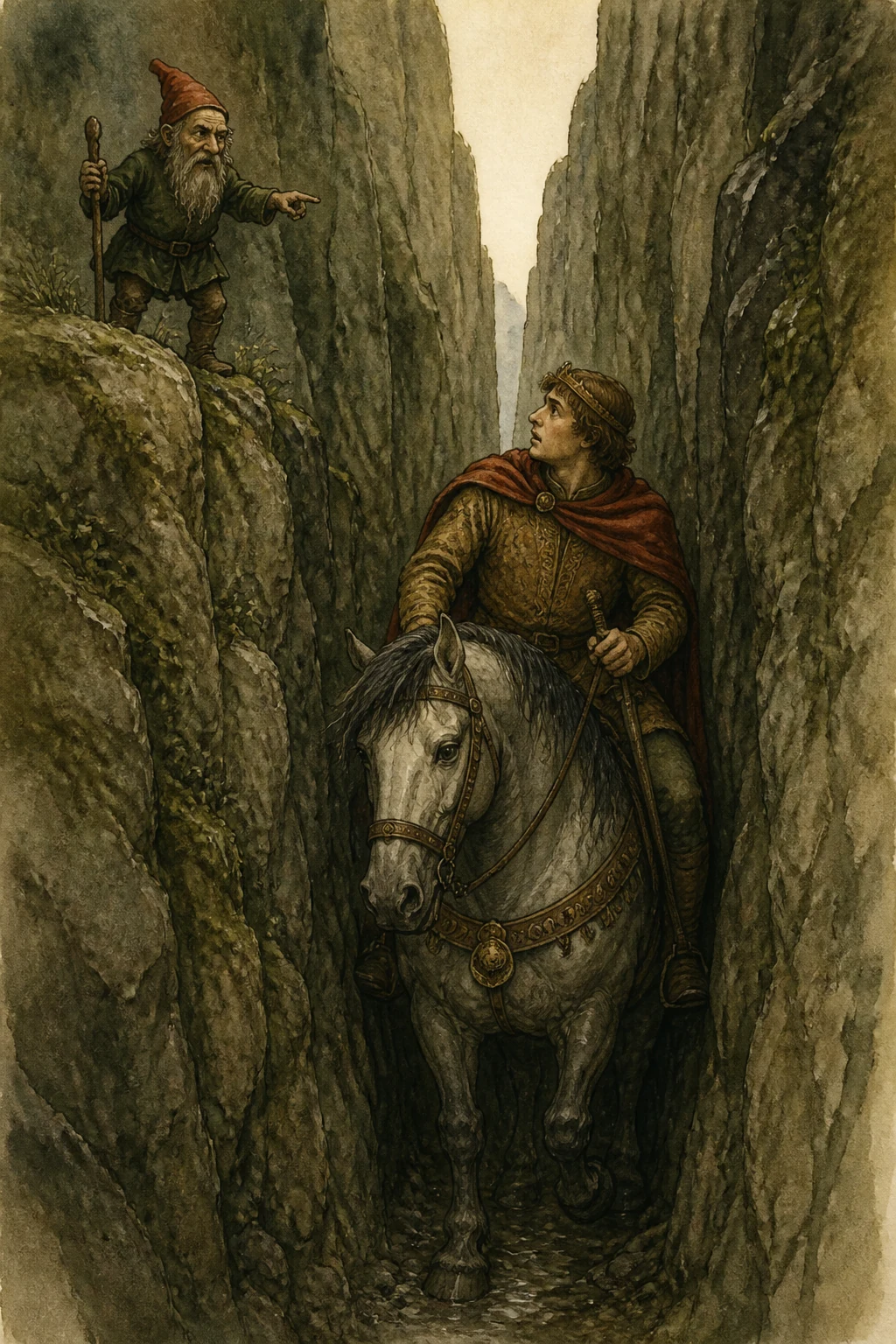
So he set out, and after he had ridden for some time, he found a dwarf standing in the road, who called out to him, “Where are you off to in such a hurry?” “You silly little runt,” said the prince haughtily, “that is none of your business,” and rode on. But the little man grew angry and laid a curse on him. Soon afterward the prince came into a mountain gorge, and the farther he rode, the closer the mountains drew together, until at last the way was so narrow that he could not move another step. He could neither turn his horse nor climb out of the saddle, and there he sat, as though imprisoned. The sick king waited a long time for him, but he did not return. Then the second son said, “Father, let me set out and search for the water,” thinking to himself, “If my brother is dead, the kingdom will fall to me.” At first the king would not let him go either, but at last he yielded. So the prince took the same road his brother had followed, and he too met the dwarf, who stopped him and asked where he was going in such haste. “You little runt,” said the prince, “that is none of your business,” and rode on without another glance. But the dwarf cursed him, and he too became trapped in a mountain gorge, unable to move either forward or back. Such is the fate of the proud.
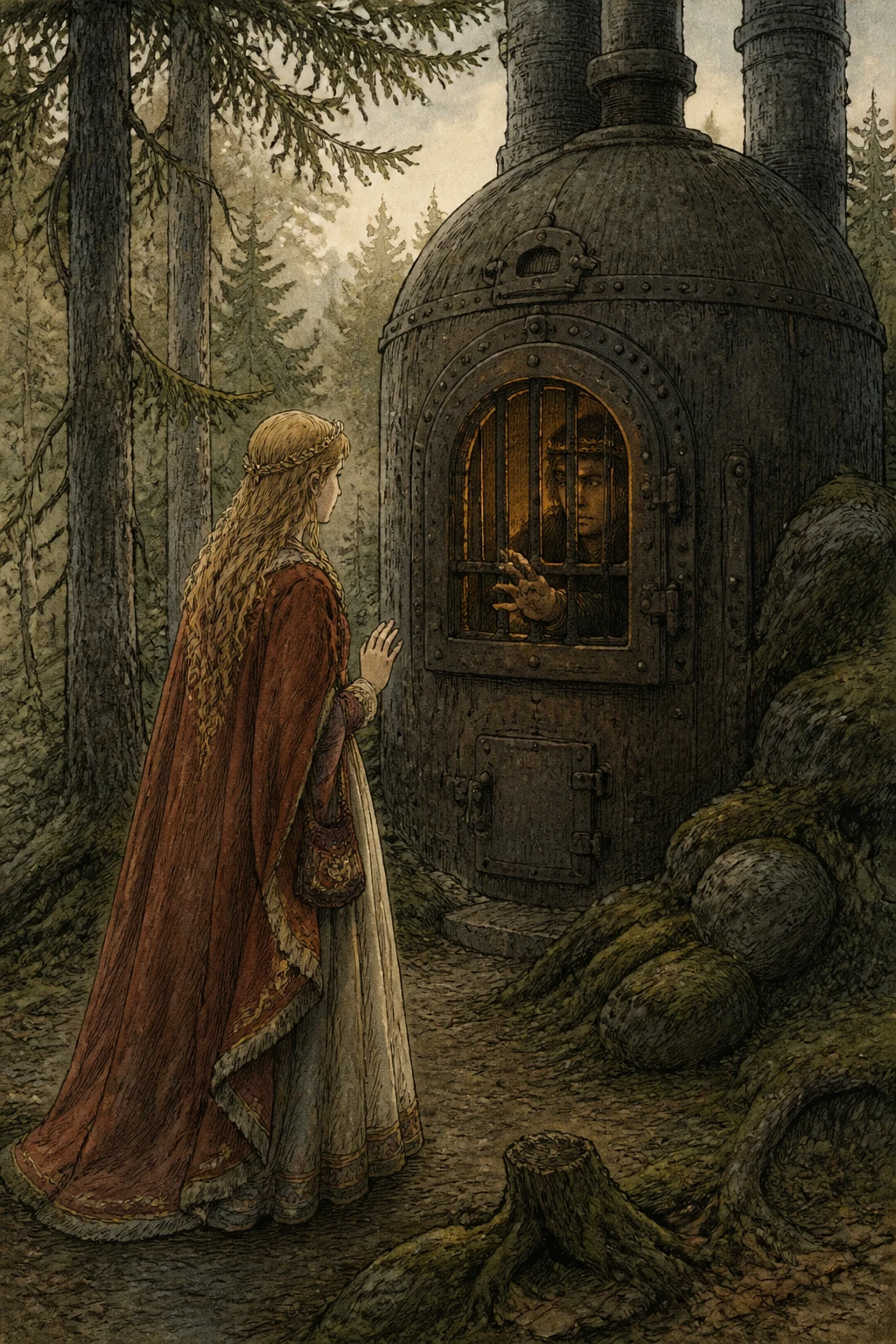
When the second son also failed to return, the youngest offered to set out and fetch the water, and at last the king had to let him go. When he met the dwarf and was asked where he was going in such haste, he stopped and answered him, saying, “I am searching for the Water of Life, for my father is deathly ill.” “Do you know where it is to be found?” “No,” said the prince. “Since you have behaved as you ought, and have not been arrogant like your wicked brothers, I will help you and tell you how to reach the Water of Life. It flows from a fountain in the courtyard of an enchanted castle, but you cannot enter unless I give you an iron rod and two small loaves of bread. Strike the castle’s iron gate three times with the rod, and it will spring open. Inside lie two lions with their jaws gaping wide, but if you throw a loaf into each lion’s mouth, they will be quiet. Then hurry and fetch some of the Water of Life before the clock strikes twelve, or the gate will slam shut again and you will be trapped.” The prince thanked him, took the rod and the bread, and went on his way. When he arrived, everything was just as the dwarf had said. At the third stroke of the rod, the gate sprang open, and after he had quieted the lions with the bread, he entered the castle and came into a great and beautiful hall. There sat enchanted princes, and he drew the rings from their fingers. A sword and a loaf of bread lay there too, and he took them with him. Going farther, he came into a room where a beautiful maiden stood. She rejoiced at the sight of him, kissed him, and said that he had freed her from the enchantment and should have her whole kingdom. If he returned in a year’s time, their wedding would be celebrated. Then she told him where to find the fountain of the Water of Life, but said he must hurry and draw some before the clock struck twelve. He went on and at last came into a room where there stood a beautiful, freshly made bed. As he was tired, he thought he would rest a little first. So he lay down and fell asleep. When he awoke, the clock was striking a quarter to twelve. He sprang up in alarm, ran to the fountain, and drew water in a cup that stood beside it, then hurried to escape. Just as he was passing through the iron gate, the clock struck twelve, and the gate slammed shut so violently that it cut off a piece of his heel.
But he was glad to have obtained the Water of Life, and he set off home, passing the dwarf once more. When the dwarf saw the sword and the bread, he said, “You have won great treasures there. With that sword you can defeat whole armies, and that bread will never run out.” The prince did not wish to return to his father without his brothers, and said, “Dear dwarf, can you tell me where my two brothers are? They set out in search of the Water of Life before I did, and have not returned.” “They are trapped between two mountains,” said the dwarf. “I put them there under a curse because they were so arrogant.” The prince pleaded until at last the dwarf released them, but he warned him, saying, “Beware of them. They have wicked hearts.”
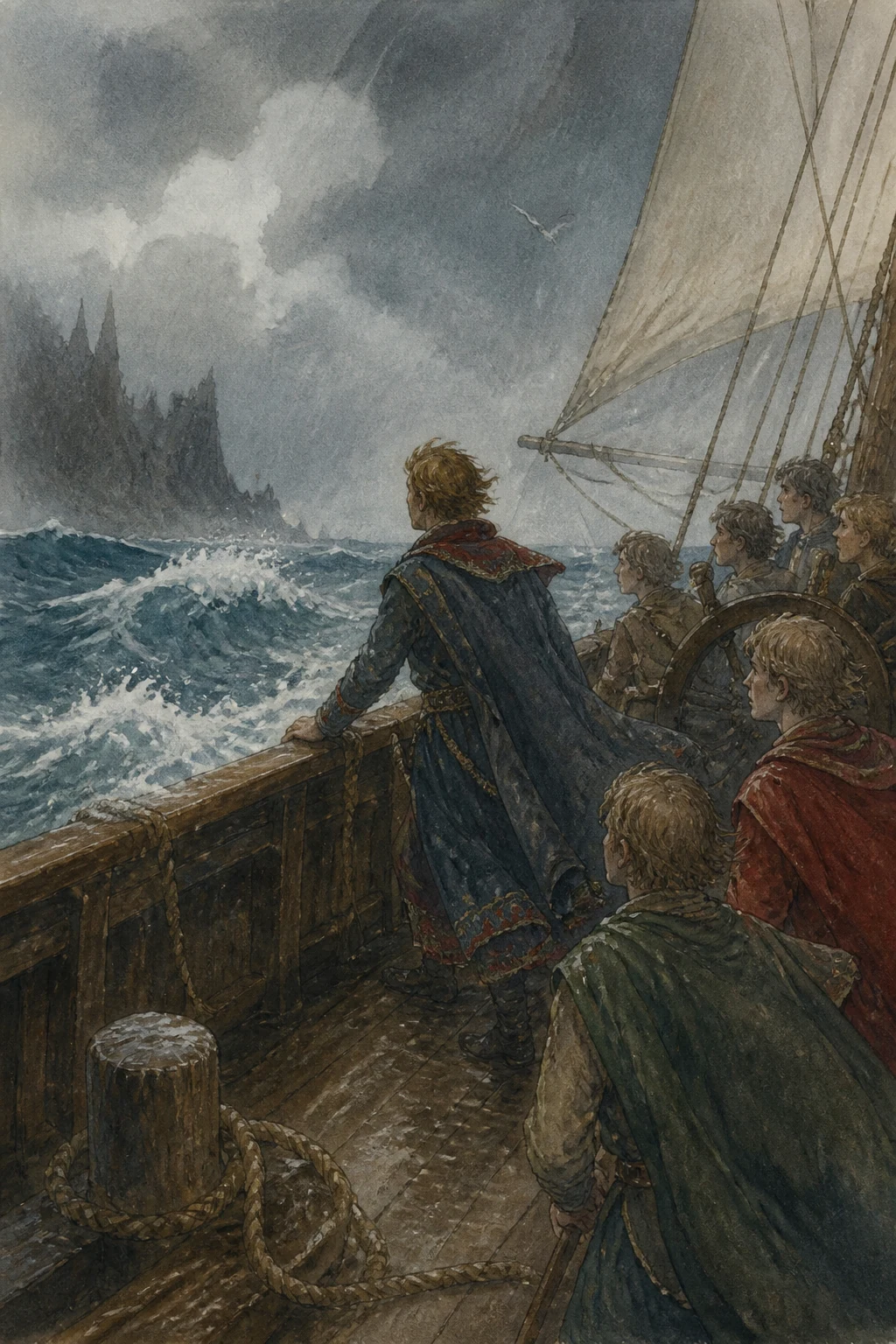
When his brothers came, he rejoiced and told them all that had happened to him: how he had found the Water of Life and brought away a cupful, and how he had freed a beautiful princess from an enchantment. She would wait for him for a year, then they would be married and he would receive a great kingdom. After that they rode on together and came to a land plagued by famine and war. The distress was so great that its king had given himself up for lost. The prince went to him and gave him the bread, with which he fed his whole kingdom until everyone had enough. Then the prince gave him the sword as well, and with it he defeated his enemies’ armies and could now live in peace and quiet. The prince took back his bread and sword, and the three brothers rode on. They came to two more lands where famine and war were raging, and each time the prince lent the kings his bread and sword, so that he had now saved three kingdoms. Afterward they boarded a ship and sailed across the sea. During the voyage, the two elder brothers said to one another, “The youngest has found the Water of Life, and we have not. Our father will give him the kingdom that belongs to us, and he will rob us of our good fortune.” Their hearts filled with spite, and they plotted together to bring about his ruin. They waited until he was fast asleep, then poured the Water of Life out of his cup and kept it for themselves, filling his cup with bitter seawater instead.
When they arrived home, the youngest brought his cup to the sick king so that he might drink from it and recover. But scarcely had he swallowed a little of the bitter seawater when he grew even sicker than before. While he was lamenting this, the two elder sons came in and accused the youngest of trying to poison him. They said they had brought the true Water of Life, and handed it to him. No sooner had he drunk it than he felt his illness leave him, and he was as strong and healthy as in his youth. Afterward the two went to the youngest and mocked him, saying, “You may have found the Water of Life, but you have had the trouble and we have the reward. You should have been cleverer and kept your eyes open. We took it from you while you were asleep at sea, and when the year is up, one of us will fetch the beautiful princess. But take care not to tell a soul. Father will not believe you anyway, and if you say a single word, you shall lose your life into the bargain. If you keep quiet, however, we will spare you.”
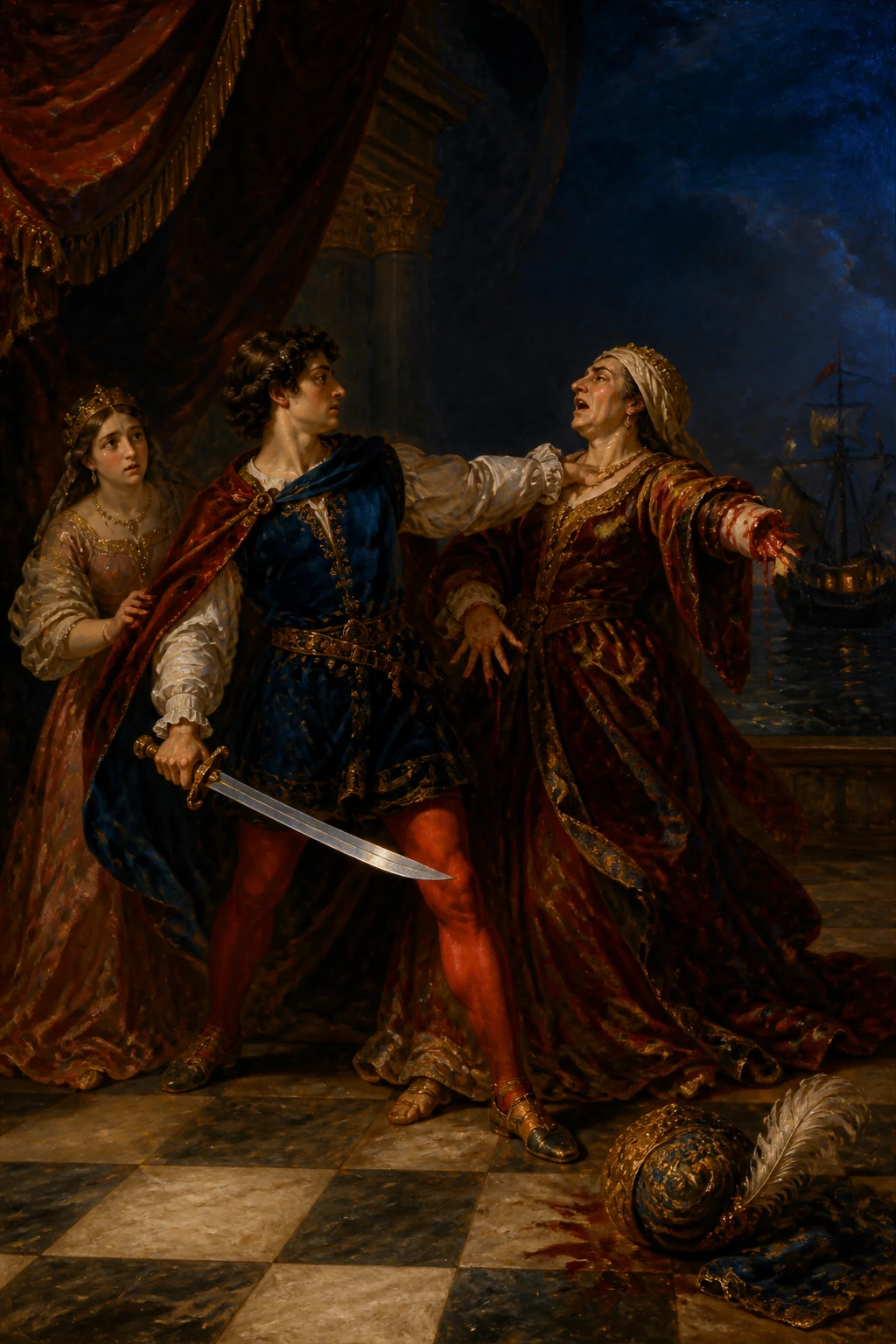
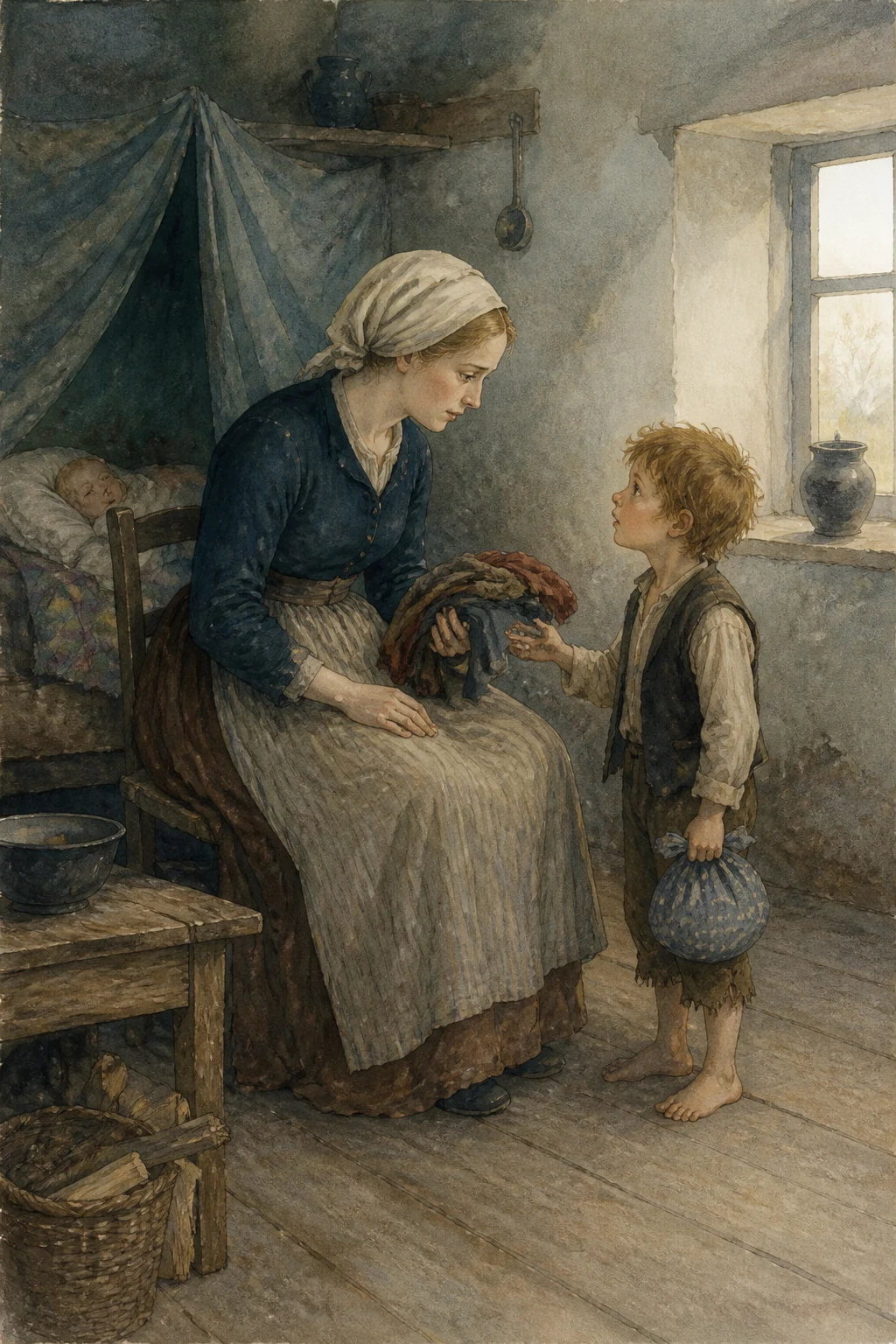
The old king was angry with his youngest son and believed he had tried to take his life. So he summoned his court and had sentence passed upon him: he was to be secretly shot. One day, when the prince rode out hunting, suspecting no harm, the king’s huntsman was ordered to go with him. When they were alone in the forest, the huntsman looked so sad that the prince said to him, “Dear huntsman, what troubles you?” The huntsman replied, “I cannot tell you, and yet I must.” Then the prince said, “Tell me what it is. I will forgive you.” “Alas,” said the huntsman, “I am to shoot you dead. The king has commanded it.” The prince was horrified and said, “Dear huntsman, spare my life. I will give you my royal clothes, and you can give me your poor ones in return.” The huntsman said, “Gladly. I could never have brought myself to shoot you.” So they exchanged clothes, and the huntsman went home, while the prince went deeper into the forest.
Some time later, three wagons laden with gold and precious stones arrived at the old king’s court for his youngest son. They had been sent by the three kings who had defeated their enemies with the prince’s sword and fed their lands with his bread, and who wished to show their gratitude. Then the old king thought, “Could my son have been innocent?” He said to his people, “If only he were still alive! How bitterly I regret having him killed.” “He is still alive,” said the huntsman. “I could not find it in my heart to carry out your command,” and he told the king what had happened. A great weight fell from the king’s heart, and he had it proclaimed throughout all the kingdoms that his son might return and would be welcomed back into his favor.
Meanwhile, the princess had a road made in front of her castle, all of shining gold, and told her servants that whoever rode straight along it to her was the true bridegroom, and they must let him in. But whoever rode beside it was not the right man, and they must refuse him entry. When the year was nearly up, the eldest brother thought he would hurry to the princess and pass himself off as her deliverer; then he would win her as his wife, and the kingdom as well. So he rode off, and when he reached the castle and saw the beautiful golden road, he thought, “It would be a terrible shame to ride over that.” He turned aside and rode along its right-hand edge. But when he came to the gate, the servants told him he was not the right man and must go away. Soon afterward the second prince set out, and when he reached the golden road and his horse had placed one hoof upon it, he thought, “It would be a terrible shame—some of the gold might wear away.” He turned aside and rode along its left-hand edge. But when he came to the gate, the servants told him he was not the right man and must go away. When the full year had passed, the third prince wished to leave the forest and ride to his beloved, hoping to forget his sorrows with her. So he set out, thinking only of her and longing to be at her side, and he did not even notice the golden road. His horse rode straight along the middle of it, and when he reached the gate, it was opened. The princess welcomed him joyfully and said that he was her deliverer and the lord of the kingdom, and their wedding was celebrated with great happiness. When it was over, she told him that his father had sent for him and forgiven him. So he rode to his father and told him everything: how his brothers had deceived him, and how he had nevertheless kept silent. The old king wished to punish them, but they had put to sea and sailed away, and never returned for the rest of their lives.
Izvirnik
Das Wasser des Lebens
Naslednje strani prikazujejo izvirno besedilo za primerjavo.
Ein Märchen der Brüder Grimm
Es war einmal ein König, der war krank, und niemand glaubte, daß er mit dem Leben davonkäme. Er hatte aber drei Söhne, die waren darüber betrübt, gingen hinunter in den Schloßgarten und weinten. Da begegnete ihnen ein alter Mann, der fragte sie nach ihrem Kummer. Sie sagten ihm, ihr Vater wäre so krank, daß er wohl sterben würde, denn es wollte ihm nichts helfen. Da sprach der Alte 'ich weiß ein Mittel, das ist das Wasser des Lebens, wenn er davon trinkt, so wird er wieder gesund: es ist aber schwer zu finden.' Der älteste sagte 'ich will es schon finden,' ging zum kranken König und bat ihn, er möchte ihm erlauben auszuziehen, um das Wasser des Lebens zu suchen, denn das könnte ihn allein heilen. 'Nein,' sprach der König, 'die Gefahr dabei ist zu groß, lieber will ich sterben.' Er bat aber so lange, bis der König einwilligte. Der Prinz dachte in seinem Herzen 'bringe ich das Wasser, so bin ich meinem Vater der liebste und erbe das Reich.'
Also machte er sich auf, und als er eine Zeitlang fortgeritten war, stand da ein Zwerg auf dem Wege, der rief ihn an und sprach 'wo hinaus so geschwind?, 'Dummer Knirps,' sagte der Prinz ganz stolz, 'das brauchst du nicht zu wissen,' und ritt weiter. Das kleine Männchen aber war zornig geworden und hatte einen bösen Wunsch getan. Der Prinz geriet bald hernach in eine Bergschlucht, und je weiter er ritt, je enger taten sich die Berge zusammen, und endlich ward der Weg so eng, daß er keinen Schritt weiter konnte; es war nicht möglich, das Pferd zu wenden oder aus dem Sattel zu steigen, und er saß da wie eingesperrt. Der kranke König wartete lange Zeit auf ihn, aber er kam nicht. Da sagte der zweite Sohn 'Vater, laßt mich ausziehen und das Wasser suchen,' und dachte bei sich 'ist mein Bruder tot, so fällt das Reich mir zu.' Der König wollt ihn anfangs auch nicht ziehen lassen, endlich gab er nach. Der Prinz zog also auf demselben Weg fort, den sein Bruder eingeschlagen hatte, und begegnete auch dem Zwerg, der ihn anhielt und fragte, wohin er so eilig wollte. 'Kleiner Knirps,' sagte der Prinz, 'das brauchst du nicht zu wissen,' und ritt fort, ohne sich weiter umzusehen. Aber der Zwerg verwünschte ihn, und er geriet wie der andere in eine Bergschlucht und konnte nicht vorwärts und rückwärts. So gehts aber den Hochmütigen.
Als auch der zweite Sohn ausblieb, so erbot sich der jüngste, auszuziehen und das Wasser zu holen, und der König mußte ihn endlich ziehen lassen. Als er dem Zwerg begegnete und dieser fragte, wohin er so eilig wolle, so hielt er an, gab ihm Rede und Antwort und sagte 'ich suche das Wasser des Lebens, denn mein Vater ist sterbenskrank.' 'Weißt du auch, wo das zu finden ist?, 'Nein,' sagte der Prinz. 'Weil du dich betragen hast, wie sichs geziemt, nicht übermütig wie deine falschen Brüder, so will ich dir Auskunft geben und dir sagen, wie du zu dem Wasser des Lebens gelangst. Es quillt aus einem Brunnen in dem Hofe eines verwünschten Schlosses, aber du dringst nicht hinein, wenn ich dir nicht eine eiserne Rute gebe und zwei Laiberchen Brot. Mit der Rute schlag dreimal an das eiserne Tor des Schlosses, so wird es aufspringen: inwendig liegen zwei Löwen, die den Rachen aufsperren, wenn du aber jedem ein Brot hineinwirfst, so werden sie still, und dann eile dich und hol von dem Wasser des Lebens, bevor es zwölf schlägt, sonst schlägt das Tor wieder zu und du bist eingesperrt.' Der Prinz dankte ihm, nahm die Rute und das Brot, und machte sich auf den Weg. Und als er anlangte, war alles so, wie der Zwerg gesagt hatte. Das Tor sprang beim dritten Rutenschlag auf, und als er die Löwen mit dem Brot gesänftigt hatte, trat er in das Schloß und kam in einen großen schönen Saal: darin saßen verwünschte Prinzen, denen zog er die Ringe vom Finger, dann lag da ein Schwert und ein Brot, das nahm er weg. Und weiter kam er in ein Zimmer, darin stand eine schöne Jungfrau, die freute sich, als sie ihn sah, küßte ihn und sagte, er hätte sie erlöst und sollte ihr ganzes Reich haben, und wenn er in einem Jahre wiederkäme, so sollte ihre Hochzeit gefeiert werden. Dann sagte sie ihm auch, wo der Brunnen wäre mit dem Lebenswasser, er müßte sich aber eilen und daraus schöpfen, eh es zwö lf schlüge. Da ging er weiter und kam endlich in ein Zimmer, wo ein schönes frischgedecktes Bett stand, und weil er müde war, wollt er erst ein wenig ausruhen. Also legte er sich und schlief ein: als er erwachte, schlug es dreiviertel auf zwölf. Da sprang er ganz erschrocken auf, lief zu dem Brunnen und schöpfte daraus mit einem Becher, der daneben stand, und eilte, daß er fortkam. Wie er eben zum eisernen Tor hinausging, da schlugs zwölf, und das Tor schlug so heftig zu, daß es ihm noch ein Stück von der Ferse wegnahm.
Er aber war froh, daß er das Wasser des Lebens erlangt hatte, ging heimwärts und kam wieder an dem Zwerg vorbei. Als dieser das Schwert und das Brot sah, sprach er 'damit hast du großes Gut gewonnen, mit dem Schwert kannst du ganze Heere schlagen, das Brot aber wird niemals all.' Der Prinz wollte ohne seine Brüder nicht zu dem Vater nach Haus kommen und sprach 'lieber Zwerg, kannst du mir nicht sagen, wo meine zwei Brüder sind? sie sind früher als ich nach dem Wasser des Lebens ausgezogen und sind nicht wiedergekommen.' 'Zwischen zwei Bergen stecken sie eingeschlossen,' sprach der Zwerg, 'dahin habe ich sie verwünscht, weil sie so übermütig waren.' Da bat der Prinz so lange, bis der Zwerg sie wieder losließ, aber er warnte ihn und sprach 'hüte dich vor ihnen, sie haben ein böses Herz.'
Als seine Brüder kamen, freute er sich und erzählte ihnen, wie es ihm ergangen wäre, daß er das Wasser des Lebens gefunden und einen Becher voll mitgenommen und eine schöne Prinzessin erlöst hätte, die wollte ein Jahr lang auf ihn warten, dann sollte Hochzeit gehalten werden, und er bekäme ein großes Reich. Danach ritten sie zusammen fort und gerieten in ein Land, wo Hunger und Krieg war, und der König glaubte schon, er müßte verderben, so groß war die Not. Da ging der Prinz zu ihm und gab ihm das Brot, womit er sein ganzes Reich speiste und sättigte: und dann gab ihm der Prinz auch das Schwert, damit schlug er die Heere seiner Feinde und konnte nun in Ruhe und Frieden leben. Da nahm der Prinz sein Brot und Schwert wieder zurück, und die drei Brüder ritten weiter. Sie kamen aber noch in zwei Länder, wo Hunger und Krieg herrschten, und da gab der Prinz den Königen jedesmal sein Brot und Schwert, und hatte nun drei Reiche gerettet. Und danach setzten sie sich auf ein Schiff und fuhren übers Meer. Während der Fahrt, da sprachen die beiden ältesten unter sich 'der jüngste hat das Wasser des Lebens gefunden und wir nicht, dafür wird ihm unser Vater das Reich geben, das uns gebührt, und er wird unser Glück wegnehmen.' Da wurden sie rachsüchtig und verabredeten miteinander, daß sie ihn verderben wollten. Sie warteten, bis er einmal fest eingeschlafen war, da gossen sie das Wasser des Lebens aus dem Becher und nahmen es für sich, ihm aber gossen sie bitteres Meerwasser hinein.
Als sie nun daheim ankamen, brachte der jüngste dem kranken König seinen Becher, damit er daraus trinken und gesund werden sollte. Kaum aber hatte er ein wenig von dem bittern Meerwasser getrunken, so ward er noch kränker als zuvor. Und wie er darüber jammerte, kamen die beiden ältesten Söhne und klagten den jüngsten an, er hätte ihn vergiften wollen, sie brächten ihm das rechte Wasser des Lebens und reichten es ihm. Kaum hatte er davon getrunken, so fühlte er seine Krankheit verschwinden, und war stark und gesund wie in seinen jungen Tagen. Danach gingen die beiden zu dem jüngsten, verspotteten ihn und sagten 'du hast zwar das Wasser des Lebens gefunden, aber du hast die Mühe gehabt und wir den Lohn; du hättest klüger sein und die Augen aufbehalten sollen, wir haben dirs genommen, während du auf dem Meere eingeschlafen warst, und übers Jahr, da holt sich einer von uns die schöne Königstochter. Aber hüte dich, daß du nichts davon verrätst, der Vater glaubt dir doch nicht, und wenn du ein einziges Wort sagst, so sollst du noch obendrein dein Leben verlieren, schweigst du aber, so soll dirs geschenkt sein.'
Der alte König war zornig über seinen jüngsten Sohn und glaubte, er hätte ihm nach dem Leben getrachtet. Also ließ er den Hof versammeln und das Urteil über ihn sprechen, daß er heimlich sollte erschossen werden. Als der Prinz nun einmal auf die Jagd ritt und nichts Böses vermutete, mußte des Königs Jäger mitgehen. Draußen, als sie ganz allein im Wald waren, und der Jäger so traurig aussah, sagte der Prinz zu ihm 'lieber Jäger, was fehlt dir?' Der Jäger sprach 'ich kanns nicht sagen und soll es doch.' Da sprach der Prinz 'sage heraus, was es ist, ich will dirs verzeihen.' 'Ach', sagte der Jäger, 'ich soll Euch totschießen, der König hat mirs befohlen.' Da erschrak der Prinz und sprach 'lieber Jäger, laß mich leben, da geb ich dir mein königliches Kleid, gib mir dafür dein schlechtes.' Der Jäger sagte 'das will ich gerne tun, ich hätte doch nicht nach Euch schießen können.' Da tauschten sie die Kleider, und der Jäger ging heim, der Prinz aber ging weiter in den Wald hinein.
Über eine Zeit, da kamen zu dem alten König drei Wagen mit Gold und Edelsteinen für seinen jüngsten Sohn: sie waren aber von den drei Königen geschickt, die mit des Prinzen Schwert die Feinde geschlagen und mit seinem Brot ihr Land ernährt hatten, und die sich dankbar bezeigen wollten. Da dachte der alte König 'sollte mein Sohn unschuldig gewesen sein?, und sprach zu seinen Leuten 'wäre er noch am Leben, wie tut mirs so leid, daß ich ihn habe töten lassen.' 'Er lebt noch', sprach der Jäger, 'ich konnte es nicht übers Herz bringen, Euern Befehl auszuführen,' und sagte dem König, wie es zugegangen war. Da fiel dem König ein Stein von dem Herzen, und er ließ in allen Reichen verkündigen, sein Sohn dürfte wiederkommen und sollte in Gnaden aufgenommen werden.
Die Königstochter aber ließ eine Straße vor ihrem Schloß machen, die war ganz golden und glänzend, und sagte ihren Leuten, wer darauf geradeswegs zu ihr geritten käme, das wäre der rechte, und den sollten sie einlassen, wer aber daneben käme, der wäre der rechte nicht, und den sollten sie auch nicht einlassen. Als nun die Zeit bald herum war, dachte der älteste, er wollte sich eilen, zur Königstochter gehen und sich für ihren Erlöser ausgeben, da bekäme er sie zur Gemahlin und das Reich daneben. Also ritt er fort, und als er vor das Schloß kam und die schöne goldene Straße sah, dachte er 'das wäre jammerschade, wenn du darauf rittest,' lenkte ab und ritt rechts nebenher. Wie er aber vor das Tor kam, sagten die Leute zu ihm, er wäre der rechte nicht, er sollte wieder fortgehen. Bald darauf machte sich der zweite Prinz auf, und wie der zur goldenen Straße kam und das Pferd den einen Fuß daraufgesetzt hatte, dachte er 'es wäre jammerschade, das könnte etwas abtreten,' lenkte ab und ritt links nebenher. Wie er aber vor das Tor kam, sagten die Leute, er wäre der rechte nicht, er sollte wieder fortgehen. Als nun das Jahr ganz herum war, wollte der dritte aus dem Wald fort zu seiner Liebsten reiten und bei ihr sein Leid vergessen. Also machte er sich auf, und dachte immer an sie und wäre gerne schon bei ihr gewesen, und sah die goldene Straße gar nicht. Da ritt sein Pferd mitten darüber hin, und als er vor das Tor kam, ward es aufgetan, und die Königstochter empfing ihn mit Freuden und sagte, er wär ihr Erlöser und der Herr des Königreichs, und ward die Hochzeit gehalten mit großer Glückseligkeit. Und als sie vorbei war, erzählte sie ihm, daß sein Vater ihn zu sich entboten und ihm verziehen hätte. Da ritt er hin und sagte ihm alles, wie seine Brüder ihn betrogen und er doch dazu geschwiegen hätte. Der alte König woll te sie strafen, aber sie hatten sich aufs Meer gesetzt und waren fortgeschifft und kamen ihr Lebtag nicht wieder.
Nadaljuj z branjem