Waltey
Tri princese v Beli deželi
Norske Folkeeventyr · Peter Christen Asbjørnsen in Jørgen MoeO besedilu
Tri princese v Beli deželi
- Vir
- Norske Folkeeventyr
- Avtor
- Peter Christen Asbjørnsen in Jørgen Moe
- Jezik branja
- English
- Jezik izvirnika
- Norsk
- Čas branja
- 11 min branja
- Obseg
- 9 strani
- Naslov izvirnika
- 009 De tre Prindsesser i Hvidtenland
O izvirniku
Norske Folkeeventyr
Norveške ljudske pravljice o gozdu, gorah, prebrisanih junakih in nevarnih bitjih. Bralni jezik je English, izvirnik pa prihaja iz vira Norske Folkeeventyr v jeziku Norsk.
Besedilo
Tri princese v Beli deželi
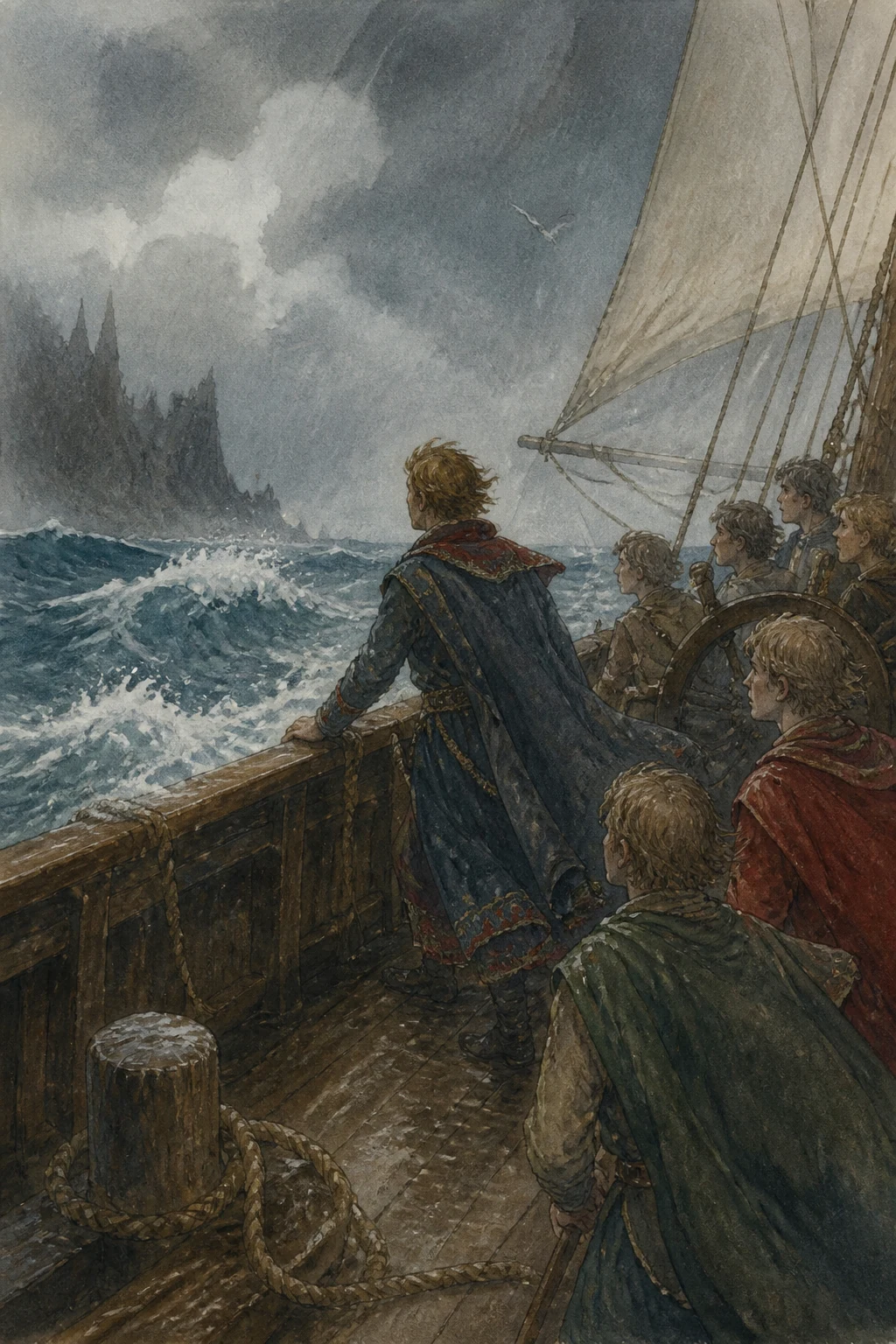
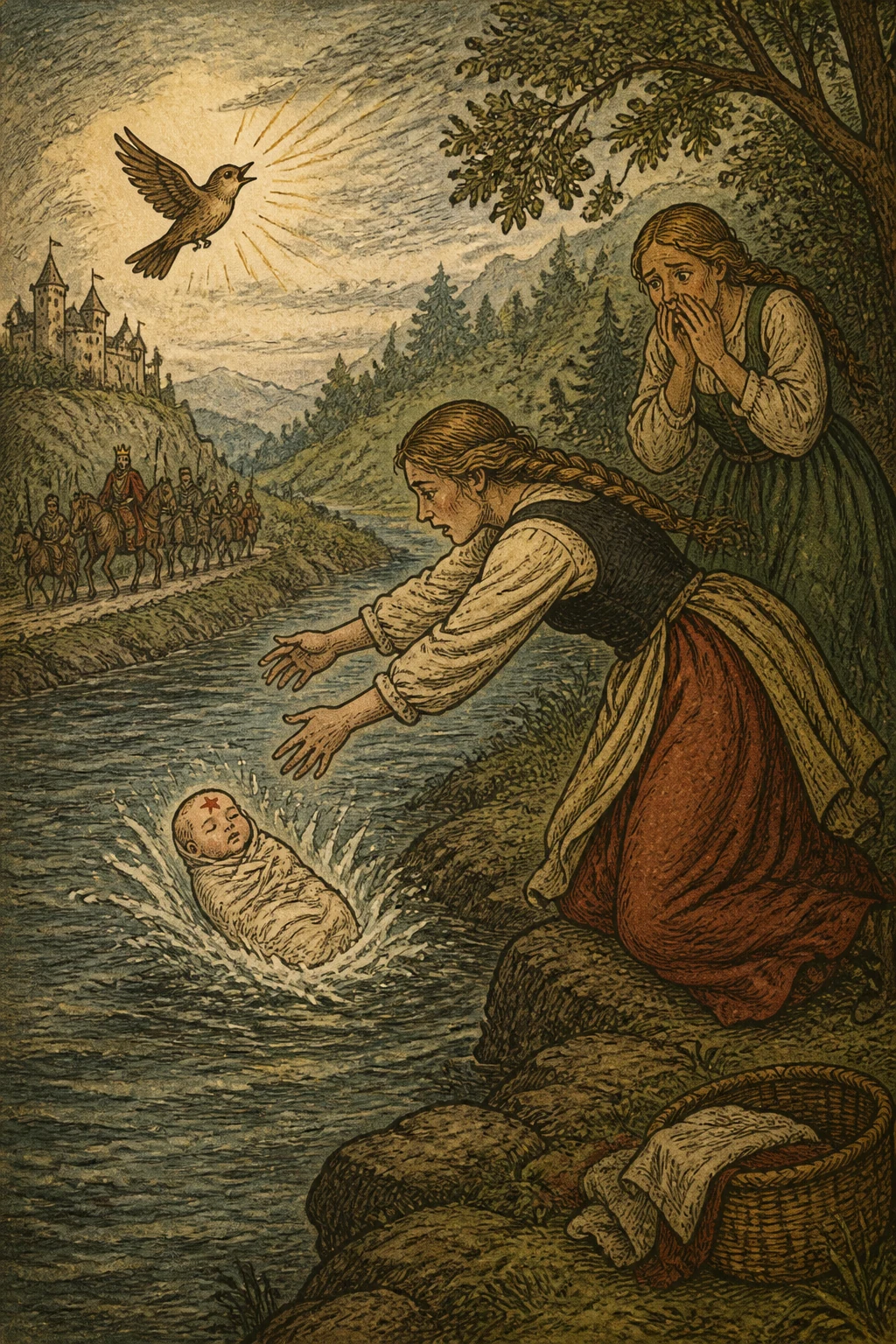
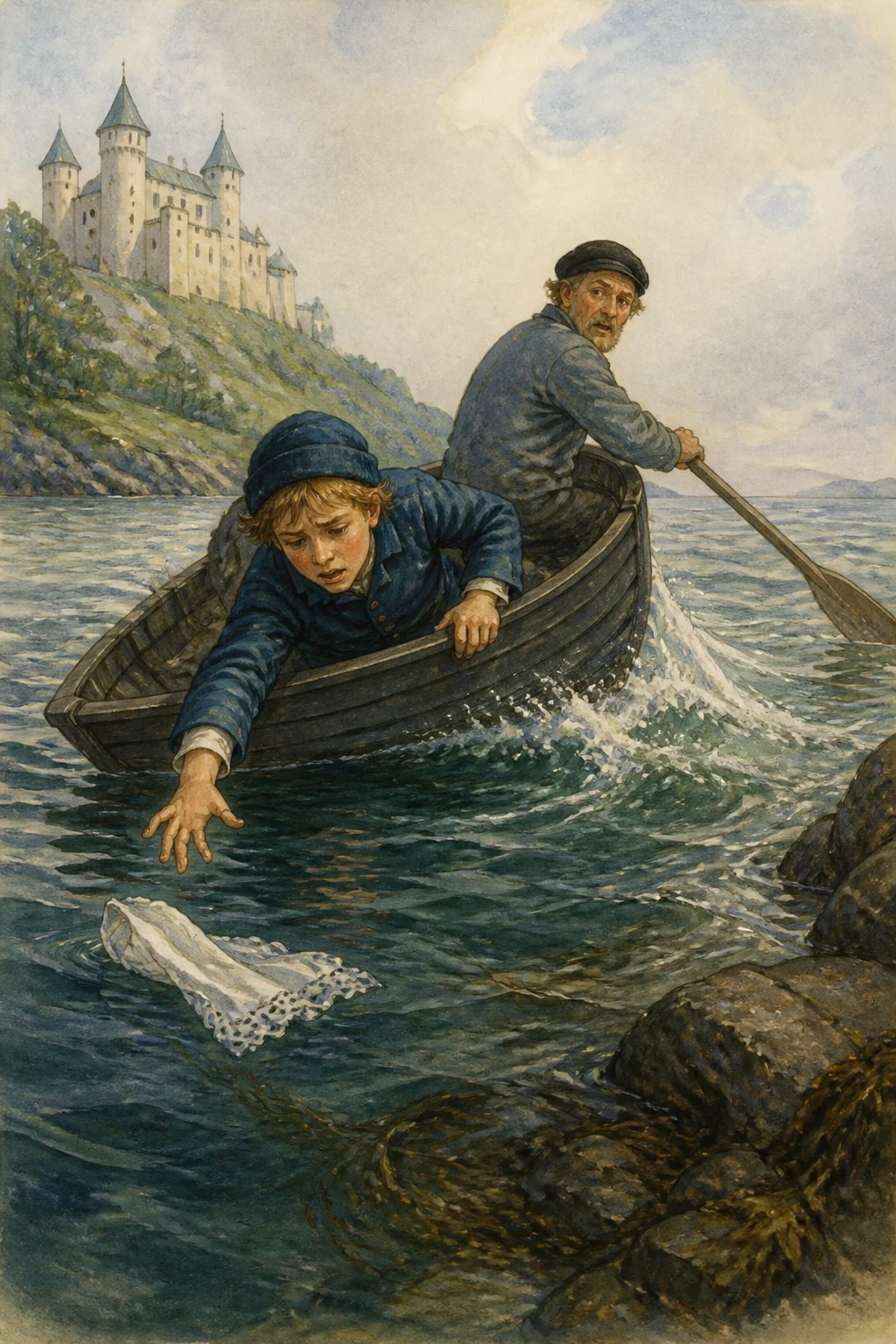
Once upon a time there was a fisherman who lived close to the palace and caught fish for the king’s table. One day, when he was out fishing, he caught nothing at all; try as he might, with rod and line, not so much as a bone would take the hook. But late in the day a head rose out of the water and said, “If you will give me what your wife carries beneath her girdle, you shall have fish enough.” The man agreed at once, for he did not know that she was with child. After that he caught fish in plenty that day, you may be sure—as many as he could wish. But when he came home that evening and told his wife how he had come by all the fish, she began to weep and wail, and begged God to comfort and help her after the promise her husband had made; for she was carrying a child beneath her girdle, she said. Word soon reached the palace that the woman was in such distress, and when the king heard of it and learned the reason, he promised to take the child into his care and see whether he could save it. Time went by, and when her time was up, the woman gave birth to a boy. The king took him in and brought him up as his own son until he was a grown lad. Then one day the lad asked leave to go fishing with his father; he had set his heart on it, he said. The king was unwilling to allow it, but at last the lad had his way and went with his father. All went well throughout the day, until they came ashore that evening. Then the son found he had left his handkerchief behind and went to jump into the boat to fetch it. But the moment he stepped aboard, the boat began to carry him away, with the water foaming all around it. Though the lad pulled against it with the oars, it was no use; on and on it went all night, until at last he came far, far away to a white shore. There he went ashore, and when he had walked a little way, he met an old man with a long white beard. “What is this place called?” asked the lad.
“Hvidtenland,” answered the man, and then he asked the lad where he came from and what he wanted, and the lad told him. “Well,” said the man, “if you follow this shore, you will come to three princesses who are buried in the earth with only their heads showing. The first—the eldest—will call out and beg you most sweetly to come and help her, and the second will do the same. But you must not go to either of them; hurry past as though you neither heard nor saw them. Go to the third, though, and do whatever she asks you; that will be the making of your fortune.” When the lad came to the first princess, she called to him and begged him most earnestly and sweetly to come to her, but he walked on as though he had never seen her. He passed the second in just the same way, but went up to the third. “If you will do as I tell you, you may have whichever of us three you choose,” said the princess. Yes, he would gladly do that; and she told him that three trolls had buried the three of them there in the earth, but that they had once lived in the castle he could see over in the forest.
“Now you must go into the castle and let the trolls whip you for one night for each of us,” she said. “If you can bear it, you will set us free.” Yes, answered the lad, he would certainly try. “When you go in,” the princess went on, “there will be two lions in the gateway, but if you walk straight between them, they will do you no harm. Then go straight into a small, dark room;
lie down there. The troll will come and beat you, but then you must take the bottle hanging on the wall and rub its contents on the places where he has struck you, and you will be as well as ever. Then seize the sword hanging beside the bottle and strike the troll dead.” The lad did as the princess had told him. He walked straight between the lions as though he did not see them, went right into the little room, and lay down. The first night a troll came with three heads and three scourges, and whipped the lad cruelly;
but he held out until the troll had finished. Then he took the bottle and rubbed himself with its contents, seized the sword, and struck the troll dead. When he came out in the morning, the princesses were above the ground as far as their waists. The second night things went just the same, except that the troll who came had six heads and six scourges, and whipped him even worse than the first. But when he came out that morning, the princesses were above the ground as far as their calves. The third night a troll came with nine heads and nine scourges, and beat and whipped the lad so long that at last he fainted;
then the troll picked him up and hurled him against the wall, knocking down the bottle so that its contents splashed over him, and he was as well as ever. He lost no time then, but seized the sword and struck the troll dead. When he came out of the castle that morning, the princesses were standing entirely above the ground. So he took the youngest for his queen and lived happily with her for a long time.
But at last he began to long to go home for a little while and see his parents. His queen did not like the thought of it, but when he yearned so much to go and insisted that go he must, she said to him, “There is one thing you must promise me: do only what your father asks of you, and not what your mother asks.” This he promised. Then she gave him a ring which granted whoever wore it any two wishes he pleased. He wished himself home, and his parents could not marvel enough at how splendid and handsome he had become.
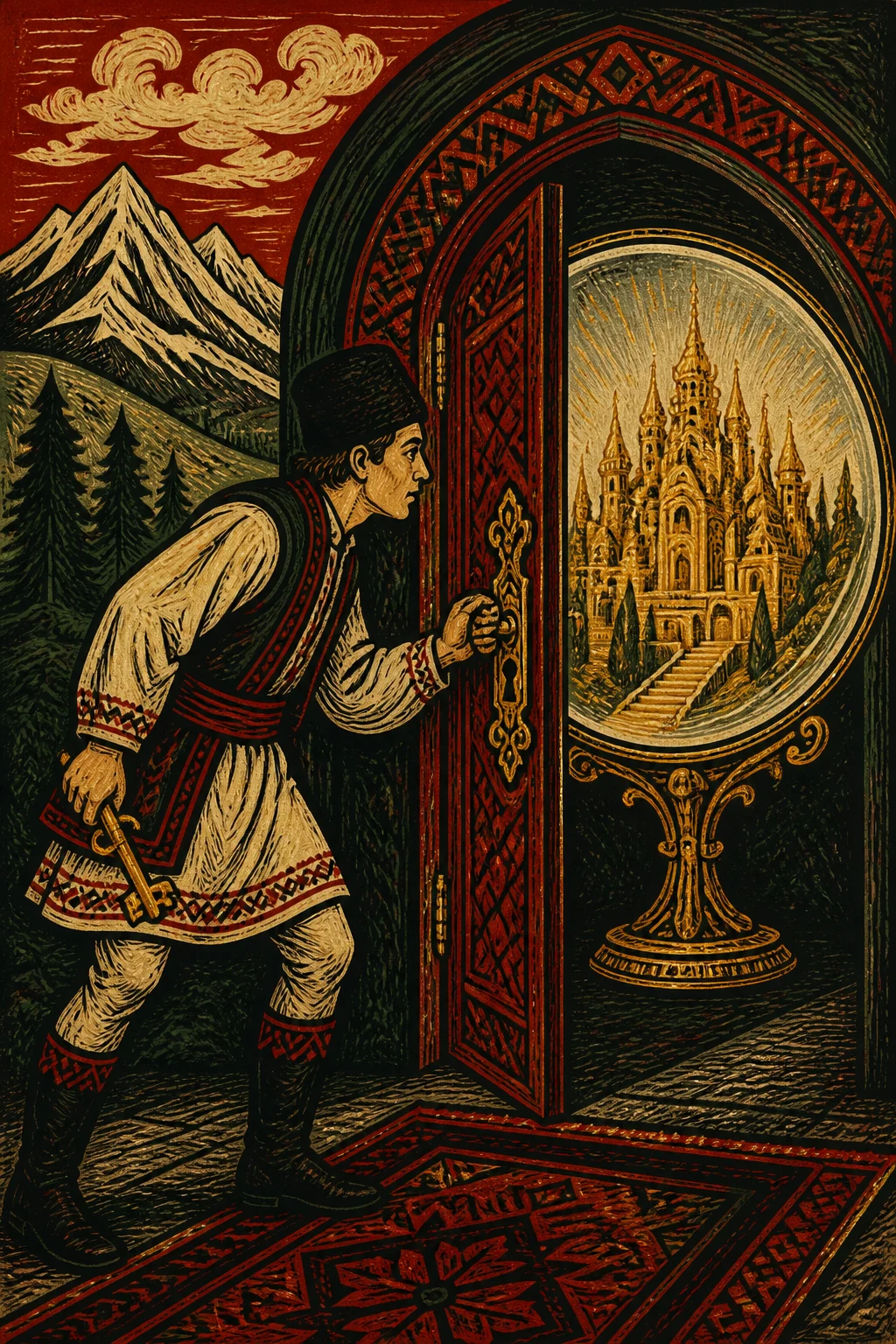
When he had been home a few days, his mother wanted him to go up to the palace and show the king what a fine man he had grown into. His father said, “No, he ought not to do that, for then we shall lose the pleasure of his company for all that time.” But it was no use: his mother begged and pleaded until at last he went. When he arrived, he was more splendid in his clothes and everything else than the other king. This did not please the king at all, and so he said, “Well, you can see what my queen is like, but I cannot see yours. I do not believe you have so beautiful a queen.” “Would to God she were here, and then you would see!” said the young king, and in an instant there she stood. But she was very sorrowful and said to him, “Why did you not heed me and listen to what your father told you? Now I must go home again at once, and you have used both your wishes.” With that she tied a ring bearing her name into his hair, and wished herself home.
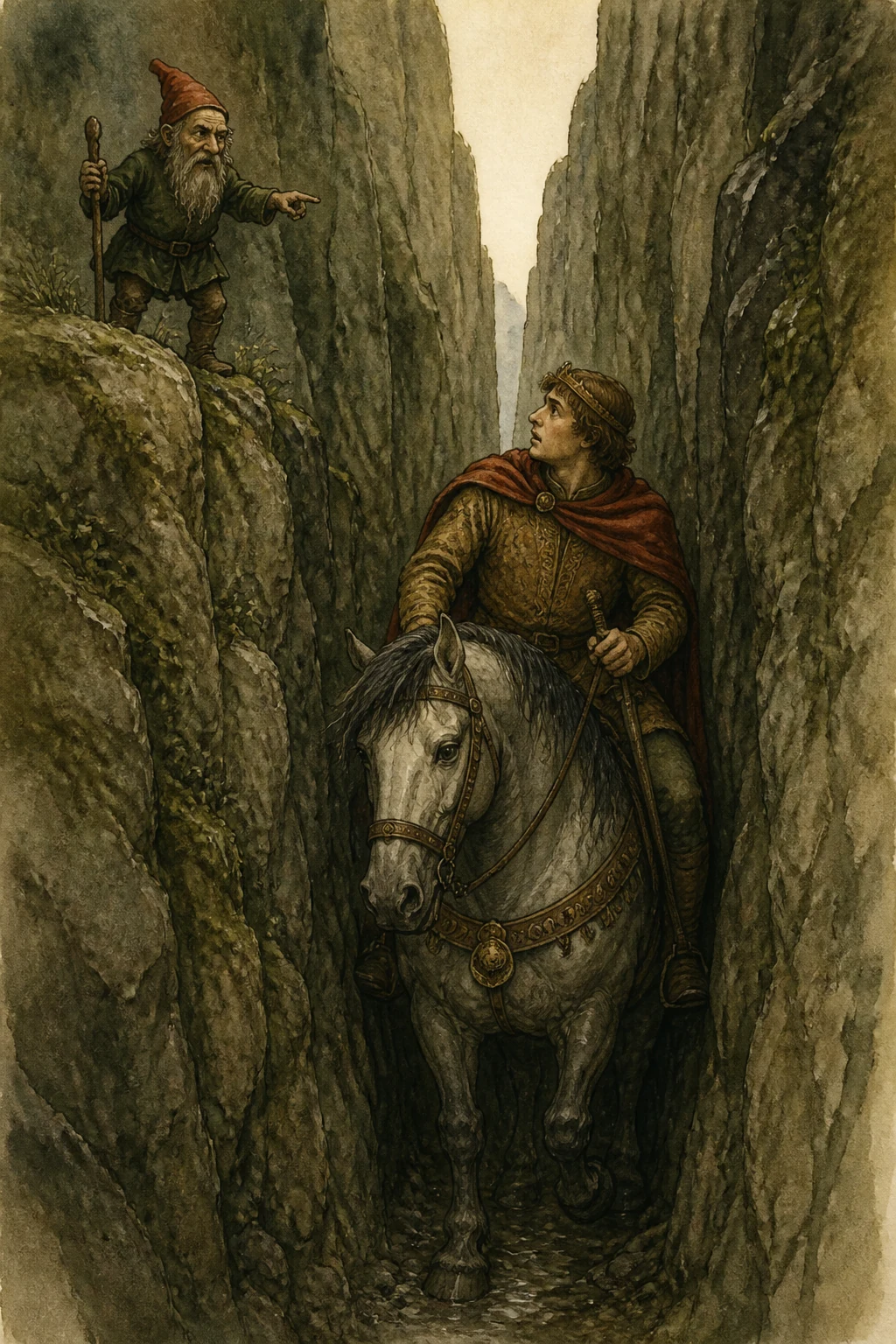
Then the young king was deeply grieved, and day after day he went about thinking of nothing but how he might return to his queen. I must see whether I can find anyone who can tell me where Hvidtenland lies, he thought, and set out into the world. After he had travelled for a while, he came to a mountain, where he met a man who was lord of all the beasts in the forest—for they came whenever he blew a horn he carried. The king asked him the way to Hvidtenland. “Well, I do not know,” he answered, “but I will ask my beasts.” Then he blew his horn to summon them and asked whether any of them knew where Hvidtenland lay, but none of them did.
Then the man gave him a pair of skis. “When you stand on these,” he said, “they will take you to my brother, who lives a hundred miles from here. He is lord of all the birds in the air;
ask him! When you arrive, just turn the skis so that their tips point this way, and they will come home by themselves.” When the king reached his destination, he turned the skis as the lord of the beasts had told him, and back they went.
Again he asked the way to Hvidtenland, and the man blew his horn to summon all the birds and asked whether any of them knew where Hvidtenland lay. No, none of them knew. Long after the other birds, an old eagle arrived; she had been away for ten whole years, but she did not know either. “Well, well,” said the man, “then I will lend you a pair of skis. When you stand on them, they will take you to my brother, who lives a hundred miles from here. He is lord of all the fish in the sea; you must ask him. But do not forget to turn the skis round!” The king thanked him and stepped onto the skis. When he reached the lord of the fish in the sea, he turned them round, and they went back just as the first pair had done. Then he asked once more about Hvidtenland.
The man blew his horn to summon the fish, but none of them could tell him anything. At last a very, very old pike arrived, whom he had great trouble summoning. When he asked her, she said, “Yes, I know the place well, for I have been cook there these past ten years.
Tomorrow I am going there again, for the queen whose king vanished is to marry another man.” “Since that is how things stand, I will give you some advice,” said the man. “Over there on a marsh stand three brothers who have been fighting for a hundred years over a hat, a cloak, and a pair of boots. Whoever has those three things can make himself invisible and wish himself as far away as he pleases. You can tell them that you will try the things out and then judge between them.” The king thanked him, went off, and did just that. “What is it you stand here fighting over for ever and ever?” he asked the brothers. “Let me try the things, and I will judge between you.” They were quite willing, but once he had the hat, the cloak, and the boots, he said, “The next time we meet, you shall hear my judgment!” And with that he wished himself away.
As he sped through the air, he fell in with the North Wind. “Where are you going?” asked the North Wind. “To Hvidtenland,” said the king, and told him all that had happened. “Well,” said the North Wind, “you will probably travel a little faster than I do, for I must gust and blow into every nook and cranny. But when you arrive, stand on the steps beside the door, and I will come roaring up as though I meant to blow the whole castle down. Then, when the prince who is to marry your queen comes out to see what is happening, seize him by the scruff of the neck and throw him out, and I will see if I cannot carry him off.” The king did as the North Wind had told him and stood on the steps. When the North Wind came roaring and rushing up and caught at the castle wall so that it shook, the prince went out to see what was happening. But the moment he appeared, the king seized him by the scruff of the neck and threw him out, and the North Wind caught him up and swept him away. Once he was rid of him, the king went into the castle. At first the queen did not recognize him, for he had grown so thin and pale from his long wandering and sorrow. But when he showed her the ring, she was overjoyed, and then the true wedding was celebrated, and the tale of it spread far and wide.
Izvirnik
009 De tre Prindsesser i Hvidtenland
Naslednje strani prikazujejo izvirno besedilo za primerjavo.
Der var engang en Fisker, som boede tæt ved Slottet og fiskede til Kongens Bord. En Dag, han var ude at fiske, fik han slet Intet; han kunde bære sig ad, som han vilde, og mede og angle, saa hang ikke et Been paa Krogen; men da det led langt paa Dagen, dukkede et Hoved op at Vandet og sagde: „Faaer jeg det, som Konen din bærer under Bæltet, skal du faae Fisk nok.“ Manden svarede strax ja, for han vidste ikke af, at hun var frugtsommelig. Siden fik han da Fisk om Dagen, kan hænde, og det saa Meget, han vilde have. Men da han kom hjem om Aftenen og fortalte, hvorledes han havde faaet al Fisken, begyndte Konen at jamre sig og græde, og bad Gud trøste og bedre sig for det Løfte, Manden havde gjort; for hun bar et Barn under Bæltet, sagde hun. Det blev snart fortalt oppe
paa Slottet, at Konen var saa bedrøvet, og da Kongen fik høre det og fik spurgt Aarsagen dertil, lovede han, at han vilde tage Barnet til sig og see at redde det. Det led med det skred, og da Tiden var omme, fødte Konen et Guttebarn; det tog da Kongen til sig og opdrog det som sin egen Søn, ligetil Gutten var voxen. Da bad Denne en Dag at han maatte faae Lov at følge sin Fader ud at fiske; han havde saadan inderlig Lyst til det, sagde han. Kongen vilde nødig tillade det, men endelig fik Gutten Lov, han blev med Faderen, og det gik godt og vel nok hele Dagen, ligetil de kom til Lands om Aftenen. Da havde Sønnen glemt efter sig Lommetørklædet sit, det vilde han springe ud i Baaden efter. Men med det samme han kom udi,
begyndte Baaden at gaae med ham, saa det fossede om den, og alt Gutten holdt imod med Aarerne, saa hjalp det ikke; det gik og det gik hele Natten, og endelig kom han langt, langt bort til en hvid Strand. Der gik han i Land, og da han havde gaaet et Stykke frem, mødte han en gammel Mand med et hvidt, sidt Skjæg. „Hvad hedder det her?“ sagde Gutten. „Hvidtenland,“ svarede Manden, og saa bad han Gutten sige sig, hvor han var fra, og hvad han vilde, og det fortalte Gutten ham. „Ja,“ sagde Manden, „naar du nu gaaer frem langs med Stranden her, saa kommer du til tre Prindsesser, som staae i Jorden, saa blot Hovedet er oppe. Saa raaber den Første — det er den ældste — og beder dig saa vakkert komme til sig, og hjælpe sig, og det gjør den Anden ogsaa; men Ingen
af dem skal du gaae hen til; skynd dig bare forbi dem, som du aldrig hørte eller saa dem. Men den Tredie skal du gaae hen til og gjøre det, hun beder dig om; det bliver din Lykke, det.“ Da Gutten kom til den første af Prindsesserne, raabte hun til ham og bad ham saa inderlig vakkert, at han skulde komme hen til hende, men han gik, som han aldrig saa hende; lige eens gik han forbi den anden; men den tredie gik han bort til. „Vil du gjøre det, jeg siger dig, skal du faae hvem af os tre, du vil,“ sagde Prindsessen. Ja, det vilde han gjerne; og saa fortalte hun, at dem tre havde tre Trold sat ned i Jorden der; men før havde de boet paa det Slot, han kunde see borte i Skoven.
„Nu skal du gaae ind i Slottet, og lade Troldene pidske dig een Nat for hver af os;“ sagde hun; „orker du taale det, saa frelser du os.“ Ja, svarede Gutten, det skulde han nok prøve. „Naar du gaaer ind,“ sagde Prindsessen videre, „staaer der to Løver i Porten, men naar du bare gaaer midt imellem dem, saa gjøre de dig Intet. Gaa saa ligefrem ind i et mørkt, lille Værelse; der lægger du dig. Saa kommer Troldet og slaaer dig; men saa skal du tage den Flaske, som hænger paa Væggen, og smøre dig der, han har slaaet dig, saa er du lige god igjen. Grib saa det Sværd, som hænger ved Siden af Flasken og hug Troldet ihjel.“ Ja, han gjorde, som Prindsessen sagde, han gik midt imellem Løverne, som om han ikke saa dem, og lige ind i det
lille Kammer, og der lagde han sig. Første Nat kom der et Trold med tre Hoveder og tre Riis og pidskede Gutten syndigt; men han holdt ud, til Troldet var færdig, saa tog han Flasken og smurte sig, og Sværdet og hug Troldet ihjel med. Da han saa kom ud om Morgenen, stod Prindsesserne over Jorden til Bæltet. Den anden Nat gik det lige eens; men det Trold, som da kom, havde sex Hoveder og sex Riis, og det pidskede ham endnu værre end det forrige; men da han den Morgen kom ud, stode Prindsesserne over Jorden til Smallæggen. Tredie Nat kom der et Trold, som havde ni Hoveder og ni Riis, og slog og pidskede Gutten saa længe, at han tilsidst daanede; saa tog Troldet ham og kastede ham mod Væggen, og derved faldt Krukken ned, saa det skvat ud over ham, og saa blev han
lige god igjen. Han var da ikke seen; han greb Sværdet og hug Troldet ihjel, og da han den Morgen kom ud af Slottet, stod Prindsesserne heelt ovenpaa Jorden. Saa tog han den yngste af dem til sin Dronning og levede godt og vel med hende i lang Tid. Men endelig fik han Lyst at reise hjem lidt og see til sine Forældre. Det syntes hans Dronning ikke om; men da han længtes saa meget og endelig maatte og skulde afsted, sagde hun til ham: „Eet skal du love mig, at du blot gjør det, som din Fader beder dig, men ikke det, din Moder beder dig,“ og det lovede han. Saa gav hun ham en Ring, som var saadan, at den, som havde den paa, kunde ønske to Ting, hvad han vilde. Han
ønskede sig da hjem, og Forældrene kunde ikke nok forundre sig over, hvor prægtig og gjild han var. Da han havde været hjemme nogle Dage, vilde Moderen, han skulde gaae op til Slottet og vise Kongen, hvilken en Mand der nu var bleven af ham. Faderen sagde: „Nei, det bør han ikke gjøre, for saa kan vi ikke have nogen Glæde af ham den Stunden;“ men det hjalp ikke, Moderen tiggede og bad ham saalænge, til han gik. Da han kom derop, var han prægtigere baade i Klæder og Alting end den anden Konge; det syntes denne nu ikke ret om, og saa sagde han: „Ja, men nu kan du see, hvordan min Dronning er; jeg kan ikke faae see din, jeg. Jeg troer ikke, du har saa deilig Dronning.“ „Gud give, hun stod her, skulde du faae see det!“ sagde den unge Kongen,
og strax saa stod hun der. Men hun var meget bedrøvet og sagde til ham: „Hvorfor led du ikke mig ad, og hørte efter hvad din Fader sagde dig? Nu maa jeg strax hjem igjen, jeg, og du har brugt begge Ønskerne dine.“ Dermed knyttede hun en Ring i hans Haar, som Navnet hendes stod paa, og ønskede sig saa hjem. Da blev den unge Konge hjertelig bedrøvet og gik Dag ud og Dag ind og tænkte bare paa, hvorledes han skulde komme tilbage til sin Dronning. Jeg faaer see, om jeg ingensteds kan faae spurgt, hvor Hvidtenland er, — tænkte han og begav sig ud i Verden. Da han havde gaaet en Stund, kom han til et Bjerg; der mødte han En, som var Herre over alle Dyrene
i Skoven — for de kom, naar han blæste i et Horn, han havde — og saa spurgte Kongen efter Hvidtenland. „Ja jeg veed det ikke,“ svarede han, „men jeg skal spørge Dyrene mine.“ Derpaa blæste han ind disse og spurgte, om Nogen af dem vidste hvor Hvidtenland laa; men der var Ingen, som vidste det. Saa gav Manden ham et Par Ski; „naar du staaer paa disse,“ sagde han, „kommer du til min Broder, som boer hundrede Mile herifra; han er Herre over alle Fuglene i Luften; spørg ham! Naar du er kommen frem, saa vender du bare Skierne saaledes at Odden staaer hidover, saa gaae de hjem af sig selv.“ Da Kongen kom did, vendte han Skierne saaledes som Herren over Dyrene havde sagt, og saa gik de tilbage.
Han spurgte igjen efter Hvidtenland, og Manden blæste ind alle Fuglene og spurgte om Nogen af dem vidste, hvor Hvidtenland laa? Nei, ingen vidste det. Længe efter de andre Fugle kom ogsaa en gammel Ørn, hun havde været borte i ti runde Aar; men hun vidste det heller ikke. „Ja, ja,“ sagde Manden, „saa skal du faae laant et Par Ski af mig; naar du staaer paa dem, saa kommer du til min Broder, som boer hundrede Miil herifra; han er Herre over alle Fiskene i Havet; du faaer spørge ham. Men glem ikke at vende Skierne igjen!“ Kongen takkede, steg paa Skiene, og da han var kommen til ham, der var Herre over Fiskene i Havet, vendte han dem, og saa gik de tilbage, ligesom de forrige; derpaa spurgte han efter Hvidtenland igjen.
Manden blæste da ind Fiskene, men ingen vidste Besked; endelig kom en gammel, gammel Gjedde, han havde megen Møie med at faae blæst ind. Da han spurgte hende, sagde hun: „Jo, der er jeg vel kjendt; for nu har jeg været Kokke der i ti Aar. Imorgen skal jeg did igjen; for da skal den Dronning, som Kongen blev borte for, holde Bryllup med en Anden.“ „Siden det er saa, skal jeg sige dig et Raad,“ sagde Manden. „Her borte paa en Myr staae tre Brødre, som har staaet der i hundrede Aar og slaaets om en Hat, en Kappe og et Par Støvler; naar En har de tre Ting, kan han gjøre sig usynlig og ønske sig saa langt, han vil. Du kan sige til dem, at du vil prøve Tingene og siden afsige Dom imellem dem.“ Ja, Kongen takkede for sig, gik og
gjorde saa. „Hvad er det I staae her og slaaes evig og evindelig om?“ sagde han til Brødrene; „lad mig prøve Tingene, skal jeg dømme imellem Jer.“ Det vilde de gjerne, men da han havde faaet Hatten, Kappen og Støvlerne sagde han: „Naar vi træffes næste Gang, skal I faae høre Dommen!“ og dermed ønskede han sig afsted. Medens han foer i Luften, kom han i Følge med Nordenvinden.
„Hvor skal du hen?“ sagde Nordenvinden. „Til Hvidtenland,“ sagde Kongen, og dermed fortalte han, hvad der var hændt ham. „Ja,“ sagde Nordenvinden, „du farer sagtens lidt fortere du; jeg skal nu ind i hver Krog og guste og blæse, jeg. Men naar du kommer frem, saa stil dig paa Trappen, ved Siden af Døren, saa skal jeg komme susende, som jeg vilde blæse ned hele Slottet. Naar da Prindsen, som skal have Dronningen din, kommer ud og skal see, hvad der er paa Færde, saa tager du ham i Nakken og kaster ham ud, saa skal jeg nok prøve at faae ham af Gaarde.“ Ja, som Nordenvinden havde sagt, gjorde Kongen; han stillede sig paa Trappen, og da Nordenvinden kom susende og brusende og tog et Tag i Væggen
paa Slottet, saa det rystede, gik Prindsen ud for at see hvad der var paa Færde; men med det samme han kom, tog Kongen ham i Nakken og kastede ham ud, og saa tog Nordenvinden ham og reiste med ham. Da han var bleven af med ham, gik Kongen ind i Slottet. Først kjendte ikke Dronningen ham, fordi han var bleven saa mager og bleg, ved det han havde vandret saalænge og været saa sorgfuld; men da han viste hende Ringen, blev hun hjertelig glad, og saa blev det rette Bryllup holdt, saa det spurgtes baade vidt og bredt.
Nadaljuj z branjem