Prevod
Nekega zgodnjega deževnega jutra je dolg Deževnik prilezel iz svojega rova. Pravzaprav ga ni čisto zapustil, temveč je izvlekel na plano večji del telesa, le čisto zadnji konec pa pustil v zemlji. Ker ni imel oči, ni mogel videti težkih sivih oblakov, ki so prekrivali nebo, niti stebel svilnic, tako obteženih z dežnimi kapljami, da so povešale rožnate glavice. Vsega tega ni mogel videti, lahko pa je čutil mehko, vlažno travo in hladen, svež zrak. Kar pa se vida tiče — deževniki pač nimajo oči in si jih tudi nikoli ne zaželijo, prav kakor si vi ne bi zaželeli šestih nog ali tipalnic na glavi.
Deževnik je bil zunaj svojega rova šele kratek čas, ko je nekaj zaprhutalo in zašumelo, z neba pa je priletelo Nekaj in njegovo ubogo telo pregriznilo na dvoje. O, kako je bolelo! Obe polovici sta se zvijali in krčili od bolečine, in kdo ve, kaj bi bilo z njima, če ne bi pridrvelo še drugo, večje Nekaj in pregnalo prvega. Tako je ubogi Deževnik obležal v dveh bolečih, zvijajočih se kosih, in čeprav ga je bilo prav lahko pregrizniti na dvoje, ga nič na svetu ne bi moglo ugrizniti nazaj v eno.
Čez nekaj časa je bolečina ponehala in lahko je začel razmišljati. Zelo težko se je bilo odločiti, kaj naj stori. Saj si lahko predstavljate, kako zmeden je moral biti: če bi nenadoma ugotovili, da ste namesto enega človeka dva, tudi vi ne bi vedeli, kateri je kateri. Prav tisti hip pa je mimo prišel Škržad in eden od Deževnikovih kosov ga je prosil za nasvet. Škržad je menil, da je ravno pravi za svetovanje v takem primeru, saj je tudi sam že doživel nekaj prav tako begajočega. Zato je zelo učeno dejal: »Pih! To je čisto preprosto. Tudi jaz sem nekoč mislil, da sem dva škržada, pa nisem bil. Tisti del, ki misli in se premika, je pravi, naj se zgodi karkoli. Torej je tisti del Črva, ki misli in se premika, pravi Črv.«
»Jaz sem tisti del, ki misli!« je vzkliknil vsak od obeh kosov. Škržad je bil tako presenečen, da si je s sprednjimi nogami pomel glavo. »In jaz sem tisti del, ki se premika!« je vzkliknil vsak od obeh kosov in se malo zvil, da bi to dokazal.
»No, no, no, no!« je vzkliknil Škržad. »Kaže, da ne vem, kako naj to razrešim. Poklical bom Podveznico,« in odletel je ponjo.
Prav nenavaden par sta bila Podveznica in Škržad, ko sta hitela nazaj od kačinega doma. Podveznica je bila precej razburjena. »Kaj takega se na našem travniku že dolgo ni zgodilo,« je rekla, »in še dobro, da je tu kdo, ki vama lahko vse pojasni, sicer bi se strašansko prestrašila. Moja družina je v sorodu s Črvi, zato se spoznam na to. Zdaj sta oba kosa Črva. Pregriznjena konca se bosta kmalu zacelila in lahko si uredita domova drug ob drugem, če nočeta živeti skupaj.«
»No,« sta rekla Deževnika, »če nisva več isti Črv, ampak dva Črva, ali sva si potem v sorodu? Sva brata ali kaj?« »No,« je odgovorila Podveznica s hudomušnim nasmeškom, »mislim, da bi se lahko imenovala polbrata.« In še danes ju poznajo kot »deževniška polbrata«. Zelo rada se imata in vedno ju je videti skupaj.
Vesel mlad Kobilček, ki je velik jedec in še malo preveč misli na hrano, je rekel, da ne bi imel nič proti, če bi ga pregriznili v dva kobilčka, če bi tako dobil dva želodca in bi lahko pojedel dvakrat toliko.
Škržad je nekega dne to povedal Podveznici, ona pa je rekla: »Povej mu, naj nikar ne poskuša. Deževniki so edini prebivalci travnika, ki lahko živijo, potem ko jih takole pregriznejo na dvoje. Vsi drugi moramo ostati celi ali pa je po nas. Kar pa se tiče dveh želodcev, mu z enim prav nič ne manjka, saj bi bil z dvema tudi dvakrat bolj lačen.«
Izvirnik
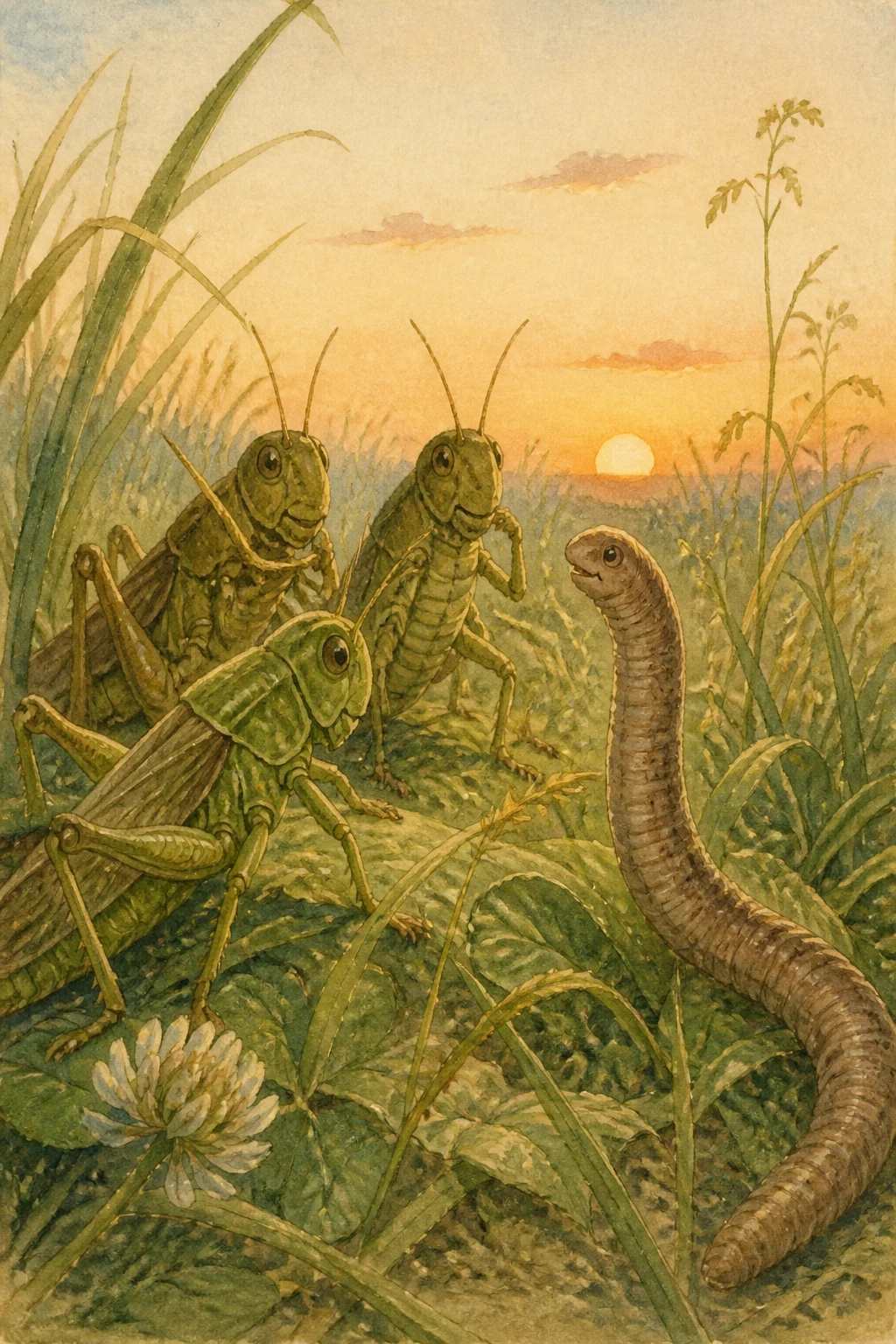
Early one wet morning, a long Earthworm came out of his burrow. He did not really leave it, but he dragged most of his body out, and let just the tip-end of it stay in the earth. Not having any eyes, he could not see the heavy, gray clouds that filled the sky, nor the milkweed stalks, so heavy with rain-drops that they drooped their pink heads. He could not see these things, but he could feel the soft, damp grass, and the cool, clear air, and as for seeing, why, Earthworms never do have eyes, and never think of wanting them, any more than you would want six legs, or feelers on your head.
This Earthworm had been out of his burrow only a little while, when there was a flutter and a rush, and Something flew down from the sky and bit his poor body in two. Oh, how it hurt! Both halves of him wriggled and twisted with pain, and there is no telling what might have become of them if another and bigger Something had not come rushing down to drive the first Something away. So there the poor Earthworm lay, in two aching, wriggling pieces, and although it had been easy enough to bite him in two, nothing in the world could ever bite him into one.
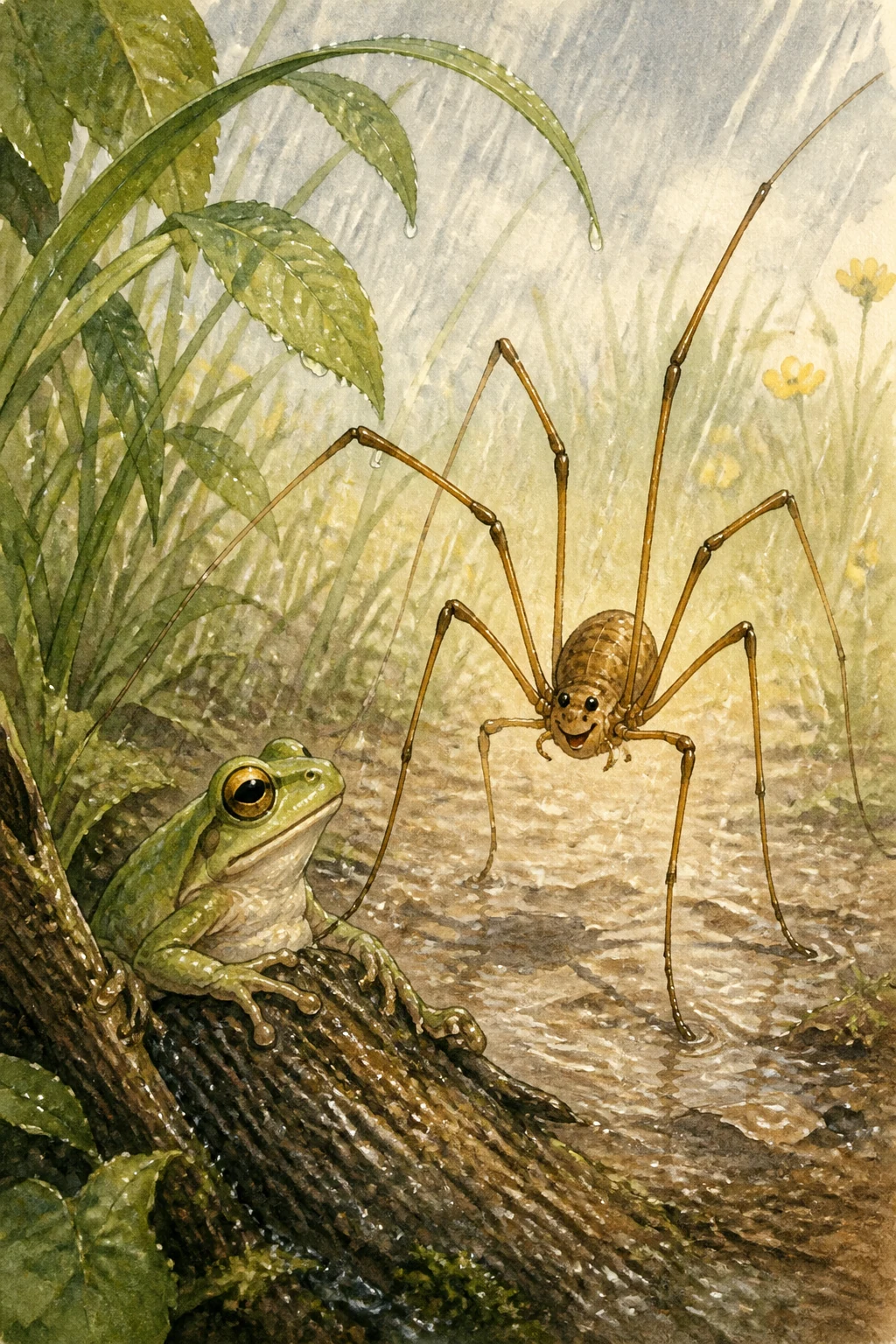
After a while the aching stopped, and he had time to think. It was very hard to decide what he ought to do. You can see just how puzzling it must have been, for, if you should suddenly find yourself two people instead of one, you would not know which one was which. At this very minute, who should come along but the Cicada, and one of the Earthworm pieces asked his advice. The Cicada thought that he was the very person to advise in such a case, because he had had such a puzzling time himself. So he said in a very knowing way: "Pooh! That is a simple matter. I thought I was two Cicadas once, but I wasn't. The thinking, moving part is the real one, whatever happens, so that part of the Worm which thinks and moves is the real Worm."
"I am the thinking part," cried each of the pieces.
The Cicada rubbed his head with his front legs, he was so surprised.
"And I am the moving part," cried each of the pieces, giving a little wriggle to prove it.
"Well, well, well, well!" exclaimed the Cicada, "I believe I don't know how to settle this. I will call the Garter Snake," and he flew off to get him.
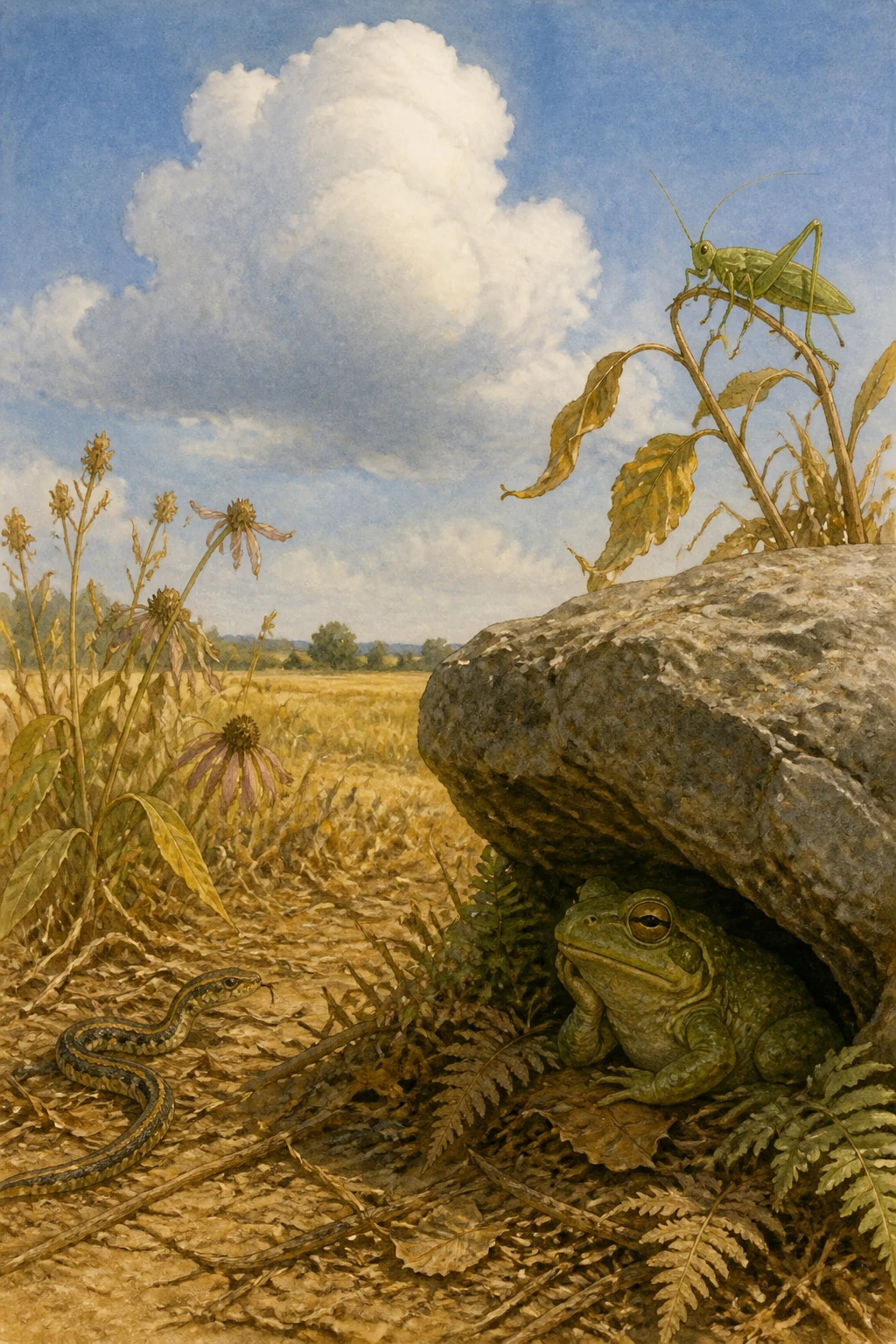
A very queer couple they made, the Garter Snake and the Cicada, as they came hurrying back from the Snake's home. The Garter Snake was quite excited. "Such a thing has not happened in our meadow for a long time," he said, "and it is a good thing there is somebody here to explain it to you, or you would be dreadfully frightened. My family is related to the Worms, and I know. Both of you pieces are Worms now. The bitten ends will soon be well, and you can keep house side by side, if you don't want to live together."
"Well," said the Earthworms, "if we are no longer the same Worm, but two Worms, are we related to each other? Are we brothers, or what?"
"Why," answered the Garter Snake, with a funny little smile, "I think you might call yourselves half-brothers." And to this day they are known as "the Earthworm half-brothers." They are very fond of each other and are always seen together.
A jolly young Grasshopper, who is a great eater and thinks rather too much about food, said he wouldn't mind being bitten into two Grasshoppers, if it would give him two stomachs and let him eat twice as much.
The Cicada told the Garter Snake this one day, and the Garter Snake said: "Tell him not to try it. The Earthworms are the only meadow people who can live after being bitten in two that way. The rest of us have to be one, or nothing. And as for having two stomachs, he is just as well off with one, for if he had two, he would get twice as hungry."