Prevod
Med vsemi, ki so živeli in delali na travniku ob reki, ni bilo nikogar, ki bi se toliko ukvarjal s tujimi zadevami kakor neki Modri Brenčač. Zakaj je bilo tako, ni znal povedati nihče; morda zato, ker ni imel drugega dela, kakor da je jedel in spal, saj se to pogosto dogaja tistim, ki imajo malo dela.
Prav zares je imel malo skrbi. Resda je veliko jedel, toda s skoraj šestdesetimi zobci za grizljanje in čudovitim dolgim jezikom za sesanje je lahko v zelo kratkem času pojedel prav veliko. Kar pa zadeva spanje — no, spati mu je bilo prav tako lahko kakor komur koli drugemu.
Kakor koli že, opazil je skoraj vse, kar se je zgodilo, in o tem premleval v svoji čudni trikotni glavici, dokler ni bil prepričan, da mora o tem govoriti še s kom. Nič čudnega, da je toliko videl, saj je imel na vsaki strani glave velik skupek oči, prav na vrhu pa še tri svetle, bleščeče očesce. Tako je lahko videl skoraj vse hkrati, poleg tega pa je imel tako zelo vitek vrat, da je lahko glavo obračal daleč naokrog.
Ta Brenčač je imel, tako kot vse druge muhe, zelo rad sonce, ob temnem ali deževnem vremenu pa se je držal doma. Hiše ni imel, toda ob oblačnih dneh se je zadrževal v nekem bezgovem grmu in temu je pravil svoj dom. Tam je prebil ves nevihten dan, viseč na spodnji strani lista, in ni imel drugega dela, kakor da je premišljeval. Seveda je imel glavo spodaj in noge zgoraj, toda Modri Brenčači v takem položaju razmišljajo prav tako dobro kakor v katerem koli drugem, po dve lepljivi blazinici na vsakem od njegovih šestih stopalc pa sta ga prav udobno držali na mestu.
Tisti dan je toliko premišljeval, da je imel naslednje jutro, ko se je zdanilo v jasen in sončen dan, drugim povedati celo goro reči, zato se je nemudoma odpravil na pot.
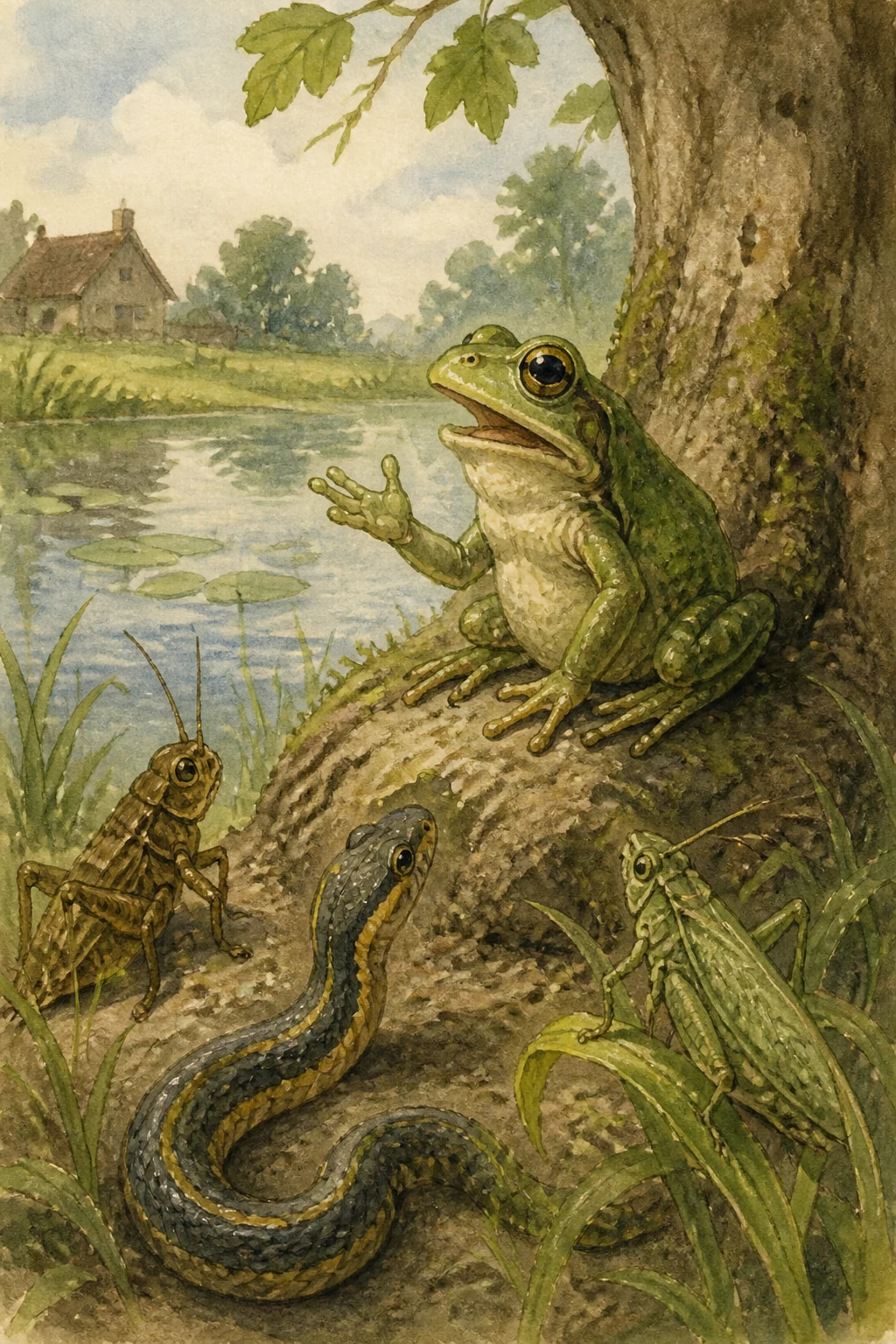
Najprej je obiskal Drevesnega Žabca. »Kaj misliš,« je dejal, »kaj Podveznica govori o tebi? Prav nesmiselno je, pa vendar se mi zdi, da bi moral vedeti. Pravi, da imaš jezik priraščen na napačnem koncu in da ti konica moli navzdol v grlo. Seveda sem vedel, da to ne more biti res, a sem ti vseeno hotel povedati, kaj je rekla, da bi lahko šel k njej in temu naredil konec.«
V odgovor je Drevesni Žabec iztegnil jezik in ta je bil res priraščen spredaj. »Kača ima čisto prav,« je prijazno dejal, »in moj jezik mi povsem ustreza. Prav tak je, kakršnega potrebujem za hrano, ki jo jem, najbolje pri vsem pa je, da nikoli ne seje razdora med prijatelji.«
Po tem Brenčač tam ni imel več kaj reči, zato je kar se da glasno odbrenčal iskat Kobilčka, ki je izgubil tekmo. »Sramota je bila,« mu je rekel, »da sodniki zmage niso prisodili tebi. Pa kaj še, da pride sem tisti mali zeleni Pednjak, skoraj tujec, in povzroči toliko težav! Na tvojem mestu bi poskrbel, da ga preženejo s travnika.«
»Oh, saj je vse v redu,« je odgovoril Kobilček, ki je bil po srcu res dober fant. »Nekaj časa sem se zaradi tiste tekme vedel prav neumno, toda s Pednjakom sva zdaj trdna prijatelja. Kajne?« Obrnil se je k listu tik za seboj in tam je izza roba kukal sam Pednjak.
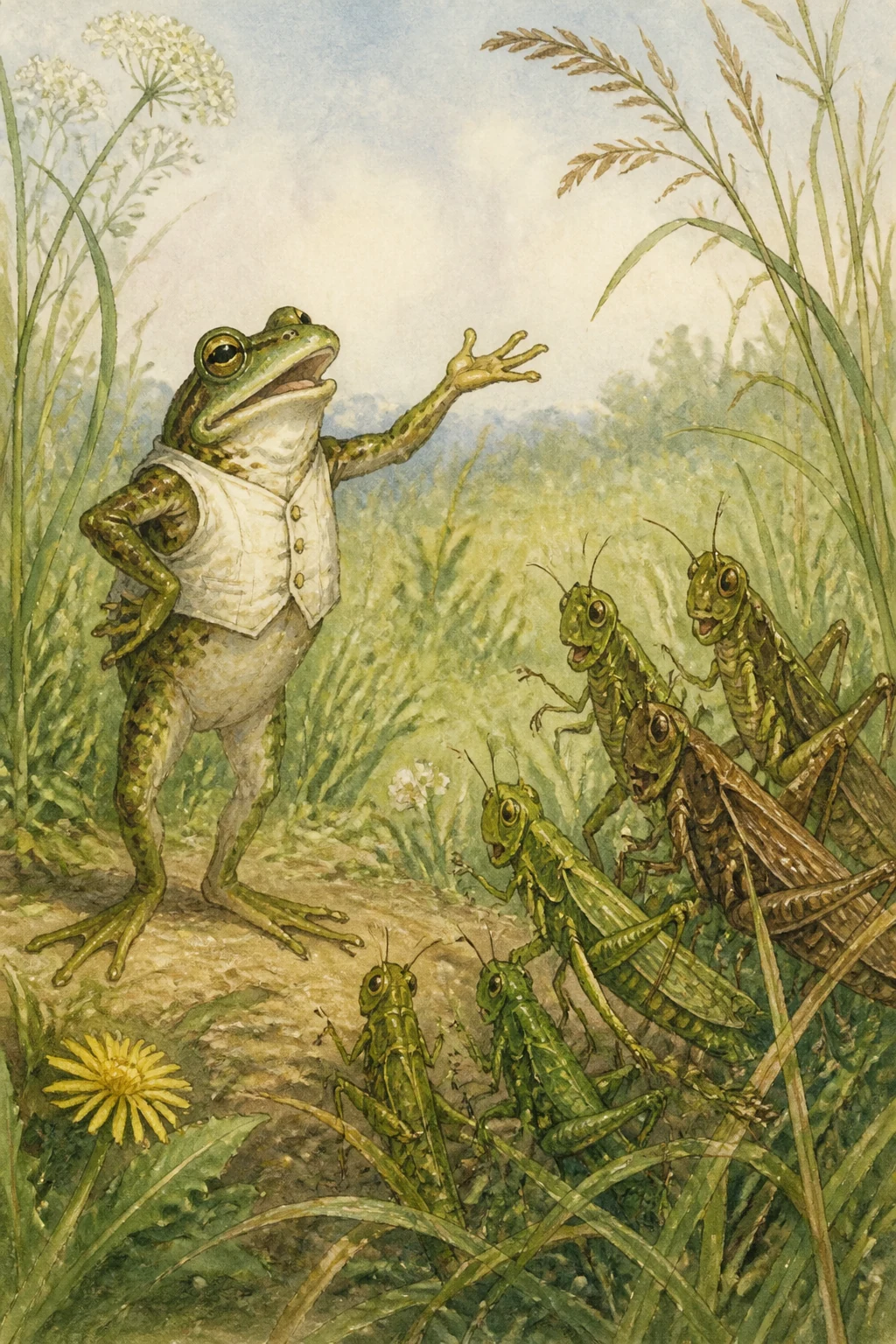
Modri Brenčač jo je naglo popihal, saj med tako dobrodušnimi bitji ni mogel ničesar doseči. Tokrat se je odpravil k Čričkom, ki jih je našel zbrane ob luknji debelega starega Črička.
»Prišel sem,« je dejal, »da bi izvedel, ali je res, kar pravijo prebivalci travnika, namreč da ste bili vsi na smrt prestrašeni, ko je prišla Krava.« Črički niso odgovorili niti besedice, temveč so se spogledali in ga začeli spraševati.
»Ali je res,« je rekel eden, »da ne počneš drugega, kakor da ješ in spiš?« »Ali je res,« je rekel drugi, »da svoje oči večino časa uporabljaš za iskanje napak pri drugih?«
»In ali je res,« je rekel tretji, »da ob vsem hrupu, ki ga zganjaš, počneš le malo drugega, kot da seješ razdor?« Modri Brenčač ni odgovoril ničesar, temveč se je pri priči odpravil domov v bezgov grm, in pravijo, da so njegovo trikotno glavico polnile čisto drugačne misli kot kdaj koli prej.
Izvirnik
Of all the people who lived and worked in the meadow by the river, there was not one who gave so much thought to other people's business as a certain Blue-bottle Fly. Why this should be so, nobody could say; perhaps it was because he had nothing to do but eat and sleep, for that is often the way with those who do little work.
Truly his cares were light. To be sure, he ate much, but then, with nearly sixty teeth for nibbling and a wonderful long tongue for sucking, he could eat a great deal in a very short time. And as for sleeping--well, sleeping was as easy for him as for anyone else.
However it was, he saw nearly everything that happened, and thought it over in his queer little three-cornered head until he was sure that he ought to go to talk about it with somebody else. It was no wonder that he saw so much, for he had a great bunch of eyes on each side of his head, and three bright, shining ones on the very top of it. That let him see almost everything at once, and beside this his neck was so exceedingly slender that he could turn his head very far around.
This particular Fly, like all other Flies, was very fond of the sunshine and kept closely at home in dark or wet weather. He had no house, but stayed in a certain elder bush on cloudy days and called that his home. He had spent all of one stormy day there, hanging on the under side of a leaf, with nothing to do but think. Of course, his head was down and his feet were up, but Blue-bottle Flies think in that position as well as in any other, and the two sticky pads on each side of his six feet held him there very comfortably.
He thought so much that day, that when the next morning dawned sunshiny and clear, he had any number of things to tell people, and he started out at once.
First he went to the Tree Frog. "What do you suppose," said he, "that the Garter Snake is saying about you? It is very absurd, yet I feel that you ought to know. He says that your tongue is fastened at the wrong end, and that the tip of it points down your throat. Of course, I knew it couldn't be true, still I thought I would tell you what he said, and then you could see him and put a stop to it."
For an answer to this the Tree Frog ran out his tongue, and, sure enough, it was fastened at the front end. "The Snake is quite right," he said pleasantly, "and my tongue suits me perfectly. It is just what I need for the kind of food I eat, and the best of all is that it never makes mischief between friends."
After that, the Fly could say nothing more there, so he flew away in his noisiest manner to find the Grasshopper who lost the race. "It was a shame," said the Fly to him, "that the judges did not give the race to you. The idea of that little green Measuring Worm coming in here, almost a stranger, and making so much trouble! I would have him driven out of the meadow, if I were you."
"Oh, that is all right," answered the Grasshopper, who was really a good fellow at heart; "I was very foolish about that race for a time, but the Measuring Worm and I are firm friends now. Are we not?" And he turned to a leaf just back of him, and there, peeping around the edge, was the Measuring Worm himself.
The Blue-bottle Fly left in a hurry, for where people were so good-natured he could do nothing at all. He went this time to the Crickets, whom he found all together by the fat, old Cricket's hole.
"I came," he said, "to find out if it were true, as the meadow people say, that you were all dreadfully frightened when the Cow came?"
The Crickets answered never a word, but they looked at each other and began asking him questions.
"Is it true," said one, "that you do nothing but eat and sleep?"
"Is it true," said another, "that your eyes are used most of the time for seeing other people's faults?"
"And is it true," said another, "that with all the fuss you make, you do little but mischief?"
The Blue-bottle Fly answered nothing, but started at once for his home in the elder bush, and they say that his three-cornered head was filled with very different thoughts from any that had been there before.