Prevod
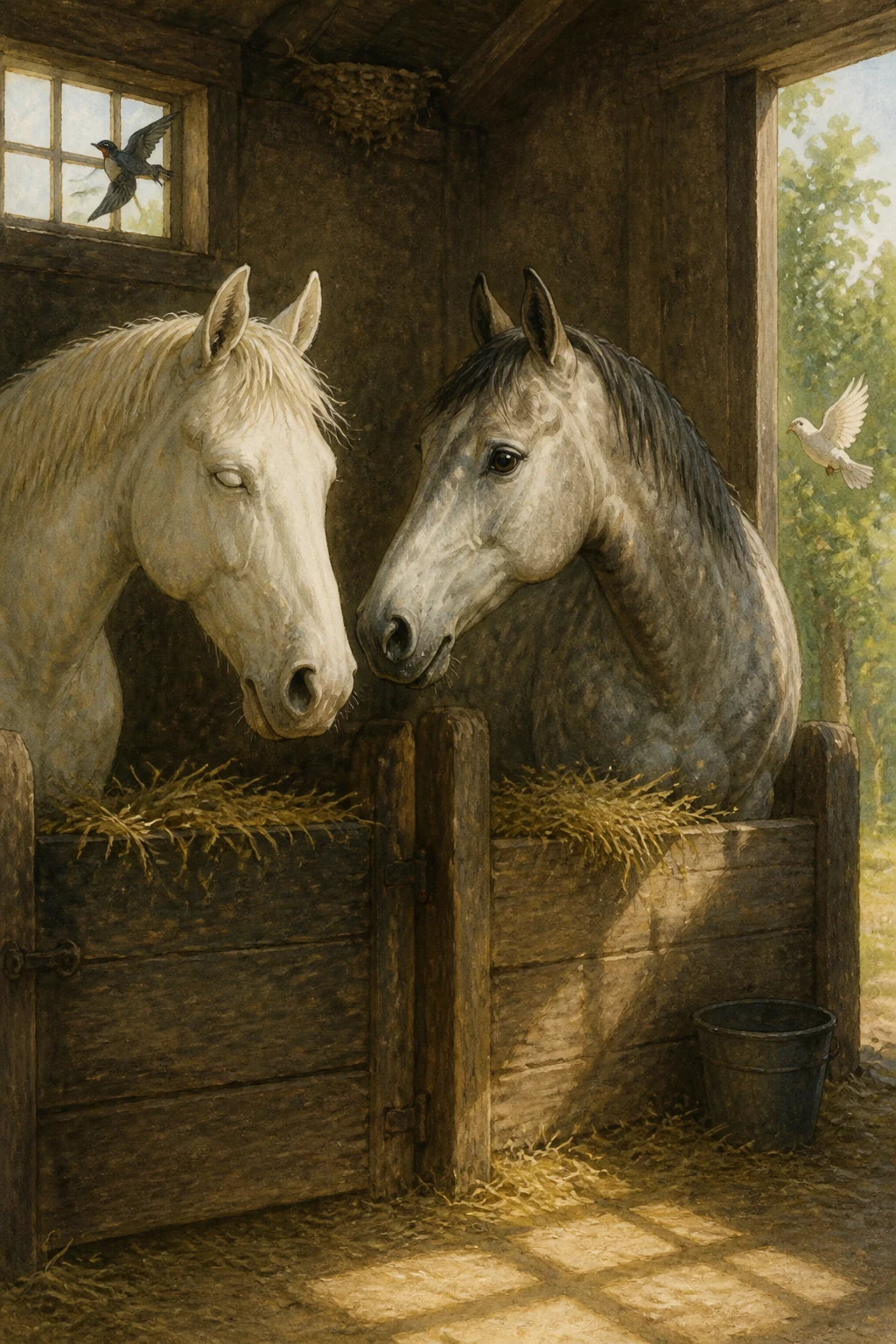
Nekega dne so se trije veliki mucki, ki so z mamo živeli v kmetovem skednju, strašno sprli. Če bi bila mama z njimi, bi verjetno vsakemu prisolila zaušnico s sprednjo tačko in jih pošteno oštela. A ni bila z njimi, saj so ob njej na senu nad hlevskimi stoji ležali štirje novi majceni mucki.
Človek bi si mislil, da so bili starejši mucki gotovo zelo ponosni na svoje male bratce in sestrice, pa niso bili. Lahko bi bili za mamo naredili kaj prijaznega, vendar niso. Lovili so samo zase in ji nikoli niso prinesli niti grižljaja. To pa še ne pomeni, da so bili slabi mucki. Kaže le, da so bili mladi in nepremišljeni.
Rjavi mucek, tisti, ki je imel črne in rumene dlake tako drobno pomešane, da je bil videti rjav, se je povzpel po skedenjskih stopnicah, da bi jih pogledal. Ko je prišel do njihovega kotička, je sedel in zarenčal nanje. Mama sprva ni rekla ničesar, ko pa je začel še grozeče švigati z repom, je zapustila svoje nove mladičke, planila nanj in mu rekla, naj zgoraj ne pokaže več niti brkov, dokler se ne bo znal dostojno vesti.
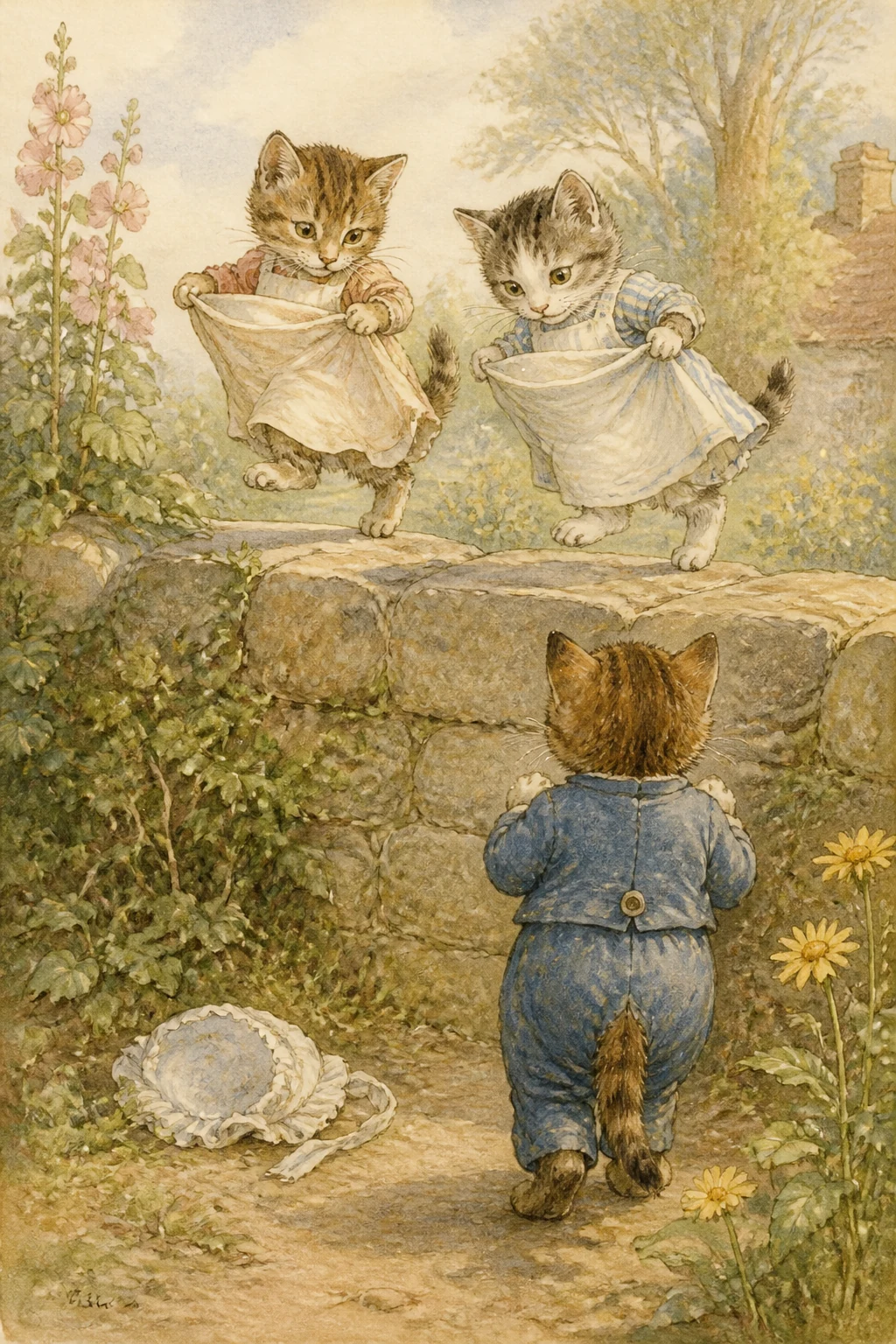
Njegovi sestri, Rumena mucka in Bela mucka, sta ostali spodaj. Mladički jima niso bili tako zoprni kakor njunemu bratu. Preprosto jima ni bilo nič mar zanje. Saj veste, mačkam navadno ni kaj dosti do muckov, razen če so njihovi lastni, veliki bratje pa vedno pravijo, da jih ne prenesejo.
Ti trije starejši mucki so bili povsem sposobni skrbeti zase. Že dolgo je bilo tega, kar jih je mama nehala hraniti, in bili so že izvrstni lovci. Še preden so zapustili senik, so se vadili v prežanju, plazenju in skakanju. Včasih so lovili šope sena, ki so se premikali, kadar je skozi odprta vrata zapihal veter. Včasih so skakali drug na drugega, včasih pa lovili kobilice, ki so jih s senom prinesli v skedenj. Prav pri tem so se nekoč tako strašno prestrašili, a to zgodbo smo že povedali.
Nobenega razloga ni bilo, da bi se počutili zapostavljene ali skrbeli, ali bodo dobili dovolj hrane. Če kateri pri lovu ni imel sreče, se je moral samo smukati okoli skednja, ko so pripeljali krave, in iti v hišo za kmetom, ki je nesel velika vedra, polna penastega mleka. Če so se potem mucki delali lačne, zelo glasno mijavkali in se ljubeznivo drgnili ob kmetico, so zagotovo dobili lepo polno skodelico toplega mleka.
Saj vidite, kako nerazumni so bili. Imeli so dovolj hrane in mama jih je imela še vedno prav tako rada kakor prej, vendar so bili užaljeni, se kujali po kotih, drug drugemu prav nesramno odgovarjali in niso hoteli tekati za vrvico, s katero jim je pred nosom bingljala kmetova hčerkica. Ves čas vendarle niso bili čemerni, saj so bili pokonci vso noč in so morali tudi spati. Ko so zaspali, so se nehali kujati, brž ko so se zbudili, pa so spet začeli. Kokoši, ki so v bližini brskale za hrano, so se tega tako navadile, da so takoj, ko so videle katerega od muckov, kako se preteguje in zvija, kakor da se bo zbudil, sklonile glave in jo ucvrle, kolikor so jih nesle noge.
Še za čistočo niso skrbeli. O, že res, da so se čez dan dvakrat ali trikrat oblizali, vendar ne temeljito. Rumena mucka niti enkrat ni poskusila ujeti svojega repa in ga pošteno umiti, tako da je ves dan hodila naokrog z neumitim repom. Ker je bil rumen, se to ni posebno poznalo, a zato ni bil nič čistejši. Bela mucka je hodila naokrog s sprednjima tačkama, ki sta bili zares sramotno umazani. Rjavi mucek si je ušesa umival nekam mlačno, na predel pod brado pa sploh ni pazil. Ko si je umival ušesa, je enkrat obliznil tačko in enkrat podrgnil po ušesu, pa še to je ponovil le šestkrat. Vsakdo ve, da si zares snažen maček tačko omoči z dvema oblizoma, uho očisti z dvema potegoma in to ponovi dvajsetkrat do štiridesetkrat, preden se loti drugega ušesa.
Proti večeru so se sprli ob skodelici mleka, ki jim jo je dala kmetica. Prostora je bilo dovolj, da bi vsi hkrati pomolili glave k skodelici in lokali, dokler ne bi vsak dobil svojega deleža. Če ne bi bilo njihovih brkov, ne bi bilo nobene težave. Ti pa so se zadevali drug ob drugega in vsak je drugima dvema rekel, naj se umakneta in počakata. Nihče tega ni storil in nastal je tak direndaj, da je kmetica skodelico odnesla, zato nihče ni dobil več niti kapljice. Začeli so kriviti drug drugega in se tako glasno prepirati, da jih je kmet vse nagnal in so jo ucvrli, kolikor so jih nesle tačke.
Zdaj, ko so bili vsak zase, je vsak postajal vse bolj nezadovoljen. Rjavi mucek je zlezel pod kolnico in se, brž ko se je zares stemnilo, skrivaj odpravil v gozd.
»Mama ima nove mucke,« je rekel, »sestri pa mi čisto razmršita brke. Odšel bom in se nikoli več vrnil. Tudi poslovil se ne bom od njih. Potem jim bo gotovo hudo in si bodo želeli, da bi bili prijaznejši do mene! Če me kdaj najdejo in hočejo, da pridem nazaj, ne bom šel. Tudi če me bodo prosili in prosili! Samo rep jim bom obrnil in odkorakal proč.«
Rjavi mucek je vedel, da se mačke včasih odselijo v gozd in se tam prav dobro znajdejo. Nobene take ni poznal; mama je njemu in sestrama pripovedovala zgodbe o mačkah, ki so si izbrale takšno življenje. Rekla je, da se tudi po tem vidi, koliko pametnejše so od psov. Saj veste, psi ne morejo srečno živeti daleč od ljudi, četudi je okoli njih še toliko dobrega plena.
»Poiskal si bom lepo votlo drevo,« je rekel, »in si v njem uredil dom. Tam bom ves dan spal, ponoči pa lovil. Toliko bom jedel, da bom postal velik in močan. Ko se bom potem odpravil na lov, bodo gozdni prebivalci rekli: ‘Pst! Prihaja Rjavi maček.’«
Medtem ko je tako razmišljal, je tiho tekel po podeželski cesti proti gozdu. Tu in tam se je ustavil in prisluhnil; obstal je z dvignjeno in vstran obrnjeno glavo ter eno sprednjo tačko v zraku. Ušesa je ves čas obračal naprej, da bi bolje slišal.
Ko je šel mimo močvirja, je zagledal kresnice, ki so plesale po zraku. Včasih so letele tako nizko, da bi jih mucek lahko ujel. Sklenil je poskusiti, zato se je splazil skozi ograjo proti kraju, kjer so plesale. Šel je mimo dveh utrujenih kresnic, ki sta sedeli na listu, a ju sploh ni opazil. Krila so jima namreč tako dobro prekrivala boke, da svetloba ni prodirala mimo njih, svetla trebuščka pa sta bila tesno ob listu. Skoraj je že prišel do plesalk, ko je začutil, da ima tačke mokre in blatne. Zato se je pri priči obrnil, saj blata nikakor ni prenesel. »Ko bi le imel kaj za pod zob,« je rekel in odgriznil košček mačje mete. »Tole je prav dobro za posladek, za cel obrok pa ne.«
Stopical je naprej proti gozdu in razmišljal o mleku, kresnicah in še marsičem, ko ga je ustavil velik krilati neznanec, ki se je spustil proti njemu, nato pa se v loku dvignil in pristal na veji. Rjavi mucek je ves otrpel odskočil in zasikal: »Haaa!«
»Kdo? Kdo? H komu?« je vprašal neznanec na veji. Rjavi mucek je odgovoril: »Jaz sem.« A vprašanje se je ponovilo: »Kdo? Kdo? H komu?« Tedaj se je Rjavi mucek spomnil, da v gozdu ne poznajo njegovega glasu, zato iz njegovega odgovora nihče ne more ničesar izvedeti. Tokrat je odgovoril: »Rjavi mucek sem, če dovolite, in prišel sem živet v gozd.«
»Kdo? Kdo? H komu?« se je glasilo naslednje vprašanje in Rjavi mucek je pomislil, da ga sprašuje, h komu gre na dom. »K nikomur ne grem,« je rekel. »Preprosto sem hotel priti sem in sem nenadoma zapustil svoj stari dom. Živel bom sam in se imel lepo. Še mami nisem povedal.«
»Kdo? Kdo? H komu?« je rekel Veliki uhar, kajti to je bil on. »Moji m-mami,« je rekel Rjavi mucek, potem pa stekel proč, kolikor hitro je mogel. Med govorjenjem je uharja jasneje videl in njegov obraz ga je malce spominjal na mamo, zato si jo je zaželel videti. Tekel je tako hitro, da se je skoraj zaletel v Smrdljivca, ki se je dostojanstveno sprehajal po gozdu in ovohaval skoraj vse, kar je videl. Veste, prav veliko srečo je imel, da se ni zares zaletel vanj, saj smrdljivci ne marajo, da se kdo zaletava vanje, in če bi se to zgodilo, bi drugi kmalu ovohavali njega.
Rjavi mucek je pomislil, da je Smrdljivec morda njegov sorodnik. Bila sta približno enako velika, Rjavemu mucku pa so povedali, da njegovi sorodniki niso le različnih barv, temveč tudi različnih oblik. Mama mu je pripovedovala, da je videla nekaj manskih muckov, ki sploh niso imeli repov, zato se mu je zdelo, da Smrdljivčev imenitni dolgodlaki rep še ne pomeni, da ni maček.
»Dober večer,« je rekel Rjavi mucek. »Bi mi, prosim, povedali, ali ste maček?« »Maček? Ne!« je zarenčal Smrdljivec. »Včasih mi pravijo gozdni muc, a nimajo pravice do tega. Jaz sem smrdljivec, smrdljivec, SMRDLJIVEC in sem v sorodu s podlasicami. Umakni se mi s poti.«
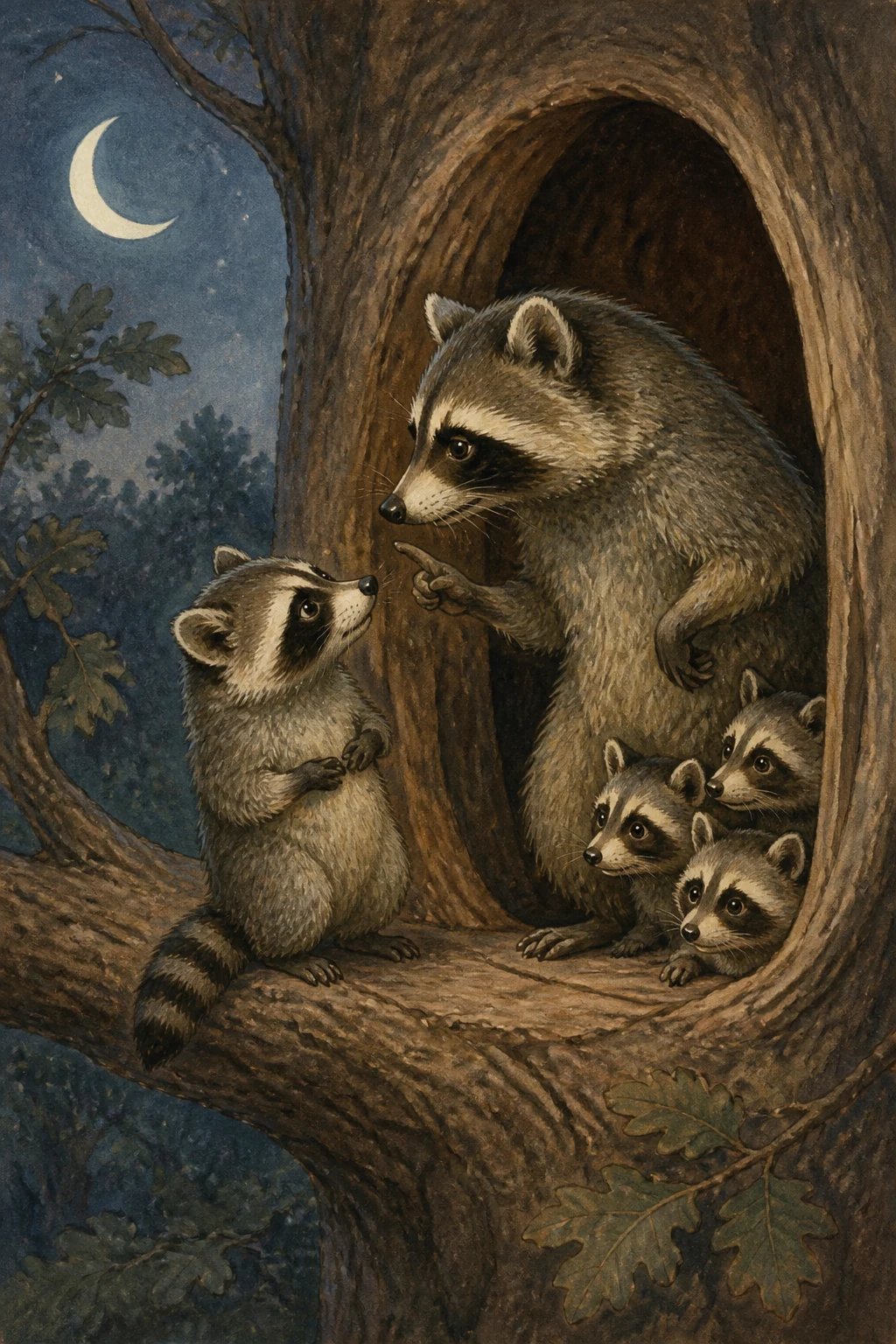
Družina mladih rakunov na drevesu mu je nagajivo klicala, naj pride gor, ko pa je začel plezati, so mu rekli, naj gre dol, in se mu nato smejali, ker je moral sestopati z repom naprej. Ni vedel, da gozdni plezalci obrnejo prste zadnjih nog nazaj in smuknejo navzdol z glavo naprej. A tudi če bi to vedel, ne bi bilo nič drugače, saj svojih prstov ni mogel obračati.
Tu in tam je našel kaj za pod zob in ves čas iskal votlo drevo. Našel je le eno, v njem pa so prebivale čebele, zato se ni mogel naseliti vanj. Povsod okoli njega so iz zemlje poganjale prelepe gobe. Bile so bele, rumene, oranžne, rdeče in rjave ter videti tako mesnate in lepe, da si jih je želel ugrizniti. Toda vedel je, da so nekatere zelo strupene, zato jih s svojim željnim, hrapavim rožnatim jezičkom ni niti obliznil. Prav tedaj so mu izpadali mlečni zobje in rasli novi, pravi mačji zobje, zaradi katerih ga je mikalo ugrizniti skoraj vse, kar je videl. Ena vrsta gob, ki se mu je zdela najlepša od vseh, je rasla samo na deblih podrtih bukev. Bila je bela in imela je veliko drobnih vejic, stisnjenih tesno drugo ob drugo.
Večina rastlin, ki jih je videl, je trdno spala. Saj veste, vsaka rastlina mora spati in večina si ponoči privošči dolg spanec. Nekatere, denimo lokvanji, spijo tudi ob oblačnih dneh. Detelje je imel zelo rad, a njihovi lističi so bili tesno zloženi in samo gobe, svetlini ter še nekaj drugih rastlin so bili povsem budni. Vsi, ki jih je srečal, so bili tujci in začel se je počutiti zelo osamljenega. Mačk navadno ne moti, če so same. Pravzaprav jim je to kar všeč; vendar si lahko predstavljate, kako težko je mucku, ki je bil vedno ljubljen in deležen skrbi, ko se znajde sam v temnem gozdu, kjer velike ptice kar naprej ponavljajo ista vprašanja, drugi pa se norčujejo iz njega. Tudi vam ne bi bilo všeč, če bi bili mucek.
Naposled je med tihim potikanjem po stari gozdni poti, v upanju, da bo srečal kakšno mlado, nežno gozdno miško, pred seboj zagledal dve svetli živali. Zdeli sta se mu zelo podobni muckoma, a spomnil se je, kako ga je Smrdljivec osorno zavrnil, ko ga je imel za mačka, zato je molčal. Stekel je, da bi ju dohitel in bolje videl, in prav ko ju je dosegel, so vsi skupaj prišli do ovinka na poti.
Še preden je utegnil spregovoriti ali preden sta opazili, da je tam, je v vejah nad njimi zarjovel veter in tik pred njimi sta iz starega hloda zastrmeli vanje dve strašni veliki očesi. Vsi so obstali z nasršeno dlako na hrbtu in togo ukrivljenimi repi. Nihče ni izpustil niti glasu. Dvigovali so zdaj eno, zdaj drugo tačko in se počasi, neslišno umikali nazaj. Ko so bili dovolj daleč, so se naglo obrnili in stekli po stari poti, kolikor hitro jih je neslo njihovih dvanajst tačk. Ustavili so se šele na cesti proti domu, kjer so se lahko v soju zvezd ozrli in se prepričali, da jim nihče ne sledi. Tedaj so se zazrli drug v drugega — Rumena mucka, Bela mucka in Rjavi mucek.
»Si pobegnil, da bi živel v gozdu?« sta vprašali sestri. »Pa vidve?« je vprašal Rjavi mucek. »Ne boš nikoli povedal?« sta rekli. »Nikoli!« je rekel.
»No, potem pa: res sva pobegnili in se srečali tik pred tvojim prihodom. Nameravali sva živeti v gozdu.« »Jaz tudi,« je rekel. »Pa nisem našel nobenega votlega drevesa.«
»Sta srečali tistega strašnega ptiča?« sta vprašali. »Tistega, ki nikoli ne sliši tvojih odgovorov in te kar naprej sprašuje isto?« »Sem,« je rekel. »Glejta, da nikoli ne povesta!«
»Ha ha!« je zakričal mali Skovik in se smejal. Videl je, kaj se je zgodilo na stari gozdni poti, in je z neslišnim zamahovanjem kril priletel za njimi.
»Trije veliki mucki se bojijo trohnobne svetlobe! Oho! Oho!« Vsi so že slišali za trohnobno svetlobo in vedeli, da je to svetloba, ki jo v temi oddajajo nekatere vrste trohnečega lesa, vendar so dvignili glave in odgovorili: »Trohnobne svetlobe se ne bojimo.«
»Ha ha!« je spet zakričal Skovik. »Mislili ste, da vas gledajo velike oči. Pa je bila samo trohnobna svetloba. Če vas ni strah, si upajte nazaj!«
»Nočemo nazaj,« je odgovoril Rjavi mucek. »Nimamo časa.« »Ha ha!« je zakričal Skovik. »Nimate časa! Kam pa greste?«
»Domov, seveda,« je odgovoril Rjavi mucek. Nato je sestrama zašepetal: »Dajmo!« »Prav,« sta rekli in vsi so zdrveli po cesti, kolikor hitro so mogli. Mama še danes ne ve, da so kdaj pobegnili od doma.
Pa je bila samo trohnobna svetloba.
Izvirnik
One day the three big Kittens who lived with their mother in the farmer's barn had a dreadful quarrel. If their mother had been with them, she would probably have cuffed each with her fore paw and scolded them soundly. She was not with them because she had four little new Kittens lying beside her in the hay-loft over the stalls.
You would think that the older Kittens must have been very proud of their baby brothers and sisters, yet they were not. They might have done kind little things for their mother, but they didn't. They just hunted food for themselves and never took a mouthful of it to her. And this does not prove that they were bad Kittens. It just shows that they were young and thoughtless.
The Brown Kitten, the one whose fur was black and yellow mixed so finely as to look brown, had climbed the barn stairs to see them. When he reached their corner he sat down and growled at them. His mother said nothing at first, but when he went so far as to switch his tail in a threatening way, she left her new babies and sprang at him and told him not to show his whiskers upstairs again until he could behave properly.
His sisters, the Yellow Kitten and the White Kitten, stayed downstairs. They didn't dislike babies so much as their brother. They just didn't care anything about them. Cats never care much about Kittens, you know, unless they are their own, and big brothers always say that they can't bear them.
Now these three older Kittens were perfectly able to care for themselves. It was a long time since their mother stopped feeding them, and they were already excellent hunters. They had practised crouching, crawling, and springing before they left the hay-loft. Sometimes they hunted wisps of hay that moved when the wind blew in through the open door. Sometimes they pounced on each other, and sometimes they hunted the Grasshoppers who got brought in with the hay. It was when they were doing this once that they were so badly scared, but that is a story which has already been told.
There was no reason why they should feel neglected or worry about getting enough to eat. If one of them had poor luck in hunting, all he had to do was to hang around the barn when the Cows were brought up, and go into the house with the man when he carried the great pails full of foamy milk. Then if the Kittens acted hungry, mewed very loudly, and rubbed up lovingly against the farmer's wife they were sure to get a good, dishful of warm milk.
You can see how unreasonable they were. They had plenty to eat, and their mother loved them just as much as ever, but they felt hurt and sulked around in corners, and answered each other quite rudely, and would not run after a string which the farmer's little girl dangled before them. They were not cross all the time, because they had been up the whole night and had to sleep. They stopped being cross when they fell asleep and began again as soon as they awakened. The Hens who were feeding around became so used to it that as soon as they saw a Kitten twist and squirm, and act like awakening, they put their heads down and ran away as fast as they could.
They did not even keep themselves clean. Oh, they licked themselves over two or three times during the day, but not thoroughly. The Yellow Kitten did not once try to catch her tail and scrub it, and actually wore an unwashed tail all day. It didn't show very plainly because it was yellow, but that made it no cleaner. The White Kitten went around with her fore paws looking really disgraceful. The Brown Kitten scrubbed his ears in a sort of half-hearted way, and paid no attention to the place under his chin. When he did his ears, he gave his paw one lick and his ear one rub, and repeated this only six times. Everybody knows that a truly tidy Cat wets his paw with two licks, cleans his ear with two rubs, and does this over and over from twenty to forty times before he begins on the other ear.
Toward night they quarrelled over a dishful of milk which the farmer's wife gave them. There was plenty of room for them all to put their heads into the dish at once and lap until each had his share. If it had not been for their whiskers, there would have been no trouble. These hit, and each told the others to step back and wait. Nobody did, and there was such a fuss that the farmer's wife took the dish away and none of them had any more. They began to blame each other and talk so loudly that the man drove them all away as fast as they could scamper.
Now that they were separated, each began to grow more and more discontented. The Brown Kitten had crawled under the carriage house, and as soon as it was really dark he stole off to the forest.
"My mother has more Kittens," he said, "and my sisters get my whiskers all out of shape, and I'll go away and never come back. I won't say good-by to them either. I guess they'll feel badly then and wish they'd been nicer to me! If they ever find me and want me to come back, I won't go. Not if they beg and beg! I'll just turn my tail toward them and walk away."
The Brown Kitten knew that Cats sometimes went to live in the woods and got along very well. He was not acquainted with one who had done this; his mother had told him and his sisters stories of Cats who chose to live so. She said that was one thing which showed how much more clever they were than Dogs. Dogs, you know, cannot live happily away from men, although there may be the best of hunting around them.
"I will find a good hollow tree," said he, "for my home, and I will sleep there all day and hunt at night. I will eat so much that I shall grow large and strong. Then, when I go out to hunt, the forest people will say, 'Sh! Here comes the Brown Cat.'"
As he thought this he was running softly along the country road toward the forest. Once in a while he stopped to listen, and stood with his head raised and turned and one fore foot in the air. He kept his ears pointed forward all the time so as to hear better.
When he passed the marsh he saw the Fireflies dancing in the air. Sometimes they flew so low that a Kitten might catch them. He thought he would try, so he crawled through the fence and toward the place where they were dancing. He passed two tired ones sitting on a leaf and never saw them. That was because their wings covered their sides so well that no light shone past, and their bright bellies were close to the leaf. He had almost reached the dancers when he found his paws getting wet and muddy. That made him turn back at once, for mud was something he couldn't stand. "I wish I had something to eat," he said, as he took a bite of catnip. "This is very good for a relish, but not for a whole meal."
He trotted on toward the forest, thinking about milk and Fireflies and several other things, when he was stopped by some great winged person flying down toward him and then sweeping upward and alighting on a branch. The Brown Kitten drew back stiffly and said, "Ha-a-ah!"
"Who? Who? To who?" asked the person on the branch.
The Brown Kitten answered, "It is I." But the question came again: "Who? Who? To who?"
That made the Brown Kitten remember that, since his voice was not known in the forest, nobody could tell anything by his answer. This time he replied: "I am the Brown Kitten, if you please, and I have come to live in the forest."
"Who? Who? To who?" was the next question, and the Brown Kitten thought he was asked to whose home he was going.
"I am not going to anybody," he said. "I just wanted to come, and left my old home suddenly. I shall live alone and have a good time. I didn't even tell my mother."
"Who? Who? To who?" said the Great Horned Owl, for it was he.
"My m-mother," said the Brown Kitten, and then he ran away as fast as he could. He had seen the Owl more clearly as he spoke, and the Owl's face reminded him a little of his mother and made him want to see her. He ran so fast that he almost bumped into the Skunk, who was taking a dignified stroll through the forest and sniffing at nearly everything he saw. It was very lucky, you know, that he did not quite run into the Skunk, for Skunks do not like to be run into, and, if he had done so, other people would soon have been sniffing at him.
The Brown Kitten thought that the Skunk might be related to him. They were about the same size, and the Brown Kitten had been told that his relatives were not only different colors, but different shapes. His mother had told of seeing some Manx Kittens who had no tails at all, and he thought that the Skunk's elegant long-haired one needn't prevent his being a Cat.
"Good evening," said the Brown Kitten. "Would you mind telling me if you are a Cat."
"Cat? No!" growled the Skunk. "They sometimes call me a Wood-Kitty, but they have no right to. I am a Skunk, Skunk, SKUNK, and I am related to the Weasles. Step out of my path."
A family of young Raccoons in a tree called down teasingly to him to come up, but after he had started they told him to go down, and then laughed at him because he had to go tail first. He did not know that forest climbers turn the toes of their hind feet backward and scamper down head first. Still, it would have made no difference if he had known, for his toes wouldn't turn.
He found something to eat now and then, and he looked for a hollow tree. He found only one, and that was a Bee tree, so he couldn't use it. All around him the most beautiful mushrooms were pushing up from the ground. White, yellow, orange, red, and brown they were, and looked so plump and fair that he wanted to bite them. He knew, however, that some of them were very poisonous, so he didn't even lick them with his eager, rough little pink tongue. He was just losing his Kitten teeth, and his new Cat teeth were growing, and they made him want to bite almost everything he saw. One kind of mushroom, which he thought the prettiest of all, grew only on the trunks of fallen beech trees. It was white, and had a great many little branches, all very close together.
Most of the plants which he saw were sound asleep. Every plant has to sleep, you know, and most of them take a long nap at night. Some of them, like the water-lilies, also sleep on cloudy days. He was very fond of the clovers, but they had their leaflets folded tight, and only the mushrooms, the evening primroses, and a few others were wide awake. Everybody whom he met was a stranger, and he began to feel very lonely. Cats do not usually mind being alone. Indeed, they rather like it; still, you can see how hard it would be for a Kitten who had always been loved and cared for to find himself alone in a dark forest, where great birds ask the same questions over and over, and other people make fun of him. You wouldn't like it yourself, if you were a Kitten.
At last, when he was prowling along an old forest road and hoping to meet a tender young Wood-Mouse, he saw a couple of light-colored animals ahead of him. They looked to him very much like Kittens, but he remembered how the Skunk had snubbed him when taken for a Cat, and he kept still. He ran to overtake them and see more clearly, and just as he reached them they all came to a turn in the road.
Before he could speak or they could notice that he was there, the wind roared through the branches above, and just ahead two terrible great eyes glared at them out of an old log. They all stopped with their back-fur bristling and their tails arched stiffly. Not a sound did one of them make. They lifted first one foot and then another and backed slowly and silently away. When they had gone far enough, they turned quickly and ran down the old road as fast as their twelve feet could carry them. They never stopped until they were in the road for home and could look back in the starlight and be sure that nobody was following them. Then they stared at each other--the Yellow Kitten, the White Kitten, and the Brown Kitten.
"Did you run away to live in the forest?" asked the sisters.
"Did you?" asked the Brown Kitten.
"You'll never tell?" said they.
"Never!" said he.
"Well then, we did run away, and met each other just before you came. We meant to live in the forest."
"So did I," said he. "And I couldn't find any hollow tree."
"Did you meet that dreadful bird?" said they,--"the one who never hears your answers and keeps asking you over and over?"
"Yes," said he. "Don't you ever tell!"
"Ha-ha!" screamed a laughing little Screech-Owl, who had seen what had happened in the old forest road and flapped along noiselessly behind them.
"Three big Kittens afraid of fox-fire! O-ho! O-ho!"
Now all of them had heard about fox-fire and knew it was the light which shines from some kinds of rotten wood in the dark, but they held up their heads and answered, "We're not afraid of fox-fire."
"Ha-ha!" screamed the Screech-Owl again. "Thought you saw big eyes glaring at you. Only fox-fire. Dare you to come back if you are not afraid."
"We don't want to go back," answered the Brown Kitten. "We haven't time."
"Ha-ha!" screamed the Screech-Owl. "Haven't time! Where are you going?"
"Going home, of course," answered the Brown Kitten. And then he whispered to his sisters, "Let's!"
"All right," said they, and they raced down the road as fast as they could go. To this day their mother does not know that they ever ran away from home.
But it was only fox-fire.