Waltey
Krokar in kača
Tisoč in ena noč · arabska pripovedna tradicijaO besedilu
Krokar in kača
- Vir
- Tisoč in ena noč
- Avtor
- arabska pripovedna tradicija
- Jezik branja
- English
- Jezik izvirnika
- Arabic
- Čas branja
- 4 min branja
- Obseg
- 3 strani
- Naslov izvirnika
- حكاية الغراب والحية - الليالي ٩٠٣ إلى ٩٠٤
O izvirniku
Tisoč in ena noč
Zgodbe v zgodbah, polne trgovcev, dvorov, preoblek in nočnih zapletov. Bralni jezik je English, izvirnik pa prihaja iz vira Tisoč in ena noč v jeziku Arabic.
Besedilo
Krokar in kača
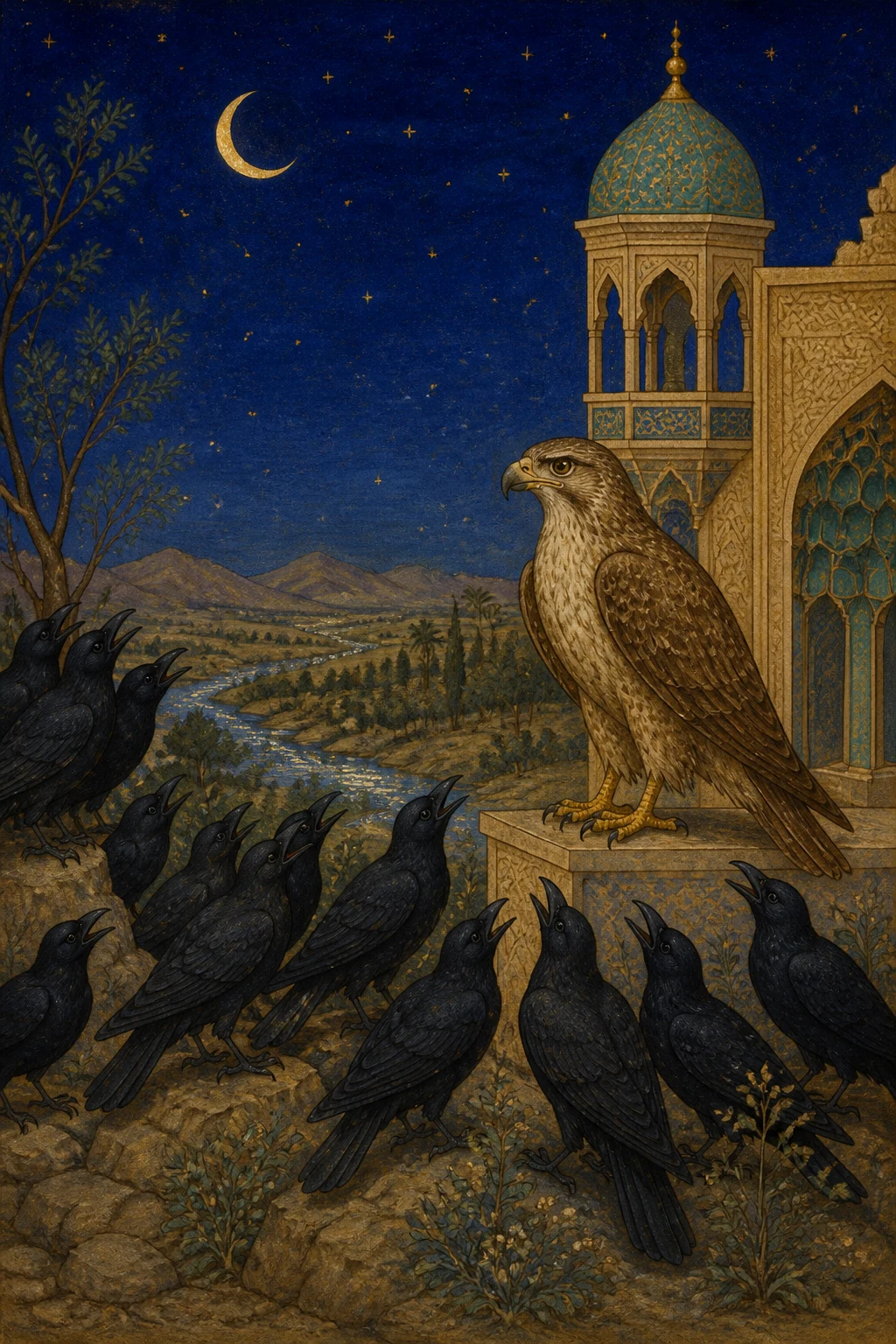
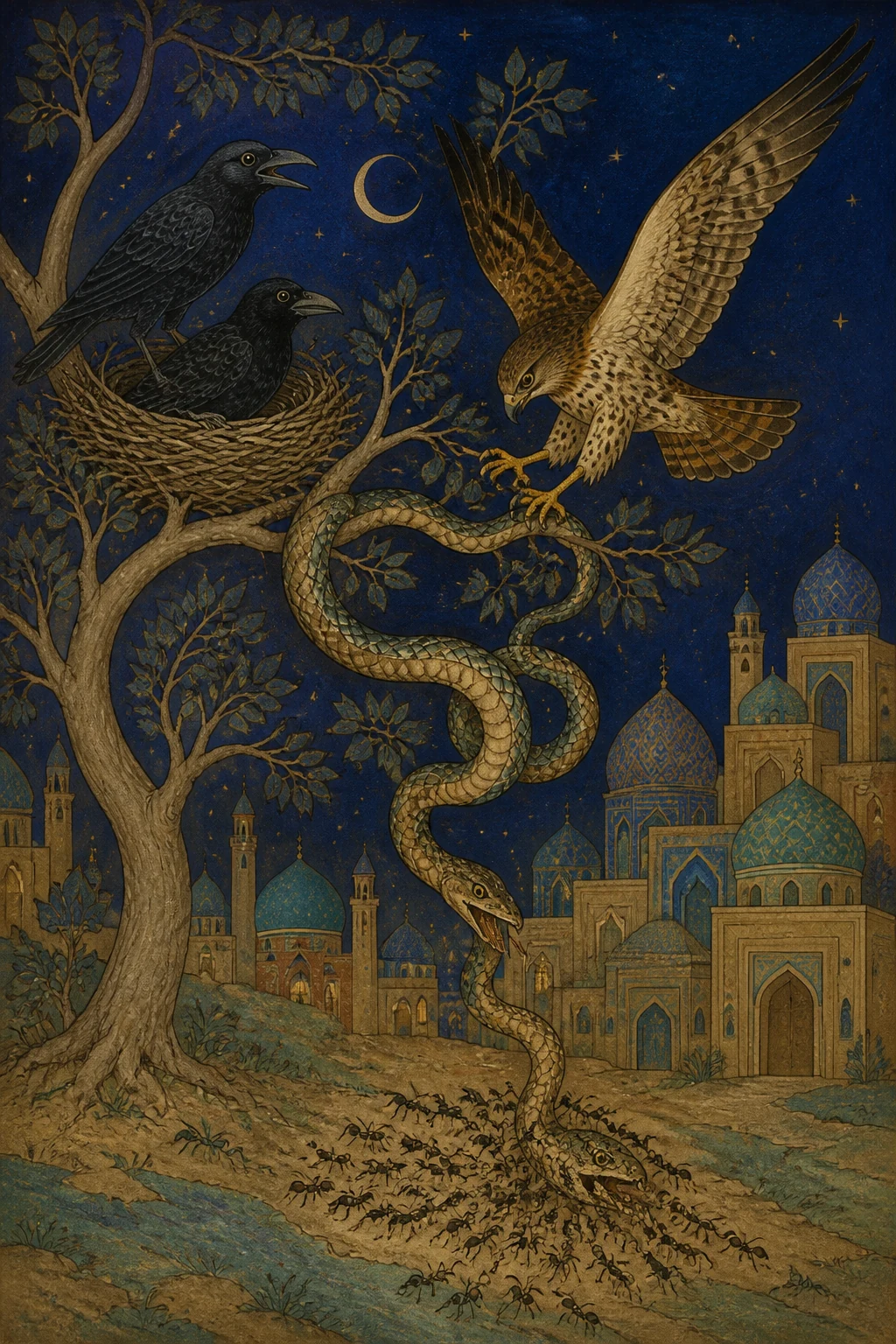
The vizier said, “Know, O King, that there was once a crow who lived with his wife in a tree, enjoying a life of ease, until their nesting season came, in the heat of summer. A snake emerged from its hole and made for that tree, winding its way among the branches until it reached the crow’s nest. There it settled and remained throughout the summer days, while the crow was driven out, finding neither a chance to return nor a place to rest. When the hot weather had passed, the snake went back to its own dwelling, and the crow said to his wife, ‘Let us thank God Most High, who has saved us and delivered us from this affliction, even though we have been deprived of our sustenance this year. God Most High will not disappoint our hopes, so let us thank Him for granting us safety and soundness of body. In Him alone do we trust, and if God wills that we live until next year, He will make good the loss of our brood.’ When their nesting season came again, the snake left its dwelling and made for the tree. As it clung to one of the branches, heading as usual for the crow’s nest, a kite suddenly swooped upon it and struck it on the head, tearing its skin. The snake fell senseless to the ground, where ants swarmed over it and devoured it. The crow and his wife then lived in safety and peace, raised many young, and thanked God for their deliverance and for the offspring He had granted them. And we, O King, must thank God for the blessing He has bestowed upon you and upon us in this blessed, fortunate child, after despair had overtaken us and all hope was gone. May God grant you a goodly reward and bring your affairs to a happy end.” And morning overtook Shahrazad, and she fell silent, leaving her tale untold.
When it was the nine hundred and fourth night
She said, “It has reached me, O fortunate King, that when the second vizier had finished speaking, he concluded with the words, ‘May God grant you a goodly reward and bring your affairs to a happy end.’ Then the third vizier rose and said, ‘Rejoice, O just King, in blessings here and rewards hereafter, for whoever is loved by the people of earth is loved by the people of heaven. God Most High has allotted you love and planted it in the hearts of the people of your kingdom. To Him, then, be thanks and praise from us and from you, that He may increase His blessings upon you, and upon us through you. Know, O King, that no man can accomplish anything except by the command of God Most High. He alone is the Giver, and every good thing a man possesses comes ultimately from Him. He apportions His blessings among His servants as He pleases: to some He grants abundant gifts; some He keeps occupied with earning their daily bread; some He makes rulers; and some He causes to renounce this world and turn their longing toward Him. For it is He who has said, “I am He who brings harm and benefit; I heal and cause sickness, enrich and impoverish, bring death and give life. In My hand are all things, and to Me is the return.” Thus it is the duty of all people to thank Him. And you, O King, are among the fortunate and righteous, as it has been said: “The most fortunate of the righteous is he for whom God unites the good of this world with the good of the next, who is content with what God has allotted him and thanks Him for the station in which He has placed him.” But whoever oversteps the bounds and seeks something other than what God has ordained for him, whether to his benefit or his loss, is like the wild ass and the fox.’ The king asked, ‘And what is their story?’”
Izvirnik
حكاية الغراب والحية - الليالي ٩٠٣ إلى ٩٠٤
Naslednje strani prikazujejo izvirno besedilo za primerjavo.
فلما كانت الليلة ٩٠٣
فقال الوزير: اعلم أيها الملك أنه كان غراب ساكنًا في شجرةٍ هو وزوجته في أرغدِ عيشٍ إلى أن بلغَا زمانَ تفريخهما وكان زمنَ القيظ، فخرجَتْ حيَّةٌ من وكْرِها وقصدَتْ تلك الشجرة فتعلَّقت بفروعها إلى أن صعدت إلى عش الغراب وربضت فيه ومكثت مدة أيام الصيف، وصار الغراب مطرودًا لا يجد له فرصةً ولا موضعًا يرقد فيه. فلما انقضت أيام الحر ذهبَتِ الحيَّةُ إلى مَوْضعها، فقال الغراب لزوجته: نشكر الله تعالى الذي نجَّانا وخلَّصنا من هذه الآفة، ولو كنا حُرِمنا من الزاد في هذه السنة؛ لأن الله تعالى لا يقطع رجاءَنا، فنشكره على ما مَنَّ علينا من السلامة وصحة أبداننا، وليس لنا اتِّكالٌ إلا عليه، وإذا أراد الله وعِشْنا إلى العام القابل عوَّضَ اللهُ علينا نتاجَنا. فلما كان وقتُ تفريخِهما خرجَتِ الحيةُ من موضعها وقصدت الشجرة، فبينما هي متعلِّقة ببعض أغصانها وهي قاصدة عُشَّ الغراب على العادة، وإذا بحَدَأة قد انقضَّتْ عليها وضربَتْها في رأسها فخدشَتْها، فعند ذلك سقطت الحية على الأرض مغشيًّا عليها وطلع عليها النمل فأكلها، وصار الغراب مع زوجته في سلامة وطمأنينة، وفرَّخَا أولادًا كثيرة وشكرَا الله على سلامتهما وعلى حصول الأولاد. ونحن أيها الملك يجب علينا شكر الله على ما أنعَمَ به عليك وعلينا بهذا المولود المبارك السعيد بعد اليأس وقطع الرجاء، أحسَنَ الله ثوابَك وعاقبةَ أمرك. وأدرك شهرزاد الصباح، فسكتَتْ عن الكلام المباح.
فلما كانت الليلة ٩٠٤
قالت: بلغني أيها الملك السعيد، أن الوزير الثاني لما فرغ من كلامه ختمه بقوله: أحسَنَ الله ثوابك وعاقبة أمرك. ثم قام الوزير الثالث وقال: أبشِرْ أيها الملك العادل بالخير العاجل والثواب الآجل؛ لأن كلَّ مَن يحبه أهل الأرض يحبه أهل السماء، والله تعالى قسم لك المحبَّة وجعلها في قلوب أهل مملكتك، فله الشكر والحمد منَّا ومنك، لكي يزيد نعمته عليك وعلينا بك، واعلم أيها الملك إن الإنسان لا يستطيع شيئًا إلا بأمر الله تعالى، وإنه هو المعطي، وكل خير عند شخص إليه ينتهي، قسَّم النِّعَم على عبيده كما يحب؛ فمنهم مَن أعطاه مواهب كثيرة، ومنهم مَن شغله بتحصيل القوت، ومنهم مَن جعله رئيسًا، ومنهم مَن جعله زاهدًا في الدنيا راغبًا إليه؛ لأنه هو الذي قال: أنا الضار النافع، أشفي وأُمرِض، وأُغنِي وأُفقِر، وأُمِيت وأُحِيي، وبيدي كلُّ شيءٍ وإليَّ المصير، فواجب على جميع الناس شكره، وأنت أيها الملك من السعداء الأبرار كما قيل: إن أسعد الأبرار مَن جمع الله له بين خيرَيِ الدنيا والآخرة، ويقنع بما قسم الله له ويشكره على ما أقامه، ومَن تعدَّى وطلب غير ما قدَّرَ الله له وعليه، يشبه حمار الوحش والثعلب. قال الملك: وما حديثهما؟
Nadaljuj z branjem