Waltey
Zgodba o pajku in vetru
Tisoč in ena noč · arabska pripovedna tradicijaO besedilu
Zgodba o pajku in vetru
- Vir
- Tisoč in ena noč
- Avtor
- arabska pripovedna tradicija
- Jezik branja
- English
- Jezik izvirnika
- Arabic
- Čas branja
- 11 min branja
- Obseg
- 9 strani
- Naslov izvirnika
- حكاية العنكبوت والريح - الليالي ٩٠٨ إلى ٩٠٩
O izvirniku
Tisoč in ena noč
Zgodbe v zgodbah, polne trgovcev, dvorov, preoblek in nočnih zapletov. Bralni jezik je English, izvirnik pa prihaja iz vira Tisoč in ena noč v jeziku Arabic.
Besedilo
Zgodba o pajku in vetru
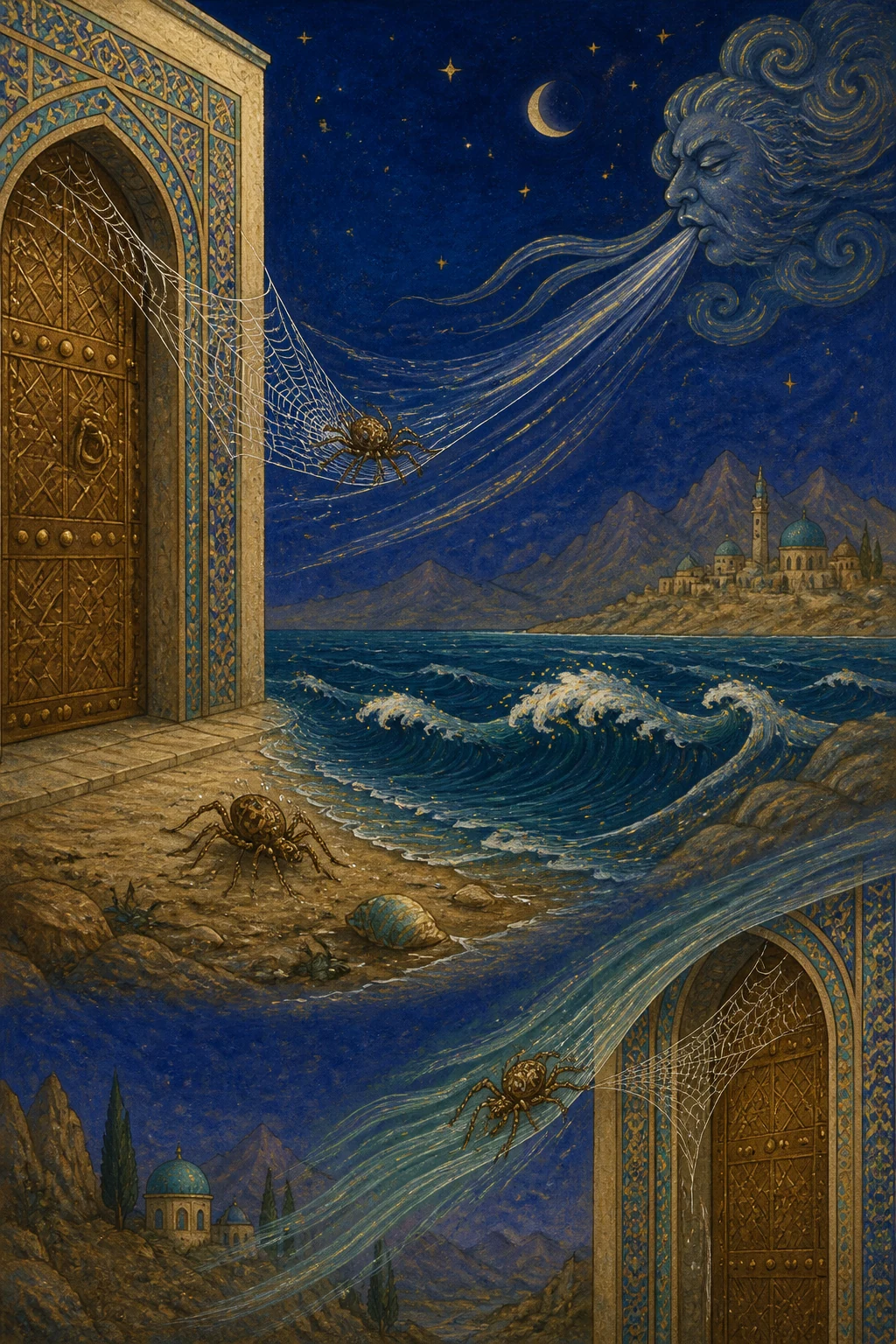
She said: It has reached me, O fortunate King, that the king said to the vizier, “What is the story of the spider and the wind?” The vizier replied, “Know, O King, that a spider once clung to the top of a doorway in a secluded place, spun herself a web, and dwelt there in safety. She gave thanks to God Most High, who had provided her with this refuge and relieved her fear of creeping creatures. For a time she remained thus, thanking God for her ease and her unfailing sustenance. Then her Creator put her to the test, driving her out to see how grateful and patient she would be. He sent a fierce east wind against her, which carried her away, web and all, and cast her into the sea. The waves washed her ashore, and she thanked God Most High for her deliverance. Then she began to reproach the wind, saying, ‘O Wind, why have you done this to me? What good has it brought you to carry me from my home to this place? I was safe and at peace in my web at the top of that doorway.’ The wind replied, ‘Cease your reproaches. I shall take you back and restore you to your former place.’ So the spider waited patiently, hoping to return to her home, until the north wind departed without carrying her back. Then the south wind arose, passed by her, snatched her up, and flew with her towards that house. As she passed it, she recognized it and clung to it. And we beseech God, who rewarded the king for his loneliness and patience, granting him this boy in his old age after he had lost hope, and who did not take him from this world before blessing him with a son to gladden his eyes; who bestowed upon him kingship and dominion, so that he showed mercy to his subjects and showered his bounty upon them.” The king said, “Praise be to God above all praise, and thanks be to Him above all thanks! There is no god but He, the Creator of all things, who has made Himself known to us through the light of His works and the majesty of His greatness. He grants kingship and dominion to whom He wills among His servants in His lands, choosing whom He pleases to be His deputy and steward over His creatures. He commands him to treat them with justice and equity, to uphold the laws and established ordinances, to act truthfully, and to conduct their affairs uprightly, in a manner pleasing to Him and to them. Whoever among them acts according to God’s commands secures his own good fortune and obeys his Lord; God will spare him the terrors of this world and reward him well in the next, for He does not let the reward of the righteous go to waste. But whoever acts contrary to God’s commands commits a grievous error, disobeys his Lord, and prefers this world to the next. He shall have neither honourable deeds to his name in this world nor any share in the hereafter, for God does not long indulge the unjust and corrupt, nor does He overlook any of His servants. These viziers of ours have said that, because of our just rule and good dealings with them, He has favoured us and them by guiding us to give Him thanks, thereby earning still greater blessings. Each has spoken as God inspired him, and all have been unstinting in their gratitude and praise to God Most High for His bounty and grace. I too thank God, for I am but a servant under His command. My heart is in His hand, and my tongue obeys it. I am content with whatever God decrees for me and for them, whatever the outcome may be. Each has spoken the thoughts that came to him concerning this boy, and recalled the new blessing bestowed upon us when I had reached an age at which despair prevails and confidence grows weak. Praise be to God, who has saved us from being left without an heir and from rulers succeeding one another as night succeeds day. This has been a mighty blessing to them and to us. We praise God Most High, who has granted us this attentive and obedient boy and made him heir to an exalted station in the sovereignty. We ask Him, in His generosity and forbearance, to bless the boy’s every undertaking and guide him to good deeds, so that he may become a king and sovereign who rules his subjects with justice and equity, protecting them from the ruin wrought by oppression, through God’s favour, generosity, and bounty.”
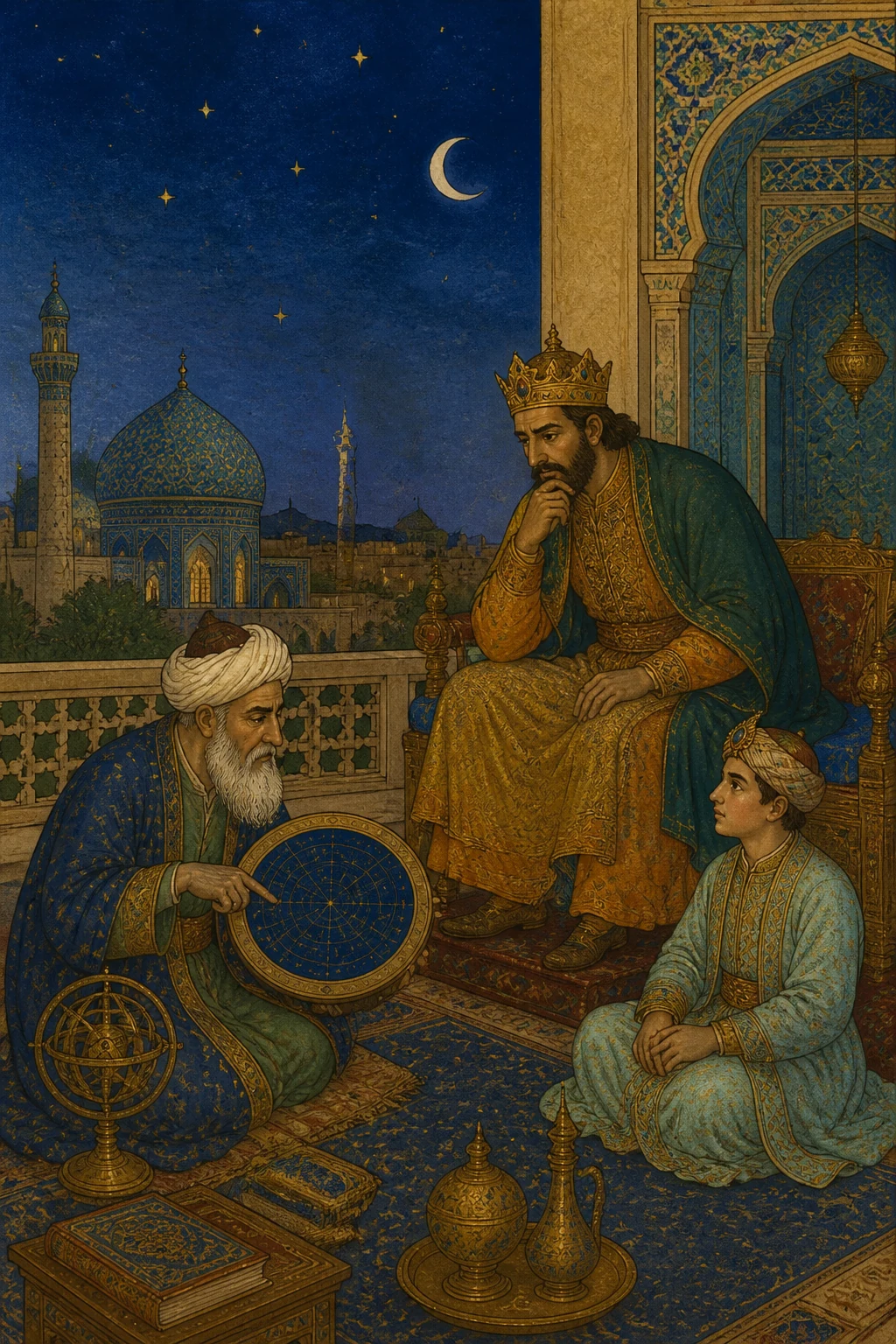
When the king had finished speaking, the sages and scholars rose and prostrated themselves before God. They thanked the king and kissed his hands, then each returned to his own house. The king then entered his private apartments, looked upon the boy, prayed for him, and named him Wardkhan. When the boy was twelve years old, the king wished to have him instructed in the sciences. He built him a palace in the middle of the city, containing three hundred and sixty chambers, and lodged him there. He appointed three sages and scholars to attend him, commanding them never to neglect his instruction, by night or by day, and to sit with him in a different chamber each day. They were to take care that there was no branch of knowledge they did not teach him, until he became versed in every science. On the door of each chamber they were to write the subjects they taught him there, and every seven days they were to submit to the king an account of what he had learned.
The scholars devoted themselves to the boy, never wearying of teaching him, night or day, and withholding nothing of the knowledge they possessed. He displayed such keenness of mind, excellence of understanding, and readiness to learn as no one before him had shown. Each week they reported to the king how much his son had learned and mastered, and from these reports the king discerned sound learning and fine cultivation. The scholars said, “Never have we seen anyone endowed with understanding like this boy’s. May God bless him for you and grant you joy in his life!” When the boy had completed twelve years of study, he had mastered the finest part of every science and surpassed all the scholars and sages of his age. His teachers brought him before his father the king and said, “May God gladden your eyes, O King, with this fortunate son! We have brought him to you after teaching him every science, until no scholar or sage of our time has attained what he has attained.” The king rejoiced exceedingly, redoubled his thanks to God Most High, and fell prostrate before Him, mighty and glorious, saying, “Praise be to God for His blessings beyond number!” Then he summoned the vizier Shimas and said to him, “Know, Shimas, that the scholars have come to me and told me that this son of mine has learned every science. There is no branch of knowledge they have not taught him, until he has surpassed all who came before him. What do you say, Shimas?” At this, Shimas prostrated himself before God, mighty and glorious, kissed the king’s hands, and said, “A ruby, though hidden in the heart of solid rock, cannot but shine like a lamp. This son of yours is a jewel, and his youth does not prevent him from being wise. Praise be to God for what He has bestowed upon him! Tomorrow, if God Most High wills, I shall question him and draw out his knowledge before an assembly of distinguished scholars and emirs whom I shall gather for him.” But morning overtook Shahrazad, and she fell silent, leaving her tale untold.
When it was the nine hundred and ninth night
She said: It has reached me, O fortunate King, that when King Jali‘ad heard Shimas’s words, he commanded the foremost scholars, the most discerning men of learning, and the most accomplished sages to attend the royal palace the following day. They all came, and when they had assembled at the palace gates, the king gave them leave to enter. Then the vizier Shimas appeared and kissed the hands of the king’s son. The prince rose and prostrated himself before Shimas, who said to him, “A lion’s cub should not bow before any of the beasts, nor should light be joined with darkness.” The boy replied, “When the lion’s cub saw the king’s vizier, he bowed before him.” Then Shimas said, “Tell me, who is the Absolute and Everlasting, what are His two realms of existence, and what endures in those two realms?” The boy replied, “The Absolute and Everlasting is God, mighty and glorious, for He is the First without beginning and the Last without end. His two realms of existence are this world and the hereafter, and what endures in them is the bliss of the hereafter.” Shimas said, “You have spoken truly, and I accept your answer. But I would have you tell me how you know that one of these realms is this world and the other is the hereafter.” The boy replied, “Because this world was created when nothing existed, and thus became the first realm of existence. Yet it is a fleeting state, soon to pass away, in which deeds require recompense. This calls for the restoration of what has perished, and so the hereafter is the second realm of existence.” Shimas said, “You have spoken truly, and I accept your answer. But I would have you tell me how you know that the bliss of the hereafter is what endures in these two realms.” The boy replied, “I know this because it is the abode of recompense for deeds, prepared by Him who abides and never passes away.” Shimas said, “Tell me, whose deeds are most praiseworthy among the people of this world?” The boy replied, “Those of the man who prefers the hereafter to this world.” Shimas asked, “And who is it that prefers the hereafter to this world?” The boy replied, “He who knows that he dwells in an abode that must come to an end, that he was created only to perish, and that after death he will be called to account. Even if there were a man destined to live for ever in this world, he should not prefer it to the hereafter.” Shimas said, “Tell me, can there be a hereafter without this world?” The boy replied, “He who has no life in this world has no hereafter. Yet I see this world, its people, and the final abode to which they are bound as resembling the people of certain estates, for whom an emir built a cramped house and into which he brought them. He ordered them to perform a task, appointed a term for each, and set a keeper over him. Whoever did as he was commanded was led out of that narrow place by his keeper, but whoever failed to do as he was commanded before his appointed term was up was punished. While they were there, honey began to seep through the cracks in the house. When they ate it and tasted its sweetness, they grew slack in the work they had been ordered to do and cast it behind their backs. They endured the confinement and distress in which they lived, despite knowing the punishment to which they were bound, content with that little sweetness. Yet their keeper never failed to take each of them out of the house when his appointed time arrived. Thus we know that this world is an abode where men’s eyes are bewildered and the allotted span of their lives slips away. Whoever finds the little sweetness this world affords and occupies himself with it will be among the lost, because he has preferred the affairs of this world to those of the hereafter. But whoever prefers the hereafter to this world and pays no heed to that little sweetness will be among those who attain salvation.”
Shimas said, “I have heard what you have said concerning this world and the hereafter, and I accept it. Yet I see that both hold sway over man, so that he must satisfy them both, though their demands are at odds. If a man devotes himself to earning his livelihood, he harms his soul in the life to come; but if he devotes himself to the hereafter, he harms his body. There is no way for him to satisfy two opposing demands at once.”
Izvirnik
حكاية العنكبوت والريح - الليالي ٩٠٨ إلى ٩٠٩
Naslednje strani prikazujejo izvirno besedilo za primerjavo.
فلما كانت الليلة ٩٠٨
قالت: بلغني أيها الملك السعيد، أن الملك قال للوزير: وما حكاية العنكبوت والريح؟ فقال الوزير: اعلم أيها الملك أن عنكبوتة تعلَّقَتْ في بابٍ متنحٍّ عالٍ وعملت لها بيتًا وسكنت فيه بأمانٍ، وكانت تشكر اللهَ تعالى الذي يسَّرَ لها هذا المكان وآمن خوفها من الهوام، فمكثَتْ على هذا الحال مدة من الزمان، وهي شاكرة لله على راحتها واتصال رزقها، فامتحنها خالِقها بأن أخرَجَها لينظر شكرها وصبرها، فأرسل إليها ريحًا عاصفًا شرقية فحملتها ببيتها ورمتها في البحر، فجرَّتْها الأمواج إلى البر، فعند ذلك شكرَتِ الله تعالى على سلامتها وجعلت تعاتب الريح قائلةً لها: أيتها الريح، لِمَ فعلتِ بي ذلك؟ وما الذي حصل لك من الخير في نقلي من مكاني إلى هنا؟ وقد كنتُ آمِنةً مطمئنةً في بيتي بأعلى ذلك الباب؟ فقالت لها الريح: انتهي عن العتاب، فإني سأرجع بكِ وأوصلكِ إلى مكانك كما كنتِ أولًا. فلبثَتِ العنكبوتة صابرةً على ذلك راجيةً أن ترجع إلى مكانها حتى ذهبت ريح الشمال ولم ترجع بها، وهبَّتْ ريح الجنوب فمرَّتْ بها واختطفتها وطارت بها إلى جهة ذلك البيت، فلما مرَّتْ به عرفته فتعلَّقَتْ به. ونحن نسأل اللهَ الذي أثاب الملك على وحدته وصبره ورزَقَه هذا الغلامَ بعد يأسه وكبر سنِّه، ولم يُخرِجه من هذه الدنيا حتى رزَقَه قرَّةَ عين، ووهب له ما وهب من المُلْك والسلطان، فرحم رعيته وأولاهم نعمته. فقال الملك: الحمد لله فوق كلِّ حمدٍ، والشكر له فوق كلِّ شكرٍ، لا إله إلا هو خالق كل شيءٍ، الذي عرَّفنا بنور آثاره وجلال عظمته، يُؤتِي المُلْكَ والسلطان مَن يشاء من عباده في بلاده؛ لأنه ينتخب منهم مَن يشاء ليجعله خليفةً ووكيلًا على خلقه، ويأمره فيهم بالعدل والإنصاف وإقامة الشرائع والسنن، والعمل بالحق والاستقامة في أمورهم على ما أحَبَّ وأحَبُّوا، فمَن عمِلَ منهم بما أمر الله كان لحَظِّه مصيبًا ولأمرِ ربِّه مُطِيعًا، فيكفيه هولَ دنياه ويُحسِن جزاءه في أُخرَاه، إنه لا يضيع أجر المحسنين؛ ومَن عمل منهم بغير ما أمر الله أخطأ خطأً بليغًا، وعصى ربه وآثَرَ دنياه على أُخرَاه، فليس له في الدنيا مآثِر ولا في الآخرة نصيب؛ لأن الله لا يمهل أهل الجور والفساد ولا يهمل أحدًا من العباد، وقد ذكر وزراؤنا هؤلاء أنَّ مِن عدلنا بينهم وحُسْن تصرُّفنا معهم، أنعم علينا وعليهم بالتوفيق لشكره المستوجب لمزيد إنعامه، وكل واحد منهم قال ما ألهَمَه الله في ذلك، وبالغوا في الشكر لله تعالى والثناء عليه بسبب نعمته وفضله، وأنا أشكر الله لأني إنما أنا عبدٌ مأمورٌ، وقلبي بيده ولساني تابع له، راضٍ بما حكم الله عليَّ وعليهم بأي شيءٍ صار؛ وقد قال كلُّ واحدٍ منهم ما خطر بباله من أمر هذا الغلام، وذكروا ما كان من متجدِّد النعمة علينا حين بلغتُ من السن حدًّا يغلب معه اليأس وضَعْف اليقين، والحمد لله الذي نجَّانا من الحرمان واختلاف الحكَّام كاختلاف الليل والنهار، وقد كان ذلك إنعامًا عظيمًا عليهم وعلينا، فنحمد الله تعالى الذي رزقنا هذا الغلام سميعًا مطيعًا، وجعله وارثًا من الخلافة محلًّا رفيعًا، نسأله من كرمه وحلمه أن يجعله سعيدَ الحركات موفَّقًا للخيرات، حتى يصير ملِكًا وسلطانًا على رعيته بالعدل والإنصاف، حافظًا لهم من هلكات الاعتساف، بمَنِّه وكرمه وجوده.
فلما فرغ الملك من كلامه، قام الحكماء والعلماء وسجدوا لله وشكروا الملك وقبَّلوا يدَيْه، وانصرف كلُّ واحدٍ منهم إلى بيته، فعند ذلك دخل الملك بيته وأبصَرَ الغلام، ودَعَا له وسمَّاه وردخان، فلما مضى له من العمر اثنتا عشرة سنة، أراد الملك أن يعلِّمه العلومَ، فبنى له قصرًا في وسط المدينة وبنى فيه ثلاثمائة وستين مقصورةً، وجعل الغلام فيه، ورتَّبَ له ثلاثةً من الحكماء والعلماء وأمرهم ألَّا يغفلوا عن تعليمه ليلًا ولا نهارًا، وأن يجلسوا معه في كل مقصورة يومًا، ويحرصوا على ألَّا يكونَ علمٌ إلا ويعلِّمونه إياه، حتى يصير بجميع العلوم عارفًا، ويكتبون على باب كل مقصورة ما يعلِّمونه له فيها من أصناف العلوم، يرفعون إليه في كلِّ سبعة أيام ما عرفه من العلوم.
ثم إن العلماء أقبلوا على الغلام وصاروا لا يفترون عن تعليمه ليلًا ولا نهارًا، ولا يؤخِّرون عنه شيئًا ممَّا عندهم من العلوم، فظهر للغلام من ذكاء العقل وجودة الفهم وقبول العلم ما لم يظهر لأحدٍ قبله، وجعلوا يرفعون للملك في كل أسبوع مقدارَ ما تعلَّمَه ولده وأتقنه، فكان الملك يستظهر من ذلك علمًا حسنًا وأدبًا جميلًا، وقال العلماء: إننا ما رأينا قطُّ مَن أُعطِي فهمًا مثل هذا الغلام، فبارَكَ الله لكَ فيه ومتَّعَكَ بحياته. فلما أتَمَّ الغلام مدة اثنتي عشرة سنة حفظَ من كلِّ علمٍ أحسنَه، وفاقَ جميعَ العلماء والحكماء الذين في زمانه، فأتى به العلماء إلى الملك والده وقالوا له: أقرَّ اللهُ عينيك أيها الملك بهذا الولد السعيد، وقد أتيناكَ به بعد أن تعلَّمَ كلَّ علمٍ، حتى لم يكن أحدٌ من علماء الوقت وحكمائه بلغ ما بلغه. ففرح الملك بذلك فرحًا شديدًا، وزاد في شكر الله تعالى وخَرَّ ساجدًا له عز وجل، وقال: الحمد لله على نِعَمِه التي لا تُحصَى. ثم دعا بشماس الوزير وقال له: اعلم يا شماس أن العلماء قد أتوني وأخبروني أن ابني هذا قد تعلَّمَ كلَّ علمٍ، ولم يَبْقَ من العلوم علمٌ إلا وقد علَّموه له حتى فاق مَن تقدَّمه في ذلك، فما تقول يا شماس؟ فسجَدَ عند ذلك لله عز وجل وقبَّلَ يدَيِ الملك وقال: أَبَتِ الياقوتةُ ولو كانَتْ في الجبل الأصم، إلا أن تكون مضيئةً كالسراج، وابنك هذا جوهرة، فما تمنعه حداثته من أن يكون حكيمًا والحمد لله على ما أولاه، وأنا إن شاء الله تعالى في غدٍ أسأله وأستنطقه بما عنده في مجمعٍ أجمَعَه له من خواص العلماء والأمراء. وأدرك شهرزاد الصباح، فسكتَتْ عن الكلام المباح.
فلما كانت الليلة ٩٠٩
قالت: بلغني أيها الملك السعيد، أن الملك جليعاد لما سمع كلام شماس أمَرَ جهابذة العلماء وأذكياء الفضلاء ومَهَرة الحكماء أن يحضروا إلى قصر الملك في غدٍ، فحضروا جميعًا، فلما اجتمعوا على باب الملك أذِنَ لهم بالدخول، ثم حضر شماس الوزير وقبَّلَ يدَيِ ابن الملك، فقام ابن الملك وسجد للشماس، فقال له الشماس: ليس يجب على شبل الأسد أن يسجد لأحدٍ من الوحوش، ولا ينبغي أن يقترنَ النورُ بالظلام. قال الغلام: إن شبل الأسد لما رأى وزير الملك سجَدَ له. فعند ذلك قال شماس: أخبرني ما الدائم المطلق وما كوناه؟ وما الدائم من كونَيْه؟ قال الغلام: أما الدائم المطلق فهو الله عزَّ وجلَّ؛ لأنه أول بلا ابتداء، وآخِر بلا انتهاء، وأما كوناه فالدنيا والآخرة، وأما الدائم من كونَيْه فهو نعيم الآخرة. قال شماس: صدقتَ فيما قلتَ وقبلته منك، غير أني أحب أن تخبرني من أين علمتَ أن أحد الكونين هو الدنيا وثانيهما هو الآخرة؟ قال الغلام: لأن الدنيا خُلِقت ولم يكن من شيءٍ كائنٍ، فآلَ أمرها إلى الكون الأول، غير أنها عَرَض سريع الزوال متوجِّب الجزاء على الأعمال، وذلك يستدعي إعادةَ الفاني، فالآخرة هي الكون الثاني. قال شماس: صدقتَ فيما قلتَ وقبلتُه منكَ، غير أني أحبُّ أن تخبرني من أين علمتَ أن نعيم الآخرة هو الدائم من الكونَيْن؟ قال الغلام: علمتُ ذلك من أنها دار الجزاء على الأعمال التي أعَدَّها الباقي بلا زوال. قال شماس: أخبرني أي أهل الدنيا أحمد عملًا؟ قال الغلام: مَن يُؤثِر آخِرتَه على دنياه. قال شماس: ومَن الذي يُؤثِر آخرتَه على دنياه؟ فقال الغلام: مَن كان يعلم أنه في دارٍ منقطعةٍ، وأنه ما خُلِق إلا للفناء، وأنه بعد الفناء يُحاسَب، وأنه لو كان في هذه الدنيا أحدٌ مخلَّدٌ أبدًا، لا يُؤثِر الدنيا على الآخرة. قال شماس: أخبرني هل تستقيم آخِرة بغير دنيا؟ قال الغلام: مَن لم يكن له دنيا فلا آخِرة له، ولكن رأيتُ الدنيا وأهلَها والمعادَ الذي هم صائرون إليه كمثل أهل هؤلاء الضياع الذين ابتنَى لهم أميرٌ بيتًا ضيِّقًا وأدخَلَهم فيه، وأمرهم بعملٍ يعملونه، وضرب لكلِّ واحدٍ منهم أجلًا ووكَّلَ به شخصًا، فمَن عمل منهم ما أُمِر به أخرَجَه الشخص الموكل به من ذلك الضِّيق، ومَن لم يعمل ما أُمِر به وقد انقضى الأجل المضروب له عُوقِب؛ فبينما هم كذلك إذ رشح لهم من شقوق البيت عسل، فلما أكلوا من العسل وذاقوا طعمه وحلاوته، توانَوْا في العمل الذي أُمِروا به ونبذوه وراء ظهورهم، وصبروا على ما هم فيه من الضِّيق والغَمِّ، مع ما علموا من تلك العقوبة التي هم صائرون إليها، وقنعوا بتلك الحلاوة اليسيرة، وصار الموكل بهم لا يدع أحدًا منهم إذا جاء أجله إلا ويُخرِجه من ذلك البيت، فعرفنا أن الدنيا دارٌ تتحيَّرُ فيها الأبصارُ، وتسرب لأهلها فيها الآجال، فمَن وجد الحلاوة القليلة التي تكون في الدنيا وأشغَلَ نفسه بها، كان من الهالكين؛ حيت آثَرَ أمرَ دنياه على آخِرته، ومَن يُؤثِر آخِرتَه على دنياه ولم يلتفت إلى تلك الحلاوة القليلة، كان من الفائزين.
قال شماس: قد سمعتُ ما ذكرتَ من أمر الدنيا والآخرة وقبلتُ ذلك منك، ولكني قد رأيتُهما مسلَّطَتَيْن على الإنسان، فلا بد له من إرضائهما معًا وهما مختلفتان، فإنْ أقبَلَ العبد على طلب المعيشة، فذلك إضرار بروحه في المعاد، وإنْ أقبَلَ على الآخرة، كان ذلك إضرارًا بجسده، وليس له سبيل إلى إرضاء المتخالِفَيْن معًا.
Nadaljuj z branjem