Prevod
And now the Minyans were cleaving the sea in their ship from Pagasae, and had seen Phineus, dragging out his destitute old age in everlasting darkness; the young sons of the North Wind had driven the maiden-faced birds from the wretched old man’s lips, and after many hardships, under glorious Jason, they had at last reached the rushing waters of the muddy Phasis.
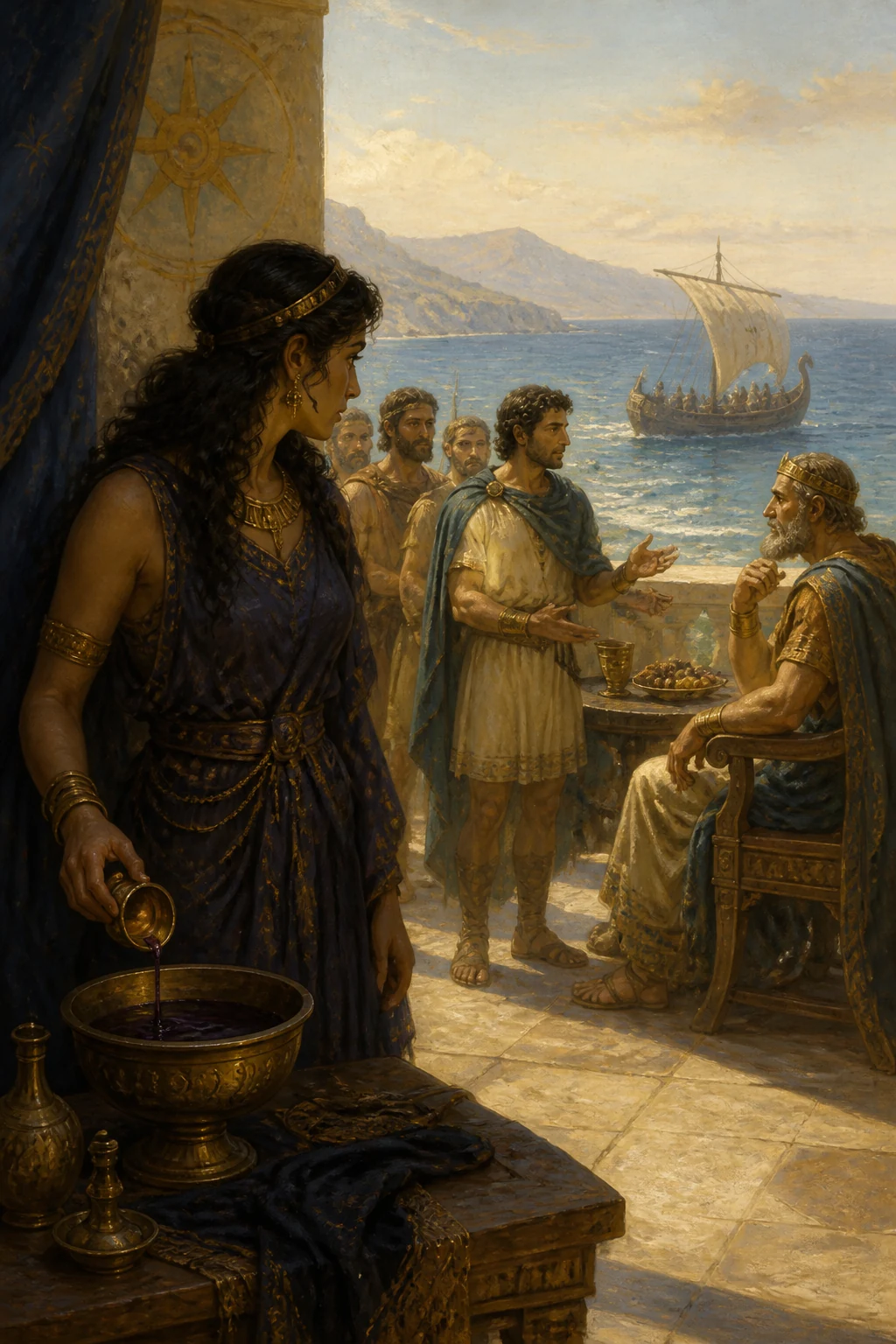
While they approached the king and demanded the fleece of Phrixus, and the Minyans were set the dreadful terms of mighty labors, meanwhile the daughter of Aeetes conceived a fierce passion, and after struggling long, when she could not master her frenzy with reason, she said, “Medea, you struggle in vain: some god—I know not who—stands in your way. I would be surprised if this were not what they call love, or something very like it.
For why do my father’s commands seem too harsh to me? They are too harsh indeed. Why do I fear that a man I have only just seen may die? What causes such great fear? Shake from your maiden heart the flames it has conceived, if you can, unhappy girl!—If I could, I would be wiser. But a strange force drags me against my will: desire urges one thing, my mind another. I see the better course and approve it, but follow the worse. Why, royal maiden, do you burn for a stranger and dream of marriage in a foreign land?
This land too can give you someone to love. Whether he lives or dies rests with the gods. Yet let him live! I may pray for that even without love: for what wrong has Jason done? Who but a cruel heart would not be moved by Jason’s youth, his lineage and his courage? And even without these, who could resist his face? He has certainly moved my heart. But unless I bring him aid, the bulls’ breath will scorch him, and he will face the crop he sows himself, enemies born from the earth, or be given as savage prey to the ravenous dragon.
If I allow this, then I shall confess that a tigress bore me, that I carry iron and stone within my heart. Why not watch him dying too, and defile my eyes with the sight? Why not urge the bulls against him, and the fierce earthborn men, and the sleepless dragon? May the gods grant better things! Yet these are not things to pray for, but things I must bring about.—Shall I betray my father’s kingdom, and save some stranger, whom I scarcely know, with my aid, so that, safe through me, he may spread his sails without me and become another’s husband, while I, Medea, am left to punishment?
If he can do this, or prefer another woman to me, let the ingrate die! But there is nothing in his face, nothing in his noble spirit or the grace of his beauty, to make me fear deceit or forgetfulness of what I have done for him. Besides, he shall pledge his faith beforehand, and I will call the gods to witness our compact. Why fear when you are safe? Take courage and banish all delay: Jason will forever be in your debt, will join you to himself by the solemn marriage torch, and through the Greek cities crowds of mothers will acclaim you as their sons’ deliverer.
Shall I then leave my sister, brother, father, gods, and native soil, borne away upon the winds? Yes, my father is cruel, my country barbarous, my brother still a child; my sister’s wishes favor mine, and the greatest god is within me. What I leave is little; what I seek is great: the glory of saving the young men of Greece, knowledge of a better country, and cities whose fame flourishes even here, the culture and arts of those lands; and the son of Aeson, whom I would not exchange for all the wealth the whole world holds. With him as my husband, I shall be called blessed and dear to the gods, and touch the stars with my head.
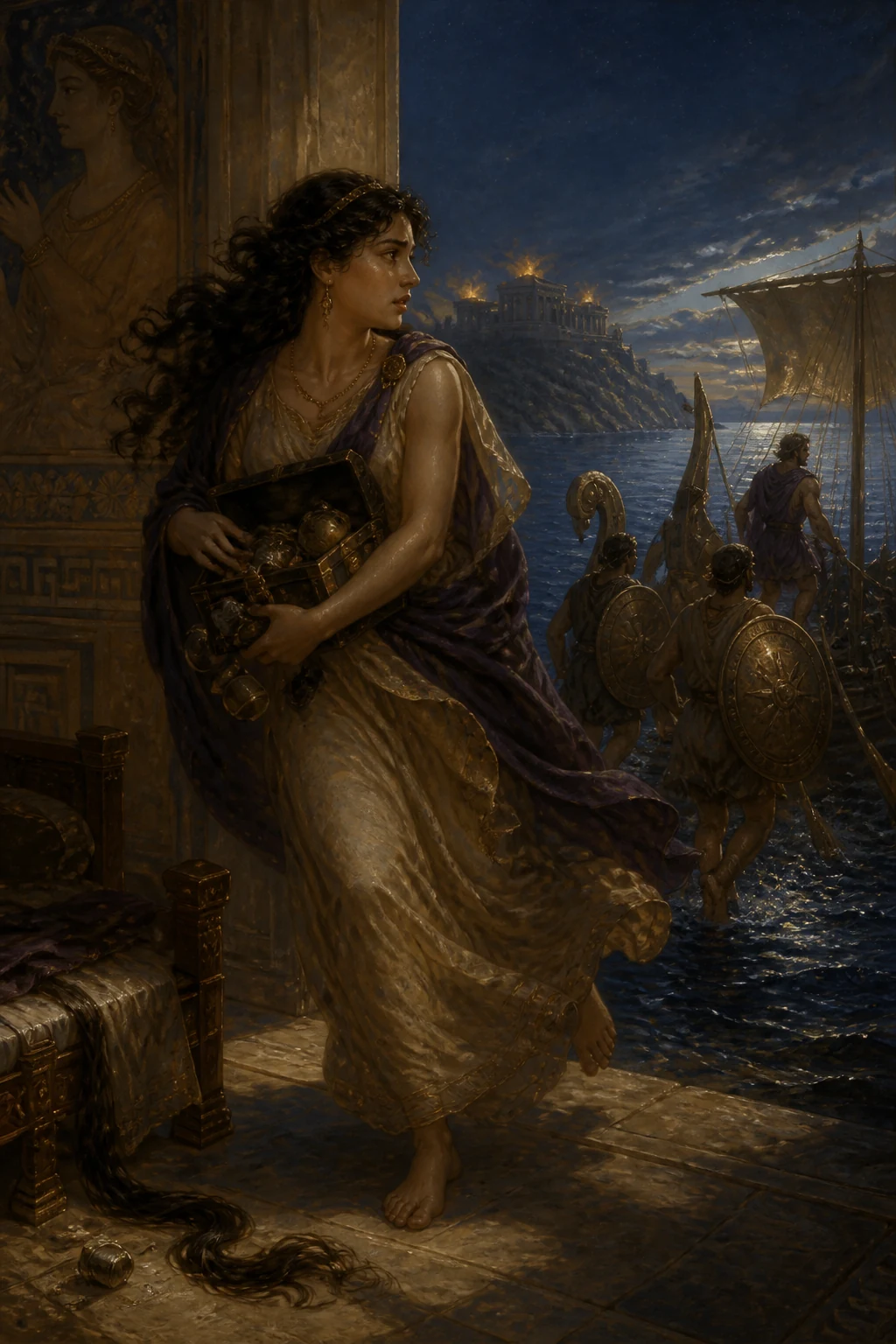
But what of those mountains, said to clash together in mid-sea, and Charybdis, the ships’ enemy, now swallowing the sea, now spewing it back, and ravenous Scylla, girdled with savage dogs, barking in the Sicilian deep? Why, holding the man I love, nestled in Jason’s arms, I shall be carried over the long seas. In his embrace I shall fear nothing; or if I fear anything, I shall fear for my husband alone.— Do you call it marriage, Medea, and cloak your guilt in splendid names? Look instead at the enormity of the wrong you attempt, and escape the crime while you can.”
She spoke, and right, duty, and modesty stood before her eyes, and Love, defeated, was already turning in flight. She went to the ancient altars of Hecate, daughter of Perses, hidden beneath a shady grove and secluded woodland. And now she was resolute; her banished passion had subsided, when she saw the son of Aeson, and the extinguished flame blazed anew. Her cheeks reddened, and her whole face glowed again; and as a tiny spark, hidden beneath a covering of ash, will take nourishment from the winds and grow, fanned back into all its former strength, so her love, now quiet, which you would have thought was fading, flared at the sight of the young man’s beauty before her.
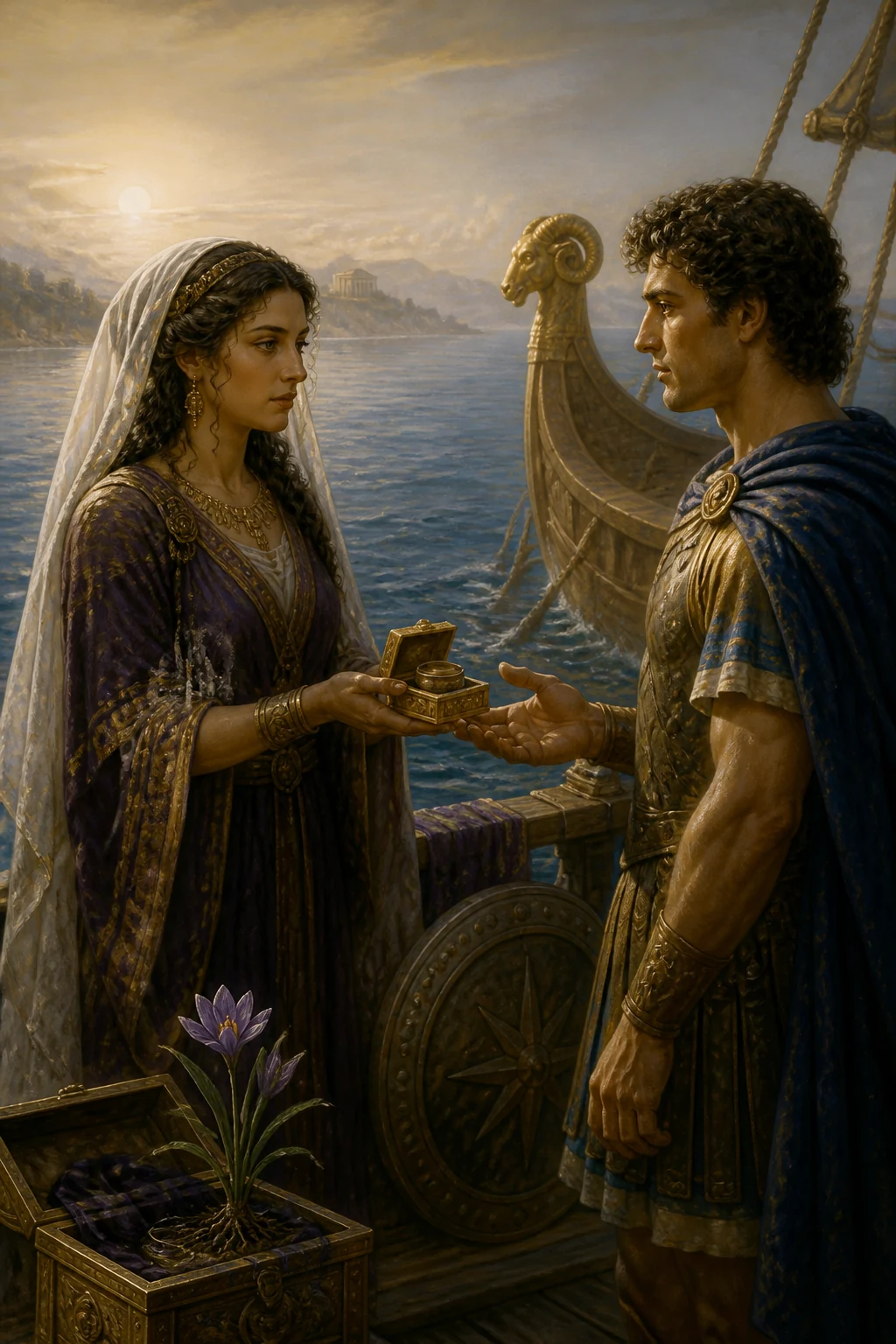
And by chance the son of Aeson was more handsome than usual that day: you could have forgiven her for loving him. She gazed, her eyes fixed upon his face as though seeing it for the first time; in her madness she thought the face she saw could not be mortal, and could not turn away. But when the stranger began to speak and took her right hand, asking for help in a lowered voice and promising marriage, she answered through streaming tears: “I see what I am about to do: it is not ignorance of the truth that will undo me, but love. My gift shall save you; once saved, fulfill your promise.” By the sacred rites of the triple-formed goddess, by whatever divine power dwelt in that grove,
by the all-seeing father of his future father-in-law, and by his own fortunes and his great perils, he swore. Believed, he at once received the enchanted herbs, learned how to use them, and returned joyfully to his lodging. The next dawn had driven away the glittering stars: the people gathered on the field sacred to Mars and took their places on the ridges. Amid the throng the king himself sat, resplendent in purple and distinguished by his ivory scepter.
Then the bronze-footed bulls breathed fire from their nostrils of adamant, and the grass their hot breath touched burst into flame. As full furnaces roar, or as stones, melted in an earthen kiln, catch fire when sprinkled with clear water, so their chests, churning with imprisoned flames, and their scorched throats resounded. Yet the son of Aeson went out to meet them. As he approached, they turned their terrible faces and iron-tipped horns toward him, struck the dusty ground with cloven hooves, and filled the place with smoke-filled bellowing.
The Minyans froze with fear. He advanced, unscathed by the fire they breathed—such was the power of the drugs— and boldly stroked their hanging dewlaps with his right hand; then, bringing them under the yoke, he forced them to draw the heavy plow and cleave with iron a field never plowed before. The Colchians marveled; the Minyans raised their shouts and urged him on. Then from a bronze helmet he took the serpent’s teeth and scattered them over the plowed fields.
The soil softened the seeds, steeped in potent poison, and the sown teeth grew and became new bodies. As an infant takes human shape in its mother’s womb and is fashioned within, part by part, and only when fully formed comes forth into the common air, so, when a human shape had been fashioned in the bowels of the pregnant earth, it rose from the fertile field, and, more wondrous still, brandished weapons born with it.
When the Greeks saw them preparing to hurl their keen-pointed spears at the young Thessalian’s head, their faces fell and their courage sank with fear. Even she who had made him safe was frightened; and when she saw the young man, alone, attacked by so many enemies, she grew pale and sat suddenly cold and bloodless. And lest the herbs she had given him prove too weak, she sang a spell to aid him and called upon her secret arts.
He hurled a heavy stone into the midst of his enemies, turning their warfare away from himself and against one another. The earthborn brothers perished of wounds they dealt each other, falling in civil strife. The Greeks rejoiced, welcomed the victor, and clung to him in eager embraces. You too, foreign maiden, longed to embrace the victor: modesty checked you. Yet you would have embraced him, had concern for your reputation not held you back.
As far as you may, you rejoice with silent love, and give thanks to your spells and to the gods who gave them power. It remained to lull with herbs the ever-wakeful dragon, who, marked by a crest and three tongues, and dreadful with hooked teeth, guarded the tree of gold. After he had sprinkled it with herbs steeped in Lethe’s juice and three times spoken words that bring peaceful sleep, words that still the troubled sea and rushing rivers, sleep came upon eyes that had never known it, and Aeson’s heroic son gained the gold. Proud of his spoil, and carrying with him the giver of his gift as a second prize, he reached the harbor of Iolcus in triumph with his bride.