Waltey
Medeja pobegne in Jazon osvoji zlato runo
Argonavtika · Apolonij RodoškiO besedilu
Medeja pobegne in Jazon osvoji zlato runo
- Vir
- Argonavtika
- Avtor
- Apolonij Rodoški
- Jezik branja
- English
- Jezik izvirnika
- Ancient Greek
- Čas branja
- 11 min branja
- Obseg
- 9 strani
- Naslov izvirnika
- Medea Flees and Jason Takes the Fleece
O izvirniku
Argonavtika
Morska odprava za zlatim runom, med junaštvom, čarovnijo in Medejino odločitvijo. Bralni jezik je English, izvirnik pa prihaja iz vira Argonavtika v jeziku Ancient Greek.
Besedilo
Medeja pobegne in Jazon osvoji zlato runo
Now tell, goddess, of the Colchian maiden’s anguish and her counsels, Muse, daughter of Zeus. For my mind turns helplessly within me as I ponder whether to call it the torment of a ruinous passion or the shameful flight by which she left the Colchian people.
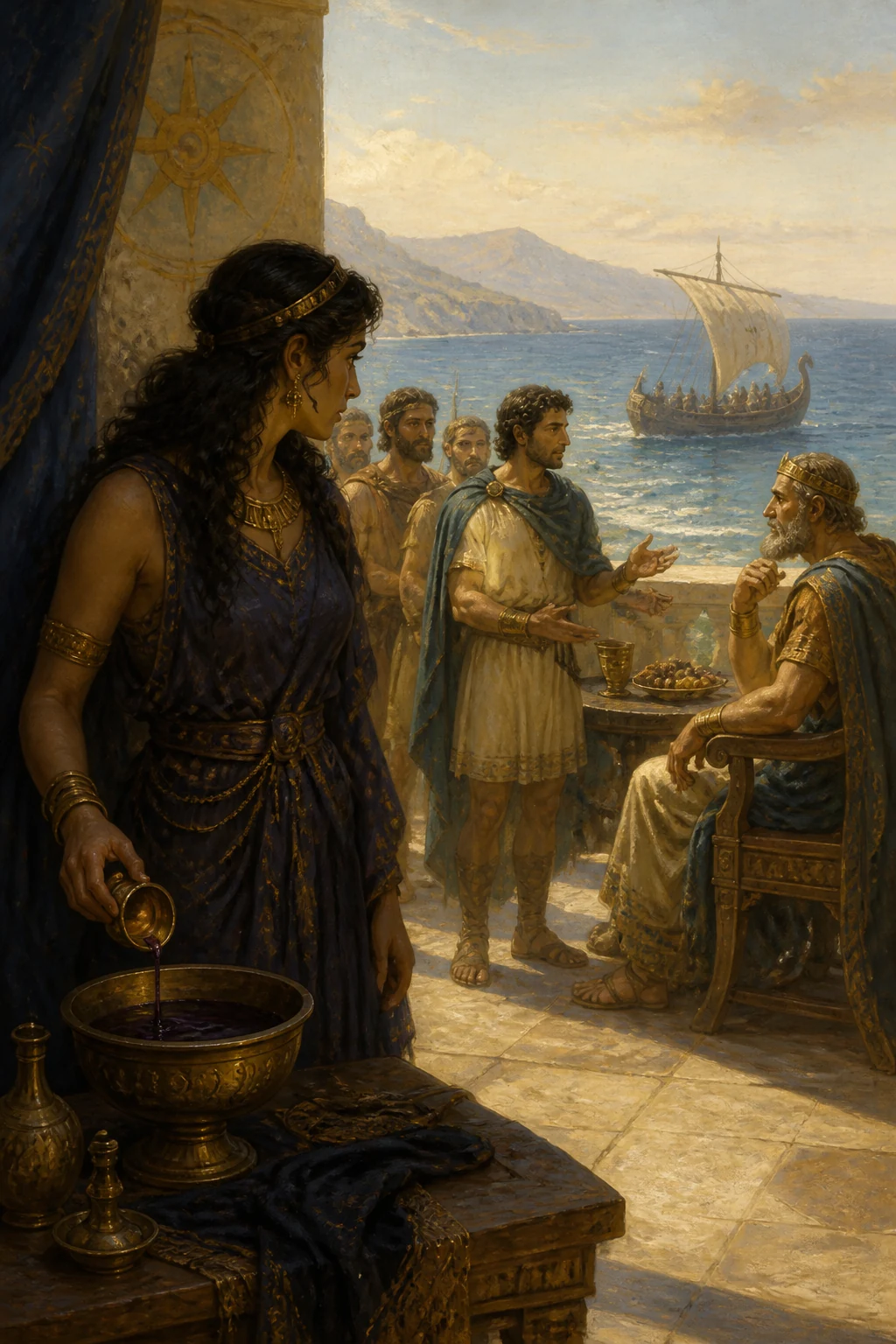
All night in his palace Aeetes plotted a deadly treachery against the heroes with the foremost men of his people, his heart fiercely embittered by the hateful outcome of the trial. Nor did he suppose that all this had been accomplished without his daughters’ help.
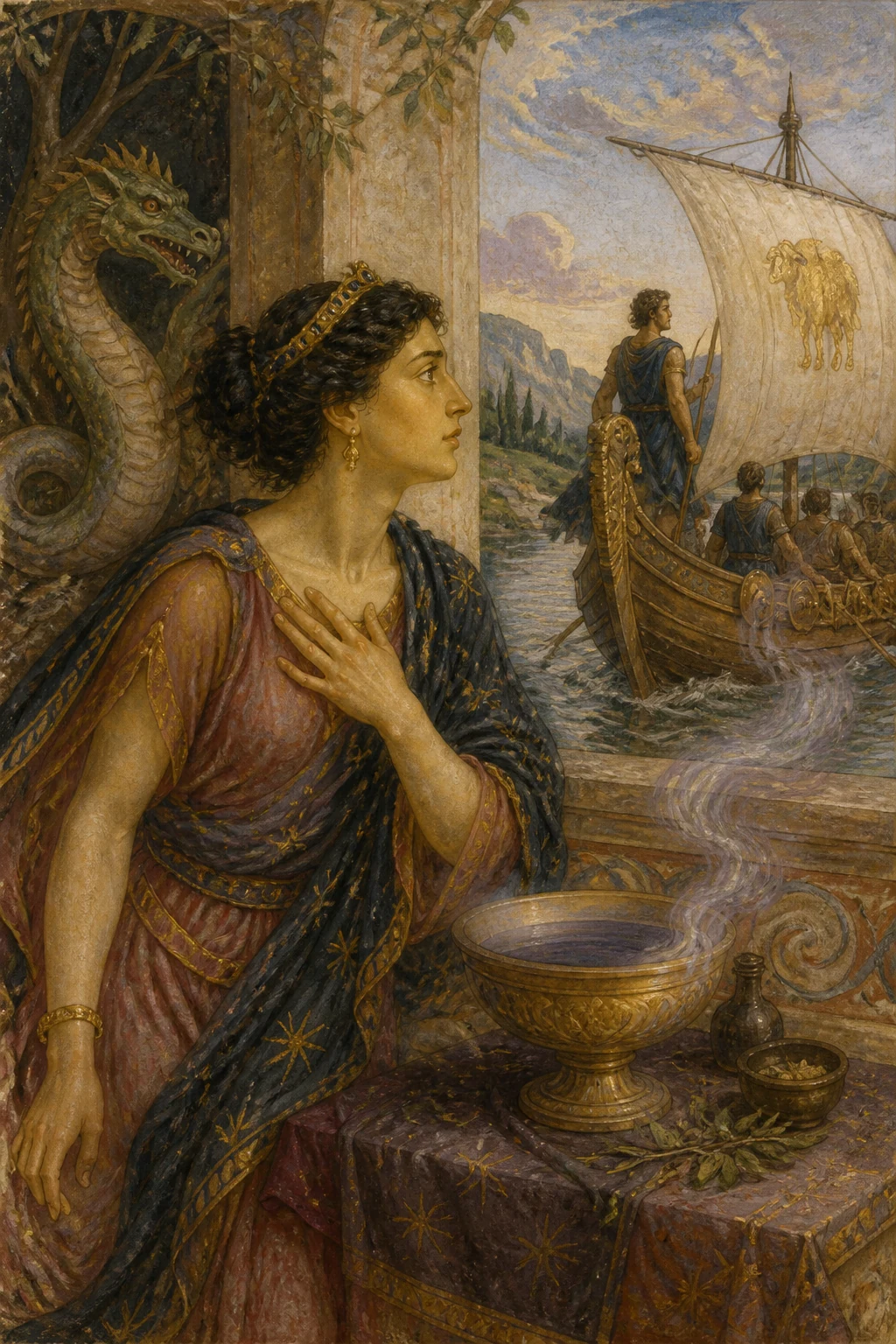
But Hera cast a most grievous fear into the maiden’s heart. She trembled like a light-footed fawn startled in the thickets of a deep forest by the baying of hounds. At once she felt certain that her help had not escaped her father’s notice and that she would soon suffer every misery.
She feared that her handmaids knew; her eyes filled with fire, and a dreadful roaring sounded in her ears. Again and again she clutched at her throat; again and again she tore at her hair and groaned in an agony of grief.
And then the maiden would have died there before her destined time, tasting poison and thwarting Hera’s purpose, had not the goddess stirred her in her terror to flee with the sons of Phrixus. Her fluttering spirit took comfort, and she quickly poured all her drugs together from the casket into the folds of her robe.
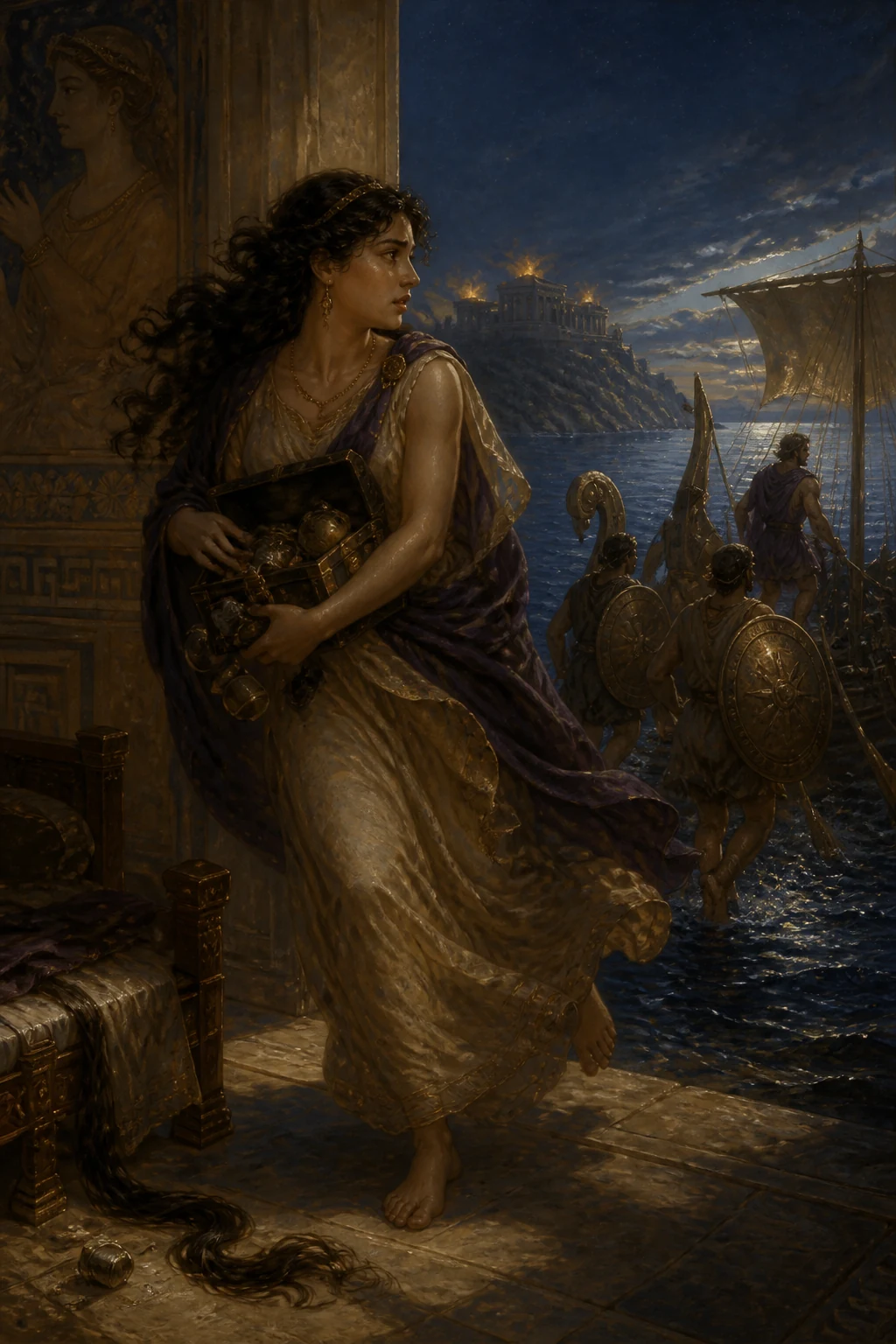
She kissed her bed and the posts on either side of the double doors, and touched the walls. Tearing out a long lock of hair with her hands, she left it in her chamber for her mother as a remembrance of her maidenhood, and lamented in a piercing voice: “In place of myself I leave you this long lock as I go, my mother. Farewell, though I am going far away from you; farewell, Chalciope, and all this house. Stranger, would that the sea had shattered you before you reached the land of Colchis!”
So she spoke, and tears streamed from her eyes. As a captive woman slips out of a wealthy house, newly torn by fate from her homeland, who has not yet tasted the misery of toil but, still unaccustomed to suffering and a slave’s work, goes in terror beneath her mistress’s cruel hands, so the lovely maiden hurried from her home.
The bolts of the doors yielded of their own accord, springing back at her swift spells. Barefoot she ran along the narrow paths, with her left hand drawing her mantle across her brow and lovely cheeks, while with her right she held the hem of her tunic high.
Swiftly in her fear she followed an obscure track beyond the towers of the spacious city. None of the guards recognized her; she set out unseen. From there she planned to make her way to the temple, for she knew the roads well, having often wandered them before in search of corpses and baneful roots of the earth, as witches do. Yet her heart quivered with shuddering fear.
The Titan goddess, the Moon, newly risen from the far horizon, saw her wandering and rejoiced eagerly at the sight, saying within herself: “So I am not the only one who strays to the Latmian cave, nor do I alone burn for handsome Endymion. Often, remembering my love, I have yielded to your cunning spells, so that in the darkness of night you might work your enchantments undisturbed, those deeds so dear to you.
“Now you too have a share in the same madness. Some god of sorrow has made Jason a grievous affliction to you. Go, then, and, wise though you are, endure the burden of a grief that will bring you many tears.”
So she spoke, and the maiden’s feet swiftly bore her on as she hastened. Gladly she reached the riverbank and looked across at the gleam of the fire which the heroes kept burning all night as they celebrated the trial’s success.
Then through the darkness she called in a clear, piercing voice to the youngest of Phrixus’s sons across the river, Phrontis. He and his brothers, and the son of Aeson himself, recognized the maiden’s voice. Their companions marvelled in silence when they understood what had indeed happened.
Three times she called; three times Phrontis, urged on by the company, called back in answer. Meanwhile the heroes drove towards her with swift strokes of their oars. Before they had cast the ship’s mooring ropes onto the opposite shore, Jason sprang nimbly to land from the high deck. After him Phrontis and Argus, the two sons of Phrixus, leapt ashore. Clasping their knees with both hands, she said: “Friends, save me in my misery, and yourselves as well, from Aeetes. Everything has now been plainly revealed, and no remedy is left. Let us flee aboard the ship before he mounts his swift chariot.
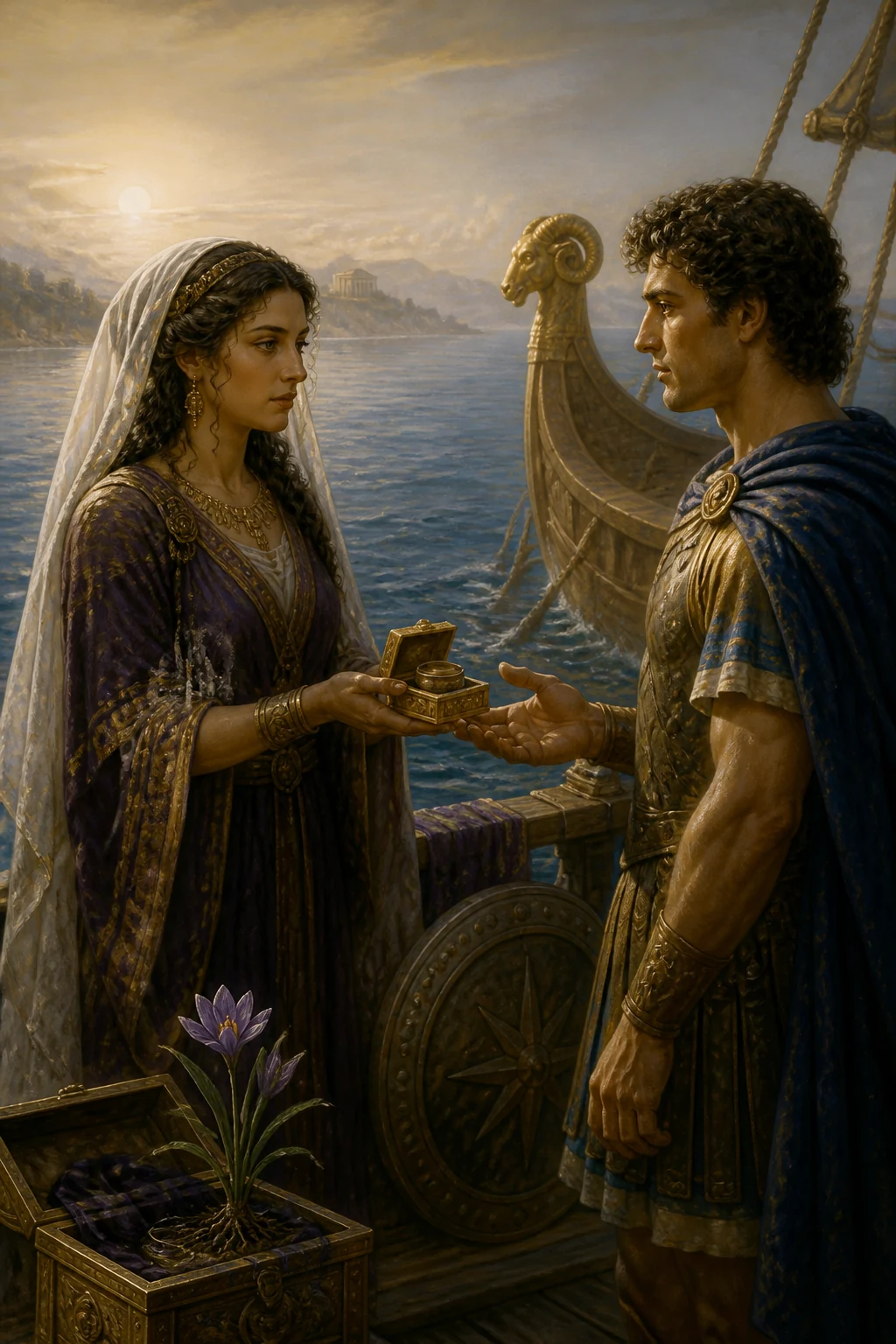
“I will give you the golden fleece, putting its guardian serpent to sleep. But you, stranger, before your companions, make the gods witnesses to the promises you gave me. Do not leave me, once I have gone far from here without protectors, to shame and dishonour.”
So she spoke in anguish, but the heart of Aeson’s son rejoiced greatly. Gently raising her from where she crouched at his knees, he embraced her and reassured her: “Dear lady, let Olympian Zeus himself witness my oath, and Hera, guardian of marriage, the wife of Zeus: I will establish you in my house as my lawful wife when we return to the land of Greece.”
So he spoke, and clasped her right hand in his. She urged them to row the swift ship straight to the sacred grove, so that they might take the fleece and carry it away while it was still night, without Aeetes knowing.
For them, in their haste, word and deed were one. They went aboard and at once thrust the ship away from the shore. Loud was the tumult as the heroes laboured urgently at their oars. But she turned back towards the land and stretched out her hands in helpless grief. Jason comforted her with words and restrained her anguish.
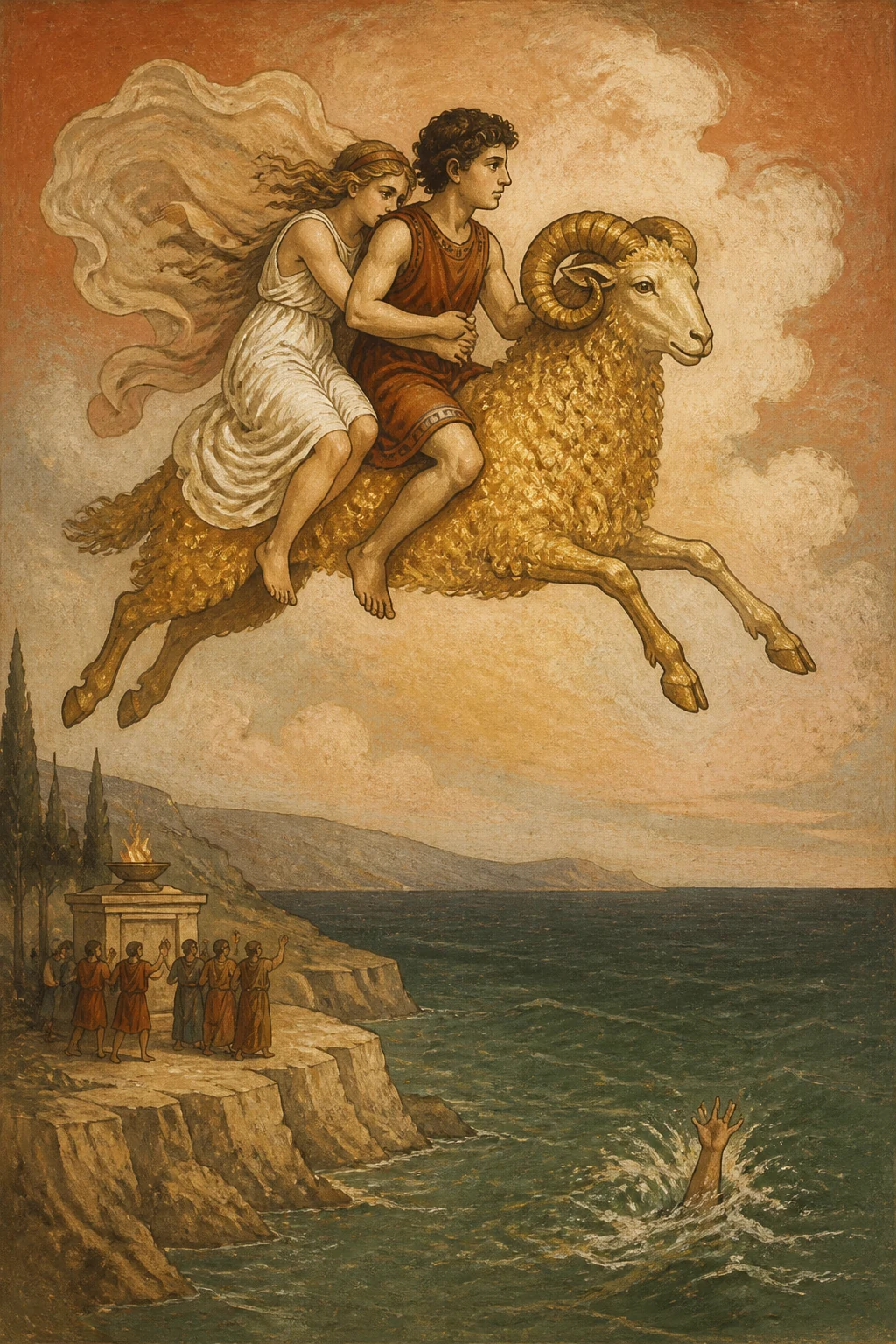
At the hour when hunters shake sleep from their eyes—men who, trusting in their hounds, never slumber through the last hours of darkness, lest dawn’s light should strike with its white rays and obliterate the tracks and scent of the beasts—then the son of Aeson and the maiden stepped ashore in a grassy place called the Ram’s Rest, where the ram had first bent its weary knees, bearing on its back the Minyan son of Athamas.
Near by stood the smoke-blackened foundations of an altar—πελεν corrected diacritic error (πελεν) in the source text—which Phrixus, descendant of Aeolus, had once built to Zeus, guardian of fugitives, when he sacrificed that wondrous creature, all of gold, as Hermes had bidden him when he met him graciously. There, at Argus’s suggestion, the heroes put the two ashore.
They followed a path to the sacred grove, seeking the immense oak on which the fleece was spread, like a cloud reddened by the fiery rays of the rising sun.
But the serpent, keen-eyed and sleepless, saw them coming and stretched its long neck straight towards them, hissing monstrously. The river’s long banks and the vast grove echoed all around.
Even those who dwelt far from Titanian Aea in the Colchian land, beside the mouths of the Lycus, heard it—the Lycus, which branches from the roaring Araxes and joins its sacred stream to the Phasis, until both rivers, flowing into one, pour into the Caucasian sea.
Mothers newly delivered woke in terror and anxiously threw their arms around the little children sleeping in their embrace, who trembled at the hissing. As above a smouldering forest countless sooty coils of smoke whirl upward, one rising swiftly after another, always mounting from below in circling spirals, so then that monster rolled its endless coils, sheathed in dry, hard scales.
As it writhed, the maiden advanced before its eyes, calling in a sweet voice upon Sleep, highest of gods, to help her and enchant the monster. She invoked the queen who wanders by night beneath the earth, asking her to grant success to their undertaking.
The son of Aeson followed in fear. Already beguiled by the song, the serpent was loosening the long ridge of its earth-born coils and stretching out its countless rings, like a dark wave rolling over a gentle sea, mute and soundless. Yet still it held its dreadful head aloft, eager to enfold them both in its deadly jaws.
But she dipped a freshly cut sprig of juniper into her potion and, chanting spells, sprinkled potent drugs over its eyes. All around, the strong fragrance of the drug spread sleep, and the serpent lowered its jaw to rest upon the very spot where it lay. Far behind, its endless coils stretched through the many-trunked forest.
Then, at the maiden’s urging, Jason took the golden fleece from the oak. She stood firm, stroking the monster’s head with her drug, until Jason himself bade her return to his ship, and he left the deeply shadowed grove of Ares.
As a maiden catches in her fine robe the brightness of the full moon shining high above her chamber beneath the roof, and her heart rejoices as she gazes at its lovely radiance, so Jason joyfully lifted the great fleece in his hands. Over his fair cheeks and forehead the shimmering wool cast a ruddy glow like flame.
As large as the hide of a yearling ox or of the stag that hunters call a brocket, so broad was the fleece, golden all over. It was heavy with its thick wool, and as he walked the earth beneath his feet flashed continually with its light.
As he went, now he wore it over his left shoulder, hanging from his neck to his feet; now he gathered it up again and stroked it. For he was greatly afraid that some man or god might meet him and take it away.
Dawn was spreading over the earth when they reached their companions. The young men marvelled at the great fleece, shining like the lightning of Zeus. Each sprang up, longing to touch it and take it into his own hands.
But the son of Aeson held them back and threw a fresh-woven cloth over it. He brought the maiden aboard and seated her in the stern, then spoke before them all: “Friends, delay no longer now in returning to our homeland.
“For the task for which we endured this grievous voyage, toiling in misery, has now been easily accomplished through this maiden’s counsels. With her consent I will take her home as my lawful wife. But you must protect her, for she has been a noble helper to all Achaea and to yourselves. Already, I am sure, Aeetes will be coming with his host to stop us from leaving the river for the sea.
“Let half of you take your places at the oars, man by man on alternate benches throughout the ship, and row; let the other half hold up your oxhide shields, a ready defence against the enemy’s missiles, and guard our homeward voyage. Now we hold in our hands our children, our dear homeland, and our aged parents. On our efforts rests whether Greece will win shame or mighty glory.”
So he spoke and put on his armour of war. They raised a tremendous shout in their eagerness. Drawing his sword from its sheath, he cut the ship’s stern cables. Armed, he took his place beside the maiden, near Ancaeus the helmsman, and the ship sped on under their oars as they strained with all their might to drive her swiftly out of the river.
Izvirnik
Medea Flees and Jason Takes the Fleece
Naslednje strani prikazujejo izvirno besedilo za primerjavo.
αὐτὴ νῦν κάματόν γε, θεά, καὶ δήνεα κούρης Κολχίδος ἔννεπε, Μοῦσα, Διὸς τέκος. ἦ γὰρ ἔμοιγε ἀμφασίῃ νόος ἔνδον ἑλίσσεται ὁρμαίνοντι, ἢ ἔμεν ἄτης πῆμα δυσίμερον, ἦ τόγʼ ἐνίσπω φύζαν ἀεικελίην, ᾗ κάλλιπεν ἔθνεα Κόλχων. ἤτοι ὁ μὲν δήμοιο μετʼ ἀνδράσιν, ὅσσοι ἄριστοι, παννύχιος δόλον αἰπὺν ἐπὶ σφίσι μητιάασκεν οἷσιν ἐνὶ μεγάροις, στυγερῷ ἐπὶ θυμὸν ἀέθλῳ Αἰήτης ἄμοτον κεχολωμένος· οὐδʼ ὅγε πάμπαν θυγατέρων τάδε νόσφιν ἑῶν τελέεσθαι ἐώλπει.
τῇ δʼ ἀλεγεινότατον κραδίῃ φόβον ἔμβαλεν Ἥρη· τρέσσεν δʼ, ἠύτε τις κούφη κεμάς, ἥν τε βαθείης τάρφεσιν ἐν ξυλόχοιο κυνῶν ἐφόβησεν ὁμοκλή. αὐτίκα γὰρ νημερτὲς ὀίσσατο, μή μιν ἀρωγὴν ληθέμεν, αἶψα δὲ πᾶσαν ἀναπλήσειν κακότητα. τάρβει δʼ ἀμφιπόλους ἐπιίστορας· ἐν δέ οἱ ὄσσε πλῆτο πυρός, δεινὸν δὲ περιβρομέεσκον ἀκουαί. πυκνὰ δὲ λευκανίης ἐπεμάσσατο, πυκνὰ δὲ κουρὶξ ἑλκομένη πλοκάμους γοερῇ βρυχήσατʼ ἀνίῃ.
καί νύ κεν αὐτοῦ τῆμος ὑπὲρ μόρον ὤλετο κούρη, φάρμακα πασσαμένη, Ἥρης δʼ ἁλίωσε μενοινάς, εἰ μή μιν Φρίξοιο θεὰ σὺν παισὶ φέβεσθαι ὦρσεν ἀτυζομένην· πτερόεις δέ οἱ ἐν φρεσὶ θυμὸς ἰάνθη· μετὰ δʼ ἥγε παλίσσυτος ἀθρόα κόλπων φάρμακα πάντʼ ἄμυδις κατεχεύατο φωριαμοῖο. κύσσε δʼ ἑόν τε λέχος καὶ δικλίδας ἀμφοτέρωθεν σταθμούς, καὶ τοίχων ἐπαφήσατο, χερσί τε μακρὸν ῥηξαμένη πλόκαμον, θαλάμῳ μνημήια μητρὶ κάλλιπε παρθενίης, ἀδινῇ δʼ ὀλοφύρατο φωνῇ· τόνδε τοι ἀντʼ ἐμέθεν ταναὸν πλόκον εἶμι λιποῦσα, μῆτερ ἐμή· χαίροις δὲ καὶ ἄνδιχα πολλὸν ἰούσῃ·
χαίροις Χαλκιόπη, καὶ πᾶς δόμος. αἴθε σε πόντος, ξεῖνε, διέρραισεν, πρὶν Κολχίδα γαῖαν ἱκέσθαι. ὧς ἄρʼ ἔφη· βλεφάρων δὲ κατʼ ἀθρόα δάκρυα χεῦεν. οἵη δʼ ἀφνειοῖο διειλυσθεῖσα δόμοιο ληιάς, ἥν τε νέον πάτρης ἀπενόσφισεν αἶσα, οὐδέ νύ πω μογεροῖο πεπείρηται καμάτοιο, ἀλλʼ ἔτʼ ἀηθέσσουσα δύης καὶ δούλια ἔργα εἶσιν ἀτυζομένη χαλεπὰς ὑπὸ χεῖρας ἀνάσσης· τοίη ἄρʼ ἱμερόεσσα δόμων ἐξέσσυτο κούρη.
τῇ δὲ καὶ αὐτόματοι θυρέων ὑπόειξαν ὀχῆες, ὠκείαις ἄψορροι ἀναθρώσκοντες ἀοιδαῖς. γυμνοῖσιν δὲ πόδεσσιν ἀνὰ στεινὰς θέεν οἴμους, λαιῇ μὲν χερὶ πέπλον ἐπʼ ὀφρύσιν ἀμφὶ μέτωπα στειλαμένη καὶ καλὰ παρήια, δεξιτερῇ δὲ ἄκρην ὑψόθι πέζαν ἀερτάζουσα χιτῶνος. καρπαλίμως δʼ ἀίδηλον ἀνὰ στίβον ἔκτοθι πύργων ἄστεος εὐρυχόροιο φόβῳ ἵκετʼ· οὐδέ τις ἔγνω τήνγε φυλακτήρων, λάθε δέ σφεας ὁρμηθεῖσα.
ἔνθεν ἴμεν νηόνδε μάλʼ ἐφράσατʼ· οὐ γὰρ ἄιδρις ἦεν ὁδῶν, θαμὰ καὶ πρὶν ἀλωμένη ἀμφί τε νεκρούς, ἀμφί τε δυσπαλέας ῥίζας χθονός, οἷα γυναῖκες φαρμακίδες· τρομερῷ δʼ ὑπὸ δείματι πάλλετο θυμός. τὴν δὲ νέον Τιτηνὶς ἀνερχομένη περάτηθεν φοιταλέην ἐσιδοῦσα θεὰ ἐπεχήρατο Μήνη ἁρπαλέως, καὶ τοῖα μετὰ φρεσὶν ᾗσιν ἔειπεν· οὐκ ἄρʼ ἐγὼ μούνη μετὰ Λάτμιον ἄντρον ἀλύσκω, οὐδʼ οἴη καλῷ περιδαίομαι Ἐνδυμίωνι· ἦ θαμὰ δὴ καὶ σεῖο κίον δολίῃσιν ἀοιδαῖς, μνησαμένη φιλότητος, ἵνα σκοτίῃ ἐνὶ νυκτὶ φαρμάσσῃς εὔκηλος, ἅ τοι φίλα ἔργα τέτυκται.
νῦν δὲ καὶ αὐτὴ δῆθεν ὁμοίης ἔμμορες ἄτης· δῶκε δʼ ἀνιηρόν τοι Ἰήσονα πῆμα γενέσθαι δαίμων ἀλγινόεις. ἀλλʼ ἔρχεο, τέτλαθι δʼ ἔμπης, καὶ πινυτή περ ἐοῦσα, πολύστονον ἄλγος ἀείρειν. ὦς ἄρʼ ἔφη· τὴν δʼ αἶψα πόδες φέρον ἐγκονέουσαν. ἀσπασίως δʼ ὄχθῃσιν ἐπηέρθη ποταμοῖο, ἀντιπέρην λεύσσουσα πυρὸς σέλας, ὅ ῥά τʼ ἀέθλου παννύχιοι ἥρωες ἐυφροσύνῃσιν ἔδαιον. ὀξείῃ δἤπειτα διὰ κνέφας ὄρθια φωνῇ ὁπλότατον Φρίξοιο περαιόθεν ἤπυε παίδων, Φρόντιν· ὁ δὲ ξὺν ἑοῖσι κασιγνήτοις ὄπα κούρης αὐτῷ τʼ Αἰσονίδῃ τεκμήρατο· σῖγα δʼ ἑταῖροι
θάμβεον, εὖτʼ ἐνόησαν ὃ δὴ καὶ ἐτήτυμον ἦεν. τρὶς μὲν ἀνήυσεν, τρὶς δʼ ὀτρύνοντος ὁμίλου Φρόντις ἀμοιβήδην ἀντίαχεν· οἱ δʼ ἄρα τείως ἥρωες μετὰ τήνγε θοοῖς ἐλάασκον ἐρετμοῖς. οὔπω πείσματα νηὸς ἐπʼ ἠπείροιο περαίης βάλλον, ὁ δὲ κραιπνοὺς χέρσῳ πόδας ἧκεν Ἰήσων ὑψοῦ ἀπʼ ἰκριόφιν· μετὰ δὲ Φρόντις τε καὶ Ἄργος, υἷε δύω Φρίξου, χαμάδις θόρον· ἡ δʼ ἄρα τούσγε γούνων ἀμφοτέρῃσι περισχομένη προσέειπεν· ἔκ με, φίλοι, ῥύσασθε δυσάμμορον, ὧς δὲ καὶ αὐτοὺς ὑμέας Αἰήταο, πρὸ γάρ τʼ ἀναφανδὰ τέτυκται πάντα μάλʼ, οὐδέ τι μῆχος ἱκάνεται. ἀλλʼ ἐπὶ νηὶ
φεύγωμεν, πρὶν τόνδε θοῶν ἐπιβήμεναι ἵππων. δώσω δὲ χρύσειον ἐγὼ δέρος, εὐνήσασα φρουρὸν ὄφιν· τύνη δὲ θεοὺς ἐνὶ σοῖσιν ἑταίροις, ξεῖνε, τεῶν μύθων ἐπιίστορας, οὕς μοι ὑπέστης, ποίησαι· μηδʼ ἔνθεν ἑκαστέρω ὁρμηθεῖσαν χήτει κηδεμόνων ὀνοτὴν καὶ ἀεικέα θείης. Ἴσκεν ἀκηχεμένη· μέγα δὲ φρένες Αἰσονίδαο γήθεον· αἶψα δέ μιν περὶ γούνασι πεπτηυῖαν ἦκʼ ἀναειρόμενος προσπτύξατο, θάρσυνέν τε· δαιμονίη, Ζεὺς αὐτὸς Ὀλύμπιος ὅρκιος ἔστω, Ἥρη τε Ζυγίη, Διὸς εὐνέτις, ἦ μὲν ἐμοῖσιν κουριδίην σε δόμοισιν ἐνιστήσεσθαι ἄκοιτιν,
εὖτʼ ἂν ἐς Ἑλλάδα γαῖαν ἱκώμεθα νοστήσαντες. ὧς ηὔδα, καὶ χεῖρα παρασχεδὸν ἤραρε χειρὶ δεξιτερήν· ἡ δέ σφιν ἐς ἱερὸν ἄλσος ἀνώγει νῆα θοὴν ἐλάαν αὐτοσχεδόν, ὄφρʼ ἔτι νύκτωρ κῶας ἑλόντες ἄγοιντο παρὲκ νόον Αἰήταο. ἔνθʼ ἔπος ἠδὲ καὶ ἔργον ὁμοῦ πέλεν ἐσσυμένοισιν. εἰς γάρ μιν βήσαντες, ἀπὸ χθονὸς αὐτίκʼ ἔωσαν νῆα· πολὺς δʼ ὀρυμαγδὸς ἐπειγομένων ἐλάτῃσιν ἦεν ἀριστήων· ἡ δʼ ἔμπαλιν ἀίσσουσα γαίῃ χεῖρας ἔτεινεν ἀμήχανος. αὐτὰρ Ἰήσων θάρσυνέν τʼ ἐπέεσσι, καὶ ἴσχανεν ἀσχαλόωσαν.
ἦμος δʼ ἀνέρες ὕπνον ἀπʼ ὀφθαλμῶν ἐβάλοντο ἀγρόται, οἵ τε κύνεσσι πεποιθότες οὔποτε νύκτα ἄγχαυρον κνώσσουσιν, ἀλευάμενοι φάος ἠοῦς, μὴ πρὶν ἀμαλδύνῃ θηρῶν στίβον ἠδὲ καὶ ὀδμὴν θηρείην λευκῇσιν ἐνισκίμψασα βολῇσιν· τῆμος ἄρʼ Αἰσονίδης κούρη τʼ ἀπὸ νηὸς ἔβησαν ποιήεντʼ ἀνὰ χῶρον, ἵνα κριοῦ καλέονται εὐναί, ὅθι πρῶτον κεκμηότα γούνατʼ ἔκαμψεν, νώτοισιν φορέων Μινυήιον υἷʼ Ἀθάμαντος.
ἐγγύθι δʼ αἰθαλόεντα πέλεν πελεν corrected diacritic error (πελεν) in the source text. βωμοῖο θέμεθλα, ὅν ῥά ποτʼ Αἰολίδης Διὶ Φυξίῳ εἵσατο Φρίξος, ῥέζων κεῖνο τέρας παγχρύσεον, ὥς οἱ ἔειπεν Ἑρμείας πρόφρων ξυμβλήμενος. ἔνθʼ ἄρα τούσγε Ἄργου φραδμοσύνῃσιν ἀριστῆες μεθέηκαν. τὼ δὲ διʼ ἀτραπιτοῖο μεθʼ ἱερὸν ἄλσος ἵκοντο, φηγὸν ἀπειρεσίην διζημένω, ᾗ ἔπι κῶας βέβλητο, νεφέλῃ ἐναλίγκιον, ἥ τʼ ἀνιόντος ἠελίου φλογερῇσιν ἐρεύθεται ἀκτίνεσσιν.
αὐτὰρ ὁ ἀντικρὺ περιμήκεα τείνετο δειρὴν ὀξὺς ἀύπνοισιν προϊδὼν ὄφις ὀφθαλμοῖσιν νισσομένους, ῥοίζει δὲ πελώριον· ἀμφὶ δὲ μακραὶ ἠιόνες ποταμοῖο καὶ ἄσπετον ἴαχεν ἄλσος. ἔκλυον οἳ καὶ πολλὸν ἑκὰς Τιτηνίδος Αἴης Κολχίδα γῆν ἐνέμοντο παρὰ προχοῇσι Λύκοιο, ὅς τʼ ἀποκιδνάμενος ποταμοῦ κελάδοντος Ἀράξεω Φάσιδι συμφέρεται ἱερὸν ῥόον· οἱ δὲ συνάμφω Καυκασίην ἅλαδʼ εἰς ἓν ἐλαυνόμενοι προχέουσιν.
δείματι δʼ ἐξέγροντο λεχωίδες, ἀμφὶ δὲ παισὶν νηπιάχοις, οἵ τέ σφιν ὑπʼ ἀγκαλίδεσσιν ἴαυον, ῥοίζῳ παλλομένοις χεῖρας βάλον ἀσχαλόωσαι. ὡς δʼ ὅτε τυφομένης ὕλης ὕπερ αἰθαλόεσσαι καπνοῖο στροφάλιγγες ἀπείριτοι εἱλίσσονται, ἄλλη δʼ αἶψʼ ἑτέρῃ ἐπιτέλλεται αἰὲν ἐπιπρὸ νειόθεν εἰλίγγοισιν ἐπήορος ἐξανιοῦσα· ὧς τότε κεῖνο πέλωρον ἀπειρεσίας ἐλέλιξεν ῥυμβόνας ἀζαλέῃσιν ἐπηρεφέας φολίδεσσιν.
τοῖο δʼ ἑλισσομένοιο κατʼ ὄμματα νίσσετο κούρη, Ὕπνον ἀοσσητῆρα, θεῶν ὕπατον, καλέουσα ἡδείῃ ἐνοπῇ, θέλξαι τέρας· αὖε δʼ ἄνασσαν νυκτιπόλον, χθονίην, εὐαντέα δοῦναι ἐφορμήν. εἵπετο δʼ Αἰσονίδης πεφοβημένος, αὐτὰρ ὅγʼ ἤδη οἴμῃ θελγόμενος δολιχὴν ἀνελύετʼ ἄκανθαν γηγενέος σπείρης, μήκυνε δὲ μυρία κύκλα, οἷον ὅτε βληχροῖσι κυλινδόμενον πελάγεσσιν κῦμα μέλαν κωφόν τε καὶ ἄβρομον· ἀλλὰ καὶ ἔμπης ὑψοῦ σμερδαλέην κεφαλὴν μενέαινεν ἀείρας ἀμφοτέρους ὀλοῇσι περιπτύξαι γενύεσσιν.
ἡ δέ μιν ἀρκεύθοιο νέον τετμηότι θαλλῷ βάπτουσʼ ἐκ κυκεῶνος ἀκήρατα φάρμακʼ ἀοιδαῖς ῥαῖνε κατʼ ὀφθαλμῶν· περί τʼ ἀμφί τε νήριτος ὀδμὴ φαρμάκου ὕπνον ἔβαλλε· γένυν δʼ αὐτῇ ἐνὶ χώρῃ θῆκεν ἐρεισάμενος· τὰ δʼ ἀπείρονα πολλὸν ὀπίσσω κύκλα πολυπρέμνοιο διὲξ ὕλης τετάνυστο. ἔνθα δʼ ὁ μὲν χρύσειον ἀπὸ δρυὸς αἴνυτο κῶας, κούρης κεκλομένης· ἡ δʼ ἔμπεδον ἑστηυῖα φαρμάκῳ ἔψηχεν θηρὸς κάρη, εἰσόκε δή μιν αὐτὸς ἑὴν ἐπὶ νῆα παλιντροπάασθαι Ἰήσων ἤνωγεν, λεῖπεν δὲ πολύσκιον ἄλσος Ἄρηος.
ὡς δὲ σεληναίην διχομήνιδα παρθένος αἴγλην ὑψόθεν ἐξανέχουσαν ὑπωροφίου θαλάμοιο λεπταλέῳ ἑανῷ ὑποΐσχεται· ἐν δέ οἱ ἦτορ χαίρει δερκομένης καλὸν σέλας· ὧς τότʼ Ἰήσων γηθόσυνος μέγα κῶας ἑαῖς ἐναείρατο χερσίν· καί οἱ ἐπὶ ξανθῇσι παρηίσιν ἠδὲ μετώπῳ μαρμαρυγῇ ληνέων φλογὶ εἴκελον ἷζεν ἔρευθος. ὅσση δὲ ῥινὸς βοὸς ἤνιος ἢ ἐλάφοιο γίγνεται, ἥν τʼ ἀγρῶσται ἀχαιινέην καλέουσιν, τόσσον ἔην πάντῃ χρύσεον ἐφύπερθεν ἄωτον.
βεβρίθει λήνεσσιν ἐπηρεφές· ἤλιθα δὲ χθὼν αἰὲν ὑποπρὸ ποδῶν ἀμαρύσσετο νισσομένοιο. ἤιε δʼ ἄλλοτε μὲν λαιῷ ἐπιειμένος ὤμῳ αὐχένος ἐξ ὑπάτοιο ποδηνεκές, ἄλλοτε δʼ αὖτε εἴλει ἀφασσόμενος· περὶ γὰρ δίεν, ὄφρα ἓ μή τις ἀνδρῶν ἠὲ θεῶν νοσφίσσεται ἀντιβολήσας. Ἠὼς μέν ῥʼ ἐπὶ γαῖαν ἐκίδνατο, τοὶ δʼ ἐς ὅμιλον ἷξον· θάμβησαν δὲ νέοι μέγα κῶας ἰδόντες λαμπόμενον στεροπῇ ἴκελον Διός. ὦρτο δʼ ἕκαστος ψαῦσαι ἐελδόμενος δέχθαι τʼ ἐνὶ χερσὶν ἑῇσιν.
Αἰσονίδης δʼ ἄλλους μὲν ἐρήτυε, τῷ δʼ ἐπὶ φᾶρος κάββαλε νηγάτεον· πρύμνῃ δʼ ἐνεείσατο κούρην ἀνθέμενος, καὶ τοῖον ἔπος μετὰ πᾶσιν ἔειπεν· μηκέτι νῦν χάζεσθε, φίλοι, πάτρηνδε νέεσθαι. ἤδη γὰρ χρειώ, τῆς εἵνεκα τήνδʼ ἀλεγεινὴν ναυτιλίην ἔτλημεν ὀιζύι μοχθίζοντες, εὐπαλέως κούρης ὑπὸ δήνεσι κεκράανται. τὴν μὲν ἐγὼν ἐθέλουσαν ἀνάξομαι οἴκαδʼ ἄκοιτιν κουριδίην· ἀτὰρ ὔμμες Ἀχαιίδος οἷά τε πάσης αὐτῶν θʼ ὑμείων ἐσθλὴν ἐπαρωγὸν ἐοῦσαν σώετε. δὴ γάρ που, μάλʼ ὀίομαι, εἶσιν ἐρύξων Αἰήτης ὁμάδῳ πόντονδʼ ἴμεν ἐκ ποταμοῖο.
ἀλλʼ οἱ μὲν διὰ νηός, ἀμοιβαδὶς ἀνέρος ἀνὴρ ἑζόμενος, πηδοῖσιν ἐρέσσετε· τοὶ δὲ βοείας ἀσπίδας ἡμίσεες, δῄων θοὸν ἔχμα βολάων, προσχόμενοι νόστῳ ἐπαμύνετε. νῦν δʼ ἐνὶ χερσὶν παῖδας ἑοὺς πάτρην τε φίλην, γεραρούς τε τοκῆας ἴσχομεν· ἡμετέρῃ δʼ ἐπερείδεται Ἑλλὰς ἐφορμῇ, ἠὲ κατηφείην, ἢ καὶ μέγα κῦδος ἀρέσθαι. ὧς φάτο, δῦνε δὲ τεύχεʼ ἀρήια· τοὶ δʼ ἰάχησαν θεσπέσιον μεμαῶτες. ὁ δὲ ξίφος ἐκ κολεοῖο σπασσάμενος πρυμναῖα νεὼς ἀπὸ πείσματʼ ἔκοψεν.
ἄγχι δὲ παρθενικῆς κεκορυθμένος ἰθυντῆρι Ἀγκαίῳ παρέβασκεν· ἐπείγετο δʼ εἰρεσίῃ νηῦς σπερχομένων ἄμοτον ποταμοῦ ἄφαρ ἐκτὸς ἐλάσσαι.
Nadaljuj z branjem