Prevod
This grief, before his time, before the final years of a long old age, sent Pandion down to the shadows of Tartarus. Erechtheus took the kingdom’s sceptre and the reins of power, as mighty in justice as in the strength of his arms. He had fathered four sons and as many daughters; but two of the girls were equally beautiful. Of these, Procris, you made Cephalus, descendant of Aeolus, happy as your husband. But Tereus and the Thracians stood in Boreas’ way, and long the god went without his beloved Orithyia, while he pleaded, preferring prayers to force.
But when his coaxing achieved nothing, bristling with anger— so usual with him, so much a part of this wind’s nature— he said, “And rightly so! Why have I laid aside my weapons, my fierceness and strength, my anger and threatening spirit, and resorted to prayers, which it disgraces me to use? Force is my proper way: by force I drive away the gloomy clouds, by force I churn the seas and uproot the knotted oaks, harden the snow and batter the earth with hail.
And when I meet my brothers in the open sky— for that is my battlefield—I wrestle with such fury that the heavens between us thunder with our clashes, and fire leaps out, struck from the hollow clouds. And when I enter the vaulted passages of the earth and thrust my savage back beneath its deepest caverns, I trouble the shades below and shake the whole world. With these powers I should have sought my bride: Erechtheus should not have been entreated, but forced to become my father-in-law.”
With these words, or others no less proud, Boreas shook out his wings, whose beating blasted the whole earth and sent a shudder across the broad sea. Trailing a cloak of dust over the mountain summits, he swept the ground and, shrouded in darkness, clasped the terrified Orithyia in his tawny wings. As he flew, the fanning wind made his passion burn more fiercely. Nor did the ravisher rein in his flight through the air until he reached the people and walls of the Cicones.
There the Athenian girl became the icy monarch’s wife and a mother, giving birth to twin sons, who had their mother’s features, but their father’s wings. Yet those wings, they say, were not theirs from birth, and while no beard yet grew beneath their ruddy hair, the boys, Calais and Zetes, remained unfeathered. Soon, like birds, they both began to sprout wings along their sides, and golden down appeared on both their cheeks.
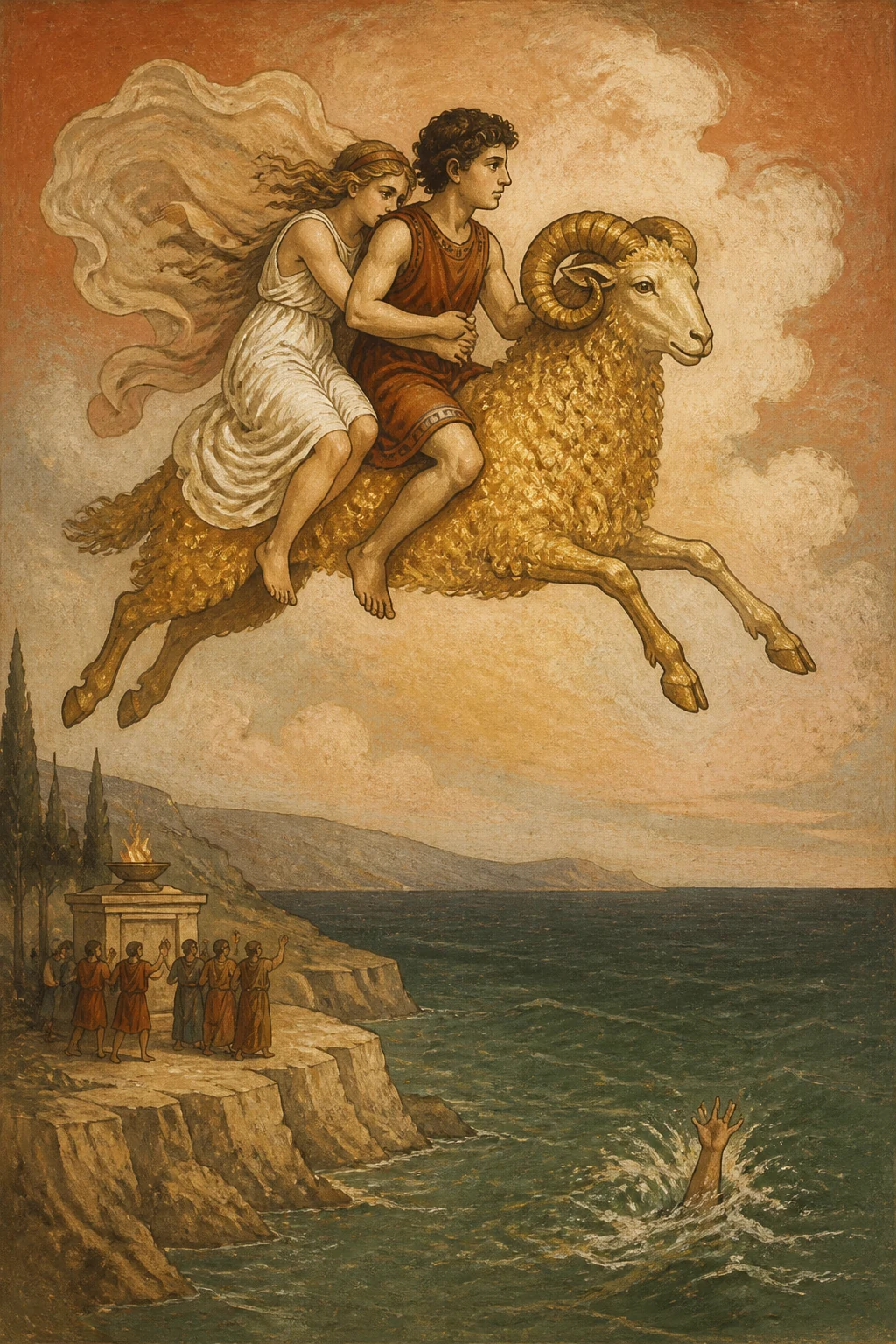
So when boyhood gave way to youth, they sailed with the Minyans in quest of the fleece with its gleaming golden wool, across an unknown sea, aboard the first ship.