Prevod
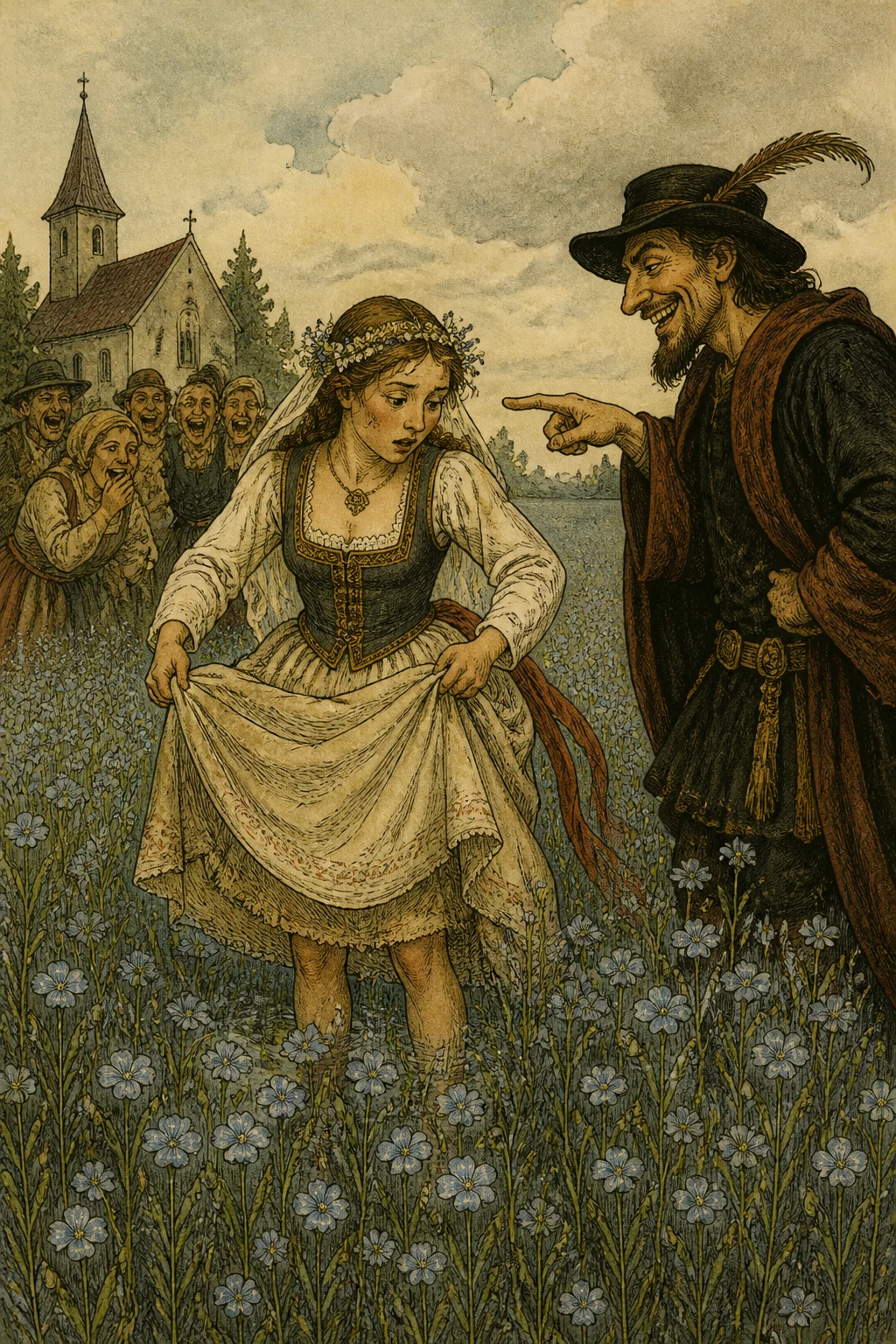
Once upon a time there was a young farmer named Hans, whose cousin wanted to find him a rich wife. So he sat Hans down behind the stove and had a good fire lit in it. Then he fetched a pot of milk and a generous helping of white bread, put a bright, newly minted heller into his hand, and said, “Hans, hold tight to that heller, break the white bread into the milk, and stay sitting there. Don’t stir from the spot until I come back.” “Yes,” said Hans, “I’ll do all that.” Now the matchmaker put on a pair of old, much-patched breeches, went to another village to see a rich farmer’s daughter, and said, “Would you like to marry my cousin Hans? You’ll have a fine, sensible husband who is sure to please you.” Her miserly father asked, “And what about his property? Has he anything to put in the pot?” “My dear friend,” answered the matchmaker, “my young cousin is sitting snug and warm, he has a fine bright penny in his hand, and he has plenty to put in the pot. And he must have no fewer patches”—as they called their plots of land—“than I have,” and here he slapped his patched breeches. “If you care to take the trouble to come with me, you shall see this very hour that everything is just as I say.” The miser did not want to let such a fine opportunity slip away, and said, “If that is so, I have no further objection to the marriage.” So the wedding was celebrated on the appointed day, and when the young wife wanted to go out into the fields and see the bridegroom’s property, Hans first took off his Sunday clothes and put on his patched smock, saying, “I might soil my good clothes.” Then they went out into the fields together, and wherever a vine marked a boundary, or fields and meadows were divided, Hans pointed his finger and then tapped a large or small patch on his smock, saying, “That patch is mine, and so is that one, my dear. Just look at them.” What he meant was that his wife should not gaze out over the broad fields, but look at his clothes, for those were his own.
“Were you at the wedding too?” “Yes indeed, I was there, dressed in all my finery. My headdress was made of snow, but the sun came out and melted it away; my dress was made of cobwebs, but I passed through some thorns and they tore it off me; my slippers were made of glass, but I struck them against a stone, and they went clink! and broke in two.”