O besedilu
Pametni ljudje
- Vir
- Grimmove pravljice
- Avtor
- Jacob in Wilhelm Grimm
- Jezik branja
- English
- Jezik izvirnika
- Deutsch
- Čas branja
- 8 min branja
- Obseg
- 6 strani
- Naslov izvirnika
- Die klugen Leute
O izvirniku
Grimmove pravljice
Gozdovi, čarobni predmeti in ljudska logika evropske pripovedne tradicije. Bralni jezik je English, izvirnik pa prihaja iz vira Grimmove pravljice v jeziku Deutsch.
Besedilo
Pametni ljudje
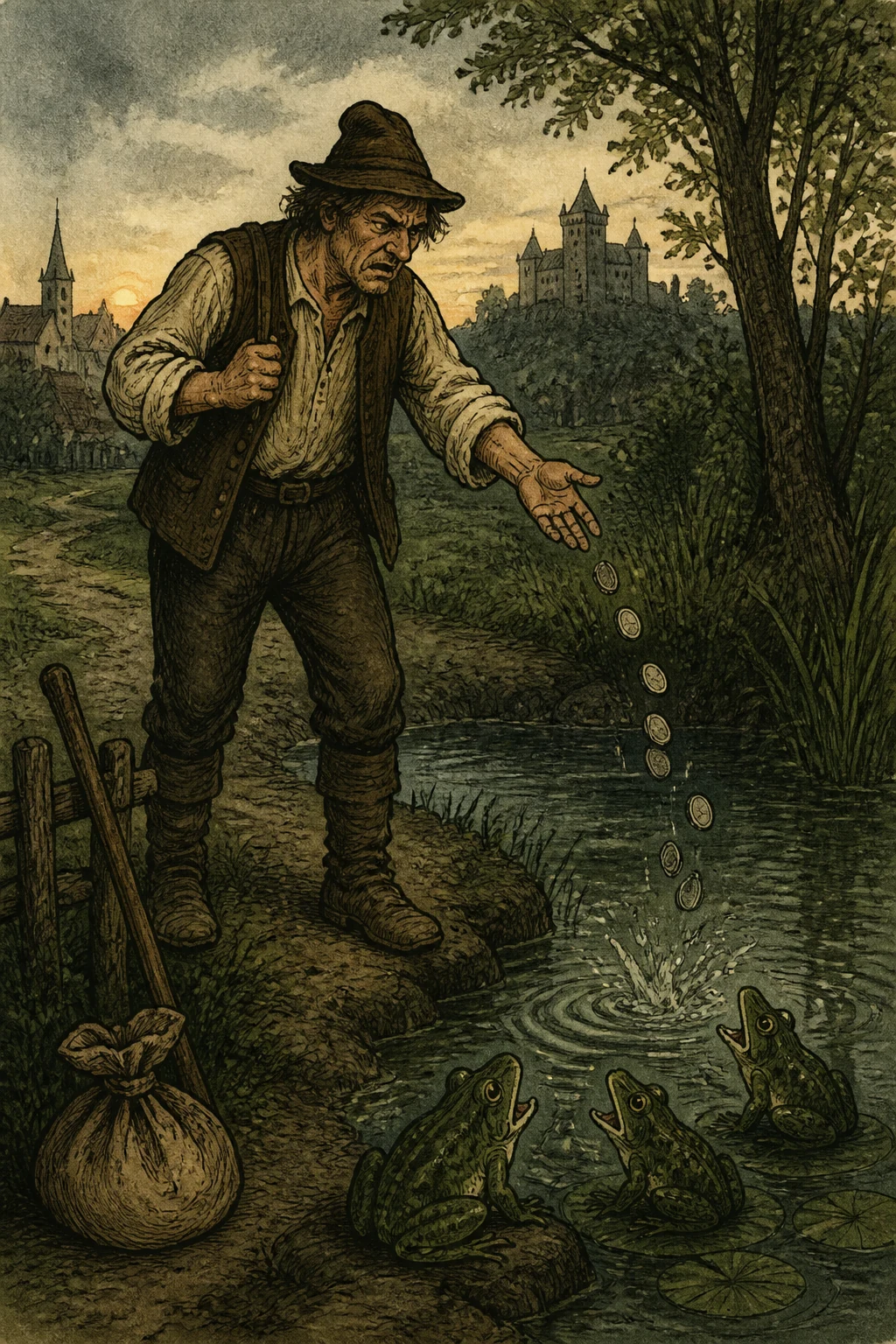
One day a farmer took his hornbeam stick from the corner and said to his wife, “Trine, I am going out into the country, and I shan’t be back for three days. If the cattle dealer calls while I’m away and wants to buy our three cows, you may sell them, but only for two hundred thalers, not a penny less, do you hear?” “Go in God’s name,” answered his wife. “I’ll see to it.” “Yes, you!” said her husband. “You fell on your head once when you were a little child, and you’ve never got over it to this day. But I tell you this: if you do anything foolish, I’ll paint your back blue, and without any paint, just with this stick I have in my hand. And you can be sure the colour will last a whole year.” With that, the man went on his way.
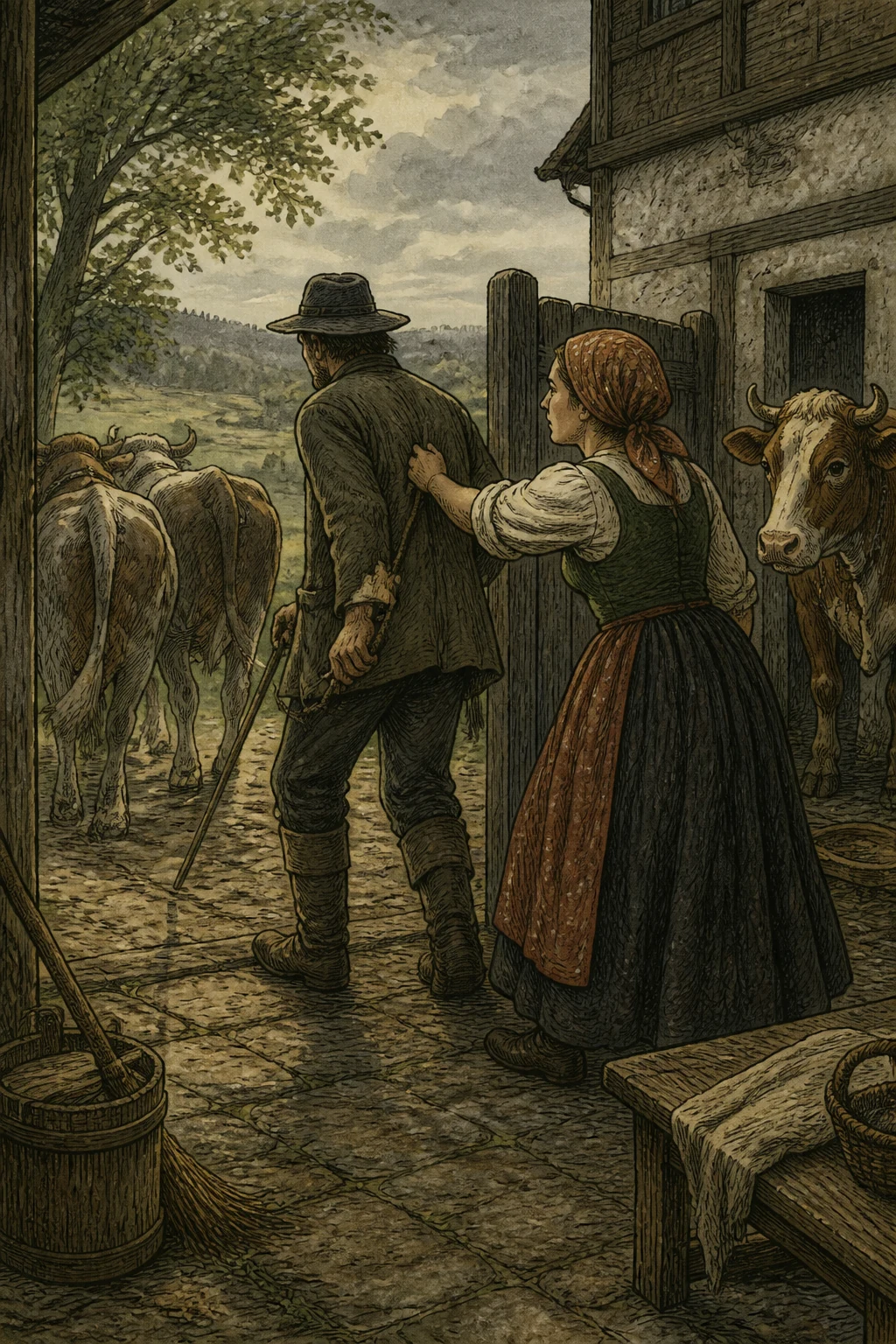
The next morning the cattle dealer came, and the woman had little need to bargain with him. When he had looked over the cows and heard the price, he said, “I’ll gladly give you that. It’s a fair price between friends. I’ll take the animals away at once.” He unchained them and drove them out of the cowshed. Just as he was about to pass through the farmyard gate, the woman caught him by the sleeve and said, “You must give me the two hundred thalers first, or I can’t let you go.” “Quite right,” answered the man. “I simply forgot to buckle on my money belt. But don’t worry, you shall have security until I pay. I’ll take two cows with me and leave you the third, so you’ll have a good pledge.” This made sense to the woman. She let the man go off with his cows and thought, “How pleased Hans will be when he sees how cleverly I’ve managed!” On the third day the farmer came home, as he had said he would, and asked at once whether the cows had been sold. “Of course, dear Hans,” answered his wife, “and for two hundred thalers, just as you said. They’re scarcely worth that much, but the man took them without a word of protest.” “Where’s the money?” asked the farmer. “The money? I haven’t got that,” answered his wife. “He’d forgotten his money belt, but he’ll bring it soon. He left me a good pledge.” “What sort of pledge?” asked the man. “One of the three cows. He won’t get her until he’s paid for the others. I managed it cleverly: I kept the smallest, because she eats the least.” The man flew into a rage, raised his stick, and was about to give her the coat of paint he had promised. Suddenly he lowered it and said, “You are the stupidest goose that ever waddled over God’s earth, but I pity you. I’ll go out onto the highway and spend three days looking for someone even more foolish than you. If I succeed, you shall go free; but if I don’t, you shall have every bit of the reward you deserve.”
He went out onto the highway, sat down on a stone, and waited to see what would happen. Presently he saw a farm wagon approaching, with a woman standing in the middle of it instead of sitting on the bundle of straw beside her or walking alongside the oxen to guide them. “This may be the sort you’re looking for,” the man thought. He sprang up and ran back and forth in front of the wagon like someone not quite right in the head. “What do you want, my good fellow?” the woman asked him. “I don’t know you. Where have you come from?” “I’ve fallen out of heaven,” answered the man, “and I don’t know how to get back. Couldn’t you drive me up there?” “No,” said the woman, “I don’t know the way. But if you come from heaven, perhaps you can tell me how my husband is getting on. He’s been there these three years. Surely you’ve seen him?” “Oh, I’ve seen him, but not everyone can have an easy life. He tends the sheep, and the poor creatures give him a great deal of trouble. They leap up the mountains and stray into the wilderness, and he has to run after them and round them up again. He’s all in rags, too, and his clothes will soon be falling off his back. There are no tailors there: Saint Peter won’t let any in, as you know from the tale.” “Who would ever have thought it!” cried the woman. “Do you know what? I’ll fetch his Sunday coat, which is still hanging in the cupboard at home. He can wear that there and look respectable. Be so kind as to take it with you.” “That won’t do,” answered the farmer. “You aren’t allowed to bring clothes into heaven. They take them away from you at the gate.” “Listen,” said the woman, “yesterday I sold my fine wheat and got a tidy sum for it. I’ll send him that. If you put the purse in your pocket, no one will notice.” “If nothing else will do,” replied the farmer, “I’ll gladly oblige you.” “Just stay sitting there,” she said. “I’ll drive home and fetch the purse. I’ll soon be back. I don’t sit on the bundle of straw, you see, but stand in the wagon, to make it easier for the animals.” She urged her oxen on, and the farmer thought, “She certainly has a gift for foolishness. If she really brings the money, my wife may count herself lucky, for she’ll get no beating.” Before long the woman came running back, brought the money, and put it into his pocket herself. Before she left, she thanked him a thousand times for his kindness.
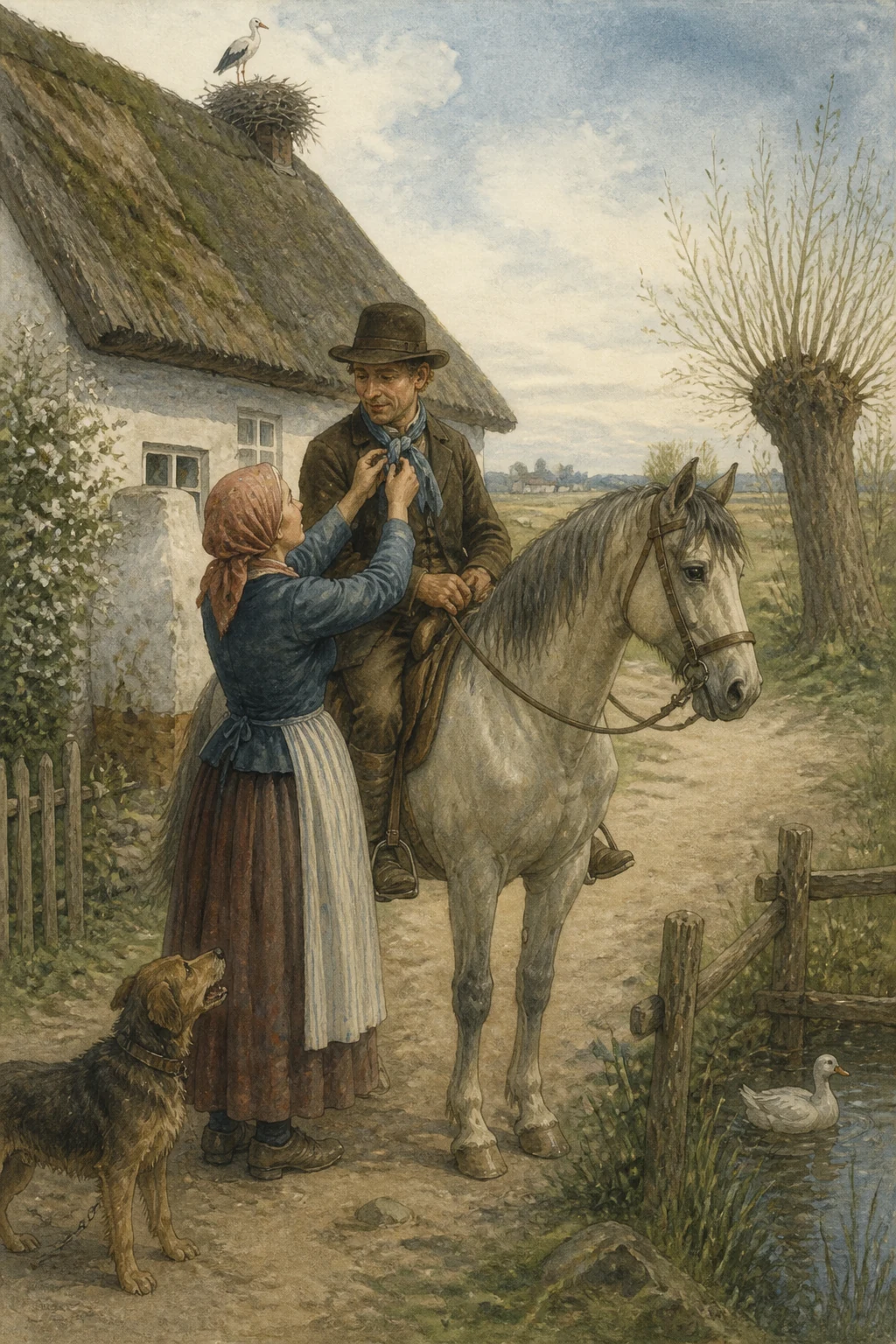
When the woman reached home again, she found her son, who had returned from the fields. She told him the astonishing things she had heard, then added, “I’m so glad I’ve had a chance to send something to my poor husband. Who would ever have imagined he could want for anything in heaven?” Her son was utterly amazed. “Mother,” he said, “a man doesn’t come down from heaven every day. I’ll go straight out and see if I can still find him. He must tell me what it’s like up there and how they go about their work.” He saddled the horse and rode off in great haste. He found the farmer sitting under a willow tree, about to count the money in the purse. “Have you seen the man who came from heaven?” the young fellow called to him. “Yes,” answered the farmer. “He’s set off on his way back and gone up that mountain over there, where it’s a little nearer. You can still catch him if you ride hard.” “Oh,” said the young fellow, “I’ve worn myself out working all day, and the ride here has quite finished me off. You know the man. Be so kind as to get on my horse and persuade him to come here.” “Aha,” thought the farmer, “here’s another with no wick in his lamp.” “Why shouldn’t I do you that favour?” he said, mounted the horse, and rode off at a brisk trot. The young fellow sat waiting until nightfall, but the farmer did not return. “No doubt,” he thought, “the man from heaven was in a great hurry and didn’t want to turn back, and the farmer gave him the horse to take to my father.” He went home and told his mother what had happened: he had sent his father the horse so that he would not always have to run about on foot. “You did well,” she answered. “Your legs are still young, and you can walk.”
When the farmer reached home, he put the horse in the stable beside the cow that had been left as a pledge, then went to his wife and said, “Trine, you’ve been lucky. I found two fools even more simple-minded than you. This time you’ll escape a beating. I’ll save it for another occasion.” Then he lit his pipe, sat down in the grandfather chair, and said, “That was a good bargain: a sleek horse and a great purse full of money for two scrawny cows. If foolishness always brought in so much, I’d gladly hold it in honour.” So thought the farmer, but I am sure you like the simple folk better.
Izvirnik
Die klugen Leute
Naslednje strani prikazujejo izvirno besedilo za primerjavo.
Ein Märchen der Brüder Grimm
Eines Tages holte ein Bauer seinen hagebüchnen Stock aus der Ecke und sprach zu seiner Frau 'Trine, ich gehe jetzt über Land und komme erst in drei Tagen wieder zurück. Wenn der Viehhändler in der Zeit bei uns einspricht und will unsere drei Kühe kaufen, so kannst du sie losschlagen, aber nicht anders als für zweihundert Taler, geringer nicht, hörst du?' 'Geh nur in Gottes Namen,' antwortete die Frau, 'ich will das schon machen.' 'Ja, du!' sprach der Mann, 'du bist als ein kleines Kind einmal auf den Kopf gefallen, das hängt dir bis auf diese Stunde nach. Aber das sage ich dir, machst du dummes Zeug, so streiche ich dir den Rücken blau an, und das ohne Farbe, bloß mit dem Stock, den ich da in der Hand habe, und der Anstrich soll ein ganzes Jahr halten, darauf kannst du dich verlassen.' Damit ging der Mann seine Wege.
Am andern Morgen kam der Viehhändler, und die Frau brauchte mit ihm nicht viel Worte zu machen. Als er die Kühe besehen hatte und den Preis vernahm, sagte er 'das gebe ich gerne, so viel sind sie unter Brüdern wert. Ich will die Tiere gleich mitnehmen.' Er machte sie von der Kette los und trieb sie aus dem Stall. Als er eben zum Hoftor hinaus wollte, faßte ihn die Frau am Ärmel und sprach 'Ihr müßt mir erst die zweihundert Taler geben, sonst kann ich Euch nicht gehen lassen.' 'Richtig,' antwortete der Mann, 'ich habe nur vergessen, meine Geldkatze umzuschnallen. Aber macht Euch keine Sorge, Ihr sollt Sicherheit haben, bis ich zahle. Zwei Kühe nehme ich mit, und die dritte lasse ich Euch zurück, so habt Ihr ein gutes Pfand.' Der Frau leuchtete das ein, sie ließ den Mann mit seinen Kühen abziehen und dachte 'wie wird sich der Hans freuen, wenn er sieht, daß ich es so klug gemacht habe.' Der Bauer kam den dritten Tag, wie er gesagt hatte, nach Haus und fragte gleich, ob die Kühe verkauft wären. 'Freilich, lieber Hans,' antwortete die Frau, 'und wie du gesagt hast, für zweihundert Taler. So viel sind sie kaum wert, aber der Mann nahm sie ohne Widerrede.' 'Wo ist das Geld?' fragte der Bauer. 'Das Geld, das habe ich nicht,' antwortete die Frau, 'er hatte gerade seine Geldkatze vergessen, wirds aber bald bringen; er hat mir ein gutes Pfand zurückgelassen.' 'Was für ein Pfand?' fragte der Mann. 'Eine von den drei Kühen, die kriegt er nicht eher, als bis er die andern bezahlt hat. Ich habe es klug gemacht, ich habe die kleinste zurückbehalten, die frißt am wenigsten.' Der Mann ward zornig, hob seinen Stock in die Höhe und wollte ihr damit den verheißenen Anstrich geben. Plötzlich ließ er ihn sinken und sagte 'du bist die dummste Gans, die auf Gottes Erdboden herumwackelt, aber du dauerst mich. Ich will auf die Landstraße gehen und drei Tage lang warten, ob ich jemand finde, der noch einfältiger ist, als du bist. Glückt mirs, so sollst du frei sein, find ich ihn aber nicht, so sollst du deinen wohlverdienten Lohn ohne Abzug erhalten.'
Er ging hinaus auf die große Straße, setzte sich auf einen Stein und wartete auf die Dinge, die kommen sollten. Da sah er einen Leiterwagen heranfahren, und eine Frau stand mitten darauf, statt auf dem Gebund Stroh zu sitzen, das dabei lag, oder neben den Ochsen zu gehen und sie zu leiten. Der Mann dachte 'das ist wohl eine, wie du sie suchst,' sprang auf und lief vor dem Wagen hin und her, wie einer, der nicht recht gescheit ist. 'Was wollt Ihr, Gevatter,' sagte die Frau zu ihm, 'ich kenne Euch nicht, von wo kommt Ihr her?' 'Ich bin von dem Himmel gefallen,' antwortete der Mann, 'und weiß nicht, wie ich wieder hinkommen soll; könnt Ihr mich nicht hinauffahren?, 'Nein,' sagte die Frau, 'ich weiß den Weg nicht. Aber wenn Ihr aus dem Himmel kommt, so könnt Ihr mir wohl sagen, wie es meinem Mann geht, der schon seit drei Jahren dort ist: Ihr habt ihn gewiß gesehen?' 'Ich habe ihn wohl gesehen, aber es kann nicht allen Menschen gut gehen. Er hütet die Schafe, und das liebe Vieh macht ihm viel zu schaffen, das springt auf die Berge und verirrt sich in der Wildnis, und da muß er hinterherlaufen und es wieder zusammentreiben. Abgerissen ist er auch, und die Kleider werden ihm bald vom Leib fallen. Schneider gibt es dort nicht, der heilige Petrus läßt keinen hinein, wie Ihr aus dem Märchen wißt.' 'Wer hätte sich das gedacht!' rief die Frau, 'wißt Ihr was? ich will seinen Sonntagsrock holen, der noch daheim im Schrank hängt, den kann er dort mit Ehren tragen. Ihr seid so gut und nehmt ihn mit.' 'Das geht nicht wohl,' antwortete der Bauer, 'Kleider darf man nicht in den Himmel bringen, die werden einem vor dem Tor abgenommen.' 'Hört mich an,' sprach die Frau, 'ich habe gestern meinen schönen Weizen verkauft und ein hübsches Geld dafür bekommen, das will ich ihm schicken. Wenn Ihr den Beutel in die Tasche steckt, so wirds kein Mensch gewahr.' 'Kanns nicht anders sein,' erwiderte der Bauer, 'so will ich Euch wohl den Gefallen tun.' 'Bleibt nur da sitzen,' sagte sie, 'ich will heim fahren und den Beutel holen; ich bin bald wieder hier. Ich setze mich nicht auf das Bund Stroh, sondern stehe auf dem Wagen, so hats das Vieh leichter.' Sie trieb ihre Ochsen an, und der Bauer dachte 'die hat Anlage zur Narrheit, bringt sie das Geld wirklich, so kann meine Frau von Glück sagen, denn sie kriegt keine SchIäge.' Es dauerte nicht lange, so kam sie gelaufen, brachte das Geld und steckte es ihm selbst in die Tasche. Eh sie wegging, dankte sie ihm noch tausendmal für seine Gefälligkeit.
Als die Frau wieder heim kam, so fand sie ihren Sohn, der aus dem Feld zurückgekehrt war. Sie erzählte ihm, was sie für unerwartete Dinge erfahren hätte, und setzte dann hinzu 'ich freue mich recht, daß ich Gelegenheit gefunden habe, meinem armen Mann etwas zu schicken, wer hätte sich vorgestellt, daß er im Himmel an etwas Mangel leiden würde?' Der Sohn war in der größten Verwunderung, 'Mutter,' sagte er, 'so einer aus dem Himmel kommt nicht alle Tage, ich will gleich hinaus und sehen, daß ich den Mann noch finde: der muß mir erzählen, wies dort aussieht und wies mit der Arbeit geht.' Er sattelte das Pferd und ritt in aller Hast fort. Er fand den Bauer, der unter einem Weidenbaum saß und das Geld, das im Beutel war, zählen wollte. 'Habt Ihr nicht den Mann gesehen,' rief ihm der Junge zu, 'der aus dem Himmel gekommen ist?' 'Ja,' antwortete der Bauer, 'der hat sich wieder auf den Rückweg gemacht und ist den Berg dort hinaufgegangen, von wo ers etwas näher hat. Ihr könnt ihn noch einholen, wenn Ihr scharf reitet' 'Ach,' sagte der Junge, 'ich habe mich den ganzen Tag abgeäschert, und der Ritt hierher hat mich vollends müde gemacht: Ihr kennt den Mann, seid so gut und setzt Euch auf mein Pferd und überredet ihn, daß er hierher kommt.' 'Aha,' meinte der Bauer, 'das ist auch einer, der keinen Docht in seiner Lampe hat. 'Warum sollte ich Euch den Gefallen nicht tun?' sprach er, stieg auf und ritt im stärksten Trab fort. Der Junge blieb sitzen, bis die Nacht einbrach, aber der Bauer kam nicht zurück. 'Gewiß,' dachte er, 'hat der Mann aus dem Himmel große Eile gehabt und nicht umkehren wollen, und der Bauer hat ihm das Pferd mitgegeben, um es meinem Vater zu bringen.' Er ging heim und erzählte seiner Mutter, was geschehen war: das Pferd habe er dem Vater geschickt, damit er nicht immer herumzulaufen brauche. 'Du hast wohl getan,' antwortete sie, 'du hast noch junge Beine und kanns t zu Fuß gehen.'
Als der Bauer nach Haus gekommen war, stellte er das Pferd in den Stall neben die verpfändete Kuh, ging dann zu seiner Frau und sagte 'Trine, das war dein Glück, ich habe zwei gefunden, die noch einfältigere Narren sind als du: diesmal kommst du ohne SchIäge davon, ich will sie für eine andere Gelegenheit aufsparen.' Dann zündete er seine Pfeife an, setzte sich in den Großvaterstuhl und sprach 'das war ein gutes Geschäft, für zwei magere Kühe ein glattes Pferd und dazu einen großen Beutel voll Geld. Wenn die Dummheit immer soviel einbrächte, so wollte ich sie gerne in Ehren halten. So dachte der Bauer, aber dir sind gewiß die Einfältigen lieber.
Nadaljuj z branjem