Prevod
Jack in njegova mati sta živela čisto sama v majhni koči z vrtom pred njo in na vsem svetu nista imela ničesar drugega kakor kravo po imenu Blackey.
Nekega dne je Blackey presušila; niti kapljice mleka ni več dala. »No, pa imamo!« je rekla mati. »Če nam Blackey ne daje mleka, si ne moreva privoščiti, da bi jo obdržala. Odpeljati jo boš moral na semenj, Jack, in jo prodati za toliko, kolikor boš dobil zanjo.«
Jacku je bilo žal, da morata kravico prodati, vendar ji je nataknil povodec in se odpravil z njo na pot. Ni prišel daleč, ko je srečal drobnega starčka z dolgo sivo brado.
»No, Jack,« je rekel starček, »kam pa pelješ Blackey v tem lepem jutru?« Jack se je začudil, da neznanec pozna njegovo ime in celo ime njegove krave, vendar je vljudno odgovoril: »Na semenj jo peljem, da jo prodam.«
»Ni ti treba tako daleč,« je rekel starček, »saj jo lahko za primerno ceno kupim od tebe jaz.« »Koliko pa bi mi dali zanjo?« je vprašal Jack, kajti bil je prebrisan fant.
»Dal ti bom pest fižola,« je rekel starec. »Ne, ne,« je Jack odkimal. »To bi bila dobra kupčija za vas, jaz pa za svojo kravo nočem fižola, temveč pošten srebrn denar.«
»Počakaj, da vidiš fižol,« je rekel starec in iz žepa izvlekel pest zrn. Ko jih je Jack zagledal, so se mu oči zaiskrile, kajti takšnega fižola še nikoli ni videl. Zrna so bila vseh barv, rdeča, zelena, modra, vijoličasta in rumena, in svetila so se, kakor da bi bila zloščena. A Jack je še vedno odkimaval. Njegova mati je hotela srebrnike, ne fižola.
»Potem pa ti bom povedal še nekaj o tem fižolu,« je rekel mož. »Takšne kupčije ne boš sklenil nikoli več, kajti to je čarobni fižol. Če ga posadiš, bo v eni sami noči zrasel prav do neba, in če boš hotel, boš lahko splezal tja gor in se razgledal.«
Ko je Jack to slišal, si je premislil, saj se mu je zdelo, da je takšen fižol vreden več kakor krava. Starcu je izročil povodec krave Blackey, vzel fižol, ga zavezal v robec in z njim stekel domov.
Mati se je začudila, da se je tako hitro vrnil s semnja. »No, si prodal Blackey?« je vprašala. Da, Jack jo je prodal. »In koliko si dobil zanjo?«
O, dobro ceno je dobil. »Ampak koliko? Koliko? Petindvajset dolarjev? Ali dvajset? Ali vsaj deset?« O, Jack je sklenil še boljšo kupčijo. Prodal jo je nekemu starcu tam pri ovinku za celo pest čarobnega fižola; nato je pohitel odvezovat robec, da bi materi pokazal zrna.
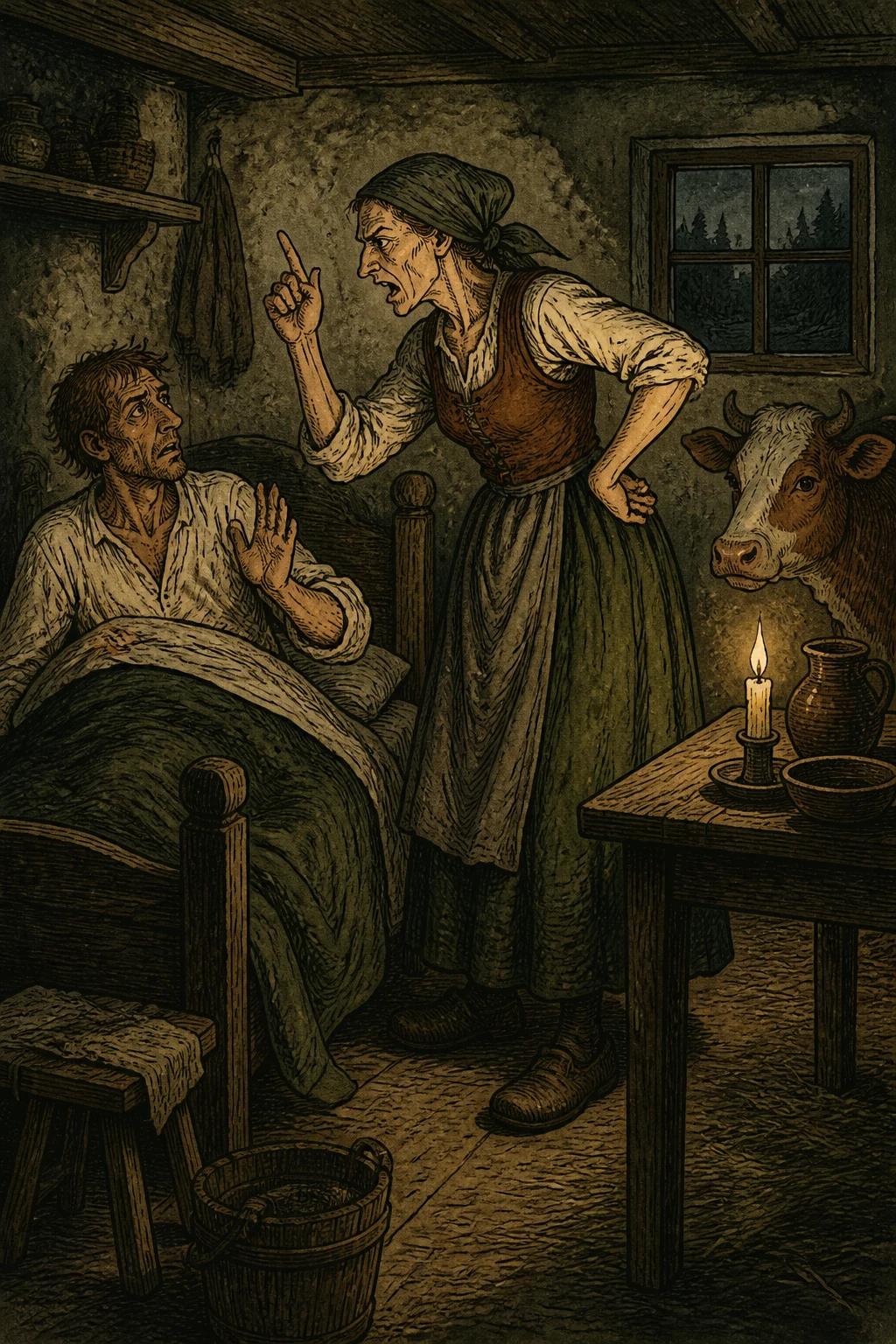
Ko pa je vdova slišala, da je prodal kravo za fižol, bi najraje zajokala od jeze. Prav nič ji ni bilo mar, kako lep je fižol, in bila je dovolj pametna, da ni verjela, da je čaroben. Jacku je primazala takšno zaušnico, da mu je zazvonilo v glavi, ga poslala spat brez večerje, fižol pa vrgla skozi okno.
Ko se je Jack naslednje jutro prebudil, ni vedel, kaj se je zgodilo. Vsa soba je bila mračna, senčna in zelena, skozi okno pa ni bilo videti neba — samo zelenje.
Zlezel je iz postelje in pogledal ven. Tedaj je zagledal, da je eno od čarobnih zrn ponoči pognalo korenine ter raslo in raslo, dokler ni zraslo prav do neba. Jack se je nagnil skozi okno in pogledal navzgor. Vrha ovijalke ni mogel videti, toda fižolovo steblo je bilo dovolj močno, da bi ga držalo, zato je stopil nanj in začel plezati.
Plezal je in plezal, dokler ni bil visoko nad streho in visoko nad drevesi. Plezal je, dokler ni komaj še razločil vrta globoko spodaj, ptice pa so krožile okoli njega in veter je zibal fižolovo steblo. Splezal je tako visoko, da je čez čas prispel v nebesno deželo, ki pa ni bila modra in prazna, kakor se zdi nam tu spodaj. Bila je dežela ravnih zelenih travnikov, dreves in potokov, pred seboj pa je Jack zagledal cesto, ki je vodila naravnost čez travnike do velikega, visokega sivega gradu.
Jack je stopil na cesto in se odpravil proti gradu. Ni prišel daleč, ko je srečal prelepo gospo. Bila je vila, čeprav Jack tega ni vedel.
»Kam greš, Jack?« ga je vprašala. »V tisti grad grem, da si ga ogledam,« je rekel Jack. »Prav je tako,« je rekla gospa, »le previden bodi, ko boš stikal po njem, kajti ta grad pripada zelo nasilnemu, bogatemu in strašnemu velikanu. Zdaj pa ti bom nekaj povedala: vse njegovo bogastvo je nekoč pripadalo tvojemu očetu; velikan mu ga je ukradel, zato bo prav in pošteno, če ti uspe kaj odnesti s seboj.«
Jack se ji je zahvalil za to, kar mu je povedala, nato pa je šel naprej, korak za korakom. Čez čas je prišel do gradu in tam je neka ženska pometala stopnice. Bila je velikanova žena.
Ko je zagledala Jacka, se je prestrašila. »Kaj hočeš tukaj?« je vzkliknila. »Poberi se, preden pride moj mož domov, kajti če te najde tukaj, se ti bo slabo godilo, to ti povem.«
»Da, da, vem,« je rekel Jack, »ampak nič še nisem zajtrkoval in tako sem lačen, da bom vsak hip omagal. Dajte mi samo grižljaj, da potešim lakoto, pa bom šel.« Velikanova žena tega nikakor ni hotela storiti, toda Jack je tako dolgo prosil in moledoval, da ga je nazadnje spustila v hišo in mu prinesla košček kruha in sira.
Jack je komaj sedel k jedi, ko se je zunaj zaslišal strašen hrup in topotanje. »O, usmiljenje!« je vzkliknila velikanova žena in čisto prebledela. »Moj mož prihaja, in če te vidi tukaj, te bo v hipu pogoltnil, povrhu pa še mene pretepel.«
Ko je Jack to slišal, mu ni bilo prav nič všeč. »Ali me ne morete kam skriti?« je vprašal. »Sem, zlezi v ta bakreni lonec!« je vzkliknila ženska in dvignila pokrov. Jacku je pomagala zlesti v lonec in ga pokrila, in komaj je to storila, je velikan že prikorakal v sobo.
»Fi, faj, fo, fam! Angleško kri zavohal sem!« je zarjovel. »Naj bo živ ali mrtev že, iz njegovih kosti spekel bom kruh zase!« »Kakšne neumnosti!« je rekla njegova žena. »Če bi kdo prišel sem, mar misliš, da ga ne bi videla? Vrana je letela čez streho in spustila kost v dimnik, in to vohaš.«
Ko je to rekla, ji je velikan verjel. Sedel je za mizo in zahteval zajtrk. Žena je predenj postavila tri cele pečene vole in dva hlebca kruha, vsakega velikega kakor sod, in velikan je vse pojedel, kot bi trenil.
»Zdaj pa mi, žena, prinesi vreči z denarjem iz zakladnice,« je rekel. Njegova žena je odšla skozi velika vrata, okovana z žeblji, in ko se je vrnila, je prinesla dve vreči ter ju postavila na mizo pred velikana. Velikan je odvezal vrvici in ju odprl, in vreči sta bili polni žvenketajočih zlatnikov. Sedel je tam in štel in štel denar. Ko je preštel vsega, ga je spet spravil v vreči, nato pa iztegnil noge predse in zaspal ter smrčal tako, da so se tresli strešni tramovi.
Velikanova žena je še nekaj časa opravljala hišna dela, nato pa odšla v drugo sobo. Jack je počakal, dokler ni bil prepričan, da je odšla, nato pa odrinil pokrov lonca in zlezel ven. Prikradel se je do mize, pograbil vreči z denarjem in jo ucvrl z njima. Ne velikan ne njegova žena nista ničesar opazila, dokler ni Jack že varno splezal po fižolovem steblu in se vrnil domov.
Ko je Jackova mati zagledala vreči z denarjem, sta jo preplavila začudenje in veselje. »Ti vreči sta bili nekoč očetovi,« je rekla, »vendar so mu ju ukradli in nikoli si nisem mislila, da ju bom še kdaj videla.«
Od tedaj sta Jack in njegova mati dobro živela; imela sta dovolj hrane in pijače, lepe obleke in vse, kar sta si želela. In nista bila skopa; svojo srečo sta delila tudi s sosedi.
Čez čas je denarja skoraj zmanjkalo. »Še enkrat bom splezal po fižolovem steblu,« si je rekel Jack, »in pogledal, kaj ima velikan še v svojem gradu.«
Plezal je in plezal in plezal in čez čas je prišel v velikanovo deželo. Pred njim se je raztezala cesta do gradu. Jack je urno stopal po njej, korak za korakom, dokler ni prišel do grajskih vrat, in ker ni videl nikogar, jih je odprl ter stopil noter.
Tam je velikanova žena drgnila lonce in ponve. Ko je zagledala Jacka, ji je ponev, ki jo je držala, skoraj padla iz rok. »Spet si tukaj?«
»Da, spet sem tukaj,« je rekel Jack. »Potem pa si želim, da bi bil kje drugje,« je rekla velikanova žena. »Ko si bil zadnjič tukaj, sta nama izginili vreči z denarjem, in ne morem si kaj, da ne bi pomislila, da si imel ti kaj pri tem.«
»O, o! Kako lahko kaj takega mislite?« je vzkliknil Jack. »No, vseeno se poberi,« je precej nejevoljno rekla velikanova žena. »Nočem več tujih fantov v hiši.«
Da, Jack bo takoj odšel, toda ali mu ne bi prej dala grižljaja za zajtrk? Ne, velikanova žena mu ga ne bo dala, in pika. Toda Jacka ni bilo tako lahko odgnati; govoril je, prosil in jo prepričeval, in medtem ko je še govoril, sta zaslišala velikana pri vratih.
Velikanova žena se je na smrt prestrašila. »O, če te najde tukaj, jih bom pa dobila!« je vzkliknila. »Hitro, spet v lonec!« Jack je zlezel v bakreni lonec in velikanova žena ga je pokrila.
Naslednji hip je velikan pritopotal v sobo. »Fi, faj, fo, fam!« je zatulil. »Angleško kri zavohal sem! Naj bo živ ali mrtev že, iz njegovih kosti spekel bom kruh zase!«
»Neumnost,« je rekla njegova žena, »vedno si kaj domišljaš. Daj, sedi za mizo in pojej zajtrk. Vrana je letela čez streho in spustila kost v ogenj, in to vohaš.«
Velikan je malo vohljal naokoli, nato pa, še vedno mrmraje sam pri sebi, sedel za mizo in začel jesti. Ko je končal, je zaklical: »Zdaj pa mi, žena, prinesi mojo malo rdečo kokoško iz zakladnice.«
Njegova žena je odšla v zakladnico in se kmalu vrnila z malo rdečo kokoško v predpasniku. Postavila jo je na mizo pred velikana. Velikan se je zarežal, da je pokazal vse zobe.
»Moja mala rdeča kokoška, moja lepa rdeča kokoška, znesi jajce,« je rekel velikan. Brž ko je to izrekel, je kokoška znesla jajce iz čistega zlata. »Moja mala rdeča kokoška, moja lepa rdeča kokoška, znesi jajce!« je rekel velikan. Tedaj je mala rdeča kokoška znesla še eno jajce.
»Moja mala rdeča kokoška, moja lepa rdeča kokoška, znesi jajce,« je rekel velikan. Tedaj je kokoška znesla tretje jajce. »Tako!« je rekel velikan. »Za danes bo dovolj. Zdaj jo lahko, žena, odneseš nazaj v zakladnico.«
Žena je vzela kokoško in jo odnesla v zakladnico, ko pa se je vrnila v kuhinjo, je pozabila zapreti vrata zakladnice za seboj.
Nato je velikan iztegnil noge predse, zaspal in smrčal tako, da so se tresli strešni tramovi. Njegova žena je opravljala delo po kuhinji in čez čas, ko ni gledala, je Jack zlezel iz lonca. Prikradel se je do vrat zakladnice in smuknil skoznje. Tam je mala rdeča kokoška udobno sedela v zlatem gnezdu.
Jack jo je stisnil pod pazduho, ona pa ni niti pisnila. Nato se je prikradel nazaj skozi kuhinjo in ven skozi vrata ter jo ucvrl po cesti. Velikanova žena ga sploh ni opazila.
Toda ravno ko je Jack prišel do fižolovega stebla, je kokoška začela kokodakati. To je prebudilo velikana. »Žena, žena!« je zarjovel. »Nekdo krade mojo malo rdečo kokoško!« Stekel je iz gradu in se ozrl na vse strani, a nikogar ni videl, kajti Jack je bil že na pol poti navzdol po fižolovem steblu.
Od tedaj Jacku in njegovi materi nikoli več ni ničesar primanjkovalo, kajti kadar je potreboval denar, je moral samo reči: »Moja mala rdeča kokoška, moja lepa rdeča kokoška, znesi jajce,« in kokoška je znesla zlato jajce.
Vendar Jack še vedno ni bil zadovoljen. Hotel je videti, kaj je še v velikanovem gradu. Zato je nekega dne, ne da bi materi kaj rekel, splezal po fižolovem steblu in pohitel po cesti do velikanovega gradu. Ni hotel srečati velikanove žene, kajti pomislil je, da je morda uganila, da je prav on odnesel velikanovo kokoško in vreči z denarjem. In res je uganila, pa ne le to: tudi velikanu je vse povedala.
Jack se je zelo previdno prikradel do gradu in nikogar ni videl. Za špranjo je odprl grajska vrata in pokukal noter, a še vedno ni videl nikogar. Potisnil jih je malo bolj na stežaj, nato pa stekel noter in čez kuhinjo ter se skril v veliko peč.
Komaj je to storil, je prišla velikanova žena. »Uf!« je rekla. »Kakšen prepih!« In zaprla je zunanja vrata. Nato je postavila velikanov zajtrk na mizo in se še naprej pogovarjala sama s seboj. »Veter je moral odpreti vrata,« je rekla. »Prepričana sem, da sem jih zaprla, ko sem šla ven.«
Kmalu je velikan prihrumel in pritopotal v hišo. Brž ko je vstopil v sobo, je začel tuliti: »Fi, faj, fo, fam! Angleško kri zavohal sem! Naj bo živ ali mrtev že, iz njegovih kosti spekel bom kruh zase!«
»Kaj? Kaj?« je vzkliknila njegova žena. »Pravkar sem našla vrata odprta. Misliš, da je tisti presneti fant spet v hiši?« »Če je, bom že hitro opravil z njim,« je rekel velikan.
Velikanova žena je stekla k bakrenemu loncu, dvignila pokrov in pogledala vanj, vendar v njem ni bilo nikogar. Nato sta z velikanom začela iskati naokoli. Pogledala sta v omare in za vrata in vsepovsod, a v peč jima ni prišlo na misel pogledati.
»Navsezadnje ga ne more biti tukaj,« je rekla žena, »sicer bi ga našla. Nekaj drugega moraš vohati.« Velikan je torej sedel in začel jesti zajtrk, a med jedjo je mrmral in godrnjal sam pri sebi.
Ko je končal, je rekel: »Žena, prinesi mojo zlato harfo, da mi bo pela.« Njegova žena je odšla v zakladnico in se vrnila z zlato harfo v rokah. Postavila jo je na mizo pred velikana in harfa je takoj začela igrati. Glasba je bila tako lepa, da se je človeku ob njej topilo srce. Tudi velikanova žena je sedla in prisluhnila in kmalu je glasba oba zazibala v spanec. Tedaj je Jack zlezel iz peči, pograbil harfo in pobegnil z njo.
Harfa je takoj začela klicati: »Gospodar! Gospodar! Na pomoč! Nekdo me odnaša!« Velikan se je sunkoma prebudil in se ozrl naokoli. Ko je ugotovil, da harfe ni več, je zarjovel kakor razjarjen bik. Stekel je k vratom, Jack pa je bil že več kot na pol poti po cesti. »Stoj! Stoj!« je kričal velikan, toda Jacku še na misel ni prišlo, da bi se ustavil. Tekel je, dokler ni prišel do fižolovega stebla, nato pa začel plezati navzdol, kolikor hitro je mogel, še vedno s harfo v rokah.
Velikan mu je sledil, in ko je prišel do fižolovega stebla, je pogledal navzdol ter zagledal Jacka daleč, daleč pod seboj. Velikan ni bil vajen plezanja. Ni vedel, ali naj mu sledi ali ne. Tedaj je harfa spet zaklicala: »Na pomoč, gospodar, na pomoč!« Velikan ni več omahoval. Oprijel se je fižolovega stebla in začel plezati navzdol.
Medtem je Jack že dosegel tla. »Hitro! Hitro, mati!« je zaklical. »Prinesi mi sekiro!« Mati je pritekla s sekiro. Ni vedela, čemu jo potrebuje, vendar je vedela, da se mu mudi.
Jack je zgrabil sekiro in začel sekati fižolovo steblo. Velikan nad njim je začutil, da se steblo trese. »Počakaj! Malo počakaj!« je zaklical. »Rad bi govoril s teboj!«
Toda še preden je lahko rekel kaj več, je bilo fižolovo steblo presekano in se je z velikanskim treskom podrlo. Z njim je padel tudi velikan in tako je bilo po njem.
Jack in njegova mati pa sta odtlej živela v miru in izobilju do konca svojih dni.
Izvirnik
Jack and his mother lived all alone in a little hut with a garden in front of it, and they had nothing else in the world but a cow named Blackey.
One time Blackey went dry; not a drop of milk would she give. “See there now!” said the mother. “If Blackey doesn’t give us milk we can’t afford to keep her. You’ll have to take her off to market, Jack, and sell her for what you can get.”
Jack was sorry that the little cow had to be sold, but he put a halter around her neck and started off with her.
He had not gone far, when he met a little old man with a long gray beard.
“Well, Jack,” said the little old man, “where are you taking Blackey this fine morning?”
Jack was surprised that the stranger should know his name, and that of the cow, too, but he answered politely, “Oh, I am taking her to market to sell her.”
“There is no need for you to go as far as that,” said the little old man, “for I will buy her from you for a price.”
“What price would you give me?” asked Jack, for he was a sharp lad.
“Oh, I will give you a handful of beans for her,” said the old man.
“No, no,” Jack shook his head. “That would be a fine bargain for you; but it is not beans but good silver money that I want for my cow.”
“But wait till you see the beans,” said the old man; and he drew out a handful of them from his pocket. When Jack saw them his eyes sparkled, for they were such beans as he had never seen before. They were of all colors, red and green and blue and purple and yellow, and they shone as though they had been polished. But still Jack shook his head. It was silver pieces his mother wanted, not beans.
“Then I will tell you something further about these beans,” said the man. “This is such a bargain as you will never strike again; for these are magic beans. If you plant them they will grow right up to the sky in a single night, and you can climb up there and look about you if you like.”
When Jack heard that he changed his mind, for he thought such beans as that were worth more than a cow. He put Blackey’s halter in the old man’s hand, and took the beans and tied them up in his handkerchief and ran home with them.
His mother was surprised to see him back from market so soon.
“Well, and have you sold Blackey?” she asked.
Yes, Jack had sold her.
“And what price did you get for her?”
Oh, he got a good price.
“But how much? How much? Twenty-five dollars? Or twenty? Or even ten?”
Oh, Jack had done better than that. He had sold her to an old man down there at the turn of the road for a whole handful of magic beans; and then Jack hastened to untie his handkerchief and show the beans to his mother.
But when the widow heard he had sold the cow for beans she was ready to cry for anger. She did not care how pretty they were, and as to their being magic beans she knew better than to believe that. She gave Jack such a box on the ears that his head rang with it, and sent him up to bed without his supper, and the beans she threw out of the window.
The next morning when Jack awoke he did not know what had happened. All of the room was dim and shady and green, and there was no sky to be seen from the window,—only greenness.
He slipped from bed and looked out, and then he saw that one of the magic beans had taken root in the night and grown and grown until it had grown right up to the sky. Jack leaned out of the window and looked up and he could not see the top of the vine, but the bean-stalk was stout enough to bear him, so he stepped out onto it and began to climb.
He climbed and he climbed until he was high above the roof-top and high above the trees. He climbed till he could hardly see the garden down below, and the birds wheeled about him and the wind swayed the bean-stalk. He climbed so high that after awhile he came to the sky country, and it was not blue and hollow as it looks to us down here below. It was a land of flat green meadows and trees and streams, and Jack saw a road before him that led straight across the meadows to a great tall gray castle.
Jack set his feet in the road and began to walk toward the castle.
He had not gone far when he met a lovely lady, and she was a fairy, though Jack did not know it.
“Where are you going, Jack?” she asked.
“I’m going to yonder castle to have a look at it,” said Jack.
“That is well,” said the lady, “only you must be careful how you poke about there, for that castle belongs to a very fierce and rich and terrible giant: and now I will tell you something: all the riches he has used to belong to your father; the giant stole them from him, so if you can fetch anything away with you it will be a right and fair thing.”
Jack thanked her for what she told him, and then he went on, setting one foot before the other.
After awhile he came to the castle, and there was a woman sweeping the steps, and she was the giant’s wife.
When she saw Jack she looked frightened. “What do you want here?” she cried. “Be off with you before my husband comes home, for if he finds you here it will be the worse for you I can tell you.”
“Yes, yes, I know”; said Jack, “but I’ve had no breakfast, and I’m like to drop I’m so hungry. Just give me a bite to stay my stomach and I’ll be off.” The giant’s wife did not want to do that at all, but Jack begged and coaxed until at last she let him come into the house and got out a bit of bread and cheese for him.
Jack had hardly set down to it when there was a great noise and stamping outside.
“Oh, mercy!” cried the giant’s wife, and she turned quite pale. “There’s my husband coming in, and if he sees you here he’ll swallow you down in a trice, and give me a beating into the bargain.”
When Jack heard that he did not like it at all. “Can you not hide me some place?” he asked.
“Here, creep into this copper pot,” cried the woman, taking off the lid. She helped Jack into the pot and put the lid over him, and she had no more than done it before the giant came stumping into the room.
“Fee, fi, fo, fum! I smell the blood of an Englishman!”
he roared.
“Be he alive or be he dead I’ll grind his bones to make my bread.”
“What nonsense!” said his wife. “If anyone had come here don’t you suppose I would have seen him? A crow flew over the roof and dropped a bone down the chimney, and that is what you smell.”
When she said that the giant believed her. He sat down at the table and called for breakfast. The woman set before him three whole roasted oxen and two loaves of bread each as big as a hogshead, and the giant ate them up in a twinkling.
“Now, wife, bring me my moneybags from the treasure-room,” he said.
His wife went out through a great door studded with nails, and when she came back she brought two bags with her and set them on the table in front of the giant. The giant untied the strings and opened them, and they were full of clinking golden money. The giant sat there and counted and counted the money. After it was all counted he put it back in the bags again, and then he stretched his legs out in front of him and went to sleep and snored until the rafters shook.
The giant’s wife worked around for awhile and then she went into another room. Jack waited until he was sure she had gone, and then he pushed the lid of the pot aside and crept out. He crept over to the table and seized hold of the moneybags and made off with them, and neither the giant nor his wife knew anything about it until Jack was safe down the bean-stalk and home again.
When Jack’s mother saw the moneybags she was filled with wonder and joy. “Those were once your father’s,” said she, “but they were stolen from him, and never did I think to see them again.”
After that Jack and his mother lived well, they had plenty to eat and drink, and good clothes to wear, and everything they wanted. And they were not stingy; they shared their good luck with their neighbors as well.
After awhile the money was almost gone. “I’ll just climb up the bean-stalk again,” said Jack to himself, “and see what else the giant has in his castle.”
He climbed and he climbed and he climbed, and after awhile he came to the giant’s country, and there in front of him lay the road to the castle. Jack walked along briskly, setting one foot in front of the other till he came to the castle door, and as he saw no one he opened the door and stepped inside.
There was the giant’s wife scouring the pots and pans, and when she saw Jack she almost dropped the skillet she was holding.
“You here again?”
“Yes, here I am again,” said Jack.
“Then I wish you were some place else,” said the giant’s wife; “when you were here before our moneybags were stolen, and I can’t help thinking you had something to do with it.”
“Oh, oh! How can you think that?” cried Jack.
“Well, be off with you, anyway”; and the giant’s wife spoke quite glumly. “I want no more strange lads around here.”
Yes, Jack would be off in a moment, but wouldn’t she give him a bite of breakfast first?
No, the giant’s wife wouldn’t, and that was flat.
But Jack was not to be turned off so easily; he talked and begged and argued, and while he was still talking they heard the giant at the door.
The giant’s wife was terribly scared, “Oh, if he finds you here won’t I get a beating!” she cried.
“Quick; into the pot again!”
Jack crawled into the copper pot and the giant’s wife put the lid over him.
The next moment the giant stamped into the room.
“Fee, fi, fo, fum,”
he bawled,
“I smell the blood of an Englishman; Be he alive or be he dead, I’ll grind his bones to make my bread!”
“Nonsense,” said his wife, “you’re always fancying things. Here, sit down at the table and eat your breakfast. A crow flew over the roof and dropped a bone in the fire, and that is what you smell.”
The giant sniffed about a bit, and then, still muttering to himself, he sat down at the table and began to eat. After he had finished he cried, “Now wife, bring me my little red hen from the treasure-room.”
His wife went into the treasure-room, and presently she came back with a little red hen in her apron. She set it on the table before the giant. The giant grinned till he showed all his teeth.
“My little red hen, my pretty red hen, lay,” said the giant.
As soon as he said that the hen laid an egg all of pure gold.
“My little red hen, my pretty red hen, lay!” said the giant. Then the little red hen laid another egg.
“My little red hen, my pretty red hen, lay,” said the giant. Then the hen laid a third egg.
“There!” said the giant, “that is enough for to-day. Now, wife, you can take her back to the treasure-room again.”
His wife took up the hen and carried her off to the treasure-room, but when she came back into the kitchen she forgot to shut the treasure-room door behind her.
Then the giant stretched his legs out in front of him and went to sleep and snored till the rafters shook.
His wife worked around in the kitchen, and after awhile, when she wasn’t looking, Jack crept out of the pot. He crept over to the door of the treasure-room and slipped through, and there was the little red hen sitting comfortably on a golden nest.
Jack caught her up under his arm and she never made a sound. Then he crept back through the kitchen and out through the door, and made off down the road, and the giant’s wife never saw him at all.
But just as Jack reached the bean-stalk the hen began to cackle. This woke the giant. “Wife, wife,” he roared, “someone is stealing my little red hen,” and he ran out of the castle and looked all about him; but he could see no one, for Jack was already half-way down the bean-stalk.
After that Jack and his mother never had any lack of anything, for whenever he wanted money he had only to say, “My little red hen, my pretty red hen, lay,” and the hen would lay a gold egg.
Still Jack was not satisfied. He wanted to see what else was in the giant’s castle. So one day, without saying a word to his mother, he climbed the bean-stalk and hurried along the road to the giant’s castle. He did not want to meet the giant’s wife, for he thought maybe she had guessed that it was he who had taken the giant’s hen, and the moneybags, and so indeed she had, and what was more she had told the giant all about it, too.
Jack crept up to the castle very carefully, and he saw no one. He opened the castle door a crack and peeped in, and still he saw no one. He pushed it open a little wider and then he ran in and across the kitchen and hid himself in the great oven.
He had no more than done this before the giant’s wife came in. “Pfu!” said she. “What a draft!” and she closed the outside door. Then she set the giant’s breakfast on the table, still talking to herself. “The door must have blown open,” said she. “I’m sure I closed it when I went out.”
Presently the giant came thumping and stumping into the house. The moment he entered the room he began to bawl—
“Fee, fi, fo, fum! I smell the blood of an Englishman; Be he alive or be he dead, I’ll grind his bones to make my bread.”
“What? What?” cried his wife, “I found the door open just now. Do you suppose that dratted boy is in the house again?”
“If he is, I’ll soon put an end to him,” said the giant.
The giant’s wife ran to the copper pot and lifted the lid, and looked inside it, but no one was there. Then she and the giant began to hunt about. They looked in the cupboards and behind the doors, and every place, but they never thought of looking in the oven.
“He can’t be here after all,” said the wife, “or we would have found him. It must be something else you smell.”
So the giant sat down and began to eat his breakfast, but as he ate he mumbled and grumbled to himself.
After he had finished he said, “Wife, bring out my golden harp to sing for me.”
His wife went into the treasure-room and came back carrying a golden harp. She set it on the table before the giant and at once it began to make music, and the music was so beautiful that it melted the heart to hear it. The giant’s wife sat down to listen, too, and presently the music put them both to sleep. Then Jack crept out of the oven and seized the harp and made off with it.
At once the harp began to call, “Master! master! help! Someone is running off with me!”
The giant started out of sleep and looked about him. When he found the harp gone he gave a roar like an angry bull. He ran to the door and there was Jack already more than half-way down the road. “Stop! stop!” cried the giant, but Jack had no idea of stopping. He ran until he reached the bean-stalk, and then he began climbing down it as fast as he could, still carrying the harp.
The giant followed and when he came to the bean-stalk he looked down, and there was Jack far, far below him. The giant was not used to climbing. He did not know whether to follow or not. Then the harp cried again, “Help, master, help!” The giant hesitated no longer. He caught hold of the bean-stalk and began to climb down.
By this time Jack had reached the ground. “Quick! quick, mother!” he cried. “Bring me an ax.”
His mother came running with an ax. She did not know what he wanted it for, but she knew he was in a hurry.
Jack seized the ax and began to chop the bean-stalk. The giant above felt the stalk tremble. “Wait! wait a bit!” he cried, “I want to talk to you!”
But before he could say anything more the bean-stalk was chopped through and fell with a mighty crash, and as the giant fell with it that was the end of him.
But Jack and his mother lived in peace and plenty forever after.