Prevod
Near the Gudenå, deep in Silkeborg Forest, rises a ridge like a great rampart. They call it “the ridge,” and beneath it, to the west, stood—indeed, still stands—a little farmhouse with poor fields; the sand shows through the scanty rye and barley. It is some years ago now; the people who lived there tended their little holding, and besides it had three sheep, a pig, and two oxen. In short, they had enough to eat, if they took things as they came. They might even have managed to keep a couple of horses, but they said, like the other farmers in those parts, “A horse eats itself up!”—it costs as much to feed as its work is worth. Jeppe-Jæns worked his little plot in summer, and in winter he was a skilled clog-maker. He had help, too: a hired man who knew how to carve clogs that were sturdy, light, and shapely. They carved spoons and ladles as well; it brought in a few shillings. You could not call Jeppe-Jæns a poor man.
Little Ib, the seven-year-old boy, the only child in the house, sat watching them, whittling at a stick and cutting his fingers too. But one day he had carved two pieces of wood until they looked like tiny clogs. They were to be a present, he said, for little Christine, the bargeman’s daughter, who was as dainty and lovely as a child of gentlefolk. Had she been dressed as her looks deserved, no one would have believed she came from the heather-turf cottage on Sejs Heath. Her father lived over there; he was a widower and earned his living by taking firewood in his barge from the forest down to the eel-weir at Silkeborg, and often from there all the way on to Randers. He had no one to look after little Christine, who was a year younger than Ib, so she was nearly always with him, on the barge or among the heather and the lingonberry bushes. But if he had to go right up to Randers, little Christine would come to stay at Jeppe-Jæns’s.
Ib and little Christine got on well together, at play and over their food. They grubbed and dug, they crawled and walked, and one day they ventured off, just the two of them, almost to the top of the ridge and a little way into the forest. Once they found woodcock eggs there; that was a great event.
Ib had never yet been over to Sejs Heath, nor travelled by barge through the lakes along the Gudenå, but now he was to do so. The bargeman had invited him, and the evening before, he went home with him.
Early in the morning the two children sat on the firewood piled high in the barge, eating bread and raspberries. The bargeman and his helper poled them along; the current carried them swiftly down the river and through the lakes, which seemed to be closed in by forest and reeds. Yet there was always a passage, even where the old trees leaned far out over the water and the oaks stretched out their bare branches, as though they had rolled up their sleeves to show their gnarled, naked arms. Old alders, loosened from the banks by the current, clung to the riverbed with their roots and looked like little wooded islands. Water lilies rocked on the surface. What a lovely journey it was! And then they came to the eel-weir, where the water roared through the sluices. That was something for Ib and Christine to see!
In those days there was neither factory nor town down there, only the old farmstead, with few people about it; the rush of the water through the sluice and the cries of the wild ducks were the most constant signs of life. When the firewood had been unloaded, Christine’s father bought a large bunch of eels and a little slaughtered pig, which were put together in a basket at the stern of the barge. Now they headed home against the current, but the wind was with them, and when they set their sail it was as good as having two horses pulling them.
When the barge had come far enough upstream beneath the forest to be opposite a place only a short walk from the helper’s home, he and Christine’s father went ashore. They told the children to keep still and be careful, but the children did not obey for long. They had to look into the basket where the eels and the pig were hidden away, and they had to lift up the pig and hold it. But when both of them tried to hold it at once, they dropped it—straight into the water. There it floated away on the current. It was a dreadful event.
Ib sprang ashore and ran a little way; then Christine followed. “Take me with you!” she cried, and soon they were among the bushes, with neither barge nor river in sight. They ran a little farther, then Christine fell down and cried. Ib helped her up.
“Come with me!” he said. “The house is over there!” But it was not over there. They walked and walked over withered leaves and dry fallen branches that cracked beneath their little feet. Now they heard a loud shout. They stood still and listened. Then an eagle screamed; it was a dreadful cry, and they were quite frightened. But ahead of them in the forest grew the loveliest bilberries, an unbelievable number of them. They were far too tempting to pass by, so the children stayed and ate until their mouths and cheeks were quite blue. Now they heard another shout.
“We’ll get a beating for the pig!” said Christine. “Let’s go home to our house!” said Ib. “It’s here in the forest!” And on they went. They came to a cart track, but it did not lead them home. Darkness fell, and they were afraid. The strange silence all around was broken by the dreadful cries of the great horned owl, or the calls of birds they did not know. At last they both became caught in a thicket. Christine cried, and Ib cried, and when they had cried for a while, they lay down in the leaves and fell asleep.
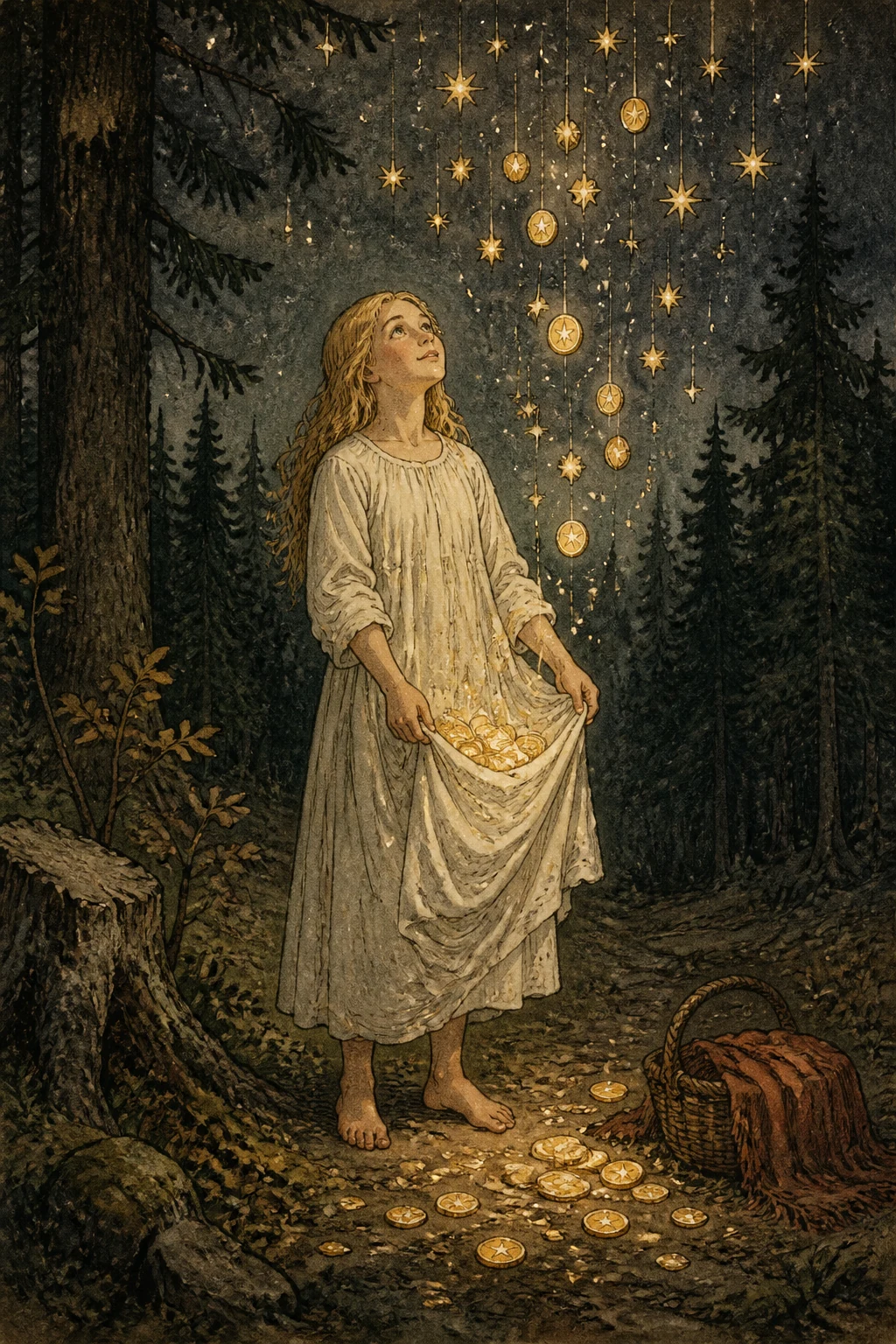
The sun was high when they woke. They were cold, but on the hill close by the sunshine fell between the trees; there they could warm themselves, and from there, Ib thought, they must be able to see his parents’ house. But they were far from it, in quite another part of the forest. They scrambled right to the top of the hill and stood on a bank beside a clear, transparent lake. Shoals of fish hung in its waters, lit by the sunbeams. It was such an unexpected sight, and close by stood a great hazel bush full of nuts, some even in clusters of seven. They picked and cracked them and ate the delicate kernels that had begun to form. Then came another surprise, and a fright. From behind the bush stepped a tall old woman, with a face so brown and hair so shiny and black; the whites of her eyes gleamed as they do in a black person’s face. She carried a bundle on her back and a knotted stick in her hand. She was a Romani woman. At first the children could not understand what she said. Then she took three large nuts out of her pocket; inside each one, she told them, the loveliest things lay hidden. They were wishing-nuts.
Ib looked at her. She was so friendly that he took courage and asked whether he might have the nuts. The woman gave them to him and picked herself a whole pocketful from the bush.
And Ib and Christine gazed wide-eyed at the three wishing-nuts. “Is there a carriage with horses in this one?” asked Ib. “There’s a golden coach with golden horses!” said the woman.
“Then give it to me!” said little Christine. Ib gave it to her, and the woman tied the nut into her neckerchief. “Is there a pretty little neckerchief in this one, like the one Christine has?” asked Ib.
“There are ten neckerchiefs!” said the woman. “There are fine dresses, stockings, and a hat!” “Then I want that one too!” said Christine, and little Ib gave her the second nut as well. The third was a little black one.
“You must keep that one!” said Christine. “It’s pretty too.” “And what is inside it?” asked Ib. “The very best thing for you!” said the Romani woman.
And Ib held tight to the nut. The woman promised to put them on the right road home, and off they went—though in quite the opposite direction from the one they ought to have taken. But that is no reason to accuse her of wanting to steal children.
In the bewildering forest they met Chræn, the forest keeper. He knew Ib, and with his help Ib and little Christine came home, where everyone had been terribly anxious about them. They were forgiven, though they had both deserved a sound whipping, first for dropping the pig into the water, and then for running away.
Christine went home to the heath, and Ib stayed in the little house in the forest. The first thing he did that evening was to take out the nut that held “the very best thing.” He put it between the door and the doorpost and pressed hard. The nut cracked, but there was not a trace of a kernel to be seen; it was filled with something like snuff or dark earth. It was worm-eaten, as they say.
“Well, I might have known!” thought Ib. “How could there be room for the very best thing inside a little nut like that? Christine won’t get fine clothes or a golden coach out of her two nuts either!”
And winter came, and the new year came. And several years went by. Now Ib was to go to the pastor for confirmation lessons, and the pastor lived a long way off. About this time the bargeman came one day and told Ib’s parents that little Christine was going out into service to earn her bread, and that it was a true piece of good fortune for her to be going into such good hands, to have a place with such decent people. Just think, she was going to the rich innkeepers out west, near Herning. There she would help the mistress about the house, and later, if she behaved well and had been confirmed, they would keep her on.
Ib and Christine said goodbye to one another. People called them sweethearts, and as they parted she showed him that she still had the two nuts he had given her when they were lost in the forest. She told him, too, that in her clothes chest she kept the little clogs he had carved and given her as a boy. And so they parted.
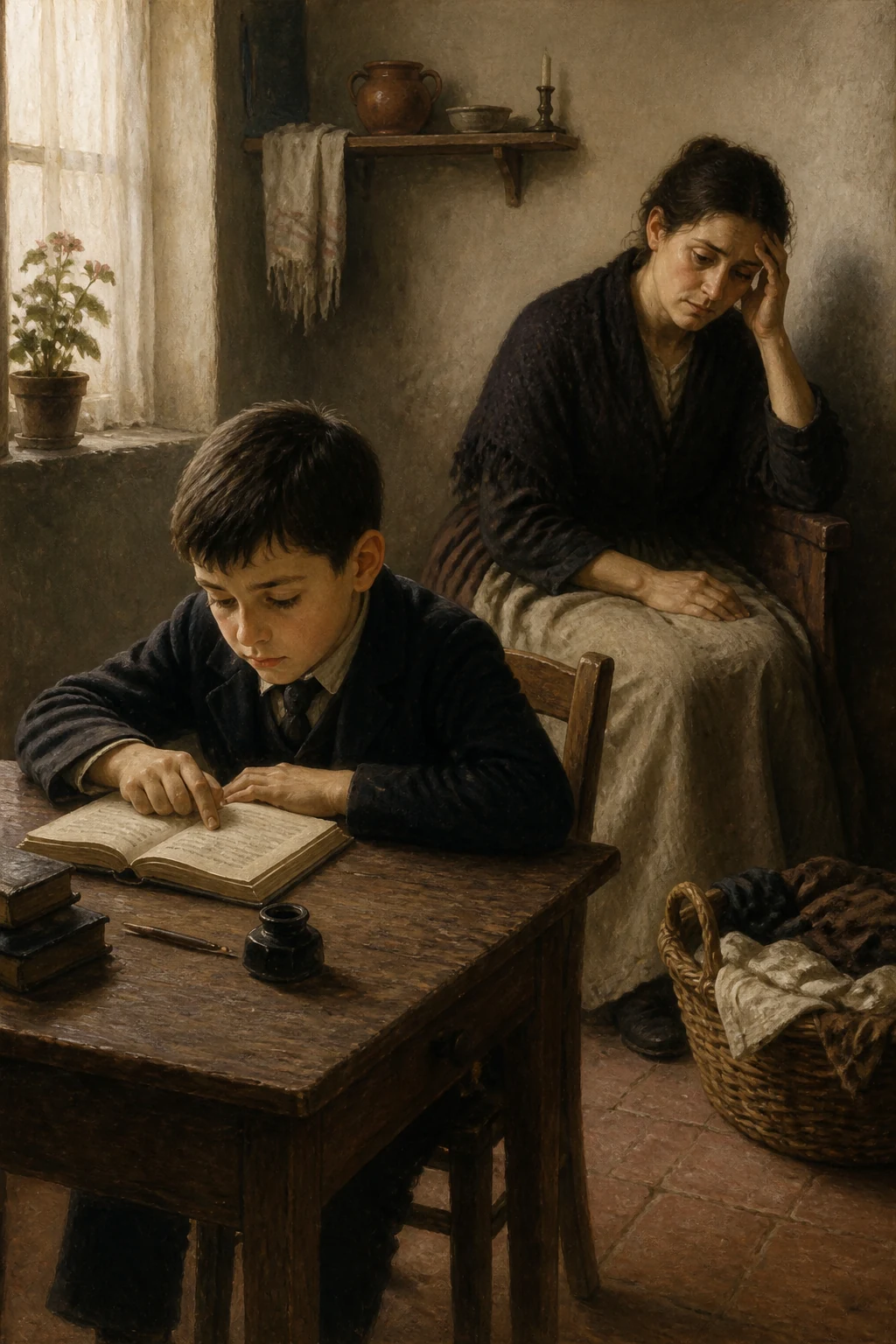
Ib was confirmed, but he stayed in his mother’s house, for he was a skilled clog-carver, and in summer he tended the little holding well. His mother had only him to do it now; Ib’s father was dead.
Only rarely, through a postboy or an eel dealer, did they hear news of Christine. She was doing well with the rich innkeepers, and after she was confirmed she wrote her father a letter, sending greetings to Ib and his mother. In the letter she told of six new shifts and a lovely dress her master and mistress had given her. That was good news indeed.
One fine day the following spring there was a knock at the door of Ib and his mother’s house. It was the bargeman with Christine; she had come for a day’s visit. There happened to be a chance of a lift to Them and back, and she had taken it. She was beautiful, like a young lady of quality, and she wore good clothes, well made and becoming. There she stood in all her finery, while Ib wore his old everyday clothes. He could scarcely utter a word. He took her hand, to be sure, and held it tight, and was deeply happy, but he could not get his tongue to move. Little Christine could; she talked, she had plenty to tell, and she kissed Ib full on the mouth.
“Surely you know me!” she said. But even when they were alone and he still stood holding her hand, all he could say was, “You’ve grown just like a fine lady! And I look so shabby! How I’ve thought of you, Christine, and of the old days!”
And they walked arm in arm up the ridge and looked across the Gudenå towards Sejs Heath with its great heather-covered hills. Ib said nothing, but by the time they parted it was clear to him that Christine must become his wife. They had been called sweethearts since they were little; to his mind they were an engaged couple, though neither of them had ever said so.
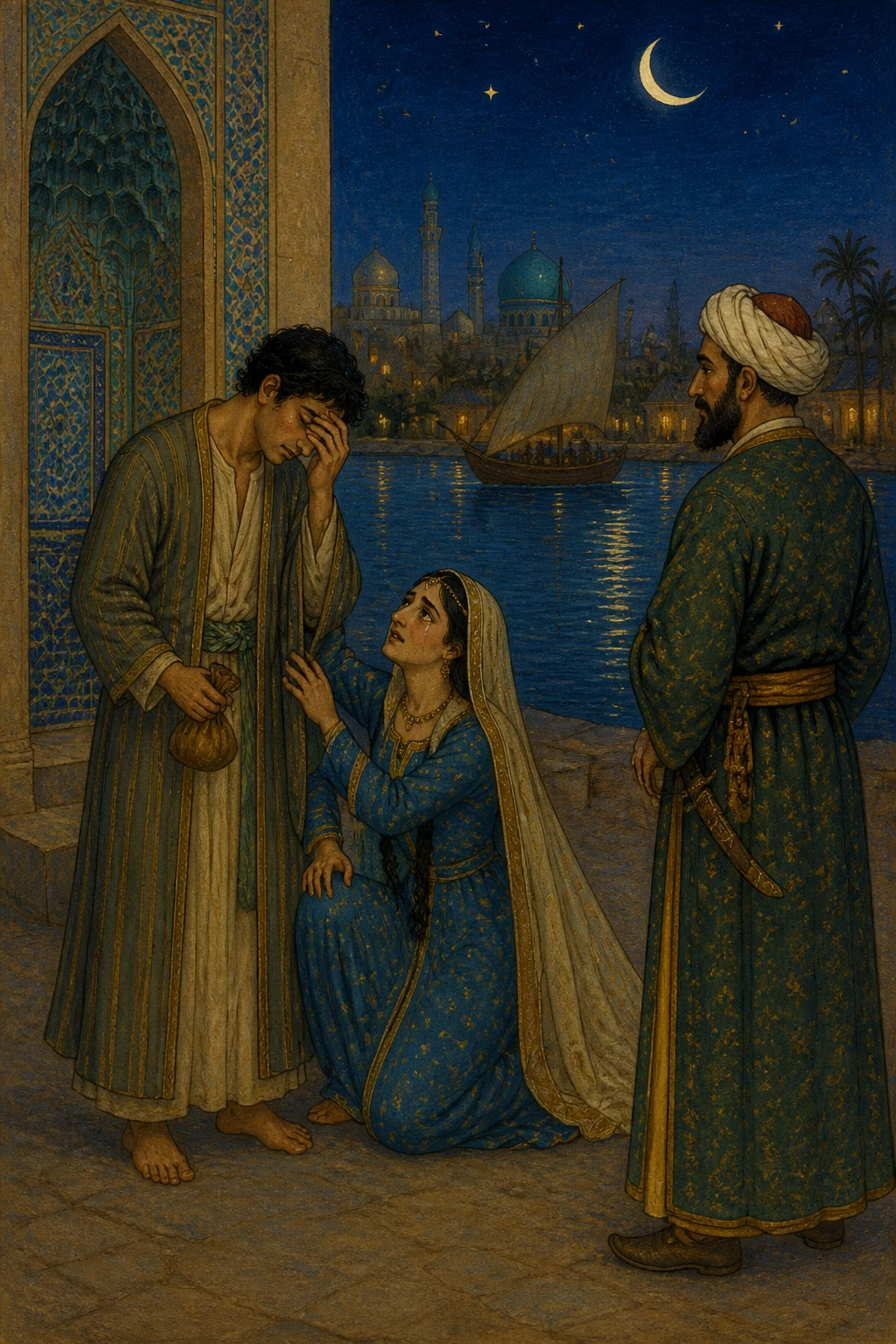
They could be together only a few hours longer, for she had to go back to Them, where the wagon would leave early the next morning for the journey west. Her father and Ib went with her to Them. The moon shone brightly, and when they arrived, Ib was still holding Christine’s hand and could not let it go. His eyes were shining, but his words came haltingly; yet every one was from his heart. “If you haven’t grown used to things too fine,” he said, “and if you could be content to live in Mother’s house with me as your husband, then one day we two shall be man and wife! But we can wait a little!”
“Yes, let’s see what time brings, Ib!” she said. Then she pressed his hand, and he kissed her on the mouth. “I trust you, Ib!” said Christine. “And I believe I love you! But let me sleep on it!”
And so they parted. Ib told the bargeman that he and Christine were now as good as engaged, and the bargeman thought this was just as he had always expected. He went home with Ib and shared his bed that night, and no more was said about the engagement.
A year had passed; two letters had been exchanged between Ib and Christine, with “Faithful unto death!” written above the signature. One day the bargeman came to see Ib, bringing greetings from Christine. Whatever else he had to say came out rather slowly, but it amounted to this: Christine was doing well, more than well. She was a pretty girl, respected and well liked. The innkeeper’s son had been home on a visit; he held a position in some large concern in Copenhagen, in an office. He had taken a liking to Christine, and she liked him too. His parents, it seemed, had no objection. But now it weighed on Christine’s heart that Ib thought so much of her, and she had been considering turning her good fortune away, the bargeman said.
At first Ib did not say a word, but he turned as white as a sheet, shook his head a little, and then said, “Christine must not turn her good fortune away!”
“Write her a few words to say so!” said the bargeman. And Ib did write, but he could not quite put the words together as he wished. He crossed things out and tore the paper up. By morning, however, a letter to little Christine was ready, and here it is!
“I have read the letter you wrote to your father, and I see that things are going well for you in every way, and that they may go better still! Ask your heart, Christine, and think carefully about what you would be taking on if you chose me; what I have is very little. Do not think of me or of how I shall fare, but think of your own good! You are bound to me by no promise, and if in your heart you have made me one, then I release you from it. May all the joy in the world be yours, little Christine! Our Lord will surely have some comfort for my heart!
Always your devoted friend, Ib.” And the letter was sent, and Christine received it. Around Martinmas her banns were read from the pulpit, both in the church on the heath and over in Copenhagen, where the bridegroom lived. She travelled there with her mistress, since the bridegroom’s many business affairs prevented him from coming so far into Jutland. By arrangement, Christine met her father in the village of Funder, through which the road passed; it was the nearest meeting place for him. There the two said goodbye. A few words were spoken of this, but Ib said nothing. He had grown so thoughtful, his old mother said. Yes, thoughtful he was, and so his mind went back to the three nuts the Romani woman had given him as a child, two of which he had given to Christine. They were wishing-nuts; in one of hers there had been a golden coach with horses, and in the other the loveliest clothes. It had come true! All that splendour was now hers over in the king’s Copenhagen! For her the wishes were fulfilled. In Ib’s nut there had been only black earth. “The very best thing” for him, the Romani woman had said. Yes, that too had come true! The black earth was the best thing for him. Now he understood clearly what the woman had meant: in the black earth, in the shelter of the grave, there lay the very best thing for him!
And years went by—not many, but long ones, Ib thought. The old innkeepers died, one soon after the other; all their wealth, many thousands of rigsdalers, went to their son. Yes, now Christine could have a golden coach and fine clothes in plenty.
For the next two long years no letter came from Christine, and when at last her father received one, it was not written in prosperity and happiness. Poor Christine! Neither she nor her husband had known how to be temperate with their riches. The money went as it had come; there was no blessing upon it, for they themselves would not have it so.
And the heather bloomed, and the heather withered. For many winters the snow had drifted over Sejs Heath and over the ridge beneath which Ib lived in shelter. The spring sun shone, and Ib put his plough into the earth. It struck what he thought was a flint, and something like a great black shaving rose out of the soil. When Ib touched it, he found it was metal, and where the plough had cut into it, it shone brightly. It was a large, heavy gold arm-ring from heathen times. An ancient burial mound had been levelled here, and now its precious ornament had been found. Ib showed it to the pastor, who told him what a splendid thing it was. From there Ib took it to the district magistrate, who reported the find to Copenhagen and advised Ib to deliver the precious object himself.
“You have found the best thing you could find in the earth!” said the magistrate. “The best thing!” thought Ib. “The very best thing for me—and in the earth! Then the Romani woman was right about me too, if this was the best thing!”
And Ib sailed on a smack from Aarhus to the king’s Copenhagen. It was like a voyage across the ocean to him, who had never crossed anything but the Gudenå. And Ib came to Copenhagen.
He was paid the value of the gold he had found. It was a large sum: six hundred rigsdalers. There in great, bewildering Copenhagen walked Ib from the forest by Sejs Heath.
It was the very evening before he was to sail back to Aarhus with the skipper that he lost his way in the streets, went in quite the wrong direction, and crossed Knippelsbro to Christianshavn instead of going towards the ramparts by the West Gate. He was indeed heading west, but not where he ought to have been. There was not a soul to be seen in the street. Then a tiny little girl came out of a poor house. Ib spoke to her, asking his way. She stopped short, looked up at him, and was crying bitterly. Now he asked her what was wrong. She said something he did not understand, and as they were both standing beneath a street lamp, its light fell full upon her face. A strange feeling came over him, for it was little Christine herself he seemed to see, just as he remembered her when they were both children.
And he went with the little girl into the poor house, up the narrow, worn stairs, high up to a little attic room beneath the sloping roof. The air inside was heavy and stifling, and no light was burning. From the corner came sighs and laboured breathing. Ib struck a match. It was the child’s mother lying on the wretched bed.
“Is there anything I can do to help you?” said Ib. “The little girl brought me here, but I am a stranger in the city myself. Are there no neighbours or anyone I can call?” And he raised her head.
It was Christine from Sejs Heath. For years her name had not been spoken back home in Jutland; it would have disturbed the quiet course of Ib’s thoughts. Nor was there anything good in what rumour and truth had told: the great fortune her husband had inherited from his parents had made him reckless and wild. He had given up his steady position, travelled abroad for six months, returned and run into debt, yet still kept up a grand appearance. The wagon leaned farther and farther, and at last it overturned. The many merry friends who had sat at his table said he deserved what had happened to him; after all, he had lived like a madman! One morning his body had been found in the canal in the palace gardens.
Christine carried death within her. Her youngest little child, only a few weeks old, carried in prosperity and born in misery, was already in the grave. And now Christine had come to this: she lay dying, abandoned, in a wretched room—a room whose wretchedness she might have endured in her young days on Sejs Heath, but now, accustomed to better things, she felt its misery to the full. It was her eldest child, another little Christine, who suffered want and hunger with her, and who had brought Ib upstairs.
“I am afraid I shall die and leave the poor child!” she sighed. “Where in the world will she go then?” She could say no more. Ib struck another match and found a candle-end; it burned and lit the miserable room.
And Ib looked at the little girl and thought of Christine in her young days. For Christine’s sake he could be good to this child he did not know. The dying woman looked at him, her eyes growing wider and wider. Did she know him? He could not tell; he heard her say not a word.
–––––––– And it was in the forest by the Gudenå, near Sejs Heath. The sky was grey, the heather bore no flowers, and the west winds drove the yellow leaves from the forest out into the river and across the heath, where the turf cottage stood with strangers living in it. But beneath the ridge, well sheltered behind tall trees, stood the little house, whitewashed and painted. Inside the room, peat burned in the stove; inside the room there was sunshine, shining from two childish eyes, and the spring lark’s song rang in the speech of a red, laughing mouth. There was life and gladness; little Christine was there. She sat on Ib’s knee. Ib was father and mother to her; her own were gone, as a dream is gone for child and grown-up alike. Ib sat in the neat, tidy house, a prosperous man; the little girl’s mother lay in the paupers’ churchyard in the king’s Copenhagen.
Ib had money at the bottom of his chest, people said, gold from the earth; and he had little Christine too.