Prevod
Among the other little children at the charity school was a little Jewish girl, so bright and good, the cleverest of them all; but there was one lesson in which she could take no part: the Scripture lesson, for she was in a Christian school.
She could keep her geography book before her and read it, or finish her arithmetic, but the sums were soon done and the lesson learned. A book lay open before her, to be sure, but she was not reading it; she sat listening, and the teacher soon noticed that she followed the lesson as scarcely any of the others did.
"Read your book!" he said gently but gravely. Yet she looked at him with her dark, shining eyes, and when he put a question to her too, she knew the answer better than all the others. She had listened, understood, and treasured it.
Her father was a poor, honest man. When she entered the school, he had stipulated that she was not to be instructed in the Christian faith. To send her away during that lesson might perhaps give offence, or stir thoughts and feelings in the other little children at the school, and so she had stayed; but this could no longer continue.
The teacher went to her father and told him that he must either take his daughter out of the school or let her become a Christian. "I cannot bear to see those burning eyes, that fervour, that thirst of the soul, as it were, for the words of the Gospel!" said the teacher.
And her father burst into tears. "I myself know little of our own religion, but her mother was a daughter of Israel, firm and steadfast in her faith. On her deathbed I promised her that our child would never receive Christian baptism. I must keep my promise; to me it is like a covenant with God."
And the little Jewish girl was taken out of the Christian school. — Years had passed. In one of the smallest market towns in Jutland, a poor girl of the Jewish faith was in service in a modest middle-class household. This was Sara. Her hair was black as ebony, her eyes as dark, yet full of the lustre and light possessed by the daughters of the East. The grown girl's expression was still the same as the child's had been when she sat on the school bench listening with a thoughtful gaze.
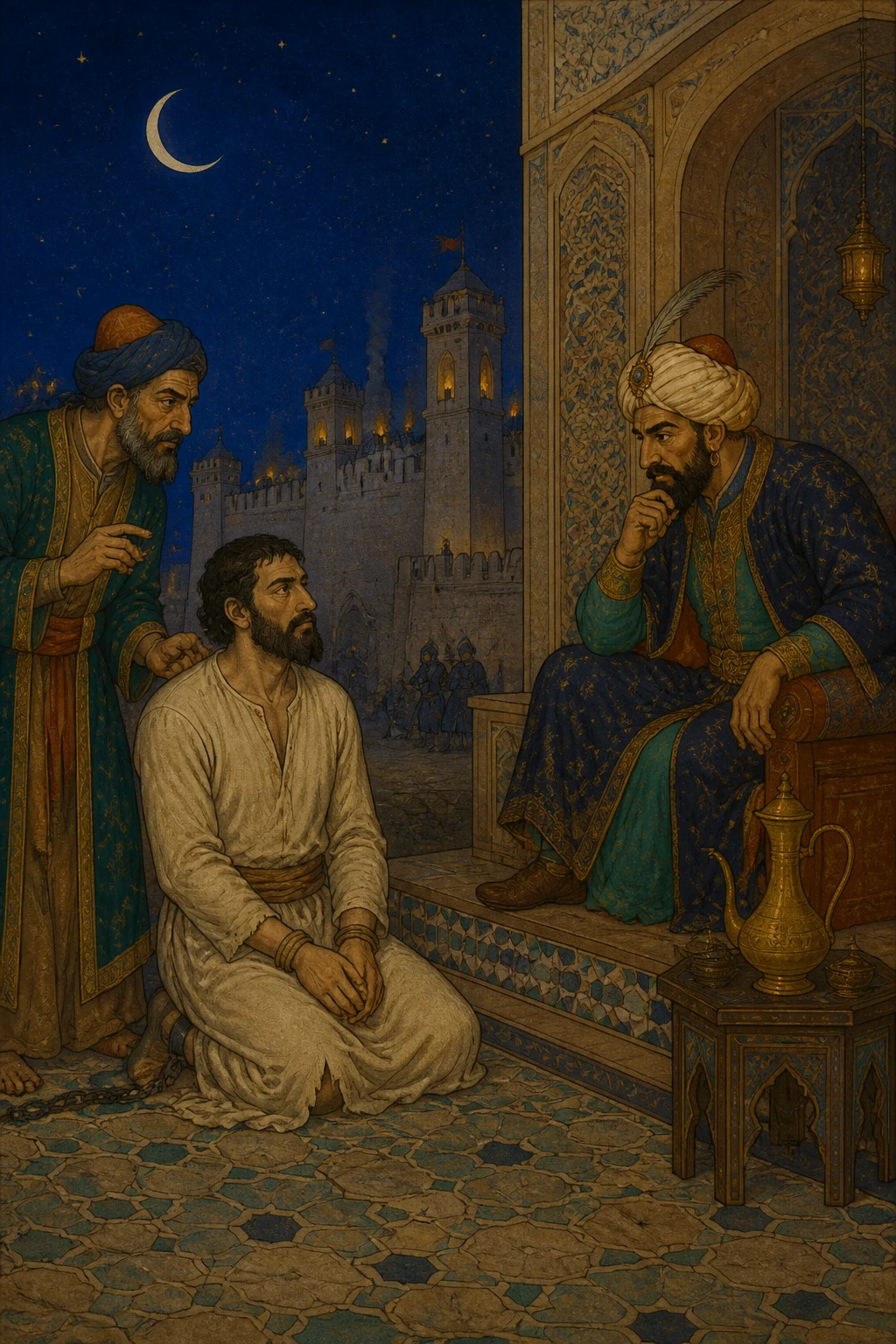
Every Sunday the organ and the congregation's singing rang out from the church, across the street and into the house opposite, where the Jewish girl went about her work, diligent and faithful in her duties. "Remember the Sabbath day, to keep it holy!" was her law; but her Sabbath was a working day for the Christians, and she could keep it holy only in her heart, which she did not believe was enough. But what are days and hours to God? That thought had awakened in her soul, and on the Christians' Sunday her hour of devotion was less disturbed. When the sound of the organ and the singing of hymns reached her where she stood at the kitchen sink, even that place became holy and still. Then she read the Old Testament, the treasure and possession of her people, and that alone; for what her father had told her and the teacher when she was taken out of school lay deep in her mind: the promise made to her dying mother that Sara should not become a Christian, should not forsake the faith of her forefathers. The New Testament was, and must remain, a closed book to her, and yet she knew so much of it; it shone in her childhood memories. One evening, as she sat in a corner of the room, she heard her master reading aloud, and surely she might listen to that: it was not the Gospels, no, he was reading from an old history book, and she could surely listen to that. It told of a Hungarian knight who was captured by a Turkish pasha, who had him harnessed to the plough beside the oxen, driven with lashes, and subjected to endless humiliation and suffering.
The knight's wife sold all her jewels and mortgaged their castle and lands; his friends contributed great sums, for the ransom demanded was almost beyond belief. But the money was raised, and he was freed from slavery and disgrace; sick and suffering, he reached his home. Soon, however, a general call to arms went out against the enemy of Christendom. The sick man heard it and could find neither peace nor rest. He had himself lifted onto his warhorse; the blood returned to his cheeks, his strength seemed to revive, and he rode away to victory. The very pasha who had had him harnessed to the plough, humiliated and tormented, now became his prisoner, and the knight brought him home to the castle dungeon. Yet within the first hour, the knight came and asked his prisoner:
"What do you think awaits you?" "I know!" answered the Turk. "Retribution!" "Yes, a Christian's retribution!" said the knight. "Christianity bids us forgive our enemies and love our neighbour. God is love! Go home in peace to your loved ones, and be gentle and good to those who suffer!"
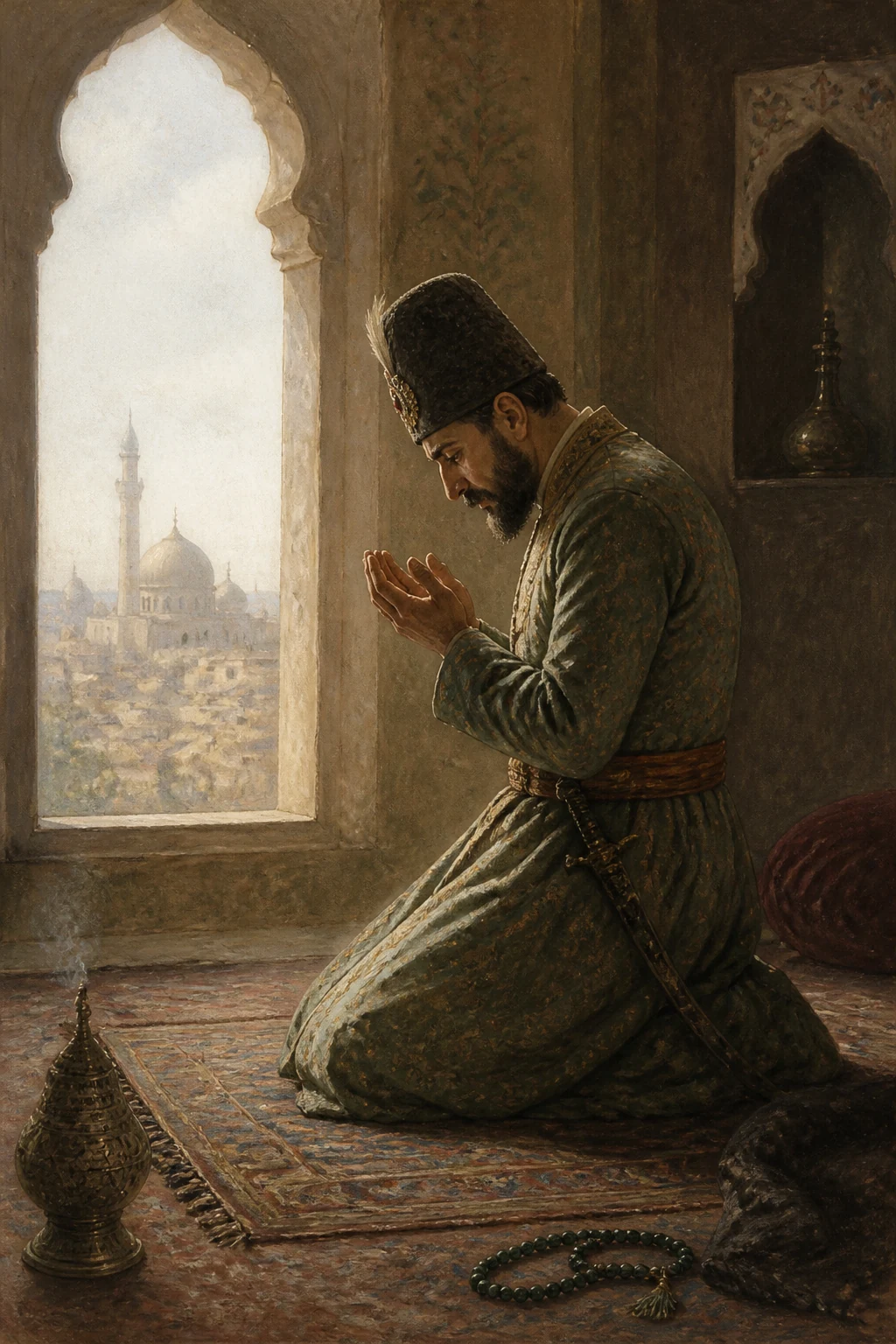
Then the prisoner burst into tears. "How could I have thought such a thing possible! I was certain of torture and agony, and I took a poison that will kill me in a few hours. I must die; there is no remedy! But before I die, teach me the faith that holds such love and mercy. It is great and divine! Let me die in it, die a Christian!" And his prayer was granted.
Such was the legend, the story that was read aloud. They all listened and followed it, but it filled and quickened most ardently the heart of the girl who sat in the corner, Sara the servant girl, the Jewish girl. Great, heavy tears stood in her shining, coal-black eyes; she sat there with a child's heart, as she had once sat on the school bench, sensing the greatness of the Gospel. The tears rolled down her cheeks.
"Do not let my child become a Christian!" had been her mother's last words on her deathbed. They rang through Sara's heart and soul together with the words of the law: "Honour thy father and thy mother!"
"I have not become a Christian! They call me the Jewish girl; that was what the neighbour's boys called me in mockery last Sunday, when I stopped outside the open church door and looked in at the burning altar candles and the singing congregation. From my schooldays until this very day, there has been a power in Christianity that, like sunshine, shines straight into my heart even when I close my eyes to it. But, Mother, I shall not grieve you in your grave! I shall not betray the promise my father made you! I will not read the Christian Bible; I have the God of my forefathers on whom to rest my head!"
— And years passed. Her master died, and her mistress was left in straitened circumstances; they would have to do without a servant. But Sara did not leave. She was their help in distress, holding everything together; she worked far into the night, earning bread for the household by the labour of her hands. There were no close relatives to care for the family, and the mistress grew weaker day by day and was confined to her sickbed for months. Sara kept watch, nursed her, and worked, gentle and devout, a blessing in that poor house.
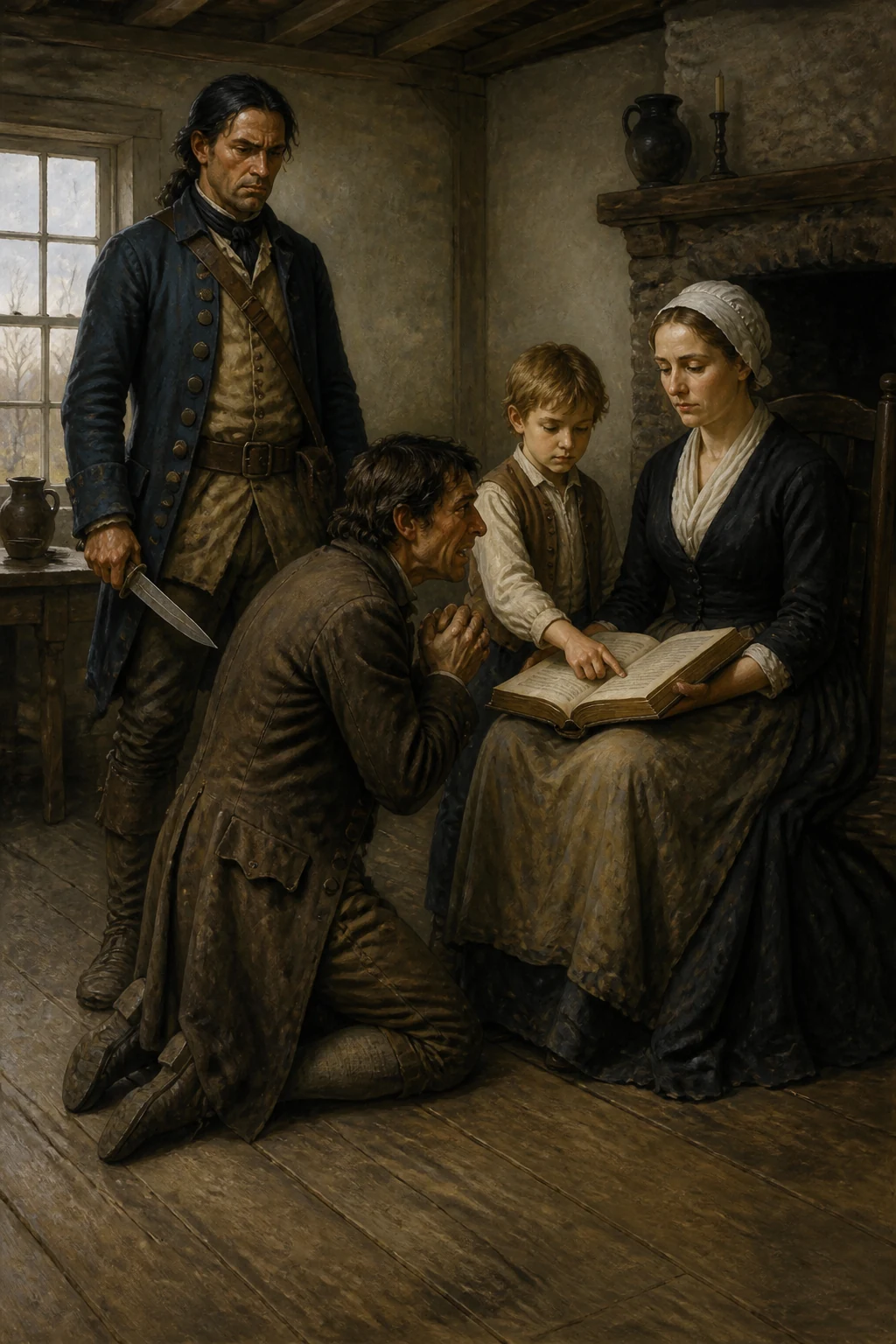
"The Bible is over there!" said the sick woman. "Read me a little on this long evening; I long so dearly to hear the word of God." And Sara bowed her head; her hands clasped the Bible, which she opened and read to the sick woman. Often tears welled up, but her eyes grew clearer, and in her soul too all grew clearer: "Mother, your child shall not receive Christian baptism or be counted among their congregation. That was what you asked, and I shall keep my word to you. On that we are agreed here on earth; but above this earth there is—there is a greater unity in God. 'He will guide us beyond death!'—'He visits the earth, and when he has made it thirsty, he greatly enriches it!' I understand! I do not myself know how it came about—! It is through him, in him: Christ!"
And she trembled as she spoke the holy name. A baptism of flame streamed through her, more powerful than her body could bear, and it sank down, weaker than that of the sick woman over whom she watched.
"Poor Sara!" they said. "She has worn herself out with work and keeping watch." They took her to the paupers' infirmary, and there she died, and from there she was buried. But not in the Christian churchyard; that was no place for the Jewish girl. No, outside it, beside the wall, she was given her grave.
And God's sun, which shone upon the Christian graves, shone also upon the Jewish girl's grave outside, and the hymns sung in the Christian churchyard rang out over her grave. To it too came the proclamation: "There is resurrection in Christ!" In him, the Lord, who said to his disciples: "John indeed baptized with water, but you shall be baptized with the Holy Spirit!"