O besedilu
Hipolit in Virbij
- Vir
- Ovidove preobrazbe
- Avtor
- Ovid
- Jezik branja
- English
- Jezik izvirnika
- Latin
- Čas branja
- 4 min branja
- Obseg
- 3 strani
- Naslov izvirnika
- Hippolytus and Virbius
O izvirniku
Ovidove preobrazbe
Pesniški tok antičnih preobrazb, kjer bogovi, ljudje in narava stalno menjavajo obliko. Bralni jezik je English, izvirnik pa prihaja iz vira Ovidove preobrazbe v jeziku Latin.
Besedilo
Hipolit in Virbij
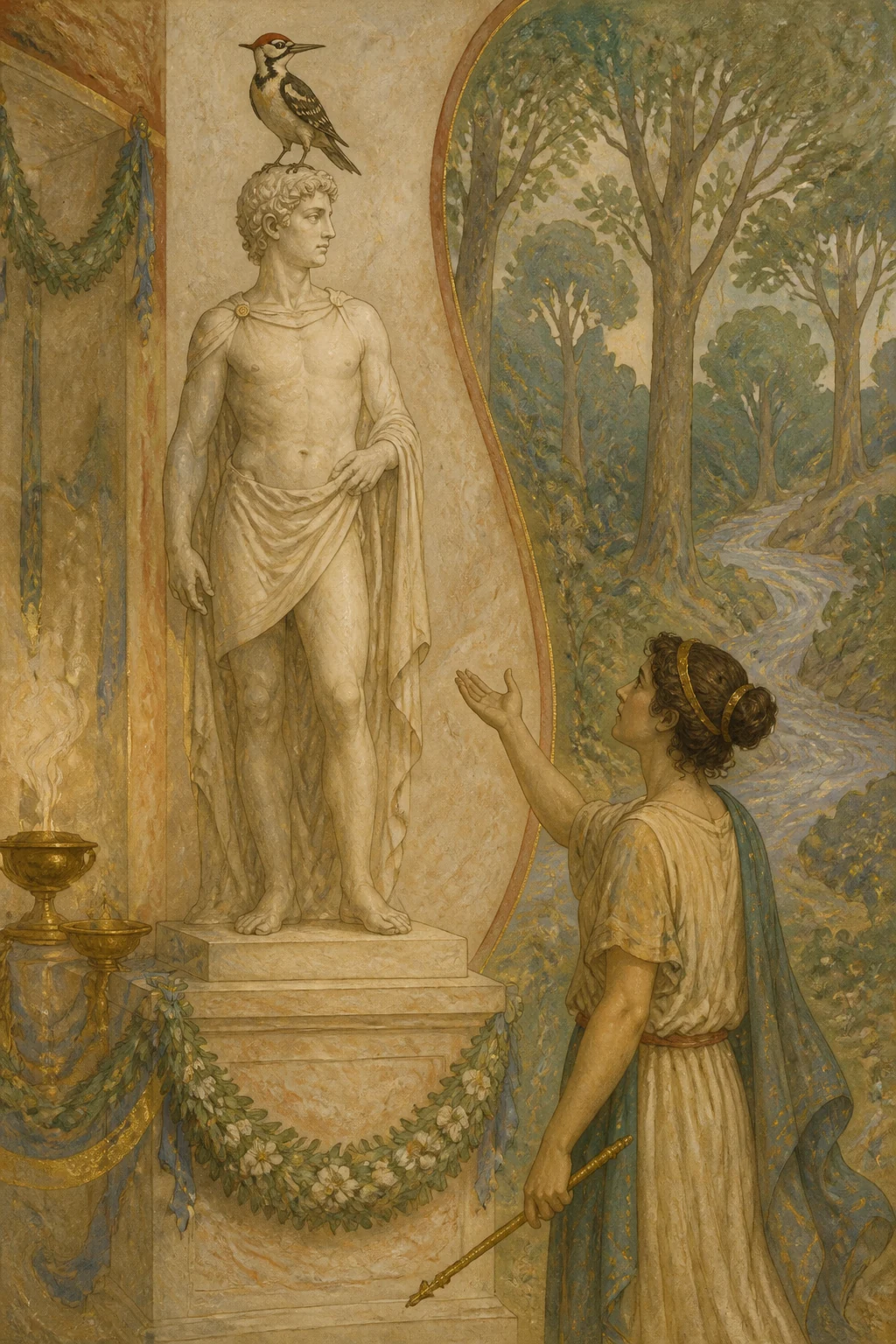
With his heart schooled by these and other teachings, Numa, they say, returned to his homeland and, freely invited, accepted the reins of the Latin people. Blessed with a nymph as his wife and the Camenae as his guides, he taught the rites of worship and led a people accustomed to savage warfare toward the arts of peace. When, grown old, he had fulfilled his reign and his allotted years, the women of Latium, the people, and the senators wept for Numa’s death; but his wife, abandoning the city, hid herself in the dense woods of the Arician valley, disrupting the rites of Orestes’ Diana with her groans and lamentations. Ah, how often the nymphs of the grove and lake
urged her to desist and spoke words of comfort! How often Theseus’ son said to her as she wept, “Set bounds to your grief! Yours is not the only fate worth mourning; consider the like misfortunes of others: you will bear your own more gently. Would that another’s story, not mine, could ease your sorrow! Yet mine can do so too. I think some tale has reached your ears of one Hippolytus, who, through his father’s credulity and a wicked stepmother’s deceit, met his death. You will marvel, and I shall scarcely convince you, but I am he. Once Pasiphaë’s daughter tried in vain to lure me into defiling my father’s marriage bed; then, reversing the charge, the wretched woman accused me
of desiring what she herself desired—was it more from fear of exposure or anger at rejection? My father drove me, innocent, from the city and cursed me as I went, praying for my destruction. In exile, I was driving my chariot toward Pittheus’ Troezen and was already following the shores of the Corinthian gulf, when the sea rose, and an enormous mass of water seemed to arch and swell into the shape of a mountain, to bellow, and to split apart at its very crest.
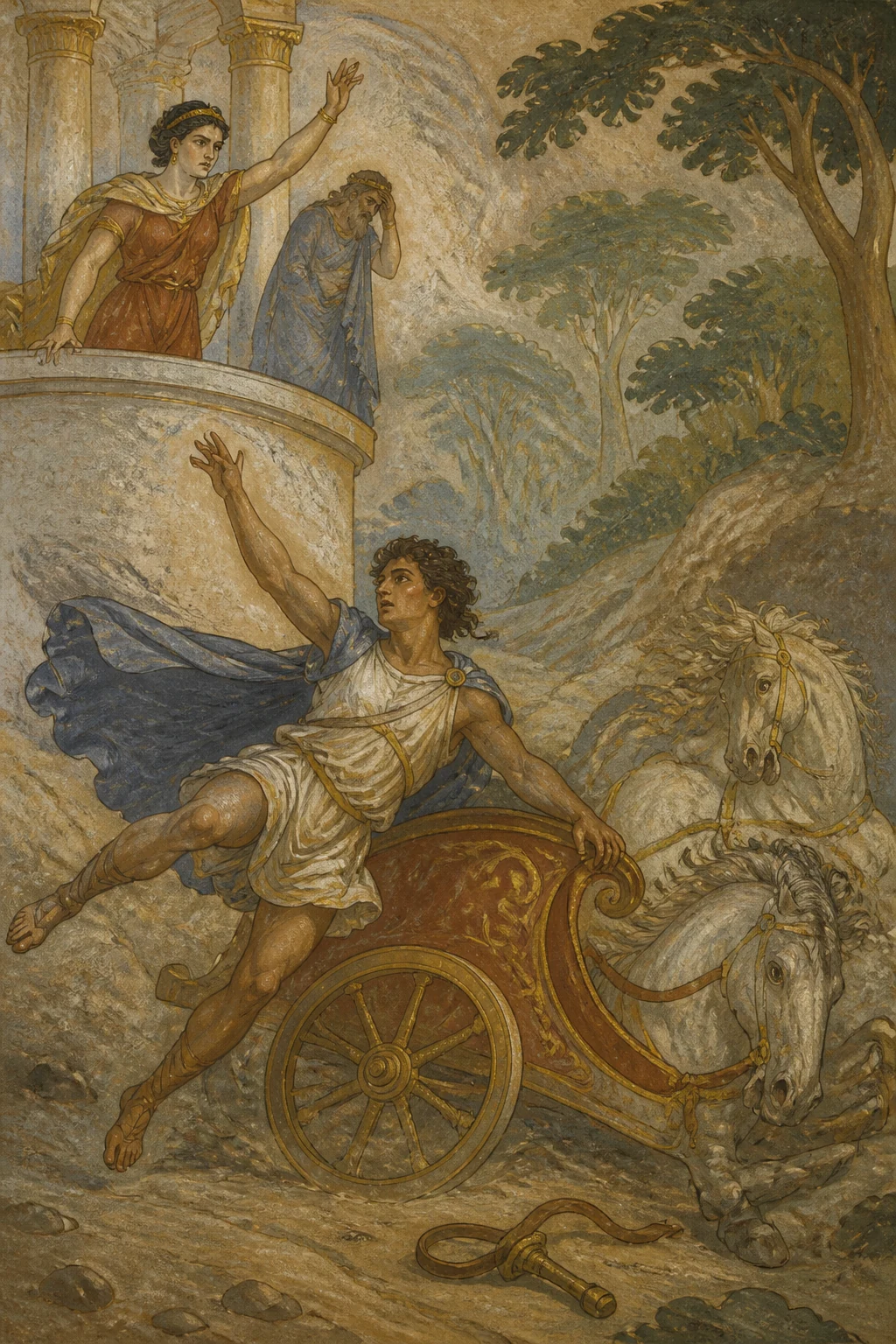
Out of the bursting waves a horned bull was hurled, rising breast-high into the yielding air, spewing seawater from its nostrils and gaping mouth. My companions’ hearts quailed. My own spirit remained fearless, with woes enough in my exile. Then the spirited horses turned their heads toward the sea and shuddered, ears pricked, panicking at the monster; they dashed the chariot toward the lofty rocks. I struggled to pull the useless reins, coated in white foam, leaning backward as I strained the yielding straps.
Yet the horses’ frenzy would not have overcome my strength, had not a wheel, where it turns about the unbroken axle, struck a tree stump and shattered into pieces. I was flung from the chariot, my limbs caught in the reins. You might have seen my living entrails dragged along, my sinews snagged on the stump, some limbs torn away, others caught and left behind, my bones breaking with a dreadful crack, my exhausted spirit breathed out, and no part of my body left recognizable: all of it was one great wound.
Can you, nymph, or dare you compare your calamity with mine? I saw, too, the kingdoms bereft of light and bathed my mangled body in Phlegethon’s waters. Nor would life have been restored to me but for the potent medicine of Apollo’s son. When, through powerful herbs and the healing god’s aid, I regained it, to Dis’s outrage, Cynthia, lest my presence deepen resentment at this gift, screened me with thick clouds.
And so that I might be safe and be seen without danger, she added years to my age and left my face unrecognizable. Long she hesitated whether to give me Crete or Delos as my home; then, passing over both, she placed me here and bade me also lay aside the name that might recall horses. “You who once were Hippolytus,” she said, “shall now be Virbius, still the same man!”
Since then I have dwelt in this grove, one of the lesser gods, sheltered by my mistress’s divinity and numbered among her attendants.”
Izvirnik
Hippolytus and Virbius
Naslednje strani prikazujejo izvirno besedilo za primerjavo.
Source ID: ovid_metamorphoses_story_101 Citation: Ovid, Metamorphoses 15.479-15.546 Original language: Latin Source: PerseusDL canonical-latinLit Source URL: https://github.com/PerseusDL/canonical-latinLit/blob/master/data/phi0959/phi006/phi0959.phi006.perseus-lat2.xml Segmentation certainty: medium 479: Talibus atque aliis instructum pectora dictis 480: in patriam remeasse ferunt ultroque petitum 481: accepisse Numam populi Latiaris habenas.
482: Coniuge qui felix nympha ducibusque Camenis 483: sacrificos docuit ritus gentemque feroci 484: adsuetam bello pacis traduxit ad artes. 485: Qui postquam senior regnumque aevumque peregit, 486: exstinctum Latiaeque nurus populusque patresque 487: deflevere Numam; nam coniunx urbe relicta 488: vallis Aricinae densis latet abdita silvis 489: sacraque Oresteae gemitu questuque Dianae 490: impedit: a! quotiens nymphae nemorisque lacusque, 491: ne faceret, monuere et consolantia verba 492: dixerunt. Quotiens flenti Theseius heros 493: “siste modum!” dixit, “ne que enim fortuna querenda
494: sola tua est; similes aliorum respice casus: 495: mitius ista feres, utinamque exempla dolentem 496: non mea te possent relevare! Sed et mea possunt. 497: Fando aliquem Hippolytum vestras puto, contigit aures 498: credulitate patris, sceleratae fraude novercae 499: occubuisse neci: mirabere, vixque probabo, 500: sed tamen ille ego sum. Me Pasiphaeia quondam 501: temptatum frustra patrium temerare cubile, 502: quod voluit, voluisse, infelix crimine verso 503: (indiciine metu magis offensane repulsae?)
504: damnavit, meritumque nihil pater eicit urbe 505: hostilique caput prece detestatur euntis. 506: Pittheam profugo curru Troezena petebam, 507: iamque Corinthiaci carpebam litora ponti, 508: cum mare surrexit, cumulusque inmanis aquarum 509: in montis speciem curvari et crescere visus 510: et dare mugitus summoque cacumine findi. 511: Corniger hinc taurus ruptis expellitur undis, 512: pectoribusque tenus molles erectus in auras 513: naribus et patulo partem maris evomit ore.
514: Corda pavent comitum. Mihi mens interrita mansit 515: exsiliis contenta suis: cum colla feroces 516: ad freta convertunt adrectisque auribus horrent 517: quadrupedes monstrique metu turbantur et altis 518: praecipitant currum scopulis; ego ducere vana 519: frena manu spumis albentibus oblita luctor 520: et retro lentas tendo resupinus habenas. 521: Nec vires tamen has rabies superasset equorum.
522: ni rota, perpetuum qua circumvertitur axem, 523: stipitis occursu fracta ac disiecta fuisset. 524: Excutior curru, lorisque tenentibus artus 525: viscera viva trahi nervosque in stipe teneri, 526: membra rapi partim, partim reprensa relinqui, 527: ossa gravem dare fracta sonum fessamque videres 528: exhalari animam nullasque in corpore partes, 529: noscere quas posses; unumque erat omnia vulnus.
530: Num potes aut audes cladi componere nostrae, 531: nympha, tuam? Vidi quoque luce carentia regna 532: et lacerum fovi Phlegethontide corpus in unda, 533: nec nisi Apollineae valido medicamine prolis 534: reddita vita foret; quam postquam fortibus herbis 535: atque ope Paeonia Dite indignante recepi, 536: tum mihi, ne praesens augerem muneris huius 537: invidiam, densas obiecit Cynthia nubes, 538: utque forem tutus possemque impune videri, 539: addidit aetatem nec cognoscenda reliquit 540: ora mihi Cretenque diu dubitavit habendam 541: traderet an Delon: Delo Creteque relictis
542: hic posuit nomenque simul, quod possit equorum 543: admonuisse, iubet deponere, “qui” que “fuisti 544: Hippolytus” dixit, “nunc idem Virbius esto!” 545: Hoc nemus inde colo, de disque minoribus unus 546: numine sub dominae lateo atque accenseor illi.”
Nadaljuj z branjem