O besedilu
Ahemenid in Kirkin otok
- Vir
- Ovidove preobrazbe
- Avtor
- Ovid
- Jezik branja
- English
- Jezik izvirnika
- Latin
- Čas branja
- 8 min branja
- Obseg
- 7 strani
- Naslov izvirnika
- Achaemenides and Circe's Island
O izvirniku
Ovidove preobrazbe
Pesniški tok antičnih preobrazb, kjer bogovi, ljudje in narava stalno menjavajo obliko. Bralni jezik je English, izvirnik pa prihaja iz vira Ovidove preobrazbe v jeziku Latin.
Besedilo
Ahemenid in Kirkin otok
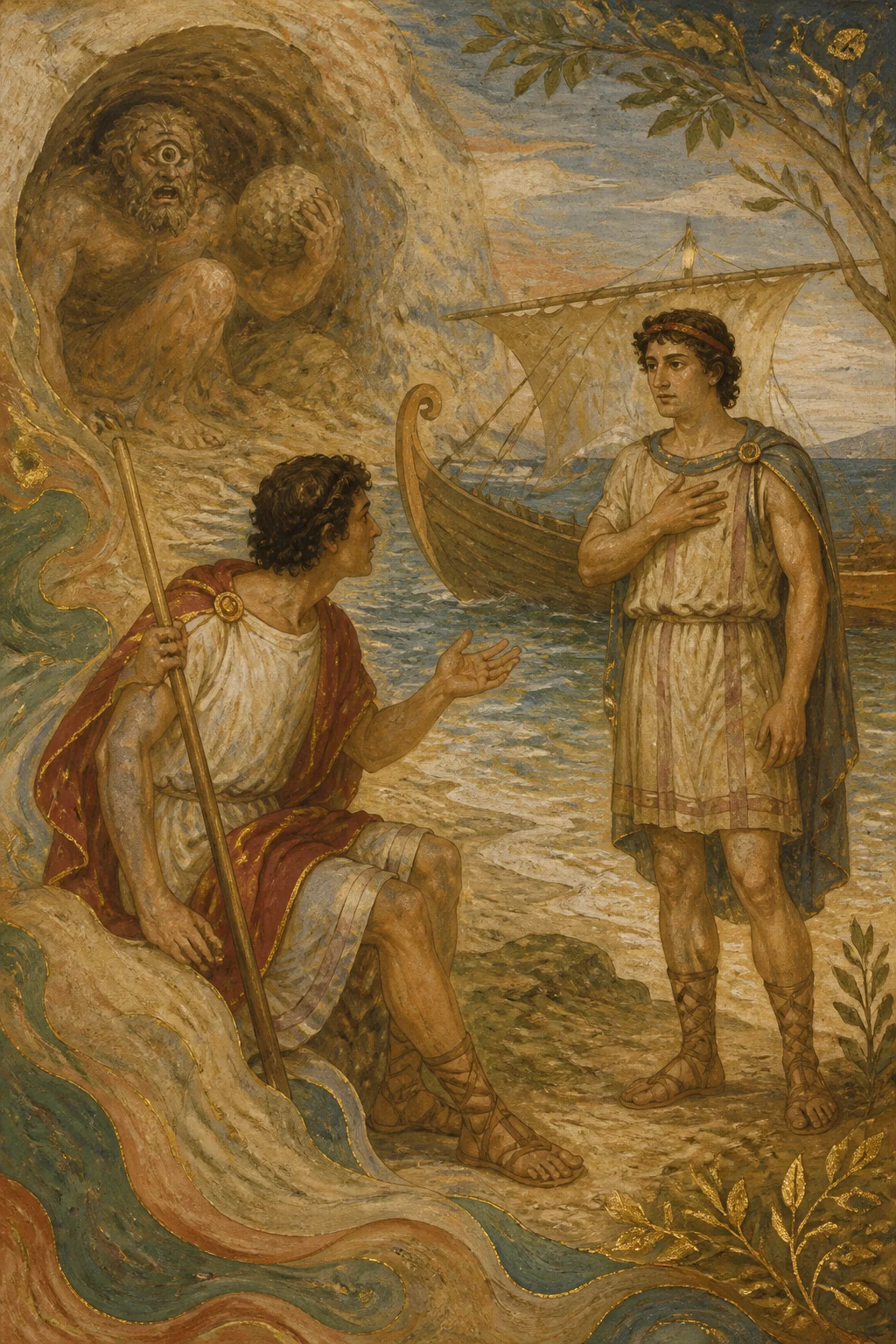
As the Sibyl told these things along the upward path, from the Stygian realms into the Euboean city Trojan Aeneas emerged, and, having duly offered sacrifice, made for the shore that did not yet bear his nurse’s name. Here too, worn out by long and weary hardships, Macareus of Neritus, companion of much-tried Ulysses, had settled; he recognized Achaemenides, once abandoned among the crags of Etna, and, amazed to find him unexpectedly alive, said, “What chance or god has saved you, Achaemenides? Why does a foreign ship carry a Greek? What land is your vessel bound for?”
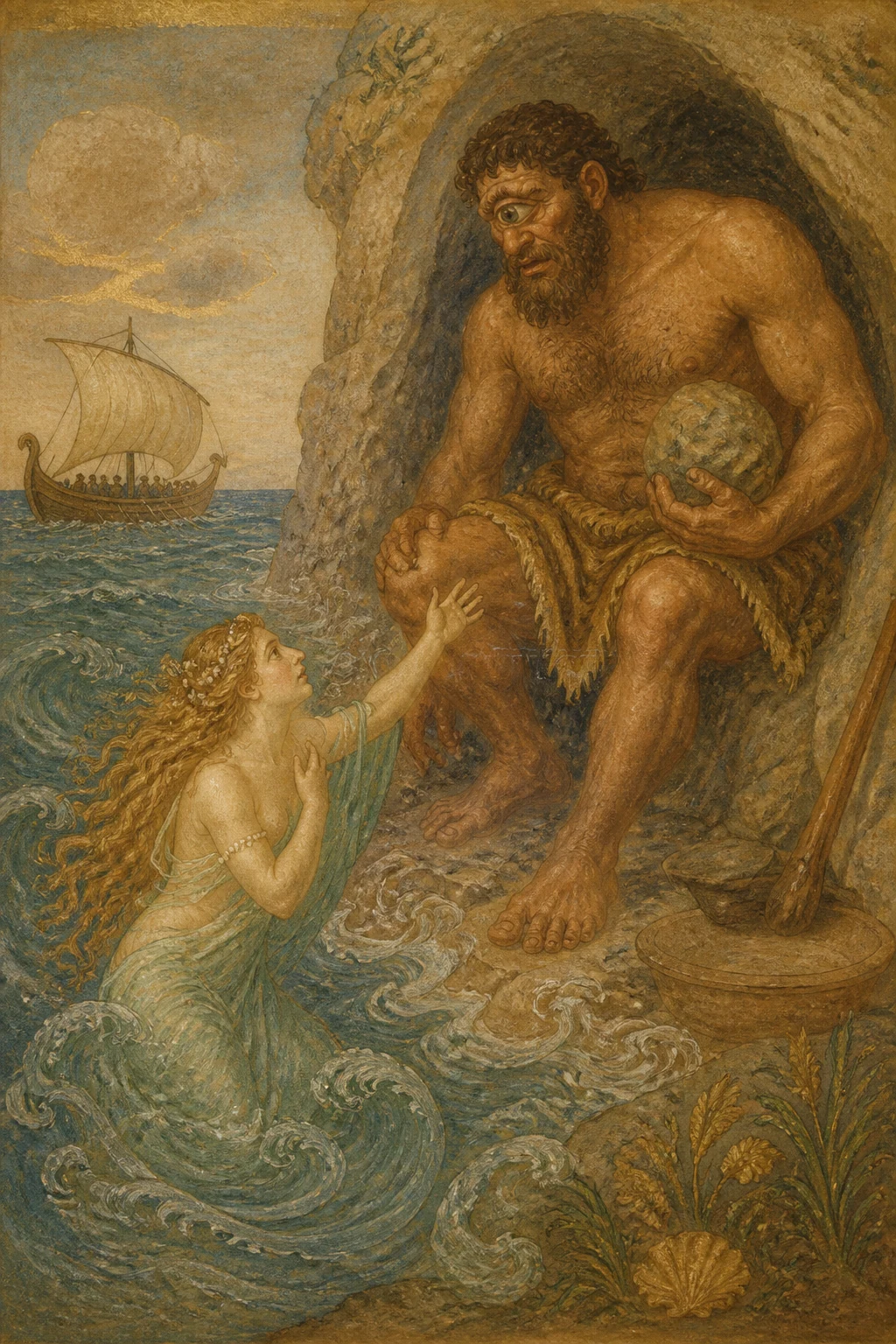
To these questions Achaemenides, no longer clad in shaggy rags, himself again, his clothing no longer fastened with thorns, replied: “May I see Polyphemus once again, and those jaws streaming with human blood, if I prefer my home or the Ithacan’s ship to this one, if I revere Aeneas less than my own father! Never, though I give all I have, can I be grateful enough.
That I speak and breathe, that I look upon the sky and the sunlight—could I forget that debt and be so impious? It is his gift that this life did not pass into the Cyclops’ jaws; and even if I leave the light of life this very moment, I shall lie in a grave, or at least not in that belly. What were my feelings then—unless fear had robbed me of all feeling and thought—when, left behind, I saw you making for the open sea? I wanted to shout, but feared betraying myself to the enemy: Ulysses’ shouting, too, almost destroyed your ship. I saw him tear from the mountain an enormous crag and hurl it into the midst of the waves; again I saw him, as though driven by an engine’s force,
launch huge rocks with his gigantic arm, and I was terrified that waves or wind might sink the ship, forgetting now that I was no longer aboard her. But when your flight had snatched you from certain death, he wandered groaning all over Etna, groping through the woods, and, robbed of sight, stumbled against the rocks; stretching his gore-stained arms toward the sea, he cursed the Greek race and cried: ‘Oh, if only some chance would bring Ulysses back, or one of his companions, on whom my rage could fall, whose entrails I could eat, whose living limbs I could tear apart with my own hands, whose blood would flood
my throat, whose mangled joints would quiver beneath my teeth! How little, or how nothing, the loss of my sight would seem!’ This and more the savage cried; a sickening horror seized me as I gazed at his face, still wet with slaughter, his cruel hands, the hollow socket of his eye, his limbs, and his beard clotted with human blood. Death stood before my eyes, yet death itself was the least of my anguish: I thought he would seize me at any moment, and plunge my entrails into his own; and in my mind clung the image of that time when I saw him seize two of my companions and dash their bodies three or four times against the ground, then, sprawling over them like a shaggy lion,
cram their entrails and flesh, their bones with the white marrow, and their still-quivering limbs into his ravenous belly. I was seized with trembling; I stood there bloodless and appalled. Watching him chew and spew his bloody feast from his mouth, vomiting chunks thick with wine, I imagined that such a fate awaited wretched me. For many days I hid, trembling at every sound, afraid of death yet longing to die, staving off hunger with acorns, grass, and leaves, alone, destitute, hopeless, abandoned to torment and death.
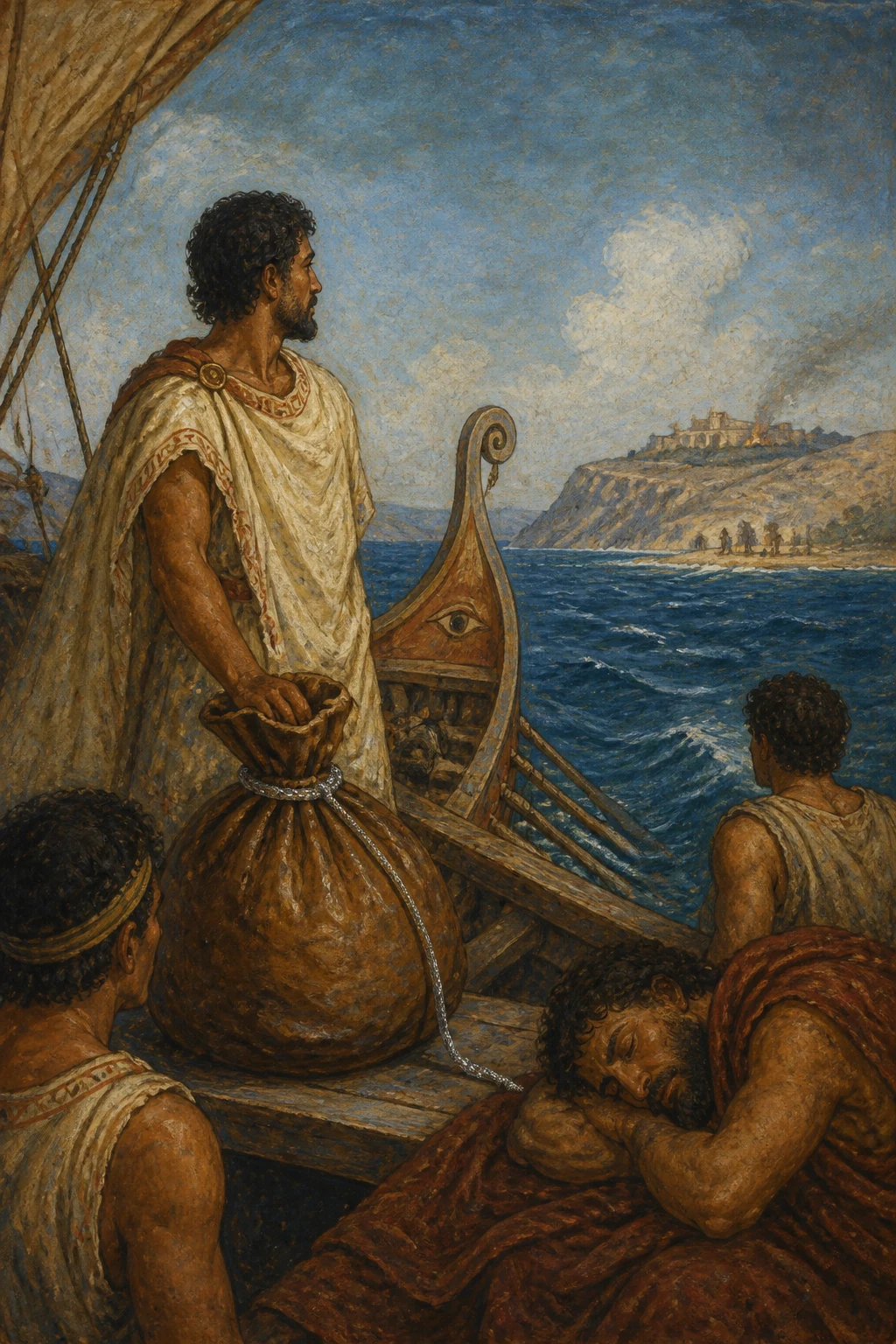
At last, after a long time, I saw this ship far off and ran down to the shore, pleading by gestures to be rescued— and moved their hearts. A Trojan ship took in a Greek! Now you too, dearest of companions, tell me your adventures, and those of your leader and the men who sailed with you.” Macareus told how Aeolus ruled over the Tuscan deep, Aeolus, son of Hippotes, who kept the winds imprisoned; how the Dulichian leader received them, shut inside an oxhide—a wondrous gift—and with a favoring breeze sailed for nine days and came in sight of the land he sought; how, when the dawn after the ninth day began to rise, his companions, overcome by envy and greed for plunder,
thought the bag held gold and untied the winds’ bonds; and how the winds bore him back across the waters he had just sailed, and his ship returned to the harbor of King Aeolus. “From there,” he said, “we came to the ancient city of Lamus the Laestrygonian. Antiphates ruled that land. I was sent to him with two companions, and one companion and I barely escaped with our lives: the third of us stained the Laestrygonian’s impious mouth with his blood. Antiphates pursued us as we fled and roused his host. They gathered and hurled rocks and beams, sinking men and ships alike.
Yet one ship, which carried us and Ulysses himself, escaped. Mourning the loss of so many companions and bitterly lamenting, we drifted to the land you see far off from here—believe me, that island is best seen from afar: I have seen it close! And you, most righteous of Trojans, goddess-born—for now the war is over, you must not be called an enemy, Aeneas—I warn you: shun Circe’s shores.
We too, when our ship was moored on Circe’s coast, remembered Antiphates and the savage Cyclops, and refused to go and enter an unknown house; we drew lots, and the lot sent me, faithful Polites, Eurylochus, Elpenor, too fond of wine, and eighteen companions to Circe’s dwelling. As soon as we reached it and stood upon the threshold, a thousand wolves, with bears and lionesses among them, rushed to meet us and filled us with fear; yet none was fearsome, and none would wound our bodies.
Instead, they wagged their tails gently in the air and fawned upon us, following our steps until serving women welcomed us and led us through marble-paved halls to their mistress. She sat in a beautiful recess, on a stately throne, wearing a gleaming gown with a gold-embroidered mantle draped over it. Around her were Nereids and nymphs, whose busy fingers neither teased out wool nor drew the trailing thread: they arranged plants and sorted flowers strewn at random into baskets, and herbs of different colors.
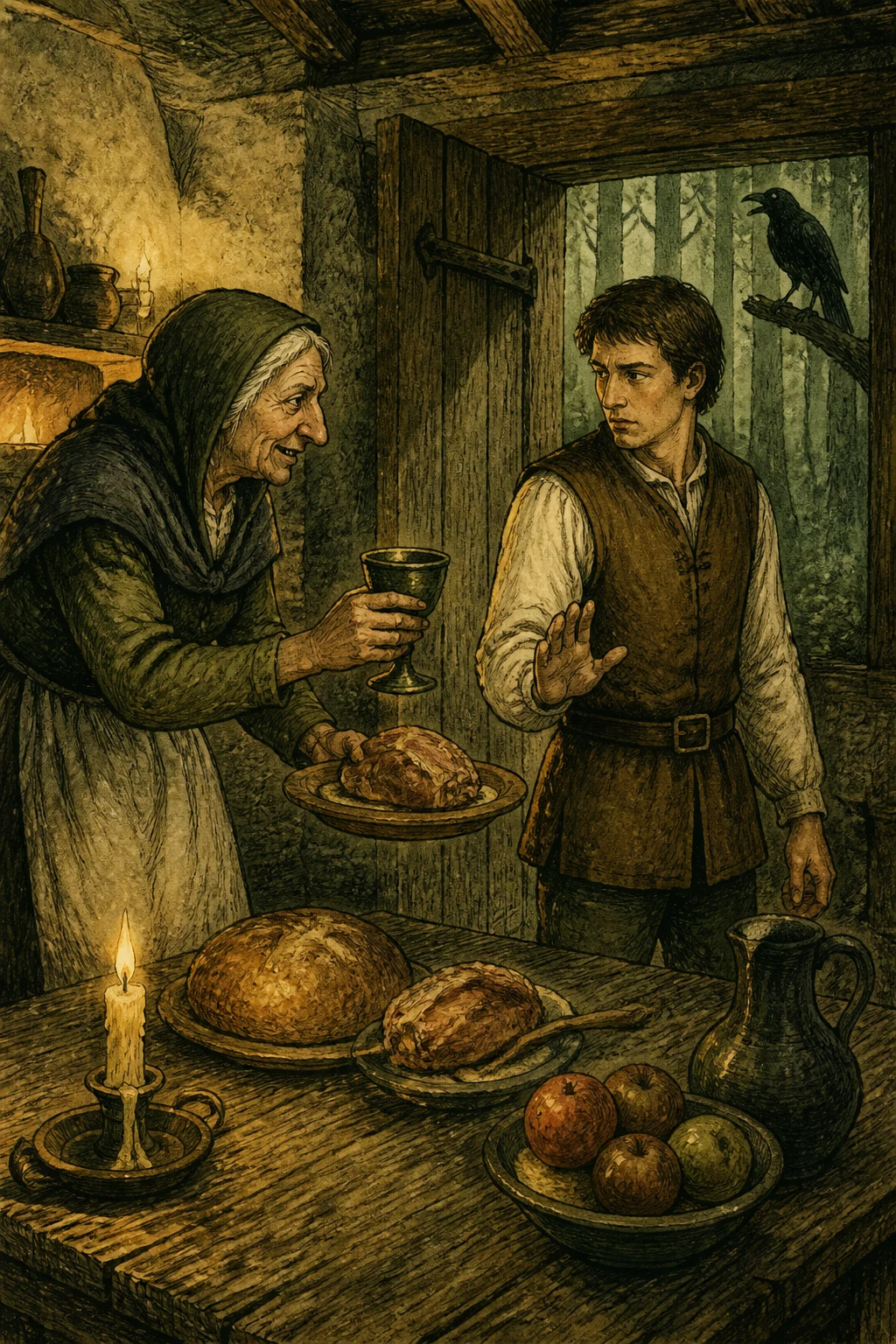
She herself oversaw their work; she herself knew the virtue of every leaf, and which ingredients blended well, and carefully examined the herbs they weighed. When she saw us, and greetings had been exchanged, her face brightened, and she spoke words of welcome. At once she ordered roasted barley to be mixed with honey, strong wine, curdled milk, and raisin wine, and added juices whose presence that sweetness would secretly conceal. We took the cups her sacred hand offered.
As soon as our thirsty mouths had drained them, and the dread goddess touched the tops of our heads with her wand, I began—though I blush to tell it—to bristle with coarse hair; I could no longer speak, but uttered hoarse grunts instead of words, and fell face downward to the ground. I felt my mouth harden into a curving snout, my neck swell into thick folds, and the hands with which I had just taken the cup became my feet.
With the others who had suffered the same—such is the power of potions!— I was shut in a sty. Eurylochus alone, we saw, had escaped a pig’s shape: he alone had refused the offered cup. Had he not avoided it, I would still be one of that bristling herd, nor would Ulysses, learning of our great calamity from him, have come to Circe to avenge us. The peace-bearing god of Cyllene had given him a white flower, which the gods call moly; it grows from a black root.
Protected by this, and by the god’s instructions, he entered Circe’s house; when invited to drink the treacherous cup, he thrust her back as she tried to stroke his hair with her wand, and terrified her with his drawn sword. Then pledges were exchanged and hands were clasped; welcomed to her bed, he demanded his companions’ bodies as his marriage gift. We were sprinkled with the better juices of an unknown herb, our heads were struck with her wand reversed, and words were spoken that undid the words spoken before.
The longer she chanted, the higher we rose and straightened from the earth; our bristles fell away, the clefts vanished from our cloven feet, our shoulders returned, and we had arms and hands once more. Weeping, we embraced our weeping leader and clung about his neck, and the first words we spoke were words of gratitude.
Izvirnik
Achaemenides and Circe's Island
Naslednje strani prikazujejo izvirno besedilo za primerjavo.
Source ID: ovid_metamorphoses_story_093 Citation: Ovid, Metamorphoses 14.154-14.307 Original language: Latin Source: PerseusDL canonical-latinLit Source URL: https://github.com/PerseusDL/canonical-latinLit/blob/master/data/phi0959/phi006/phi0959.phi006.perseus-lat2.xml Segmentation certainty: medium 154: Talia convexum per iter memorante Sibylla 155: sedibus Euboicam Stygiis emergit in urbem 156: Troius Aeneas sacrisque ex more litatis 157: litora adit nondum nutricis habentia nomen.
158: Hic quoque substiterat per taedia longa laborum 159: Neritius Macareus, comes experientis Ulixei; 160: desertum quondam mediis e rupibus Aetnae 161: noscit Achaemeniden improvisoque repertum 162: vivere miratus “qui de casusve deusve 163: servat, Achaemenide? cur” inquit “barbara Graium 164: prora vehit? petitur vestra quae terra carina?” 165: Talia quaerenti iam non hirsutus amictu, 166: iam suus et spinis conserto tegmine nullis, 167: fatur Achaemenides: “Iterum Polyphemon et illos 168: adspiciam fluidos humano sanguine rictus, 169: hac mihi si potior domus est Ithacique carina,
170: si minus Aenean veneror genitore nec umquam 171: esse satis potero, praestem licet omnia, gratus. 172: Quod loquor et spiro caelumque et sidera solis 173: respicio, possimne ingratus et impius esse? 174: Ille dedit, quod non anima haec Cyclopis in ora 175: venit, et ut iam nunc lumen vitale relinquam, 176: aut tumulo aut certe non illa condar in alvo. 177: Quid mihi tunc animi (nisi si timor abstulit omnem 178: sensum animumque) fuit, cum vos petere alta relictus 179: aequora conspexi? Volui inclamare, sed hosti 180: prodere me timui: vestrae quoque clamor Ulixis 181: paene rati nocuit. Vidi, cum monte revulsum
182: inmanem scopulum medias permisit in undas; 183: vidi iterum veluti tormenti viribus acta 184: vasta Giganteo iaculantem saxa lacerto 185: et, ne deprimeret fluctus ventusve carinam, 186: pertimui, iam me non esse oblitus in illa. 187: Ut vero fuga vos a certa morte reduxit, 188: ille quidem totam gemebundus obambulat Aetnam 189: praetemptatque manu silvas et luminis orbus 190: rupibus incursat foedataque bracchia tabo 191: in mare protendens gentem exsecratur Achivam 192: atque ait: “O si quis referat mihi casus Ulixem 193: aut aliquem e sociis, in quem mea saeviat ira,
194: viscera cuius edam, cuius viventia dextra 195: membra mea laniem, cuius mihi sanguis inundet 196: guttur et elisi trepident sub dentibus artus: 197: quam nullum aut leve sit damnum mihi lucis ademptae!” 198: Haec et plura ferox; me luridus occupat horror 199: spectantem vultus etiamnum caede madentes 200: crudelesque manus et inanem luminis orbem 201: membraque et humano concretam sanguine barbam.
202: mors erat ante oculos, minimum tamen ipsa doloris: 203: et iam prensurum, iam nunc mea viscera rebar 204: in sua mersurum, mentique haerebat imago 205: temporis illius, quo vidi bina meorum 206: ter quater adfligi sociorum corpora terrae, 207: cum super ipse iacens hirsuti more leonis 208: visceraque et carnes cumque albis ossa medullis 209: semianimesque artus avidam condebat in alvum.
210: Me tremor invasit: stabam sine sanguine maestus; 211: mandentemque videns eiectantemque cruentas 212: ore dapes et frusta mero glomerata vomentem 213: talia fingebam misero mihi fata parari 214: perque dies multos latitans omnemque tremescens 215: ad strepitum, mortemque timens cupidusque moriri, 216: glande famem pellens et mixta frondibus herba, 217: solus, inops, exspes, leto poenaeque relictus 218: hanc procul adspexi longo post tempore navem 219: oravique fugam gestu ad litusque cucurri — 220: et movi. Graiumque ratis Troiana recepit!
221: Tu quoque pande tuos, comitum gratissime, casus 222: et ducis et turbae, quae tecum est credita ponto.” 223: Aeolon ille refert Tusco regnare profundo, 224: Aeolon Hippotaden, cohibentem carcere ventos; 225: quos bovis inclusos tergo, memorabile munus, 226: Dulichium sumpsisse ducem flatuque secundo 227: lucibus isse novem et terram adspexisse petitam; 228: proxima post nonam cum sese aurora moveret, 229: invidia socios praedaeque cupidine victos, 230: esse ratos aurum, dempsisse ligamina ventis; 231: cum quibus isse retro, per quas modo venerat undas, 232: Aeoliique ratem portus repetisse tyranni.
233: “Inde Lami veterem Laestrygonis” inquit “in urbem 234: venimus. Antiphates terra regnabat in illa. 235: Missus ad hunc ego sum, numero comitante duorum, 236: vixque fuga quaesita salus comitique mihique: 237: tertius e nobis Laestrygonis impia tinxit 238: ora cruore suo. Fugientibus instat et agmen 239: concitat Antiphates. Coeunt et saxa trabesque 240: coniciunt merguntque viros merguntque carinas.
241: Una tamen, quae nos ipsumque vehebat Ulixen, 242: effugit. Amissa sociorum parte dolentes 243: multaque conquesti terris adlabimur illis, 244: quas procul hinc cernis (procul hinc, mihi crede, videnda 245: insula, visa mihi!), tuque o iustissime Troum, 246: nate dea (neque enim finito Marte vocandus 247: hostis es, Aenea), moneo, fuge litora Circes. 248: Nos quoque Circaeo religata in litore pinu, 249: Antiphatae memores inmansuetique Cyclopis, 250: ire negabamus vel tecta ignota subire; 251: sorte sumus lecti, sors me fidumque Politen 252: Eurylochumque simul nimiique Elpenora vini
253: bisque novem socios Circaea ad moenia misit. 254: Quae simul attigimus stetimusque in limine tecti, 255: mille lupi mixtaeque lupis ursique leaeque 256: occursu fecere metum, sed nulla timenda 257: nullaque erat nostro factura in corpore vulnus. 258: Quin etiam blandas movere per aera caudas 259: nostraque adulantes comitant vestigia, donec 260: excipiunt famulae perque atria marmore tecta 261: ad dominam ducunt: pulchro sedet illa recessu, 262: sollemni solio, pallamque induta nitentem 263: insuper aurato circumvelatur amictu.
264: Nereides nymphaeque simul, quae vellera motis 265: nulla trahunt digitis nec fila sequentia ducunt: 266: gramina disponunt sparsosque sine ordine flores 267: secernunt calathis variasque coloribus herbas; 268: ipsa quod hae faciunt opus, exigit, ipsa, quis usus 269: quove sit in folio, quae sit concordia mixtis, 270: novit et advertens pensas examinat herbas.
271: Haec ubi nos vidit, dicta acceptaque salute, 272: diffudit vultus et reddidit omina voce. 273: Nec mora, misceri tosti iubet hordea grani 274: mellaque vimque meri cum lacte coagula passo, 275: quique sub hac lateant furtim dulcedine, sucos 276: adicit. Accipimus sacra data pocula dextra. 277: Quae simul arenti sitientes hausimus ore, 278: et tetigit summos virga dea dira capillos, 279: (et pudet et referam!) saetis horrescere coepi 280: nec iam posse loqui, pro verbis edere raucum 281: murmur et in terram toto procumbere vultu; 282: osque meum sensi pando occallescere rostro,
283: colla tumere toris, et qua modo pocula parte 284: sumpta mihi fuerant, illa vestigia feci, 285: cumque eadem passis (tantum medicamina possunt!) 286: claudor hara, solumque suis caruisse figura 287: vidimus Eurylochum: solus data pocula fugit. 288: Quae nisi vitasset, pecoris pars una manerem 289: nunc quoque saetigeri, nec tantae cladis ab illo 290: certior ad Circen ultor venisset Ulixes.
291: Pacifer huic dederat florem Cyllenius album, 292: moly vocant superi, nigra radice tenetur; 293: tutus eo monitisque simul caelestibus intrat 294: ille domum Circes, et ad insidiosa vocatus 295: pocula, conantem virga mulcere capillos 296: reppulit et stricto pavidam deterruit ense. 297: Inde fides dextraeque datae, thalamoque receptus 298: coniugii dotem sociorum corpora poscit.
299: Spargimur ignotae sucis melioribus herbae 300: percutimurque caput conversae verbere virgae, 301: verbaque dicuntur dictis contraria verbis. 302: Quo magis illa canit, magis hoc tellure levati 303: erigimur, saetaeque cadunt, bifidosque relinquit 304: rima pedes, redeunt umeri et subiecta lacertis 305: bracchia sunt: flentem flentes amplectimur ipsi 306: haeremusque ducis collo nec verba locuti 307: ulla priora sumus quam nos testantia gratos.
Nadaljuj z branjem