Prevod
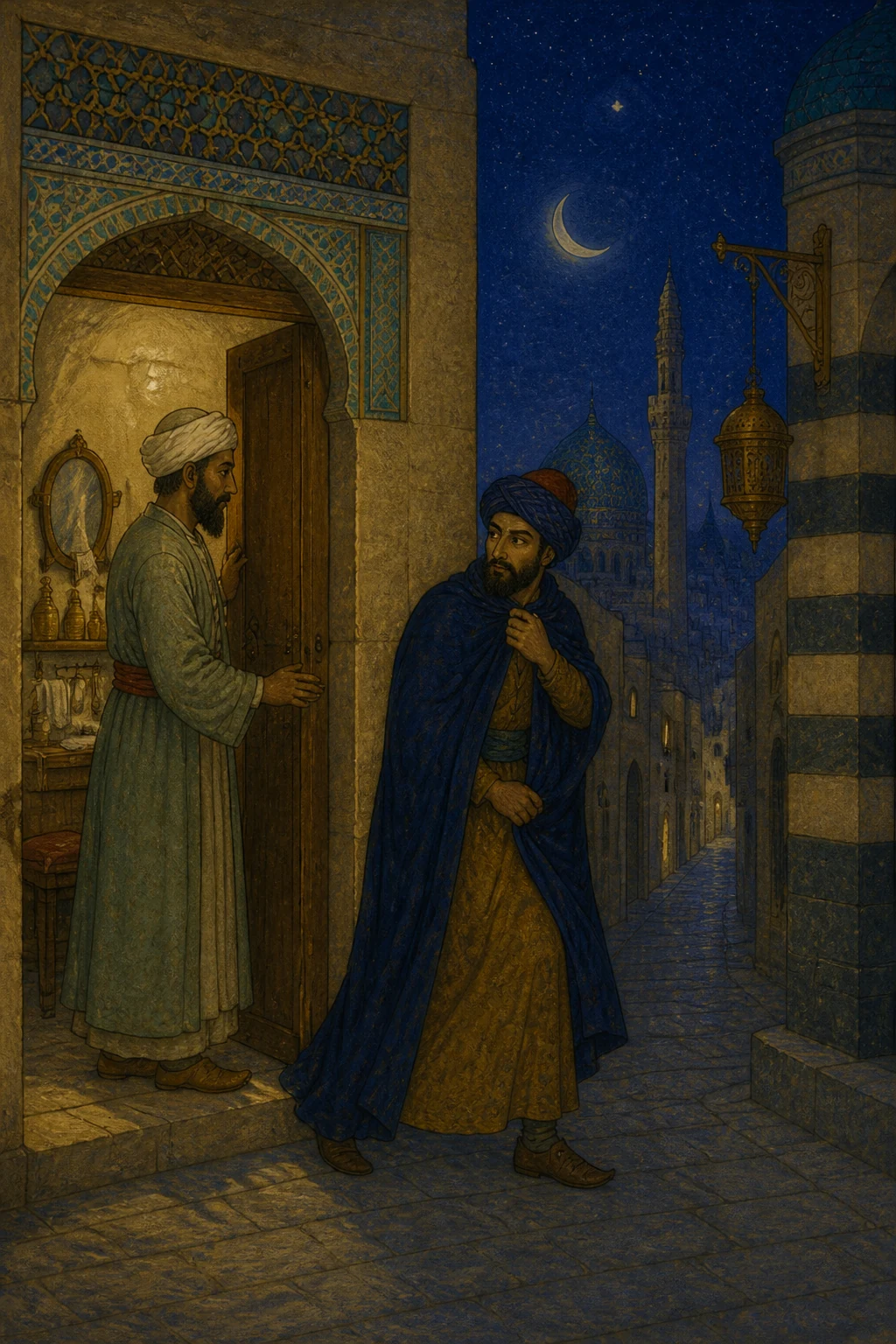
It is told that Khalid ibn Abd Allah al-Qasri was governor of Basra, and that one day a group of men came before him holding a young man of dazzling beauty, evident refinement, and sound understanding. He was handsome and sweet-scented, with a calm and dignified bearing. They brought him before Khalid, who asked them what had happened. “This is a thief,” they said. “We caught him in our house last night.” Khalid looked at him and was struck by his fine appearance and cleanliness. “Let go of him,” he said. Then he drew near and asked the young man for his account. “These men have spoken the truth,” he replied. “It is just as they have said.” Khalid asked, “What drove you to this, when you are so fine in appearance and so handsome?” He answered, “Worldly greed drove me to it, and the decree of God, glorified and exalted be He.” Khalid said, “May your mother be bereaved of you! Were your handsome face, your sound understanding, and your fine manners not enough to restrain you from theft?” “Leave that aside, O governor,” he replied, “and carry out what God Most High has commanded. This is what my own hands have earned, and God is never unjust to His servants.” Khalid fell silent for a while, pondering the young man’s case. Then he drew him close and said, “Your confession before all these witnesses has made me suspicious. I do not believe you are a thief. Perhaps there is some other story behind this besides theft; tell it to me.” He answered, “O governor, entertain no thought beyond what I have confessed before you. I have no story to tell except that I entered these people’s house and stole whatever I could. They caught me, took it from me, and brought me to you.” Khalid ordered him imprisoned, and commanded a herald to proclaim throughout Basra, “Let whoever wishes to see the punishment of the thief so-and-so, and the cutting off of his hand, come tomorrow morning to such-and-such a place.” When the young man was lodged in prison and his feet were put in irons, he heaved a deep sigh, shed a flood of tears, and recited these verses:
“Khalid has threatened to cut off my hand, because I would not tell him her story. I said, ‘Never shall I reveal the love my heart holds for her. To lose my hand for what I have confessed is easier on my heart than her disgrace.’” His guards heard him and went to Khalid to report what he had said. When night fell, Khalid ordered the youth brought before him. He questioned him and found him intelligent, cultivated, perceptive, witty, and discerning. He ordered food for him, and the young man ate. After talking with him for a while, Khalid said, “I know there is more to your story than theft. When morning comes, and the people and the judge are assembled, deny the theft when he questions you, and say whatever may avert the penalty of amputation. For the Messenger of God, God bless him and grant him peace, said, ‘Avert the prescribed punishments wherever there is doubt.’” Then he ordered him returned to prison. And morning overtook Shahrazad, and she fell silent, leaving her tale untold.
When it was the two hundred and ninety-eighth night
She said: It has reached me, O fortunate king, that after Khalid had spoken with the young man, he ordered him returned to prison, where he passed the night. When morning came, the people gathered to watch his hand being cut off. Not a man or woman in Basra stayed away: all came to witness the young man’s punishment. Khalid rode out, accompanied by the leading men of Basra and others. Then he summoned the judges and ordered the young man brought before him. He came hobbling in his fetters, and no one who saw him could keep from weeping, while the women’s sobs rose aloud. The judge ordered the women to be quiet, then said to him, “These people claim that you entered their house and stole their property. Perhaps you stole less than the amount for which the penalty is prescribed?” “No,” he answered, “I stole the full prescribed amount.” “Perhaps you have a share in some of it?” “No, it all belongs to them. I have no right to any of it.” Khalid grew angry, rose, and struck him across the face with his whip, quoting this verse:
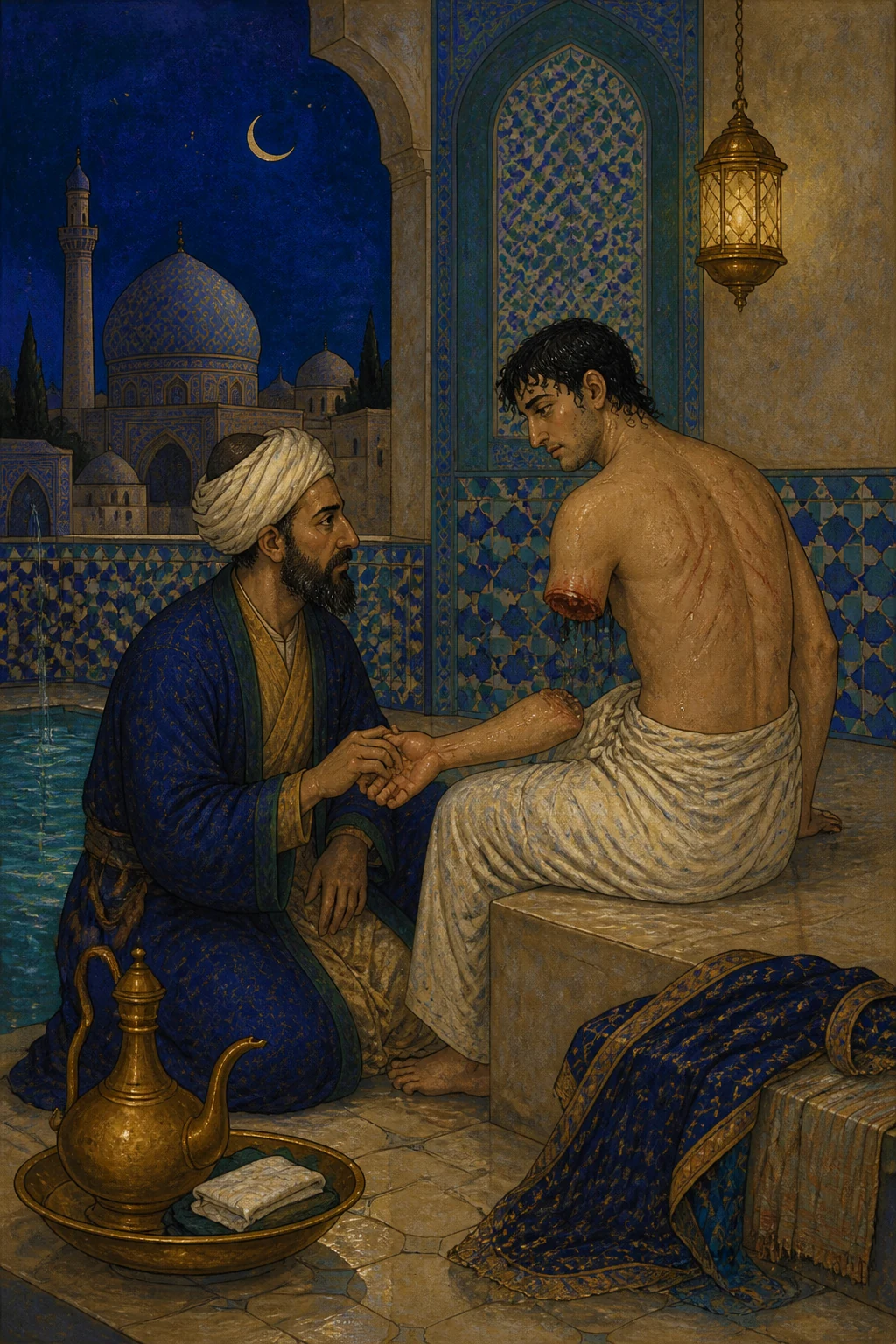
“Man wishes to be granted his desire, but God allows only what He wills.” Then he called for the executioner to cut off the youth’s hand. The man came, drew his knife, stretched out the youth’s hand, and laid the blade upon it. At that moment a girl in filthy rags rushed out from among the women, crying aloud, and threw herself upon the young man. Then she unveiled a face like the moon. A great uproar rose among the people, and a tumult that might have set the crowd aflame nearly broke out. The girl cried at the top of her voice, “I implore you by God, O governor, do not be hasty in cutting off his hand before you have read this note!” She handed him a paper, which Khalid opened and read. These verses were written upon it:
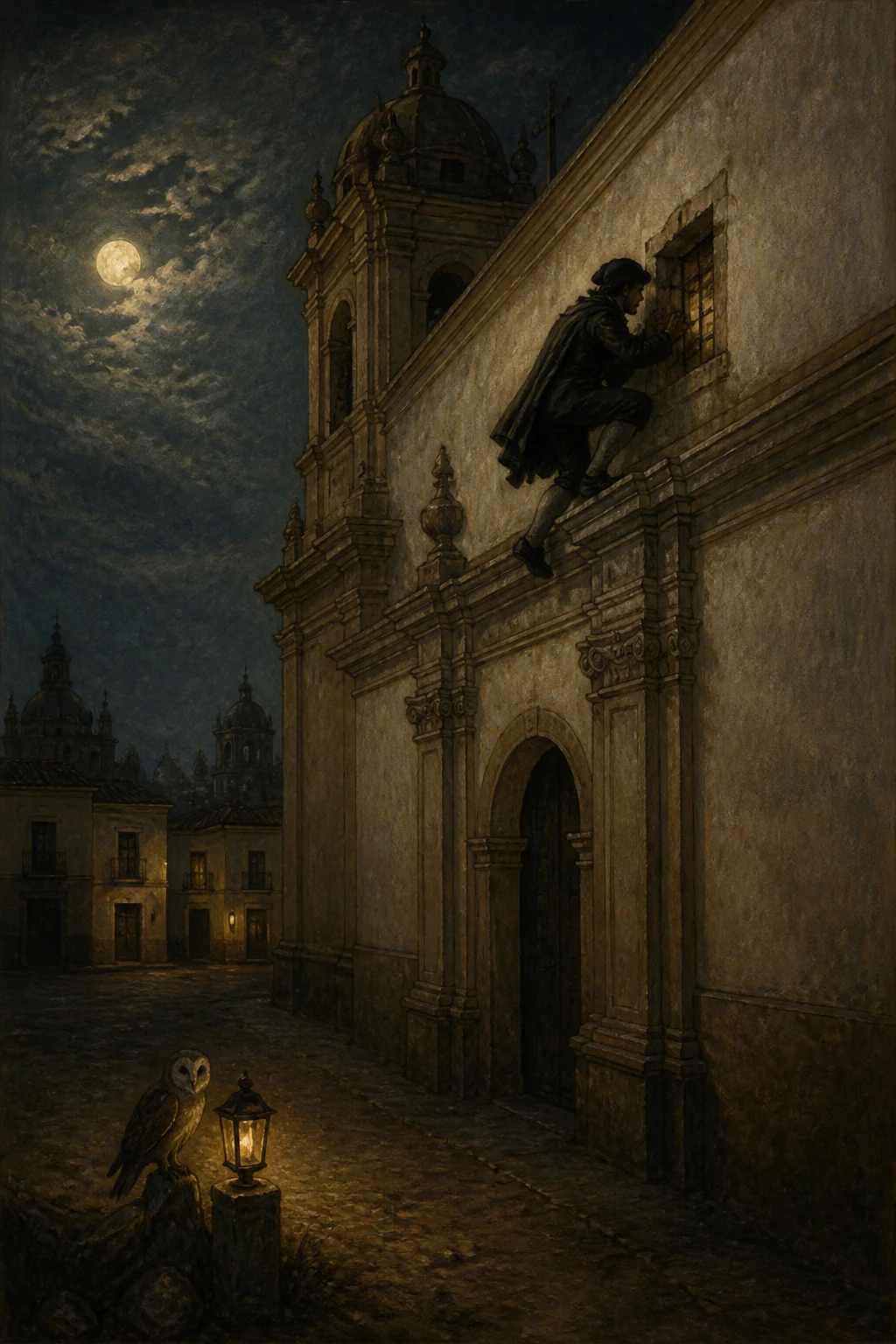
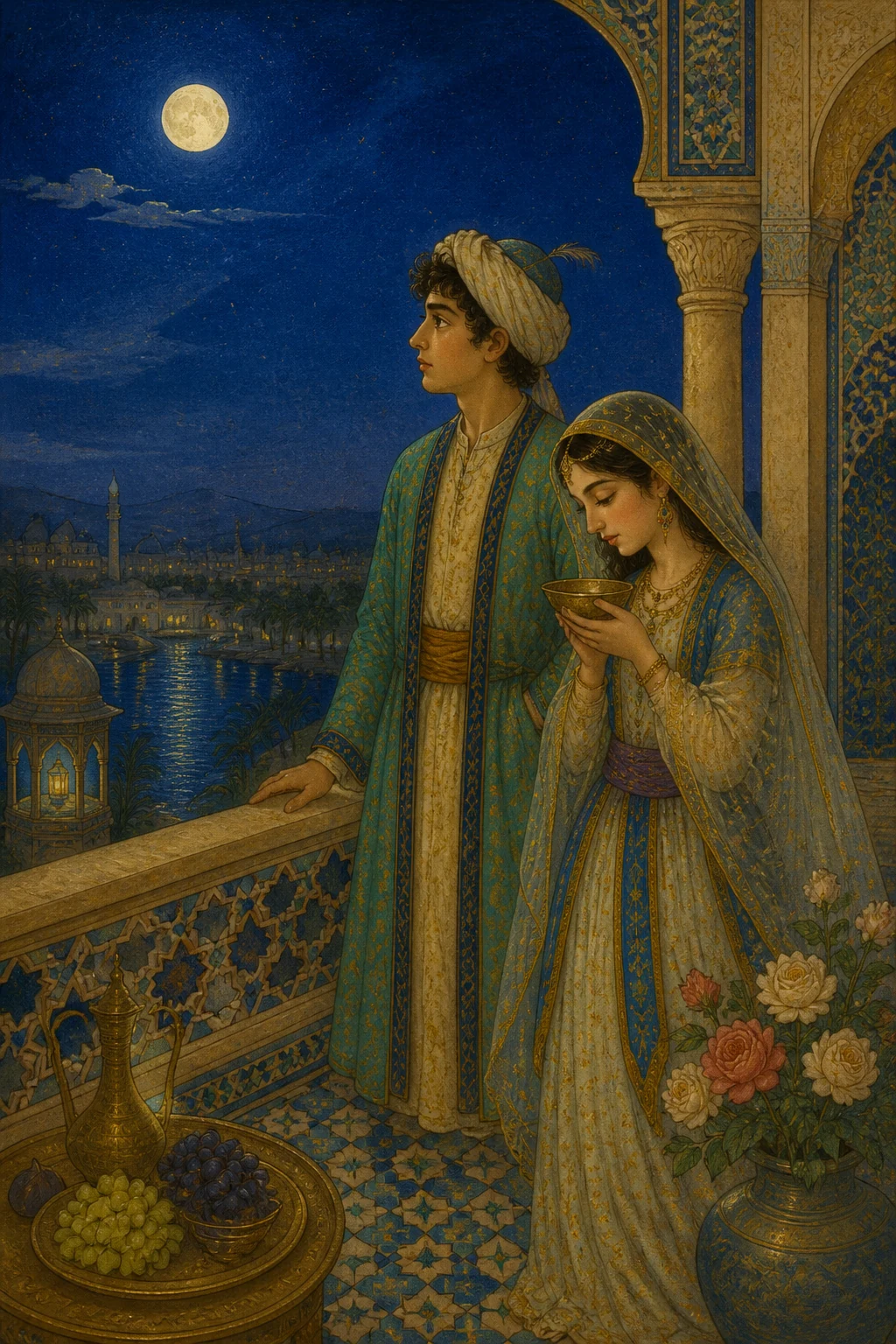
“O Khalid, this man is love-stricken, enslaved by passion; my glances shot him from the bows of my eyelids. The arrow of my gaze pierced him to the heart, and he is bound to a love-sickness from which he cannot recover. He confessed to a deed he had not done, deeming that better than exposing his beloved to disgrace. Be gentle, then, with this sorrowing lover: he is a man of noble character, no thief.” When Khalid had read the verses, he withdrew from the crowd, had the woman brought to him, and asked her for her story. She told him that the young man loved her and that she loved him. He had meant only to visit her, and had come to her family’s house and thrown a stone into it to let her know he was there. Her father and brothers had heard the stone and climbed up to him. When he became aware of them, he gathered together all the household goods and made himself appear a thief, to shield his beloved. Seeing him like this, they seized him, saying, “Here is a thief!” “They brought him before you,” she continued, “and he confessed to theft and persisted in his confession so as not to disgrace me. It was his great chivalry and noble spirit that led him to do all this and bring the charge of theft upon himself.” Khalid said, “He well deserves to be granted his desire.” Then he summoned the young man, kissed him between the eyes, and ordered the girl’s father brought before him. “Old man,” he said, “we had intended to carry out the sentence of amputation upon this youth, but God, mighty and majestic, has preserved him from it. I have ordered that he be given ten thousand dirhams for offering up his hand to safeguard your honour and your daughter’s, and to preserve you both from disgrace. I have also ordered ten thousand dirhams for your daughter, because she told me the truth of the matter. Now I ask you to permit me to marry her to him.” The old man replied, “O governor, I give you my permission.” Then Khalid praised and glorified God, and delivered an eloquent marriage sermon. And morning overtook Shahrazad, and she fell silent, leaving her tale untold.