Prevod
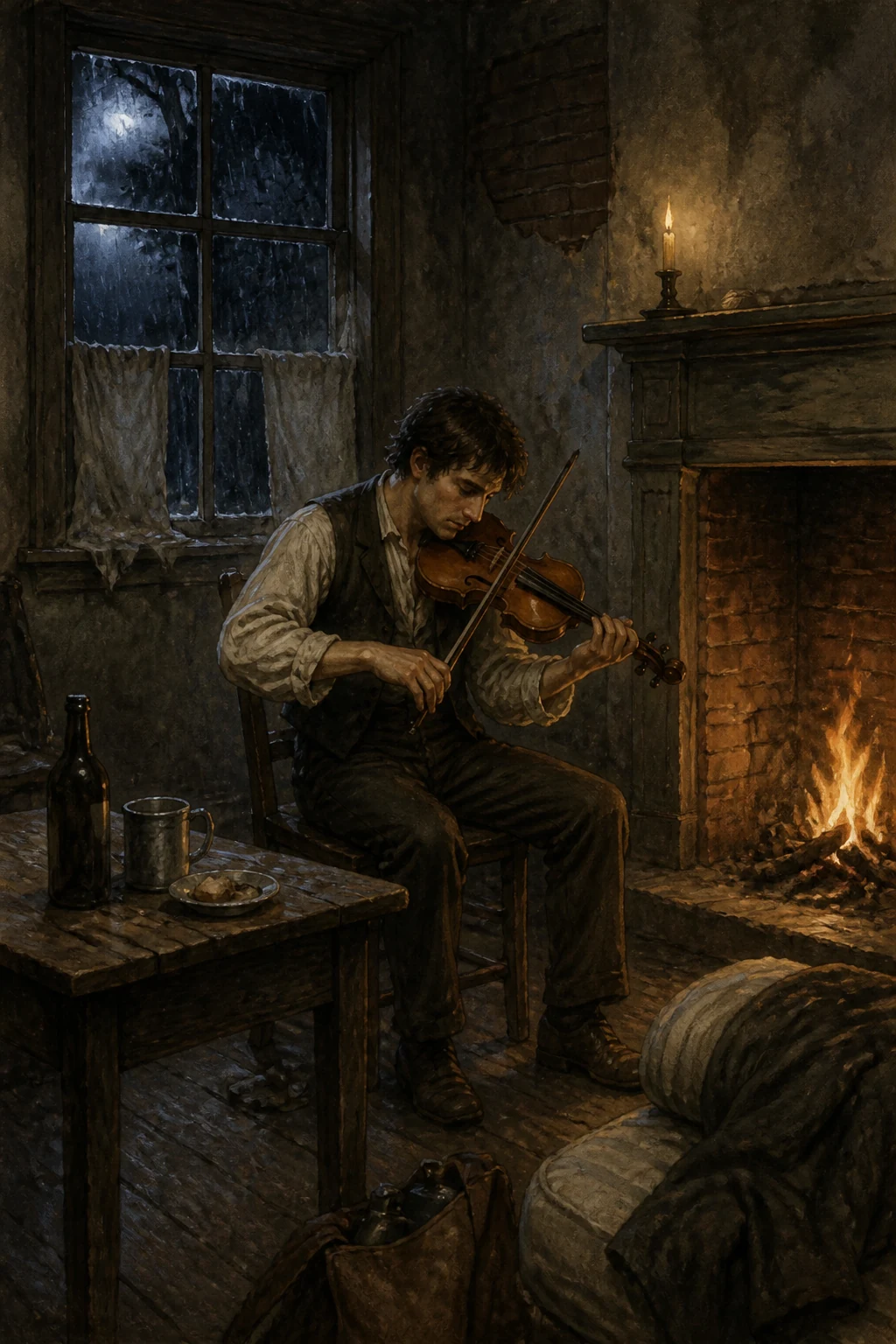
Preden se je Brooklyn razširil onkraj pokopališča Greenwood, je bilo v ulici Martense's Lane, južno od tega pokopališča, mogoče videti kamen z odtisom kopita. Črnec po imenu Joost, ki je služil pri družini Van Der Nekaj-ali-drugega, se je v soboto zvečer s težkimi koraki vračal domov, z goslimi pod pazduho. Igral je na poroki v Flatbushu in pil žganje, dokler ni videl zvezd na tleh in plotov na nebu; pravzaprav se mu je vse vesolje zdelo tako narobe, da se je precej težko spustil na ta kamen, da bi stvar premislil. Še posebno nenavadno se mu je zdelo, kako zvezde plavajo in se kotalijo, in domislil se je, da hočejo plesati. Prislonil si je gosli pod brado in zaigral divjo poskočnico. Čeprav si jo je sproti izmišljal, se je dobro zavedal, da mu gre odlično, ko mu je doneči udarec zvona pognal srh po hrbtenici. Bila je polnoč, on pa je v nedeljo igral plesno vižo. Toda greh igranja ene same sekunde na dan Gospodov je bil prav tako velik kakor greh celodnevnega igranja; ker je bil torej že tako ali tako v grehu, je sklenil vižo pripeljati do konca in je z brezobzirno vnemo drgnil po goslih. Kmalu je opazil, da je glasba hkrati bolj divja in slajša kakor prej in da je je več. Šele tedaj je zagledal visokega, suhega tujca, ki je stal ob njem in prav tako igral na gosli — Joostovi viži je spletal drugi glas, kakor da bi znal prebrati njegovo misel, še preden jo je uresničil na strunah. Joost je nehal, in tujec prav tako.
»Od kod za vraga si se pa ti vzel?« je vprašal prvi. Drugi se je nasmehnil. »In kako to, da poznaš to vižo?« je nadaljeval Joost. »Oh, to vižo poznam že leta,« se je glasil odgovor. »Pravi se ji ‘Hudičevo veselje ob skrunitvi dneva Gospodovega’.«
»Lažnivec si!« je zavpil črnec. Tujec se je priklonil in planil v bučen krohot. »Lažnivec!« je ponovil Joost, »saj sem si to vižo izmislil prav ta hip.«
»Pa si vendar opazil, da sem ti lahko sledil, ko si igral.« »Hm! Ja, slediti znaš.« »Pa tudi voditi znam. Poznaš vižo ‘Pojdi k hudiču in se otresi’?«
»Ja; ampak jaz nikomur ne igram drugega glasu.« »Prav, premagal te bom v kateri koli viži, ki se je lotiš.« »Velja!« je rekel Joost. In tedaj se je začelo tekmovanje, ki je trajalo do zore. Tujec je bil mojster, Joost pa je igral kakor navdihnjen, in prav ko se je prikazalo sonce, je v širokih, slovesnih harmonijah zaigral Von Cattsovo hvalnico:
»Glej, ob zori dneva zdaj, pobožni Holandci pojo, molitve k nebu dvigajo.« Ob tem je tujec vzkliknil: »No, to pa še hudiča prekaša!« Nato je jezno udaril z nogo ob skalo in izginil v ognjenem blisku, kakor da bi razneslo bombo. Eksplozija je Joosta vrgla dvajset čevljev daleč in obležal je nezavesten na tleh, dokler ga ni nekaj ur pozneje našel pastir. Ker mu tekmovanje ni prav nič škodovalo in je postal še boljši godec kakor prej, domnevajo, da mu angel zapisovalec njegove skrunitve dneva Gospodovega ni vpisal v breme z velikimi črkami. Nekateri so sicer dvomili o njegovi zgodbi, a ko jim je pokazal odtis kopita na skali, niso imeli več kaj reči. Poleg tega je med črnci manj godcev, kakor jih je bilo nekoč, saj pravijo, da je violina hudičevo glasbilo.
Izvirnik
Before Brooklyn had spread itself beyond Greenwood Cemetery a stone could be seen in Martense's Lane, south of that burial-ground, that bore a hoof mark. A negro named Joost, in the service of the Van Der Something-or-others, was plodding home on Saturday night, his fiddle under his arm. He had been playing for a wedding in Flatbush and had been drinking schnapps until he saw stars on the ground and fences in the sky; in fact, the universe seemed so out of order that he seated himself rather heavily on this rock to think about it. The behavior of the stars in swimming and rolling struck him as especially curious, and he conceived the notion that they wanted to dance. Putting his fiddle to his chin, he began a wild jig, and though he made it up as he went along, he was conscious of doing finely, when the boom of a bell sent a shiver down his spine. It was twelve o'clock, and here he was playing a dance tune on Sunday. However, the sin of playing for one second on the Sabbath was as great as that of playing all day; so, as long as he was in for it, he resolved to carry the tune to the end, and he fiddled away with a reckless vehemence. Presently he became aware that the music was both wilder and sweeter than before, and that there was more of it. Not until then did he observe that a tall, thin stranger stood beside him; and that he was fiddling too,--composing a second to Joost's air, as if he could read his thought before he put it into execution on the strings. Joost paused, and the stranger did likewise.
“Where de debble did you come frum?” asked the first. The other smiled.
“And how did you come to know dat music?” Joost pursued.
“Oh, I've known that tune for years,” was the reply. “It's called 'The Devil's joy at Sabbath Breaking.'”
“You're a liar!” cried the negro. The stranger bowed and burst into a roar of laughter. “A liar!” repeated Joost,--“for I made up dat music dis very minute.”
“Yet you notice that I could follow when you played.”
“Humph! Yes, you can follow.”
“And I can lead, too. Do you know the tune 'Go to the Devil and Shake Yourself?'”
“Yes; but I play second to nobody.”
“Very well, I'll beat you at any air you try.”
“Done!” said Joost. And then began a contest that lasted until daybreak. The stranger was an expert, but Joost seemed to be inspired, and just as the sun appeared he sounded, in broad and solemn harmonies, the hymn of Von Catts:
“Now behold, at dawn of day, Pious Dutchmen sing and pray.”
At that the stranger exclaimed, “Well, that beats the devil!” and striking his foot angrily on the rock, disappeared in a flash of fire like a burst bomb. Joost was hurled twenty feet by the explosion, and lay on the ground insensible until a herdsman found him some hours later. As he suffered no harm from the contest and became a better fiddler than ever, it is supposed that the recording angel did not inscribe his feat of Sabbath breaking against him in large letters. There were a few who doubted his story, but they had nothing more to say when he showed them the hoof-mark on the rock. Moreover, there are fewer fiddlers among the negroes than there used to be, because they say that the violin is the devil's instrument.