Prevod
Divji Purani so potujoče ljudstvo in v enem kraju ostanejo le toliko časa, da vzredijo mladiče. Težko bi rekli, da živijo v Gozdu, toda vsako leto, ko dozorita želod in žir, pridejo na obisk. Vedno je vznemirljivo, ko na drugem bregu reke opazijo Purane, ki se zbirajo in pripravljajo na prelet. Nekateri Gozdni Prebivalci so že odšli v toplejše kraje na jugu, tisti, ki še ostajajo, pa se bodisi pogovarjajo o svojih načrtih za odlet bodisi pridno pripravljajo zaloge hrane, če nameravajo prezimiti na severu.
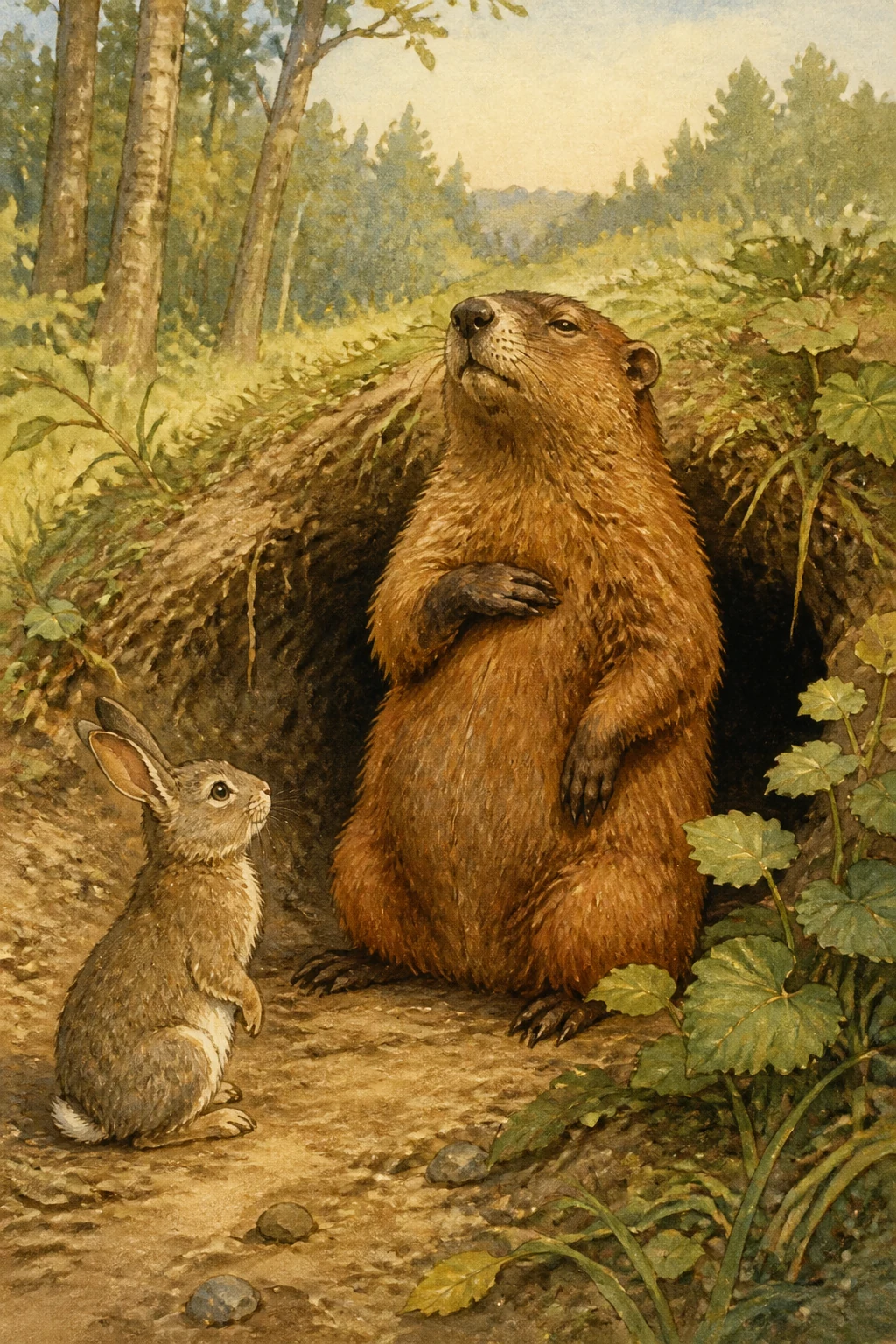
Tako je bilo tudi letos. Nekega jutra je Rdečeglavi Detel prinesel novico, da se Purani zbirajo. Svizec je zanjo izvedel ravno, ko se je odpravljal spat po noči, ki jo je preživel ob hranjenju in potepanju po robu travnika. Eden izmed mladih Zajcev mu je povedal novico in ga pregovarjal, naj ostane pokonci, da si ogleda prišleke.
»Še nikoli v življenju nisem videl Puranov,« je rekel mladi Zajec, »in pravijo, da jih je zelo zabavno opazovati. Oh, prosim, pojdi z menoj na rečni breg in poglej, kako Purani prečkajo reko. Daj, prosim!«
»A-a-ah,« je zazehaval Svizec. »Raje bi prosil koga, ki ni bil vso noč pokonci. Preveč sem zaspan.« »Ko prideš na rečni breg, ne boš več zaspan,« je rekel Zajec. »Poleg tega mislim, da bi jih moral kdo tam pričakati.«
Ob teh besedah je Svizec dvignil povešeno glavo, odprl mežikajoče oči in zelo dostojanstveno odgovoril: »Res bi jih moral kdo pričakati. Takoj grem.«
Ko sta prišla na rečni breg, ju je tam čakal pogled, ki ga je bilo res vredno videti. Na drugi strani vode je bilo vse polno Puranov. Tam so bili stari Purani in mame Puranke z jatami svojih otrok, vsi nadvse imenitni v bleščečih črnih suknjah. Ko so stali v senci, bi človek pomislil, da na njih ni nobene druge barve razen živo rdeče na glavah in vratovih, kjer nobeno pero ni prekrivalo njihove nagubane kože. Ko pa so stopili na sonce, se je njihovo perje zasvetilo v čudovitih škrlatnih in zelenih odtenkih in Zajcu so se zdeli najčudovitejša velika bitja, kar jih je kdaj videl.
»Poglej jih zdaj!« je vzkliknil. »Zakaj tisti največji korakajo sem in tja pred drugimi in jih oštevajo?« »To so puranji samci,« je odgovoril Svizec, »in tako kažejo, da se ne bojijo prečkati reke. Šopirijo se in goltajo, šopirijo se in goltajo ter govorijo: ‘Kdo-se-boji? Kdo-se-boji?’ dokler niso tudi drugi pripravljeni preleteti reke.«
»Zdaj počnejo isto še drugi,« je rekel Zajec, ko so se tudi matere in mladi Purani začeli šopiriti sem ter tja. »To pomeni, da so pripravljeni prečkati reko,« je odgovoril Svizec. »Zdaj bodo poleteli prav na vrhove dreves na griču in tam nekaj časa kramljali. Vedno je tako. Odpravijo se z najvišje točke, ki jo lahko najdejo. Še nekaj časa bo minilo, preden pridejo čez, zato bom malo zadremal. Nikar me ne pozabi zbuditi, ko se odpravijo. Rad bi jim izrekel dobrodošlico v Gozdu.« In Svizec se je zvil ob podrtem deblu in zaspal.
Zajec je pohajkoval naokrog in pojedel vse dobrote, ki jih je našel. Nato se je začel spraševati, kako bi bilo, če bi bil ptica. Zdelo se mu je, da mora biti letenje silno zabavno. Kako prijetno mora biti tako hitro drseti skozi zrak, potem pa se veličastno spustiti in mehko pristati na tleh, ne da bi kdo vedel, da prihajaš!
Prav mikalo ga je, da bi poskusil. Nikogar ni bilo, ki bi ga opazoval, zato se je povzpel po deblu podrtega drevesa, ki se je naslanjalo na sosednja drevesa. To je bilo nespametno in tega se je zavedal, toda mladi Zajci so preveč navihani, da bi bili vedno preudarni.
»Zadnje noge bom držal čisto pri miru,« si je mislil, »s sprednjimi pa bom zamahoval kakor s krili.« Nato je skočil in s treskom priletel na suho listje. Bil je ves slaboten in omotičen, in ko se je pobral ter pogledal naokrog, je upal, da ga ni nihče videl. »Letenje je morda res zelo zabavno,« je rekel, »toda pristati po letu ni prav nič zabavno, če nimaš pravih pernatih kril. Če letiš z nogami, preveč treščiš ob tla.«
Prav tedaj je zaslišal klic starega Purana in zagledal jato Puranov, ki se mu je bližala. »Zbudi se! Zbudi se!« je zaklical Svizcu. Toda Svizec se ni niti ganil.
Purani pa so se vse bolj bližali. Zajec je videl, da debeli stari Purani prehitevajo druge in da se mora tu in tam kak mlad ali slaboten Puran spustiti v reko ter zaplavati, ker so se mu krila utrudila. Prišli so tako blizu, da je lahko videl nenavadne čopke žimastega perja, ki so samcem viseli s prsi, in škrlatne podbradke, ki so se jim pozibavali pod kljuni. Še enkrat je poklical Svizca, in ker ni dobil odgovora, ga je trikrat dregnil z glavo.
Svizec se je obrnil, pretegnil, zazehaval, nekajkrat premaknil čeljusti, kakor da bi sanjal, da je svežo spomladansko travo, in nato spet zaspal. Potem ga je Zajec pustil pri miru.
Prvi so pristali samci in se takoj začeli šopiriti in glasno kramljati. Za njimi so prišle mame Puranke s svojimi mladiči, nazadnje pa še slabotni Purani, ki so reko preplavali. Prav imenitno jih je bilo gledati, kako prihajajo. Plavalci so razprli repe, tesno zložili krila, iztegnili vratove ter hitro in močno zaveslali z nogami.
Mladi Zajec je slišal, kako se pogovarja skupina mater. »Samci so se že kar navezali na otroke,« je rekla ena. »Res je,« je rekla druga, »moj mož mi je včeraj povedal, da je zelo ponosen na najine malčke.«
»No, zdaj je že čas, da začnejo skupaj hoditi naokrog,« je rekla prva, »ampak še nikoli v življenju nisem imela takih težav kot to pomlad. Mislila sem, da bo moj mož razbil prav vsako jajce, ki ga znesem.«
»Tudi meni ni bilo lahko,« je rekla druga. »Nobeno od mojih jajc se ni razbilo, ko pa so se izvalili mladiči, sem jih morala po dvanajstkrat na dan na hitro odpeljati očetu izpred oči.«
»To je zelo naporno,« je z vzdihom rekla tretja mama Puranka, »toda s samci je vedno tako. Najbrž si ti naši ljubi možje ne morejo pomagati.« In ljubeče se je ozrla proti možu, ki se je šopiril med prijatelji. Če bi videli njene nežne poglede in slišali ljubeznivo goltanje njenega moža, ne bi verjeli, da sta vse poletje komaj spregovorila drug z drugim. Seveda zdaj ni bilo več tako kot spomladi. Takrat bi pretepel vsakega drugega Purana, ki bi se ji približal, tako zelo jo je ljubil. Pa vendar je Zajec med opazovanjem videl, da ta Puran, kadar najde posebej debel in lep želod, ne poje vsega sam, temveč pokliče ženo, naj pride in ga deli z njim. In vedel je, da sta srečna skupaj, po svoje, kakor so pač srečni Purani.
Prav tedaj je Svizec odprl oči in se opotekaje postavil na noge. Glasno govorjenje ga je prebudilo. Ta hip ni bil videti prav nič dostojanstven. Kožuh je imel razmršen in od zaspanosti je kar naprej mežikal. Na eno uho se mu je prilepil tudi suh list, zaradi katerega je bil videti zelo smešen. Zajcu je šlo na smeh, vendar se ni upal zasmejati. Svizec je stopil k Puranom in se vzravnal na zadnjih nogah.
»Dober večer, dober večer,« je rekel (v resnici je bilo jutro, veste). »Zelo smo veseli, da vam lahko izrečemo dobrodošlico v gozdu. Počutite se kakor doma. Trava sicer ni več tako nežna, kot je bila še pred kratkim, vendar mislim, da boste našli dovolj dobre paše,« in vljudno je pomahal s tačkami.
»Hvala, hvala!« so odgovorili samci, medtem ko so se matere in mladi Purani zgrnili bliže, da bi si ogledali Svizca. »Prišli smo po želod in druge gozdne plodove. Prav gotovo se bomo imeli lepo.«
»Tako je prav,« je prisrčno rekel Svizec. »Prav imeniten gozd imamo tukaj. Oprostite, ker to omenjam. Prebivalci Ribnika imajo pregovor, ki še kako drži: ‘Prav klavrna je Žaba, ki ne kvaka v hvalo svoji mlaki.’ In moj ded je rad govoril, da je Svizec, ki ne ljubi svojega doma, res kaj klavrn Svizec. Lahko noč, prijatelji moji, lahko noč.« In veselo je odracal proč, Zajec pa za njim.
Ko je odšel, so Purani govorili: »Kako prijazen je!« in »Kako lepo se vede!« Mladi Zajec pa si je mislil: »To je pa čudno. Bil je zaspan in kožuh je imel razmršen, tisti list pa mu je med govorjenjem poplesaval ob ušesu. Rekel je ‘večer’ namesto ‘jutro’ in govoril, kakor da bi Purani prihajali sem jest travo. Pa vendar jim je bil vsem všeč in njegove besede so jih razveselile.«
Vidite, mladi Zajec se še ni naučil, da lepo vedenje velja več kot lep videz in da ob Svizčevem dobrem srcu nihče ni niti pomislil na napake v njegovem govorjenju.
Izvirnik
The Wild Turkeys are a wandering people, and stay in one place only long enough to rear their young. One could hardly say that they lived in the Forest, but every year when the acorns and beechnuts were ripe, they came for a visit. It is always an exciting time when the Turkeys are seen gathering on the farther side of the river and making ready to fly over. Some of the Forest People have started for the warmer country in the South, and those who still remain are either talking over their plans for flight, or working hard, if they are to spend the winter in the North, to get their stores of food ready.
It was so this year. One morning a Red-headed Woodpecker brought the news that the Turkeys were gathering. The Ground Hog heard of it just as he was going to sleep after a night of feeding and rambling in the edge of the meadow. One of the young Rabbits told him, and coaxed him to stay up to see the newcomers.
"I've never seen Turkeys in my life," said the young Rabbit, "and they say it is great fun to watch them. Oh, please come with me to the river-bank and see the Turkeys cross over. Please do!"
"Ah-h-h," yawned the Ground Hog. "You might better ask somebody who has not been up all night. I am too sleepy."
"You won't be sleepy when you reach the river-bank," said the Rabbit. "Beside, I think there should be someone there to meet them."
At this, the Ground Hog raised his drooping head, opened his blinking eyes, and answered with great dignity: "There should indeed be someone. I will go at once."
When they reached the river-bank there was a sight well worth seeing. On the farther side of the water were a great many Turkeys. Old Gobblers were there, and the mother Turkeys with their broods of children, all looking as fine as you please, in their shining black coats. When they stood in the shadow, one might think that they wore no color but the brilliant red of their heads and necks, where there were no feathers to cover their wrinkled skin. When they walked out into the sunshine, however, their feathers showed gleams of beautiful purple and green, and the Rabbit thought them the most wonderful great creatures he had ever seen.
"Look at them now!" he cried. "Why do those largest ones walk up and down in front of the rest and scold them?"
"They are the Gobblers," answered the Ground Hog, "and they are doing that to show that they are not afraid to cross the river. They strut and gobble, and strut and gobble, and say: 'Who's-afraid? Who's-afraid?' until the rest are ready to fly over."
"Now the others are doing the same thing," said the Rabbit, as the mothers and young Turkeys began to strut back and forth.
"That shows that they are willing to cross," answered the Ground Hog. "Now they will fly up to the very tops of the trees on the hill and visit there for a time. It is always so. They start from the highest point they can find. It will be some time before they come over, and I will take a short nap. Be sure to awaken me when they start. I want to welcome them to the Forest." And the Ground Hog curled himself up beside a log and went to sleep.
The Rabbit wandered around and ate all the good things he could find. Then he fell to wondering how it would feel to be a bird. He thought it would be great fun to fly. To pass so swiftly through the air must be delightful, and then to sweep grandly down and alight softly on the ground without having people know that you were coming!
He had a good mind to try it. There was nobody to watch him, and he crept up the trunk of a fallen tree which leaned over against its neighbors. It was a foolish thing to do, and he knew it, but young Rabbits are too full of mischief to always be wise.
"I will hold my hind legs very still," he thought, "and flap my forelegs for wings." With that he jumped off and came crashing down upon the dry leaves. He felt weak and dizzy, and as he picked himself up and looked around he hoped that nobody had seen him. "It may be a great deal of fun to fly," he said, "but it is no fun alighting from your flight unless you have real feather wings. It is too bumpy when you fly with your legs."
At this minute he heard an old Gobbler call out, and saw the flock of Turkeys coming toward him. "Wake up! Wake up!" he cried to the Ground Hog. But the Ground Hog never moved.
Still the Turkeys came nearer. The Rabbit could see that the fat old ones were getting ahead of the others, and that here and there a young or weak Turkey had to drop into the river and swim, because his wings were tired. They got so near that he could see the queer little tufts of wiry feathers which the Gobblers wear hanging from their breast, and could see the swaying scarlet wattles under their beaks. He called again to the Ground Hog, and getting no answer, poked him three times with his head.
The Ground Hog turned over, stretched, yawned, moved his jaws a few times as though he dreamed of eating fresh spring grass, and then fell asleep once more. After that the Rabbit left him alone.
The first to alight were the Gobblers, and they began at once to strut and chatter. Next came the mother Turkeys and their young, and last of all came the weak ones who swam across. It was a fine sight to see them come in. The swimmers spread their tails, folded their wings tightly, stretched their necks, and struck out swiftly and strongly with their feet.
The young Rabbit could hear a group of mothers talking together. "The Gobblers are growing quite fond of the children," said one.
"Yes," said another; "my husband told me yesterday that he was very proud of our little ones."
"Well, it is the season for them to begin to walk together," said the first speaker; "but I never in my life had such a time as I had this spring. I thought my husband would break every egg I laid."
"I had a hard time too," said the other. "None of my eggs were broken, but after my chicks were hatched I had to hurry them out of their father's sight a dozen times a day."
"It is very trying," said a third mother Turkey with a sigh; "but that is always the way with the Gobblers. I suppose the dear fellows can't help it;" and she looked lovingly over at her husband as he strutted around with his friends. You would not have believed if you had seen her fond looks, and heard her husband's tender "Gobble," that they had hardly spoken to each other all summer. To be sure, it was not now as it had been in the springtime. Then he would have beaten any other Gobbler who came near her, he loved her so; still, the Rabbit could see as he watched them that when he found some very large and fine acorns, this Gobbler would not eat them all, but called his wife to come and share with him; and he knew that they were happy together in their own Turkey way of being happy.
At this minute the Ground Hog opened his eyes and staggered to his feet. The loud talking had awakened him. He did not look very dignified just now. His fur was rumpled, and he blinked often from sleepiness. There was a dry leaf caught on one of his ears, too, that made him look very odd. The Rabbit wanted to laugh, but he did not dare to do so. The Ground Hog walked toward the Gobblers, and raised himself on his haunches.
"Good-evening, good-evening," said he (it was really morning, you know). "We are very glad to welcome you to the forest. Make yourselves perfectly at home. The grass is not so tender as it was a while ago, yet I think that you will find good feeding," and he waved his paws politely.
"Thank-you,--thank-you!" answered the Gobblers, while the mothers and young Turkeys came crowding up to look at the Ground Hog. "We came for the acorns and nuts. We shall certainly enjoy ourselves."
"That is right," said the Ground Hog heartily. "We have a very fine forest here. You will pardon me for remarking it. The Pond People have a saying that is very true: 'It's a mighty poor Frog that won't croak for his own puddle.' And my grandfather used to say that if a Ground Hog didn't love his own home he was a very poor Hog indeed. Good-night, my friends, good-night." And he trotted happily away, followed by the Rabbit.
When he was gone, the Turkeys said: "How very kind of him!" and "What fine manners!" And the young Rabbit thought to himself: "It is queer. He was sleepy and his fur was rumpled, and that leaf bobbed around his ear when he talked. He said 'evening' instead of 'morning,' and spoke as though Turkeys came here to eat grass. And yet they all liked him, and were pleased by what he said."
You see the young Rabbit had not yet learned that the power of fine manners is more than that of looks; and that people could not think of the Ground Hog's mistakes in speaking because they knew his kindness of heart.