Waltey
Plašni mali svizec
088 THE TIMID LITTLE GROUND HOG
Živalske zgodbe Clare Dillingham Pierson · Clara Dillingham PiersonO besedilu
Plašni mali svizec
- Vir
- Živalske zgodbe Clare Dillingham Pierson
- Avtor
- Clara Dillingham Pierson
- Jezik branja
- Slovenščina
- Jezik izvirnika
- English
- Čas branja
- 9 min branja
- Obseg
- 7 strani
- Naslov izvirnika
- 088 THE TIMID LITTLE GROUND HOG
O izvirniku
Živalske zgodbe Clare Dillingham Pierson
Devetindevetdeset avtorskih zgodb o živalih na kmetiji, travniku, v gozdu, ob ribniku in ponoči. Bralni jezik je Slovenščina, izvirnik pa prihaja iz vira Živalske zgodbe Clare Dillingham Pierson v jeziku English.
Besedilo
Plašni mali svizec
Ni se pogosto zgodilo, da bi mali svizci podnevi ostali sami. Še preden so se skotili, so njihovo mamo slišali reči, da si svoje misli o vsakem svizcu, ki se po sončnem vzhodu pokaže zunaj. Gospod Svizec je bil enakega mnenja in je dejal, da bi mu ljudje lahko rekli kar gozdni svizec, če bi kdaj začel pohajkovati pri belem dnevu kakor nekateri njegovi sorodniki. Menil je, da bi moral vsakdo, ki od sončnega zahoda do vzhoda jé vejice, peso, repo, mlado drevesno lubje in drugo zelenje, zdržati do naslednjega sončnega zahoda brez malice. Pravil je, da je vsak svizec, ki hoče še več, pravi prašič.
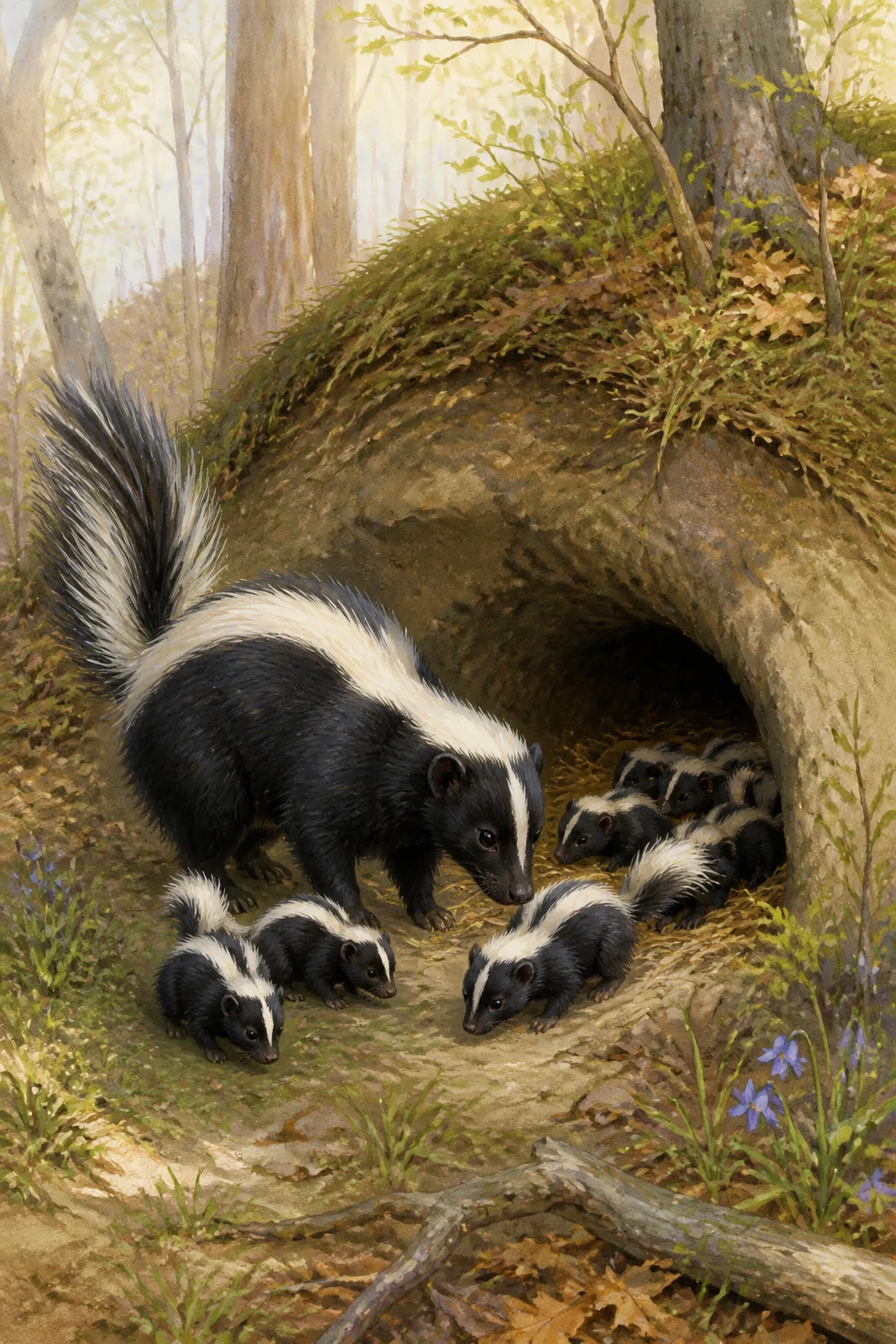
Ko pa so se skotili mali svizci, je bilo vse drugače. Ponoči še niso mogli sami iskat hrane, njihovi želodčki pa so bili tako drobceni in je šlo vanje naenkrat tako malo, da jih je bilo treba zelo pogosto polniti. Gospoda Svizca zdaj nikoli ni bilo doma in vsa skrb je padla na njegovo marljivo ženo.
»Saj veš, draga moja,« ji je rekel, »da bi ti bil samo v napoto, če bi ostal doma, saj z otroki nisem tako spreten in potrpežljiv kakor ti. Ne, mislim, da bom odšel in poskrbel za nekaj opravkov, ki sem jih zadnje čase precej zanemarjal. Ko bodo otroci odrasli in boš imela več časa zame, se bom vrnil k tebi.«
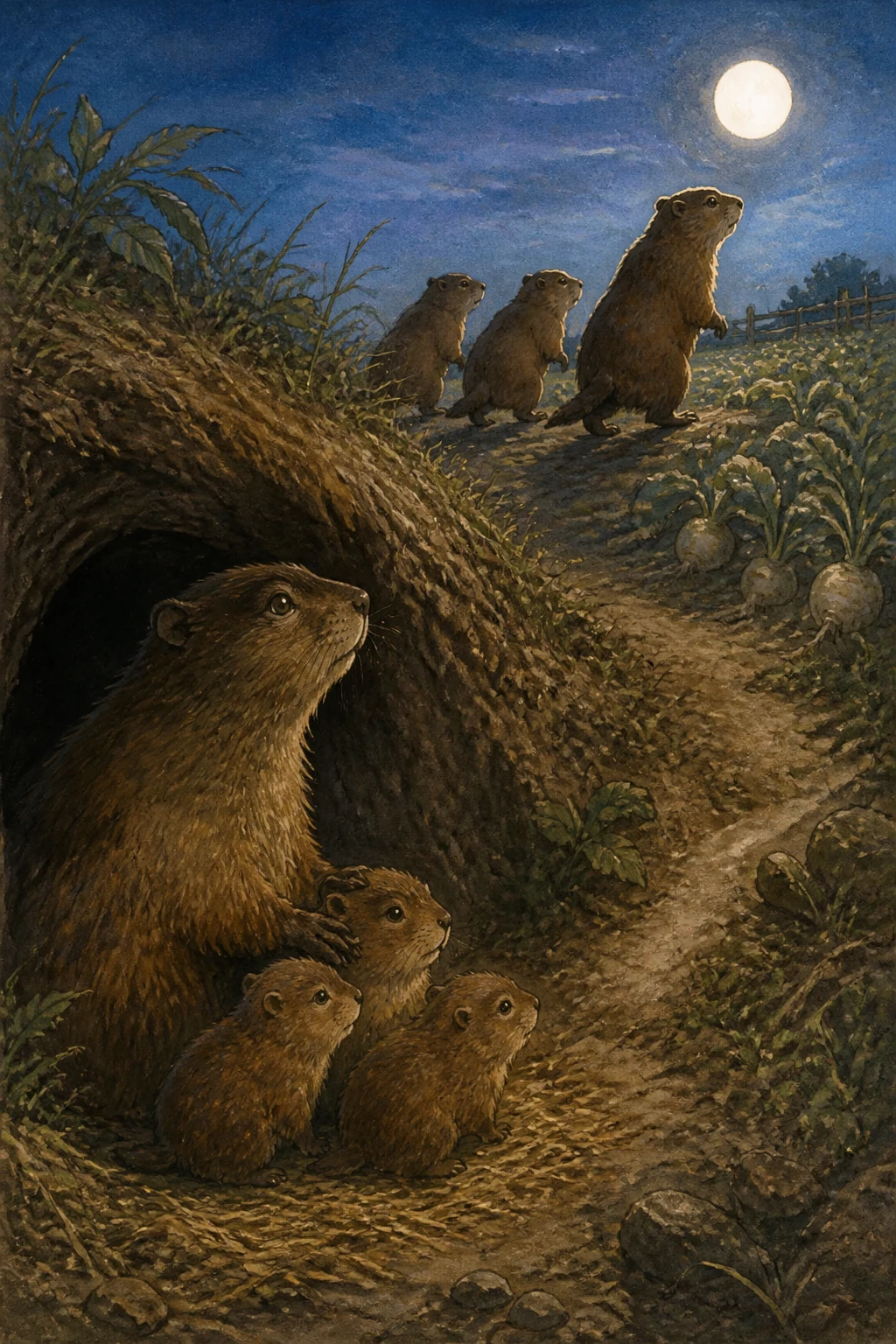
Nato je gospod Svizec odracal k druščini prijateljev, ki so svojim ženam pravkar povedali nekaj podobnega, in vsi skupaj so odšli na kmetovo njivo z repo, kjer so se imenitno zabavali do jutra. Gospa Svižčevka je gledala za njim, ko je racal proč, in si želela, da bi lahko šla z njim. Tako čeden je bil, ko mu je mesečina sijala na dolgo, gosto, rdečkasto dlako in osvetljevala črno progo na hrbtu, kjer so bile konice dlak sive. Bil je debel in se je ves tresel v svoji ohlapni koži, in ko se je ustavil, sedel na zadnje tace, ji pomahal s sprednjimi in si pogladil dlako po obrazu, se ji je zdel prav tako čeden kakor zgodaj spomladi, ko sta se prvič srečala. To je bilo na gredi pastinaka, kjer je bilo hrane na pretek, dokler kmet ni odkril, da tja zahajajo svizci, ter izkopal še preostalo zelenjavo in jo spravil v klet. Kakšne polnočne pojedine sta si tam privoščila skupaj! Gospa Svižčevka je pravila, da odtlej nikoli ni videla pastinaka, ne da bi se spomnila njunega dvorjenja.
Nekoč je bila prav tako čedna kakor on in občudovali so jo še mnogi drugi svizci. Zdaj pa je bila suha in le redko je utegnila s sprednjimi tačkami počesati svoj kožuh. Z njim ni mogla na njivo z repo, ker se ni hotela tako oddaljiti od svojih mladičkov. Ob tej misli se je spomnila, da mora v rov v pobočju pogledat, kaj počnejo. Potem je legla in jim pustila, da so iz njenega telesa sesali toplo mleko. Medtem ko so sesali, jih je otipavala in razmišljala, kako hitro rastejo. Še malo, pa bodo lahko sami racali po poljih in predirljivo žvižgali, ko bodo švigali v svoje rove. »Ah,« je rekla, »to je lepše od njiv z repo ali celo od pastinaka.«
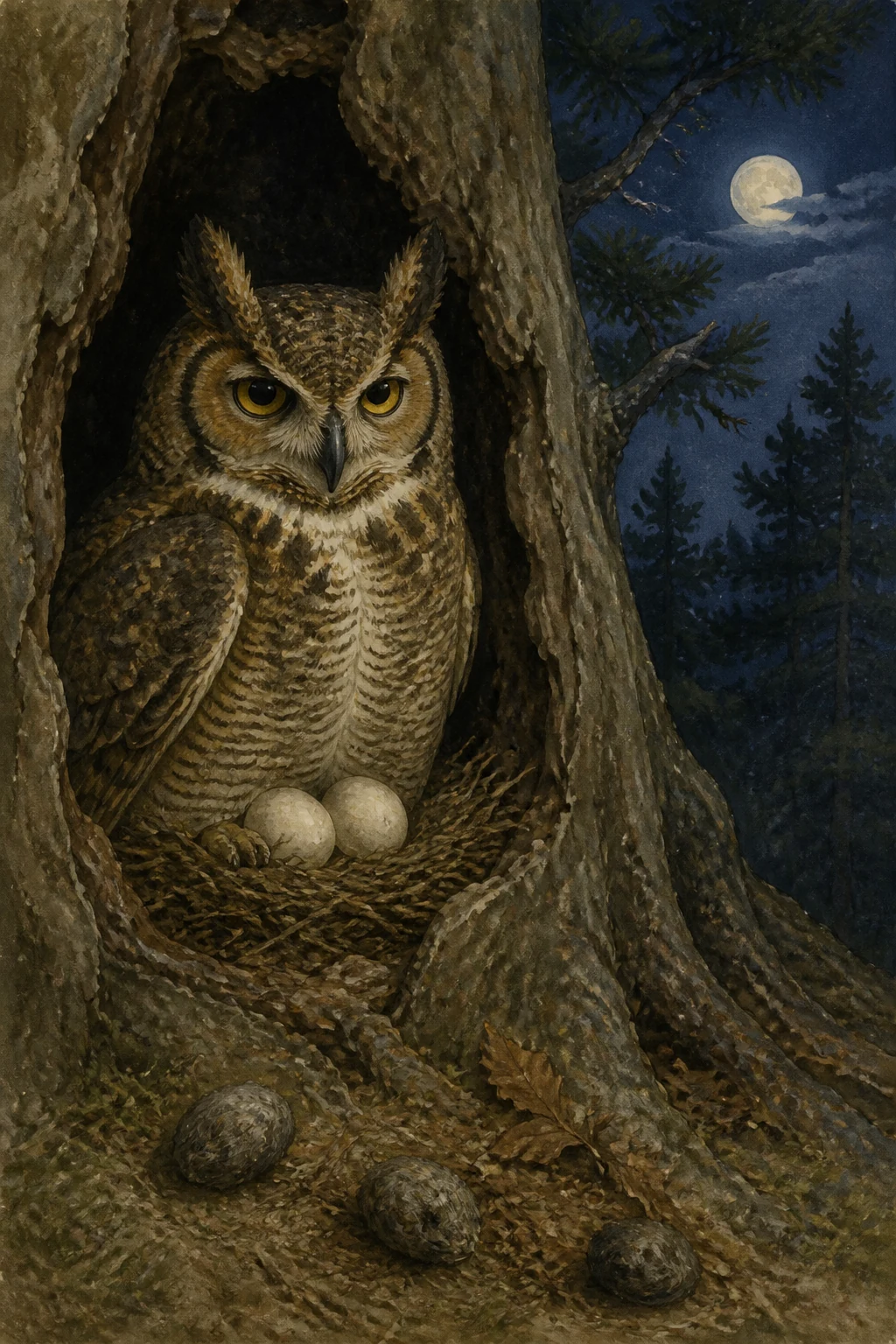
Ko so se najedli, jih je mama zapustila in odšla iskat hrano. Že od nekdaj je bila zelo ješča, zdaj pa je morala pojesti še toliko več, da je imela mleko za svoje mladičke. Pogosto je pomislila, da bi se njihov oče morda lahko naučil pomagati pri hranjenju, ko bi svižčji mladički lahko jedli še kaj drugega. Na to je še posebej mislila, kadar je videla velikega uharja, kako nosi domov hrano sinu in hčerki. »Tako je pač, če hodiš po štirih,« je rekla, »in ker za nič na svetu ne bi hotela biti sova, se ne bom pritoževala.« Potem je bila boljše volje.
Kadar je zapuščala rov, je vedno rekla: »Zdaj grem jest in ne bo me prav dolgo. Nikar se ne bojte, saj imate varen rov, zunaj pa je prijetno temno.«
Otroci so zaklicali: »In zagotovo se boš vrnila pred sončnim vzhodom?« »Zagotovo,« je vselej odgovorila, ko je odracala proč. Potem so otroci spokojno počivali v svojem gnezdu v rovu.
Zdaj pa je bila gospa Svižčevka lačna in zunaj je bil že beli dan. Vedela je, da je to zato, ker so bili njeni otroci vsak dan večji in so potrebovali čedalje več mleka. Zato je morala več jesti, sicer mleka ne bi bilo dovolj, ko bi si ga zaželeli. Vedela je, da bo morala začeti hoditi po hrano tudi podnevi, ne le ponoči, in vesela je bila, da kar dobro vidi, če ji sonce le ne sveti naravnost v oči.
»Otroci,« jim je rekla, ko so ravno končali jutranjo malico, »zelo sem lačna in grem jest. Tukaj boste povsem varni in želim, da ste pridni, dokler me ne bo.«
Mali svizci so začeli jokati in se s svojimi šibkimi tačkami oprijemati njenega kožuha. »Oh, ne hodi,« so govorili. »Prosim, ne hodi. Nočemo biti sami podnevi. Strah nas je.«
»Moram,« je rekla, »sicer ne bom imela mleka za vas. Saj vendar tudi ne bi hoteli, da bi ves dan ležala tukaj in bila preveč lačna, da bi lahko zaspala, kajne?« »N-ne,« so rekli, »ampak kmalu se boš vrnila, kajne?«
»Da,« je rekla, se otresla njihovih oklepajočih se tačk, odrinila hčerko, ki se je je znova oprijela, in odracala proč, kolikor hitro je mogla. Prvič je bila zunaj pri dnevni svetlobi in vse se ji je zdelo nenavadno. Barve so bile preveč žive, hrupa je bilo, kot kaže, več kot navadno in srečala je kar nekaj takih, ki jih še nikoli ni videla. Za hip se je ustavila, da si ogleda gnezdo zlatoglavega gozdnega pevca. Ptičja mama je bila v njem in je sedela čisto pri miru ter se pogumno držala, čeprav jo je bilo zelo strah.
»Dobro jutro,« je rekla gospa Svižčevka. »Pravkar sem občudovala vaše gnezdo. Pri dnevni svetlobi ga še nikoli nisem videla.« »Dobro jutro,« je odgovorila zlatoglava pevka. »Vesela sem, da vam je moje gnezdo všeč, vendar upam, da ne jeste radi mesa.«
»Mesa?« je odvrnila gospa Svižčevka. »Nikoli se ga niti ne dotaknem.« Nasmehnila se je in pokazala vse zobe. »Oh,« je vzkliknila zlatoglava pevka, »vidim, da res ne, saj imate glodače, precej podobne zajčjim.« Nato je skočila iz gnezda in pustila gospe Svižčevki, da pokuka vanj ter si ogleda, kako je izdelano znotraj, pa tudi štiri pegasta jajčka, ki so ležala v njem.
»Prečudovito gnezdo imate,« je rekla gospa Svižčevka, »in ta jajčka so pravi lepotci. Toda otrokom sem obljubila, da bom pohitela. Nasvidenje.« Veselo je odracala dalje, gospa Zlatoglava pevka pa se je spet namestila na jajčka in razmišljala, kako prijeten obisk je imela ter kako izvrstna in razumna gospa je ta Svižčevka!
Ves ta čas so se otroci doma pogovarjali o sebi in o tem, kar jim je povedala mama. Nekoč je nastala dolga tišina, ki je trajala, dokler ni bratec rekel: »Mene ni strah, pa vas?«
»Seveda nas ni,« so rekle. »Saj se nimamo česa bati,« je rekel on. »Prav ničesar,« so rekle. »Pa tudi sicer me ne bi bilo strah,« je rekel.
»Nas tudi ne,« so odgovorile sestrice. Spet je nastala dolga tišina. »Rekla je, da bomo prav tako varni, kot če bi bila tema,« je rekla najstarejša sestrica.
»Seveda,« je rekel bratec. »In rekla je, da se bo vrnila, kakor hitro bo mogla,« je rekla druga sestrica. »Ko bi le že prišla,« je rekla najmanjša sestrica.
Spet je nastala dolga tišina. »Saj menda ne bo kdo prišel sem samo zato, da bi nas prestrašil?« je vprašala druga sestrica. »Poslušaj,« je rekel bratec, »ko bi le nehala govoriti reči, ob katerih človeka postane strah.«
»Menda ja nisi prestrašen!« so vzkliknile vse tri sestrice hkrati. Najmanjša pa je dodala: »Pa si res! Čutim, kako se treseš.«
»No, pa kaj potem,« je rekel bratec. »Drugih me že ni strah. Ko bi bilo le temno, mi ne bi bilo nič hudega.« »Oh, se tudi ti bojiš dnevne svetlobe?« je vzkliknila vsaka od sestric. »Jaz tudi!« Potem so se vsi skupaj tresli.
»Veste, kaj naredimo?« je rekla najmanjša sestrica. »Nehajmo gledati proti svetlemu koncu rova, stisnimo se skupaj, pokrijmo si oči in se pretvarjajmo, da je noč.« Tako so tudi storili in počutili so se bolje. Celo igrali so se, da slišijo redke nočne glasove. Zunaj je zakrakala vrana in bratec je rekel: »Ste slišale tisto sovo? To je bil veliki uhar, saj veste, tisti, ki je moral valiti jajca.«
Ko je zakrakala še ena vrana, je najmanjša sestrica vprašala: »Je bila to njegova sestrična, mala uharica?« »Da,« je odgovorila najstarejša sestrica. »Ona je tista, ki je velikemu uharju nosila hrano.«
Tako so zabavali sebe in drug drugega in prav dobro jim je šlo, razen kadar so tu in tam za drobno špranjo odprli oči, da bi videli, ali se nemara zares že temni. Tedaj so morali začeti znova od začetka. Naposled je prišla mama in kakšno olajšanje je bilo to! Kako vesela je bila, da se je vrnila, in koliko jim je imela povedati! Vse o gnezdu zlatoglavega gozdnega pevca in štirih jajčkih v njem, pa tudi o tem, kako zlatoglavi gozdni pevci noči prespijo, dneve pa preživljajo ob delu in igri.
»Le ali bo male zlatoglave pevčke strah, ko bodo morali podnevi ostati sami?« je rekla najmanjša sestrica. »Bolj bi jih bilo strah, če bi morali ostati sami ponoči,« je rekla mama.
»Ponoči!« so vzkliknili vsi mali svizci. »Saj je vendar takrat tema!« »Morda bi se bali teme,« je rekla mama. Tedaj so se otroci zasmejali, prepričani, da jih mama draži. Popili so nekaj mleka in zaspali kakor pridni mali svizci, toda veliki bratec se je še napol v snu na glas zasmejal ob misli, da bi bilo male zlatoglave pevčke ponoči strah. Lahko je razumel, da se kdo boji dnevne svetlobe, ampak teme —!
Izvirnik
088 THE TIMID LITTLE GROUND HOG
Naslednje strani prikazujejo izvirno besedilo za primerjavo.
It was not often that the little Ground Hogs were left alone in the daytime. Before they were born their mother had been heard to say that she had her opinion of any Ground Hog who would be seen out after sunrise. Mr. Ground Hog felt in the same way, and said if he ever got to running around by daylight, like some of his relatives, people might call him a Woodchuck. He thought that any one who ate twigs, beets, turnips, young tree-bark, and other green things from sunset to sunrise ought to be able to get along until the next sunset without a lunch. He said that any Ground Hog who wanted more was a Pig.
After the baby Ground Hogs were born, matters were different. They could not go out at night to feed for themselves, and their stomachs were so tiny and held so little at a time that they had to be filled very often. Mr. Ground Hog was never at home now, and the care all fell upon his hard-working wife.
"You know, my dear," he had said, "that I should only be in the way if I were to stay at home, for I am not clever and patient with children as you are. No, I think I will go away and see to some matters which I have rather neglected of late. When the children are grown up and you have more time to give me, I will come back to you."
Then Mr. Ground Hog trotted away to join a party of his friends who had just told their wives something of the same sort, and they all went together to the farmer's turnip patch and had a delightful time until morning. Mrs. Ground Hog looked after him as he trotted away and wished that she could go too. He looked so handsome with the moonlight shining down on his long, thick, reddish fur, and showing the black streak on his back where the fur was tipped with gray. He was fat and shaky, with a baggy skin, and when he stopped to sit up on his haunches and wave his paws at her and comb his face-fur, she thought him just as handsome as he had been in the early spring when they first met. That had been in a parsnip patch where there was good feeding until the farmer found that the Ground Hogs were there, and dug the rest of his vegetables and stored them in his cellar. Such midnight meals as they had eaten there together! Mrs. Ground Hog said she never saw a parsnip afterward without thinking of their courtship.
She had been as handsome as he, and there were many other Ground Hogs who admired her. But now she was thin and did not have many chances to comb her fur with her fore paws. She could not go with him to the turnip patch because she did not wish to go so far from her babies. Thinking of that reminded her to go into her sidehill burrow and see what they were doing. Then she lay down and let them draw the warm milk from her body. While they were feeding she felt of them, and thought how fast they were growing. It would be only a short time before they could trot around the fields by themselves and whistle shrilly as they dodged down into their own burrows. "Ah!" said she, "this is better than turnip patches or even parsnips."
When they had finished, their mother left them and went out to feed. She had always been a hearty eater, but now she had to eat enough more to make the milk for her babies. She often thought that if Ground Hog babies could eat anything else their father might have learned to help feed them. She thought of this especially when she saw the Great Horned Owl carrying food home to his son and daughter. "It is what comes of being four-legged," said she, "and I wouldn't be an Owl for anything, so I won't grumble." After this she was more cheerful.
When she left the burrow she always said: "I am going out to feed, and I shall not be gone very long. Don't be afraid, for you have a good burrow, and it is nice and dark outside."
The children would cry: "And you will surely come home before sunrise?"
"Surely," she always answered as she trotted away. Then the children would rest happily in their burrow-nest.
But now Mrs. Ground Hog was hungry, and it was broad daylight. She knew that it was because her children grew bigger every day and had to have more and more milk. This meant that she must eat more, or else when they wanted milk there would not be enough ready. She knew that she must begin to feed by day as well as by night, and she was glad that she could see fairly well if the sun were not shining into her eyes.
"Children," said she to them, just as they finished their morning lunch, "I am very hungry and I am going out to feed. You will be quite safe here and I want you to be good while I am gone."
The young Ground Hogs began to cry and clutch at her fur with their weak little paws. "Oh, don't go," they said. "Please don't go. We don't want to stay alone in the daytime. We're afraid."
"I must," said she, "or I shall have no milk for you. And then, you wouldn't have me lie here all day too hungry to sleep, would you?"
"N-no," said they; "but you'll come back soon, won't you?"
"Yes," said she, and she shook off their clinging paws and poked back the daughter who caught on again, and trotted away as fast as she could. It was the first time that she had been out by daylight, and everything looked queer. The colors looked too bright, and there seemed to be more noise than usual, and she met several people whom she had never seen before. She stopped for a minute to look at an Ovenbird's nest. The mother-bird was inside, sitting there very still and brave, although she was much frightened.
"Good-morning," said Mrs. Ground Hog. "I was just admiring your nest. I have never seen it by daylight."
"Good-morning," answered the Ovenbird. "I'm glad you fancy my nest, but I hope you don't like to eat meat."
"Meat?" answered Mrs. Ground Hog. "I never touch it." And she smiled and showed all her teeth.
"Oh," exclaimed the Ovenbird, "I see you don't, for you have gnawing-teeth, rather like those of the Rabbits." Then she hopped out of the nest and let Mrs. Ground Hog peep in to see how the inside was finished and also to see the four speckled eggs which lay there.
"It is a lovely nest," said Mrs. Ground Hog, "and those eggs are beauties. But I promised the children that I would hurry. Good-by." She trotted happily away, while Mrs. Ovenbird settled herself upon her eggs again and thought what a pleasant call she had had and what an excellent and intelligent person Mrs. Ground Hog was!
All this time the children at home were talking together about themselves and what their mother had told them. Once there was a long pause which lasted until the brother said: "I'm not afraid, are you?"
"Of course not," said they.
"Because there isn't anything to be afraid of," said he.
"Not anything," said they.
"And I wouldn't be afraid anyway," said he.
"Neither would we," answered the sisters.
There was another long pause.
"She said we'd be just as safe as if it were dark," said the big sister.
"Of course," said the brother.
"And she said she'd come back as soon as she could," said the second sister.
"I wish she'd come now," said the smallest sister.
There was another long pause.
"You don't suppose anybody would come here just to scare us, do you?" asked the second sister.
"See here," said the brother, "I wish you'd quit saying things to make a fellow afraid."
"You don't mean that you are frightened!" exclaimed the three sisters together. And the smallest one added: "Why, you are, too! I can feel you tremble."
"Well, I don't care," said the brother. "I'm not afraid of people, anyhow. If it were only dark I wouldn't mind."
"Oh, are you afraid of the daylight too?" cried each of the sisters. "So am I!" Then they all trembled together.
"I tell you what let's do," said the smallest sister. "Let's all stop looking toward the light end of the burrow, and cuddle up together and cover our eyes and make believe it's night." They did this and felt better. They even played that they heard the few noises of the night-time. A Crow cawed outside, and the brother said, "Did you hear that Owl? That was the Great Horned Owl, the one who had to hatch the eggs, you know."
When another Crow cawed, the smallest sister said, "Was that his cousin, the Screech Owl?"
"Yes," answered the big sister. "He is the one who used to bring things for the Great Horned Owl to eat."
So they amused themselves and each other, and really got along very well except when, once in a while, they opened their eyes a little crack to see if it were not getting really dark. Then they had to begin all over again. At last their mother came, and what a comfort it was! How glad she was to be back, and how much she had to tell them! All about the Ovenbird's nest and the four eggs in it, and how the Ovenbirds spent their nights in sleeping and their days in work and play.
"I wonder if the little Ovenbirds will be scared when they have to stay alone in the daytime?" said the smallest sister.
"They would be more scared if they had to stay alone at night," said their mother.
"At night!" exclaimed all the young Ground Hogs. "Why, it is dark then!"
"They might be afraid of the darkness," said their mother. Then the children laughed and thought she was making fun of them. They drank some milk and went to sleep like good little Ground Hogs, but even after he was half asleep the big brother laughed out loud at the thought of the Ovenbird babies being scared at night. He could understand any one's being afraid of daylight, but darkness----!
Nadaljuj z branjem