Prevod
_Through the machinations of a Queen, Miuccio is sent into one peril after another, but with the help of an enchanted Bird he emerges honorably from them all. At last the Queen dies, and Miuccio, discovered to be the King’s son, has his mother set free, and she becomes the wife of that crowned head._ _The tale of the Seven Little Rinds so enriched the soup of the Prince’s pleasure that the fat fairly overflowed as he heard of Saporita’s ignorant cunning and cunning ignorance, which Tolla had served up with such relish. But Popa, unwilling to yield so much as a crumb to Tolla, embarked upon the sea of storytelling with the tale that follows._ Whoever seeks another’s harm finds his own hurt, and whoever sets out to catch this person or that by treachery and deceit often falls into the very snares he has laid, as you shall hear of a Queen who built with her own hands the trap that caught her by the foot.
Once upon a time, they say, there was a King of Auta Marina who, because of the cruelty and tyranny he practiced, had his royal throne seized by a certain sorceress while he was away with his wife at a little castle far from the city. He therefore had prayers offered to a wooden statue that gave certain oracular answers, and it replied that he would recover his kingdom when the sorceress lost her sight. But the sorceress was not only well guarded: she could sniff out the people he sent to harm her, and dealt with them like dogs. Driven to despair, and to spite the sorceress, he robbed every woman of that place whom he could get into his clutches first of her honor and then of her life. After hundreds upon hundreds, brought there by their ill fortune, had been stripped of their good names and cut short in their days, there came among the others a young woman named Porziella, the most exquisite creature to be seen anywhere on earth. Her hair was a pair of handcuffs for Love’s constables; her forehead a tablet displaying the prices in the shop of amorous delights; her eyes two beacons guiding the ships of desire safely into the harbor of contentment; her mouth a honeycomb between two hedges of roses. When she fell into the King’s hands, and he had put her through the usual drill, he meant to kill her like the rest;
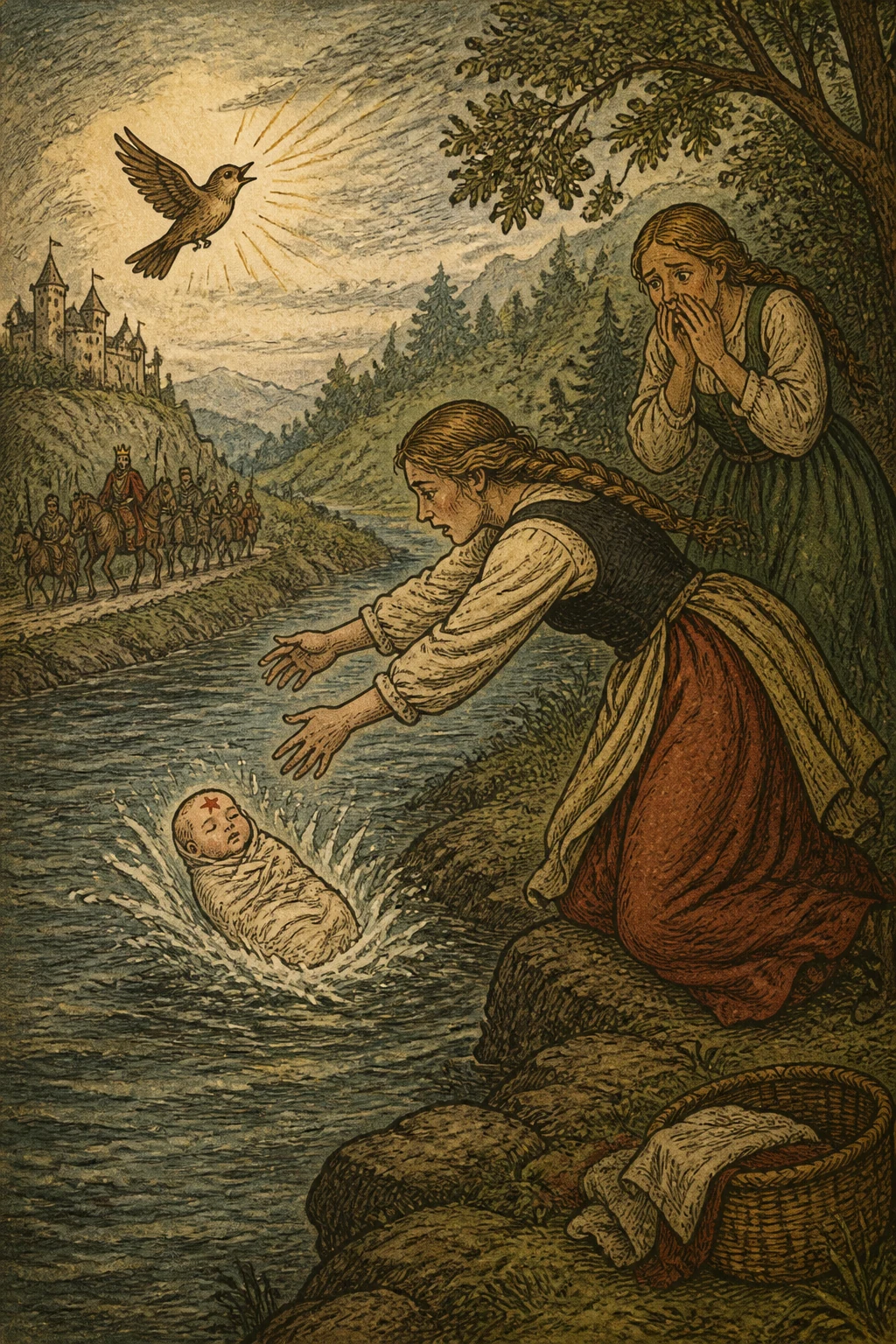
but at the very moment he raised his dagger, a bird dropped some root or other upon his arm, and such a trembling seized him that the weapon fell from his hand. This bird was a Fairy who, a few days before, had been sleeping in a wood, where beneath the awning of the shadows desire played for terror’s stakes. A certain Satyr was about to do vile things to her when Porziella woke her; and in gratitude for this kindness she had ever since followed the girl’s footsteps, seeking to repay her. Now, when the King saw what had happened, he imagined that the beauty of her face had laid this restraint upon his arm and cast this spell upon his dagger, preventing them from ripping her open as they had so many others. He decided that one madman in the house was enough, and that he would not stain his instrument of death with blood as he had stained his instrument of life. Instead, she should die walled up in an attic of his palace. And so he did indeed have the lovely, luckless girl shut in between four walls, leaving her neither food nor drink, so that she might waste away little by little. Seeing her in this plight, the Bird comforted her in human speech, telling her to take heart: in return for a kindness she had done it, it would help her with its own lifeblood. However much Porziella begged, it would never say who it was, only that it was in her debt and would leave nothing undone to serve her. Seeing that the poor girl was faint with hunger, it flew out and returned at once with a sharp-pointed knife stolen from the King’s pantry. It told her to make a hole, little by little, in one corner of the floor, which would open into the kitchen, from which it could always fetch something to keep her alive. Porziella worked away for some time, digging until she had made a passage for the Bird. Watching until the Cook went to fetch a bucket of water from a fountain, it slipped down through the hole, snatched up a fine chicken that was keeping warm, and carried it to Porziella. To relieve her thirst, not knowing how to bring her anything to drink, it flew to the storeroom, where bunches of grapes hung in abundance, and brought her a handsome cluster. This it continued to do day after day. Meanwhile Porziella, who had become pregnant, gave birth to a beautiful boy, whom she nursed and brought up with the Bird’s constant help. When he had grown, the Fairy advised his Mother to enlarge the hole, removing enough little floorboards to let Miuccio—for that was the boy’s name—pass through. Once she had lowered him with some cords the Bird brought her, she was to put the boards back in place, so that no one would see where he had come down. Porziella did as the Bird advised, and, bidding her Son never tell where he had come from or whose child he was, lowered him while the Cook was out. When the Cook returned and saw so handsome a boy, he asked him who he was, how he had got in, and what he had come to do. Miuccio, remembering his mother’s advice, said he had lost his way and was looking for a master. During this exchange the Steward arrived, and, seeing so spirited a Lad, thought he would make a good page for the King. He took him to the royal apartments, and the King, seeing him so handsome and engaging, like a precious jewel, took an instant liking to him, keeping him as a page in his service and as a son in his heart. He had him taught all the exercises befitting a Gentleman, until he grew into the most accomplished youth at Court. The King loved him far more than he loved his stepson, and for this reason the Queen began to dislike him and find him distasteful. Envy and malice gained ground all the faster as the favors and kindnesses the King bestowed on Miuccio smoothed their way. At last she resolved to smear so much soap upon the steps of his fortune that he would slip from top to bottom. One evening, after they had tuned their instruments together and were making their own private music, the Queen told the King that Miuccio had boasted he could build three castles in the air. The King, whether because his wits were muddled or because he wished to please his wife, sent for Miuccio next morning, when the Moon, schoolmistress of the shadows, gives her pupils a holiday for the festival of the Sun. He ordered him, whatever it took, to build the three castles in the air he had promised, or else he would have him dance in the air himself. Hearing this, Miuccio went to his room and began to lament bitterly, reflecting how brittle was the favor of princes, and how briefly their kindness lasted. While he was weeping floods of tears, along came the Bird, who said, “Take heart, Miuccio, and have no fear while you have this fellow beside you, for I can pull you out of the fire.” So saying, it told him to take cardboard and glue and make three great castles. Then it summoned three huge Griffins and fastened one castle to each. As they flew through the air, Miuccio called the King, who came running with the whole Court to see the spectacle. At the sight of Miuccio’s ingenuity, the King grew fonder of him than ever, and showered him with extraordinary caresses. This poured fresh fuel upon the Queen’s envy and fire upon her anger, for she saw that nothing was turning out as she wished. Not a waking day passed without her thinking, nor a sleeping night without her dreaming, of some way to remove this thorn from her eyes. And so, a few days later, she said to the King, “My husband, now is the time to return to our former grandeur and the pleasures of days gone by, for Miuccio has offered to blind the Fairy, and with one gouging of eyes win back your lost Kingdom.” The King, feeling himself touched upon his sorest spot, sent for Miuccio that instant and said, “I am greatly astonished that, when I love you so dearly and you can restore me to the throne from which I have fallen, you should remain so unconcerned and take no thought of rescuing me from my misery. You see me reduced from a Kingdom to a wood, from a City to a wretched little Castle, and from commanding so many people to being barely served by a handful of bread-gobblers, loaf-slicers, and broth-ladlers. Unless you want my displeasure, go this very moment and blind the Fairy who holds what is mine. By closing her shops you will reopen the warehouse of my greatness; by putting out those lanterns you will relight the lamps of my honor, which now stand dark and blackened.”
Hearing this proposal, Miuccio wanted to reply that the King had been misinformed and mistaken him for someone else, for he was neither a crow to peck out eyes nor a privy-cleaner to clear out holes. But the King cut him short: “No more words! Such is my will, and so it shall be done. Consider that, in the mint of this brain of mine, I have set up the scales: here is your reward if you do your duty, and here your punishment if you fail to do as I command.” Miuccio, who could not butt heads with a stone, and had to deal with a man—woe to the mother whose daughter fell into his hands!—went off into a corner to bewail his lot. There the Bird found him and said, “Is it possible, Miuccio, that you must always drown in a glass of water? If I had been killed, could you make any greater outcry?
“Do you not know that I care more for your life than for my own? So do not lose heart, but follow me, and you shall see what little Meniello can do.” It took wing and alighted in the wood, where it began to warble, and a flock of birds gathered round. It asked which of them felt able to take away the Sorceress’s sight: whoever did so would receive a safeguard against the talons of sparrowhawks and goshawks, and a pass exempting it from the guns, springes, crossbows, and snares of hunters. Among them was a swallow that had built its nest on a beam in the royal palace and hated the Sorceress, who, in performing her accursed spells, had often driven it from her chamber with her fumigations. Partly from a desire for revenge, partly to win the reward the Bird promised, it offered to undertake the task. Flying like a thunderbolt to the City and entering the palace, it found the Fairy stretched upon a couch, being cooled with a fan by two waiting-women. The Swallow swooped straight down upon the Fairy’s eyes and, dropping its dung into them, robbed her of her sight. Finding night upon her at midday, and knowing that with this closing of her customs house her trade in the Kingdom was ended, she screamed like a damned soul, renounced the scepter, and went to burrow in certain caves, where she spent the rest of her days battering her head against the walls. Once the Sorceress had gone, the Councilors sent ambassadors to the King, bidding him return to enjoy his own home, since the Sorceress’s blindness had allowed them to see this happy day. At the same time as they arrived, Miuccio also appeared, and, prompted by the Bird, said to the King, “I have paid you in good coin: the Sorceress is blind, and the kingdom is yours. If I deserve any payment for this service, I ask only that you leave me alone with my troubles, without exposing me to such dangers again.” The King embraced him most lovingly, bade him put on his cap, and seated him beside him. Heaven alone could tell you how the Queen swelled with rage; and the rainbow of colors that crossed her face foretold the storm of ruin she was brewing in her heart against poor Miuccio. Not far from this castle lived a most ferocious Dragon, born at the same birth as the Queen. Her Father had summoned the Astrologers to read the meaning of this event, and they declared that his daughter would live as long as the Dragon lived, and that when one died the other must necessarily die too. Only one thing could restore the Queen to life: her temples, the hollow of her breast, her nostrils, and her wrists must be anointed with the blood of that same Dragon. Now the Queen, knowing the creature’s fury and strength, resolved to send Miuccio into its claws, certain that it would make a single mouthful of him, and that he would be no more than a strawberry in a Bear’s throat. Turning to the King, she said, “Upon my word, Miuccio is the treasure of your household, and you would be ungrateful not to love him, all the more since he has let it be understood that he means to kill the Dragon. Though the creature is my brother, since he is so much your enemy I care more for one hair of a husband than for a hundred brothers.” The King, who hated the Dragon mortally and did not know how to rid himself of it, sent for Miuccio at once and said, “I know you can turn your hand to anything you please; and so, having done so much already, you must do me one more favor, and afterward turn me whichever way you wish. Go this very instant and kill the Dragon. You will render me a signal service, and I shall reward you handsomely.” At these words Miuccio nearly lost his senses, and when at last he could get the words out, he said to the King, “Now here is a fresh headache! Have you taken it into your head to wear me out? Is my life made of black goatskin, that you waste it so recklessly? This is no peeled pear to drop into my mouth: it is a Dragon, which tears with its claws, smashes with its head, shatters with its tail, shreds with its teeth, poisons with its eyes, and kills with its breath. How can you send me to my death? Is this the worthless office I am given for giving you a Kingdom? What accursed soul has thrown this die upon the table?
“What son of Hell has put you up to these tricks and stuffed you full of such talk?” But the King, who was as light as a ball when it came to being bounced about, yet harder than stone in holding to anything he had once said, dug in his heels. “You have done so much, and now you fail at the best of it! No more words. Go and rid my Kingdom of this plague, unless you wish me to rid you of your life.” Wretched Miuccio, who received now a favor, now a threat, now a stroke upon the cheek, now a kick in the backside, now heat and now cold, reflected how changeable were the fortunes of Court, and wished he had never so much as tasted the King’s acquaintance. But knowing that to argue with great men is folly, and as good as plucking a Lion’s beard, he withdrew to one side, cursing the fate that had brought him to Court only to cut short the hours of his life. As he sat on a doorstep with his face between his knees, washing his shoes with tears and warming his nether weights with sighs, along came the Bird with a herb in its beak. Dropping it into his lap, it said:
“Get up, Miuccio, and rest assured that you will not be playing a losing game with your own days, but sweeping the board of the Dragon’s life. Take this herb, and when you reach that ugly creature’s cave, throw it inside. At once such an overpowering sleep will seize him that he will nod off where he lies. Then take a good stout blade and, between one slash and the next, finish him off and come away. Things will turn out better than you think. Enough: I know very well what I have up my sleeve, and we have more time than money, and whoever has time has life.” At these words Miuccio rose, tucked a great wagoner’s knife beneath his clothes, took the herb, and set out for the Dragon’s court. It lay beneath a mountain so well grown that the three mountains the Giants used as a staircase would not have reached its waist. Arriving there, he threw the herb into the cavern, and the Dragon fell asleep at once. Miuccio began hacking it to pieces. At the very moment he was mincing the beast, the Queen felt her heart being minced, and, finding herself in a desperate state, recognized her mistake: she had bought her death with ready money. Calling her husband, she told him what the Astrologers had foretold, how her life hung upon the Dragon’s death, and how she feared Miuccio had killed it, since she felt herself slipping away little by little;
to which the King replied, “If you knew the Dragon’s life was the prop of your own and the root of your days, why did you make me send Miuccio there? Who is to blame? You have brought this harm upon yourself, and you may weep for it yourself. You broke the glass, and you must pay for it.” And the Queen answered, “I never imagined that such a little scrap of a boy would have the skill and strength to bring down a creature that thought nothing of an army. I meant him to leave his rags there;
“but since I have reckoned without the host, and the boat of my designs has gone aground, do me one favor, if you love me. As soon as I am dead, have a sponge soaked in the Dragon’s blood brought here, and anoint all the extremities of my body before burying me.” “That is a small thing beside the love I bear you,” replied the King, “and if the Dragon’s blood is not enough, I shall add my own to satisfy you”;
and as the Queen tried to thank him, her spirit departed with the words, for at that very moment Miuccio had finished chopping the Dragon into tuna steaks. No sooner had he appeared before the King to report what he had done than the King ordered him to go and fetch the Dragon’s blood. But, curious to see the feat Miuccio had accomplished, the King followed behind him. As Miuccio was leaving the palace gate, the Bird met him and said, “Where are you going?” Miuccio answered, “Wherever the King sends me. He keeps me going like a weaver’s shuttle and will not let me rest for an hour.” “To do what?” asked the Bird. “To fetch the Dragon’s blood,” said Miuccio. The Bird replied, “Oh, wretched boy! This Dragon’s blood will be bull’s blood to you, bursting you open inside. With this blood you will bring back to life the evil seed of all your troubles, for she is forever putting you in fresh danger so that you may lose your life;
“and the King, who lets an ugly harpy saddle him, sends you out like a castaway to risk your person, though you are his own blood, a sprout of his own plant. But the poor blind fool does not know you:
“yet the affection within him ought to betray this kinship, so that the services you have rendered this Lord, and his gain in finding so handsome an heir, might persuade him to restore to favor that unfortunate Porziella, your mother. For fourteen years now she has been buried alive in an attic, where a temple of beauty stands walled inside a little chamber.” While the Fairy was speaking thus, the King, who had heard everything, came forward to learn more. Hearing that Miuccio was the son of Porziella, who had conceived by him, and that Porziella was still alive in her chamber, he immediately ordered the wall broken open and her brought before him;
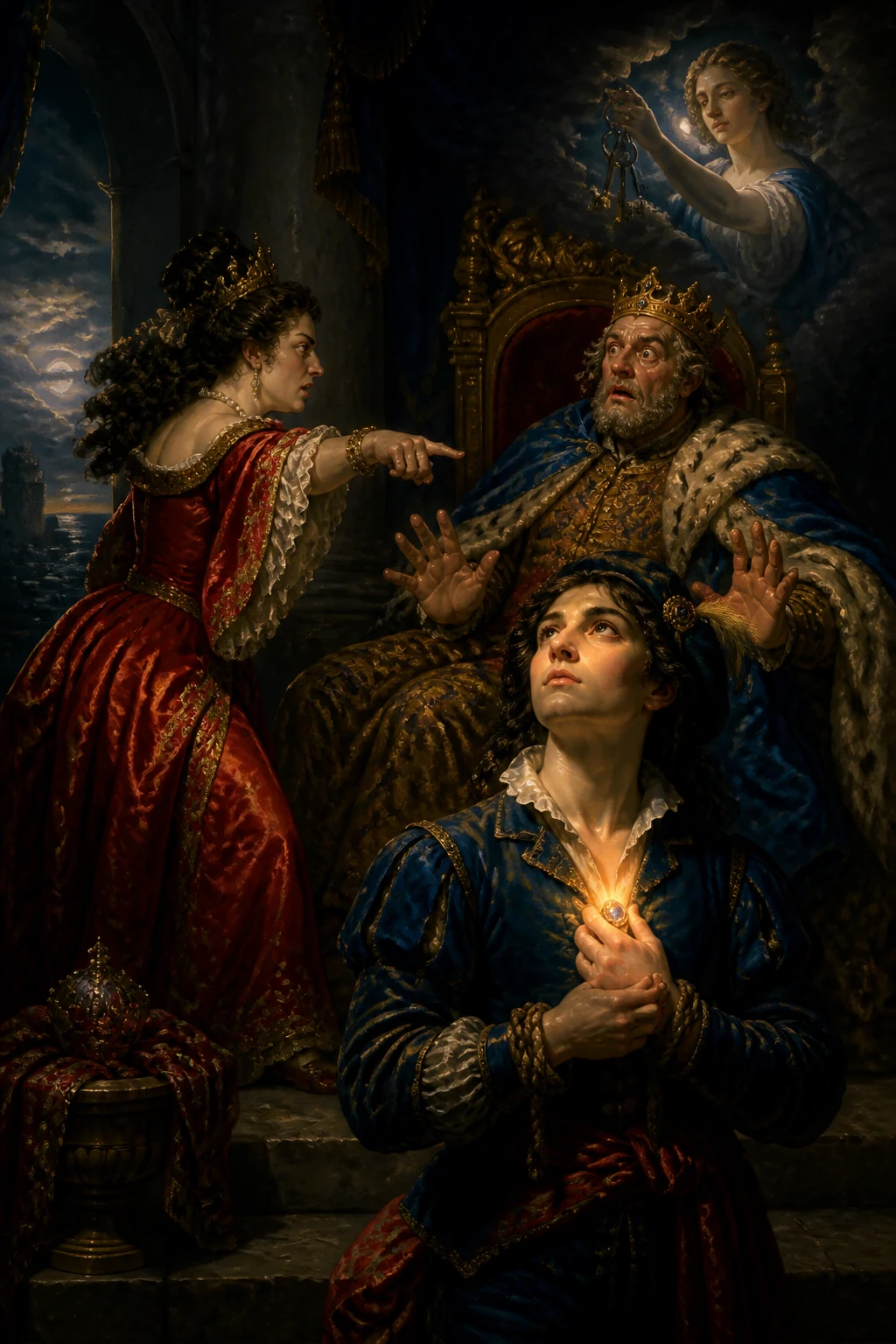
and when he saw her more beautiful than ever, thanks to the Bird’s good care, he embraced her with great love, unable to have enough of clasping now the mother, now the son. He begged her forgiveness for his cruel treatment, and the boy’s for the dangers to which he had exposed him. At once he had her dressed in the dead Queen’s richest garments and took her for his wife. When he learned that she owed her life to the food the Bird had brought, and that his son owed his escape from so many perils to its counsel, he offered it his kingdom and his life. But it said it wanted no reward for all its services except Miuccio for a husband. As it spoke, it became a most beautiful Maiden, who, to the great delight of the King and Porziella, was given to Miuccio as his wife. Thus, while the dead Queen was cast into a tomb, the bridal pair gathered happiness by the bushel. To make the festivities greater still, they set out for their Kingdom, where they were eagerly awaited, acknowledging that all their good fortune came from the Fairy, in return for the kindness Porziella had done her; for, when all is said and done, _A good deed is never lost._
Izvirnik
_Miuccio è mmannato ped’opera de na Regina a diverse pericole, e da tutte, pe l’ajuto de n’Auciello fatato, nne resce a nnore. A la fine more la Regina, e scopierto pe ffiglio de lo Rrè, fa liberare la mamma, che deventa mogliere de chella Corona._ _Lo cunto de le ssette Cotenelle ngrassaje de manera la menestra de lo gusto de lo Prencepe, che lo ggrasso sceva pe ffora sentenno la gnorante malizia, e la maliziosa gnoranzia de Saporita, che cco ttanto sapore era stata scioccarriata da Tolla: ma Popa non volenno cedere mollica a Ttolla, se ’mmarcaje pe lo maro de le ffilastroccole co lo Cunto, che ssecoteja._ Chi cerca lo mmale d’autro, trova lo danno proprio, e chi và pe ’ncappare lo tierzo, e lo quarto a ttrademiento, e a li ’nganne,
spisso ’ncappa a le bescate stesse, ch’aveva parato, comme sentarrite de na Reggina, che se fravecaje co le mmano stesse la tagliola, dove ’ncappaje pe lo pede. Dice, ch’era na vota lo Rrè d’Auta Marina, lo quale pe la canetate, e tirannia, che osava, le fu (mentre era juto a spasso co la mogliere a no Castellotto lontano da la Cetate) occupato lo sieggio rejale da na certa femmena maga; pe la quale cosa fatta pregare na statola de ligno, che dava certe rresposte cervune; chella respose, che tanno recuperarria lo stato, quanno la maga perdesse la vista; e bedenno ca la maga, otra che steva bona guardata, canosceva a lo naso le gente mannate da isso a ffarele despiacere, e nne faceva jostizia de cane, puostose ’n desperazione quanta femmene poteva avere ’n mano de
chillo luogo, pe despietto de la Maga, a tutte levava lo nnore, e co lo nnore la vita; e dapò ciento, e ciento portate da la mala ventura lloro, che rremmasero stompagnate de la repotazione, e sfasciate de li juorne, nce capitaje fra l’autre na giovane chiammata Porziella, la quale era la cchiù pentata cosa, che se potesse vedere sopra tutta la terra. Aveva li capille, Manette de li sbirre d’amore; la fronte tavola, dov’era scritta l’assisa a la poteca de le grazie de li guste amoruse; l’uocchie, duje fanale, che assecuravano li vascielle de le boglie a bottare la proda a lo puorto de li contiente; la vocca na cupa de mele ’n miezo doje sepale de rose, la quale venuta ’n mano de lo Rrè, e ffattala passare a rrollo, la voze accidere comm’all’autre;
ma a lo stisso tiempo, che auzaje lo pugnale, n’auciello lassannole cadere non saccio che rradeca ncoppa a lo vraccio, le venne tale tremmoliccio, che le cadette l’arma de mano. Era st’auciello na Fata, che stanno poco juorne ’nnante a dormire drinto a no vosco, dove sotto la tenna dell’ombre se jocava l’ardore a la galera de lo spaviento, mentre no cierto Satoro le voleva fare le brutte cose, fu scetata da Porziella, che pe sto beneficio secotava sempre le ppedate soje pe le rennere la pareglia. Ora vedenno lo Rrè sto socciesso, penzaje, che la bellezza de chella facce avesse fatto sto sequestro a lo vraccio, e sto ncanto a lo pognale, che no l’avessero sficcagliata, comme de tante autre aveva fatto, però fece penziero, che bastasse no pazzo pe
ccasa, e non tegnere de sango l’ardigno de morte, comme aveva fatto de lo stromiento de vita; ma che mmoresse fravecata a no soppigno de lo palazzo sujo, comme fece con affetto fravecanno l’ammata, e nnegrecata fra quatto mura, senza lassarele drinto nè da magnare, nè da vevere, perchè se ne jesse cessa cessa. L’Auciello che la vedde a sto male termene, co pparole omane la conzolaje, decenno, che stesse de buon’armo, che pe le rennere la gran merzè de no piacere, che l’aveva fatto, l’averria ajutata co lo sango proprio, e pe quanto lo pregasse Porziella, non voze dicere maje chi fosse, schitto, ca l’era obrecato, e che n’averria lassato cosa a ffare pe sservirela; e bedenno ca la povera fegliola era allancata de la famme, dette na volata fora, e
ttornaje subeto co no cortiello appontuto, che levaje da lo repuosto de lo Rrè, e le disse, che a poco a poco avesse fatto no pertuso a no pontone de lo solaro, che sarria juta a rresponnere a la cocina, da la quale averria pigliato sempre quarcosa pe le mantenere la vita; e cossì affatecatese no piezzo Porziella, tanto scavaje, che fece strata a l’Auciello, lo quale abbestato lo Cuoco, ch’era juto a pigliare no cato d’acqua a na fontana; scese pe cchillo pertuso, e nn’auzaje no bello Pollastro, che steva ’n caudo, e lo portaje a Porziella; e perchè remmediasse a la seta, non sapenno comme le portare da vevere, volaje a la despenza, dove era tanta uva appesa, e nce ne portaje no bello piennolo, e cossì fece pe na mano de juorne. Fra chisto miezo
essenno remasa prena Porziella, fece no bello figlio mascolo, lo quale allattaje, e ccrescette co lo continuo ajuto de l’Auciello: ma essenno fatto granne, fu consegliata la Mamma da la Fata, che ffacesse lo pertuso cchiù granne, e levarene tante chiancarelle da lo solaro, che nce capesse Miuccio (che cossì se chiammava lo figliuolo), dapò che l’avesse calato a bascio co ccerte ffonecelle, che l’Auciello portaje, tornasse a mmettere le cchiancarelle a lo luoco sujo, azzò non se vedesse pe dov’era sciso; e fatto Porziella comme le disse l’Auciello, e commannato a lo Figlio, che non decesse maje da dove fosse venuto, nè de chi era figlio, lo calaje a bascio quanno lo Cuoco era sciuto fore, lo quale tornato a ttrasire, e bisto cossì bello
figliulo, l’addemmannaje chi era, da dove era trasuto, e ch’era venuto a ffare; e Miuccio tenenno a mmente lo conziglio de la mamma, disse ca s’era sperduto, e ghieva cercanno patrone. A sto contrasto arrivaje lo Scarco, e bisto no Peccerillo de tanto spireto, penzaje, che ssarria stato buono pe paggio de lo Rrè, e pportatolo a le stanzie rejale, comme fu visto cossì bello, e graziuso, che pareva na gioja, subeto piacette a lo Rrè, tenennolo a lo servizio pe paggio, e a lo core pe ffiglio, facennolo ’mmezzare tutte li sarzizie, che stanno buone a no Cavaliero, tanto, che se crescette lo cchiù bertoluso de la Corte, e lo Rrè le voleva assaje chiù bene, che non voleva a lo figliastro, pe la quale cosa la Regina commenzaje a pigliarelo ’ndesagro, e ad
averelo ’nsavuorrio. E ttanto cchiù guadagnava terreno la ’nvidia, e la malevolenza, quanto cchiù le schianavano la strata li favure, e le grazie, che lo Rrè faceva a Miuccio; tanto che fece penziero de mettere tanto sapone a le scaliate de la fortuna soja, che sciuliasse da coppa a bascio; e mmentre che na sera, dapò accordate li stromiente ’nziemme, facevano na museca de trascurzo fra lloro, disse la Regina a lo Rrè, ca Miuccio s’era vantato de fare tre castielle n’ajero, e lo Rrè, si perchè era confuso, si pe ddare gusto a la mogliere, comme la matina la Luna maestra dell’ombre dà feria a le ddescepole pe la festa de lo Sole, fece chiammare Miuccio e le commannaje, che ’nn ogne cunto avesse fatto li tre castielle ’n ajero comm’aveva prommiso, autramente
l’averria fatto fare li saute ’n ajero. Miuccio sentenno sta cosa, se nne jette a la cammara soja, e accommenzaje a fare n’ammaro lamiento, e bedenno quanto era vitriola la grazia de li Princepe, e comme poco duravano li favure, che le facevano; e mmentre chiagneva co tanto de lagreme, eccote venire l’auciello, lo quale le disse, piglia core, o Miuccio, e non dobetare, mentre aje sto fusto co ttico, ca io sò buono a cacciarete da lo ffuoco, e cossì decenno, l’ordenaje che avesse pigliato cartune, e ccolla, e ffattone tre gran castielle, e facenno venire tre gruosse Grifune, nne pose legate uno pe Ccastiello, li quale volanno pe coppa l’ajero, Miuccio chiammaje lo Rrè, lo quale co ttutta la Corte corze a sto spettacolo, e bisto lo nciegno de Miuccio, le
mese cchiù gran affezzione, e le fece carizze dell’autro munno: pe la quale cosa refose nove a la ’nvidia de la Regina, e ffuoco a lo sdigno, vedenno ca nesciuna cosa le sceva ’mparo, tanto che non begliava lo juorno, che non penzasse muodo, nè dormeva la notte, che non sonnasse manera da levarse da nante sto spruoccolo dall’uocchie suoje: tanto, che dapò certe autre juorne, disse a lo Rrè: Marito mio, mo è lo tiempo de tornare a le grannezze passate, e a li guste de mò fa l’anno, pocca Miuccio s’è affierto de cecare la Fata, e co na sborzata d’uocchie farete recattare lo Regno perduto. Lo Rrè, che se sentette toccare dove le doleva, a lo stisso punto, chiammato Miuccio le disse: Io resto maravegliato assaje, che bolennote tanto bene, e potenno tu metteremme
de nuovo a lo sieggio da dove sò tommoliato, te nne staje cossì spenzerato, non te cure chiù de levareme da la meseria, addove mme trovo, vedennome arreddutto da no Regno a no vosco, da na Cetate a no povero Castelluccio, e da lo commannare a ttanto puopolo, essere appena servuto da quatto pane a parte, fella pane, e mmiette vruodo; però se non vuoje la desgrazia mia, curre mo proprio a ccecare l’uocchie a la Fata, che se tene la rrobba mia; perchè serranno le ppoteche soje, raprarraje lo funnaco de le grannizze meje, stutanno chelle llocerne, allommarraje le llampe dell’annore mio, che stanno scure, e nnegrecate.
Sentuta sta proposta Miuccio, voleva responnere, ca lo Rrè steva male nformato, e ca l’aveva pigliato a scagno, perchè non era cuorvo, che cecasse uocchie, nè latrinaro, che spilasse pertosa, quanno lo Rrè leprecaje: nò cchiù pparole: cossì boglio, cossì sia fatto: fa cunto, ca a la zecca de sto cellevriello mio aggio apparato la valanza; da ccà lo premmio, si faje chello, che dive, da ccà la pena, si lasse de fare chello che te commanno. Miuccio, che non poteva tozzare co la preta, e aveva da fare co n’ommo, che trista la mamma che nce aveva la figlia, se nne jeze a no pontone a trivoliare, dove arrivato l’Auciello, le disse; è possibile, Miuccio, che sempre t’annieghe a no becchiero d’acqua? se io fosse stato acciso, porrisse fare maje sto sciabbacco?
non saje, ca io aggio cchiù ppensiero de la vita toja, che de la propria? però non te perdere d’armo, e bieneme appriesso, ca vedarraje chello, che sà fare Meniello; e puostose a bolare se fermaje drinto lo vosco, dove puostose a bernolejare, le vennero na mano d’aucielle a ttuorno, a li quale essa demannaje, che chi se confidava de levare la vista a la Maga, l’averria fatto na sarva-guardia contra le granfe de li spreviere, e d’Asture, e na carta franca contra le Scoppette, archette, valestre, e bescate de li cacciature. Era fra chiste na rennena, che aveva fatto lo nido a no travo de la casa rejale, e aveva ’nn odio la Maga, che pe ffare li mmarditte percante suoje, l’aveva cacciato cchiù bote da la cammara soja co li fomiente, pe la quale
cosa parte pe ddesedderio de la vennetta, parte pe guadagnarese lo premmio, che prometteva l’Auciello, se afferze de fare lo servizio, e bolare comme no furgolo a la Cetate, e ttrasut’a lo palazzo, trovaje che la Fata steva stesa ’ncoppa a no lietto de repuoso, facennose fare frisco co no ventaglio da doje dammecelle. Arrevata la Rennena, se pose a chiummino sopra l’uocchie de la Fata, e cacannoce drinto, le levaje la vista; la quale vedenno a miezo juorno la notte, e sapenno ca scompeva co sta serrata de doana la mercanzia de lo Regno, jettanno strille d’arma dannata renonziaje lo scettro, e se nne jette a ntanare a ccerte grotte, dove tozzanno sempre la capo pe le mmura scompette li juorne. Partuta la Maga, li Consigliere mannattero mmasciature a lo
Rrè, che se nne venesse a gaudere la casa soja; pocca lo cecamiento de la Maga l’aveva fatto vedere sto buono juorno; ed a lo stisso tiempo, che chiste arrivaro, jonze ancora Miuccio, lo quale nfrocecato da l’Auciello, disse a lo Rrè, t’aggio servuto de bona moneta: la Maga è ccecata: lo regno è lo tujo; perrò s’io mmereto pagamiento de sto servizio, non voglio autro, che mme lasse stare co li malanne mieje, senza mettereme n’autra vota a sti pericole. Lo Rrè abbracciatolo co n’ammore granne, le fece mettere la coppola, e ssedere a ccanto ad isso, che se la Regina ’ntorzaje, lo cielo te lo ddica, tanto che a l’arco de tante colure, che se mostraje a la facce soja, se canoscette lo viento de le rroine, che contra lo povero Miuccio machinava drinto
a lo core. Era poco lontano da sto castiello no Dragone ferocissemo, lo quale nascette a no stisso partoro co la Regina, e chiammate da lo Patre l’Astrolache a strolacare sopra sto fatto, decette, che ssarria campata la figlia soja quanto campava lo Dragone, e che mmorenno l’uno, sarria muorto necessariamente l’autro: sulo na cosa poteva resorzetare la Regina, ed era se l’avessero ontato le cchiocche, la forcella de lo pietto, le fforgie de lo naso, e ppoza co lo sango de lo stisso Dragone. Ora mo la Regina sapenno la furia, e la forza de l’anemale, pensaje de mannarele Miuccio drinto le granfe, secura, che se n’averria fatto no voccone, e le sarria stato comm’a ffraola ’n canna a l’Urzo, e botatase a lo Rrè, le disse: Affè, ca Miuccio è lo
tresoro de la casa toja, e sarrisse sgrato se non l’amasse, tanto chiù, ca s’è lassato ’ntennere de volere accidere lo Dragone, che si bè mm’è ffrate, essennote cossì nnemmico, io voglio cchiù pe no pilo de no marito, che pe cciento frate. Lo Rrè, che odiava a morte sto Dragone, e non sapeva comme levaresillo da nanze all’uocchie, subeto chiammato Miuccio, le disse: Io saccio ca miette la maneca a dove vuoje, e perzò avenno fatto tanto e tanto, besogna, che mme faccie n’autro piacere, e po votame dove vuoje. Vattenne a sta medesima pedata, ed accide lo Dragone, ca mme faje no servizio signalato, e io te ne darraggio buono miereto. Miuccio a ste parole appe a scire de sentemiento, e dapò che potte sperlire le parole, disse a lo Rrè: Ora chessa è doglia de capo
mò, vuje m’avite pigliato a ffrusciare, è ffatto de crapa negra la vita mia, che nne facite tanta struderie? Chisto non è ppiro monnato, cascame ncanna, ca è no Dragone; che co le granfe deslenza, co la capo stompagna, co la coda sfracassa, co li diente spetaccia, coll’uocchie nfetta, e co lo sciato accide. Ora comme mme volite mannare a la morte? chesta è chiazza morta, che mm’è data, ppe t’avere dato no Regno? chi è stata l’arma mmardetta, c’ha puosto sto dado ’ntavola?
chi è stato lo figlio de lo Zefierno, che v’ave puosto a sti saute, e v’ave mprenato de ste pparole? lo Rrè, che era lieggio comme pallone a ffarese sbauzare, ma tuosto chiù de na preta a mmantenere chello ch’aveva ditto na vota, mpontaje li piede, decenno; aje fatto, e mò te pierde a lo mmeglio: però non cchiù pparole, và leva sta pesta da lo Regno mio, se non vuoje, che te leva la vita. Miuccio negrecato, che se senteva fare mo no favore, mo n’ammenaccia, mo n’allesciata de facce, mo no cauce ’n culo, mo na cauda, e mo na fredda, consideraje quanto erano mutabele le fortune de la Corte, e averria voluto essere cchiù ca diuno de la canoscenza de lo Rrè; ma sapenno ca lo leprecare all’uommene granne è bestiale, e quanto pelare la varva a no Lione, se
reteraje a na parte, mmardecenno la sciorte soja, che l’avev’arreddutto a la Corte, pe ffare corte l’ore de la vita soja; e mmentre seduto a no grado de porta co la facce ’n miezo a le ddenocchia lavava le scarpe co lo chianto, e scaudava li contrapise co li sospire, eccote venire l’Auciello co n’erva ’n pizzo, e ghiettannoncella ’n sino le disse: Auzate Miuccio, e assecurate, ca non joquarraje a scarreca l’aseno de li juorne tuoje, ma a sbaraglino de la vita de lo Dragone; perzò piglia st’erva, e arrivato a la grotta de sto brutto anemale, jettacella drinto, ca subeto le venarrà tale suonno spotestato, che scapizzarà a ddormire, e tu co no bello cortellaccio fra nacca e ppacca, fanne subeto la festa, e bienetenne, ca le ccose resceranno meglio, che non
te pienze. Vasta io saccio buono, che porto ssotta, ed avimmo cchiù ttiempo, ca denare, e chi ha ttiempo, ha bita. Ditto accossì s’auzaje Miuccio, e schiaffatose na cortella carrese sotta, e pigliatase l’erva s’abbiaje a la Corte de lo Dragone, la quale steva sotta na montagna de cossì bona-crescenza, che li tre mmunte, che fecero gradiata a li Gegante, no le sarriano arrivate a la centura; dove arrivato, jettaje l’erva drinto chella spelonca, e appiccecato subeto suonno a lo Dragone, Miuccio l’accommenzaje a ttaccarejare. A lo stisso tiempo, ch’isso adacciava l’anemale, se sentette la Regina adacciare lo core, e bistose a mmale termene, s’addonaje de l’arrore sujo, che s’aveva comprato a denare contante la morte; e chiammato lo marito, le
disse, che l’avevano pronostecato l’Astrolache, e che da la morte de lo Dragone penneva la vita soja, e comme dobetava, che Miuccio avesse acciso lo Dragone, mentre essa se ne senteva sciuliare appoco appoco; a la quale respose lo Rrè, se tu sapive ca la vita de lo Dragone era pontella de la vita toja, e rradice de li juorne, perchè mme nce faciste mannare Miuccio? chi nc’ha corpa? tu t’aje fatto lo mmale, e tu te lo chiagne: tu aje rutto lo gotto, e tu lo paga; e la Regina respose: non me credeva maje, che no smiuzillo avesse tanta arte, e ttanta forza de jettare a tterra n’anemale, che faceva poca stima de n’asserzeto, e aveva fatto penziero, che nce lassasse li stracce; ma pocca aggio fatto lo cunto senza l’oste, e la varca de li designe
mieje è ghiuta traverza, famme no piacere, si mme vuoje bene, comme sò morta, de fare pigliare na spogna nfosa de lo sango de sto Dragone, e ontareme tutte le stremetà de la perzona ’nnanze de m’atterrare. Chesta è ppoca cosa a l’ammore, che te porto, respose lo Rrè, e si non vasta lo sango de lo Dragone, nce mettarraggio lo mio pe ddarete sfazione; e bolenno la Regina rengraziarelo, le scette lo spirito co la parola, perchè a lo stisso tiempo avea Miuccio scomputo de fare tonnina de lo Drago; e appena venuto nnante lo Rrè a darele nova de lo fatto, le commannaje, che fosse juto pe lo sango de lo Dragone. Ma curiuso lo Rrè de vedere la prova fatta da le mmano de Miuccio, se l’abbiaje retomano, e mmentre Miuccio, sceva la porta de lo palazzo se la fece ’ncontra
l’Auciello decennole, dove vaje? E Miuccio respose: vao dove mme manna lo Rrè, che facennome ire comme a nnavettola, non me lassa resistere n’ora. A fare che? disse l’Auciello; e Miuccio: a pigliare lo sango de lo Drago; e l’Auciello leprecaje: Oh nigro te, ca sto sango de Drago sarrà sango de Toro pe te, che te schiatterà ncuorpo, e co sto sango resorzetarà chella mala semmenta de tutte li travaglie tuoje, pocca essa te và mettenno sempre a nnuove pericole, perchè nce lasse la vita; e lo Rrè, che se fa mettere la varda da na brutta scerpia, te manna comme a ghiettariello ad arresecare la perzona, ch’è puro sango sujo, ch’è puro vruoccolo de chella chianta; ma lo scuro non te conosce: puro devarria l’affetto ntrinseco essere spione de sto parentato, azzò
li servizie, ch’aje fatto a sto Segnore, e lo guadagno, ch’isso fa de cossì bello arede, avessero forza de farele trasire ’n grazia chella sfortunata de Porziella mammata, ch’ora maje sò quattuordece anne, che stace atterrata viva drinto no soppigno, dove se vede no tempio de bellezza fravecato drinto a no cammariello; mentre accossì le deceva la Fata, lo Rrè ch’aveva sentuto ogne ccosa, se facette nnante pe ssentire meglio lo fatto; e ntiso ca Miuccio era figlio de Porziella, restata prena d’isso, e la Porziella era ancora viva drinto la cammara, dette subeto ordene, che ffosse sfravecata, e pportata ’nnante ad isso; la quale comme la vedde cchiù bella, che maje, pe lo buono covierno de l’Auciello, abbracciatola co n’ammore granne, non se saziava de
stregnere mo la mamma, e mo lo figlio, cercanno perduono a chella de lo male trattamiento, che l’aveva fatto, ed a chillo de li pericole, a che l’aveva puosto; e fattole subeto vestire dell’abete cchiù ricche de la Regina morta, se la pigliaje pe mmogliere; e saputo che tanto essa era campata, e tanto lo figlio era sciuto franco da tante pericole, quanto l’Auciello aveva l’una mantenuta de vitto, e l’autro ajutato de consiglio, l’offerse lo stato, e la vita; lo quale disse, non volere autro premio de tante servizie, che Miuccio pe mmarito; e cossì decenno deventaje na bellissema Giovane, la quale co gusto granne de lo Rrè, e de Porziella fu data a Miuccio pe mmogliere, e tutto a no tiempo, mentre la Regina morta fu jettata a no tummolo, la cocchia de li Zite
cogliettero li contiente a ttommola; e pe ffare cchiù granne le ffeste s’abbiaro a lo Regno loro, dove erano aspettate co gran desederio, reconoscenno tutta sta bona fortuna da la Fata, pe lo piacere, che le fece Porziella, pocca a la fine de li fine, _Lo fare bene non se perde maje._