Prevod
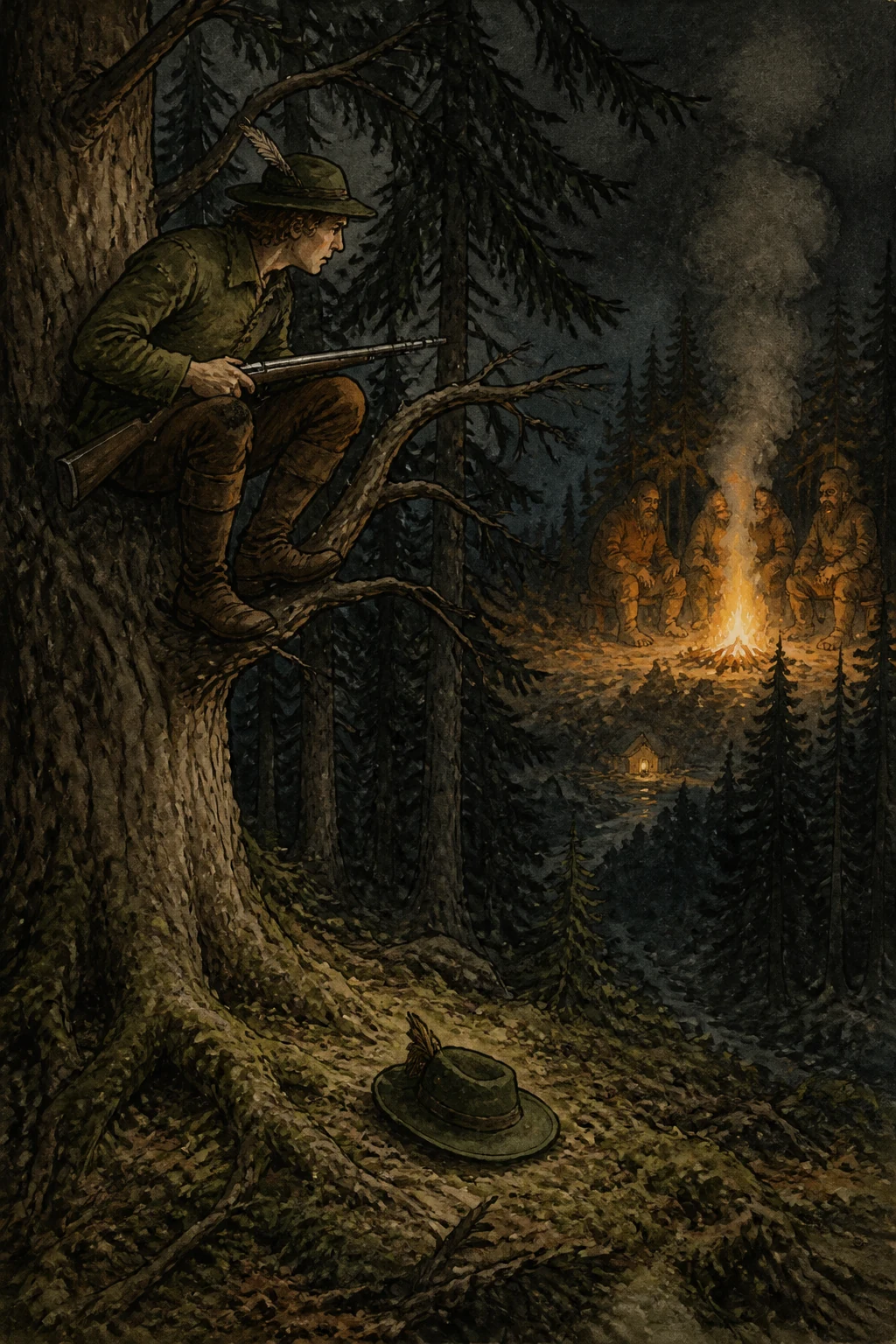
There was once a hunter who went up into the mountains to hunt, and a ram with a golden fleece appeared before him. When the hunter saw it, he raised his gun to shoot it, but the ram charged and killed him with its horns before he could fire. The hunter fell dead on the spot, and when his companions found him later, not knowing who had killed him, they carried him home and buried him. After this, the hunter’s wife hung his gun on a peg. When her son grew strong enough, he asked his mother for the gun so that he might go hunting with it, but she would not give it to him. “By no means, my son!” she said. “Your father met his death with that gun. Do you want it to cost you your head too?” One day he stole the gun and went hunting. When he came into the forest, the ram with the golden fleece appeared before him too and said, “I killed your father, and now I shall kill you.” The young man took fright and cried, “God help me!” Then he cocked the gun and shot the ram dead. Now he rejoiced at having killed a golden-fleeced ram, the like of which was nowhere else in the empire, and he stripped off its skin and carried it home. Little by little, word of this reached the emperor, who ordered the skin to be brought to him, so that he might see what strange beasts there were in his empire. When the young man brought the skin and showed it to him, the emperor said, “Ask whatever you please in return for that skin.” But he answered, “I will not sell it at any price.” Now the young man’s uncle was the emperor’s chief counsellor, and he was no friend to his nephew, but an enemy. He said to the emperor, “Since he will not give you the skin, let us find a way to break his neck. Order him to do something impossible.” And so, at his prompting, the emperor summoned the young man and told him to plant a vineyard and bring him new wine from it within seven days. On hearing this, the young man began to weep and plead, saying that he could not do such a thing, nor could it possibly be done. But the emperor said again, “If you have not done it within seven days, you shall lose your head.” He went home weeping and told his mother everything that had happened. When she heard it, she answered, “Did I not tell you, my son, that the gun would cost you your head, just as it did your father?” Weeping and wondering what to do and where to go to vanish from sight, the young man walked out of the village and wandered a good way off. Suddenly a young girl appeared before him and asked, “Why are you weeping, brother?” He answered angrily, “Go with God, since you cannot help me,” and walked on. But the girl followed him and begged him to tell her. “Perhaps,” she said, “I may be able to help you.” Then he stopped and said, “I will tell you, but only God himself can help me; no one else can.” And he told her all that had befallen him and what the emperor had commanded. When she had heard him out, she said, “Do not be afraid, brother. Go and ask the emperor where he wants the vineyard to be, and have them mark out the ground for you. Then take a bag, put a sprig of basil in it, go to that place, and lie down to sleep. In seven days you will have ripe grapes.” He returned home and, scarcely knowing what else to do, told his mother how he had met the girl and what she had said. His mother answered, “Go, my son, go and try. You are lost in any case.” So he went to the emperor and asked for a place for the vineyard, and for the rows to be marked out. The emperor gave him everything and did as he asked. The young man slung a bag over his shoulder, with a sprig of basil inside it, and went sorrowfully to lie down and sleep there. When he rose in the morning, the vineyard had been planted; by the next morning it was in leaf; and within seven days there were ripe grapes in it, though it was a season when grapes were nowhere to be found. He gathered some, crushed them, and took the emperor sweet new wine and a kerchief full of grapes. The emperor was greatly astonished at the sight, as was everyone at court. Then the young man’s uncle said to the emperor, “Now we shall command him to do something else, something he truly cannot accomplish.” At his prompting, the emperor summoned the young man and said, “Build me a palace out of elephants’ tusks.” When the young man heard this, he went home weeping and told his mother what the emperor had now commanded. “Mother,” he said, “such a thing cannot be done, nor can I accomplish it.” His mother answered, “Go out beyond the village again, my son. Perhaps God will lead you to that young girl.” He went out beyond the village, and when he came to the very place where he had met the girl before, she appeared before him again and said, “Once more you are sorrowful and weeping, brother.” He began to lament and told her what he had now been ordered to do. When she had heard him out, she said, “That too will be easy. Go to the emperor and ask for a ship with three hundred casks of wine and three hundred casks of rakija aboard, and twenty carpenters besides. When you have sailed to a certain place between two mountains, dam up the water there and pour all the wine and rakija into it. The elephants will come there to drink, and they will grow drunk and fall down. Then have the carpenters cut out all their tusks. Carry them to the place where the emperor wants his palace built, and lie down to sleep. In seven days the palace will be finished.”
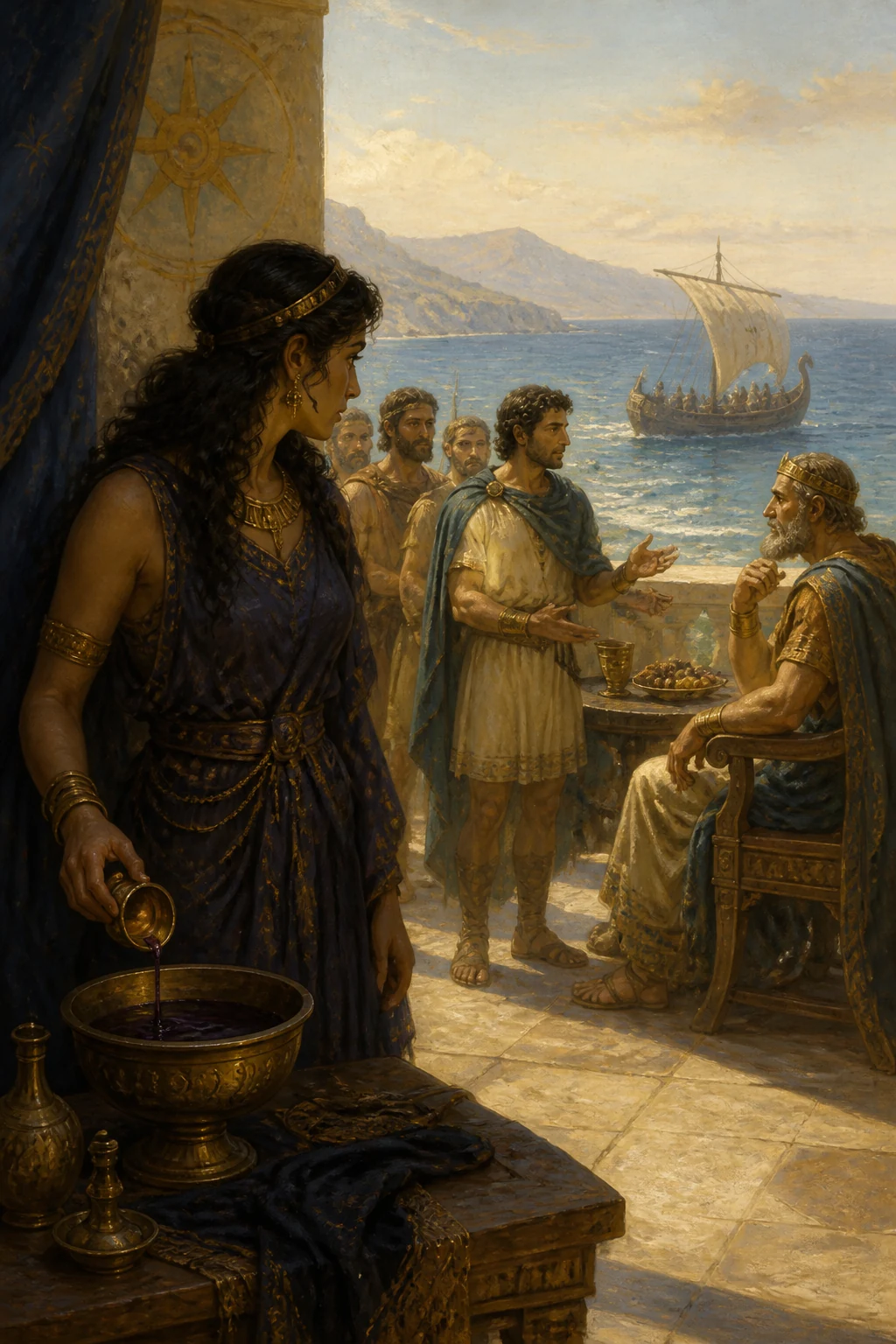
Then he returned home and told his mother how he had met the girl again and what she had said. His mother answered once more, “Go, my son, and may God grant that she helps you again.” He went to the emperor and asked for everything, then set off and did as the girl had told him. The elephants came, grew drunk, and fell down, and the carpenters cut out their tusks and carried them to the place where the palace was to be built. That evening he put a sprig of basil in his bag, went there, and lay down to sleep; and in seven days the palace was finished. When the emperor saw the finished palace, he marvelled greatly and said to the young man’s uncle, his chief counsellor, “Well, what am I to do with him now? This is no man—God knows what he is.” The counsellor answered, “Give him one more command, and if he accomplishes that too, then he is indeed something more than a man.” And so he again persuaded the emperor, who summoned the young man and said, “Now you must bring me a princess from another empire, from such and such a city. If you do not bring her to me, you shall lose your head.” When the young man heard this, he went to his mother and told her what the emperor had commanded. She said, “Go, my son, and seek out that girl again. May God grant that she saves you once more.” He went out beyond the village and found the girl, and told her what he had now been commanded to do. When she had heard him out, she said, “Go and ask the emperor for a galley, with twenty shops built aboard it, each stocked with a different kind of merchandise, one finer than the next. Ask him also to choose the handsomest young men, dress them in fine clothes, and station them as shop assistants, one in each shop. Then you will set sail in that galley. First of all you will meet a man carrying a great live eagle. Ask him whether he will sell it. He will say yes, and you must give him whatever he asks. After that you will meet another man with a carp in a small boat, its scales all golden. Buy that carp too, whatever the price. A third man you will meet carrying a live dove, and for the dove too you must give whatever he asks. Pluck a feather from the eagle’s tail, a scale from the carp, and a feather from the dove’s left wing, then set them all free. When you reach the other empire and anchor below that city, open all the shops and tell each young man to stand outside his own. Then all the townspeople will come to look at the merchandise and marvel at it, and the girls who come to fetch water will spread word through the city: ‘People say that never since this city was founded has there been such a galley or such merchandise.’ The princess will hear of it too and ask her father’s leave to go and see it herself. When she comes aboard the galley with her companions, lead her from shop to shop and bring out all kinds of wares before her, each more beautiful than the last. Keep her amused until dusk begins to fall, and then set the galley in motion. At that very moment darkness will fall so thick that nothing can be seen. The princess will have a bird on her shoulder, which she always keeps with her. When she sees that the ship is moving, she will send the bird from her shoulder to tell the court what has happened. Then burn the eagle’s feather, and the eagle will come to you at once. Tell it to catch the bird, and it will do so. After that the princess will throw a little stone into the water, and the galley will stop at once. Then take the carp’s scale and burn it, and the carp will come to you at once. Tell it to find the little stone and swallow it. The carp will find it and swallow it, and the galley will immediately move on. After that you will sail peacefully for a long time, until at last you come between two mountains. There the galley will turn to stone, and you will suffer great terror. The princess will insist that you bring her the water of life. Then burn the dove’s feather, and the dove will come to you at once. Give it a little glass bottle, and it will bring you the water of life. After that the galley will immediately move on, and you will reach home safely with the princess.”
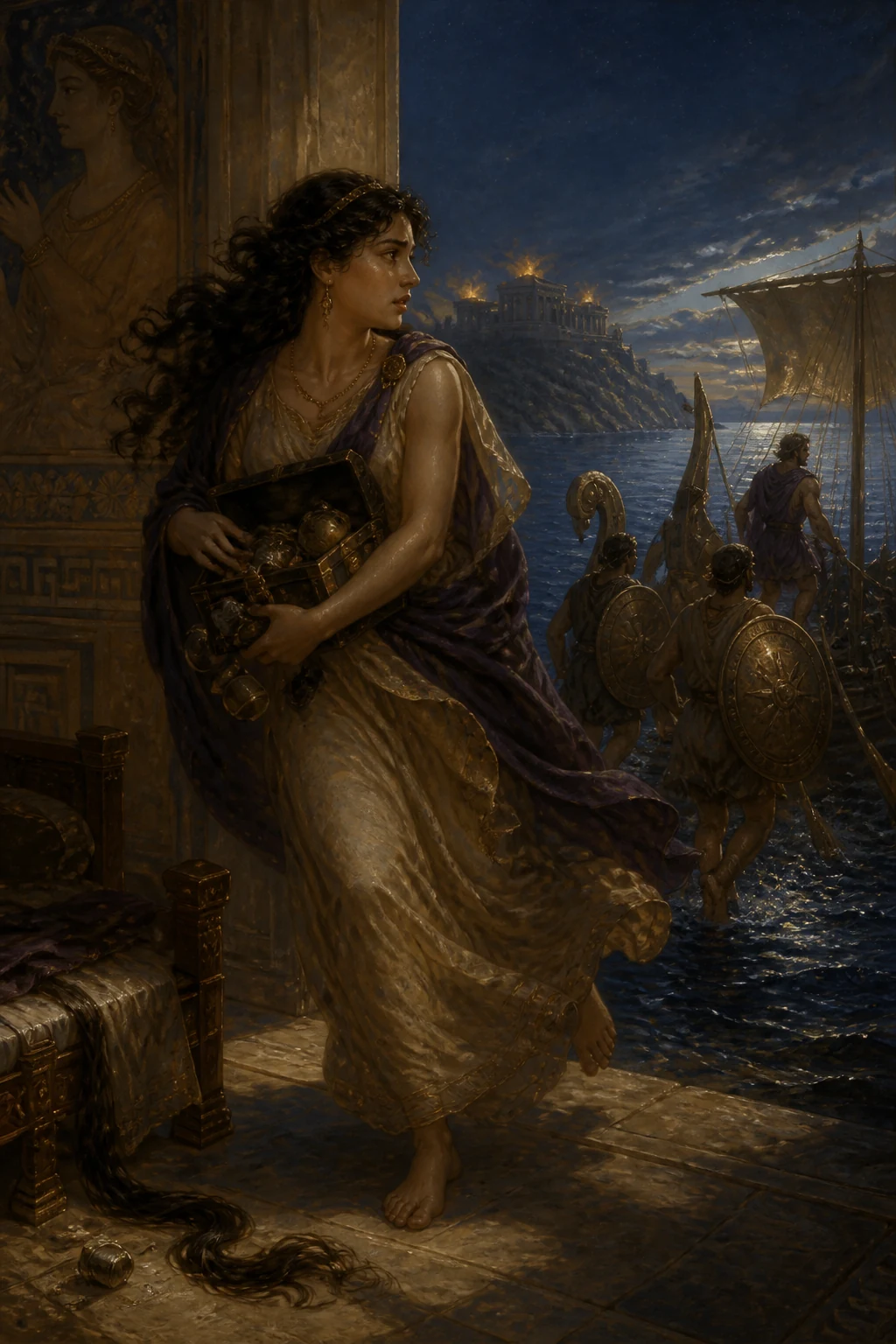
When the young man had heard the girl out, he went home and told his mother everything. Then he went to the emperor and asked for all he needed. The emperor could not refuse him, but gave it to him, and so he set sail in the galley. Along the way he did everything as he had been told, and came to the city in the other empire. There too he did everything as the girl had instructed him, carried off the princess, and returned safely with her. From the palace windows, the emperor and his counsellor saw the galley approaching in the distance, and the counsellor said to the emperor, “Now put him to death as soon as he steps off the galley. There is no other way to be rid of him.” When the galley reached the shore, they all began to disembark in turn: first the princess with her companions, then the young men, and last of all the young man himself. But the emperor had stationed an executioner there, and the moment the young man appeared, he cut off his head. The emperor meant to marry the princess himself, and as soon as she stepped off the galley, he hurried to her and began to caress her. But she turned away from him and said, “Where is the man who took such pains for me?” When she saw that his head had been cut off, she immediately took the water of life, poured it over him, and set his head back in place. He came to life again, just as he had been before. When the emperor and his counsellor saw that he had come back to life, the counsellor said, “Now he will know even more than he knew before, for he has been dead and come to life again.”
The emperor wished to discover whether one truly knew more after coming back to life, so he ordered them to cut off his head too, and told the princess to revive him with the water of life. Once the emperor’s head had been cut off, the princess would have nothing more to do with him. Instead, she immediately wrote her father a letter, telling him all that had happened and saying that she wished to marry the young man. Her father wrote back that the people must accept the young man as their emperor; if they refused, he would raise an army against them. The people at once agreed that it was only right for him to marry the princess and reign over them. And so the young man married the princess and became emperor, while the other young men who had sailed with him married the maidens who had accompanied her and became great lords.