Waltey
Zgodbe o miloščini
Tisoč in ena noč · arabska pripovedna tradicijaO besedilu
Zgodbe o miloščini
- Vir
- Tisoč in ena noč
- Avtor
- arabska pripovedna tradicija
- Jezik branja
- English
- Jezik izvirnika
- Arabic
- Čas branja
- 6 min branja
- Obseg
- 5 strani
- Naslov izvirnika
- حكايات الصدقة - الليالي ٣٤٧ إلى ٣٤٩
O izvirniku
Tisoč in ena noč
Zgodbe v zgodbah, polne trgovcev, dvorov, preoblek in nočnih zapletov. Bralni jezik je English, izvirnik pa prihaja iz vira Tisoč in ena noč v jeziku Arabic.
Besedilo
Zgodbe o miloščini
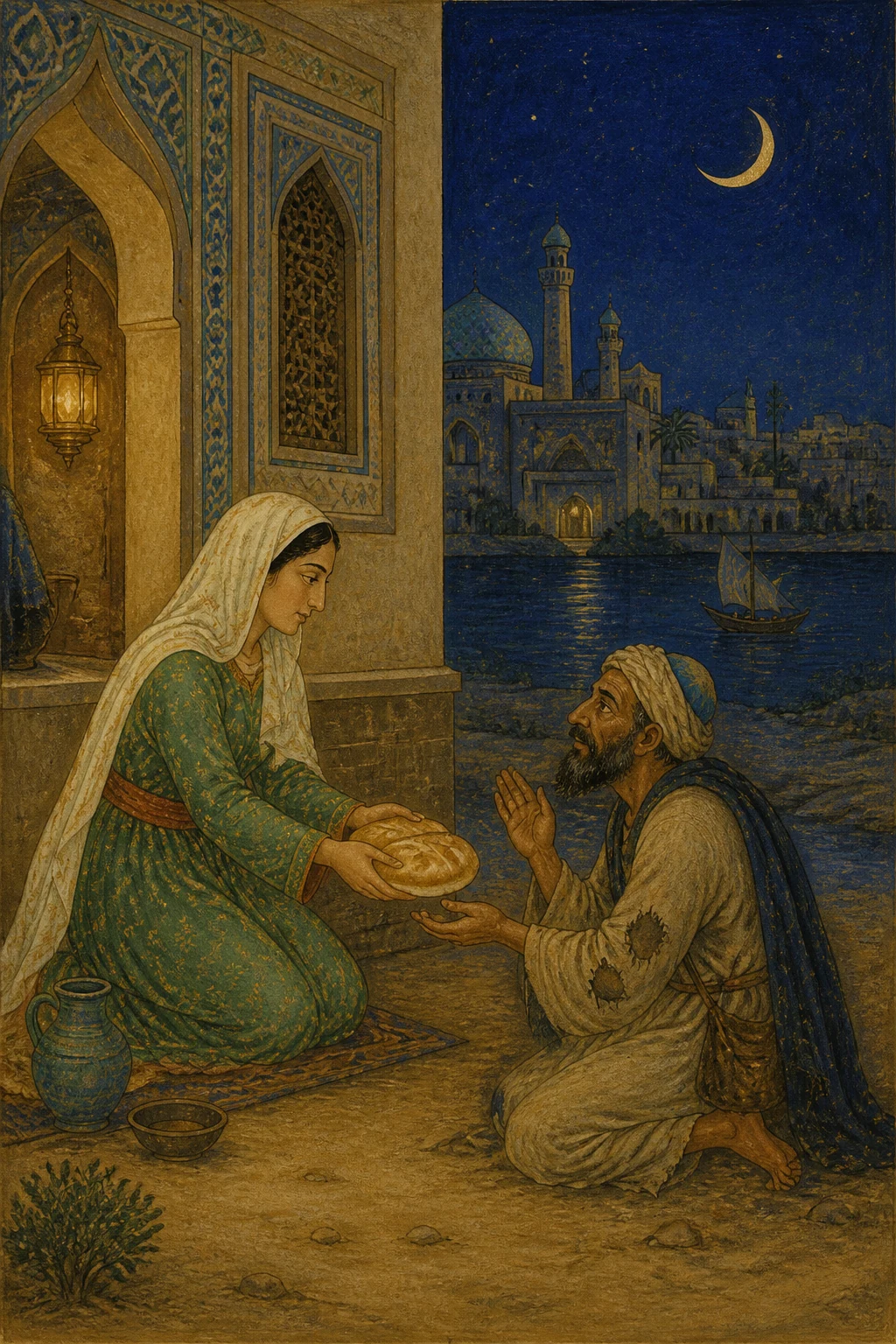
It is told that a certain king said to the people of his kingdom, “If any one of you gives anything in charity, I shall cut off his hand.” Thus he put a stop to all almsgiving, and no one dared give anything to anyone. Now it happened one day that a beggar, sorely afflicted by hunger, came to a woman and said, “Give me something in charity.” But morning overtook Shahrazad, and she fell silent, leaving her tale untold.
When it was the three hundred and forty-eighth night
She said: It has reached me, O fortunate King, that the beggar said to the woman, “Give me something in charity.” She replied, “How can I give you anything when the king cuts off the hand of everyone who gives alms?” He said, “I beseech you by Almighty God to give me something.” When he appealed to her in God’s name, her heart softened toward him, and she gave him two loaves of bread. News of this reached the king, and he ordered her to be brought before him. When she appeared, he cut off both her hands, and she went home. Some time later, the king said to his mother, “I wish to marry, so find me a beautiful wife.” She said, “There is a woman in our neighborhood whose beauty is beyond compare, but she has a grave defect.” “What is it?” he asked. She replied, “Both her hands have been cut off.” He said, “I wish to see her.” So his mother brought her to him, and when he saw her, he was captivated by her beauty. He married her and consummated the marriage. This was the very woman who had given the beggar two loaves and whose hands he had cut off for that deed. When he married her, his other wives grew jealous of her and wrote to the king, telling him that she was unchaste and had given birth to a boy. The king wrote a letter to his mother, ordering her to take the woman out into the wilderness, leave her there, and return alone. His mother did as he commanded: she took her into the wilderness and then went back. The woman began to weep over all that had befallen her, sobbing with a grief beyond measure. As she walked along with the child upon her neck, she came to a river. She knelt to drink, for walking, weariness, and sorrow had left her desperately thirsty, but as she bent her head, the child fell into the water. She sat there weeping bitterly for her son. While she was weeping, two men passed by and asked her, “What makes you weep?” She told them, “I had a child upon my neck, and he fell into the water.” They asked, “Would you like us to bring him out for you?” “Yes,” she replied. They prayed to Almighty God, and the child came out of the river to her, safe and unharmed. Then they asked her, “Would you like God to restore your hands as they were?” “Yes,” she replied. They prayed to God, glorified and exalted be He, and her hands were restored, more beautiful than before. Then they said, “Do you know who we are?” She replied, “God knows best.” They said, “We are the two loaves you gave to the beggar, the charity for which your hands were cut off. So praise Almighty God, who has restored your hands and your child to you.” And she gave thanks to Almighty God and praised Him.
It is also told that among the Children of Israel there was a devout man whose family spun cotton. Each day he would sell the yarn and buy more cotton, and with whatever profit remained he would buy food for his family to eat that day. One day he went out and sold the yarn, but a brother of his met him and complained of his need. The man gave him the money from the sale and returned to his family with neither cotton nor food. They asked him, “Where are the cotton and the food?” He replied, “So-and-so met me and complained of his need, so I gave him the money from the yarn.” They said, “What are we to do? We have nothing to sell.” They had a broken bowl and a jar, so he took them to the market, but no one would buy them. While he was in the market, a man passed by carrying a fish … But morning overtook Shahrazad, and she fell silent, leaving her tale untold.
When it was the three hundred and forty-ninth night
She said: It has reached me, O fortunate King, that the man took the bowl and the jar to the market, but no one would buy them. While he was there, a man passed by carrying a bloated, stinking fish that no one would buy from him. The man with the fish said, “Will you trade your unsold goods for mine?” “Yes,” he replied. So he handed over the bowl and the jar, took the fish, and brought it home to his family. They asked, “What will you do with this fish?” He said, “We shall roast it and eat it until Almighty God sees fit to provide for us.” They took it and slit open its belly, and inside they found a pearl. They told the old man, who said, “Look and see: if it is pierced, it belongs to someone; but if it is unpierced, it is a provision Almighty God has bestowed upon you.” They examined it and found that it was unpierced. When morning came, he took it to a friend who knew about such things. The friend asked, “Where did you get this pearl?” He replied, “It is a provision Almighty God has bestowed upon us.” His friend said, “It is worth a thousand dirhams, and I will give you that much for it. But take it to so-and-so, for he has more money and greater knowledge than I.” So he took it to the other man, who said, “It is worth seventy thousand dirhams, no more.” He paid him seventy thousand dirhams and summoned porters, who carried the money to the door of his house. Then a beggar came up to him and said, “Give me something of what Almighty God has given you.” He said to the beggar, “Only yesterday we were as you are. Take half this money.” He divided the money into two equal shares, and each took his half. Then the beggar said to him, “Keep your money and take it back. May God bless it for you. I am but a messenger from your Lord, sent to put you to the test.” The man said, “To God belong all praise and gratitude.” And he and his family lived in ease and plenty until death.
Izvirnik
حكايات الصدقة - الليالي ٣٤٧ إلى ٣٤٩
Naslednje strani prikazujejo izvirno besedilo za primerjavo.
فلما كانت الليلة ٣٤٧
ومما يُحكَى أن ملكًا من الملوك قال لأهل مملكته: لئن تصدَّق أحد منكم بشيء لأقطعن يده. فأسكت الناس جميعًا عن الصدقة، ولم يقدر أحد أن يتصدَّق على أحدٍ، فاتفق أن سائلًا جاء إلى امرأة يومًا من الأيام، وقد أضرَّ به الجوع وقال لها: تصدَّقِي عليَّ بشيء. وأدرك شهرزاد الصباح فسكتَتْ عن الكلام المباح.
فلما كانت الليلة ٣٤٨
قالت: بلغني أيها الملك السعيد، أن الرجل السائل قال للمرأة: تصدَّقِي عليَّ بشيء. فقالت: كيف أتصدَّق عليك والملك يقطع يدَ كلِّ مَن تصدَّق؟ فقال: اسألك بالله تعالى أن تتصدَّقِي عليَّ. فلما سألها بالله رقَّتْ له وتصدقت عليه برغيفين، فوصل الخبر إلى الملك فأمر فإحضارها، فلما حضرت قطع يديها وتوجهت إلى دارها، ثم إن الملك بعد حين قال لأمه: إني أريد الزواج فزوِّجيني امرأةً جميلة. قال: إن في جوارنا امرأة لم يوجد أحسن منها ولكن بها عيب شديد. قال: ما هو؟ قالت: مقطوعة اليدين. قال: أريد أن أنظرها. فأتَتْ بها إليه، فلما نظرها افتتن بها، فتزوَّجَها ودخل بها، وكانت تلك المرأة هي التي تصدَّقت على السائل برغيفين وقطع يديها من أجل ذلك، فلما تزوَّجَ بها حسدها ضرائرها، وكتبن إلى الملك يخبرنه عنها بأنها فاجرة وقد ولدت غلامًا، فكتب الملك إلى أمه كتابًا وأمرها فيه أن تخرج بها إلى الصحراء وتتركها هناك ثم ترجع، ففعلت أمه ذلك وخرجت بها إلى الصحراء ثم رجعت، فصارت تلك المرأة تبكي على ما جرى لها، وتنتحب انتحابًا شديدًا ما عليه من مزيد، فبينما هي تمشي والولد على عنقها إذ مرَّتْ على نهر، فبركت لتشرب من شدة العطش الذي لحقها من مشيها وتعبها وحزنها، فعندما طأطأت سقط الولد في الماء، فجلست تبكي على ولدها بكاءً شديدًا، فبينما هي تبكي إذ مرَّ عليها رجلان فقالا لها: ما يُبكِيكِ؟ قالت لهما: كان لي ولد على عنقي فسقط في الماء. فقالا لها: أتحبين أن نُخرِجه لك؟ قالت: نعم. فدعَوَا الله تعالى فخرج الولد إليها سالمًا لم يُصِبه شيء. ثم قالَا لها: أتحبِّين أن يردَّ الله يدَيْك كما كانتا؟ قالت: نعم. فدعَوَا الله سبحانه وتعالى، فرجعت يداها أحسن مما كانتا عليه، ثم قالا لها: أتدرين مَن نحن؟ قالت: الله أعلم. قالا: نحن رغيفاك اللذان تصدَّقْتِ بنا على السائل، وكانت الصدقة سببًا لقطع يدَيْكِ، فاحمدي الله تعالى الذي ردَّ عليك يدَيْكِ وولدكِ. فحمدت الله تعالى وأثنت عليه.
ومما يُحكَى أنه كان في بني إسرائيل رجل عابد له عيال يغزلون القطن، فكان كل يوم يبيع الغزل ويشتري قطنًا، وما خرج من الكسب يشتري به طعامًا لعياله يأكلونه في ذلك اليوم، فخرج ذات يوم وباع الغزل، فلقيه أخ له فشكا إليه الحاجة، فدفع له ثمن الغزل ورجع إلى عياله من غير قطن ولا طعام، فقالوا له: أين القطن والطعام؟ فقال لهم: استقبلني فلان فشكا إليَّ الحاجةَ، فدفعت إليه ثمن الغزل. قالوا: وكيف نصنع وليس عندنا شيء نبيعه؟ وكان عندهم قصعة مكسورة وجرَّة، فذهب بهما إلى السوق فلم يشترهما أحدٌ منه، فبينما هو في السوق إذ مرَّ به رجل ومعه سمكة … وأدرك شهرزاد الصباح فسكتَتْ عن الكلام المباح.
فلما كانت الليلة ٣٤٩
قالت: بلغني أيها الملك السعيد، أن الرجل أخذ القصعة والجرة وذهب بهما إلى السوق، فلم يشترهما أحدٌ منه، فبينما هو في السوق إذ مرَّ به رجل ومعه سمكة مُنتِنة منفوخة لم يشترها أحد منه، فقال له صاحب السمكة: أتبيعني كاسدك بكاسدي؟ قال: نعم. فدفع القصعة والجرة وأخذ منه السمكة وجاء بها إلى عياله، فقالوا له: ما تفعل بهذه السمكة؟ قال: نشويها ونأكلها إلى أن يشاء الله تعالى لنا برزقنا. فأخذوها وشقُّوا بطنها، فوجدوا فيه حبة لؤلؤ، فأخبروا بها الشيخ فقال: أنظروا إنْ كانت مثقوبةً فهي لبعض الناس، وإنْ كانت غير مثقوبة فإنها رزق رزقكم الله تعالى به. فنظروا فإذا هي غير مثقوبة، فلما أصبح الصباح غدا بها إلى بعض إخوانه من أصحاب المعرفة بذلك، فقال: يا فلان من أين لك هذه اللؤلؤة؟ قال: رزقٌ رزَقَنا الله تعالى به. قال: إنها تساوي ألف درهم، وأنا أعطي لك ذلك، ولكن اذهب بها إلى فلان فإنه أكثر مني مالًا ومعرفةً. فذهب بها إليه فقال: إنها تساوي سبعين ألف درهم لا أكثر من ذلك. ثم دفع له سبعين ألف درهم، ودعا بالحمَّالين فحملوا له المال حتى وصل إلى باب منزله، فجاءه سائل وقال له: أعطني مما أعطاك الله تعالى. فقال للسائل: قد كنَّا بالأمس مثلك، خذ نصف هذا المال. فلما قسم المال شطرَيْن وأخذ كل واحد شطره، قال له السائل: أمسِكْ عليك مالك وخذه بارك الله لك فيه، وإنما أنا رسول ربك، بعثني إليك لأختبرك. فقال: لله الحمد والمنة. وما زال في أرغد عيش هو وعياله إلى الممات.
Nadaljuj z branjem