Waltey
Komur Bog pomaga, mu nihče ne more škodovati
Srpske narodne pripovijetke · Vuk Stefanović KaradžićO besedilu
Komur Bog pomaga, mu nihče ne more škodovati
- Vir
- Srpske narodne pripovijetke
- Avtor
- Vuk Stefanović Karadžić
- Jezik branja
- English
- Jezik izvirnika
- Српски
- Čas branja
- 9 min branja
- Obseg
- 7 strani
- Naslov izvirnika
- 011 Коме Бог помаже, нико му наудити не може
O izvirniku
Srpske narodne pripovijetke
Srbske ljudske pripovedi o junakih, čudežnih bitjih, preizkušnjah in ljudski modrosti. Bralni jezik je English, izvirnik pa prihaja iz vira Srpske narodne pripovijetke v jeziku Српски.
Besedilo
Komur Bog pomaga, mu nihče ne more škodovati
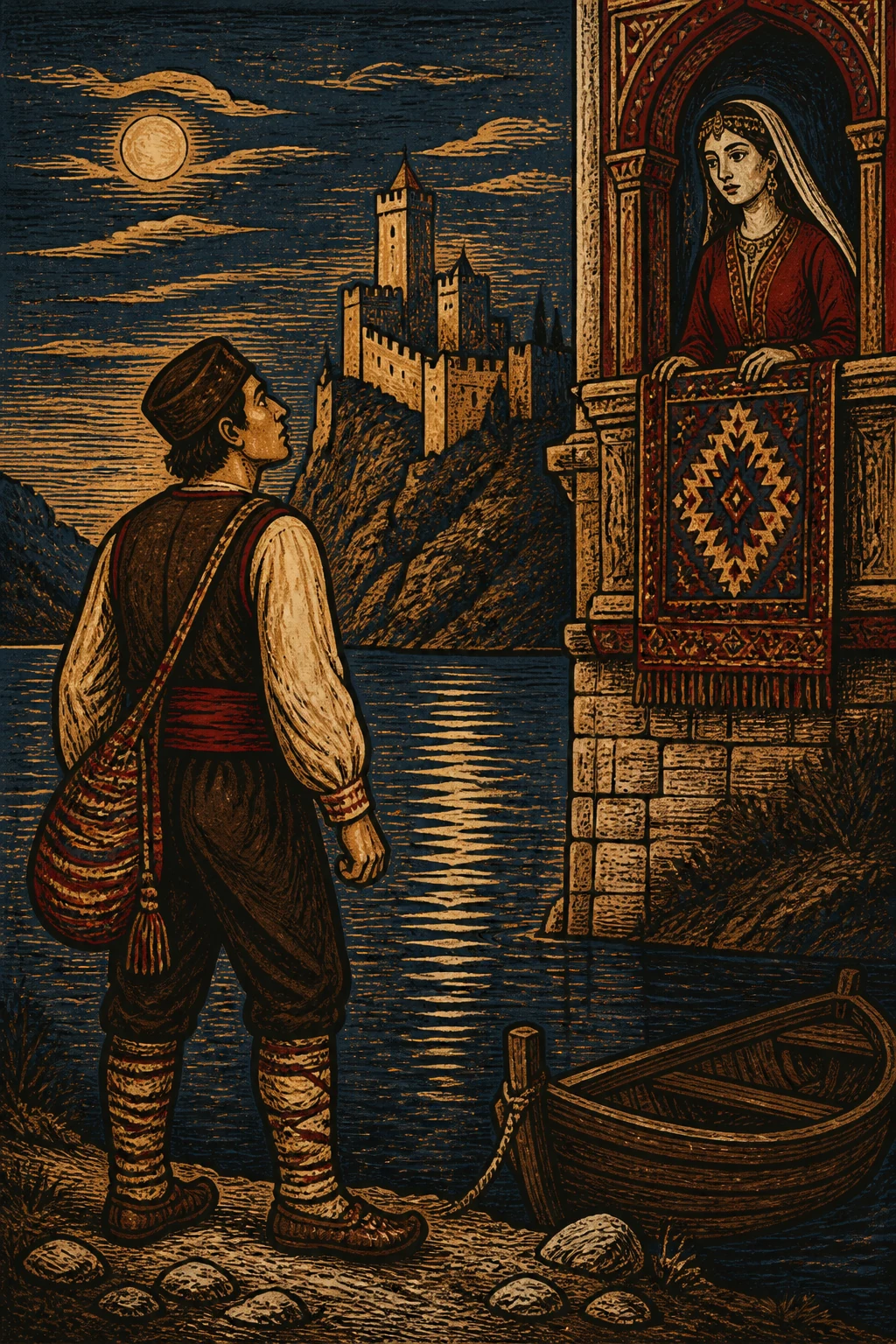
There once lived a man and his wife who had three sons. The youngest was the handsomest and exceedingly kind, so his brothers thought him a fool. All three grew old enough to marry, but their father found a wife for none of them, for he was poor. Then the eldest said to his father, "Father, I want you to find me a wife." When the middle son heard this, he too said, "And me, Father. I am old enough to marry as well." And when the youngest heard them, he said, "And me, Father. I am old enough to marry too." Now the father was in a quandary, and began discussing with his wife what they should do. At last they agreed on a plan, and the father called his sons before him and said, "Go to some town and each earn a kerchief. Whichever of you brings home the finest kerchief, I shall find him a wife." So all three set off together, but along the way the two elder brothers kept taunting the youngest and laughing at him, until at last they drove him away. He took another road, praying to God to grant him good fortune. As he walked on, he came to a river. On the far bank stood a great city, and in the city was an emperor's palace. The emperor of that city had been a very wicked and cruel man, and had died before his time, leaving his only daughter in the palace. Many men had sought the princess's hand, but no suitor who came to the palace and spent the night there ever lived to see the morning, for the emperor had become a vampire and came at night to strangle them. When the youngest brother reached the river and began walking along its bank, wondering how to cross to the other side, the princess caught sight of him through a window and ordered her servants to ferry him across and bring him before her. When he came into her presence, he was a little bewildered and afraid; but the moment the princess saw him, she took a liking to him and asked where he came from and where he was bound. He told her where he came from and related everything in order: how he had two brothers, how all three wished to marry, and how their father was poor and had told each of them to bring home a kerchief, promising to find a wife for whoever brought the finest one. When the princess heard this, she said, "You shall stay here with me tonight, and in the morning we shall see about the kerchief." As evening drew near, she gave him plenty to eat and drink, then led him into a room that was green all over and said, "Do not be afraid. Things will come here tonight and make a great banging all around you to frighten you, but you must not fear." Being a simple fellow, he could not even fall asleep for wonder, but lay marvelling at the place he had come to. Then, around midnight, a banging began in the room, and voices cried, "This one has come to inherit the empire; we can do him no harm." He went on praying to God, and so the night passed, and he remained alive and well. When dawn broke, he rose and sat down. Everyone in the palace had expected to carry him dead from the room, like the other suitors. The princess sent one of her courtiers to see whether he was alive and, if he was, to bring him before her. The courtier was astonished to find him sitting in the room alive and well, and said, "Come, our empress is calling for you." When he came before her, she too was amazed that he had survived. She gave him breakfast, and when he had eaten, she handed him a silk kerchief embroidered with gold, wrapped in paper, and said, "Here, take this to your father, and if he asks anything more of you, come back to me." He thanked her for the kerchief and for lodging him, then set off home. When he arrived, his two brothers were already there. Each brought out his kerchief. Theirs were ordinary things, but when he brought out his own, everyone marvelled, and the two brothers rounded on him. "Where did you get that? You must have stolen it somewhere." At last, to quiet them, their father said, "Do you know what? Go out into the world once more, and whichever of you brings back a chain long enough to wind nine times around our house, I shall find him a wife." At this the brothers calmed down. The two elder ones went wherever they thought best, while the youngest went straight to the princess. When he came before her, she asked, "What has your father told you this time?" He answered, "He told me to bring back a chain long enough to wind nine times around our house." Again she gave him plenty to eat and drink, then led him into a yellow room and said, "Do not be afraid of anything. They will come again tonight to frighten you, but in the morning we shall see about the chain." That night too the ghosts came and made all manner of dreadful disturbances around him, but he remained alive and well. In the morning the courtier came for him again and led him before the empress. Once more she gave him breakfast, and when he had eaten, she handed him a little box and said, "Here, take this to your father, but on no account open it before you get home. And if your father asks anything more of you, come back here again." He thanked her warmly and set off home, where he found his brothers already waiting. The elder brothers had each brought a chain that would not reach even once around the house. Then the youngest gave his father the box, and when his father opened it and drew out a golden chain, they all marvelled. His elder brothers rounded on him, almost ready to kill him. "You will bring ruin on our house! You must have stolen that somewhere." Their father again tried to calm and quiet them, and at last said, "Go, each of you, and bring back a girl, and I shall have all three of you married." The elder brothers went wherever they thought best, while the youngest went straight to the princess and told her what their father had said this time. The empress replied, "Now you must spend the night in one more room, and then we shall see about that as well." After giving him food and drink again, she led him into a red room to spend the night. There he endured greater terrors than on either of the two nights before: there was dreadful banging and shouting, the clanking of chains, and terrible voices crying, "That fellow means to inherit my empire!" They even tugged at his clothes, but dared not touch him, while he prayed to God all the while, and God kept him safe that night too. In the morning, when they brought him before the princess alive and well, she at once summoned barbers to shave and wash him. Then she brought out a gentleman's fine clothes and had him dressed in them, seated herself beside him in a carriage, and went to church, where she married him. Afterwards they remained in her palace for three more days of rejoicing, then set out to visit his father, arranging to reach his village at night. When they came to the house, they heard shouting and saw that a celebration was under way: the two brothers were getting married. Then he called from outside, "Ho, master of the house!" When his father heard this, he ran out and was astonished to see such guests before his door. His son asked him, "May we spend the night here?" His father answered, "Most gladly, but we have a wedding celebration in the house, and few rooms. The simple folk will deafen you and trouble you with their shouting." He replied, "Never mind that. I should like to hear it, for I never have before, and my wife is even more eager than I am." So they went into one room, while the merrymaking continued in another. When they had entered and settled themselves, his mother bowed to them as to gentlefolk, and they said to her, "How fortunate you are to have two causes for rejoicing at once!" But she answered, "Ah, my good lord and lady! One is a joy to me, but the other is a sorrow. I had another son, but he went out into the world and vanished. God knows how he fares or where he is." A little later he went outside, put his old shabby clothes on over his fine ones, pulled his hat down over his face, and entered the room where the wedding feast was being held, taking his place behind the door. When his brothers saw him, they called to their father and mother, "Come and see this precious son of yours, who goes about stealing all manner of things!" When his father caught sight of him, he said, "You good-for-nothing, where have you been all this time? Where is your bride?" His mother began lamenting again. "Oh, wretched woman that I am! Why do you torment me so?" When he saw and heard all this, he said, "Do not speak so harshly to me. All will be well, God willing." Then he threw off his shabby clothes and stood before them in his fine ones. At the sight, his brothers were dumbfounded and frightened, and began begging his forgiveness, while his father and mother embraced and kissed him. Now the festivities began afresh and lasted several days. Afterwards the youngest son took his father and mother away with him, and gave his brothers landed estates, so that from that time on they lived as gentlemen.
Izvirnik
011 Коме Бог помаже, нико му наудити не може
Naslednje strani prikazujejo izvirno besedilo za primerjavo.
Био човек и жена, па имали три сина. Најмлађи био најлепши и одвећ добар, па су га друга браћа држала за будалу. Сва тројица већ дорасту за женидбу, а отац их не жени ни једнога, јер је био сиромах. Онда рече најстарији к оцу: "Бабо, хоћу да ме жениш." А кад то чује средњи, рече и он: "И мене, бабо, и ја сам за женидбу." А кад чује и најмлађи, и он рече: "И мене, бабо, и ја сам за женидбу." Сад се отац нађе у невољи па се стане договарати са својом женом шта ће радити. Најпосле се договоре, те отац дозове синове преда се па им рече: "Идите у какву варош те заслужите по мараму, па који донесе најлепшу мараму, онога ћу женити." По том они пођу сва тројица заједно, али старија двојица стану путем једнако ружити најмлађега и смејати му се, иа га најпосле отерају од себе, те он удари другим путем молећи се Богу да му да добру срећу. И тако идући дође на једну воду. На оној води с друге стране био је велики град и у граду царски двор. Цар је од онога града био врло зао и опак, па је умрьо пре времена и у двору му остала јединица кћи. Ону су царску кћер многи просили, али ко је год од просилаца дошао у двор и онде заноћио, онај више није жив освануо, јер се цар био повампирио па долазио ноћу те давио. Кад најмлађи брат дође на ону воду и стане ходати покрај ње мислећи како би прешао на ону страну, угледа га кроз пенџер царева кћи, па заповеди момцима те га превезу и доведу преда њу. Он кад изиђе пред царску кћер, мало се збуни и поплаши; али царева кћи како га види, загледа се у њега па га запита откуда је и куда је наумио; а он јој каже откуда је и приповеди јој све по реду како има још два брата и како сва тројица хоће да се жене, а отац им сиромах, па им рекао да донесе сваки по једну мараму кући па који донесе најлепшу да ће онога женити. Кад то чује царева кћи, рекне му: "Ти ћеш вечерас овде остати код мене и ноћити, пак ћемо у јутру гледати за мараму." Кад буде пред ноћ, нахрани га лепо и напоји, па га одведе у једну собу сву зелену, и рече му: "Немој да се плашиш, ту ће ноћас долазити и лупати око тебе да те плаше, али ти се не бој." Он као простак није могао ни заспати од чуда, него се једнако чудио где је дошао, кад али око поноћи стане лупа по соби и вика: "Овај је дошао да прими царство; овоме не можемо ништа учинити." Он се Богу молио једнако и тако та ноћ прође и он остане жив и здрав. Кад зора забели, он устане па седне. Сви су у двору мислили да ће га извући мртва из собе као и друге просиоце. Кад царева кћи пошље једнога од дворана да види јели он жив, и ако је жив, да га доведе преда њу, дворанин се зачуди кад га нађе у соби где седи жив и здрав, па му онда рече: "Хајде, зове те наша царица." Кад он изиђе преда њу, и она се сама зачуди како је остао жив, па му да доручак, и пошто доручкује, да му у хартији завијену свилену мараму, златом везену, па му рекне: "Ево носи своме оцу, и ако ти још што каже, опет дођи овамо к мени." Он јој захвали на марами и на конаку, па пође кући; кад тамо, а то већ дошла и друга два брата. Онда они изваде сваки своју мараму: њихове биле којекакве, а кад он своју извади, сви се зачуде, па она два брата скоче на њега: "Откуда теби то? Ти си то негде украо." Најпосле отац да би их умирио, рече им: "Знате ли шта? Идите још један пут у свет, па који донесе ланац да се девет пута обавије око наше куће, онога ћу женити." Тако се браћа умире и старија двојица отиду куда су знали, а најмлађи управо к царевој кћери, па кад изиђе преда њу, она га запита: "Шта ти је сад отац казао?" А он јој одговори: "Казао да донесем ланац који се може обавити девет пута око наше куће." Она га опет лепо нахрани и напоји па га уведе у жуту собу и рече му: "Не бој се ништа, опет ће долазити ноћас да те плаше; а ујутру ћемо гледати за ланац." Тако су и ону ноћ долазиле авети и правиле страву којекакву око њега, али он остане здрав и жив. Кад буде ујутру, опет дође дворанин по њега, и одведе га пред царицу. Она му опет да доручак, и пошто доручкује, да му малу кутијицу и рече му: "Ево носи оцу, али ни по што не отварај док не дођеш кући, па ако ти отац још што каже, а ти опет дођи овамо." Он јој лепо захвали, па пође кући и нађе браћу код куће. Старија браћа донела по ланац који се није могао ни један пут омотати око куће; онда најмлађи да оцу кутију, а кад је отац отвори и извади из ње златан ланац, они се сви удиве, па старија браћа скоче нањ, готово да га убију: "Ти ћеш нашу кућу оборити, ти си то негде украо." Отац их стане опет умиривати и тишкати, па им најпосле рече: "Идите, доведите сваки девојку па ћу вас сву тројицу оженити." Онда старија браћа отиду куда су знали, а најмлађи управо к царевој девојци, па јој каже шта им је отац сад казао. Царица му на то рекне: "Сад треба још у једној соби да преноћиш, па ћемо онда и за то гледати." Пошто га опет нахрани и напоји, одведе га у црвену собу да преноћи. Онде је ону ноћ још већу страву претрпео него пређашње обе ноћи: ту је била страшна лупа, вика, звека ланаца и страшни гласови: "Тај хоће моје царство да прими!" вукли су с њега и хаљине, али се њега нису смели такнути, а он се једнако Богу молио, и Бог га сачува здрава и ону ноћ. Ујутру кад га изведу жива и здрава пред цареву кћер, она одмах доведе бербере те га обрију и умију, па онда изнесе госпоске хаљине те га преобуку, па седне с њим на кочије и отиде у цркву те се с њиме венча. После тога остану у њезину двору још три дана у весељу, па онда пођу к оцу његовоме, и удесе те ноћу дођу у његово село. Кад дођу пред кућу, чују вику и виде да је весеље: жене се она два брата; онда он повиче испред куће: "О домаћине!" Кад отац то чује, он истрчи пред кућу и зачуди се кад види такове госте пред својом кућом. Онда га син запита: "Можемо ли ноћити овде?" А отац му одговори: "Драге воље, али имамо весеље у кући, а немамо много соба, па ће вам прости људи заглушати и виком досађивати." На то он одговори: "Ништа за то; ја сам то рад, нисам никад чуо; а и моја жена још више је рада." И тако уђу унутра у једну собу, а у другој весеље. Кад уђу у собу и наместе се, поклони им се мати његова као господи, а они јој реку: "Благо теби кад имаш два весеља у један пут!" А она им одговори: "Е моја господо! једно ми је весеље, а друго жалост: имала сам још једнога сина па отишао у свет и пропао, Бог зна како је и где је." После мало изађе он на поље, па преко онога госпоскога одела обуче своје старе сиромашке хаљине и поклопи се шеширом па уђе у ону собу где је било весеље и стане за врата. Кад га виде браћа, повичу на оца и матер: "Камо те се да видите свога хваљеног сина што иде и краде којешта!" Кад га отац опази, рече му: "Несрећо, где си био до сад? камо теби девојка?" А мати опет стане нарицати: "Куку мене кукавици, за што ме тако убијаш!" Кад он то види и чује, рече им: "Немојте ме тако хулити; добро ће бити, ако Бог да", па онда збаци са себе сиромашке хаљине и остане у онима госпоскима; а они кад то виде, браћа се упропасте и поплаше и стану га молити да им опрости, а отац га и мати загрле и стану га љубити. Сад се наново учини весеље за неколико дана. После најмлађи син одведе оца и матер са собом, а браћи својој даде спахилуке, те су од оно доба госпоски живели.
Nadaljuj z branjem