Waltey
V ognju pomlajeni možiček
Grimmove pravljice · Jacob in Wilhelm GrimmO besedilu
V ognju pomlajeni možiček
- Vir
- Grimmove pravljice
- Avtor
- Jacob in Wilhelm Grimm
- Jezik branja
- English
- Jezik izvirnika
- Deutsch
- Čas branja
- 3 min branja
- Obseg
- 3 strani
- Naslov izvirnika
- Das junggeglühte Männlein
O izvirniku
Grimmove pravljice
Gozdovi, čarobni predmeti in ljudska logika evropske pripovedne tradicije. Bralni jezik je English, izvirnik pa prihaja iz vira Grimmove pravljice v jeziku Deutsch.
Besedilo
V ognju pomlajeni možiček
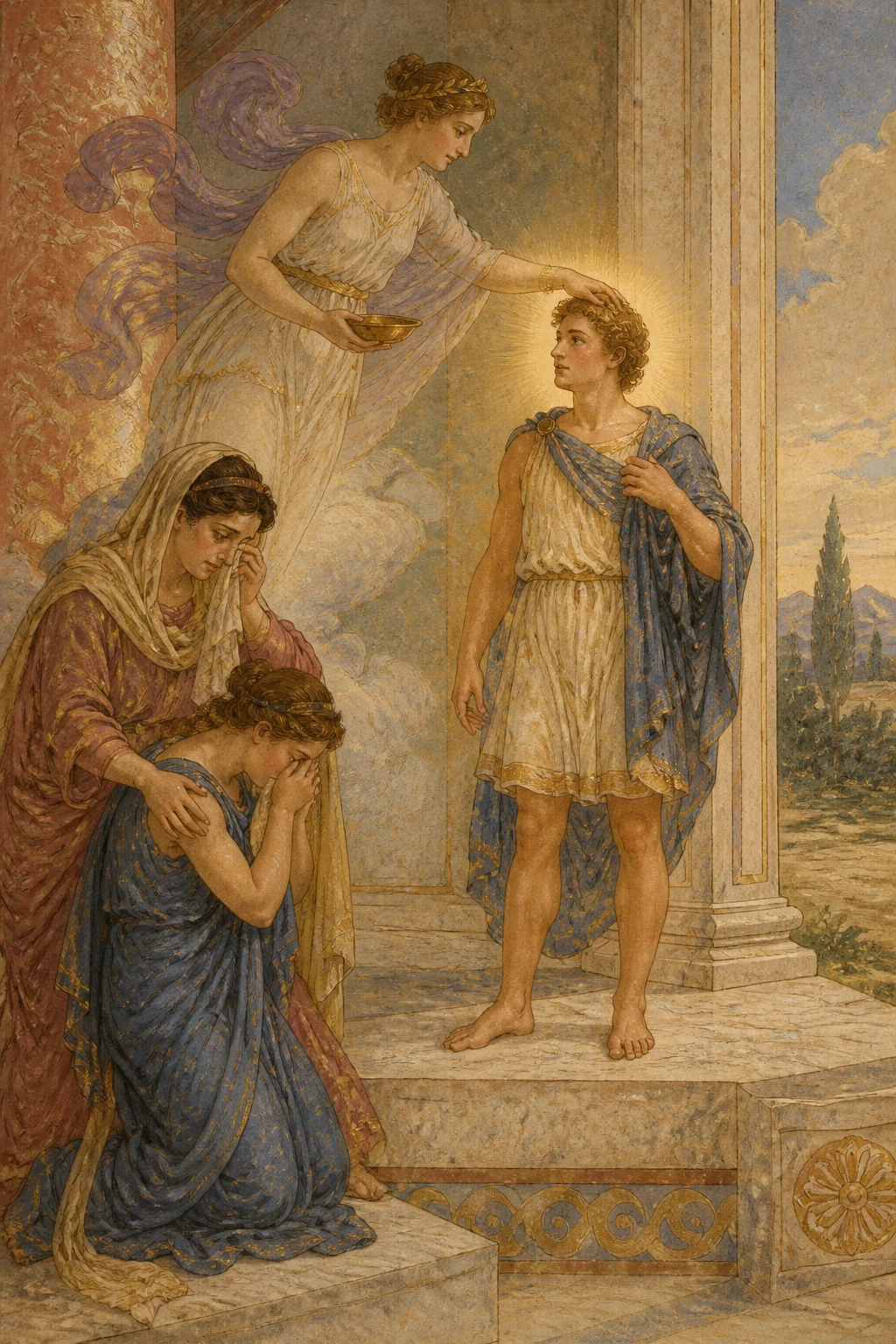
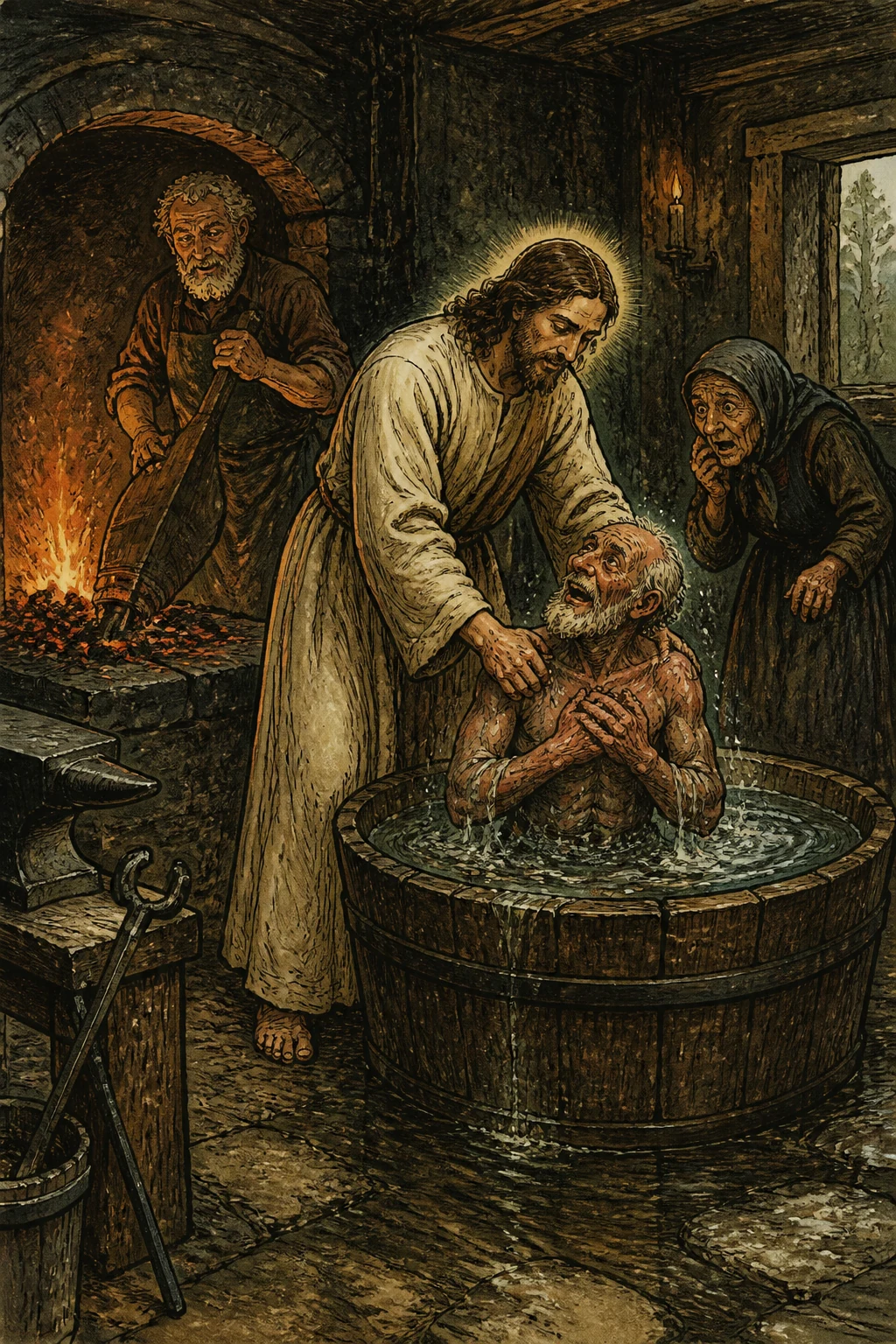
In the days when our Lord still walked the earth, he came one evening with Saint Peter to a blacksmith’s house, where they were gladly given shelter. Now it happened that a poor beggar, sorely afflicted by age and infirmity, came to the house and asked the smith for alms. Peter took pity on him and said, “Lord and Master, if it pleases you, heal his affliction so that he may earn his own bread.” The Lord said gently, “Smith, lend me your forge and heap up the coals, and I will now make this old, ailing man young again.” The smith readily agreed, and Saint Peter worked the bellows. When the coal fire blazed up high and bright, our Lord took the little old man and pushed him into the forge, into the very heart of the red fire, where he glowed like a rosebush and praised God in a loud voice. Then the Lord went to the quenching trough and drew the glowing little man into it, so that the water closed over him. When he had cooled him gently and carefully, he gave him his blessing, and behold, the little man sprang out at once, supple, straight, and healthy, as though he were twenty years old. The smith, who had watched everything closely, invited them all to supper. Now he had an old, half-blind, hunchbacked mother-in-law, who went up to the young man and earnestly asked whether the fire had burned him badly. He replied that he had never felt better; he had sat there in the heat as though in cool dew.
What the young man had said rang in the old woman’s ears all night. Early the next morning, after the Lord had thanked the smith kindly and gone on his way, the smith thought he could make his old mother-in-law young again too, since he had watched the whole business so carefully and it was, after all, in his own line of work. So he called to her and asked whether she would like to go skipping about like a girl of eighteen. “With all my heart,” she said, since the young man had found it so pleasant. The smith built up a great blaze and thrust the old woman into it. She writhed this way and that and began to scream bloody murder. “Sit still! What are you shrieking and jumping about for? I have yet to give the bellows a proper pull.” With that he worked the bellows again until all her ragged clothes were burning. The old woman screamed without stopping, and the smith thought, “This is not going as it should.” He took her out and threw her into the quenching trough. Then she shrieked so loudly that the smith’s wife and her daughter-in-law heard her upstairs. They both ran down the stairs and saw the old woman lying in the trough, howling and wailing, all shrivelled up, her face wrinkled, creased, and hideously misshapen. The two women, who were both with child, were so terrified at the sight that the very same night they gave birth to two little creatures shaped not like human beings but like apes. They ran off into the forest, and from them the race of apes is descended.
Izvirnik
Das junggeglühte Männlein
Naslednje strani prikazujejo izvirno besedilo za primerjavo.
Ein Märchen der Brüder Grimm
Zur Zeit, da unser Herr noch auf Erden ging, kehrte er eines Abends mit dem heiligen Petrus bei einem Schmied ein und bekam willig Herberge. Nun geschahs, daß ein armer Bettelmann, von Alter und Gebrechen hart gedrückt, in dieses Haus kam und vom Schmied Almosen forderte. Des erbarmte sich Petrus und sprach 'Herr und Meister, so dirs gefällt, heil ihm doch seine Plage, daß er sich selbst sein Brot möge gewinnen.' Sanftmütig sprach der Herr 'Schmied, leih mir deine Esse und lege mir Kohlen an, so will ich den alten kranken Mann zu dieser Zeit verjüngen.' Der Schmied war ganz bereit, und St. Petrus zog die Bälge, und als das Kohlenfeuer auffunkte, groß und hoch, nahm unser Herr das alte Männlein, schobs in die Esse, mitten ins rote Feuer, daß es drin glühte wie ein Rosenstock, und Gott lobte mit lauter Stimme. Nachdem trat der Herr zum Löschtrog, zog das glühende Männlein hinein, daß das Wasser über ihn zusammenschlug, und nachdem ers fein sittig abgekühlt, gab er ihm seinen Segen: siehe, zuhand sprang das Männlein heraus, zart, gerade, gesund und wie von zwanzig Jahren. Der Schmied, der eben und genau zugesehen hatte, lud sie alle zum Nachtmahl. Er hatte aber eine alte halbblinde bucklichte Schwieger, die machte sich zum Jüngling hin und forschte ernstlich, ob ihn das Feuer hart gebrennet habe. Nie sei ihm besser gewesen, antwortete jener, er habe da in der Glut gesessen wie in einem kühlen Tau.
Was der Jüngling gesagt hatte, das klang die ganze Nacht in den Ohren der alten Frau, und als der Herr frühmorgens die Straße weitergezogen war und dem Schmied wohl gedankt hatte, meinte dieser, er könnte seine alte Schwieger auch jung machen, da er fein ordentlich alles mit angesehen habe und es in seine Kunst schlage. Rief sie deshalb an, ob sie auch wie ein Mägdlein von achtzehn Jahren in Sprüngen daher wollte gehen. Sie sprach 'von ganzem Herzen,' weil es dem Jüngling auch so sanft angekommen war. Machte also der Schmied große Glut und stieß die Alte hinein, die sich hin und wieder bog und grausames Mordgeschrei anstimmte. 'Sitz still, was schreist und hüpfst du, ich will erst weidlich zublasen.' Zog damit die Bälge von neuem, bis ihr alle Haderlumpen brannten. Das alte Weib schrie ohne Ruhe, und der Schmied dachte 'Kunst geht nicht recht zu,' nahm sie heraus und warf sie in den Löschtrog. Da schrie sie ganz überlaut, daß es droben im Haus die Schmiedin und ihre Schnur hörten: die liefen beide die Stiegen herab, und sahen die Alte heulend und maulend ganz zusammengeschnurrt im Trog liegen, das Angesicht gerunzelt, gefaltet und ungeschaffen. Darob sich die zwei, die beide mit Kindern gingen, so entsetzten, daß sie noch dieselbe Nacht zwei Junge gebaren, die waren nicht wie Menschen geschaffen, sondern wie Affen, liefen zum Wald hinein; und von ihnen stammt das Geschlecht der Affen her.
Nadaljuj z branjem