Prevod
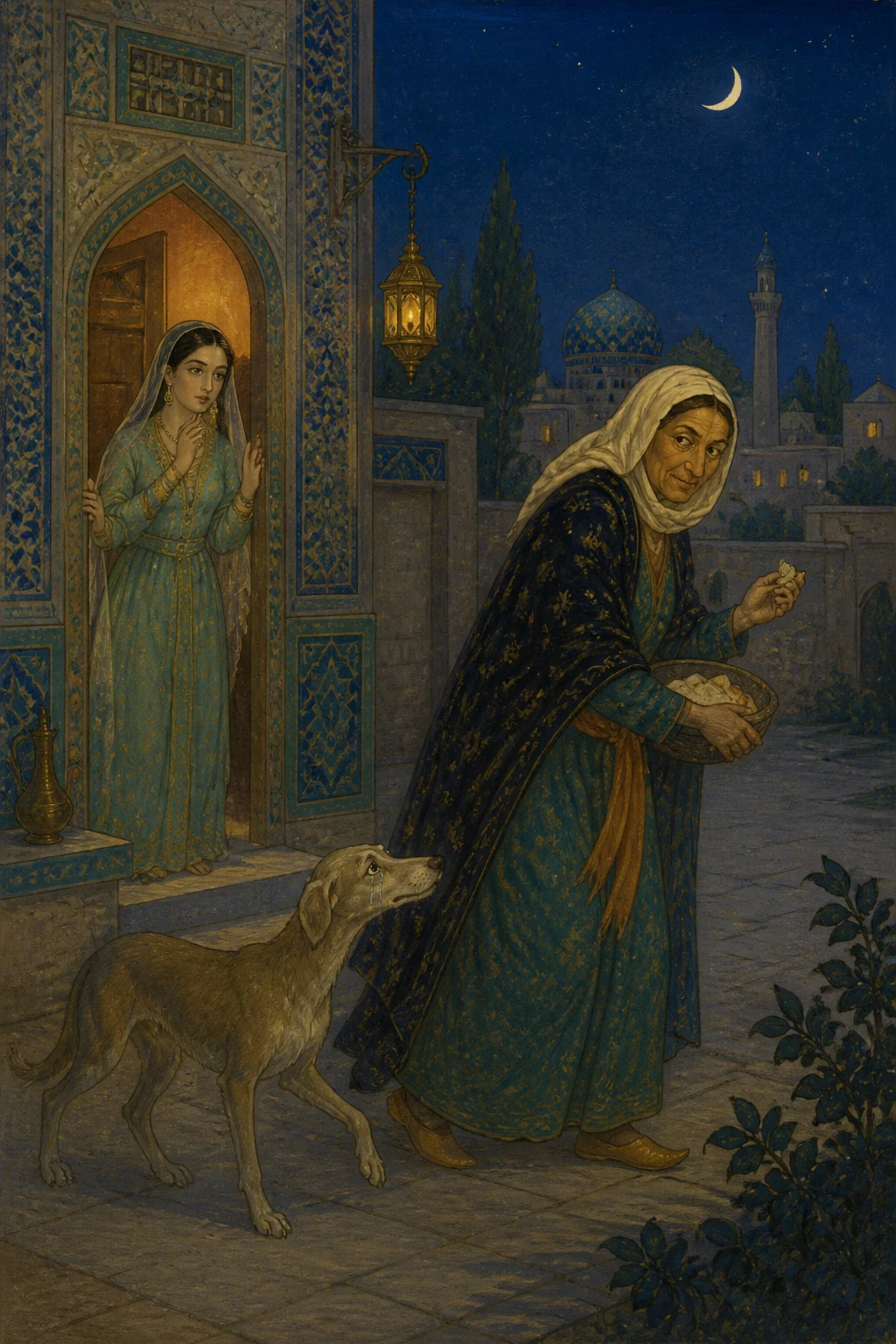
It is also told that a pilgrim once fell into a long sleep. When he awoke, he could see no trace of his fellow pilgrims, so he set off on foot and lost his way. He walked on until he came upon a tent, with an old woman at its entrance and a dog sleeping beside her. He approached, greeted the old woman, and asked her for food. “Go to that valley,” she told him, “and catch as many snakes as you need, and I will roast them for you to eat.” “I dare not catch snakes,” the man replied, “and I have never eaten them.” “I will go with you and catch them myself,” said the old woman. “Have no fear.” So she went with him, followed by the dog, and caught enough snakes for their needs, then began to roast them. The pilgrim saw that he had no choice but to eat, for he feared hunger and exhaustion, and so he ate some of the snakes. Then he grew thirsty and asked the old woman for water to drink. “There is the spring,” she said. “Go and drink from it.” He went to the spring and found its water bitter, yet, bitter though it was, his thirst left him no choice but to drink. Having drunk, he returned to the old woman and said, “How strange you are, old woman, to dwell in such a spot and remain in such a place!” But morning overtook Shahrazad, and she fell silent, leaving her tale untold.
When it was the four hundred and thirty-fifth night
She said: It has reached me, O fortunate King, that after the pilgrim had drunk from the bitter spring, driven by the severity of his thirst, he returned to the old woman and said, “I marvel at you, old woman, dwelling in such a place, feeding on such food, and drinking such water!” “What is your country like, then?” she asked him. He replied, “In our country there are spacious, airy houses, delicious ripe fruits, abundant sweet water, wholesome food, fat meat, flocks of sheep, and every good thing, as well as fair and virtuous women whose like can be found only in the Paradise that God Most High has described to His righteous servants.” The old woman said, “I have heard all this. Now tell me: have you a sultan who rules over you and deals unjustly with you while you are in his power? If one of you commits an offence, does he seize his wealth and put him to death? And if he wishes, does he drive you from your homes and root you out?” “That may indeed happen,” the man replied. “Then, by God,” said the old woman, “those delicate foods, that pleasant life, and those delicious comforts become deadly poison when accompanied by tyranny and oppression, while our food, eaten in safety, becomes a healing antidote. Have you not heard that the greatest blessings after Islam are health and security? These come only through the justice and wise governance of the sultan, God’s deputy on earth. The sultans of old wished for no more than a measure of awe, enough to make their subjects fear them at the sight of them. But a sultan in these times seeks the utmost skill in governance and the fullest authority, for people today are not as those of old. Ours is an age of people with vile qualities and grievous deeds: they are marked by folly and cruelty, and their hearts harbour hatred and enmity. If the sultan among them should be weak—God Most High forbid—or lack statecraft and authority, that would surely bring the country to ruin. As the proverb says, ‘A hundred years of a sultan’s tyranny are better than one year of the people’s tyranny over one another.’ And when the people become unjust, God sets over them a tyrannical sultan and an oppressive king. Thus it is related that one day a petition was presented to al-Hajjaj ibn Yusuf, in which was written, ‘Fear God, and do not oppress His servants so grievously.’ When he had read the petition, he mounted the pulpit, for he was an eloquent man, and said, ‘O people, God Most High has set me over you because of your deeds…’” But morning overtook Shahrazad, and she fell silent, leaving her tale untold.
When it was the four hundred and thirty-sixth night
She said: It has reached me, O fortunate King, that when al-Hajjaj ibn Yusuf had read the petition, he mounted the pulpit, for he was an eloquent man, and said, “O people, God Most High has set me over you because of your deeds. If I die, you will not escape oppression while you persist in these evil deeds, for God Most High has created many like me. If it were not I, there would be another more wicked, more unjust, and more ruthless than I, as the poet has said:
There is no hand but God’s hand is above it, And no oppressor but shall suffer one more unjust. Oppression is to be feared, while justice sets all things right. We ask God to mend our condition.”