Prevod
Among the tales that are told is that there once lived in Cairo a merchant possessed of great wealth in money, jewels, precious metals, and estates beyond counting. His name was Hasan al-Jawhari al-Baghdadi, and God had blessed him with a son of handsome face and shapely figure, rosy-cheeked, radiant, and perfect in grace and beauty. He named him Ali al-Misri and had him taught the Quran, learning, eloquence, and polite letters, until he became accomplished in every branch of knowledge. He worked under his father in trade, but his father fell ill, and as his condition worsened, he knew that death was near and summoned his son. Then dawn overtook Shahrazad, and she fell silent, leaving her tale untold.
When it was the four hundred and twenty-fifth night,
She said: It has reached me, O fortunate King, that when the merchant al-Jawhari al-Baghdadi fell ill and knew that death was near, he summoned his son, whose name was Ali al-Misri, and said to him, “My son, this world passes away, but the next endures, and every soul shall taste death. Now, my son, my end is drawing near, and I wish to leave you some counsel. If you follow it, you will live safe and happy until you meet God Most High; but if you neglect it, you will suffer grievously and regret having disregarded my advice.” His son replied, “Father, how could I fail to listen to your counsel and act upon it, when obedience to you is my duty and I am bound to heed your words?” He said, “My son, I leave you buildings, shops, merchandise, and wealth beyond counting. Even if you spent five hundred dinars every day, it would not diminish. Yet, my son, you must fear God and observe the duties He has commanded. Follow the Chosen Prophet, God bless him and grant him peace, in all the commands and prohibitions handed down in his tradition. Be constant in good works and acts of kindness, and keep company with the good, the righteous, and the learned. Take care of the poor and needy, shun greed and miserliness, and avoid the company of wicked and disreputable men. Treat your servants and your family with compassion, and your wife as well, for she is a daughter of a noble house and is carrying your child. Perhaps God will bless you with righteous offspring through her.” He continued to counsel him, weeping as he said, “My son, ask God the Generous, Lord of the mighty Throne, to deliver you from every hardship that may befall you and swiftly bring you relief.” The young man wept bitterly and said, “Father, by God, these words melt my heart. You speak as though you were bidding me farewell.” “Yes, my son,” he replied, “I know my condition. Do not forget my counsel.” Then the man began to recite the profession of faith and verses of the Quran until his appointed hour drew near. He said to his son, “Come close to me, my son.” He came close, and his father kissed him, gave a last gasp, and his soul departed his body, passing into the mercy of God Most High. His son was overcome with grief, and cries of mourning rose throughout the house. His father’s friends gathered, and he set about preparing him for burial, sending him forth with a splendid funeral procession. They carried his bier to the funeral prayers, prayed over him, then bore him to the cemetery and buried him. They recited what they could of the glorious Quran over his grave, then returned to the house, offered his son their condolences, and each went his way. His son held Friday memorial gatherings and complete recitations of the Quran for him until forty days had passed. He remained indoors, going out only to the place of prayer, and visited his father’s grave every Friday. For some time he continued in prayer, recitation, and worship, until his companions, the sons of merchants, came to see him. They greeted him and said, “How long will you go on grieving like this, neglecting your work and trade and keeping away from your friends? If this continues, it will do your health great harm.” When they entered, the accursed Iblis came with them, whispering in their hearts. They began urging him to go out with them to the market, while Iblis tempted him to agree, until at last he consented to leave the house with them. Then dawn overtook Shahrazad, and she fell silent, leaving her tale untold.
When it was the four hundred and twenty-sixth night,
She said: It has reached me, O fortunate King, that when the merchants’ sons came to the merchant Ali al-Misri, son of the merchant Hasan al-Jawhari, they urged him to go out with them to the market. He agreed, for a purpose willed by God, glorified and exalted be He, and left the house with them. They said, “Mount your mule and come with us to such-and-such a garden, where we can enjoy ourselves and drive away your sorrow and care.” He mounted his mule, took his slave with him, and accompanied them to the garden they had chosen. Once there, one of them went off, had lunch prepared, and brought it back to the garden. They ate, made merry, and sat talking until the end of the day. Then they mounted and departed, each returning home for the night. The next morning they came to him and said, “Come with us.” “Where to?” he asked. “To such-and-such a garden,” they replied. “It is finer and more delightful than the first.” He mounted and went with them to the garden they had chosen. When they arrived, one of them went off to have lunch prepared and brought it back to the garden, bringing intoxicating wine with him. They ate, and then the drink was brought out. “What is this?” Ali asked. They said, “This is what banishes sorrow and brings joy to light.” They kept praising it until they overcame his resistance, and he drank with them. They went on talking and drinking until the end of the day, then returned to their homes. But Ali al-Misri was dizzy with wine, and he went in to his wife in that state. “Why do you look so changed?” she asked. He replied, “We were enjoying ourselves today, and one of our friends brought us some water. My companions drank, and I drank with them, and it has made me dizzy.” His wife said, “My lord, have you forgotten your father’s counsel and done what he forbade you, keeping company with disreputable men?” He replied, “These are merchants’ sons, not disreputable men. They are merely fond of pleasure and good cheer.”
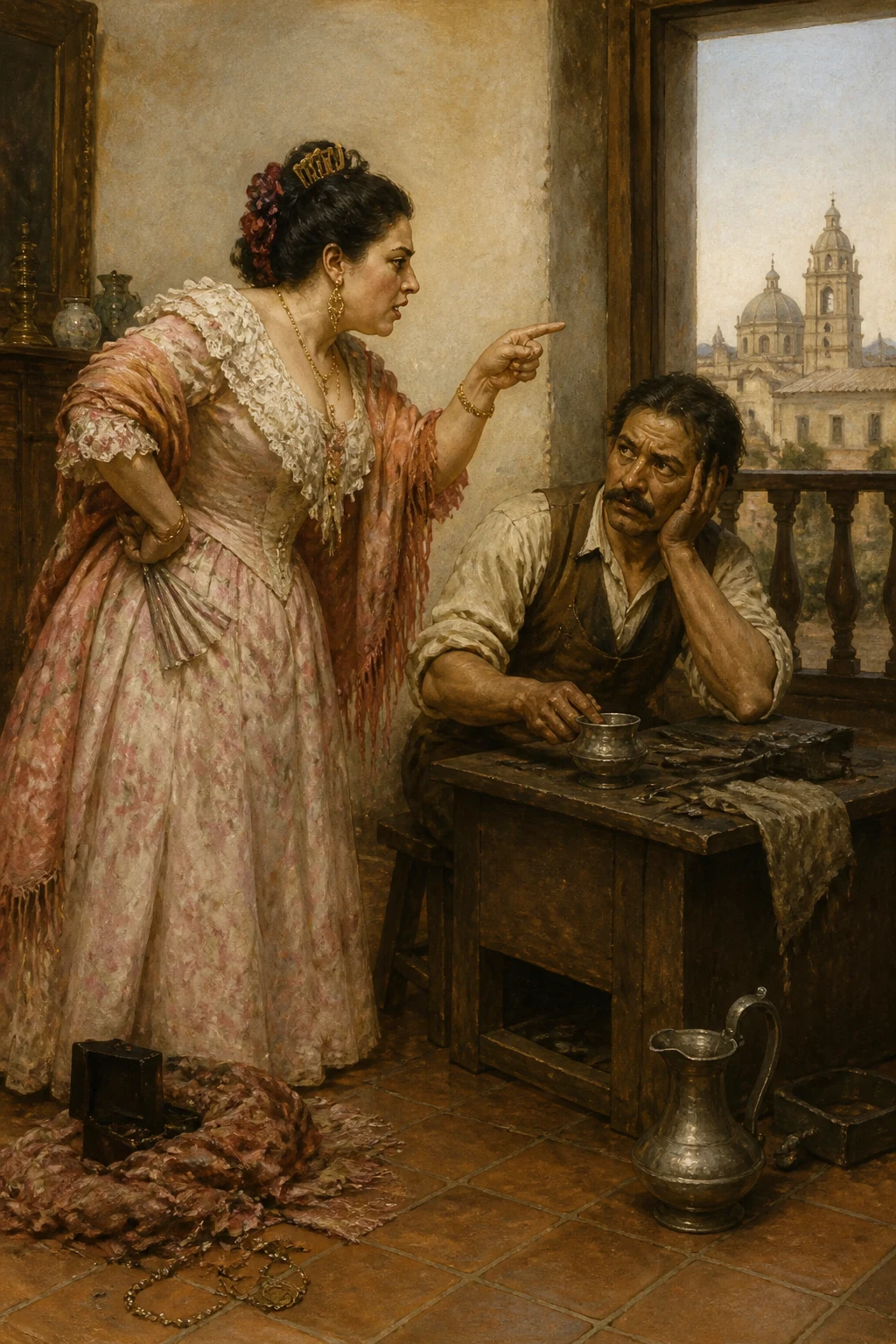
Every day he continued in this fashion with his companions, going from place to place, eating and drinking, until they said to him, “We have all taken our turns; now it is yours.” “Gladly and most willingly,” he replied. The next morning he provided all the food and drink the occasion required, many times more than they had supplied, and took cooks, servants to lay the carpets, and coffee-makers with him. They went to al-Rawda and the Nilometer and spent an entire month there, feasting, drinking, listening to music, and making merry. When the month was over, he found that he had spent a considerable sum. But the accursed Iblis beguiled him, saying, “Even if you spent as much every day, your wealth would not diminish.” So he paid no heed to his spending and continued in this way for three years. His wife advised him and reminded him of his father’s counsel, but he would not listen, until every coin he possessed was gone. Then he began taking jewels and selling them, spending their price until they too were exhausted. Next he sold his houses and properties until none remained, and then his farms and gardens, one after another, until all were gone and he owned nothing but the house in which he lived. He began stripping it of its marble and timber and selling them, until he had disposed of them all. Finding that he had nothing left to spend, he sold the house and spent its price. Then the man who had bought it came and said, “Find yourself somewhere else to live, for I need my house.” He considered his circumstances and found that he had nothing requiring a home except his wife, who had borne him a son and a daughter. He no longer had any servants, only himself and his family. So he rented a room in one of the courtyard tenements and settled there, after all his former luxury and ease, his many servants and his wealth. Now he did not even possess a day’s food. His wife said, “This is what I warned you of when I told you to heed your father’s counsel, but you would not listen. There is no power and no strength save in God, the Most High, the Almighty! Where are the little children to find food? Go now and visit your companions, the merchants’ sons. Perhaps they will give you something to keep us alive today.” He rose and went to his companions, one after another, but every man he approached turned his face away and greeted him with bitter, hurtful words. Not one gave him anything. He returned to his wife and said, “They gave me nothing.” So she rose to ask their neighbours for something. Then dawn overtook Shahrazad, and she fell silent, leaving her tale untold.
When it was the four hundred and twenty-seventh night,
She said: It has reached me, O fortunate King, that when the husband of Ali al-Misri’s wife, the son of the merchant Hasan al-Jawhari, returned to her empty-handed, she went to her neighbours to ask for something to sustain them that day. She visited a woman she had known in former days. When she entered and the woman saw her plight, she rose, welcomed her warmly, and wept, saying, “What has happened to you?” She told her everything her husband had done, and the woman said, “You are most welcome. Whatever you need, ask me for it, and I shall ask nothing in return.” “May God reward you,” she replied. The woman then gave her enough provisions for herself and her family for a whole month. She took them and returned to her lodging. When her husband saw her, he wept and said, “Where did you get this?” She replied, “From such-and-such a woman. When I told her what had happened, she spared no effort to help and said, ‘Whatever you need, ask me for it.’” Her husband said, “Now that you have this, I shall set out for a place I have in mind. Perhaps God Most High will bring us relief.” He bade her farewell, kissed his children, and went out, not knowing where to turn. He walked on until he reached Bulaq, where he saw a ship about to sail for Damietta. A man who had been a friend of his father’s saw him, greeted him, and asked, “Where are you bound?” He replied, “For Damietta. I have friends there whom I mean to seek out and visit, and then I shall return.” The man took him home, treated him generously, prepared provisions for his journey, gave him some dinars, and put him aboard the ship bound for Damietta. When they arrived, he disembarked, not knowing where to go.
As he walked along, a merchant saw him, took pity on him, and brought him home. He stayed with him for a time, then said to himself, “How long am I to go on living in other people’s houses?” He left the merchant’s home and saw a ship bound for Syria. The man with whom he had been staying prepared provisions for him and put him aboard. They sailed until they reached the Syrian coast, where he disembarked and travelled on to Damascus. As he walked through its streets, a kindly man saw him and took him home, and he stayed with him for a while. Then one day he went out and saw a caravan bound for Baghdad, and the thought came to him to travel with it. He returned to the merchant in whose house he was staying, bade him farewell, and set out with the caravan. God, glorified and exalted be He, moved one of the merchants to pity him, and the man took him under his care, sharing his food and drink with him. When they were only a day’s journey from Baghdad, a band of highwaymen fell upon the caravan, took everything they had, and spared only a few of them. Each of the survivors went off in search of shelter, while Ali al-Misri made for Baghdad. He reached it at sunset, and as he approached the city gate, he saw the gatekeepers about to close it. “Let me come in,” he called. They admitted him and asked, “Where have you come from, and where are you going?” He replied, “I am a man from Cairo, and I have merchandise, mules, loads of goods, slaves, and servants with me. I went ahead to find a place to store my merchandise, but as I rode on my mule, a band of highwaymen met me and took my mule and my belongings. I barely escaped with my life.” They treated him kindly and said, “You are welcome. Spend the night with us, and in the morning we shall find a place fit for you.” He searched his pocket and found one dinar left from the money the merchant at Bulaq had given him. He handed it to one of the gatekeepers and said, “Take this, change it, and bring us something to eat.” The man took it to the market, changed it, and returned with bread and cooked meat. Ali ate with them and slept there until morning.
Then one of the gatekeepers took him to a Baghdad merchant and told him his story. The man believed it and supposed that he was a merchant with loads of goods on the way. He welcomed him into his shop, treated him with honour, and sent home for a splendid suit of his own clothes, then took him to the bathhouse. Ali al-Misri, son of the merchant Hasan al-Jawhari, said: “I went into the bath with him, and when we came out, he took me to his house and had lunch brought for us. We ate and enjoyed ourselves, and he said to one of his slaves, ‘Masud, take your master and show him the two houses in such-and-such a place. Give him the key to whichever he likes, then come back.’ The slave and I went off until we reached a lane where three newly built houses stood side by side, all locked. He opened the first, and I looked it over; then we went out and entered the second, which he opened for me to inspect. ‘Which one shall I give you the key to?’ he asked. I said, ‘And whose is that large house?’ ‘Ours,’ he replied. ‘Open it,’ I said, ‘so that we may look inside.’ He said, ‘You have no need of that one.’ ‘Why not?’ I asked. ‘Because it is haunted,’ he replied. ‘No one has ever lodged there without being found dead in the morning. We do not open its door to bring out the dead man, but climb onto the roof of one of the other houses and carry him out that way. That is why my master abandoned it and said, “I shall never give it to anyone again.”’ I said, ‘Open it for me, so I may look inside.’ And I said to myself, ‘This is just what I want. I shall spend the night there, be dead by morning, and find relief from my present misery.’ He opened it, and I went in and found a magnificent house without equal. I said to the slave, ‘This is the only house I shall choose. Give me its key.’ He replied, ‘I cannot give you the key until I consult my master.’” Then dawn overtook Shahrazad, and she fell silent, leaving her tale untold.
When it was the four hundred and twenty-eighth night,
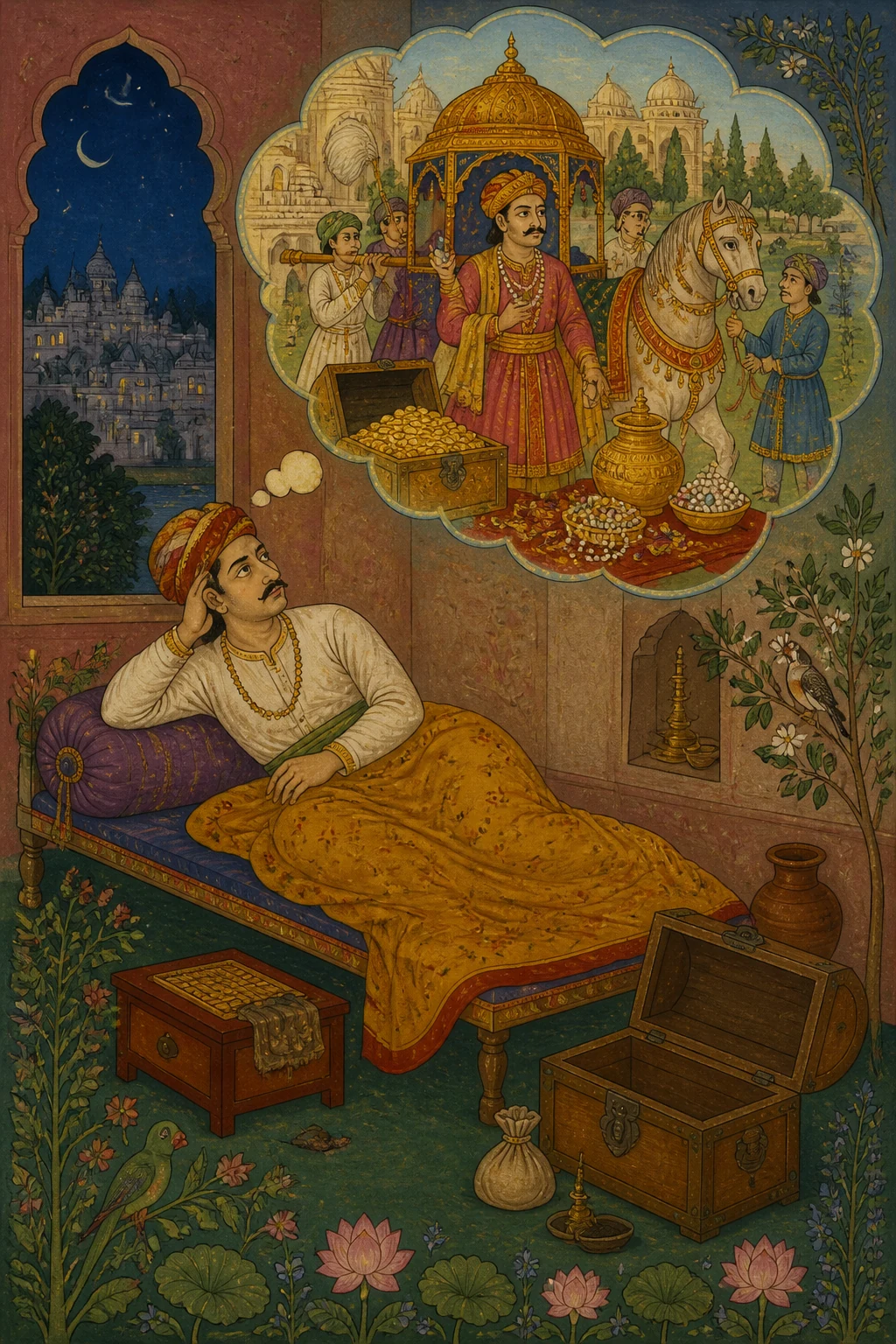
She said: It has reached me, O fortunate King, that the slave said to him, “I cannot give you the key until I consult my master.” He went to his master and said, “The Egyptian merchant says, ‘I will live nowhere but in the large house.’” The merchant rose, went to Ali al-Misri, and said, “My lord, you have no need of that house.” Ali al-Misri replied, “I will live nowhere else, and I care nothing for these stories.” The merchant said, “Then I shall have a deed drawn up between us, stating that if anything happens to you, I bear no responsibility.” “Agreed,” he replied. The merchant brought a legal witness from the court, had the deed drawn up, kept it in his possession, and gave Ali the key. He took it and entered the house. The merchant sent him bedding with a slave, who laid it out on the raised bench behind the door and departed. Ali al-Misri then rose and went farther inside, where he found a well in the courtyard with a bucket beside it. He lowered the bucket into the well, filled it, performed his ablutions, said his prescribed prayers, and sat for a while. The slave came with supper from his master’s house, bringing a lamp, a candle and candlestick, a basin, a ewer, and a water jar. Then he left him and returned to his master’s house. Ali lit the candle, ate his supper contentedly, and said the evening prayer. Then he thought to himself, “Get up, take the bedding upstairs, and sleep there. It will be better than down here.” He rose, carried the bedding upstairs, and found a magnificent hall with a gilded ceiling and floor and walls of coloured marble. He spread his bedding and sat reciting a portion of the glorious Quran. Suddenly he heard a voice calling, “Ali, son of Hasan, shall I send down the gold upon you?” He replied, “Where is this gold you mean to send down?” No sooner had he spoken than gold came pouring down upon him as though hurled from a catapult. It continued pouring until it filled the hall. When the shower of gold ceased, the voice said, “Set me free so that I may go my way, for my service is ended.” Ali al-Misri said, “I adjure you by Almighty God to tell me the reason for this gold.” The voice replied, “This gold has been kept under enchantment for you since ancient times. Whenever anyone entered this house, we would come and say, ‘Ali, son of Hasan, shall we send down the gold?’ He would take fright at our words and scream, so we would descend upon him, break his neck, and depart. But when you came, and we called you by your name and your father’s name and asked, ‘Shall we send down the gold?’ you replied, ‘Where is the gold?’ Then we knew that you were its rightful owner, and we sent it down. There is still a treasure for you in the land of Yemen. It would be best for you to travel there, take it, and return here. Now I ask you to set me free, so that I may go my way.” He replied, “By God, I will not set you free unless you bring me what is in Yemen.” “If I bring it to you,” the voice asked, “will you set me free, and the guardian of that treasure as well?” “Yes,” he replied. “Swear it to me.” He swore, and as the guardian was about to depart, Ali al-Misri said, “There is one more thing I need from you.” “What is it?” he asked. “I have a wife and children in Cairo, in such-and-such a place. You must bring them to me in comfort and without harm.” He replied, “I shall bring them to you in a procession, with a travelling litter, servants, and attendants, together with the treasure we shall fetch from Yemen, if God Most High wills.”
He then asked leave to depart for three days, by the end of which all these things would be brought to him, and went away. In the morning Ali searched the hall for a place to store the gold. At the end of the hall’s raised recess he saw a marble slab with a screw set into it. He turned the screw, and the slab slid aside, revealing a door. He opened it and went in, finding a large storeroom containing sewn cloth bags. He began filling the bags with gold and carrying them into the storeroom, until he had moved all the gold inside. Then he locked the door and turned the screw, and the marble slab returned to its place. He went downstairs and sat on the bench behind the door. As he sat there, someone knocked. He rose and opened the door, and there stood the house-owner’s slave. When the slave saw him sitting there alive, he hurried back to his master. Then dawn overtook Shahrazad, and she fell silent, leaving her tale untold.
When it was the four hundred and twenty-ninth night,
She said: It has reached me, O fortunate King, that when the house-owner’s slave came and knocked at the door of Ali al-Misri, son of the merchant Hasan, Ali opened it. Seeing him sitting there alive, the slave hurried back to bring his master the good news. When he reached him, he said, “My lord, the merchant who lodged in the house haunted by jinn is safe and well. He is sitting on the bench behind the door.” His master rose joyfully and went to the house, taking breakfast with him. When he saw Ali, he embraced him, kissed him between the eyes, and said, “How has God dealt with you?” “Kindly,” he replied. “I slept upstairs in the marble hall.” “Did anything come to you, or did you see anything?” he asked. “No,” said Ali. “I simply recited what I could of the glorious Quran and slept until morning. Then I rose, performed my ablutions, came downstairs, and sat on the bench.” “Praise be to God for your safety,” said the merchant. He then left and sent him slaves, mamluks, slave girls, and furnishings. They swept the house from top to bottom and furnished it magnificently. Three mamluks, three slaves, and four slave girls remained to serve him, while the others returned to their master’s house. When the merchants heard his story, they sent him gifts of every precious kind, as well as food, drink, and clothing. They took him with them to the market and asked, “When is your caravan coming?” “It will arrive in three days,” he replied. When the three days had passed, the guardian of the first treasure, who had sent the gold down into the house, came and said, “Come out to meet the treasure I have brought you from Yemen, and your family. With them is part of the treasure made up to look like a great consignment of merchandise.” All the mules, horses, camels, servants, and mamluks accompanying it were jinn. The guardian had gone to Cairo and found that in the meantime Ali’s wife and children had fallen into dire hunger and want of clothing. He had carried them from their lodging to a travelling litter outside Cairo and dressed them in splendid robes from the treasure of Yemen. When he came and told Ali this news, Ali rose and went to the merchants, saying, “Come with us outside the city to meet the caravan bringing our merchandise. Honour us by bringing your wives to welcome our womenfolk.” “We hear and obey,” they replied. They sent for their wives, and all went out and sat talking in one of the city’s gardens.
While they were talking, a cloud of dust rose from the heart of the wilderness. They stood to see what had caused it, and as it cleared, mules and men appeared, with baggage handlers, carpet servants, and torchbearers, approaching with singing and dancing. When they arrived, the chief baggage handler came forward to Ali al-Misri, son of the merchant Hasan al-Jawhari, kissed his hand, and said, “My lord, we were delayed on the road. We meant to enter yesterday, but feared the highwaymen, so we stayed where we were for four days, until God Most High turned them away from us.” The merchants rose, mounted their mules, and rode with the caravan. Their wives remained behind with the wife of the merchant Ali al-Misri until they too mounted and entered the city in a splendid procession. The merchants marvelled at the mules laden with chests, while their wives marvelled at the clothes worn by Ali’s wife and children, saying, “The king of Baghdad himself has nothing like these garments, nor have any of the other kings, great lords, or merchants.” They continued in procession, the men with the merchant Ali al-Misri and the women with his family, until they entered the house. Then dawn overtook Shahrazad, and she fell silent, leaving her tale untold.
When it was the four hundred and thirtieth night,
She said: It has reached me, O fortunate King, that they continued in procession, the men with the merchant Ali al-Misri and the women with his family, until they entered the house and dismounted. They brought the laden mules into the courtyard, unloaded them, and stored their burdens in the storerooms. The women went upstairs with Ali’s wife to the hall and found it like a luxuriant garden, magnificently furnished. They sat in delight and pleasure until noon, when lunch was brought up to them, consisting of the finest dishes and sweetmeats. They ate, drank exquisite sherbets, and afterwards refreshed themselves with rosewater and incense. Then the men and women bade their hosts farewell and returned to their homes. Once the merchants were home, they began sending him gifts according to their means, and their wives sent gifts to his wife, until a great many slave girls, slaves, and mamluks had come to them, together with grain, sugar, and all manner of good things beyond counting. As for the Baghdad merchant who owned the house in which Ali lived, he remained with him and would not leave. He said, “Let the slaves and servants put the mules and the other animals into one of the houses to rest.” Ali replied, “They are setting out tonight for such-and-such a place.” He gave them leave to go outside the city and wait there until nightfall before departing. They could hardly wait for this permission; they bade him farewell, went beyond the city, and flew through the air to their own abodes.
The merchant Ali sat with the owner of his house until a third of the night had passed. Then their gathering broke up, and the house-owner went home. Ali went upstairs to his family, greeted them, and said, “What happened to you during the time I was away?” His wife told him of the hunger, nakedness, and hardship they had suffered. He said, “Praise be to God for your safe arrival. How did you come?” She replied, “My lord, last night, as I lay sleeping with my children, suddenly something lifted us from the ground, and we found ourselves flying through the air. Yet no harm befell us. We flew on until we came down in a place like an Arab encampment. There we saw laden mules and a travelling litter borne between two great mules, surrounded by servants, both youths and grown men. I asked them, ‘Who are you? What are these loads? And where are we?’ They replied, ‘We are the servants of the merchant Ali al-Misri, son of the merchant Hasan al-Jawhari. He has sent us to fetch you and bring you to him in Baghdad.’ I asked, ‘Is Baghdad far from here or near?’ They said, ‘It is near. Only the darkness of this night lies between us and it.’ Then they seated us in the litter, and by morning we were here with you, without having suffered the slightest harm.” He asked, “And who gave you these clothes?” She replied, “The leader of the caravan. He opened one of the chests on the mules and took out these robes. He dressed me in one and gave each of your children another. Then he locked the chest from which he had taken them, gave me its key, and said, ‘Keep this safe until you can give it to your husband.’ I have it safely here.” She took it out, and he asked, “Would you recognize the chest?” “Yes,” she replied. He rose and went down with her to the storerooms and showed her the chests. “This is the chest from which he took the robes,” she said. He took the key from her, put it in the lock, and opened it. Inside he found many robes, together with the keys to all the other chests. He took them and began opening the chests one by one, examining the jewels and precious metals they contained, treasures the like of which no king possessed. Then he locked them, took their keys, and went upstairs with his wife to the hall. “This is of the bounty of God Most High,” he said. Afterwards he led her to the marble slab with the screw in it, turned it, opened the storeroom door, and went inside with her, showing her the gold he had placed there. She asked, “Where did all this come from?” He replied, “It came to me through my Lord’s bounty. When I left you in Cairo…” Then dawn overtook Shahrazad, and she fell silent, leaving her tale untold.
When it was the four hundred and thirty-first night,
She said: It has reached me, O fortunate King, that when the merchant Ali al-Misri showed his wife the gold, she asked, “Where did all this come from?” He replied, “It came to me through my Lord’s bounty. When I left you in Cairo, I went out without knowing where to go. I walked until I reached Bulaq, where I found a ship bound for Damietta and went aboard. When I reached Damietta, a merchant who had known my father met me, took me home, and treated me generously. He asked, ‘Where are you travelling?’ I said, ‘I wish to go to Damascus in Syria, for I have friends there.’” He told her everything that had happened to him from beginning to end. She said, “My lord, all this comes through the blessing of your father’s prayers. Before he died, he used to pray for you, saying, ‘I ask God never to let you fall into hardship without swiftly bringing you relief.’ Praise be to God Most High, who has brought you relief and restored to you more than you lost. But I implore you by God, my lord, do not return to your old ways of keeping company with disreputable men. Fear God Most High in private and in public.” She continued to counsel him, and he said, “I accept your counsel, and I ask God Most High to keep evil companions far from us and grant us the grace to obey Him and follow the tradition of His Prophet, God bless him and grant him peace.” He, his wife, and his children now lived in the greatest comfort. He acquired a shop in the merchants’ market, stocked it with jewels and precious metals, and sat there with his children and mamluks about him. He became the most esteemed merchant in Baghdad. The king of Baghdad heard of him and sent a messenger to summon him. When the messenger came, he said, “Answer the king’s summons, for he wishes to see you.” “I hear and obey,” Ali replied. Then he prepared a gift for the king, taking four trays of red gold and filling them with jewels and precious metals the like of which no king possessed. He took the trays and went up to the king.
When he entered, he kissed the ground before him, prayed that his glory and blessings might endure, and addressed him in the most gracious terms. The king said, “Merchant, you have honoured our land with your presence.” He replied, “King of the age, your servant has brought you a gift and hopes that in your kindness you will accept it.” He set the four trays before him. The king uncovered them and examined their contents, finding jewels such as he did not possess, worth whole treasuries of wealth. He said, “Your gift is accepted, merchant, and, if God Most High wills, we shall reward you with its like.” Ali kissed the king’s hands and withdrew. The king summoned the great officers of his realm and asked, “How many kings have sought my daughter’s hand?” “Many,” they replied. “Has any one of them given me a gift like this?” They all said, “No, for none of them possesses anything like it.” The king said, “I have sought God Most High’s guidance about marrying my daughter to this merchant. What do you say?” They replied, “The decision is yours.” He ordered the eunuchs to carry the four trays and their contents into his private palace. Then he went to his wife and set the trays before her. She uncovered them and saw things of which she did not possess a single equal. “Which king sent these?” she asked. “Perhaps one of the kings who have sought your daughter’s hand?” He replied, “No. They are from an Egyptian merchant who has come to our city. When I heard of his arrival, I sent a messenger to bring him to us, so that we might make his acquaintance and perhaps find jewels to buy for our daughter’s trousseau. He obeyed our command and brought us these four trays as a gift. I found him a handsome young man, dignified, sound of judgment, and elegant in appearance, so that he might almost have been a king’s son. When I saw him, my heart inclined towards him and warmed to him, and I wished to marry our daughter to him. I showed the gift to the officers of my realm and asked, ‘How many kings have sought my daughter’s hand?’ They said, ‘Many.’ I asked, ‘Has any one of them brought me anything like this?’ They all replied, ‘No, by God, King of the age! Not one of them possesses its like.’ I said, ‘I have sought God Most High’s guidance about marrying my daughter to him. What do you say?’ They replied, ‘The decision is yours.’ Now what is your answer?” Then dawn overtook Shahrazad, and she fell silent, leaving her tale untold.
When it was the four hundred and thirty-second night,
She said: It has reached me, O fortunate King, that when the king of Baghdad showed the gift to his wife, described the qualities of the merchant Ali al-Jawhari, and told her that he wished to marry their daughter to him, he asked, “Now what is your answer?” She replied, “The decision rests with God and with you, King of the age. What God wills shall be.” He said, “If God Most High wills, we shall marry her to no one but this young man.” He passed the night, and in the morning went to his court and ordered the merchant Ali al-Misri and all the merchants of Baghdad to be brought before him. They all came, and when they stood in his presence, he bade them sit, and they sat. Then he said, “Bring the judge of the court.” The judge came before him, and he said, “Judge, draw up the marriage contract between my daughter and the merchant Ali al-Misri.” Ali al-Misri said, “Pardon me, our lord the Sultan, but a merchant such as I is not fit to be the king’s son-in-law.” The king replied, “I have bestowed this honour upon you, and the vizierate as well.” He immediately invested him with a vizier’s robe of honour. Ali sat in the vizier’s chair and said, “King of the age, you have bestowed this favour upon me, and I am honoured by your generosity. But hear one word I have to say.” “Speak without fear,” said the king. Ali said, “Since your noble command has been given for your daughter’s marriage, let her marriage be to my son.” “Have you a son?” asked the king. “Yes,” he replied. “Send for him this very moment,” said the king. “I hear and obey,” Ali answered. He sent one of his mamluks to fetch his son, who came before the king, kissed the ground before him, and stood respectfully. The king looked at him and found him more beautiful than his daughter, surpassing her in shapeliness, grace, radiance, and perfection. “What is your name, my son?” he asked. “Our lord the Sultan, my name is Hasan,” he replied. He was then fourteen years old. The king said to the judge, “Draw up the marriage contract between my daughter Husn al-Wujud and Hasan, son of the merchant Ali al-Misri.” The judge drew up the contract, and the matter was concluded most happily. Everyone in the court departed, and the merchants followed the vizier Ali al-Misri down to his house, now that he held the office of vizier. They congratulated him on his good fortune, and each went his way.
Then the vizier Ali al-Misri went in to his wife. When she saw him wearing the robes of the vizierate, she asked, “What is this?” He told her the whole story from beginning to end, and said, “The king has given his daughter in marriage to my son Hasan.” She rejoiced exceedingly at this. Ali al-Misri passed the night at home, and when morning came he went up to the council chamber. The king received him graciously, seated him at his side, and showed him great favor. “Vizier,” he said, “we wish to hold the wedding festivities and bring your son to my daughter.” He replied, “My lord Sultan, whatever you deem good is good.” So the king ordered the festivities to begin, and they adorned the city. For thirty days they celebrated in happiness and delight, and at the end of the thirty days Hasan, the vizier’s son, went in to the king’s daughter and enjoyed her loveliness and beauty. As for the queen, when she saw her daughter’s husband, she grew very fond of him, and she was also exceedingly pleased with his mother.
Then the king ordered a palace to be built for Hasan, the vizier’s son. They quickly built him a magnificent palace, and he took up residence there. His mother would stay with him for a few days, then return to her own house. The queen said to her husband, “O King of the Age, Hasan’s mother cannot stay with her son and leave the vizier, nor can she stay with the vizier and leave her son.” “You speak truly,” he replied, and ordered a third palace to be built beside that of Hasan, the vizier’s son. They built it in a few days, and the king ordered the vizier’s belongings to be moved there. This was done, and the vizier took up residence in it. The three palaces were connected to one another, so whenever the king wished to speak with the vizier, he would walk over to him at night or send for him. The same was true of Hasan and his mother and father, and they continued together in contentment and pleasant living. But morning overtook Shahrazad, and she fell silent, leaving her tale untold.
When it was the four hundred and thirty-third night
She said: It has reached me, O fortunate king, that the king, the vizier, and his son continued together in contentment and pleasant living for some time. Then the king fell ill, and his sickness grew worse. He summoned the great officers of his realm and said to them, “A grievous sickness has come upon me, and it may be my death sickness. I have summoned you to consult you on a matter, so advise me as you think best. I have grown old and fallen ill, and I fear that after my death enemies may threaten the kingdom. I wish you all to agree upon one man, so that I may pledge my allegiance to him as king while I am still alive, and you may be at ease.” They all replied, “We are all content with your daughter’s husband, Hasan, the son of the vizier Ali. We have seen his wisdom, his excellence, and his understanding, and he knows the respect due to high and low alike.” The king asked them, “Are you truly content with this?” “Yes,” they answered. He said, “Perhaps you say this in my presence out of deference to me, but behind my back you will say otherwise!” They all replied, “By God, what we say openly and what we hold in our hearts are one and the same, and will not change. We have chosen him willingly and with glad hearts.” He said, “If that is so, bring before me tomorrow the judge of the holy law, all the chamberlains and deputies, and every officer of state, and we shall settle the matter in the best possible way.” “We hear and obey,” they replied. Then they withdrew and notified all the scholars and the leading men among the emirs.
When morning came, they went up to the council chamber and sent to the king to ask leave to enter his presence. He granted it, and they entered, saluted him, and said, “We have all assembled before you.” The king said to them, “O emirs of Baghdad, whom will you accept as your king after me, so that I may pledge allegiance to him during my lifetime, before my death, in the presence of you all?” They answered with one voice, “We have agreed upon Hasan, son of the vizier Ali and husband to your daughter.” He said, “If that is so, rise, all of you, and bring him before me.” They all rose and went to his palace, where they said to him, “Come with us to the king.” “For what reason?” he asked. They replied, “For a matter that will benefit both us and you.” So he rose and accompanied them into the king’s presence. Hasan kissed the ground before him, and the king said, “Sit down, my son.” He sat, and the king said to him, “Hasan, all the emirs have declared themselves content with you and agreed to make you their king after me. I wish to pledge allegiance to you during my lifetime, so that the matter may be settled.” At this Hasan rose, kissed the ground before the king, and said, “My lord King, among the emirs are men older in years and higher in rank than I. Pray excuse me from this charge.” But all the emirs said, “We will accept no one but you as our king.” He replied, “My father is older than I, and my father and I are one. It would not be right to set me above him.” His father said to him, “I desire only what my brethren desire. They have chosen you and agreed upon you, so do not oppose the command of the king or the wishes of your brethren.” Hasan lowered his head, abashed before the king and his father. The king asked them, “Are you content with him?” “We are content,” they replied. Then they all recited the Opening Chapter of the Quran seven times to solemnize their agreement, and the king said, “Judge, draw up a legal deed recording that these emirs have agreed upon the sovereignty of Hasan, my daughter’s husband, and that he shall be their king.” The judge drew up the deed and duly ratified it after they had all pledged allegiance to Hasan as king. The king too pledged allegiance to him, and bade him sit upon the throne. Then they all rose, kissed the hands of King Hasan, the vizier’s son, and declared their obedience to him. That day he ruled with great distinction and bestowed splendid robes of honor upon the officers of state. When the council dispersed, Hasan went in to his wife’s father and kissed his hands. He said to him, “Hasan, fear God in your dealings with your subjects.” But morning overtook Shahrazad, and she fell silent, leaving her tale untold.
When it was the four hundred and thirty-fourth night
She said: It has reached me, O fortunate king, that when King Hasan had finished in the council chamber, he went in to his wife’s father and kissed his hands. He said to him, “My son, fear God in your dealings with your subjects.” Hasan replied, “With your prayers for me, my father, I shall be granted success.” Then he entered his palace, where his wife, her mother, and their attendants came to meet him, kissed his hands, and said, “A blessed day!” They congratulated him on his new dignity. Then he left his palace and entered his father’s, where they rejoiced exceedingly in God’s favor in granting him the kingship. His father charged him to fear God and show compassion to his subjects. He passed that night in joy and happiness until morning, then performed his prescribed prayer, completed his daily devotions, and went up to the council chamber. All the troops and officers of state came before him. He judged between the people, enjoined what was right and forbade what was wrong, appointed men to office and dismissed others, and continued governing until the end of the day. Then the council dispersed in good order, the troops withdrew, and each man went his way. Hasan rose and entered the palace, where he found his wife’s father greatly weakened by his illness. “May no harm befall you,” he said. The king opened his eyes and said, “Hasan.” “At your service, my lord,” he answered. He said to him, “My end is now near. Take good care of your wife and her mother, fear God, and honor your parents. Stand in awe of the Sovereign Judge, and know that God commands justice and kindness.” King Hasan replied, “I hear and obey.” The old king lived three days more, then passed into the mercy of God Most High. They prepared his body for burial and shrouded him, and held recitations and complete readings of the Quran for him until the forty days were ended. King Hasan, the vizier’s son, became sole ruler, and his subjects rejoiced in him. All his days were happy. His father remained his chief vizier at his right hand, and he appointed another vizier at his left. Under him the affairs of the realm prospered, and he reigned in Baghdad for many years. The king’s daughter bore him three sons, who inherited the kingdom after him, and they lived in the greatest comfort and happiness until there came to them the Destroyer of Delights and the Sunderer of Companies. Glory be to Him who alone endures, and in whose hand lie the undoing and the making fast of all things.