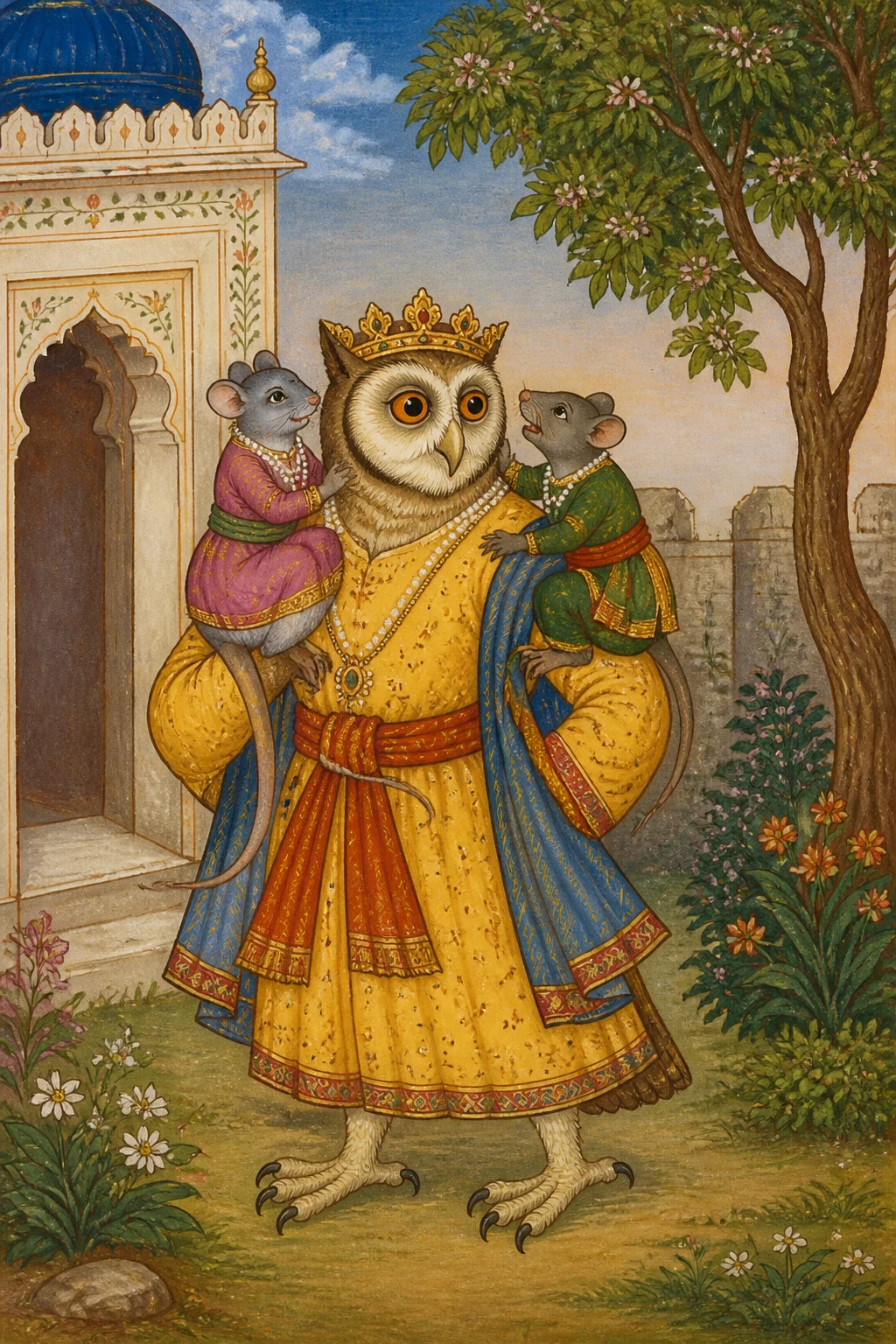
Waltey
Miška izbira ženina
Pančatantra · indijska zbirka pripovediO besedilu
Miška izbira ženina
- Vir
- Pančatantra
- Avtor
- indijska zbirka pripovedi
- Jezik branja
- English
- Jezik izvirnika
- Sanskrit
- Čas branja
- 15 min branja
- Obseg
- 12 strani
- Naslov izvirnika
- Tantra 03 kakolukiya chunk 5
O izvirniku
Pančatantra
Indijske zgodbe o zvijači, prijateljstvu in modrosti v svetu živali in vladarjev. Bralni jezik je English, izvirnik pa prihaja iz vira Pančatantra v jeziku Sanskrit.
Besedilo
Miška izbira ženina
When the foolish wheelwright heard these words of hers, his body thrilled with delight. Crawling out from beneath the bed, he said to her, “Well done, faithful wife! Well done, glory of your family! My heart was troubled by the slanders of wicked people, so I pretended to leave for another village and hid quietly beneath the bed to test you. Come, embrace me! You are foremost among women devoted to their husbands, for even in another man’s company you have preserved so sacred a vow. You did this to prolong my life and save me from an untimely death!” With these words he embraced her lovingly. Then he lifted her onto his shoulder and said to Devadatta, “Noble sir! It is through the merit of my good deeds that you have come here. By your favor I have gained a life of a hundred years. You too must embrace me and climb onto my shoulder!” So saying, he embraced the unwilling Devadatta and forcibly hoisted him onto his other shoulder. Then he danced about, saying, “Foremost of those who keep sacred vows! You too have done me a great kindness!” After letting them down, he wandered from door to door among his relatives and friends, everywhere singing the praises of them both.
“That is why I say, ‘Even when the sin is committed before his very eyes . . .’ (193).
“We are utterly uprooted now; we are ruined. Well indeed is it said:
“The discerning regard as enemies in the guise of friends
Those who reject sound advice and pursue its opposite.
And again:
“Even well-established undertakings come to nothing when they run counter to time and place,
Under foolish ministers, as darkness vanishes at sunrise.”
Ignoring his words, they all lifted Sthirajīvin and began carrying him to their stronghold. As he was being carried along, Sthirajīvin said, “Your Majesty, what use is there in taking me in, helpless and useless as I am? I wish to enter a blazing fire. Be so kind as to grant me fire and deliver me.” Raktākṣa, discerning his hidden purpose, asked, “Why do you wish to cast yourself into the fire?”
He replied, “Meghavarṇa has brought me to this misery on your account. I therefore wish to be reborn as an owl, so that I may take vengeance upon the crows.”
Hearing this, Raktākṣa, who was skilled in statecraft, said, “My good fellow, you are crafty and clever at fabricating speeches. Even if you were born an owl, you would still cherish your own crow-kind above all. There is a tale about this:
“Rejecting the Sun as her husband, then the Cloud, the Wind, and the Mountain,
The mouse returned to her own kind: one’s own nature is hard to overcome.”
The ministers asked, “How was that?” Raktākṣa told the story. Tale 11: The Mouse Saved by Śālaṅkāyana. In a certain place there lived an ascetic named Śālaṅkāyana, whose wealth was his penance. One day he went to bathe in the Ganges. While he was worshipping the Sun, a hawk nearby caught a little mouse in the grip of its sharp talons. At the sight, the sage’s heart melted with pity. Crying, “Let her go! Let her go!” he hurled a stone at the hawk. Stunned by the blow, the hawk dropped the mouse and fell to the ground. The mouse, terrified and not knowing what to do, hurried to the sage’s feet, crying, “Save me! Save me!” When the hawk recovered its senses, it said to the sage, “Sage, you have acted wrongly in striking me with a stone. Do you not fear unrighteousness? Give me back this mouse, or you will incur a grievous sin.” The sage answered the hawk, “Vilest of birds! The lives of living creatures must be protected. The wicked must be punished, the good honored, elders revered, and the gods praised. Why do you babble such nonsense?”
The hawk said, “Sage, you do not understand the subtleties of duty. When the Creator made all living creatures, he also ordained their food. Just as grain is appointed as food for you, mice and such creatures are appointed for us. Why do you blame me for seeking my proper food? For it is said:
“Whatever food is ordained for a creature brings it no guilt;
Eating forbidden food brings great fault. One must not confuse the two.
“What is lawful food for the twice-born, and sacrificial fare for drinkers of liquor,
May be forbidden to others; so too, Brahmin, what is forbidden to one may be food for another.
“Eating lawful food is wholesome; eating forbidden food is a grave sin.
How, then, you false ascetic, can you rightly punish me?
“Besides, this is not the way of sages. Their teachings praise freedom from greed and enmity, whether a thing is seen, heard, or unknown. It is said:
“He who is alike toward enemy and friend, who regards clay, stone, and gold as equal,
Who remains impartial toward well-wishers, companions, strangers, neutrals, enemies, and kinsmen,
And judges the virtuous and the sinful with an even mind—he excels.
“Among the blameless good, who ponder righteous conduct,
The yogi should constantly discipline himself, dwelling in solitude.
“By this deed you have forfeited the power of your penance. For it is said:
“At ‘Let go! Let go!’ one falls; at ‘Do not let go!’ a second.
Seeing the fall of both, know that silence accomplishes every end.”
Śālaṅkāyana asked, “How was that?” The hawk replied. Tale 12: On the bank of a river, three brother-sages named Ekata, Dvita, and Trita practiced austerities. Such was the power of their penance that, while they bathed, their wet, washed loincloths remained suspended in the air without support, as though afraid to touch the earth. One day a vulture forcibly carried off a little frog that belonged to me. Seeing it seized, the eldest brother, his heart softened with pity, cried out just as you did, “Let it go! Let it go!” At once his washed loincloth fell from the sky to the ground. Seeing it fall, the second brother became frightened and cried, “Do not let it go!” No sooner had he spoken than his loincloth also fell. The third brother, seeing both their loincloths on the ground, remained silent. ***********************************************************************
“That is why I say, ‘At “Let go! Let go!” one falls,’ and so forth.”
Hearing this, the sage laughed and said, “Foolish bird! That was the law in the Kṛta age. In that age, even speaking of sin brought sin upon a person. The two loincloths fell because of improper speech, not because there was any fault in speaking up for the innocent. But this is the Kali age, when everyone is sinful at heart. Here sin attaches to no one unless the deed itself is committed. It is said:
“In other ages, the sins of embodied beings pass from one to another;
But in Kali, steeped in sin, only the doer is stained.
And it is also said:
“In the Kṛta age, through sharing a seat, a bed, a vehicle, company, or food,
Sin spreads like a drop of oil upon water.
“Why waste more words? Be off, or I shall curse you!” When the hawk had gone, the mouse said to the sage, “Holy sir, take me to your dwelling. Otherwise some other wicked bird will kill me. I shall live there in your hermitage on a handful of the food you give me.” Kind and compassionate as he was, the sage thought, “How can I carry a mouse in my hand without making myself a laughingstock? I shall turn her into a little girl and take her with me.” So he changed her into a girl. When his wife saw the sage returning with the child, she asked, “Holy sir, where has this girl come from?”
He said, “She is a mouse who sought refuge from a hawk. I have brought her to your home in the form of a girl. You must look after her carefully. Later I shall turn her back into a mouse.”
His wife said, “Holy sir, do not do that! You are her father according to sacred law. For it is said:
“He who begets, he who initiates, he who imparts knowledge,
He who provides food, and he who saves from danger—these five are reckoned fathers.
“You have given her life. Besides, I have no child. Let her therefore be my daughter.”
And so it was arranged. The girl grew day by day like the waxing crescent moon. Serving the sage and his wife with devotion, she soon came of age. Seeing her approaching womanhood, Śālaṅkāyana said to his wife, “My dear, this girl is reaching maturity. It is no longer fitting for her to remain in my house. For it is said:
“If an unmarried girl begins to menstruate in a man’s house,
His ancestors fall even from heaven, despite their merits.
“The maiden looks for a husband, her mother for wealth, her father for learning;
Her kinsmen seek good lineage, and everyone else a delicious feast.
And again:
“While a girl is still unashamed, while she still plays in the dust,
While she still stands in the cattle’s path, one should arrange her marriage.
“The mother, the father, and the eldest brother—
All three go to hell if they see the maiden reach menstruation unmarried.
“Family, character, the support of kin,
Learning, wealth, appearance, and age—
The wise should examine these seven qualities before giving
A maiden in marriage; nothing else need concern them.
“If she approves, I shall summon the blessed Sun and give her to him. For it is said:
“If a suitor displeases the maiden, however handsome he may be,
One who desires her welfare should not give her to him.”
His wife replied, “What objection could there be? Let it be done.”
Then the sage summoned the Sun. Through the power of the Vedic invocation, the Sun appeared that very instant and said, “Holy sir, tell me at once why you have called me.” The sage replied, “Here is my daughter. If she chooses you, take her as your wife.” Having said this, he presented the god to her. “Daughter,” he asked, “does this blessed lord, the lamp of the three worlds, please you?”
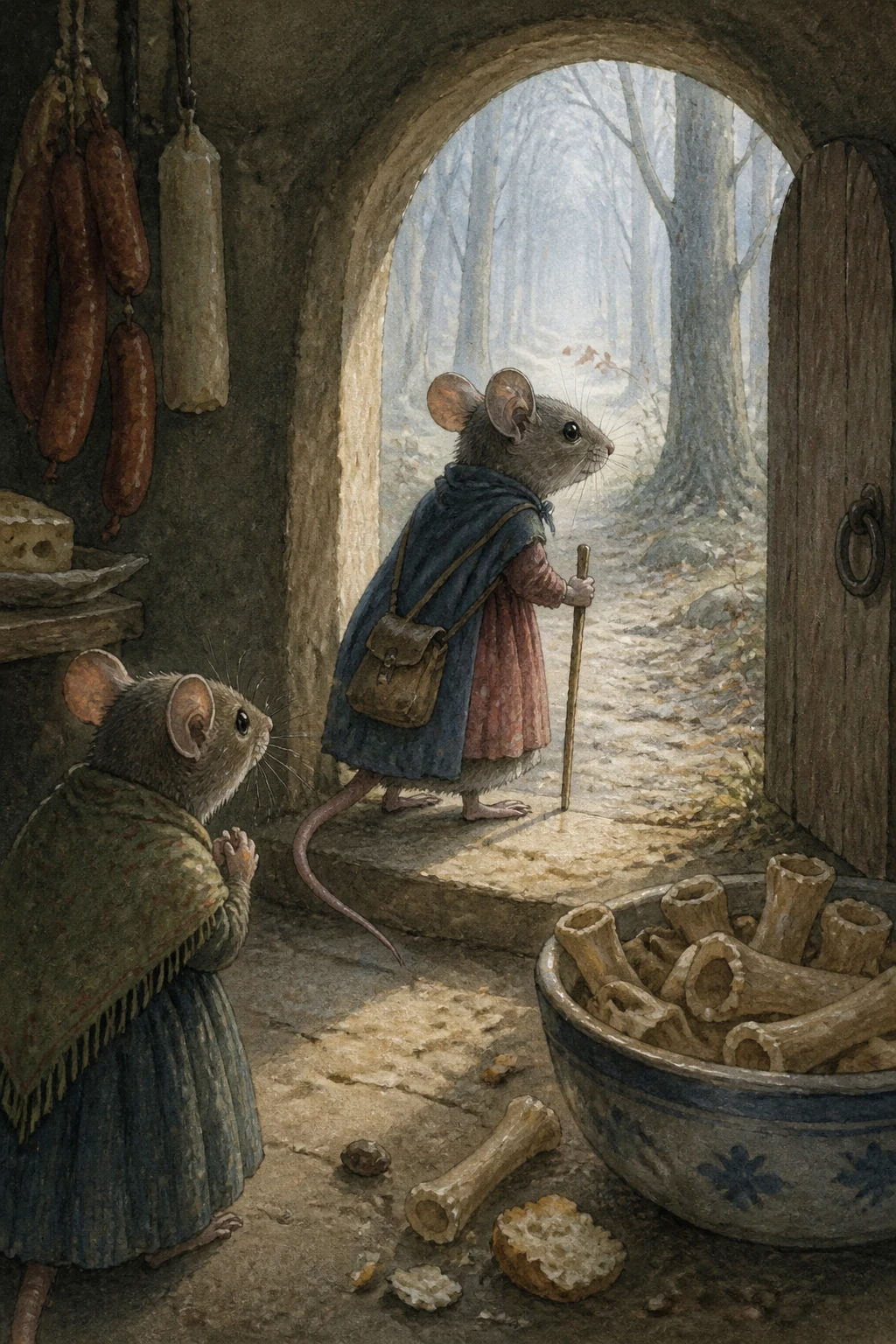
She replied, “Father, he burns far too fiercely. I do not want him. Summon someone greater than he.”
Hearing her words, the radiant Sun recognized that she was a mouse and, feeling no desire for her, said to the sage, “Holy sir, the Cloud is greater even than I. When he covers me, not even my name is known.”
The sage summoned the Cloud and asked the girl, “Does this one please you?”
She replied, “He is dark in color and cold and dull by nature. Give me to someone superior to him.”
Then the sage asked the Cloud, “Is there anyone greater than you?”
He replied, “The Wind is greater than I. When he strikes me, I scatter into a thousand pieces.”
Hearing this, the sage summoned the Wind and said, “My daughter, does this Wind seem an excellent husband to you?”
She replied, “He may be powerful, but he is fickle. Summon someone greater.”
The sage asked, “Wind, is there anyone greater than you?”
He replied, “The Mountain is greater than I. Powerful though I am, he blocks and restrains me.”
Then the sage summoned the Mountain and presented him to the girl. “Daughter, shall I give you to him?”
She replied, “Father, he is hard and unyielding. Give me to someone else.”
The sage then asked him, “King of Mountains, is there anyone greater than you?”
He replied, “Mice are greater than I, for they force their way through my body in every direction.”
Hearing this, the sage summoned a mouse and showed him to her. “Daughter, does this king of mice please you? If so, we shall make the proper arrangements.” At the sight of him she thought, “Here is one of my own kind!” Her whole body thrilled with joy, and she said, “Father, turn me into a mouse and give me to him, so that I may fulfill the duties of a wife as befits my own kind.”
Hearing this, the sage, who understood the nature of women, turned her back into a mouse and gave her to the male mouse.
***********************************************************************
“That is why I say, ‘Rejecting the Sun as her husband,’ and so forth.”
Ignoring Raktākṣa’s words, they brought Sthirajīvin into their own stronghold, to the ruin of their race. As he was being carried along, Sthirajīvin laughed inwardly and thought:
“The one who counseled his master’s good and said, ‘Let him be killed,’
Is the only one among them who truly understands the science of statecraft.
“Had they followed his advice, not the slightest harm would have come to them.”
When they reached the entrance to the stronghold, Arimardana said, “My well-wishers, give Sthirajīvin whatever quarters he desires.”
Hearing this, Sthirajīvin thought, “I must devise a way to destroy them. I cannot accomplish it if I live in their midst, for they will watch my gestures and behavior and become wary. I shall achieve my purpose by staying at the entrance.” Having resolved on this, he said to the owl king, “Your Majesty’s words are most fitting. Yet I too understand statecraft, and I belong to your enemy’s side. Though devoted and sincere, I ought not to lodge within the stronghold. I shall remain here at the entrance and serve you each day, my body purified by the dust of your lotus feet.” The king agreed. Thereafter, every day, once the owl king’s attendants had eaten their fill, they brought Sthirajīvin the finest meat by the king’s command. In only a few days he became as strong and splendid as a peacock. Seeing Sthirajīvin being so well nourished, Raktākṣa exclaimed in astonishment to the king and his ministers, “Ah, now I understand that these ministers are fools—and so are you, Your Majesty! For it is said:
“First I was a fool, and second the bird-catcher;
Then the king and his minister—a whole assembly of fools!”
They asked, “How was that?” Raktākṣa told the story. Tale 13: Sindhuka, the Bird That Dropped Gold. In a certain part of a mountain stood a great tree. In it lived a bird named Sindhuka, whose droppings turned into gold. One day a hunter came to that place. The bird let fall its droppings right before him, and the instant they struck the ground, they became gold. The hunter stared in wonder. “Ah! Since childhood I have devoted myself to catching birds, and now eighty years have passed, yet never have I seen gold in a bird’s droppings!” With this thought, he set a snare in the tree. The foolish bird, unsuspecting, settled there as usual and was caught at once. The hunter freed him from the snare, put him in a cage, and took him home. Then he thought, “What am I to do with this dangerous bird? If ever someone
“discovers his nature and reports it to the king, my very life will surely be in danger. I had better present the bird to the king myself.” Having considered the matter, he did just that.
At the sight of the bird, the king’s eyes and lotus-like face blossomed with joy, and he was greatly delighted. He said, “Ho, guards! Watch over this bird carefully, and give him as much food and drink as he desires.” But his minister said, “What use is this bird, accepted merely on the word of an untrustworthy hunter? Can gold ever come from a bird’s droppings? Let him out of his cage.” On the minister’s advice, the king released the bird. He flew up to the high arch over the gateway, deposited a dropping of pure gold, recited the verse beginning, “First I was a fool,” and took his pleasure in flying away through the sky. ***********************************************************************
“That is why I say, ‘First I was a fool.’”
But with fate set against them, they once again ignored Raktākṣa’s wholesome counsel and continued to fatten Sthirajīvin with plentiful meat and all manner of food. Then Raktākṣa called his own followers together and said to them privately, “Alas! This is the end of our king’s welfare and the safety of his stronghold. I have offered the counsel expected of a minister whose family has served for generations. Let us now seek refuge in another mountain fortress. For it is said: ‘He prospers who provides for what is yet to come;
He grieves who makes no provision for the future.
I have grown old living in the forest,
Yet never once have I heard a cave speak.’”
They asked, “How was that?” Raktākṣa told the story. Tale 14: The Lion Kharanakhara. In a certain forest lived a lion named Kharanakhara. One day he wandered this way and that, his throat parched with hunger, but found no prey at all. Then, as the sun was setting, he came upon a large cave in the mountain. Entering it, he thought, “Surely some creature will come to this cave for the night. I shall hide here and wait.”
Izvirnik
Tantra 03 kakolukiya chunk 5
Naslednje strani prikazujejo izvirno besedilo za primerjavo.
Source ID: panchatantra_gretil_tantra_03_chunk_05
Source URL: https://gretil.sub.uni-goettingen.de/gretil/1_sanskr/5_poetry/4_narr/vispancu.htm
so 'pi rathakāro mūrkhas tasyās tad-vacanam ākarṇya pulakāñcita-tanuḥ śayyādhastalān niṣkramya tām uvāca-sādhu pativrate ! sādhu kula-nandini ! ahaṃ durjana-vacana-śaṅkita-hṛdayas tvat-parīkṣā-nimittaṃ grāmāntara-vyājaṃ kṛtvā khaṭvādhas-tale nibhṛtaṃ līnaḥ | tad ehi, āliṅga mām | tvaṃ sva-bhartṛ-bhaktānāṃ mukhyā nārīṇāṃ, yad evaṃ brahma-vrataṃ para-saṅge'pi pālitavatī | yad āyur buddhi-kṛte'pamṛtyu-vināśārthaṃ catvam evaṃ kṛtavatī | tām evam uktvā sasneham āliṅgitavān |
sva-skandhe tām āropya tām api devadattam uvāca-bho mahānubhāva ! mat-puṇyais tvam ihāgataḥ | tvat-prasādān mayā prāptaṃ varṣa-śata-pramāṇam āyuḥ | tat tvam api mām āliṅgya mat-skandhe samāroha iti jalpann anicchantam api devadattam āliṅgya balāt svakīya-skandhe āropitavān |
tataś ca nṛtyaṃ kṛtvā-he brahma-vrata-dharāṇāṃ dhurīṇa ! tvayāpi mayy upakṛtam ity ādy uktvā skandhād uttārya yatra yatra svajana-gṛha-dvārādiṣu babhrāma tatra tatra tayor ubhayor api tad-guṇa-varṇanam akarot |
ato 'haṃ bravīmi-pratyakṣe'pi kṛte pāpe (193) iti |
tat sarvathā mūlotkhātā vayaṃ vinaṣṭāḥ smaḥ | suṣṭhu khalv idam ucyate-
mitra-rūpā hi ripavaḥ sambhāvyante vicakṣaṇaiḥ |
ye hitaṃ vākyam utsṛjya viparītopasevinaḥ
tathā ca-
santo 'py arthā vinaśyanti deśa-kāla-virodhinaḥ |
aprājñān mantriṇaḥ prāpya tamaḥ sūryodaye yathā
tatas tad-vaco 'nādṛtya sarve te sthirajīvinam utkṣipya sva-durgam ānetum ārabdhāḥ | athānīyamānaḥ sthirajīvy āha-deva ! adyākiñcitkareṇaitad avasthena kiṃ mayopasaṅgṛhītena ? yat kāraṇam icchāmi dīptaṃ vahnim anupraveṣṭum | tad arhasi mām agni-pradānena samuddhartum |
atha raktākṣasyāntargata-bhāvaṃ jñātvāha-kim-artham agni-patanam icchasi ?
so 'bravīt-ahaṃ tāvad yuṣmad-artham imām āpadaṃ meghavarṇena prāpitaḥ | tad icchāmi teṣāṃ vaira-yātanārtham ulūkatvam iti |
tac ca śrutvā rājanīti-kuśalo raktākṣaḥ prāha-bhadra ! kuṭilas tvaṃ kṛtaka-vacana-caturaś ca | tāvad ulūka-yoni-gato 'pi svakīyām eva vāyasa-yoniṃ bahu manyase | śrūyate caitad ākhyānakam |
sūryaṃ bhartāram utsṛjya parjanyaṃ mārutaṃ girim |
sva-jātiṃ mūṣikā prāptā svajātir duratikramā
mantriṇaḥ procuḥ--katham etat ?
raktākṣaḥ kathayati-
kathā 11
śālaṅkāyana-rakṣita-mūṣikā-kathā
asti kasmiṃścid adhiṣṭhāne śālaṅkāyano nāma tapodhano jāhnavyāṃ snānārthaṃ gataḥ | tasya ca sūryopasthānaṃ kurvatas tatra pradeśe mūṣikā kācit kharatara-nakhāgra-puṭena śyenena gṛhītā | dṛṣṭvā sa muniḥ karuṇārdra-hṛdayo muñca muñceti kurvāṇas tasyopari pāṣāṇa-khaṇḍaṃ prākṣipat | so 'pi pāṣāṇa-khaṇḍa-prahāra-vyākulendriyo bhraṣṭa-mūṣiko bhūmau nipapāta mūṣikāpi bhaya-trastā kartavyam ajānantī rakṣa rakṣeti jalpantī muni-caraṇāntikam upāviśat | śyenenāpi cetanaṃ labdhvā munir ukto, yad-bho mune ! na yuktam anuṣṭhitaṃ bhavatā yad ahaṃ pāṣāṇena tāḍitaḥ | kiṃ tvam adharmān na bibheṣi ? tat samarpaya mām enām mūṣikām | no cet prabhūtaṃ pātakam avāpsyasi |
iti bruvāṇaṃ śyenaṃ provāca saḥ-bho vihaṅgādhama ! rakṣaṇīyāḥ prāṇināṃ prāṇāḥ | daṇḍanīyā duṣṭāḥ | sammānanīyāḥ sādhavaḥ | pūjanīyā guravaḥ | stutyā devāḥ | tat kim asambaddhaṃ prajalpasi ?
śyena āha-mune ! na tvaṃ sūkṣma-dharmaṃ vetsi | iha hi sarveṣāṃ prāṇināṃ vidhinā sṛṣṭiṃ kurvatāhāro 'pi vinirmitaḥ | tato yathā bhavatām annaṃ tathāsmākaṃ mūṣikādayo vihitāḥ | tat svāhāra-kāṅkṣiṇaṃ māṃ kiṃ dūṣayasi ? uktaṃ ca-
yady asya vihitaṃ bhojyaṃ na tat tasya praduṣyati |
abhakṣye bahu-doṣaḥ syāt tasmāt kāryo na vyatyayaḥ
bhakṣyaṃ yathā dvijātīnāṃ madyapānāṃ yathā haviḥ |
abhakṣyaṃ bhakṣyatām eti tathānyeṣām api dvija
bhakṣyaṃ bhakṣyatāṃ śreya abhakṣyaṃ tu mahad agham |
tat kathaṃ māṃ vṛthācāra tvaṃ daṇḍayitum arhasi
aparaṃ munīnāṃ na caiṣa dharmo yatas tair dṛṣṭaṃ śrutam aśrutam alaulyatvam aśatrutvaṃ praśasyate | uktaṃ ca-
samaḥ śatrau ca mitre ca sama-loṣṭāśma-kāñcanaḥ |
suhṛn-mitre hy udāsīno madhyastho dveṣya-bandhuṣu |
sādhuṣv api ca pāpeṣu sama-buddhir viśiṣyate
sādhūnāṃ niravadyānāṃ sadācāra-vicāriṇām |
yogī yuñjīta satataṃ satatam ātmānaṃ rahasi sthitaḥ ||Panc_3.204|
tat tvam anena karmaṇā bhraṣṭa-tapāḥ sañjātaḥ | uktaṃ ca-
muñca muñca pataty eko mā muñceti dvitīyakaḥ |
ubhayoḥ patanaṃ dṛṣṭvā maunaṃ sarvārtha-sādhanam
śālaṅkāyana āha--katham etat ?
śyena āha-
kathā 12
?
kasmiṃścid nadī-taṭa ekata-dvita-tritābhidhānās trayo 'pi bhrātaro munayas tapaḥ kurvanti | teṣāṃ ca tapaḥ-prabhāvād ākāśasthā dhauta-potikā nirālambā jalārdrā bhū-sparśana-bhayena snāna-samaye tiṣṭhanti | athānye-dyur mamaiva kācin maṇḍūkikā kenāpi gṛdhreṇa balena nītā | atha tāṃ gṛhītā vilokya teṣāṃ jyeṣṭhena karuṇārdra-hṛdayena bhavateva vyāhṛtaṃ-muñca muñceti | atrāntare tasya dhauta-potikākāśād bhūmau patitā | tāṃ patitāṃ dṛṣṭvā dvitīyena tad-bhayārtena mā muñcety abhihitaṃ yāvat tasyāpi papāta | tatas tṛtīyo dvayor api dhauta-potikāṃ bhūmau patitāṃ dṛṣṭvā tūṣṇīṃ babhūva |
***********************************************************************
ato 'haṃ bravīmi-muñca muñca pataty eka ity ādi |
tac chrutvā munir vihasyāha-bho mūrkha vihaṅgama ! kṛta-yuge dharmaḥ sa āsīt, yataḥ kṛta-yuge pāpālāpato 'pi pāpaṃ jāyate tena dhauta-potike patite aśiṣṭālāpena na sad-apavacana-doṣataḥ | eṣa punaḥ kali-yugaḥ | atra sarvo 'pi pāpātmā | tat karma kṛtaṃ vinā pāpaṃ na lagati | uktaṃ ca-
sañcarantīha pāpāni yugeṣv anyeṣu dehinām |
kalau tu pāpa-saṃyukte yaḥ karoti sa lipyate
uktaṃ ca-
āsanāc chayanād yānāt saṃgateś cāpi bhojanāt |
kṛte sañcarate pāpaṃ taila-bindur ivāmbhasi
tat kiṃ vṛthā pralapitena ? gaccha tvam | no cec chāpayiṣyāmi | atha gate śyene mūṣikayā sa munir abhihitaḥ-bhagavan ! naya māṃ svāśrayam | no ced anyo duṣṭa-pakṣī māṃ vyāpādayiṣyati | tad ahaṃ tatraivāśrame tvad-dattānnāhāra-muṣṭyā kālaṃ neṣyāmi |
so 'pi dākṣiṇyavān sa-karuṇo vyacintayat-kathaṃ mayā mūṣikā haste dhṛtvā neyā jana-hāsya-kāriṇī | tad enāṃ kumārikāṃ kṛtvā nayāmi | evaṃ sā kanyakā kṛtā | tathānuṣṭhite kanyā-sahitaṃ munim avalokya patnī papraccha-bhagavan ! kuta iyaṃ kanyā ?
sa āha-eṣā mūṣikā śyena-bhayāc charaṇārthinī kanyā-rūpeṇa tava gṛham ānītā | tat tvayā yatnena rakṣaṇīyā | bhūyo 'py enāṃ mūṣikāṃ kariṣyāmi |
sā prāha-bhagavan ! maivaṃ kārṣīḥ | asyās tvaṃ dharma-pitā | uktaṃ ca-
janitā copanetā ca yas tu vidyāṃ prayacchati |
anna-dātā bhaya-trātā pañcaite pitaraḥ smṛtāḥ
tat tvayāsyāḥ prāṇa-pradattā | aparaṃ mamāpy apatyaṃ nāsti | tasmād eṣā mama sutā bhaviṣyati |
tathānuṣṭhite sā kanyā śukla-pakṣa-candra-kalikeva nityaṃ vṛddhiṃ prāpnoti | sāpi tasya muneḥ śuśrūṣāṃ kurvatī sapatnīkasya yauvanam āśv ayāt | atha tāṃ yauvanonmukhīm avalokya śālaṅkāyanaḥ sva-patnīm uvāca-priye ! yauvanonmukhī vartata iyaṃ kanyā | anarhā sa sāmprataṃ mad-gṛha-vāsasya | uktaṃ ca-
anūḍhā mandire yasya rajaḥ prāpnoti kanyakā |
patanti pitaras tasya svarga-sthā api tair guṇaiḥ
varaṃ varayate kanyā mātā vittaṃ pitā śrutam |
bāndhavāḥ kulam icchanti miṣṭānnam itare janāḥ
tathā ca-
yāvan na lajjate kanyā yāvat krīḍati pāṃsunā |
yāvat tiṣṭhati go-mārge tāvat kanyāṃ vivāhayet
mātā caiva pitā caiva jyeṣṭha-bhrātā tathaiva ca |
trayas te narakaṃ yānti dṛṣṭvā kanyāṃ rajasvalām
kulaṃ ca śīlaṃ ca sanāthatāṃ ca
vidyāṃ ca vittaṃ ca vapur vayaś ca |
etān guṇān saptān sapta parīkṣya deyā
kanyā budhaiḥ śeṣam acintanīyam
tad yad yasyā rocate tad bhagavantaṃ ādityam ākārya tasmai prayacchāmi | uktaṃ ca-
aniṣṭaḥ kanyakāyā yo varo rūpānvito 'pi yaḥ |
yadi syāt tasya no deyā kanyā śreyo 'bhivāñchatā
sā prāha-ko doṣo 'tra viṣaye ? evaṃ kriyatām |
atha muninā ravir āhūtaḥ | veda-mantrāmantraṇa-prabhāvāt tat-kṣaṇād evābhyupagamyādityaḥ provāca-bhagavan ! vada drutaṃ kim-artham āhūtaḥ ?
sa āha-eṣā madīyā kanyakā tiṣṭhati | yady eṣā tvāṃ vṛṇoti tarhy udvahasva tām iti | evam uktvā bhagavāṃs tasyā darśitaḥ | provāca-putri ! kiṃ tava rocata eṣa bhagavāṃs trailokya-dīpaḥ ?
sā prāha-tāta ! atidahanātmako 'yam | nāham enam abhilaṣāmi | asmād api ya utkṛṣṭataraḥ sa āhūyatām |
atha tasyās tad-vacanam ākarṇya bhāsvaro 'pi tāṃ mūṣikāṃ viditvā niḥspṛhas tam uvāca-bhagavan ! asti mamāpy adhiko megho yenācchāditasya me nāmāi na jñāyate ?
atha muninā megham apy āhūya kanyābhihitā-eṣa te rocate ?
sā prāha-kṛṣṇa-varṇo 'yaṃ jaḍātmā ca | tad asmād anyasya kasyacit pradhānasya māṃ prayaccha |
atha muninā megho 'pi pṛṣṭaḥ-bhoḥ ! tvatto 'py adhikaḥ ko 'py asti ?
sa āha-matto 'py adhiko 'sti vāyuḥ | vāyunā hato 'haṃ sahasradhā yāmi |
tac chrutvā muninā vāyur āhūtaḥ, āha ca-putrike kim eṣa vāyus te vivāhāya uttamaḥ pratibhāti ?
sā āha-prabalo 'py ayaṃ cañcalaḥ | tad abhyadhikaḥ kaścid āhūyatām |
munir āha-bho vāyo ! tvatto 'py adhiko 'sti kaścit ?
sa āha-matto 'py adhiko 'sti parvato yena saṃstabhya balavān apy ahaṃ dhriye |
atha muniḥ parvatam āhūya kanyāyā adarśayat-putrike ! tvām asmai prayacchāmi ?
sā āha-tāta ! kaṭhinātmako 'yaṃ stabdhaś ca | tad anyasmai dehi mām |
atha sa muninā pṛṣṭaḥ, yad-bhoḥ parvata-rāja ! tvatto 'py adhiko 'sti kaścit ?
sa āha-santi matto 'py adhikā mūṣikāḥ, ye mad-dehaṃ balāt sarvato bhedayanti |
tad ākarṇya munir mūṣakam āhūya tasyā adarśayat-putrike ! eṣa te pratibhāti mūṣaka-rājo yena yathocitam anuṣṭhīyate | sāpi taṃ dṛṣṭvā sva-jātīya eṣa iti manyamānā pulakodbhūṣita-śarīrā provāca-tāta ! māṃ mūṣikāṃ kṛtvāsmai prayaccha yena svajāti-vihitaṃ gṛha-dharmam anutiṣṭhāmi |
tac chrutvā tena strī-dharma-vicakṣaṇena tāṃ mūṣikāṃ kṛtvā mūṣakāya pradattā |
***********************************************************************
ato 'haṃ bravīmi-sūryaṃ bhartāram utsṛjya ityādi |
atha raktākṣa-vacanam anādṛtya taiḥ sva-vaṃśa-vināśāya sa sva-durgam upanītaḥ | nīyamānaś cāntar-līnam avahasya sthirajīvy acintayat-
hanyatām iti yenoktaṃ svāmino hita-vādinā |
sa evaiko 'tra sarveṣāṃ nīti-śāstrārtha-tattva-vit
tad yadi tasya vacanam acariṣyann ete, tato na svalpo 'py anartho 'bhaviṣyad eteṣām |
atha durga-dvāraṃ prāpyārimardano 'bravīt-bho bho hitaiṣiṇo 'sya sthirajīvino yathā-samīhitaṃ sthānaṃ prayacchata |
tac ca śrutvā sthirajīvī vyacintayat-mayā tāvad eteṣāṃ vadhopāyaś cintanīyaḥ | sa mayā madhyasthena na sādhyate | yato madīyam iṅgitādikaṃ vicārayantas te'pi sāvadhānā bhaviṣyanti | tad durga-dvāram adhiśrito 'bhipretaṃ sādhayāmi | iti niścityolūka-patim āha-deva ! yuktam idaṃ yat svāminā proktam | param aham api nītijñas te'hitaś ca | yadyapy anuraktaḥ śucis tathāpi durga-madhye āvāso nārhaḥ | tad ahaṃ atraiva durga-dvāra-sthaḥ pratyahaṃ bhavat-pāda-padma-rajaḥ pavitrī-kṛta-tanuḥ sevāṃ kariṣyāmi |
tatheti pratipanne pratidinam ulūka-pati-sevakās te prakāmam āhāraṃ kṛtvolūka-rājādeśāt prakṛṣṭa-māṃsāhāraṃ sthirajīvine prayacchanti | atha katipayair evāhobhir mayūra iva sa balavān saṃvṛttaḥ | atha raktākṣaḥ sthirajīvinaṃ poṣyamāṇaṃ dṛṣṭvā sa-vismayo mantri-janaṃ rājānaṃ ca praty āha-aho mūrkho 'yaṃ mantri-jano bhavāṃś cety evam aham avagacchāmi | uktaṃ ca-
pūrvaṃ tāvad ahaṃ mūrkho dvitīyaḥ paśu-bandhakaḥ |
tato rājā ca mantrī ca sarvaṃ vai mūrkha-maṇḍalam
te prāhuḥ-katham etat ?
raktākṣaḥ kathayati-
kathā 13
svarṇa-ṣṭhīvī-sindhuka-pakṣī-kathā
asti kasmiṃścit parvataika-deśe mahān vṛkṣaḥ | tatra ca sindhuka-nāmā ko 'pi pakṣī prativasati sma | tasya purīṣe suvarṇam utpadyate | atha kadācit tam uddiśya vyādhaḥ ko 'pi samāyayau | sa ca pakṣī tad-agrata eva purīṣam utsasarja | atha pāta-sama-kālam eva tat-suvarṇībhūtaṃ dṛṣṭvā vyādho vismayam agamat-aho mama śiśu-kālād ārabhya śakuni-bandha-vyasanino 'śīti-varṣāṇi samabhūvan,na ca kadācit pakṣi-purīṣe suvarṇaṃ dṛṣṭam iti vicintya tatra vṛkṣe pāśaṃ babandha | athāsāv api pakṣī mūrkhas tatraiva viśvasta-citto yathā-pūrvam upaviṣṭas tat-kālam eva pāśena baddhaḥ | vyādhas tu taṃ pāśād unmucya pañjarake saṃsthāpya nijāvāsaṃ nītavān | atha cintayāmāsa-kim anena sāpāyena pakṣiṇāhaṃ kariṣyāmi ? yadi kadācit ko
'py amum īdṛśaṃ jñātvā rājñe nivedayiṣyati tan nūnaṃ prāṇa-saṃśayo me bhavet | ataḥ svayam eva pakṣiṇaṃ rājñe nivedayāmi | iti vicārya tathaivānuṣṭhitavān |
atha rājāpi taṃ pakṣiṇaṃ dṛṣṭvā vikasita-nayana-vadana-kamalaḥ parāṃ tuṣṭim upagataḥ | prāha caivaṃ-haṃho rakṣā-puruṣāḥ ! enaṃ pakṣiṇaṃ yatnena rakṣata | aśana-pānādikaṃ cāsya yathecchaṃ prayacchata |
atha mantriṇābhihitam-kim anenāśraddheya-vyādha-vacana-mātra-parigṛhītenāṇḍajena ? kiṃ kadācit pakṣī-purīṣe suvarṇaṃ sambhavati ? tan mucyatāṃ pañjara-bandhanād ayaṃ pakṣī | iti mantri-vacanād rājñā mocito 'sau pakṣy unnata-dvāra-toraṇe samupaviśya suvarṇa-mayīṃ viṣṭhāṃ vidhāya-pūrvaṃ tāvad ahaṃ mūrkhaḥ iti ślokaṃ paṭhitvā yathā-sukham ākāśa-mārgeṇa prāyāt |
***********************************************************************
ato 'haṃ bravīmi-pūrvaṃ tāvad ahaṃ mūrkhaḥ iti |
atha te punar api pratikūla-daivatayā hitam api raktākṣa-vacanam anādṛtya bhūyas taṃ prabhūta-māṃsādi-vividhāhāreṇa poṣayāmāsuḥ | atha raktākṣaḥ sva-vargam āhūya rahaḥ provāca-aho ! etāvad evāsmad-bhūpateḥ kuśalaṃ durgaṃ ca | tad upadiṣṭaṃ mayā yat kula-kramāgataḥ sacivo 'bhidhatte | tad vayam anyat parvata-durgaṃ samprati samāśrayāmaḥ | uktaṃ ca yataḥ-
anāgataṃ yaḥ kurute sa śobhate
sa śocate yo na karoty anāgatam |
vane vasann eva jarām upāgato
bilasya vācā na kadāpi hi śrutā
te procuḥ-katham etat ?
raktākṣaḥ kathayati-
kathā 14
kharanakhara-siṃha-kathā
kasmiṃścid vanoddeśe kharanakharo nāma siṃhaḥ prativasati sma | sa kadācid itaś cetaś ca paribhraman kṣutkṣāma-kaṇṭho na kiñcid api sattvam āsasāda | tataś cāstam anasamaye mahatīṃ giri-guhām āsādya praviṣṭaś cintayāmāsa-nūnam etasyāṃ guhāyāṃ rātrau kenāpi sattvenāgantavyam | tan nibhṛto bhūtvā tiṣṭhāmi |
Nadaljuj z branjem