Waltey
Zgodba o kralju, njegovem sinu, sužnji in sedmih vezirjih
Tisoč in ena noč · arabska pripovedna tradicijaO besedilu
Zgodba o kralju, njegovem sinu, sužnji in sedmih vezirjih
- Vir
- Tisoč in ena noč
- Avtor
- arabska pripovedna tradicija
- Jezik branja
- English
- Jezik izvirnika
- Arabic
- Čas branja
- 5 min branja
- Obseg
- 4 strani
- Naslov izvirnika
- حكاية الملك وولده والجارية والوزراء السبعة - الليلة ٥٧٨
O izvirniku
Tisoč in ena noč
Zgodbe v zgodbah, polne trgovcev, dvorov, preoblek in nočnih zapletov. Bralni jezik je English, izvirnik pa prihaja iz vira Tisoč in ena noč v jeziku Arabic.
Besedilo
Zgodba o kralju, njegovem sinu, sužnji in sedmih vezirjih
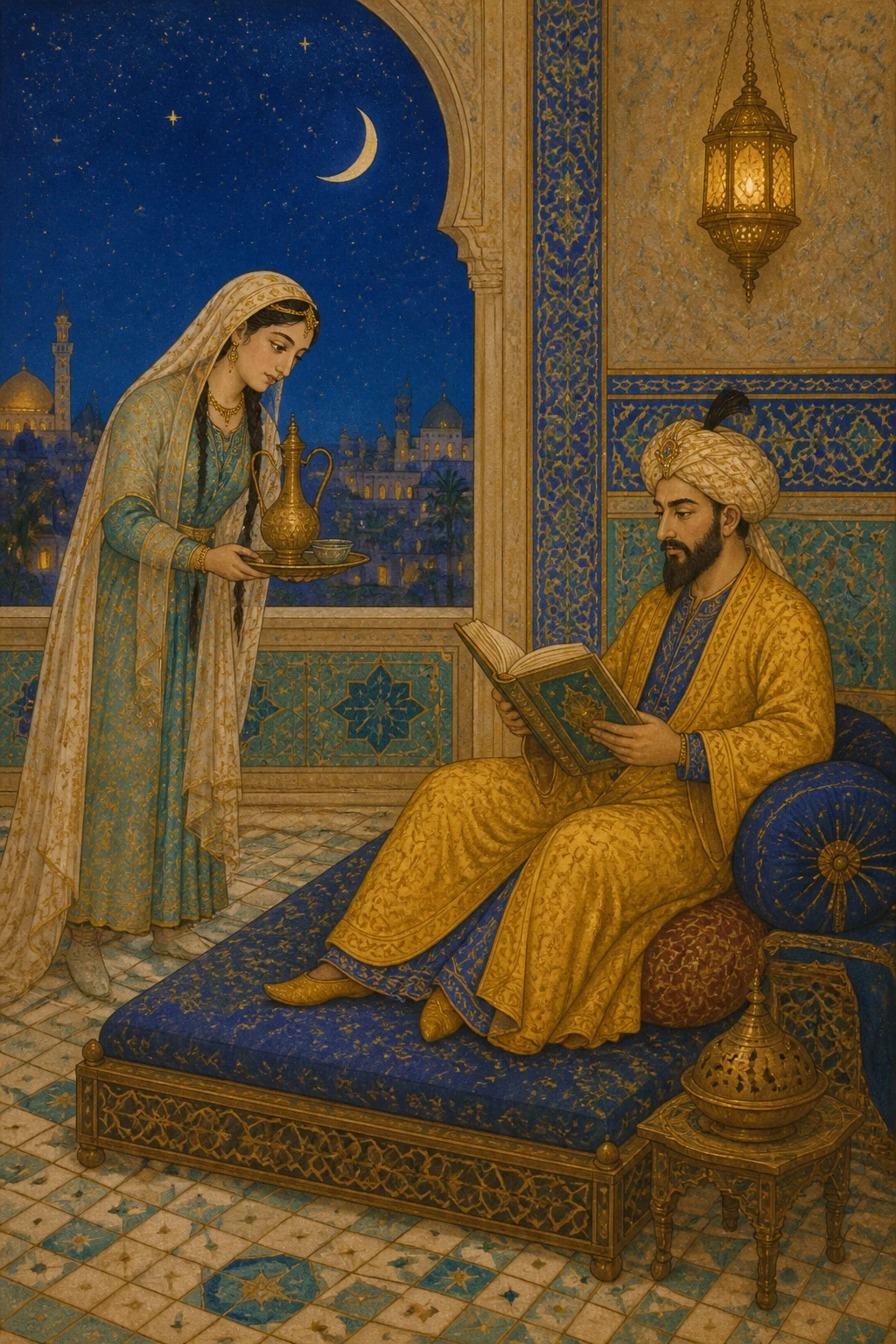
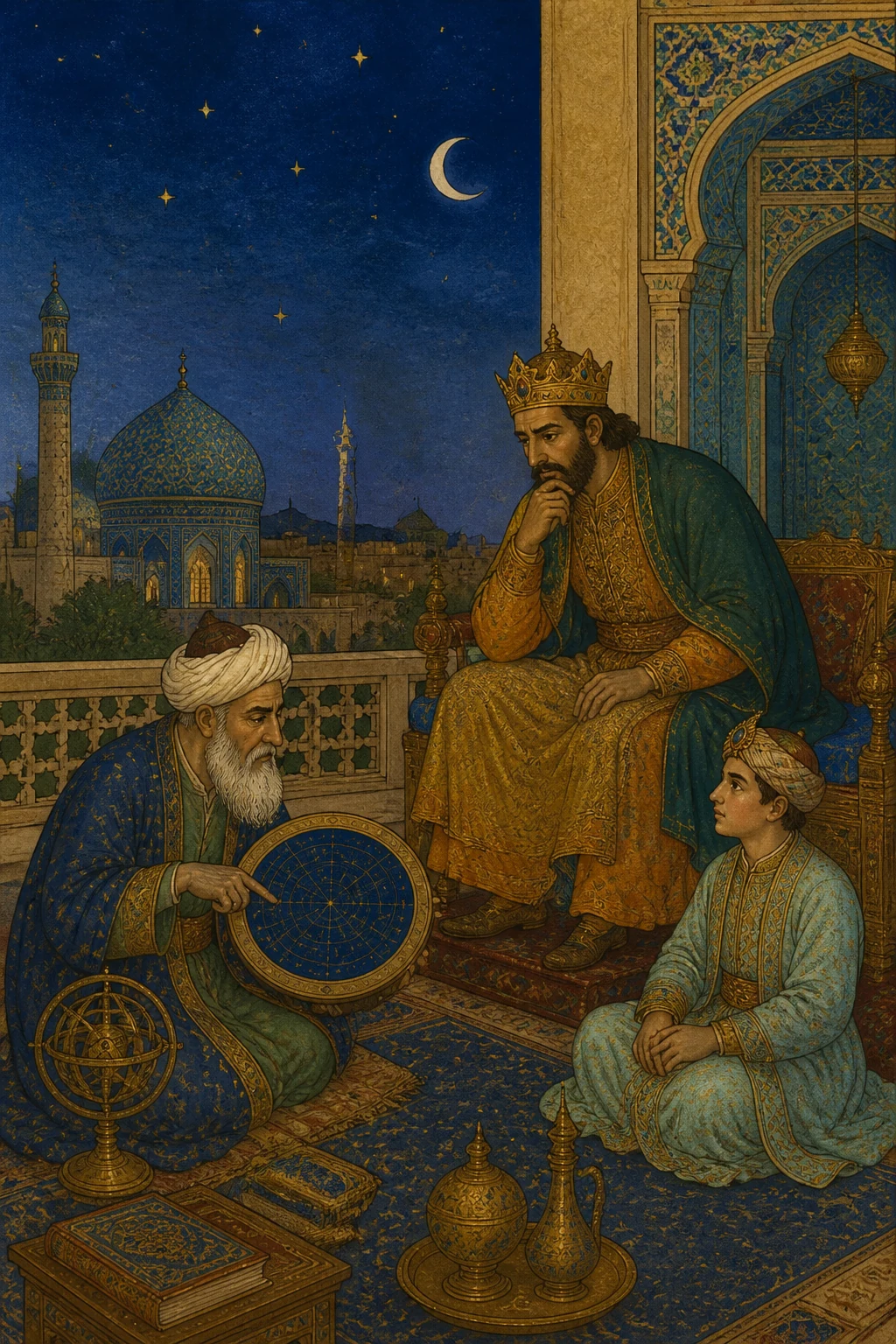
We have also heard that in ancient times, in ages long gone by, there was a king with many soldiers and retainers, a man of rank and wealth. Yet he had grown old without being blessed with a son. Troubled by this, the king prayed to Almighty God through the intercession of the Prophet, peace and blessings be upon him, and besought Him, by the honored standing of the prophets, saints, and martyrs among His favored servants, to grant him a son who would inherit the kingdom after him and be the delight of his eyes. Then, at that very hour, he rose and entered his private chamber, sent for his cousin, and lay with her; and by Almighty God’s leave she conceived. In due course, when her time came, she gave birth to a boy whose face was like the full moon on its fourteenth night. The boy was brought up until he reached the age of five. Now the king had in his service a sage named Sindbad, a man of great learning and skill, and he entrusted the boy to him. By the time the boy was ten, the sage had taught him wisdom and letters so well that no one in that age could rival him in learning, refinement, or understanding. When his father heard this, he summoned a company of Arab knights to teach him horsemanship and the arts of war. The boy mastered them, charging and wheeling about the training ground until he surpassed all his contemporaries and companions. One day the sage consulted the stars and examined the boy’s horoscope, and saw that during the next seven days, a single word from his lips would bring about his death. The sage went to the king, the boy’s father, and told him the news. “What course should we take, O sage?” asked the king. The sage replied, “O King, my counsel is that you place him somewhere pleasant, where he may listen to sweet music, and let him remain there until the seven days have passed.” So the king sent for one of his favorite slave girls, the loveliest of them all, and entrusted the boy to her, saying, “Take your master into the palace and keep him with you. He must not leave it until seven days have passed.” The girl took him by the hand and settled him in that palace.
There were forty chambers in the palace, and in every chamber ten slave girls, each with a musical instrument. When any one of them played, the whole palace seemed to dance to her melody. Around it flowed a river whose banks were planted with every kind of fruit tree and fragrant flower. Now the boy’s beauty and loveliness were beyond description. He had spent but one night there when the girl, his father’s favorite concubine, beheld him and love struck her heart. Unable to restrain herself, she threw herself upon him. The boy said to her, “God willing, when I go out to my father, I shall tell him what you have done, and he will have you killed.” The girl went to the king and flung herself upon him, weeping and wailing. “What has happened to you, girl?” he asked. “How is your master? Is he not well?” She replied, “My lord, my master tried to force himself upon me and threatened to kill me if I refused. But I resisted him and fled, and I shall never return to him or to the palace again.” When his father heard these words, he flew into a terrible rage, summoned his viziers, and ordered them to put the boy to death. They said to one another, “The king is determined to kill his son, but if he does, he will surely regret it afterward, for the boy is dear to him and was born only after he had given up all hope of a son. Then he will turn on you and blame you, saying, ‘Why did you not devise some means of keeping me from killing him?’” So they agreed to contrive a way to prevent him from killing his son. The first vizier stepped forward and said, “I shall shield you from the king’s wrath today.” He rose and went to the king, stood before him, and asked leave to speak. The king granted it, and he said, “O King, even if you had a thousand sons, you should not allow yourself to kill a single one of them on the word of a slave girl, who may be telling the truth or may be lying. Perhaps this is a plot she has laid against your son.” The king asked, “Have you heard any tales of their wiles, O Vizier?” “Yes,” he replied.
Izvirnik
حكاية الملك وولده والجارية والوزراء السبعة - الليلة ٥٧٨
Naslednje strani prikazujejo izvirno besedilo za primerjavo.
فلما كانت الليلة ٥٧٨
وقد بلغنا أيضًا أنه في قديم الزمان، وسالف العصر والأوان، ملك من ملوك الزمان كان كثير الجند والأعوان، وصاحب جاهٍ وأموال، ولكنه بلغ من العمر مدةً ولم يُرزَق ولدًا ذكرًا، فلما قلق الملك توسَّلَ بالنبي ﷺ إلى الله تعالى، وسأله بجاه الأنبياء والأولياء والشهداء من عباده المقرَّبين أن يرزقه بولد ذكر حتى يرث المُلْك من بعده، ويكون قرَّة عينه، ثم قام من وقته وساعته ودخل إلى قاعة جلوسه، وأرسل إلى بنت عمه فواصَلَها فصارت حاملة بإذن الله تعالى، فمكثت مدة حتى آن أوان وضعها، فولدت ولدًا ذكرًا وجهه مثل دورة القمر ليلة أربعة عشر، فتربَّى ذلك الغلام إلى أن بلغ من العمر خمس سنين، وكان عند ذلك الملك رجل حكيم من الحكماء الماهرين يُسمَّى السندباد، فسلَّمَ إليه ذلك الغلام، فلما بلغ من العمر عشر سنين علَّمَه الحكمة والأدب إلى أن صار ذلك الولد ليس أحدٌ في هذا الزمان يناظِره في العلم والأدب والفهم. فلما بلغ والده ذلك أحضر له جماعة من فرسان العرب يعلِّمونه الفروسية فمهر فيها، وصال وجال في حومة الميدان إلى أن فاق أهل زمانه وسائر أقرانه؛ ففي بعض الأيام نظر ذلك الحكيم في النجوم فرأى طالع الغلام، وأنه متى عاش سبعة أيام وتكلَّمَ بكلمة واحدة صار فيها هلاكه، فذهب الحكيم إلى الملك والده وأعلمه بالخبر، فقال له والده: فما يكون الرأي والتدبير يا حكيم؟ فقال له الحكيم: أيها الملك، الرأي والتدبير عندي أن تجعله في مكان نزهة وسماع آلات مطربة، يكون فيه إلى أن تمضي السبعة أيام. فأرسل الملك إلى جارية من خواصه، وكانت أحسن الجواري، فسلَّمَ إليها الولد وقال لها: خذي سيدك في القصر واجعليه عندك، ولا ينزل من القصر إلا بعد سبع أيام تمضي. فأخذته الجارية من يده وأجلسته في ذلك القصر.
وكان في القصر أربعون حجرة، وفي كل حجرة عشرُ جوارٍ، وكل جارية معها آلة من آلات الطرب إذا ضربت واحدة منهن يرقص من نغمتها ذلك القصر؛ وحواليه نهر جارٍ مزروع شاطئه بجميع الفواكه والمشموم. وكان ذلك الولد فيه من الحُسْن والجمال ما لا يُوصَف، فبات ليلة واحدة فرأته الجارية محظية والده، فطرق العشق قلبها، فلم تتمالك حتى رمت نفسها عليه، فقال لها الولد: إن شاء الله تعالى حين أخرج عند والدي أخبره بذلك فيقتلك. فتوجهت الجارية إلى الملك، ورمت نفسها عليه بالبكاء والنحيب، فقال لها: ما خبرك يا جارية؟ كيف سيدك أَمَا هو طيب؟ فقالت: يا مولاي، إن سيدي راوَدَني عن نفسي، وأراد قتلي على ذلك، فمنعته وهربت منه، وما بقيت أرجع إليه ولا إلى القصر أبدًا. فلما سمع والده ذلك الكلام حصل له غيظ عظيم، فأحضر عنده الوزراء وأمرهم بقتله، فقالوا لبعضهم: إن الملك صمَّمَ على قتل ولده، وإنْ قتله يندم عليه بعد قتله لا محالةَ؛ فإنه عزيز عنده، وما جاءه هذا الولد إلا بعد اليأس، ثم بعد ذلك يرجع عليكم باللوم، فيقول لكم: لِمَ لم تدبروا لي تدبيرًا يمنعني عن قتله؟ فاتفق رأيهم على أن يدبِّروا له تدبيرًا يمنعه عن قتل ولده، فتقدَّمَ الوزير الأول وقال: أنا أكفيكم شرَّ الملك في هذا اليوم. فقام ومضى إلى أن دخل على الملك وتمثَّلَ بين يديه، ثم استأذنه في الكلام فأذن له، فقال له: أيها الملك، لو قُدِّر أنه كان لك ألف ولد لم تطع نفسك في أن تقتل واحدًا منهم بقول جارية، إما أن تكون صادقة أو كاذبة، ولعل هذه مكيدة منها لولدك. فقال: وهل بلغك شيء من كيدهن أيها الوزير؟ قال: نعم.
Nadaljuj z branjem