Waltey
Zgodba o Mutavakilu in Mahbubi
Tisoč in ena noč · arabska pripovedna tradicijaO besedilu
Zgodba o Mutavakilu in Mahbubi
- Vir
- Tisoč in ena noč
- Avtor
- arabska pripovedna tradicija
- Jezik branja
- English
- Jezik izvirnika
- Arabic
- Čas branja
- 4 min branja
- Obseg
- 3 strani
- Naslov izvirnika
- حكاية المتوكِّل ومحبوبة - الليالي ٣٥٢ إلى ٣٥٣
O izvirniku
Tisoč in ena noč
Zgodbe v zgodbah, polne trgovcev, dvorov, preoblek in nočnih zapletov. Bralni jezik je English, izvirnik pa prihaja iz vira Tisoč in ena noč v jeziku Arabic.
Besedilo
Zgodba o Mutavakilu in Mahbubi
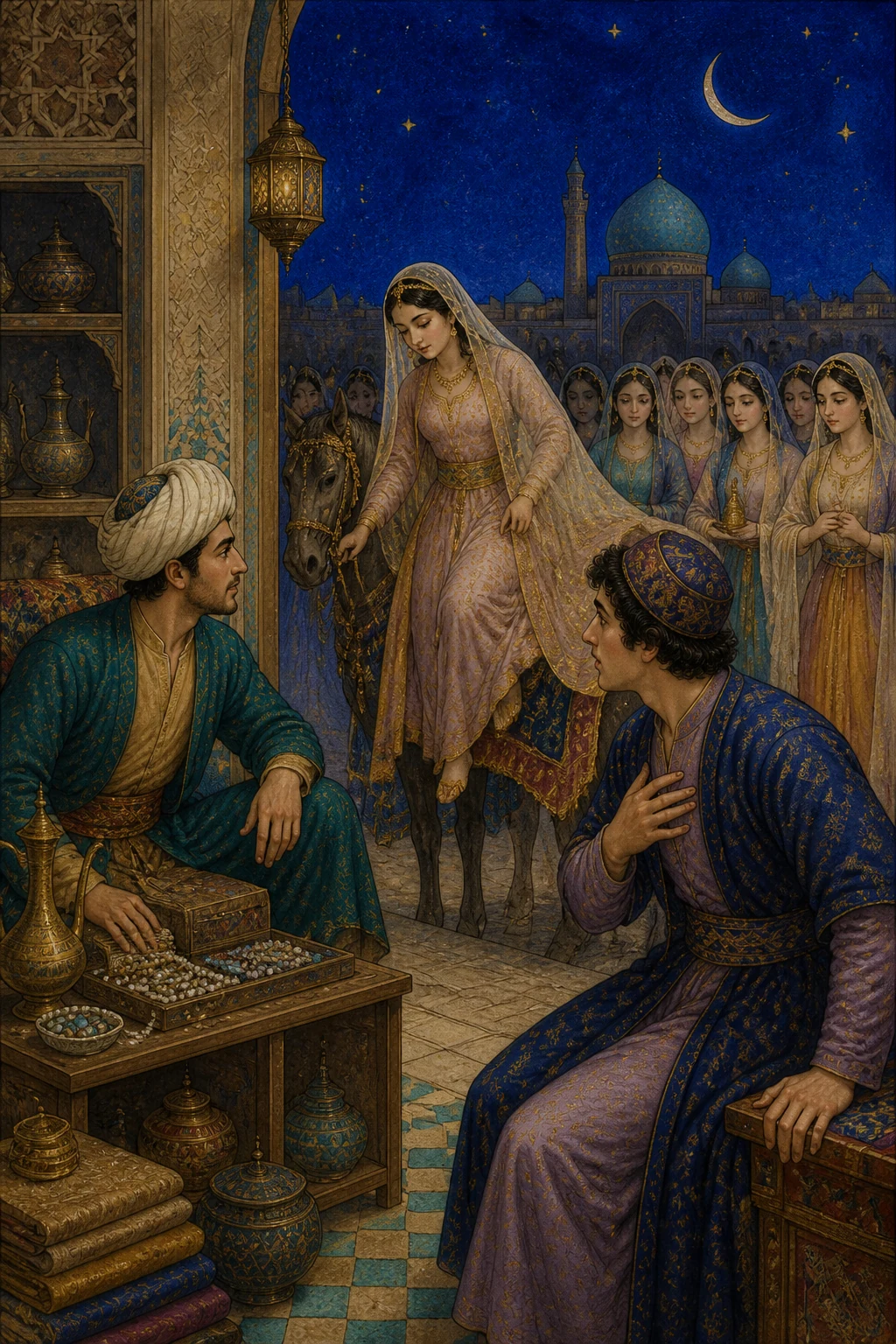
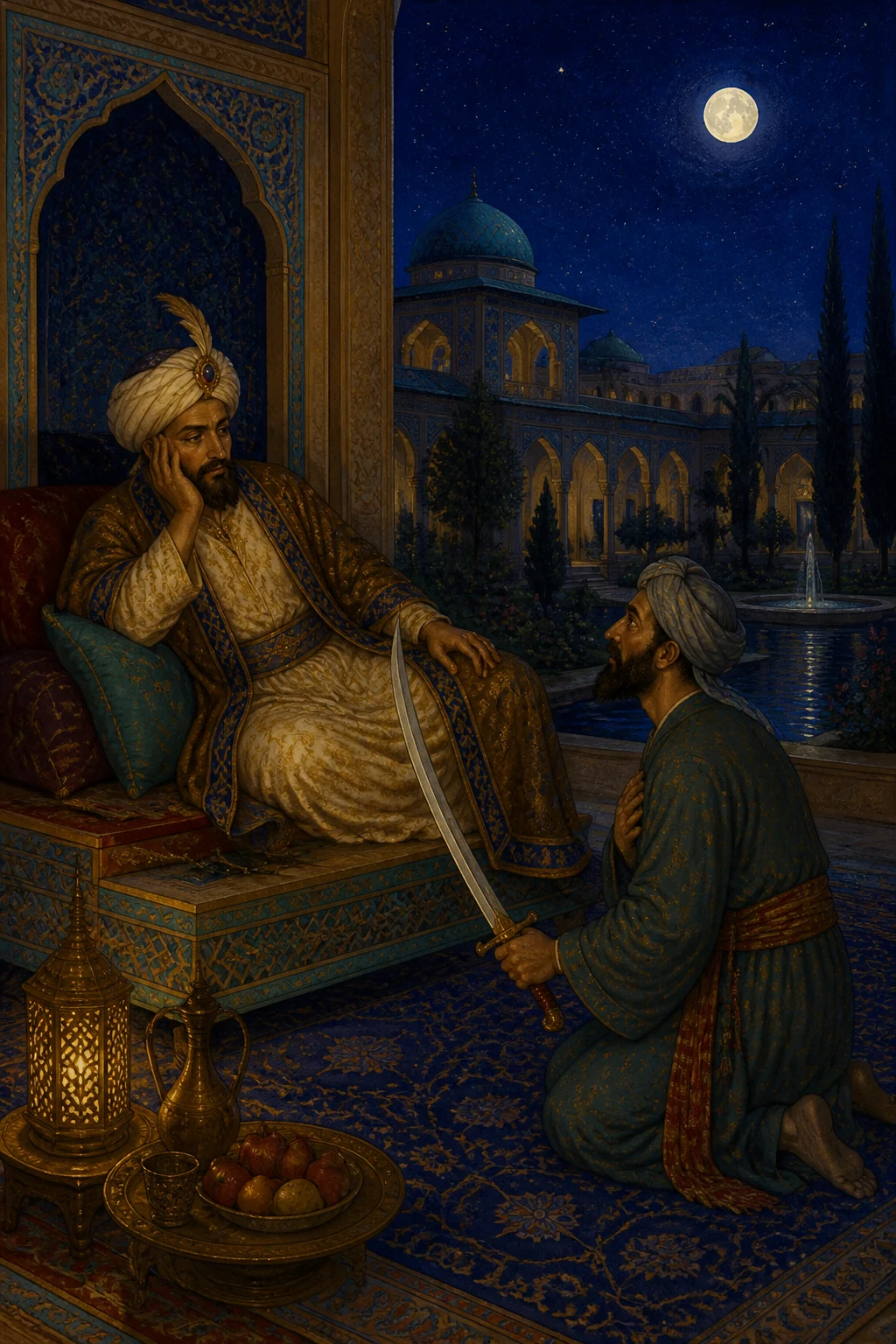
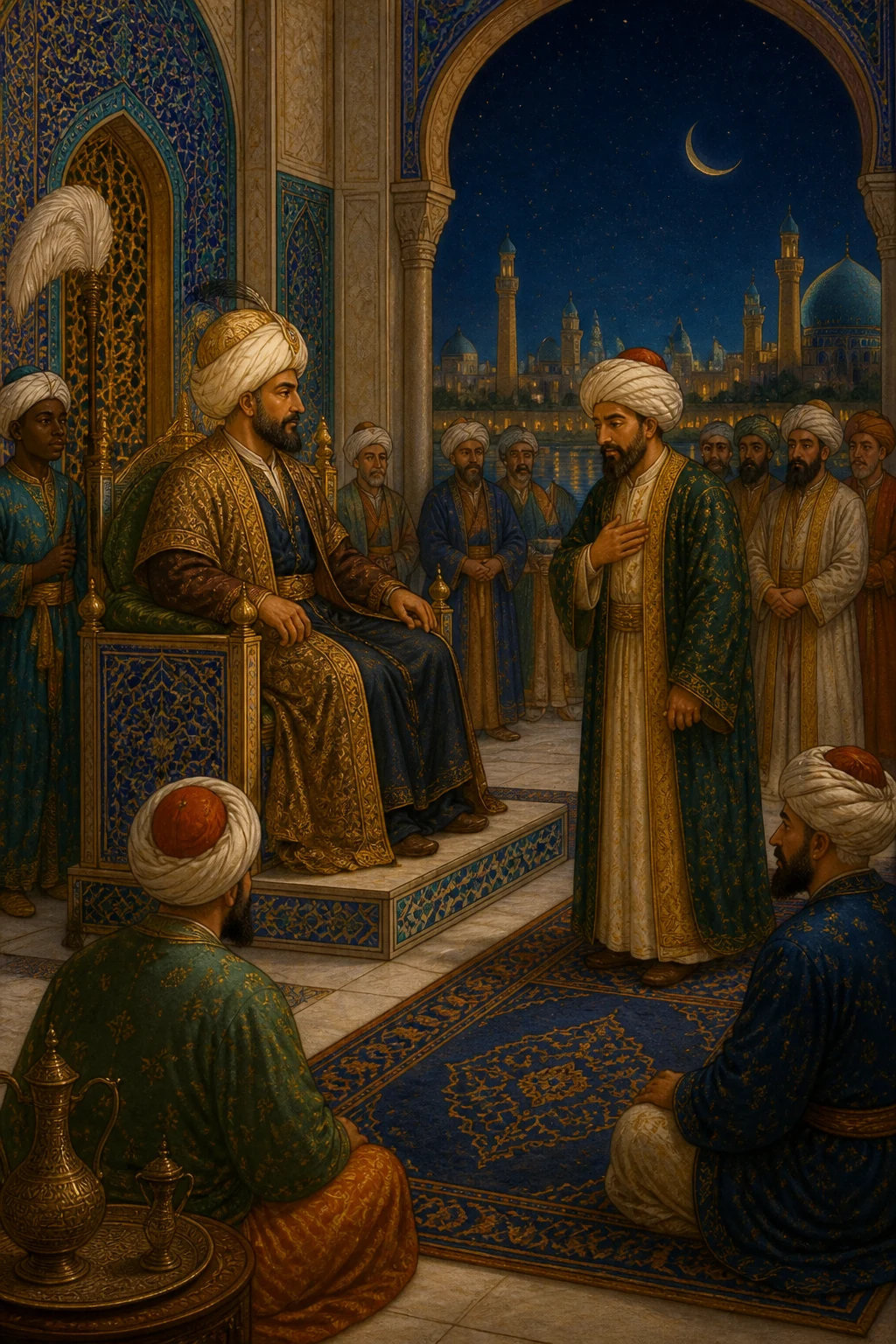
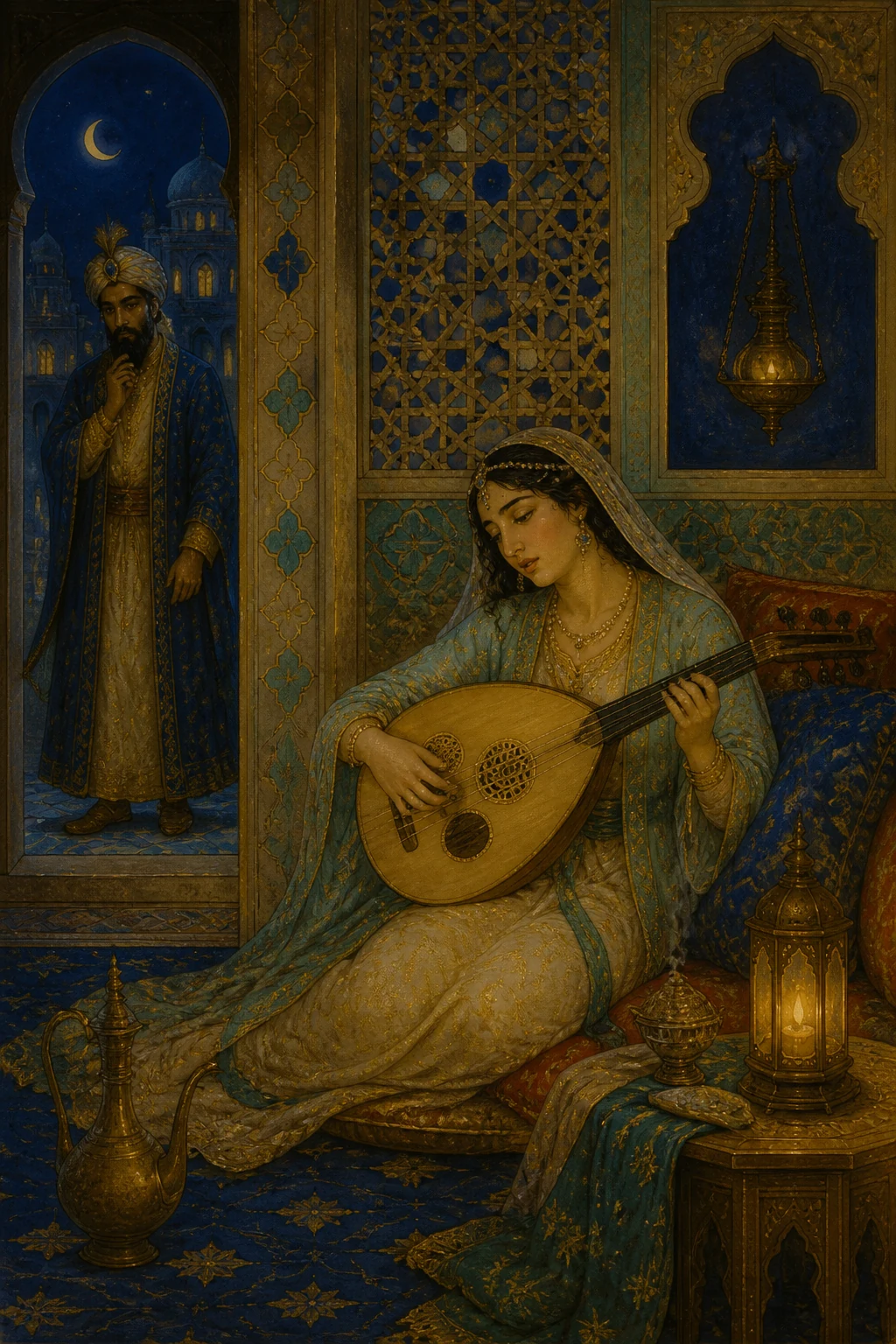
It is related that in the palace of the Commander of the Faithful, al-Mutawakkil ‘ala Allah, there were four thousand concubines, including two hundred Byzantine women and two hundred women of mixed parentage and Abyssinians. Ubayd ibn Tahir once presented al-Mutawakkil with four hundred slave girls: two hundred fair-skinned women and two hundred Abyssinians and women of mixed parentage. Among them was a girl of mixed parentage from Basra named Mahbuba, who surpassed the others in beauty, grace, wit, and charm. She played the lute, sang exquisitely, composed poetry, and wrote a fine hand. Al-Mutawakkil became so enamoured of her that he could not bear to be parted from her for even an hour. When she saw how deeply he favoured her, she grew haughty towards him and presumptuous in her good fortune. He became fiercely angry with her, forsook her, and forbade everyone in the palace to speak to her. She remained in this state for several days, though al-Mutawakkil still yearned for her. One morning he said to his companions, “Last night I dreamed that I had made peace with Mahbuba.” They replied, “We pray to Almighty God that it may come true in waking life.” While he was still speaking, a maidservant came and whispered something to him. He rose from the gathering and entered the women’s quarters. What she had whispered was this: “We heard singing and lute-playing from Mahbuba’s chamber, but we do not know the reason.” When he reached her chamber, he heard her singing to the lute, playing with great skill, and reciting these verses:
“I wander through the palace, finding none to whom I may complain, and none will speak to me; as though I had committed some offence for which no repentance could deliver me. Have we no intercessor with a king who came to me in sleep and made his peace with me? Yet when the morning’s light appeared to us, he turned again to coldness and abandoned me.” When al-Mutawakkil heard her words, he marvelled at the verses and at this strange coincidence, for Mahbuba had dreamed a dream that matched his own. He entered her chamber, and as soon as she became aware of him, she hurried to meet him, threw herself at his feet, and kissed them. “By God, my lord,” she said, “I saw this very thing in my dream last night, and when I awoke, I composed these verses.” Al-Mutawakkil replied, “By God, I too dreamed the same.” Then they embraced and were reconciled, and he stayed with her for seven days and nights. Mahbuba had written al-Mutawakkil’s name—his name was Ja‘far—in musk upon her cheek. When he saw his name written in musk high upon her cheek, he recited:
“She has written ‘Ja‘far’ upon her cheek in musk; my life be the ransom of her who traced the words I see! Though her fingers wrote a single line upon her cheek, that writing has inscribed many lines upon my heart. O you whom Ja‘far has guided among mankind, may God grant Ja‘far a draught of your wine!” When al-Mutawakkil died, all his slave girls forgot their grief for him except Mahbuba. And dawn overtook Shahrazad, and she fell silent, ceasing her permitted tale.
When it was the three hundred and fifty-third night
She said: It has reached me, O fortunate King, that when al-Mutawakkil died, all his slave girls forgot their grief for him except Mahbuba. She continued to mourn him until she died and was buried beside him. May God have mercy upon them all.
Izvirnik
حكاية المتوكِّل ومحبوبة - الليالي ٣٥٢ إلى ٣٥٣
Naslednje strani prikazujejo izvirno besedilo za primerjavo.
فلما كانت الليلة ٣٥٢
ومما يُحكَى أنه كان في قصر أمير المؤمنين المتوكِّل على الله أربعة آلاف سرية؛ مائتان روميات، ومائتان مولدات وحبش، وقد أهدى عبيد بن طاهر إلى المتوكل أربعمائة جارية؛ مائتان بيض، ومئتان حبش ومولدات، وكان من جملة ذلك جاريةٌ من مولدات البصرة يقال لها محبوبة، وكانت فائقة في الحُسْن والجمال والظرف والدلال، وكانت تضرب بالعود وتُحسِن الغناء وتنظم الشعر وتكتب خطًّا جيدًا، فافتتن بها المتوكل وكان لا يصبر عنها ساعة واحدة، فلما رأت ميله إليها تكبَّرَتْ عليه وبطرت النعمة، فغضب عليها غضبًا شديدًا وهجرها، ومنع أهل القصر من كلامها، فمكثت على ذلك أيامًا، وكان المتوكل له ميل إليها، فأصبح ذات يوم وقال لجلسائه: إني رأيت في هذه الليلة في منامي كأني صالَحْتُ محبوبة. فقالوا له: نرجو من الله تعالى أن يكون ذلك يقظة. فبينما هو في الكلام وإذا بخادمة قد أقبلت وأسَرَّتْ إلى المتوكل حديثًا، فقام من المجلس ودخل دار الحريم. وكان الذي أسَرَّتْه إليه أنها قالت له: سمعنا من حجرة محبوبة غناءً وضربًا بالعود، وما ندري سبب ذلك. فلما وصل إلى حجرتها سمعها تغني على العود، وتُحسِن الضربات وتنشد هذه الأبيات:
أَدُورُ فِي الْقَصْرِ لَا أَرَى أَحَدًا أَشْكُو إِلَيْهِ وَلَا يُكَلِّمُنِي
حَتَّى كَأَنِّي ارْتَكَبْتُ مَعْصِيَةً لَيْسَ لَهَا تَوْبَةٌ تُخَلِّصُنِي
فَهَلْ لَنَا شَافِعٌ إِلَى مَلِكٍ قَدْ زَارَنِي فِي الْكَرَى وَصَالَحَنِي
حَتَّى إِذَا مَا الصَّبَاحُ لَاحَ لَنَا عَادَ إِلَى هَجْرِهِ وَقَاطَعَنِي
فلما سمع المتوكل كلامها، تعجَّبَ من هذه الأبيات ومن هذا الاتفاق الغريب؛ حيث رأت محبوبة منامًا موافِقًا لمنامه، فدخل عليها في الحجرة، فلما دخل حجرتها وأحَسَّتْ به، بادرت بالقيام إليه وانكَبَّتْ على أقدامه وقبَّلَتْها وقالت: والله يا سيدي، لقد رأيتُ هذه الواقعة في منامي ليلةَ البارحة، فلما انتبهت من النوم نظمت هذه الأبيات. فقال لها المتوكل: والله إني رأيتُ منامًا مثل ذلك. ثم إنهما تعانَقَا واصطلحَا، وأقام عندها سبعة أيام بلياليها، وكانت محبوبة قد كتبت على خدها بالمسك اسم المتوكل، وكان اسمه جعفر، فلما رأى المتوكل اسمه مكتوبًا بأعلى خدِّها بالمسك، أنشد يقول:
وَكَاتِبَةٍ بِالْمِسْكِ فِي الْخَدِّ جَعْفَرَا بِنَفْسِي مَنْ قَدْ خَطَّ فِي الْخَدِّ مَا أَرَى
لَئِنْ كَتَبَتْ فِي الْخَدِّ سَطْرًا بَنَانُهَا لَقَدْ أَوْدَعَتْ قَلْبِي مِنَ الْخَطِّ أَسْطُرَا
فَيَا مَنْ هَدَاهَا فِي الْبَرِيَّةِ جَعْفَرٌ سَقَى اللهُ مِنْ سُقْيَا شَرَابِكِ جَعْفَرَا
ولما مات المتوكل، سلاه جميع مَن كان له من الجواري إلا محبوبة. وأدرك شهرزاد الصباح فسكتَتْ عن الكلام المباح.
فلما كانت الليلة ٣٥٣
قالت: بلغني أيها الملك السعيد، أنه لما مات المتوكل، سلاه جميع مَن كان له من الجواري إلا محبوبة، فإنها لم تزل حزينة عليه حتى ماتت ودُفِنت بجانبه رحمة الله عليهم أجمعين.
Nadaljuj z branjem