Waltey
Zgodba o Aliju ibn Bakarju in Šams an Nahar
Tisoč in ena noč · arabska pripovedna tradicijaO besedilu
Zgodba o Aliju ibn Bakarju in Šams an Nahar
- Vir
- Tisoč in ena noč
- Avtor
- arabska pripovedna tradicija
- Jezik branja
- English
- Jezik izvirnika
- Arabic
- Čas branja
- 87 min branja
- Obseg
- 70 strani
- Naslov izvirnika
- حكاية علي بن بكار وشمس النهار - الليالي ١٥٣ إلى ١٦٩
O izvirniku
Tisoč in ena noč
Zgodbe v zgodbah, polne trgovcev, dvorov, preoblek in nočnih zapletov. Bralni jezik je English, izvirnik pa prihaja iz vira Tisoč in ena noč v jeziku Arabic.
Besedilo
Zgodba o Aliju ibn Bakarju in Šams an Nahar
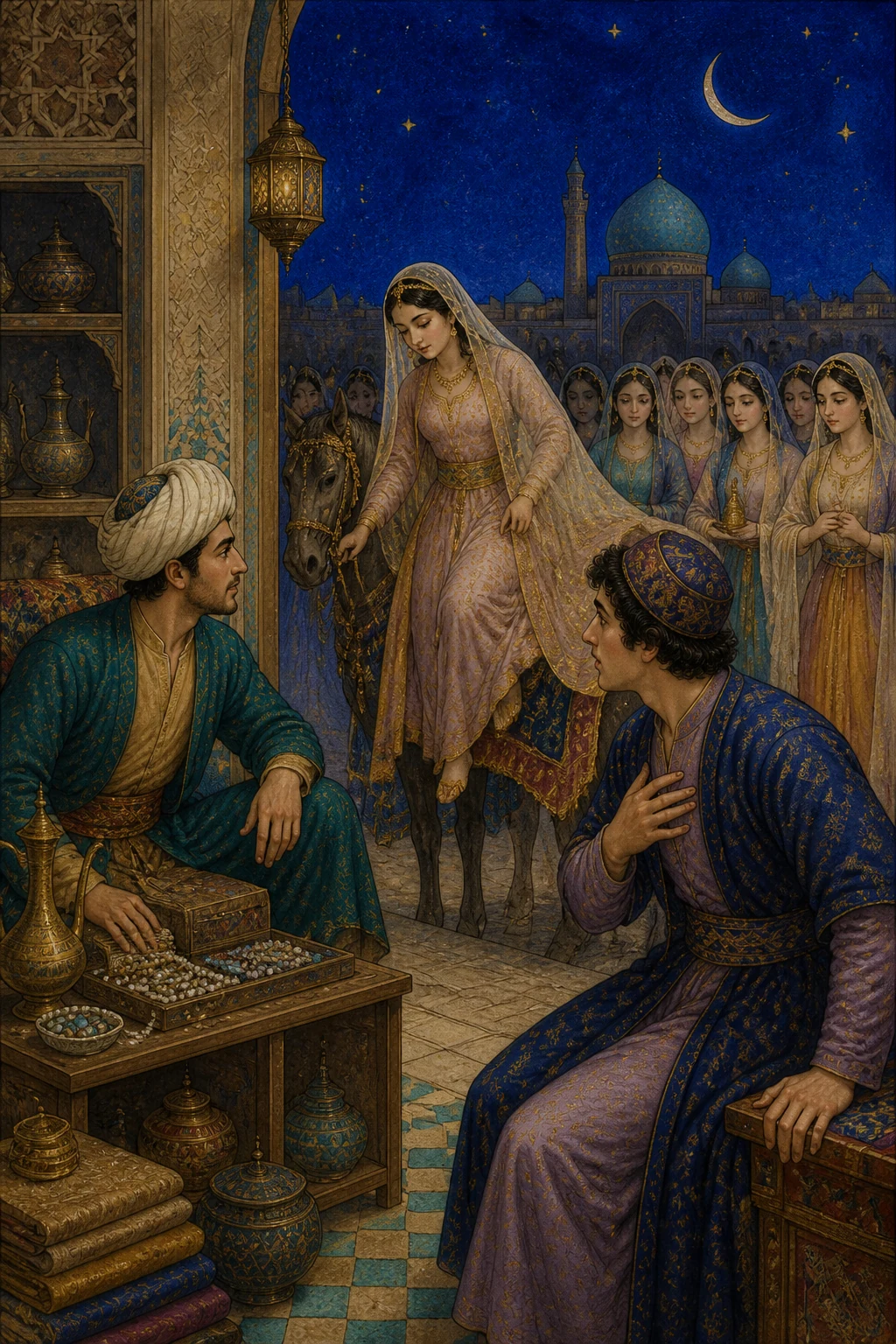
She said: It has reached me, O fortunate King, that in times long past, during the caliphate of Harun al-Rashid, there lived a merchant who had a son named Abu al-Hasan Ali ibn Tahir. He was wealthy and generous, handsome in appearance, and beloved by all who saw him. He entered the caliphal palace without asking leave, and all the caliph’s concubines and slave girls were fond of him. He kept the sovereign company over wine, recited poetry to him, and entertained him with curious tales. Yet he still bought and sold in the merchants’ market. A young man descended from the kings of Persia, named Ali ibn Bakkar, used to sit with him in his shop. This youth was graceful in stature, elegant in form, and perfect in beauty, with rosy cheeks, meeting eyebrows, sweet speech, and a ready smile; he delighted in merriment and good cheer. One day, as the two sat talking and laughing, ten slave girls appeared, lovely as moons, each endowed with beauty and a graceful figure. Among them was a young woman riding a mule with an embroidered saddle and golden stirrups. She wore a fine mantle, and about her waist was a silken sash embroidered with gold. As the poet said of her:
Her skin is silk, her speech a gentle melody, neither idle nor too spare. Her eyes—God said to them, “Be,” and they were—work upon the mind as wine will do. O love of her, increase my anguish every night! O solace from the beloved, we shall not meet till Judgment Day. When they reached Abu al-Hasan’s shop, she dismounted and sat down there. She greeted him, and he returned her greeting. At the sight of her, Ali ibn Bakkar lost his senses and made to rise, but she said to him, “Stay where you are. How can you leave when we have just arrived? That is hardly fair.” He replied, “By God, my lady, I am fleeing from what I have seen. How well the poet spoke:
She is the sun, whose dwelling is in heaven: console your heart with seemly resignation. You cannot climb to her, nor can she descend to you.” When she heard these words, she smiled and asked Abu al-Hasan, “What is this young man’s name, and where does he come from?” He answered, “He is a stranger here, named Ali ibn Bakkar, the son of a Persian king, and a stranger should be treated with honor.” She said, “When my maid comes to you, bring him to my house.” “Upon my head,” replied Abu al-Hasan. Then she rose and went on her way.
Such was her part in the affair. As for Ali ibn Bakkar, he scarcely knew what he was saying. An hour later, the maid came to Abu al-Hasan and said, “My mistress asks for you and your companion.” Abu al-Hasan rose, took Ali ibn Bakkar with him, and went to the palace of Harun al-Rashid. The maid led them into a private chamber and seated them. Tables were set before them, and they ate and washed their hands. Then she brought them wine, and they drank until they were tipsy. She bade them rise, and they followed her into another chamber, raised upon four columns, furnished with every kind of rich furnishing and adorned so splendidly that it seemed one of the palaces of Paradise. They were astonished by the treasures they saw. While they were gazing at these marvels, ten slave girls approached, swaying proudly as they walked, like moons that dazzled the eyes and bewildered the mind. They ranged themselves in a row like the maidens of Paradise. After them came ten more, carrying lutes and other instruments of music and delight. They greeted the two men, then began to play their lutes and sing verses, each girl a temptation to mankind. After them came another ten, young women of an age, with rounded breasts, black eyes, red cheeks, meeting eyebrows, and languid glances: a temptation to the devout and a delight to the beholder. Their colored silks were enough to bewilder the mind. They stood by the door, and ten more followed, lovelier still and dressed in sumptuous garments, and these too stood by the door. Then twenty slave girls came through the doorway, and among them was a young woman named Shams al-Nahar, like the moon among the stars. Her long hair lay about her like a shawl. She wore a blue gown and a silken mantle embroidered with gold, and about her waist was a girdle set with jewels of every kind. She advanced with a stately, swaying gait and seated herself upon the couch. When Ali ibn Bakkar saw her, he recited these verses:
Here begins my sickness, my enduring longing and my endless love. Before her I have seen my very soul dissolve with passion, and yearning wear away my bones. When he had finished, he said to Abu al-Hasan, “Had you wished to do me a kindness, you would have told me of all this before bringing me here, so that I might have prepared my soul and taught it patience under what has befallen it.” Then he wept and lamented. Abu al-Hasan said, “My brother, I wished you nothing but good. But I feared that if I told you, longing would so overcome you that it would keep you from meeting her and stand between you and union with her. Take heart and be glad: your good fortune has brought her to you, and she herself is seeking to meet you.” Ali ibn Bakkar asked, “What is this young woman’s name?” Abu al-Hasan replied, “She is called Shams al-Nahar, and she is one of the favorites of the Commander of the Faithful, Harun al-Rashid. This is the caliphal palace.” Shams al-Nahar sat gazing at Ali ibn Bakkar’s beauty, while he gazed at hers, and each was absorbed in love for the other. She ordered the slave girls to take their places on couches, each opposite an arched opening, and bade them sing. One of them took up the lute and sang:
Send your message once again, and take your answer openly. Before you, king of all the fair, I stand to plead my plight. My lord, my precious heart, my dearest life, bestow a kiss on me—a gift, or else a loan. I shall return it to you, may you live long, unchanged and just as it was. And if you wish for more, take more, to your heart’s content. You who have clothed me in wasting sickness, may you rejoice in the robe of health. Ali ibn Bakkar was delighted and said, “Give me more verses like these.” She touched the strings and sang:
Through long separation, my beloved, I have taught my eyelids endless weeping. O joy of my eyes, their heart’s desire, my utmost hope, my faith, have pity on one whose eyes are drowned in the tears of a sorrowing lover. When she had finished, Shams al-Nahar said to another girl, “Sing.” She charmed them with her melodies and sang these verses:
It was his glance, not his wine, that made me drunk; his swaying gait drove sleep from my eyes. Not the vintage but his curling locks enthralled me; not the wine but his gracious ways swept me away. The twisted curls at his temples twisted my resolve, and what his robes conceal stole away my reason. Hearing the girl’s song, Shams al-Nahar sighed, delighted by the verses. Then she ordered another girl to sing, and she sang:
A face that vies in splendor with the lamp of heaven, fresh with the dew of youth. The down upon his cheeks has traced its letters upon their silken veils, and in their folds lies all the meaning of love. When I met him, Beauty cried aloud, “Here is God’s own delicate embroidery!” When she had finished, Ali ibn Bakkar said to a girl seated near him, “Now you sing, maiden.” She took the lute and sang these verses:
The time of union is too brief for all this lingering and coyness. How much cruel turning away! This is not the way of the beautiful. Seize the happy hour and savor the sweetness of being together. When she had finished, Ali ibn Bakkar sighed and let his tears flow freely. Seeing him weep, moan, and lament, Shams al-Nahar burned with longing and passion, consumed by love and distraction. She rose from her couch and came to the entrance of the domed pavilion. Ali ibn Bakkar rose to meet her, and they embraced and fell unconscious in the doorway. The slave girls hurried to them, carried them inside, and sprinkled them with rosewater. When they revived, they could not see Abu al-Hasan, who had hidden beside a couch. “Where is Abu al-Hasan?” the young woman asked. He emerged from beside the couch, and she greeted him, saying, “May God grant me the means to repay your kindness, O generous friend.” Then she turned to Ali ibn Bakkar and said, “My lord, whatever extremity love has brought you to, I have suffered its like many times over. We can only endure what has befallen us.” Ali ibn Bakkar replied, “By God, my lady, only union with you can sweeten my life. The fire within me will never cease to burn for you, nor will the love rooted in my heart depart until my soul departs with it.” Then he wept, and his tears fell down his cheeks like rain. When Shams al-Nahar saw him weeping, she wept with him. Abu al-Hasan said, “By God, you amaze and bewilder me. Yours is a strange condition and a wondrous affair. You weep like this while you are together—what will become of you when you are parted?” Then he added, “This is no time for grief and tears, but for joy and delight.” Shams al-Nahar motioned to a maid, who rose and returned with attendants bearing a table set with silver dishes containing all kinds of food. They placed it before them, and Shams al-Nahar began to eat and feed morsels to Ali ibn Bakkar until all had eaten their fill. The table was removed, and they washed their hands. Censers were brought with various kinds of aloeswood, and flasks of rosewater; they perfumed themselves with the incense and scented water. Engraved golden trays were set before them, laden with wines, fruits, and sweetmeats to delight the heart and please the eye. Then an agate basin full of wine was brought. Shams al-Nahar chose ten attendants to stand beside her and ten singing girls, and sent the rest back to their quarters. She bade some of those who remained play the lute. They obeyed, and one of them sang:
I would ransom with my life the one who returned my greeting with a smile, renewing my hope of union after despair. The hands of passion have laid bare my secrets, revealing to my reproachers all that lies within my breast. My tears have come between him and me, as though my tears too were in love with him. When she had finished, Shams al-Nahar rose, filled the cup, and drank it. Then she filled it again and handed it to Ali ibn Bakkar. But morning overtook Shahrazad, and she fell silent, leaving her tale untold.
When it was the hundred and fifty-fourth night
She said: It has reached me, O fortunate King, that Shams al-Nahar filled the cup and handed it to Ali ibn Bakkar, then ordered a girl to sing. She sang these two verses: My flowing tears are so like my wine that my eyes pour forth the very liquor in my cup. By God, I cannot tell whether my eyelids stream with wine or whether it is my tears I drink. When she had finished, Ali ibn Bakkar drank his cup and returned it to Shams al-Nahar. She filled it and passed it to Abu al-Hasan, who drank. Then she took the lute and said, “No one but I shall sing over my cup.” She tuned the strings and sang these verses:
The wondrous tears upon his cheeks consume him with longing, while the fire of passion burns within his breast. Even in their presence he weeps for fear of parting: his tears flow whether they are near or far. And these words of the poet:
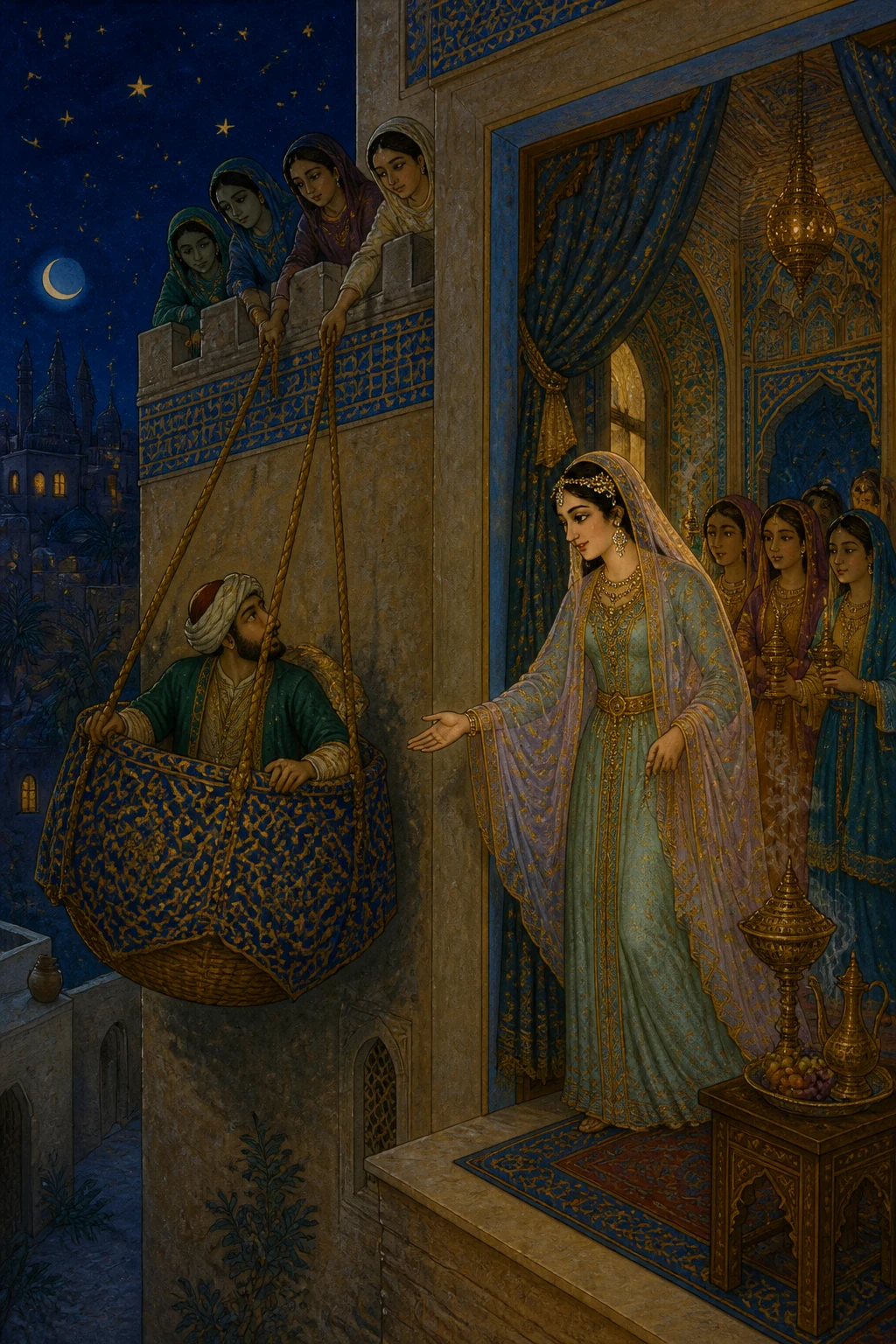
We would ransom you, cupbearer, whom beauty has clothed from your shining crown to your feet. The sun rises from your hands, the Pleiades from your mouth, and the full moon from your collar. The cups that robbed me of sobriety are passed to me from your eyes. Is it not a marvel that you are a moon at the full, while your lovers dwindle into darkness? Are you a god, who kills and brings to life whomever you please by meeting or parting? God fashioned beauty from your nature, and the sweetness of the breeze from your character. You are not of this mortal race, but a king crowned by your Creator. When Ali ibn Bakkar, Abu al-Hasan, and all those present heard Shams al-Nahar’s verses, they nearly flew with delight, and laughed and made merry. While they were thus occupied, a maid came in trembling with fear and said, “My lady, the Commander of the Faithful has arrived. He is at the door with Afif, Masrur, and others.” At her words, they nearly died of fright, but Shams al-Nahar laughed and said, “Do not be afraid.” Then she told the maid, “Keep them occupied with an answer until we have moved from here.” She ordered the pavilion door closed and its curtains drawn, with the men still inside, and had the door of the hall shut as well. Then she went out into the garden, sat upon her couch, and bade a maid massage her feet. She sent the other girls to their places and ordered the door left open for the caliph to enter. Masrur and his companions came in, twenty men bearing swords, and greeted Shams al-Nahar. “What brings you here?” she asked. They replied, “The Commander of the Faithful sends you his greetings. He longs to see you and tells you that today has brought him exceptional happiness and good fortune. He wishes to crown his pleasure with your company at this hour. Will you come to him, or shall he come to you?” She rose, kissed the ground, and said, “I hear and obey the command of the Commander of the Faithful.” Then she summoned the mistresses of the household and the slave girls, and they came. She made a show of preparing to fulfill the caliph’s command, though everything was already in perfect order. Then she said to the servants, “Go to the Commander of the Faithful and tell him I shall shortly be ready to receive him, once I have prepared a place with the proper furnishings and appointments.” The servants hurried back to the caliph. Shams al-Nahar rose and went in to her beloved Ali ibn Bakkar, clasped him to her breast, and bade him farewell. He wept bitterly and said, “My lady, let me savor this farewell, for it may cost me my life and my soul may perish for love of you. Yet I ask God to grant me patience under the love with which He has afflicted me.” Shams al-Nahar answered, “By God, it is I alone who will perish. You can go out to the market and meet someone who may comfort you; you will be safe, and your passion will remain concealed. But I shall fall into peril, especially now that I have promised to receive the caliph. My longing for you, my love and passion, and my grief at parting from you may expose me to terrible danger. With what tongue shall I sing? With what heart shall I appear before the caliph? What words shall I find to entertain the Commander of the Faithful? With what eyes shall I look upon a place where you are not? How can I sit in a gathering you do not attend? What savor can wine have when you are not there?” Abu al-Hasan said to her, “Do not lose your wits. Be patient, and do not neglect to entertain the Commander of the Faithful tonight or show him any want of attention.”
While they were speaking, a maid came and said, “My lady, the Commander of the Faithful’s attendants have arrived.” Shams al-Nahar rose at once and told her, “Take Abu al-Hasan and his companion up to the highest projecting window overlooking the garden. Leave them there until dark, then find a way to get them out.” The maid took them up to the windowed gallery, locked the door behind them, and went away. They looked out over the garden and saw the caliph approaching, preceded by some hundred servants bearing swords. Around him were twenty slave girls, lovely as moons, dressed in the most splendid garments, each wearing a crown set with gems and rubies and carrying a lighted candle. The caliph walked among them, surrounded on every side, with Masrur, Afif, and Wasif before him, advancing with a swaying gait. Shams al-Nahar and all her girls rose to meet him at the garden gate and kissed the ground before him. They walked ahead of him until he took his seat upon the couch. The girls and servants in the garden stood about him, candles burning and instruments playing, until he bade them withdraw and sit upon the couches. Shams al-Nahar seated herself on a couch beside his and began to converse with him. All this Abu al-Hasan and Ali ibn Bakkar saw and heard, though the caliph could not see them.
The caliph began to make merry with Shams al-Nahar and ordered the pavilion opened. Its doors and arched windows were thrown wide, and candles were lit until, though it was dark outside, the place shone like day. The servants began bringing in the drinking vessels. Abu al-Hasan said, “Never have I seen the like of these vessels, wines, and treasures. Here are jewels of kinds I have never even heard of. I feel as though I were dreaming. My mind is bewildered, and my heart is pounding.” As for Ali ibn Bakkar, ever since Shams al-Nahar had left him he had lain upon the floor, overcome by love. When he recovered, he began to watch these incomparable sights and said to Abu al-Hasan, “My brother, I fear the caliph may see us or learn our secret. My greatest fear is for you. As for me, I know that I am doomed, and nothing will kill me but love and passion, excessive longing and distraction. We ask God to deliver us from this affliction.” Ali ibn Bakkar and Abu al-Hasan continued watching the caliph and his entertainment from the gallery until the gathering before him was complete. Then the caliph turned to one of the girls and said, “Gharam, let us hear what delightful music you have for us.” She charmed them with her melodies and sang these verses:
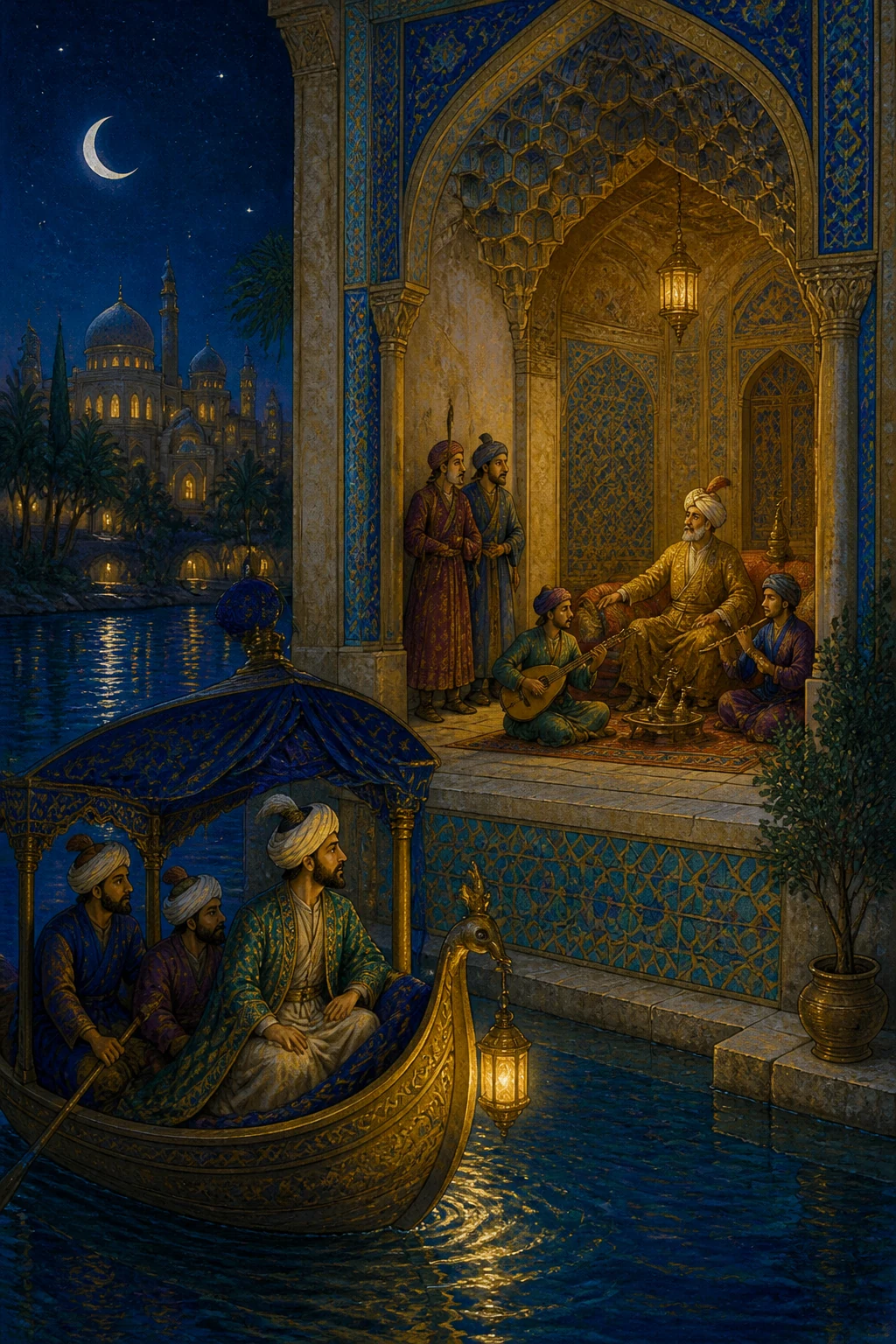
No Bedouin woman whose people have departed, who yearns for the moringa and myrtle of the Hijaz, who, whenever she spies a caravan, provides the fire for its welcome from her longing and the water for its beasts from her tears, knows a yearning greater than mine for my beloved—yet he thinks my love for him a sin. When Shams al-Nahar heard these verses, she fell unconscious from her chair and lost all awareness. The slave girls rose and carried her away. Seeing her from the gallery, Ali ibn Bakkar too fell unconscious. Abu al-Hasan said, “Fate has divided passion equally between you.” While they were thus occupied, the maid who had brought them up came and said, “Abu al-Hasan, rise with your companion and come down. The world has closed in upon us, and I fear our secret will be discovered. Get up at once, or we shall die.” Abu al-Hasan replied, “How can this young man rise with me when he has no strength to stand?” The maid sprinkled rosewater on his face until he revived. Then she and Abu al-Hasan carried him down from the gallery and went a little way. She opened a small iron door and brought the two men out onto a landing. Then she clapped her hands, and a boat appeared with a man rowing it. She helped them aboard and told the boatman, “Take them to the other bank.” When they had boarded and left the garden behind, Ali ibn Bakkar looked back at the pavilion and the garden and bade them farewell with these two verses:
I stretched out one feeble hand in farewell, while the other lay upon burning coals beneath my heart. May this not be our last meeting, nor these provisions the last I take away. Then the maid said to the boatman, “Make haste with them.” He rowed swiftly, with the maid still aboard. But morning overtook Shahrazad, and she fell silent, leaving her tale untold.
When it was the hundred and fifty-fifth night
She said: It has reached me, O fortunate King, that the boatman rowed swiftly, with the maid aboard, until they had crossed from that bank to the other. Then the maid bade the two men farewell as they went ashore and said, “I wished not to leave you, but I cannot go any farther than this.” She returned, while Ali ibn Bakkar lay before Abu al-Hasan, unable to rise. Abu al-Hasan said to him, “This place is not safe. We may lose our lives here to thieves and other villains.” Ali ibn Bakkar rose and struggled to walk a little, though he could scarcely take a step. Abu al-Hasan had friends on that side of the river, so he made for the house of one whom he trusted and could rely upon. He knocked, and the man came out quickly. At the sight of them, he welcomed them, brought them inside, seated them, and began to talk with them, asking where they had been. Abu al-Hasan said, “We came out at this hour because of a man with whom I had dealings in money. I heard that he intended to travel, taking my money with him, so I went to find him tonight and brought my friend Ali ibn Bakkar for company. We hoped to see him, but he hid from us, and we could not find him. We came away empty-handed, and the journey home at this hour seemed too difficult. We could think of nowhere to go but your house, so we came, trusting in your customary kindness.” He welcomed them warmly and did his utmost to honor them, and they stayed with him for the rest of the night.
In the morning they left him and walked until they reached the city and entered it. Passing Abu al-Hasan’s house, he insisted that his friend Ali ibn Bakkar come inside. They lay down for a little while, then awoke. Abu al-Hasan ordered his servants to furnish the room richly, and they did so. He said to himself, “I must keep this young man company and distract him from his suffering, for I know his plight best.” When Ali ibn Bakkar awoke, he called for water. They brought it, and he rose, performed his ablutions, and made up the obligatory prayers he had missed during the day and night. Then he tried to comfort himself with conversation. Seeing this, Abu al-Hasan approached him and said, “My lord Ali, in your present state it would be best to stay with me tonight, so that your heart may find relief, your anguish of longing may ease, and you may divert yourself in our company.” Ali ibn Bakkar replied, “Do as you please, my brother. Whatever happens, I cannot escape what has befallen me, so do what you intend.” Abu al-Hasan rose, called his servants, assembled his friends, and sent for singers and musicians. They came, and the company spent the rest of the day eating, drinking, and making merry until evening. Then candles were lit, the cups went round, and the gathering grew pleasant. The singing girl took up her lute and sang:
Time shot at me the arrow of a glance, and struck me to the heart; I was parted from my loved ones. Time turned against me, and my patience failed, though once I thought myself prepared. When Ali ibn Bakkar heard the singer’s words, he fell unconscious and remained so until dawn, while Abu al-Hasan despaired of him. When daylight came, he revived and asked to go home. Fearing what might happen to him, Abu al-Hasan did not prevent him. His servants brought a mule and helped him mount, and Abu al-Hasan accompanied him all the way to his house. Once his friend was safely settled there, Abu al-Hasan thanked God for delivering him from this predicament and tried to comfort him, though Ali ibn Bakkar could not master himself for the violence of his passion. Then Abu al-Hasan bade him farewell. But morning overtook Shahrazad, and she fell silent, leaving her tale untold.
When it was the hundred and fifty-sixth night
She said: It has reached me, O fortunate King, that when Abu al-Hasan bade him farewell, Ali ibn Bakkar said, “My brother, do not fail to bring me news.” “I hear and obey,” he replied. Abu al-Hasan left him, went to his shop, opened it, and waited for news from the young woman, but no one brought him any. He spent that night at home. In the morning he rose and went to Ali ibn Bakkar’s house. He found him lying upon his bed, surrounded by friends and physicians, each prescribing some remedy and feeling his pulse. At the sight of Abu al-Hasan, Ali ibn Bakkar smiled. Abu al-Hasan greeted him, asked how he fared, and sat with him until everyone had left. Then he asked, “What is all this?” Ali ibn Bakkar replied, “Word has spread that I am ill, and my friends have heard it. I have not the strength to rise and walk about, and so disprove those who say I am sick. I have remained lying here as you see me, and my friends have come to visit. My brother, have you seen the maid or heard any news from her?” He replied, “She has not come to me since she left us on the bank of the Tigris.” Then Abu al-Hasan said, “My brother, beware of scandal and restrain these tears.” Ali ibn Bakkar answered, “My brother, I cannot control myself.” Then he heaved deep sighs and recited these verses:
A pattern upon her wrist has attained what my hand could never reach, and at the sight my endurance fails. Fearing for her hand the arrows of her own eyes, she clothed it in a coat of mail. The physician, in his ignorance, felt my wrist; I told him, “The pain is in my heart—leave my hand alone.” She said to the phantom that had visited me and returned, “By God, describe him, neither adding nor taking away.” It answered, “I left him so obedient that, were he dying of thirst, if you forbade him to approach the water, he would not go.” Then from narcissus eyes she rained down pearls to water the roses of her cheeks, and bit her jujube lips with teeth like hailstones. When he had finished, he said, “I have been struck by a calamity from which I once was safe. There is no greater comfort left to me than death.” Abu al-Hasan replied, “Be patient. Perhaps God will heal you.” He left him, went to his shop, and opened it. He had been sitting there only a short while when the maid came and greeted him. He returned her greeting and, looking at her, saw that her heart was troubled and sorrow showed upon her face. “Welcome,” he said. “How is Shams al-Nahar?” She replied, “I shall tell you how she is. But how is Ali ibn Bakkar?” Abu al-Hasan told her everything that had happened to him. She grieved, sighed, and marveled at his condition, then said, “My mistress’s plight is stranger still. When you had gone, I returned with my heart trembling for you, scarcely believing you had escaped safely. I found my mistress lying in the pavilion, neither speaking nor answering anyone. The Commander of the Faithful sat at her head, unable to find anyone who could tell him what had happened, for he did not know what ailed her. She remained unconscious until midnight. When she revived, the Commander of the Faithful asked her, ‘What has befallen you, Shams al-Nahar? What has come over you tonight?’ Hearing the caliph’s words, she kissed his feet and said, ‘Commander of the Faithful, may God make me your ransom! A disordered humor overcame me and set my body aflame. The violence of it made me faint, and I do not know what happened to me.’ The caliph asked, ‘What did you take during the day?’ She answered, ‘I broke my fast with something I had never eaten before.’ Then she made a show of strength, called for something to drink, and drank it. She asked the Commander of the Faithful to return to his pleasures, and he resumed his seat in the pavilion. When I went to her, she asked me about you both. I told her what I had done for you and recited the verses Ali ibn Bakkar had spoken. She fell silent. Then the Commander of the Faithful, seated once more, ordered a girl to sing, and she sang these two verses:
Since you left, no sweetness has remained in life for me. Would that I knew how you have fared since I departed. My tears ought rightly to be blood, if you are weeping tears because I am far away. When she heard these verses, she fell unconscious.” But morning overtook Shahrazad, and she fell silent, leaving her tale untold.
When it was the hundred and fifty-seventh night
She said: It has reached me, O fortunate King, that the maid said to Abu al-Hasan, “When my mistress heard those verses, she fell unconscious. I took her hand and sprinkled rosewater on her face until she revived. Then I said, ‘My lady, do not expose yourself and all those within your palace. By the life of your beloved, be patient!’ She replied, ‘Can anything worse than death befall me? I seek it, for in it lies my rest.’ While we were speaking, a girl sang these words of the poet:
They said, ‘Perhaps patience will bring relief.’ I answered, ‘Where is patience after parting from him? The covenant between us was sealed by the severing of every cord of patience when I embraced him.’ When the girl had finished, my mistress fell unconscious again. The caliph saw her and hurried to her. He ordered the wine removed and every girl to return to her chamber, and remained with her for the rest of the night. In the morning he summoned physicians and ordered them to treat her, knowing nothing of her love and passion. I stayed beside her until I thought her condition had improved. That is what kept me from coming to you. When she ordered me to go and learn how Ali ibn Bakkar fared and return to her, I left a number of her closest attendants with her.” Abu al-Hasan marveled at the maid’s account and said, “By God, I have told you everything that has happened to him. Return to your mistress, give her my greetings, urge her to be patient, and tell her to keep the secret. Tell her that I understand her situation: it is a grave matter and must be handled carefully.” The maid thanked him, bade him farewell, and returned to her mistress.
Such was her part in the affair. As for Abu al-Hasan, he remained in his shop until the end of the day. When evening came, he rose, locked the shop, and went to Ali ibn Bakkar’s house. He knocked, and one of the servants came out and admitted him. At the sight of him, Ali ibn Bakkar smiled and rejoiced, saying, “Abu al-Hasan, I have missed you, since you stayed away from me today. For the rest of my life, my soul will be bound to you.” Abu al-Hasan replied, “Do not speak so. If I could ransom you, I would give my own life for yours. Shams al-Nahar’s maid came today and told me that nothing had kept her away but the caliph’s remaining with her mistress. She also told me what had happened to her mistress.” He related everything he had heard from the maid. Ali ibn Bakkar was deeply grieved and wept. Then he turned to Abu al-Hasan and said, “By God, help me in this affliction and tell me what can be done. I beg you, in your kindness, to spend tonight here, so that I may find comfort in your company.” Abu al-Hasan agreed to his request and consented to stay. They spent the night talking, until Ali ibn Bakkar wept, let his tears flow, and recited these verses:
With the sword of her glance she broke the pledge that shields the helpless; with the spear of her stature she pierced the armor of my endurance. Beneath the musk-dark beauty spot she unveiled the camphor of a dawn that cleft the night of ambergris. In alarm she parted carnelian lips to show pearls whose separate gems lay in a pool of sugar. She sighed in anguish, and her hand left marks upon her breast; then I beheld what I had never seen: coral pens had written in ambergris five lines upon a crystal page. O bearer of the broad-bladed sword, when she looks your way, beware the stroke of her languishing eyelid! And you, master of the lance, beware the thrust when she charges you with the dusky spear of her slender form. When Ali ibn Bakkar had finished his verses, he gave a terrible cry and fell unconscious. Abu al-Hasan thought his soul had left his body. He remained in his swoon until daybreak, then revived and spoke with Abu al-Hasan, who stayed beside him until well into the morning. Then he left him, went to his shop, and opened it. Presently the maid came and stood before him. When he saw her, she greeted him with a gesture, and he returned her greeting. She conveyed her mistress’s salutations and asked, “How is Ali ibn Bakkar?” He replied, “Girl, do not ask about his condition or the torments of his love. He neither sleeps by night nor rests by day. Sleeplessness has wasted him, distress has overcome him, and his condition would grieve anyone who loved him.” She said, “My mistress sends her greetings to you and to him. She has written him a letter, and her own condition is worse than his. She gave me the letter and said, ‘Do not return without its answer, and do as I have commanded you.’ Here is the letter with me. Will you come with me to Ali ibn Bakkar so that we may get his reply?” Abu al-Hasan answered, “I hear and obey.” He shut his shop, took the maid with him, and led her by a different route from the one he had come by. They walked on until they reached Ali ibn Bakkar’s house. There he left her at the door and went inside. And morning overtook Shahrazad, and she fell silent, leaving her tale untold.
When it was the hundred and fifty-eighth night,
She said: It has reached me, O fortunate King, that Abu al-Hasan took the maid to Ali ibn Bakkar’s house, left her at the door, and went inside. When Ali ibn Bakkar saw him, he was delighted. Abu al-Hasan said, “I have come because a certain man has sent you his maid with a note conveying his greetings. In it he explains that some unavoidable business has kept him from visiting you. The maid is standing at the door. Will you allow her to enter?” Ali said, “Bring her in.” Abu al-Hasan signaled to him that she was Shams al-Nahar’s maid, and he understood. When he saw her, he stirred with joy and asked her by signs, “How is our master? May God restore him to health and keep him well.” She replied, “He is well.” Then she took out the letter and handed it to him. He took it, kissed it, read it, and passed it to Abu al-Hasan, who found these verses written in it:
This messenger will tell you how I fare; let the report suffice instead of seeing me. You have left behind a lover sick with love for you, whose eyes are ever wakeful. I struggle to endure affliction, for no creature can ward off the blows of fate. Be comforted: you have never been absent from my heart, not even on the day you vanished from my sight. Look at your own wasted body and what has befallen it, and judge my state by its traces. And now: I have written to you without fingers and spoken to you without a tongue. To sum up my condition, I have eyes that sleeplessness never leaves and a heart from which thoughts never depart. It is as though I had never known health or happiness, never beheld a lovely sight or enjoyed a pleasant life; as though I had been created out of yearning, the pain of passion, and sorrow. Sickness follows sickness, love’s torment redoubles, and longing ever increases, until I have become as the poet said:
My heart is cramped, my thoughts range far; my eyes are sleepless and my body worn. Patience has departed, separation stays; my mind is troubled and my heart is stolen. Know that complaint does not extinguish the fire of suffering, yet it affords some solace to one whom longing has made ill and separation has destroyed. I comfort myself by speaking the very word “reunion.” How beautifully the poet said:
If love knew neither anger nor contentment, where would be the sweetness of messages and letters? Abu al-Hasan said: When I read it, its words stirred my anguish, and its meaning struck me to the heart. Then I gave it to the maid. When she had taken it, Ali ibn Bakkar said to her, “Convey my greetings to your mistress. Tell her of my passion and my torment, and how love has mingled with my flesh and bones. Tell her that I need someone to rescue me from the sea of destruction and deliver me from this bewilderment.” Then he wept, and the maid wept at his tears. She bade him farewell and left him, and Abu al-Hasan went out with her. Then he took leave of her and returned to his shop. And morning overtook Shahrazad, and she fell silent, leaving her tale untold.
When it was the hundred and fifty-ninth night,
She said: It has reached me, O fortunate King, that Abu al-Hasan bade the maid farewell and returned to his shop. As he sat there, his heart grew heavy, his breast tightened, and he was at a loss what to do. He spent the rest of the day deep in thought. The next day he went to Ali ibn Bakkar and sat with him until the other visitors had left. He asked how he was, and Ali began to complain of love’s torment, his passion and distraction, reciting these verses:
Before me, others have complained of love’s pain, and separation has struck terror into living and dead. But anything like what my breast contains I have neither heard of nor seen. And these verses of another poet:
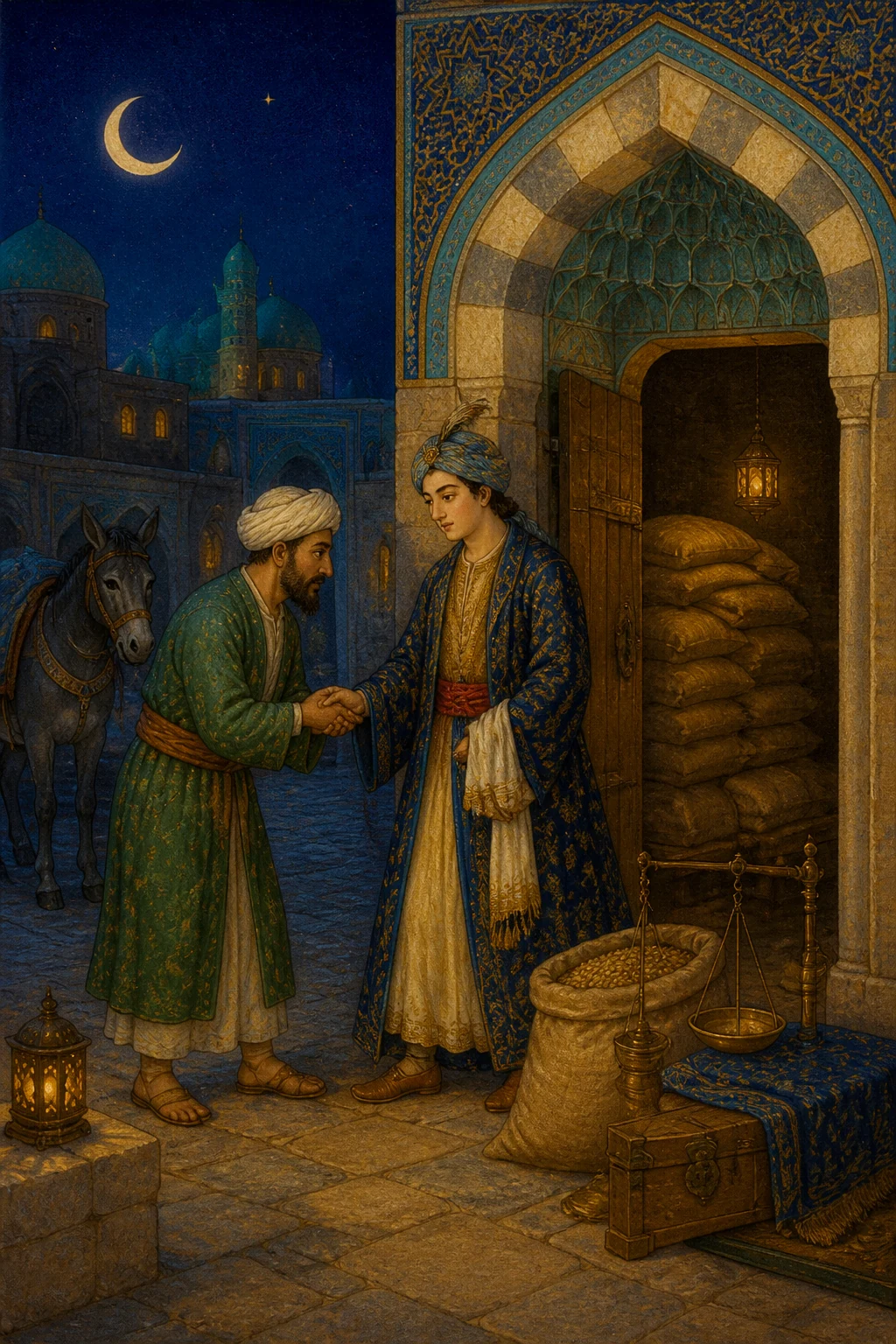
Through loving you I have suffered what even her mad Qays never suffered for Lubna. Yet I have not followed the wild beasts of the desert as Qays did: madness has many forms. Abu al-Hasan said to him, “I have never seen or heard of anyone like you in love. How can you be so consumed by passion and so feeble, when the beloved to whom you are devoted returns your love? What if you loved someone who opposed and deceived you? Then your secret would surely be exposed.” Abu al-Hasan said: Ali ibn Bakkar found comfort in my words and thanked me for them. Now I had a friend who knew of my affairs and those of Ali ibn Bakkar, and knew the close understanding between us. No one else knew what passed between us. He used to come and ask me about Ali ibn Bakkar, and before long he asked me about the maid. I told him, “Her mistress invited him to visit her, and what passed between them could not have been surpassed. That is the latest development in their affairs. But I have devised a plan for myself that I wish to put before you.” His friend asked, “What is it?” Abu al-Hasan said, “You must know that I am a man well known for my many dealings with both men and women. I fear that their affair may be discovered and lead to my death, the seizure of my property, and the dishonoring of my household. I have therefore decided to gather my money, make my preparations, and leave for Basra. I shall remain there and wait to see what becomes of them, without anyone knowing my true purpose. Love has taken firm possession of them, and letters are passing between them. Their go-between is a maid who keeps their secrets, but I fear she may grow weary and reveal them to someone. Then their story will spread and bring ruin upon them and destruction upon me, and I shall have no excuse to offer anyone.” His friend said, “You have told me of a grave matter, the like of which any sensible, experienced man would fear. May God protect you from the evil you dread and deliver you from the consequences you fear. Your decision is the right one.”
Abu al-Hasan returned home and began settling his affairs and preparing to travel to Basra. Before three days had passed, he had finished his business and set out. Three days later his friend came to visit him and did not find him. He asked the neighbors about him, and they said, “He left for Basra three days ago. He has dealings with merchants there and has gone to collect his debts. He will be back soon.” The man was bewildered and did not know where to turn. “Would that I had never parted from Abu al-Hasan!” he said. Then he devised a way to gain access to Ali ibn Bakkar. He went to his house and said to one of his servants, “Ask your master’s permission for me to come in and pay my respects.” The servant went inside, told his master, then returned with permission for him to enter. He went in and found Ali reclining upon a cushion. He greeted him, and Ali returned his greeting and welcomed him. The man apologized for not having visited him for so long, then said, “My lord, Abu al-Hasan and I are friends. I used to entrust him with my secrets and scarcely leave his company for an hour. I was away for three days on some business with a party of friends, and when I returned I found his shop shut. I asked the neighbors about him, and they told me that he had gone to Basra. I know of no friend more devoted to him than you, so I beg you, by God, to tell me what you know of him.” When Ali ibn Bakkar heard this, his color changed and he grew agitated. “Until today,” he said, “I had heard nothing of his departure. If it is as you say, then trouble has indeed befallen me.” Tears streamed from his eyes, and he recited these two verses:
I used to weep for joys gone by when all my loved ones were together, not dispersed. Today my fate has parted me from them, and now I weep for those I love. Then Ali ibn Bakkar lowered his head and sat pondering. After a while he raised it and said to a servant, “Go to Abu al-Hasan’s house and ask whether he is at home or has gone away. If they say he has left, ask where he has gone.” The servant departed and was away for a while, then returned to his master and said, “When I asked about Abu al-Hasan, his people told me that he had gone to Basra. But I found a maid standing at the door. When she saw me, she recognized me, though I did not recognize her. She asked, ‘Are you a servant of Ali ibn Bakkar?’ I said, ‘Yes.’ She said, ‘I have a message for him from the person dearest to his heart.’ So she came with me and is standing at the door.” Ali ibn Bakkar said, “Bring her in.” The servant went out and brought her in. The man sitting with Ibn Bakkar looked at the maid and saw that she was graceful and charming. She approached Ali ibn Bakkar and greeted him. And morning overtook Shahrazad, and she fell silent, leaving her tale untold.
When it was the hundred and sixtieth night,
She said: It has reached me, O fortunate King, that when the maid entered Ali ibn Bakkar’s room, she approached him, greeted him, and spoke to him in private. In the course of their conversation he repeatedly swore that he had said no such thing. Then she took her leave and departed. Now Abu al-Hasan’s friend was a jeweler. When the maid had gone, he found an opportunity to speak and said to Ali ibn Bakkar, “There can be no doubt that the caliph’s household has some claim upon you, or that you have dealings with it.” Ali asked, “Who told you that?” He replied, “I know this maid. She belongs to Shams al-Nahar. Some time ago she came to me with a note saying that her mistress wished for a necklace of jewels, and I sent her a costly one.” When Ali ibn Bakkar heard this, he became so agitated that the jeweler feared for his life. Then he recovered himself and said, “My brother, I beg you by God, how do you know her?” The jeweler replied, “Do not press me with questions.” Ali ibn Bakkar said, “I shall not leave you in peace until you tell me the truth.” The jeweler said, “I will tell you in such a way that you need harbor no suspicion of me or feel any distress at my words. I shall hide no secret from you, but explain the whole truth—on condition that you tell me the truth about your own situation and the cause of your illness.” So Ali told him his story, then said, “By God, my brother, the only reason I have concealed my affairs from others is my fear that people will expose one another’s secrets.” The jeweler said to Ali ibn Bakkar, “I sought your company only because of my great affection and concern for you, and my pity for your heart in the pain of separation. I hoped to keep you company in place of my friend Abu al-Hasan while he is away. So take heart and be comforted.” Ali ibn Bakkar thanked him and recited these two verses:
Were I to say that I could bear his absence patiently, my tears and bitter sobbing would give me the lie. How can I hide the tears that stream across my cheek because my beloved is far away? Then Ali ibn Bakkar fell silent for a time. At last he said to the jeweler, “Do you know what the maid whispered to me?” He replied, “No, by God, my lord.” Ali said, “She claimed that I advised Abu al-Hasan to go to Basra, and that I devised this stratagem to put an end to our correspondence and our meetings. I swore to her that it was not so, but she would not believe me. She went back to her mistress still harboring these suspicions, for she had been listening to Abu al-Hasan.” The jeweler said, “My brother, I gathered as much from the maid’s manner. But, God Most High willing, I shall help you attain your desire.” Ali ibn Bakkar asked, “How will you deal with her, when she shies away like a wild creature of the desert?” He replied, “I shall do my utmost to help you and devise a way to reach her without exposing any secret or causing any harm.” Then he asked leave to depart. Ali ibn Bakkar said, “My brother, be sure to keep the secret.” He looked at him and wept, and the jeweler bade him farewell and left. And morning overtook Shahrazad, and she fell silent, leaving her tale untold.
When it was the hundred and sixty-first night,
She said: It has reached me, O fortunate King, that the jeweler took his leave and departed, not knowing how he could help Ali ibn Bakkar. He walked on, pondering the matter, until he saw a letter lying in the road. He picked it up, looked at the address, and read: “From the lesser lover to the greater beloved.” He opened it and found these two verses written inside:
The messenger came, tempting me with hopes of union with you, though I thought it most likely he was mistaken. I felt no joy; my sorrow only deepened, knowing that my messenger had failed to understand. And now: Know, my lord, that I do not understand why the correspondence between us has ceased. If you have turned cold, I shall meet your coldness with fidelity; if your affection has departed, I shall preserve mine despite the distance. With you I am as the poet said:
Be proud: I shall endure. Be overbearing: I shall be patient. Exalt yourself: I shall be humble. Turn away: I shall approach. Speak: I shall listen. Command: I shall obey. Just as he finished reading, the maid appeared, looking to right and left. She saw the letter in his hand and said, “My lord, that letter fell from me.” He gave her no answer but walked on. The maid followed him until he reached his house and went inside, with her behind him. She said, “My lord, give me back the letter. I dropped it.” He turned to her and said, “Girl, do not be afraid or distressed. Only tell me the truth, for I can keep a secret. I call upon you to swear that you will conceal nothing from me about your mistress. Perhaps God will help me to fulfill her wishes and make difficult matters easy through my hands.” When the maid heard his words, she said, “My lord, no secret is lost when you guard it, and no undertaking fails when you strive to accomplish it. Know that my heart has warmed to you. I shall tell you the truth, but give me the letter.” Then she told him the whole story and said, “God is witness to what I say.” He replied, “You have spoken truly, for I already know the beginnings of this affair.” Then he told her about Ali ibn Bakkar and how he had won his confidence, recounting everything from beginning to end. She was delighted to hear it. They agreed that she should take the letter to Ali ibn Bakkar and return to the jeweler to tell him everything that happened. He gave her the letter, and she took it and sealed it as before, saying, “My mistress Shams al-Nahar gave it to me sealed. When he has read it and given me his answer, I shall bring it to you.” Then she bade him farewell and went to Ali ibn Bakkar, whom she found waiting. She gave him the letter, and he read it, then wrote a reply and handed it to her. She took it and returned to the jeweler, as they had agreed. He broke the seal and read it, finding these words:
The messenger with whom our letters lay concealed has lost them and departed in anger. Choose me a trustworthy messenger from among you, one who esteems truth and has no liking for lies. And now: No coldness has come from me. I have abandoned no fidelity, broken no pledge, severed no affection. Grief has never left me, and since our parting I have met with nothing but ruin. I knew nothing whatever of what you mentioned, and I desire only what you desire. By Him who knows all secrets and whispered counsels, I seek nothing but to meet the one I love. My way is to conceal my passion, though sickness should consume me. Such is my condition. Peace be upon you.
When the jeweler had read this letter and understood its contents, he wept bitterly. The maid said to him, “Do not leave this place until I return. He has accused me of something, and he has his excuses. I mean to contrive some way to bring you together with my mistress Shams al-Nahar, whom I left prostrate, awaiting the answer.” Then the maid went to her mistress, while the jeweler spent the night in a troubled state of mind. At daybreak he performed the dawn prayer and sat waiting for her. Presently she came in, looking happy. He asked, “What news, girl?” She replied, “I went from you to my mistress and gave her the letter Ali ibn Bakkar had written. When she read it and understood its meaning, she was bewildered. I said to her, ‘My lady, do not fear that Abu al-Hasan’s absence will spoil matters between you. I have found someone to take his place, a better man, of greater worth, and well able to keep secrets.’ I told her about you and Abu al-Hasan, how you had come to know him and Ali ibn Bakkar, how I had dropped that letter and you had found it, and what you and I had agreed.” The jeweler was utterly astonished. Then she said to him, “She wishes to hear you speak, so that she may confirm with you the pledges made between you and him. Make up your mind to come with me to her now.”
When the jeweler heard the maid’s words, he saw that going into her presence was a grave matter and a tremendous danger, not something one could venture upon or rush into. He said to the maid, “My sister, I am a man of humble birth, not a man like Abu al-Hasan. He was of high standing and widely known, and he visited the caliph’s palace because they needed his merchandise. As for me, when Abu al-Hasan spoke to me I trembled before him. If your mistress wishes to speak with me, it should be somewhere other than the caliph’s palace, far from the abode of the Commander of the Faithful, for my heart cannot consent to what you ask.” He refused to go with her, while she continued to assure him of his safety, saying, “Do not be anxious or afraid.” As they spoke, his legs began to shake and his hands to tremble. The maid said, “If it is too difficult for you to go to the caliph’s palace, and you cannot come with me, I shall bring her here to you. Do not stir from this place until I return with her.”
The maid went away and soon returned to the jeweler. “Make sure,” she said, “that you have no maid or servant with you.” He replied, “I have only an elderly black woman who attends to me.” The maid rose and shut the doors between the jeweler and his servant, and sent his serving boys out of the house. Then she went out and returned with another woman following her. As the woman entered the jeweler’s house, the fragrance of her perfume filled it. When he saw her, he rose, set a cushion for her, and sat before her. She remained silent for a while until she had rested, then unveiled her face, and the jeweler thought the sun had risen in his home. She asked her maid, “Is this the man you told me about?” The maid replied, “Yes.” She turned to the jeweler and asked, “How are you?” He replied, “Well,” and offered prayers for her. She said, “You have made us come to you and reveal a secret that lay hidden.” Then she asked about his family and household, and he told her all his circumstances. “I have another house besides this one,” he said, “which I have set aside for gatherings with friends and companions. Here I have only what I mentioned to your maid.” Then she asked how he had learned of the affair, and he answered her from beginning to end. She sighed over Abu al-Hasan’s departure and said, “My good man, know that people’s souls find harmony in their desires, and people depend upon one another. No deed is accomplished without a word, no purpose attained without effort, and no ease comes without hardship…” And morning overtook Shahrazad, and she fell silent, leaving her tale untold.
When it was the hundred and sixty-second night,
She said: It has reached me, O fortunate King, that Shams al-Nahar said to the jeweler, “No ease comes without hardship, and success comes only through people of honor. I have now revealed our affair to you, and it lies in your hands either to expose us or to protect us. No greater honor could be asked of you than the honor you already possess. You know that this maid of mine keeps my secret. For that reason she holds a very high place with me, and I have chosen her to attend to my most important concerns. Let no one be dearer to you than she is, and take her into your confidence. Be at ease: you are safe from anything you fear on our account. No door will close upon you but she will open it. She will come to you from me with news concerning Ali ibn Bakkar, and you shall be the intermediary carrying messages between him and me.” Then Shams al-Nahar rose, scarcely able to stand, and began to walk. The jeweler went before her until she reached the door of the house, then returned and sat in his place. Her beauty had dazzled him, her words had bewildered his mind, and her grace and refinement had left him astonished. He continued reflecting upon her qualities until his spirit grew calm. Then he called for food, ate enough to sustain himself, changed his clothes, and left his house for that of Ali ibn Bakkar. The servants met him and walked before him until they brought him to their master, whom he found lying upon his bed. When Ali saw the jeweler, he said, “You have been slow to come, and have added grief to my grief.” Then he dismissed his servants, ordered the doors shut, and said, “By God, I have not closed my eyes since you left me. Yesterday the maid came with a sealed letter from her mistress Shams al-Nahar.” Ibn Bakkar told him everything that had happened with her, then said, “I am bewildered and my patience is nearly gone. Abu al-Hasan used to comfort me, for he knew the maid.” When the jeweler heard Ibn Bakkar’s words, he laughed. Ibn Bakkar said, “How can you laugh at what I say, when I welcomed you as a good omen and took you for a support in adversity?” Then he wept and recited these verses:
He laughed at my tears when he saw me; had he suffered what I suffered, it would have made him weep. None pities the afflicted for what he endures save one as sorrowful, whose own trial has been long. My passion, my yearning, my groaning, my thoughts, my distraction are all for a beloved whose dwelling is the heart’s innermost recess. The beloved has settled in my heart, never leaving it for an instant, yet is so hard to meet. I have no other friend I would accept instead, nor have I ever chosen any other love. When the jeweler heard these words and understood the verses, he wept at Ali’s tears. Then he told him what had happened with the maid since they had parted. Ibn Bakkar listened intently. With every word he heard, his face changed from pale to flushed; one moment strength returned to his body, and the next it ebbed away. When the jeweler had finished, Ibn Bakkar wept and said, “My brother, I am doomed in any case. Would that my end were near! I beg you, of your kindness, to deal gently with me in all my affairs until God wills what He wills. I shall oppose nothing you say.” The jeweler replied, “Nothing will quench this fire in you but a meeting with the one you adore, though not in that dangerous place. It must be at my house, in a dwelling adjoining my own, where the maid and her mistress came to see me. It is the place she has chosen for herself. The purpose is for you both to meet there and tell each other what you have suffered.” Ali ibn Bakkar said, “Do as you wish. Whatever you think best is right.” The jeweler said: I stayed with him that night, keeping him company until morning.
When it was the hundred and sixty-third night,
She said: It has reached me, O fortunate King, that the jeweler said: I stayed that night with Ali ibn Bakkar, keeping him company until morning. Then I performed the dawn prayer, left him, and went home. I had scarcely settled down when the maid came and greeted me. I returned her greeting and told her what had passed between Ali ibn Bakkar and me. She said, “You must know that the caliph has left our quarters, and there is no one in our reception room. It would be safer and better for us there.” I said, “What you say is true, but it is not like this house of mine, which is more secluded and more suitable for us.” The maid replied, “The decision is yours. I shall go to my mistress, tell her what you have said, and put your proposal before her.”
Then the maid went to her mistress and laid the matter before her. She returned to my house and said, “My mistress agrees to your proposal.” She took a purse of dinars from the bosom of her dress and said, “My mistress sends you her greetings and says, ‘Take this and buy whatever we shall need.’” I swore that I would spend none of it, so the maid took it back to her mistress and told her, “He would not accept the money, but handed it back to me.” After the maid had gone, I went to my second house and moved into it all the furnishings and carpets that the occasion required. I brought over silver and porcelain vessels and prepared all the food and drink we should need. When the maid came and saw what I had done, she was pleased and told me to bring Ali ibn Bakkar. I said, “No one but you can bring him.” So she went to him and brought him back in the finest attire, his beauty radiant. When he arrived, I received him, welcomed him, and seated him upon a couch befitting him. I set fragrant flowers before him in porcelain and crystal vessels and talked with him for about an hour. Then the maid went away and remained absent until after the sunset prayer. She returned with Shams al-Nahar and only two young attendants. When Shams al-Nahar saw Ali ibn Bakkar and he saw her, they both fell unconscious to the ground. They remained so for an hour. When they revived, they turned to one another, then sat exchanging tender words. After that they applied some perfume and began to thank me for what I had done for them. I asked, “Would you care for some food?” They said, “Yes.” I brought them food, and they ate until they were satisfied, then washed their hands. I led them into another room and brought them wine. They drank until they were tipsy and leaned against one another. Then Shams al-Nahar said to me, “My lord, complete your kindness and bring us a lute and some other musical instruments, so that we may enjoy this hour to the full.” I replied, “Upon my head and eyes.” Then I rose and brought a lute. She took it, tuned it, laid it in her lap, and played beautifully. Then she sang these two verses:
I have lain awake so long it seems I am in love with sleeplessness; I have wasted away until sickness seems my very nature. My tears have streamed upon my cheek and scorched it. Would that I knew: shall there be reunion after parting? Then she began singing poetry in such varied melodies and with such graceful gestures that she bewildered the mind. The whole gathering seemed ready to take flight with rapture at the marvels of her song. The jeweler continued: When we were settled at our ease and the cups were passing among us, the maiden enchanted us with her melodies and sang these verses:
My beloved promised union and fulfilled the promise on a night I shall count as many nights. O night that time bestowed upon us while slanderers and reproachers were unaware! My beloved spent the night holding me in his right arm, and in my joy I clasped him with my left. I embraced him and sipped the wine of his mouth, delighting in both the honey and its giver. Then the jeweler left them in that house and withdrew to the house where he lived, spending the night there. In the morning he performed his prescribed prayer, drank his coffee, and sat considering when to go to them in his second house. As he sat there, his neighbor came in, terrified, and said, “My brother, I am deeply distressed by what happened to you last night in your other house.” I asked, “My brother, what happened? Tell me what befell my house.” He said, “The thieves who came to our neighbors yesterday, killed a certain man, and took his money saw you moving your possessions into your second house. They came there last night, took everything you had, and killed your guests.” The jeweler said: My neighbor and I rose and went to the house. We found it empty, with nothing left inside. I was at a loss and said to myself, “As for the furnishings, I do not care about their loss. Even though I borrowed some things from my friends and they too are gone, it is no great matter. They will accept my excuse, since my property has been stolen and my house plundered. But as for Ali ibn Bakkar and the favorite of the Commander of the Faithful, I fear their affair will become known and cost me my life.” Then the jeweler turned to his neighbor and said, “You are my brother and my neighbor, and you will shield me from disgrace. What do you advise me to do?” The man said, “My advice is to wait. Those who entered your house and took your goods have killed some of the finest people in the caliph’s household, as well as several members of the police prefect’s household. The officers of the state are searching every road for them. Perhaps they will find them, and you will gain what you want without any effort on your part.” When the jeweler heard this, he returned to the house where he lived… And morning overtook Shahrazad, and she fell silent, leaving her tale untold.
When it was the hundred and sixty-fourth night,
She said: It has reached me, O fortunate King, that when the jeweler heard these words, he returned to the house where he lived and said to himself, “What has befallen me is precisely what Abu al-Hasan feared when he went away to Basra. Now I have fallen into it.” News of the plundering of his house spread among the people, and they came to him from every quarter. Some rejoiced in his misfortune, while others shared his distress. He lamented to them, neither eating nor drinking. As he sat there full of regret, one of his servants came in and said, “There is someone at the door asking for you. I do not know him.” The jeweler went out, greeted him, and found that he was a stranger. The man said, “I have something to discuss with you in private.” He brought him into the house and asked, “What have you to tell me?” The man said, “Come with me to your second house.” The jeweler asked, “Do you know my second house?” He replied, “I know your whole story, and I also have something through which God may relieve your distress.” I said to myself, “I shall go with him wherever he wishes.” So I set out with him until we reached the house. When the man saw it, he said, “There is no doorkeeper here, and we cannot sit in it. Come with me somewhere else.”
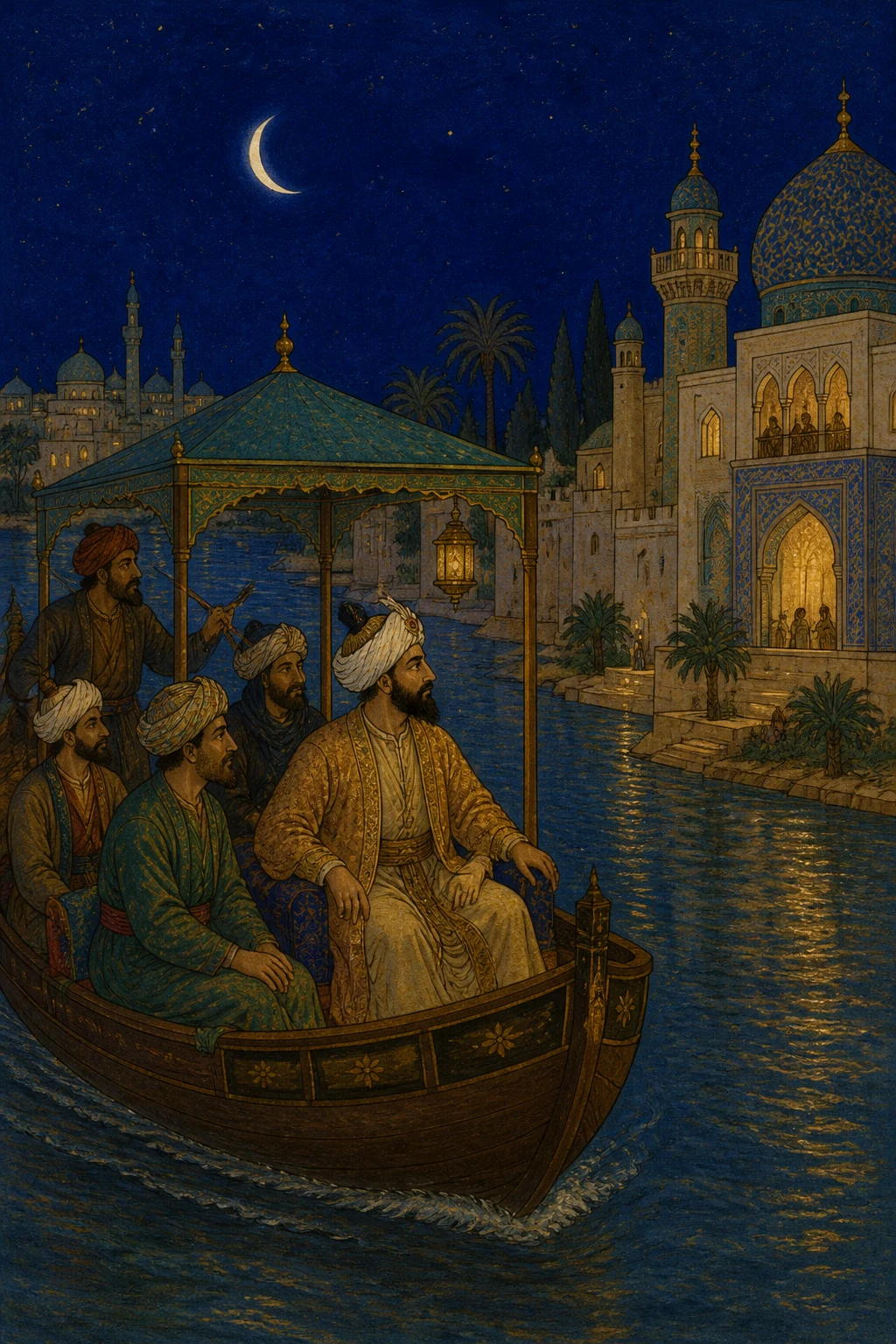
The man kept leading me from place to place, and I followed him until night fell, asking him nothing. Still he walked on, and I walked beside him, until we came out into open country. “Follow me,” he said, and began to hurry, with me hastening after him, until we reached the river. He took me aboard a boat, and the boatman rowed us across to the farther bank. The man stepped ashore, and I followed. Then he took me by the hand and led me down a lane I had never entered in my life, nor did I know in what quarter it lay. At last he stopped at the door of a house, opened it, and went inside, taking me with him. He secured the door with an iron lock, then led me through the passage until we came upon ten men who looked as alike as one man, for they were brothers. My guide greeted them, and they returned his greeting. They bade me sit down, and I did so, utterly weakened by exhaustion. They brought rosewater and sprinkled it on my face, gave me something to drink, and set food before me. I said to myself, “If there were anything harmful in the food, they would not be eating with me.” When we had washed our hands, each of us returned to his place, and they asked, “Do you know us?” “No,” I answered. “I have never known where you live, nor do I even know the man who brought me here.” “Tell us your story,” they said, “and lie about nothing.” I replied, “You must know that my plight is strange and my story extraordinary. Do you know anything of it?” “Yes,” they said. “We are the men who took your belongings last night, and carried off your friend and the woman who was singing.” “May God spread His protection over you!” I said. “Where are my friend and the woman who sang?” They pointed in one direction and said, “They are here. But by God, brother, none of us has discovered their secret. Since bringing them here, we have neither sat with them nor questioned them, for we saw such dignity and majesty in them that we dared not kill them. Tell us the truth about them, and you and they shall be safe.” The jeweller continued: When I heard these words, I nearly died of fear and dismay. “Know,” I told them, “that if honour were lost to the world, it would be found only among you; and if I had a secret I feared to reveal, nowhere would it be safer than in your hearts.” I went on at length in this vein, but at last I saw that speaking openly would serve me better than concealment, so I told them everything that had happened to me, from beginning to end.
When they had heard my story, they said, “Is this young man, then, Ali ibn Bakkar, and is this woman Shams al-Nahar?” “Yes,” I replied. They went to the two of them and begged their pardon. Then they said to me, “Some of what we took from your house is gone, but here is what remains.” They returned most of my belongings and undertook to restore them to their places in my house and to recover the rest. Yet they were divided among themselves: half were on my side and half against me. Then we left that house.
Such was what happened to me. As for Ali ibn Bakkar and Shams al-Nahar, fear had brought them to the brink of death. I went up to them, greeted them, and asked, “What can have happened to the maid and the two young attendants? Where did they go?” “We know nothing of them,” they answered. We walked on until we reached the place where the boat lay, and they helped us aboard. It was the very boat in which we had crossed the day before. The boatman rowed us to the farther bank, where they put us ashore. Hardly had we seated ourselves on the bank when horsemen appeared and surrounded us on every side. The men with us sprang away as swiftly as hawks; the boat returned for them, and they leapt aboard and made off along the river. Ali ibn Bakkar, Shams al-Nahar, and I remained on the shore, unable either to stir or to rest. “Where are you from?” the horsemen demanded. We were at a loss for an answer. The jeweller continued: I said to them, “We do not know the men you saw with us. We only met them here. We are musicians, and they wanted to carry us off to sing for them. We escaped them only by guile and gentle words. They released us just now, and you saw for yourselves how they behaved.”
The horsemen looked at Shams al-Nahar and Ali ibn Bakkar, then said to me, “You are not telling the truth. If you are, tell us who you are, where you come from, where your homes are, and in which quarter you live.” The jeweller continued: I did not know what to say. Then Shams al-Nahar rose, went up to the captain of the horsemen, and spoke to him privately. He dismounted, seated her on his horse, and took the bridle to lead her. He had the same done for Ali ibn Bakkar and for me. The captain led us to a place beside the river and called out in a foreign tongue. A party of men came towards him from the open country. He put us aboard one boat and his companions aboard another, and they rowed us towards the caliph’s palace, while we suffered the agonies of death from fear. We went on until we reached the landing from which we could make our way home. There we went ashore and walked, accompanied by some of the horsemen, who reassured us until we entered the house. Once we were inside, they bade us farewell and went their way. We reached our rooms scarcely able to move, no longer knowing morning from evening. We remained in that state until dawn, and towards the end of the day Ali ibn Bakkar fell unconscious. The men and women wept over him as he lay motionless. Some of his family came to me and said, “Tell us what happened to our son, and what has brought him to this condition.” “Listen to me, good people,” I began. But morning overtook Shahrazad, and she ceased her permitted tale.
When it was the hundred and sixty-fifth night
She said: It has reached me, O fortunate King, that the jeweller said to them, “Listen to me, good people, and do me no harm. Be patient until he revives, and he will tell you his story himself.” Then I spoke sternly to them, warning them of the disgrace that might fall upon us all. While we were thus engaged, Ali ibn Bakkar stirred upon his bed. His family rejoiced, and the other people withdrew, but his family would not let me leave him. They sprinkled rosewater on his face, and when he recovered and breathed the fresh air, they began asking how he felt. He tried to answer, though his tongue was slow to obey him. Then he signed to them to let me go home. They released me, and I went out, scarcely believing I had escaped. Two men supported me all the way to my house. When my family saw my condition, they struck their faces, but I motioned them to be silent, and they fell quiet. The two men went their way, and I threw myself upon my bed for the rest of the night, not coming to myself until well into the morning. I found my family gathered round me, saying, “What calamity has befallen you and struck you with its evil?” “Bring me something to drink,” I said. They brought it, and I drank my fill. Then I told them, “What is done is done. Go about your affairs.” I made my excuses to my friends and asked whether any of the belongings taken from my house had been returned. “Some have come back,” they said. “Someone came and left them at the door, but we did not see him.”
I took what comfort I could and remained where I was for two days, unable to rise. Then, feeling stronger, I went to the bathhouse, though my heart was troubled over Ibn Bakkar and Shams al-Nahar. All that time I had heard no news of them. I could not bring myself to visit Ali ibn Bakkar’s house, yet fear for my own safety gave me no peace at home. I repented before Almighty God of what I had done and thanked Him for my deliverance. After a while, it occurred to me to go to that quarter and return within the hour. Just as I was setting out, I noticed a woman standing nearby. I looked closely and saw that she was Shams al-Nahar’s maid. Recognizing her, I hurried away, but she followed me, and terror seized me. Every time I looked back and saw her, I trembled. “Stop,” she called, “so that I may tell you something.” I paid no heed, but kept walking until I came to a mosque in a deserted spot. “Go into this mosque,” she said, “so that I may speak one word to you. You have nothing to fear.” She adjured me until I entered, and she followed. I prayed two rak‘ahs, then approached her with a groan and asked, “What is the matter?” She asked how I was, and I told her what had happened to me and what had befallen Ali ibn Bakkar. Then I asked, “And what news have you?” She replied, “When I saw the men break down the door of your house and enter, I was afraid of them. I feared they had come from the caliph and would seize my mistress and me, and that we should perish on the spot. So the two young attendants and I fled over the rooftops. We threw ourselves down from a high place and took refuge with some people, then made our escape until we reached the caliph’s palace in a dreadful state. We concealed what had happened, and spent the hours as though turning on live coals until night fell. Then I opened the river gate, summoned the boatman who had taken us out that night, and said to him, ‘We have no news of my mistress. Take me out in the boat so that I may search for her on the river; perhaps I shall learn something of her.’ He took me aboard and rowed away. I remained on the river until midnight, when I saw a boat approaching the gate. One man was rowing, another sat with him, and a woman lay between them. The boatman rowed on until he reached the bank. When the woman stepped ashore, I looked closely and saw that she was Shams al-Nahar. I went down to meet her, beside myself with joy at seeing her after I had given up all hope.” But morning overtook Shahrazad, and she ceased her permitted tale.
When it was the hundred and sixty-sixth night
She said: It has reached me, O fortunate King, that the maid said to the jeweller, “I went down to meet her, beside myself with joy after I had given up all hope. When I stood before her, she ordered me to give the man who had brought her a thousand dinars. Then the two attendants and I carried her inside and laid her upon her bed. She passed the night in great distress. When morning came, she forbade the maids and servants to enter or approach her throughout that day. On the following day she recovered somewhat, but I found her looking as though she had come out of a tomb. I sprinkled rosewater on her face, changed her clothes, and washed her hands and feet. I coaxed her until she ate a little food and drank something, though she had no appetite for either. When she had breathed some fresh air and her strength began to return, I said, ‘Mistress, have pity on yourself. You have suffered enough; you have been at the point of death.’ ‘By God, my good maid,’ she replied, ‘death would be easier for me than what I have endured. Indeed, I thought I was certain to be killed. When the thieves took us from the jeweller’s house, they questioned me, asking, “Who are you, and what is your calling?” I told them, “I am a singing girl,” and they believed me. Then they questioned Ali ibn Bakkar, asking, “Who are you, and what is your calling?” “I am an ordinary man,” he answered. They took us along with them until we reached their dwelling, and in our terror we hurried to keep pace. Once they had settled us in their rooms, they examined me and looked at my clothes, necklaces, and jewels. Their suspicions were aroused, and they said, “These necklaces cannot belong to a singing girl.” Then they told me, “Speak truthfully and tell us what your story is.” I gave them no answer, saying to myself, “Now they will kill me for the jewels and fine clothes I am wearing.” So I uttered not a word.
“‘Then they turned to Ali ibn Bakkar and said, “Where do you come from? You do not look like an ordinary man.” He too remained silent, and we concealed our story and wept. But God softened the thieves’ hearts towards us, and they asked, “Who owns the house where you were staying?” “The jeweller, so-and-so,” we answered. One of them said, “I know him very well, and I know that he is staying in his other house. I undertake to bring him here at once.” They agreed to put me in one room and Ali ibn Bakkar in another, telling us, “Rest, and do not fear that your secret will be revealed. You are safe.” Their companion went to fetch the jeweller and brought him back. He told them our story, and we were reunited with him. Then one of the men brought a boat. They put us aboard, took us to the farther bank, left us on the shore, and went away. Horsemen of the night watch came upon us and asked, “Who are you?” I spoke to their captain and told him, “I am Shams al-Nahar, the caliph’s favourite. I became drunk and went out to visit some women of the viziers’ households whom I know. Thieves came upon me, carried me off, and brought me here. When they saw you, they fled. I am well able to reward you.” When the captain heard my words, he recognized me, dismounted, and seated me on his horse. He had the same done for Ali ibn Bakkar and the jeweller. Now my heart burns like fire for the two of them, especially the jeweller, Ibn Bakkar’s friend. Go to him, greet him for me, and ask him for news of Ali ibn Bakkar.’ I reproached her for what had happened and warned her, saying, ‘Mistress, have a care for your own safety.’ But she shouted at me, angered by my words. So I left her and came to find you, but you were not there. I was afraid to go to Ibn Bakkar, and so I stood waiting for you, to ask you about him and learn how he fared. Now I beg you to accept some money from me. Perhaps you borrowed furnishings from your friends and lost them, and will need to repay them for what went missing from your house.” The jeweller continued: “Gladly,” I replied. Then I walked with her until we came near my dwelling, where she said, “Wait here until I return.” But morning overtook Shahrazad, and she ceased her permitted tale.
When it was the hundred and sixty-seventh night
She said: It has reached me, O fortunate King, that the maid said to the jeweller, “Wait here until I return.” She went away and came back carrying the money. She gave it to him and asked, “My lord, where may we meet you?” The jeweller continued: I told her, “I shall go home at once. For your sake I will bear the trouble and devise some means of bringing you to him, though reaching him at present is difficult.” She bade me farewell and went away. I carried the money home and counted it: there were five thousand dinars. I gave some to my family and repaid everyone whose property had been in my keeping. Then I took my servants to the house from which the furnishings had been stolen, and brought carpenters and builders to restore it to its former state. I installed my maid there and put what had happened behind me. Then I went out and made my way to Ali ibn Bakkar’s house. When I arrived, his servants came towards me, and one of them said, “My master’s servants have been searching for you night and day. He has promised freedom to whoever brings you to him, so they have been looking everywhere, but could discover no trace of you. My master has regained some strength, though at times he is conscious and at others he sinks into a stupor. Whenever he comes to himself, he speaks of you and says, ‘You must bring him to me, if only for a moment; then he may go his way.’” The jeweller continued: I went with the servant to his master and found him unable to speak. I sat down by his head, and he opened his eyes. When he saw me, he wept and said, “Welcome, welcome!” I supported him, helped him sit up, and held him to my breast. “Brother,” he said, “since first I took to my bed, I have not sat up until this moment. Praise be to God for the sight of you!” I continued to support him until I had him on his feet and had helped him walk a few steps. I changed his clothes, and he drank something. When I saw signs of recovery in him, I told him what had passed with the maid, taking care that no one overheard. Then I said, “Take heart. I know what ails you.” He smiled, and I added, “You shall hear only what will gladden and heal you.”
Ali ibn Bakkar ordered food to be brought, and they brought it. He signed to his servants to withdraw, then said to me, “Brother, have you seen what has befallen us?” He begged my pardon and asked how I had fared during that time. I told him everything that had happened to me, from beginning to end. He marvelled, then told the servants, “Bring me such-and-such.” They brought him costly furnishings and other ornaments of gold and silver, worth more than all I had lost. He gave them all to me, and I sent them home, remaining with him that night. When dawn broke, he said, “Know that everything has an end, and the end of love is death or union. I am nearer death. Would that I had died before all this happened! Had God not been gracious to us, we should have been disgraced. I do not know what can deliver me from my plight, and were it not for my fear of God, I would hasten my own destruction. Brother, I am like a bird in a cage, and my soul is dying of anguish. Yet it has its appointed hour and its destined term.” Then his tears flowed, and he recited these two verses:
“Others before me have mourned the pain of parting; separation has struck terror into the living and the dead. But sorrow such as my ribs enclose I have never heard of, nor have I ever seen.” When he had finished his verses, the jeweller said to him, “My lord, I mean to go home. Perhaps the maid will return to me with news.” “Very well,” said Ali ibn Bakkar, “but come back quickly and tell me.” The jeweller continued: I bade him farewell and returned home. Scarcely had I sat down when the maid appeared, weeping and sobbing. “Why are you crying?” I asked. “My lord,” she replied, “the calamity we feared has fallen upon us. When I left you yesterday, I found my mistress angry with one of the two young attendants who were with us that night. She ordered her to be beaten. The girl, afraid of her mistress, ran away, but one of the men stationed at the gate met her, seized her, and tried to take her back. She hinted at what had happened, so he spoke gently to her and drew her out until she told him everything. The news reached the caliph, who ordered my mistress Shams al-Nahar and all her possessions to be brought into his palace, and set twenty eunuchs to attend her. I have not been able to see her since, nor have I told her the reason. I suspected this was the cause, and feared for myself. I was bewildered and did not know how to contrive her escape or my own. Of all those about her, none was more faithful in keeping her secret than I.” But morning overtook Shahrazad, and she ceased her permitted tale.
When it was the hundred and sixty-eighth night
She said: It has reached me, O fortunate King, that the maid said to the jeweller, “Of all those about my mistress, none was more faithful in keeping her secret than I. Go quickly, my lord, to Ali ibn Bakkar and tell him, so that he may be prepared. If the truth comes out, we must devise some means of saving ourselves.” The jeweller continued: Her words filled me with grief, and the world grew dark before my eyes. As she was about to leave, I asked, “What do you advise?” “Go at once to Ali ibn Bakkar,” she replied, “if he is your friend and you wish him to escape. Your task is to carry this news to him without delay; mine is to keep watch for whatever news I can discover.” Then she bade me farewell and left. As soon as she was gone, I rose and followed her out, making my way to Ali ibn Bakkar. I found him speaking to himself of reunion, soothing his heart with impossible hopes. When he saw me return so soon, he said, “You have come back at once, I see.” “Put an end to these lingering hopes,” I told him, “and leave off what occupies your thoughts. Something has happened that may cost you both your life and your fortune.” At these words his expression changed, and in alarm he said to the jeweller, “Brother, tell me what has happened.” The jeweller told him, “My lord, such-and-such has come to pass. If you remain in this house until the end of the day, you are surely lost.” Ali ibn Bakkar was stunned, and his soul almost left his body. Then he said, “To God we belong, and to Him we return,” and asked, “What shall I do, brother? What do you advise?” The jeweller continued: I said, “Take as much of your wealth as you can carry, and those servants whom you trust, and let us leave for another country before this day is over.” “I hear and obey,” he answered.
He sprang up, bewildered, now walking, now stumbling. He gathered what he could, made his excuses to his family, and gave them his instructions. Then he took three laden camels and mounted his beast. I made the same preparations, and we slipped away in secret. We travelled for the rest of the day and through the night. Towards the end of the night we unloaded our baggage, hobbled our camels, and lay down to sleep. Weariness overcame us, and we lost all awareness of our surroundings. Suddenly thieves were upon us. They surrounded us, took everything we had, and killed the servants when they tried to defend us. Then they left us there in a wretched state and went away with our wealth. We rose and walked until morning, when we reached a town. We entered it naked and made for the mosque, where we sat in a corner for the rest of the day. When night came, we slept there, having neither eaten nor drunk. At dawn we performed the morning prayer and sat down. Presently a man entered, greeted us, and prayed two rak‘ahs. Then he turned to us and asked, “Are you strangers here?” “Yes,” we replied. “Robbers waylaid us and stripped us. We have come into this town knowing no one with whom we may take shelter.” “Will you come home with me?” the man asked. The jeweller continued: I said to Ali ibn Bakkar, “Let us go with him and escape two dangers. First, we fear that someone who knows us may enter this mosque and expose us; second, we are strangers with nowhere to shelter.” “Do as you think best,” said Ali ibn Bakkar. The man urged us a second time, saying, “Poor men, heed me and come to my house.” “We hear and obey,” I replied.
The man took off some of his own clothes and clothed us, speaking kindly to us. We rose and followed him to his house. He knocked, and a young servant came and opened the door. The master entered, and we followed. He ordered a bundle of robes and turban cloths to be brought, clothed us in two suits, and gave us two turban cloths. We wound them about our heads and sat down. A maid came with a table and set it before us. We ate a little, and the table was removed. We remained with him until nightfall, when Ali ibn Bakkar sighed and said to the jeweller, “Brother, I know that I am surely dying, and I wish to leave you one charge. When you see that I am dead, go to my mother and tell her to come here to mourn me and attend the washing of my body. Bid her bear our parting patiently.” Then he fell unconscious. When he revived, he heard a maid singing and reciting verses in the distance. He listened closely to her voice, now overcome as though intoxicated, now coming to himself, now weeping in grief and sorrow over all that had befallen him. He heard the maid pour out her melodies and sing these verses:
“Separation hastened to divide us after intimacy, neighbourly closeness, and accord. The changes of the nights have torn us apart; would that I knew when we shall meet again! How bitter is parting after union; would that it never brought lovers harm! The pang of death lasts but an hour and ends, but parting from the beloved abides in the heart. If only we could find a way to reach separation, we would make separation taste the bitterness of parting.” When Ibn Bakkar heard the maid, he gave one great gasp, and his soul departed from his body. The jeweller continued: When I saw that he was dead, I entrusted him to the master of the house, saying, “I am going to Baghdad to inform his mother and his kinsfolk, so that they may come and prepare him for burial.” I set out for Baghdad, went home, and changed my clothes. Then I went to Ali ibn Bakkar’s house. When his servants saw me, they came towards me and asked after him. I asked them to obtain his mother’s permission for me to enter, and she granted it. I went in, greeted her, and said, “When God decrees a thing, there is no escaping His decree. No soul may die save by God’s leave, at an appointed time.” From these words, Ali ibn Bakkar’s mother understood that her son had died. She wept bitterly, then said, “I implore you by God, tell me: is my son dead?” My grief was too great for me to answer. Seeing my condition, she choked with tears and fell senseless to the ground. When she recovered, she asked, “What has happened to my son?” “May God greatly reward your patience in his loss,” I replied. Then I told her his story from beginning to end. “Did he leave you any charge?” she asked. “Yes,” I said, and told her what he had asked of me. “Make haste to prepare him for burial.” When Ali ibn Bakkar’s mother heard my words, she fainted again. On recovering, she resolved to do as I had urged. Then I left for home, thinking as I walked of the beauty of his youth. While I was thus absorbed, a woman suddenly took hold of my hand. But morning overtook Shahrazad, and she ceased her permitted tale.
When it was the hundred and sixty-ninth night
She said: It has reached me, O fortunate King, that the jeweller said: A woman suddenly took hold of my hand. I looked at her and saw that she was the maid who used to come from Shams al-Nahar, now bowed with sorrow. When we recognized one another, we both wept, and continued on until we reached that house. “Have you heard the news of Ali ibn Bakkar?” I asked her. “No, by God,” she replied. I told her what had happened to him, then asked, “And how fares your mistress?” She said, “The Commander of the Faithful would believe nothing said against her, so greatly did he love her. He put the best construction on everything she had done, and told her, ‘Shams al-Nahar, you are dear to me, and I shall stand by you despite your enemies.’ Then he ordered a gilded suite and a beautiful chamber to be furnished for her, and she enjoyed the highest favour with him. One day, as was his custom, he sat down to drink. His favourites attended him, and he seated each in her appointed place, with Shams al-Nahar beside him. Her patience was exhausted, and her suffering had grown worse. He ordered one of the singing girls to sing. She took up the lute, played upon it, and sang:
“A voice called me to love, and I answered, while my tears traced longing’s script upon my cheek. It is as though the tears of my eyes tell our story, revealing what I hide and hiding what I reveal. How can I seek secrecy or conceal my love, when my boundless passion for you lays bare my heart? Death has grown sweet to me since I lost my loved ones; would that I knew what sweetness they find in being far from me.” When Shams al-Nahar heard the girl’s song, she could no longer sit upright and fell senseless. The caliph flung aside his cup, drew her to him, and cried out, while the maids raised a clamour. The Commander of the Faithful turned her over and found her dead. He grieved at her death and ordered all the musical instruments and zithers present to be broken. He carried her into a chamber and remained beside her body for the rest of the night. When day broke, he made arrangements for her funeral, ordering that she be washed, shrouded, and buried. He mourned her deeply, but made no inquiry into her condition or what had caused it.” Then the maid said to the jeweller, “I beg you by God to let me know when Ali ibn Bakkar’s funeral procession sets out, and to take me to his burial.” “You may find me wherever you wish,” he replied, “but who can reach you in the place where you live?” She told him, “When Shams al-Nahar died, the Commander of the Faithful freed all her maids that very day. I was among them, and we are staying beside her tomb in such-and-such a place.” I rose and went with her to the cemetery, where I visited Shams al-Nahar’s grave. Then I went my way and waited for Ali ibn Bakkar’s funeral procession to arrive. When it came, the people of Baghdad went out to meet it, and I went with them. I found the maid among the women, grieving more bitterly than any of them. Never had I seen a greater funeral in Baghdad. We moved on through an immense throng until we reached his grave and buried him. From then on I never ceased to visit his grave and that of Shams al-Nahar. Such was their story, yet it is no more wonderful than the story of King Shahriman. But morning overtook Shahrazad, and she ceased her permitted tale.
Izvirnik
حكاية علي بن بكار وشمس النهار - الليالي ١٥٣ إلى ١٦٩
Naslednje strani prikazujejo izvirno besedilo za primerjavo.
فلما كانت الليلة ١٥٣
قالت: بلغني أيها الملك السعيد، أنه كان في قديم الزمان في خلافة هارون الرشيد، رجل تاجر له ولد يُسمَّى أبا الحسن علي بن طاهر، وكان كثير المال والنوال، حسن الصورة، محبوبًا عند كل مَن يراه، وكان يدخل دار الخلافة من غير إذن، ويحبه جميع سراري الخليفة وجواريه، وكان ينادم الملك وينشد عنده الأشعار، ويحدِّثه بنوادر الأخبار، إلا أنه كان يبيع ويشتري في سوق التجار، وكان يجلس على دكانه شاب من أولاد ملوك العجم يقال له علي بن بكار، وكان ذلك الشاب مليح القامة، ظريف الشكل، كامل الصورة، مورد الخدَّين، مقرون الحاجبين، عذب الكلام، ضاحك السن، يحب البسط والانشراح، فاتفق أنهما كانا جالسين يتحدثان ويضحكان، وإذا بعشر جوارٍ كأنهن الأقمار، وكلٌّ منهن ذات حسن وجمال، وقدٍّ واعتدال، وبينهن صبية راكبة بغلة بسرج مزركش له ركاب من الذهب، وعليها إزار رفيع، وفي وسطها زنَّار من الحرير مطرز بالذهب، كما قال فيها الشاعر:
لَهَا بَشَرٌ مِثْلُ الْحَرِيرِ وَمَنْطِقٌ رَخِيمُ الْحَوَاشِي لَا هُرَاءٌ وَلَا نَذْرُ
وَعَيْنَانِ قَالَ اللهُ كُونَا فَكَانَتَا فَعُولَانِ بِالْأَلْبَابِ مَا تَفْعَلُ الْخَمْرُ
فَيَا حُبَّهَا زِدْنِي جَوًى كُلَّ لَيْلَةٍ وَيَا سَلْوَةَ الْأَحْبَابِ مَوْعِدُكَ الْحَشْرُ
ولما وصلوا إلى دكان أبي الحسن نزلت عن البغلة وجلست على دكانه، فسلمت عليه وسلم عليها، فلما رآها علي بن بكار سلبت عقله وأراد القيام، فقالت له: اجلس مكانك، كيف تذهب إذا حضرنا؟ هذا ما هو إنصاف. فقال: والله يا سيدتي إني هارب ممَّا رأيتُ، وما أحسن قول الشاعر:
هِيَ الشَّمْسُ مَسْكَنُهَا فِي السَّمَا فَعَزِّ الْفُؤَادَ عَزَاءً جَمِيلَا
فَلَنْ تَسْتَطِيعَ إِلَيْهَا الصُّعُودَ وَلَنْ تَسْتَطِيعَ إِلَيْكَ النُّزُولَا
فلما سمعت ذلك الكلام تبسَّمت، وقالت لأبي الحسن: ما اسم هذا الفتى؟ ومن أين هو؟ فقال لها: هذا غريب اسمه علي بن بكار ابن ملك العجم، والغريب يجب إكرامه. فقالت له: إذا جاءتك جاريتي تأتي به عندي. فقال أبو الحسن: على الرأس. ثم قامت وتوجهت إلى حال سبيلها.
هذا ما كان من أمرها، وأما ما كان من أمر علي بن بكار، فإنه صار لا يعرف ما يقول، وبعد ساعة جاءت الجارية إلى أبي الحسن، وقالت له: إن سيدتي تطلبك أنت ورفيقك. فنهض أبو الحسن وأخذ معه علي بن بكار، وتوجَّها إلى دار هارون الرشيد، فأدخلتهما في مقصورة وأجلستهما، وإذا بالموائد وُضِعت قدَّامهما، فأكلَا وغسلَا أيديهما، ثم أحضرت لهما الشراب فسكرَا، ثم أمرتهما بالقيام فقامَا معها وأدخلتهما مقصورةً أخرى مركبة على أربعة أعمدة، وهي مفروشة بأنواع الفرش، مزيَّنة بأحسن الزينة كأنها من قصور الجنان، فاندهشا مما عاينا من التحف. فبينما هما يتفرَّجان على هذه الغرائب، وإذا بعشر جوارٍ أقبلن يتمايلن عجبًا كأنهن الأقمار يدهشن الأبصار ويحيرن الأفكار، واصطففن كأنهن من حور الجنان، وجاء بعدهن عشر جوارٍ أخرى وبأيديهن العيدان وآلات اللهو والطرب، فسلمن عليهما وجعلن يضربن العيدان وينشدن الأشعار، وكل واحدة منهن فتنة للعباد. وأقبل بعدهن عشر جوارٍ مثلهن كواعب أتراب، بعيون سود، وخدود حمر، مقرونات الحواجب، ناعسات الأطراف، فتنة للعابدين ونزهة للناظرين، وعليهن من أنواع الحرير الملون ما يحير العقول، ثم وقفن بالباب وجاء من بعدهن عشر جوارٍ أحسن منهن وعليهن الملبوس الفاخر، فوقفن بالباب أيضًا؛ ثم خرج من الباب عشرون جارية، وبينهن جارية اسمها شمس النهار كأنها القمر بين النجوم، وهي متوشحة بفاضل شعرها، وعليها لباس أزرق وإزار من الحرير بطرازات من الذهب، وفي وسطها حياصة مرصَّعة بأنواع الجواهر، ولم تزل تتبختر حتى جلست على السرير، فلما رآها علي بن بكار أنشد هذه الأشعار:
إِنَّ هَذِي هِيَ ابْتِدَاءُ سَقَامِي وَتَمَادِي وَجْدِي وَطُولُ غَرَامِي
عِنْدَهَا قَدْ رَأَيْتُ نَفْسِيَ ذَابَتْ مِنْ وُلُوعِي بِهَا وَبَرْيِ عِظَامِي
فلما فرغ من شعره قال لأبي الحسن: لو عملت معي خيرًا كنتَ أخبرتني بهذه الأمور قبل الدخول هنا؛ لأجل أن أوطن نفسي وأصبِّرها على ما أصابها. ثم بكى واشتكى، فقال له أبو الحسن: يا أخي، أنا ما أردت لك إلا الخير، ولكن خشيت أن أُعلِمك بذلك، فيلحقك من الوجد ما يصدك عن لقائها، ويحيل بينك وبين وصالها، فطِبْ نفسًا وقرَّ عينًا، فهي بسعدك مقبلة، وللقائك متوصلة. فقال علي بن بكار: ما اسم هذه الصبية؟ فقال له أبو الحسن: تُسمَّى شمس النهار، وهي من محاظي أمير المؤمنين هارون الرشيد، وهذا المكان قصر الخلافة. ثم إن شمس النهار جلست وتأمَّلَتْ محاسن علي بن بكار، وتأمَّلَ هو حسنها، واشتغلَا بحب بعضهما، وقد أمرت الجواري أن تجلس كل واحدة منهن في مكانها على سرير، فجلست كل واحدة قبال طاقة، وأمرتهن بالغناء، فتسلمت واحدة منهن العود، وأنشدت تقول:
أَعِدِ الرِّسَالَةَ ثَانِيَةْ وَخُذِ الْجَوَابَ عَلَانِيَهْ
وَإِلَيْكَ يَا مَلِكَ الْمِلَا حِ وَقَفْتُ أَشْكُو حَالِيَهْ
مَوْلَايَ يَا قَلْبِي الْعَزِيـ ـزَ وَيَا حَيَاتِي الْغَالِيَهْ
أَنْعِمْ عَلَيَّ بِقُبْلَةٍ هِبَةً وَإِلَّا عَارِيَهْ
وَأَرُدُّهَا لَكَ لَا عُدِمْـ ـتَ بِعَيْنِهَا وَكَمَا هِيَهْ
وَإِذَا أَرَدْتَ زِيَادَةً خُذْهَا وَنَفْسُكَ رَاضِيَهْ
يَا مُلْبِسِي ثَوْبَ الضَّنَى يُهْنِيكَ ثَوْبُ الْعَافِيَهْ
فطرب علي بن بكار وقال لها: زيديني من مثل هذا الشعر. فحركت الأوتار، وأنشدت هذه الأشعار:
مِنْ كَثْرَةِ الْبُعْدِ يَا حَبِيبَتِي عَلَّمْتُ طُولَ الْبُكَا جُفُونِي
يَا حَظَّ عَيْنِي وَيَا مُنَاهَا وَمُنْتَهَى غَايَتِي وَدِينِي
إِرْثِي لِمَنْ طَرْفُهُ غَرِيقٌ فِي عَبْرَةِ الْوَالِهِ الْحَزِينِ
فلما فرغت من شعرها قالت شمس النهار لجارية غيرها: أنشدي. فأطربت بالنغمات، وأنشدت هذه الأبيات:
سَكِرْتُ مِنْ لَحْظِهِ لَا مِنْ مُدَامَتِهِ وَمَالَ بِالنَّوْمِ عَنْ عَيْنِي تَمَايُلُهُ
فَمَا السُّلَافُ سَلَتْنِي بَلْ سَوَالِفُهُ وَمَا الشَّمُولُ شَلَتْنِي بَلْ شَمَائِلُهُ
لَوَى بِعَزْمِيَ أَصْدَاغٌ لُوِينَ لَهُ وَغَالَ عَقْلِي بِمَا تَحْوِي غَلَائِلُهُ
فلما سمعت شمس النهار إنشاد الجارية، تنهدت وأعجبها الشعر، ثم أمرت جارية أخرى أن تغني، فأنشدت هذه الأبيات:
وَجْهٌ لِمِصْبَاحِ السَّمَاءِ مُبَاهِ يَبْدُو الشَّبَابُ عَلَيْهِ رَشْحُ مِيَاهِ
رَقَمَ الْعِذَارُ غَلَالَتَيْهِ بِأَحْرُفٍ مَعْنَى الْهَوَى فِي طَيِّهَا مُتَنَاهِ
نَادَى عَلَيْهِ الْحُسْنُ حِينَ لَقِيتَهُ هَذَا الْمُنَمْنَمُ فِي طُرَازِ اللهِ
فلما فرغت من شعرها، قال علي بن بكار لجارية قريبة منه: أنشدي أنت أيتها الجارية. فأخذت العود، وأنشدت هذه الأبيات:
زَمَنُ الْوِصَالِ يَضِيقُ عَنْ هَذَا التَّمَادِي وَالدَّلَالْ
كَمْ مِنْ صُدُودٍ مُتْلِفٍ مَا هَكَذَا أَهْلُ الْجَمَالْ
فَاسْتَغْنِمُوا وَقْتَ السُّعُو دِ بِطِيبِ سَاعَاتِ الْوِصَالْ
فلما فرغت من شعرها تنهَّد علي بن بكار، وأرسل دموعه الغزار، فلما رأته شمس النهار قد بكى وأنَّ وأشتكى، أحرقها الوَجْد والغرام، وأتلفها الوله والهيام، فقامت من فوق السرير، وجاءت إلى باب القبة، فقام علي بن بكار وتلقَّاها وتعانَقَا ووقعا مغشيًّا عليهما في باب القبة، فقام الجواري إليهما، وحملنهما وأدخلنهما القبة، ورششن عليهما ماء الورد، فلما أفاقا لم يجدَا أبا الحسن، وكان قد اختفى في جانب سرير، فقالت الصبية: أين أبو الحسن؟ فظهر لها من جانب السرير، فسلمت عليه وقالت: أسأل الله أن يقدرني على مكافأتك يا صاحب المعروف. ثم أقبلت على علي بن بكار وقالت له: يا سيدي، ما بلغ بك الهوى إلى غاية إلا وعندي أمثالها، وليس لنا إلا الصبر على ما أصابنا. فقال علي بن بكار: والله يا سيدتي، جمعُ شملي بك يطيب، ولا ينطفئ إليك ما عندي من اللهيب، ولا يذهب ما تمكن من حبك في قلبي إلا بذهاب روحي. ثم بكى فنزلت دموعه على خده كأنها المطر، فلما رأته شمس النهار يبكي بكت لبكائه، فقال أبو الحسن: والله إني عجبتُ من أمركما، واحترتُ في شأنكما، فإن حالكما عجيب، وأمركما غريب، هذا البكاء وأنتما مجتمعان، فكيف تكون الحال بعد انفصالكما؟ ثم قال: هذا ليس وقت حزن وبكاء، بل هذا وقت سرور وانشراح. فأشارت شمس النهار إلى جارية، فقامت وعادت ومعها وصائف حاملات مائدة صحافها من الفضة، وفيها أنواع الطعام، ثم وضعت المائدة قدَّامهم، وصارت شمس النهار تأكل وتلقِّم علي بن بكار حتى اكتفوا، ثم رُفِعت المائدة وغسلوا أيديهم، وجاءتهم المباخر بأنواع العود، وجاءت القماقم بماء الورد، فتبخروا وتطيَّبوا، وقُدِّمت لهم أطباق من الذهب المنقوش فيها من أنواع الشراب والفواكه والنقل ما تشتهي الأنفس وتلذ الأعين، ثم جاءت لهم بطشت من العقيق ملآن من المدام، فاختارت شمس النهار عشر وصائف أوقفتهن عندها، وعشر جوار من المغنيات، وصرفت باقي الجواري إلى أماكنهن، وأمرت بعض الحاضرات من الجواري أن يضربن بالعود، ففعلن ما أمرت به، وأنشدت واحدة منهن:
بِنَفْسِيَ مَنْ رَدَّ التَّحِيةَ ضَاحِكًا فَجَدَّدَ بَعْدَ الْيَأْسِ فِي الْوَصْلِ مَطْمَعِي
لَقَدْ أَبْرَزَتْ أَيْدِي الْغَرَامِ سَرَائِرِي وَأَظْهَرْنَ لِلْعُذَّالِ مَا بَيْنَ أَضْلُعِي
وَحَالَتْ دُمُوعُ الْعَيْنِ بَيْنِي وَبَيْنَهُ كَأَنَّ دُمُوعَ الْعَيْنِ تَعْشَقُهُ مَعِي
فلما فرغت من شعرها قامت شمس النهار وملأت الكأس وشربته، ثم ملأته وأعطته لعلي بن بكار. وأدرك شهرزاد الصباح فسكتَتْ عن الكلام المباح.
فلما كانت الليلة ١٥٤
قالت: بلغني أيها الملك السعيد، أن شمس النهار ملأت الكأس وأعطته لعلي بن بكار، ثم أمرت جارية أن تغني، فأنشدت هذين البيتين:
تَشَابَهَ دَمْعِي إِذْ جَرَى وَمُدَامَتِي فَمِنْ مِثْلِ مَا فِي الْكَأْسِ عَيْنِي تَسْكُبُ
فَوَاللهِ لَا أَدْرِي أَبِالْخَمْرِ أَسْبَلَتْ جُفُونِي أَمْ مِنْ أَدْمُعِي كُنْتُ أَشْرَبُ
فلما فرغت من شعرها، شرب علي بن بكار كأسه، ورده إلى شمس النهار فملأته وناولته لأبي الحسن فشربه، ثم أخذت العود وقالت: لا يغني على قدحي غيري. ثم شدَّت الأوتار، وأنشدت هذه الأشعار:
غَرَائِبُ الدَّمْعِ فِي خَدَّيْهِ تَقْتُلُهُ وَجْدًا وَنَارُ الْهَوَى فِي صَدْرِهِ تَقِدُ
يَبْكِي مِنَ الْقُرْبِ خَوْفًا مِنْ تَبَاعُدِهِمْ فَالدَّمْعُ إِنْ قَرُبُوا جَارٍ وَإِنْ بَعَدُوا
وقول الشاعر:
نَتَفَدَّاكَ سَاقِيًا قَدْ كَسَاكَ الْـ ـحُسْنِ مِنْ فَرْقِكَ الْمُضِيءِ لِسَاقِكْ
تُشْرِقُ الشَّمْسُ مِنْ يَدَيْكَ وَمِنْ فِيـ ـكَ الثُّرَيَّا وَالْبَدْرُ مِنْ أَطْوَاقِكْ
إِنَّ أَقْدَاحَكَ الَّتِي تَرَكَتْنِي غَيْرَ صَاحٍ تُدَارُ مِنْ أَحْدَاقِكْ
أَوَلَيْسَ الْعَجِيبُ كَوْنَكَ بَدْرًا كَامِلًا وَالْمَحَاقُ فِي عُشَّاقِكْ
أَإِلَهٌ أَنْتَ إِذْ تُمِيتُ وَتُحْيِي بِتَلَاقِيكَ مَنْ تَشَا وَفِرَاقِكْ
خَلَقَ اللهُ مِنْ خَلِيقَتِكَ الْحُسْـ ـنَ وَطِيبَ النَّسِيمِ مِنْ أَخْلَاقِكْ
لَسْتَ مِنْ هَذِهِ الْبَرِيَّة بَلْ أَنْـ ـتَ مَلِيكٌ مُتَوَّجٌ مِنْ خَلَاقِكْ
فلما سمع علي بن بكار وأبو الحسن والحاضرون شِعر شمس النهار، كادوا أن يطيروا من الطرب، ولعبوا وضحكوا؛ فبينما هم على هذا الحال، وإذا بجارية أقبلت وهي ترتعد من الخوف، وقالت: يا سيدتي قد وصل أمير المؤمنين، وها هو بالباب، ومعه عفيف ومسرور وغيرهما. فلما سمعوا كلام الجارية كادوا أن يهلكوا من الخوف، فضحكت شمس النهار وقالت: لا تخافوا. ثم قالت للجارية: ردي عليهم الجواب بقدر ما نتحوَّل من هذا المكان. ثم إنها أمرت بغلق باب القبة، وإرخاء الستور على أبوابها وهم فيها، وأغلقت باب القاعة، ثم خرجت إلى البستان، وجلست على سريرها، وأمرت جاريةً أن تكبس رجليها، وأمرت بقية الجواري أن يمضين إلى أماكنهن، وأمرت الجارية أن تدع الباب مفتوحًا ليدخل الخليفة، فدخل مسرور ومَن معه، وكانوا عشرين وبأيديهم السيوف، فسلَّموا على شمس النهار، فقالت لهم: لأي شيء جئتم؟ فقالوا: إن أمير المؤمنين يسلِّم عليك، وقد استوحش لرؤيتك، ويخبرك أنه كان عنده اليوم سرور وحظ زائد، وأحب أن يكون ختام السرور بوجودك في هذه الساعة، فهل تأتين عنده أو يأتي عندك؟ فقامت وقبَّلت الأرض، وقالت: سمعًا وطاعة لأمر أمير المؤمنين. ثم أمرت بإحضار القهرمانات والجواري فحضرن، وأظهرت لهن أنها مقبلة على ما أمر به الخليفة، وكان المكان كاملًا في جميع أموره، ثم قالت للخدام: امضوا إلى أمير المؤمنين، وأخبروه أنني في انتظاره بعد قليلٍ إلى أن أهيِّئ له مكانًا بالفرش والأمتعة. فمضى الخدام مسرعين إلى أمير المؤمنين، ثم إن شمس النهار قلعت ودخلت إلى معشوقها علي بن بكار، وضمَّته إلى صدرها وودعته، فبكى بكاءً شديدًا، وقال: يا سيدتي، هذا الوداع متِّعيني به لعله يكون على تلف نفسي وهلاك روحي في هواك، ولكن أسأل الله أن يرزقني الصبر على ما بلاني به من محبتي. فقالت له شمس النهار: والله ما يصير في التلف إلا أنا؛ فإنك قد تخرج إلى السوق وتجتمع بمن يسلِّيك فتكون مصونًا، وغرامك مكنونًا، وأما أنا فسوف أقع في البلاء، خصوصًا وقد وعدت الخليفة بميعاد، فربما يلحقني من ذلك عظيم الخطر بسبب شوقي إليك، وحبي لك، وتعشُّقي فيك، وتأسُّفي على مفارقتك، فبأي لسان أغني؟ وبأي قلب أحضر عند الخليفة؟ وبأي كلام أنادم أمير المؤمنين؟ وبأي نظر أنظر إلى مكانٍ ما أنت فيه؟ وكيف أكون في حضرةٍ لم تكن بها؟ وبأي ذوق أشرب مدامًا ما أنت حاضره؟ فقال لها أبو الحسن: لا تتحيري واصبري، ولا تغفلي عن منادمة أمير المؤمنين هذه الليلة، ولا تريه تهاونًا.
فبينما هم في الكلام، وإذا بجارية قدمت وقالت: يا سيدتي، جاء غلمان أمير المؤمنين. فنهضت قائمة، وقالت للجارية: خذي أبا الحسن ورفيقه، واقصدي بهما أعلى الروشن المطل على البستان، ودعيهما هناك إلى الظلام، ثم تحيَّلي في خروجهما. فأخذتهما الجارية وأطلعتهما في الروشن، وأغلقت الباب عليهما، ومضت إلى حال سبيلها، وصارَا ينظران إلى البستان، وإذا بالخليفة قدم وقدَّامه نحو المائة خادم بأيديهم السيوف، وحواليه عشرون جارية كأنهن الأقمار، وعليهن أفخر ما يكون من الملبوس، وعلى رأس كل واحدة تاج مكلل بالجواهر واليواقيت، وفي يد كل واحدة شمعة موقودة، والخليفة يمشي بينهن، وهن محيطات به من كل ناحية، ومسرور وعفيف ووصيف قدَّامه، وهو يتمايل بينهم. فقامت له شمس النهار وجميع مَن عندها من الجواري، ولاقينه من باب البستان، وقبَّلن الأرض بين يديه، ولم يزلن سائرات أمامه إلى أن جلس على السرير، والذين في البستان من الجواري والخدم وقفوا حوله والشموع موقودة، والآلات تضرب إلى أن أمرهم بالانصراف والجلوس على الأسرَّة، فجلست شمس النهار على سرير بجانب سرير الخليفة، وصارت تحدثه؛ كل ذلك وأبو الحسن وعلي بن بكار ينظران ويسمعان، والخليفة لم يرهما.
ثم إن الخليفة صار يلعب مع شمس النهار، وأمر بفتح القبة ففُتِحت، وشرعوا طيقانها، وأوقدوا الشموع حتى صار المكان وقت الظلام كالنهار، ثم إن الخدم صاروا ينقلون آلات المشروب، فقال أبو الحسن: إن هذه الآلات والمشروب والتحف ما رأيت مثلها، وهذا شيء من أصناف الجواهر ما سمعت بمثله، وقد خُيِّلَ لي أنني في المنام، وقد اندهش عقلي، وخفق قلبي. وأما علي بن بكار فإنه لما فارقته شمس النهار لم يزل مطروحًا على الأرض من شدة العشق، فلما أفاق صار ينظر إلى هذه الفعال التي لا يوجد مثلها، فقال لأبي الحسن: أخي، أخشى أن ينظرنا الخليفة أو يعلم حالنا، وأكثر خوفي عليك، وأما أنا فإني أعلم أن نفسي من الهالكين، وما سبب موتي إلا العشق والغرام، وفرط الوَجْد والهيام، ونرجو من الله الخلاص مما بُلِينا به. ولم يزل علي بن بكار وأبو الحسن ينظران من الروشن إلى الخليفة وما هو فيه، حتى تكاملت الحضرة بين يدي الخليفة، ثم إن الخليفة التفت إلى جاريةٍ من الجواري وقال: هاتي ما عندك يا غرام من السماع المطرب. فأطربت بالنغمات، وأنشدت هذه الأبيات:
وَمَا وَجْدُ أَعْرَابِيَّةٍ بَانَ أَهْلُهَا فَحَنَّتْ إِلَى بَانِ الْحِجَازِ وَرَنْدِهِ
إِذَا آنْسَتْ رَكْبًا تَكَفَّلَ شَوْقُهَا بِنَارِ قِرَاهُ وَالدُّمُوعُ بِوِرْدِهِ
بِأَعْظَمَ مِنْ وَجْدِي بِحُبِّي وَإِنَّمَا يَرَى أَنَّنِي أَذْنَبْتُ ذَنْبًا بِوُدِّهِ
فلما سمعت شمس النهار هذا الشعر وقعت مغشيًّا عليها من فوق الكرسي الذي كانت عليه، وغابت عن الوجود، فقام الجواري واحتملنها، فلما نظر إليها علي بن بكار من الروشن وقع مغشيًّا عليه، فقال أبو الحسن: إن القضاء قسم الغرام بينكما بالسوية. فبينما هما يتحدثان وإذا بالجارية التي أطلعتهما الروشن جاءتهما وقالت: يا أبا الحسن، انهض أنت ورفيقك وانزلا، فقد ضاقت علينا الدنيا، وأنا خائفة أن يظهر أمرنا، فقوما في هذه الساعة وإلا متنا. فقال أبو الحسن: فكيف ينهض هذا الغلام معي ولا قدرةَ له على النهوض؟ فصارت الجارية ترش ماء الورد على وجهه حتى أفاق، فحمله أبو الحسن هو والجارية ونزلَا به من الروشن، ومشيَا قليلًا، ثم فتحت الجارية بابًا صغيرًا من حديد، وأخرجت أبا الحسن هو وعلي بن بكار على مصطبة، ثم صفَّقت الجارية بيديها، فجاء زورق فيه إنسان يجدف، فأطلعتهما الجارية في الزورق، وقالت للذي في الزورق: أطلعهما في ذلك البر. فلما نزلا في الزورق وفارقا البستان، نظر علي بن بكار إلى القبة والبستان، وودَّعهما بهذين البيتين:
مَدَدْتُ إِلَى التَّوْدِيعِ كَفًّا ضَعِيفَةً وَأُخْرَى عَلَى الرَّمْضَاءِ تَحْتَ فُؤَادِي
فَلَا كَانَ هَذَا آخِرَ الْعَهْدِ بَيْنَنَا وَلَا كَانَ هَذَا الزَّادُ آخِرَ زَادِي
ثم إن الجارية قالت للملاح: أسرع بهما. فصار يجدف لأجل السرعة والجارية معهم. وأدرك شهرزاد الصباح فسكتَتْ عن الكلام المباح.
فلما كانت الليلة ١٥٥
قالت: بلغني أيها الملك السعيد، أن الملاح صار يجدف لأجل السرعة والجارية معهم، إلى أن قطعوا ذلك الجانب، وعدُّوا إلى البر الثاني، ثم انصرفت الجارية وودعتهما، وطلعا إلى البر، وقالت لهما: كان قصدي ألَّا أفارقكما لكنني لا أقدر أن أسير إلى مكان غير هذا الموضع. ثم إن الجارية عادت، وصار علي بن بكار مطروحًا بين يدي أبي الحسن لا يستطيع النهوض، فقال له أبو الحسن: إن هذا المكان غير أمين، ونخشى على أنفسنا من التلف في هذا المكان بسبب اللصوص وأولاد الحرام. فقام علي بن بكار يتمشى قليلًا وهو لا يستطيع المشي، وكان أبو الحسن له في ذلك الجانب أصدقاء، فقصد مَن يثق به ويركن إليه منهم، فدقَّ بابه فخرج إليه مسرعًا، فلما رآهما رحَّبَ بهما، ودخل بهما إلى منزله، وأجلسهما وتحدث معهما، وسألهما أين كانا. فقال أبو الحسن: قد خرجنا في هذا الوقت، وأحوجنا إلى هذا الأمر إنسان عاملته في دراهم، وبلغني أنه يريد السفر بمالي، فخرجت في هذه الليلة وقصدته واستأنست برفيقي هذا علي بن بكار، وجئنا لعلنا ننظره فتوارى منَّا ولم نره، وعدنا بلا شيء، وشقَّ علينا العود في هذا الليل، ولم نرَ لنا محلًّا غير محلك، فجئنا إليك على عوائدك الجميلة. فرحَّب بهما، واجتهد في إكرامهما، وأقاما عنده بقية ليلتهما.
فلما أصبح الصباح خرجَا من عنده، ولم يزالا يمشيان حتى وصلا إلى المدينة ودخلاها وجازا على بيت أبي الحسن، فحلف على صاحبه علي بن بكار، وأدخله بيته فاضطجعا على الفراش قليلًا، ثم أفاقا، فأمر أبو الحسن غلمانه أن يفرشوا البيت فرشًا فاخرًا ففعلوا، ثم إن أبا الحسن قال في نفسه: لا بد أن أؤانس هذا الغلام وأسليه عمَّا هو فيه، فإني أدرى بأمره. ثم إن علي بن بكار لما أفاق استدعى بماء، فحضروا له بالماء، فقام وتوضأ وصلى ما فاته من الفروض في يومه وليلته، وصار يسلي نفسه بالكلام، فلما رأى منه ذلك أبو الحسن تقدم إليه وقال: يا سيدي علي، الأليق بما أنت فيه أن تقيم عندي هذه الليلة لينشرح صدرك، وينفرج ما بك من كرب الشوق، وتتلاهى معنا. فقال علي بن بكار: افعل يا أخي ما بدا لك، فإني على كل حال غير ناجٍ مما أصابني، فاصنع ما أنت صانع. فقام أبو الحسن واستدعى غلمانه، وأحضر أصحابه، وأرسل إلى أرباب المغاني والآلات، فحضروا وأقاموا على أكل وشرب وانشراح باقيَ اليوم إلى المساء، ثم أوقدوا الشموع، ودارت بينهم كئوس المنادمة، وطاب لهم الوقت، فأخذت المغنية العود وجعلت تقول:
رُمِيتُ مِنَ الزَّمَانِ بِسَهْمِ لَحْظٍ فَأَصْمَانِي وَفَارَقْتُ الْحَبَايِبْ
وَعَانَدَنِي الزَّمَانُ وَقَلَّ صَبْرِي وَإِنِّي قَبْلَ هَذَا كُنْتُ حَاسِبْ
فلما سمع علي بن بكار كلامَ المغنية خرَّ مغشيًّا عليه، ولم يزل في غشيته إلى أن طلع الفجر ويئس منه أبو الحسن، ولما طلع النهار أفاق وطلب الذهاب إلى بيته، فلم يمنعه أبو الحسن خوفًا من عاقبة أمره، فأتاه غلمانه ببغلة وأركبوه، وسار معه أبو الحسن إلى أن أدخله منزله. فلما اطمأن في بيته حمد الله أبو الحسن على خلاصه من هذه الورطة، وصار يسليه، وهو لا يتمالك نفسه من شدة الغرام، ثم إن أبا الحسن ودَّعه. وأدرك شهرزاد الصباح فسكتَتْ عن الكلام المباح.
فلما كانت الليلة ١٥٦
قالت: بلغني أيها الملك السعيد أن أبا الحسن ودَّعه، فقال له علي بن بكار: يا أخي، لا تقطع عني الأخبار. فقال: سمعًا وطاعة. ثم إن أبا الحسن قام من عنده، وأتى دكانه وفتحها، وصار يرتقب خبرًا من الصبية فلم يأته أحدٌ بخبر، فبات تلك الليلة في داره، فلما أصبح الصباح، قام إلى أن أتى دار علي بن بكار ودخل عليه، فوجده ملقًى على فراشه، وأصحابه حوله، والحكماء عنده، وكل واحد يصف له شيئًا ويجسُّون يده، فلما دخل أبو الحسن ورآه، تبسَّمَ، ثم إن أبا الحسن سلَّم عليه وسأله عن حاله وجلس عنده حتى خرج الناس، فقال له: ما هذه الحال؟ فقال علي بن بكار: قد شاع خبري أني مريض وتسامع بذلك أصحابي، وليس لي قوة أستعين بها على القيام والمشي حتى أكذِّب مَن جعلني ضعيفًا، ولم أزل ملقًى مكاني كما تراني، وقد أتى أصحابي إلى زيارتي. يا أخي، هل رأيت الجارية أو سمعت بخبر من عندها؟ فقال: ما جاءتني من يوم فارقتنا على شاطئ الدجلة. ثم قال أبو الحسن: يا أخي، احذر الفضيحة وتجنَّبْ هذا البكاء. فقال علي بن بكار: يا أخي، لا أملك نفسي. ثم صعَّد الزفرات، وأنشد هذه الأبيات:
نَالَتْ عَلَى يَدِهَا مَا لَمْ تَنَلْهُ يَدِي نَقْشٌ عَلَى مِعْصَمٍ أَوْهَتْ بِهِ جَلَدِي
خَافَتْ عَلَى يَدِهَا مِنْ نَبْلِ مُقْلَتِهَا فَأَلْبَسَتْ يَدَهَا دِرْعًا مِنَ الزَّرَدِ
جَسَّ الطَّبِيبُ يَدِي جَهْلًا فَقُلْتُ لَهُ إِنَّ التَّأَلُّمَ فِي قَلْبِي فَخَلِّ يَدِي
قَالَتْ لِطَيْفِ خَيَالٍ زَارَنِي وَمَضَى بِاللهِ صِفْهُ وَلَا تَنْقِصْ وَلَا تَزِدِ
فَقَالَ خَلَّفْتُهُ لَوْ مَاتَ مِنْ ظَمَأٍ وَقُلْتُ قِفْ عَنْ وُرُودِ الْمَاءِ لَمْ يَرِدِ
فَاسْتَمْطَرَتْ لُؤْلُؤًا مِنْ نَرْجَسٍ وَسَقَتْ وَرْدًا وَعَضَّتْ عَلَى الْعُنَّابِ بِالْبَرَدِ
فلما فرغ من شعره قال: قد بُلِيت بمصيبة كنتُ في أمن منها، وليس لي أعظم راحة من الموت. فقال له أبو الحسن: اصبر لعل الله يشفيك. ثم نزل أبو الحسن من عنده وتوجَّه إلى دكانه وفتحها، فما جلس غير قليل حتى أقبلت إليه الجارية وسلَّمت، فردَّ عليها السلام، ونظر إليها فوجدها خافقة القلب يظهر عليها أثر الكآبة، فقال لها: أهلًا وسهلًا، كيف حال شمس النهار؟ فقالت: سوف أخبرك بحالها، كيف حال علي بن بكار؟ فأخبرها أبو الحسن بجميع ما كان من أمره، فتأسَّفَتْ وتأوَّهَتْ وتعجَّبَتْ من ذلك الأمر، ثم قالت: إن حال سيدتي أعجب من ذلك، فإنكما لما توجَّهْتُما، رجعت وقلبي يخفق عليكما، وما صدقت بنجاتكما، فلما رجعتُ وجدتُ سيدتي مطروحة في القبة لا تتكلم ولا تردُّ على أحد، وأمير المؤمنين جالس عند رأسها لا يجد مَن يخبره بخبرها، ولم يعلم ما بها، ولم تزل في غشيتها إلى نصف الليل، ثم أفاقت، فقال لها أمير المؤمنين: ما الذي أصابك يا شمس النهار؟ وما الذي اعتراكِ في هذه الليلة؟ فلما سمعت شمس النهار كلام الخليفة قبَّلت أقدامه، وقالت له: يا أمير المؤمنين، جعلني الله فداك، إنه خامرني خلط فأضرم النار في جسدي فوقعت مغشيًّا عليَّ من شدة ما بي، ولا أعلم كيف كانت حالي. فقال لها الخليفة: ما الذي استعملته في نهارك؟ قالت: أفطرت على شيء لم آكله قطُّ. ثم أظهرَتِ القوة، واستدعت بشيء من الشراب فشربته، وسألت أمير المؤمنين أن يعود إلى انشراحه، فعاد إلى الجلوس في القبة، فلما جئت إليها سألتني عن أحوالكما، فأخبرتها بما فعلت معكما، وأخبرتها بما أنشده علي بن بكار فسكتت، ثم إن أمير المؤمنين جلس وأمر الجارية بالغناء، فأنشدت هذين البيتين:
وَلَمْ يَصْفُ لِي شَيْءٌ مِنَ الْعَيْشِ بَعْدَكُمُ فَيَا لَيْتَ شِعْرِي كَيْفَ حَالُكُمُ بَعْدِي
يَحِقُّ لِدَمْعِي أَنْ يَكُونَ مِنَ الدِّمَا إِذَا كُنْتُمُ تَبْكُونَ دَمْعًا عَلَى بُعْدِي
فلما سمعَتْ هذا الشعر وقعت مغشيًّا عليها. وأدرك شهرزاد الصباح فسكتَتْ عن الكلام المباح.
فلما كانت الليلة ١٥٧
قالت: بلغني أيها الملك السعيد، أن الجارية قالت لأبي الحسن: إن سيدتي لما سمعت هذا الشعر وقعت مغشيًّا عليها، فأمسكت يدها ورششت ماء الورد على وجهها، فأفاقت، فقلت لها: يا سيدتي، لا تهتكي نفسك، ومَن يحويه قصرك بحياة محبوبك أن تصبري، فقالت: هل في الأمر أكثر من الموت؟ فأنا أطلبه لأن فيه راحتي. فبينما نحن في هذا القول إذ غنَّتْ جارية بقول الشاعر:
وَقَالُوا لَعَلَّ الصَّبْرَ يَعْقِبُ رَاحَةً فَقُلْتُ وَأَيْنَ الصَّبْرُ بَعْدَ فِرَاقِهِ
وَقَدْ أَكَّدَ الْمِيثَاقُ بَيْنِي وَبَيْنَهُ بِقَطْعِ حِبَالِ الصَّبْرِ عِنْدَ عِنَاقِهِ
فلما فرغَتْ من الشعر وقعَتْ مغشيًّا عليها، فنظرها الخليفة فأتى مسرعًا إليها، وأمر برفع الشراب، وأن تعود كل جارية إلى مقصورتها، وأقام عندها باقي ليلته إلى أن أصبح الصباح، فاستدعى الأطباء وأمرهم بمعالجتها، ولم يعلم بما هي فيه من العشق والغرام، وأقمت عندها حتى ظننت أنه قد صلحت حالها، وهذا الذي عاقني عن المجيء إليكما، وقد خلفت عندها جماعة من خواصها لما أمرتني بالمسير إليكما لآخذ خبر علي بن بكار وأعود إليها. فلما سمع أبو الحسن كلامها تعجَّبَ وقال لها: والله إني أخبرتك بجميع ما كان من أمره، فعودي إلى سيدتك، وسلمي عليها، وحثِّيها على الصبر، وقولي لها: اكتمي السر، وأخبريها أني عرفت أمرها، وهو أمر صعب يحتاج إلى التدبير. فشكرَتْه الجارية، ثم ودَّعته، وانصرفت إلى سيدتها.
هذا ما كان من أمرها، وأما ما كان من أمر أبي الحسن، فإنه لم يزل في دكانه إلى آخر النهار، فلما مضى النهار قام وقفل دكانه، وأتى إلى دار علي بن بكار، فدقَّ الباب فخرج له بعض غلمانه وأدخله، فلما دخل عليه، تبسَّمَ واستبشر بقدومه، وقال له: يا أبا الحسن، أوحشتني لتخلُّفِك عني في هذا اليوم، وروحي متعلقة بك باقي عمري. فقال له أبو الحسن: دَعْ هذا الكلام، فلو أمكن فداك كنت أفديك بروحي، وفي هذا اليوم جاءت جارية شمس النهار، وأخبرتني أنه ما عاقها عن المجيء إلا جلوس الخليفة عند سيدتها، وأخبرتني بما كان من أمر سيدتها. وحكى له جميع ما سمعه من الجارية؛ فتأسَّفَ علي بن بكار غاية التأسُّف وبكى، ثم التفت إلى أبي الحسن وقال له: بالله أن تساعدني على ما بُليت به، وأخبرني ماذا تكون الحيلة؟ وأسألك من فضلك المبيتَ عندي هذه الليلة لأستأنس بك. فامتثل أبو الحسن أمره، وأجابه إلى المبيت عنده، وباتا يتحدثان في تلك الليلة، ثم إن علي بن بكار بكى وأرسل العَبَرات، وأنشد هذه الأبيات:
خَفَرَتْ بِسَيْفِ اللَّحْظِ ذِمَّةَ مُفْتَرٍ وَفَرَتْ بِرُمْحِ الْقَدِّ دِرْعَ تَصَبُّرِي
وَجَلَتْ لَنَا مِنْ تَحْتِ مِسْكَةِ خَالِهَا كَافُورَ فَجْرٍ شَقَّ لَيْلَ الْعَنْبَرِ
فَزَعَتْ فَضَرَّسَتِ الْعَقِيقُ بِلُؤْلُؤٍ سَكَنَتْ فَرَائِدُهُ غَدِيرَ السُّكَّرِ
وَتَنَهَّدَتْ جَزَعًا فَأَثَّرَ كَفُّهَا فِي صَدْرِهَا فَنَظَرْتُ مَا لَمْ أَنْظُرِ
أَقْلَامَ مُرْجَانٍ كَتَبْنَ بِعَنْبَرٍ بِصَحِيفَةِ الْبِلَّوْرِ خَمْسَةَ أَسْطُرِ
يَا حَامِلَ السَّيْفِ الصَّفِيحِ إِذَا رَنَتْ إِيَّاكَ ضَرْبَةَ جَفْنِهَا الْمُتَكَسِّرِ
وَتَوَقَّ يَا رَبُّ الْقَنَاةِ الطَّعْنَ إِنْ حَمَلَتْ عَلَيْكَ مِنَ الْقَوَامِ بِأَسْمَرِ
فلما فرغ علي بن بكار من شعره صرخ صرخة عظيمة، ووقع مغشيًّا عليه، فظن أبو الحسن أن روحه خرجت من جسده، ولم يزل في غشيته حتى طلع النهار، فأفاق وتحدث مع أبي الحسن، ولم يزل أبو الحسن جالسًا عند علي بن بكار إلى ضحوة النهار، ثم انصرف من عنده، وجاء إلى دكانه وفتحها، وإذا بالجارية جاءته، ووقفت عنده، فلما نظر إليها أومأت إليه بالسلام، فردَّ عليها السلام، وبلَّغته سلامَ سيدتها، وقالت له: كيف حال علي بن بكار؟ فقال لها: يا جارية لا تسألي عن حاله وما هو فيه من شدة الغرام؛ فإنه لا ينام الليل، ولا يستريح بالنهار، وقد أنحله السهر، وغلب عليه الضجر، وصار في حال لا يسرُّ حبيبًا. فقالت له: إن سيدتي تسلِّم عليك وعليه، وقد كتبت له ورقة، وهي في حال أعظم من حاله، وقد سلَّمَتْني الورقةَ وقالت: لا تأتيني إلا بجوابها، وافعلي ما أمرتُكِ به. وها هي الورقة معي، فهل لك أن تسير معي إلى علي بن بكار، ونأخذ منه الجواب؟ فقال لها أبو الحسن: سمعًا وطاعةً. ثم قفل الدكان، وأخذ معه الجارية، وذهب بها من مكان غير الذي جاء منه، ولم يزالا سائرين حتى وصلَا إلى دار علي بن بكار، ثم أوقف الجارية على الباب ودخل. وأدرك شهرزاد الصباح فسكتَتْ عن الكلام المباح.
فلما كانت الليلة ١٥٨
قالت: بلغني أيها الملك السعيد، أن أبا الحسن ذهب بالجارية إلى دار علي بن بكار، وأوقفها على الباب ودخل البيت، فلما رآه علي بن بكار فرح به، فقال له أبو الحسن: سبب مجيئي أن فلانًا أرسل إليك جاريته برقعة تتضمن سلامه عليك، وذكر فيها أن سبب تأخُّره عنك عذرٌ حصل له، والجارية واقفة بالباب، فهل تأذن لها بالدخول؟ فقال علي: أدخلوها. وأشار له أبو الحسن أنها جارية شمس النهار، ففهم الإشارة، فلما رآها تحرَّكَ وفرح، وقال لها بالإشارة: كيف حال السيد شفاه الله وعافاه؟ فقالت: بخير. ثم أخرجت الورقة ودفعتها له، فأخذها وقبَّلها وقرأها، وناولها لأبي الحسن، فوجد مكتوبًا فيها هذه الأبيات:
يُنْبِيكَ هَذَا الرَّسُولُ عَنْ خَبْرِي فَاسْتَغْنِ فِي ذِكْرِهِ عَنِ النَّظَرِ
خَلَّفْتَ صَبًّا بِحُبِّكُمْ دَنِفًا وَطَرْفُهُ لَا يَزَالُ بِالسَّهَرِ
أُكَابِدُ الصَّبْرَ فِي الْبَلَاءِ فَمَا يَدْفَعُ خَلْقٌ مَوَاقِعَ الْقَدَرِ
وَقَرَّ عَيْنًا وَلَيْسَ تَغْفَلُ عَنْ قَلْبِي وَلَا يَوْمَ غِبْتَ عَنْ بَصَرِي
وَانْظُرُ إِلَى جِسْمِكَ النَّحِيلِ وَمَا قَدْ حَلَّهُ وَاسْتَدَلَّ بِالْأَثَرِ
وبعدُ؛ فقد كتبت لك كتابًا بغير بنان، ونطقت لك بغير لسان، وجملة شرح حالي إن لي عينًا لا يفارقها السهر، وقلبًا لا تبرح عنه الفِكَر، فكأنني قطُّ ما عرفت صحة ولا فرحة، ولا رأيت منظرًا بهيًّا، ولا قطعت عيشًا هنيًّا، وكأنني خُلِقت من الصبابة، ومن ألم الوَجْد والكآبة، فعليَّ السقام مترادف، والغرام متضاعف، والشوق متكاثر، وصرتُ كما قال الشاعر:
الْقَلْبُ مُنْقَبِضٌ وَالْفِكْرُ مُنْبَسِطٌ وَالْعَيْنُ سَاهِرَةٌ وَالْجِسْمُ مَتْعُوبُ
وَالصَّبْرُ مُنْفَصِلٌ وَالْهَجْرُ مُتَّصِلٌ وَالْعَقْلُ مُخْتَبَلٌ وَالْقَلْبُ مَسْلُوبُ
واعلم أن الشكوى لا تطفئ نار البلوى، لكنها تعلل من أعلَّه الاشتياق، وأتلفه الفراق، وأتسلى بذكر لفظ الوصال، وما أحسن قول مَن قال:
إِذَا لَمْ يَكُنْ فِي الْحُبِّ سُخْطٌ وَلَا رِضًا فَأَيْنَ حَلَاوَاتُ الرَّسَائِلِ وَالْكُتُبِ
قال أبو الحسن: فلما قرأتُها هيَّجت ألفاظها بلابلي، وأصابت معانيها مقاتلي، ثم دفعتها إلى الجارية، فلما أخذتها قال لها علي بن بكار: أبلغي سيدتك سلامي، وعرِّفيها بوَجْدي وغرامي، وامتزاج المحبة بلحمي وعظامي، وأخبريها أنني محتاج إلى مَن ينقذني من بحر الهلاك، وينجيني من هذا الارتباك. ثم بكى فبكت الجارية لبكائه، وودعته وخرجت من عنده، وخرج أبو الحسن معها، ثم ودَّعها ومضى إلى دكانه. وأدرك شهرزاد الصباح فسكتَتْ عن الكلام المباح.
فلما كانت الليلة ١٥٩
قالت: بلغني أيها الملك السعيد، أن أبا الحسن ودَّع الجارية ورجع إلى دكانه، فلما جلس فيه وجد قلبه انقبض، وضاق صدره، وتحيَّرَ في أمره، ولم يزل في فكرٍ بقيةَ يومه، وفي اليوم الثاني ذهب إلى علي بن بكار، وجلس عنده حتى ذهبت الناس، وسأله عن حاله فأخذ في شكوى الغرام، وما به من الوَجْد والهيام، وأنشد قول الشاعر:
شَكَا أَلَمَ الْغَرَامِ النَّاسُ قَبْلِي وَرُوِّعَ بِالنَّوَى حَيٌّ وَمَيْتُ
وَأَمَّا مِثْلُ مَا ضَمَّتْ ضُلُوعِي فَإِنِّي لَا سَمِعْتُ وَلَا رَأَيْتُ
وقول الشاعر:
وَلَقِيتَ مِنْ حُبَّيْكَ مَا لَمْ يَلْقَهُ فِي حُبِّ لُبْنَى قَيْسُهَا الْمَجْنُونُ
لَكِنَّنِي لَمْ أَتَّبِعْ وَحْشَ الْفَلَا كَفِعَالِ قَيْسٍ وَالْجُنُونُ فُنُونُ
فقال له أبو الحسن: أنا ما رأيت ولا سمعت بمثلك في محبتك، كيف يكون هذا الوَجْد وضعف الحركة، وقد تعلَّقت بحبيب موافق؟ فكيف إذا تعلَّقت بحبيب مخالف مخادع، فكان أمرك ينكشف؟ قال أبو الحسن: فركن علي بن بكار إلى كلامي، وشكرني على ذلك، وكان لي صاحب يطلع على أمري وأمر علي بن بكار، ويعلم أننا متوافقان، ولم يعلم أحدٌ ما بيننا غيره، وكان يأتيني فيسألني عن حال علي بن بكار، وبعد قليل سألني عن الجارية، فقلت له: قد دعته إليها، وكان بينه وبينها ما لا مزيد عليه، وهذا آخِر ما انتهى من أمرهما، ولكني دبرت لنفسي أمرًا أريد إعراضه عليك. فقال له صاحبه: ما هو؟ قال أبو الحسن: اعلم أني رجل معروف بكثرة المعاملات بين الرجال والنساء، وأخشى أن ينكشف أمرهما فيكون سببًا لهلاكي وأخذ مالي وهتك عيالي، وقد اقتضى رأيي أن أجمع مالي، وأجهز حالي، وأتوجه إلى مدينة البصرة، وأقيم بها حتى أنظر ما يكون من أحوالهما بحيث لا يشعر بي أحد، فإنَّ المحبة قد تمكنت منهما، ودارت المراسلة بينهما؛ والحال أن الماشي بينهما جارية، وهي كاتمة لأسرارهما، وأخشى أن يغلب عليها الضجر فتبوح بسرِّهما لأحد فيشيع خبرهما، ويؤدي ذلك إلى الهلاك، ويكون سببًا لتلفي، وليس لي عذر عند الناس. فقال له صاحبه: قد أخبرتني بخبر خطير يخاف من مثله العاقل الخبير، كفاك الله شر ما تخافه وتخشاه، ونجَّاك مما تخاف عقباه، وهذا الرأي هو الصواب.
فانصرف أبو الحسن إلى منزله، وصار يقضي مصالحه، ويتجهز للسفر إلى مدينة البصرة، فما مضى ثلاثة أيام حتى قضى مصالحه، وسافر إلى البصرة، فجاء صاحبه بعد ثلاثة أيام ليزوره فلم يجده، فسأل عنه جيرانه فقالوا له: إنه توجه من مدة ثلاثة أيام إلى البصرة؛ لأن له معاملة عند تجارها، فذهب ليطالب أرباب الديون، وعن قريب يأتي. فاحتار الرجل في أمره، وصار لا يدري أين يذهب، وقال: يا ليتني لم أفارق أبا الحسن. ثم دبَّر حيلةً يتوصَّل بها إلى علي بن بكار، فقصد داره وقال لبعض غلمانه: استأذِنْ لي سيدك لأدخل أسلم عليه. فدخل الغلام وأخبر سيده به، ثم عاد إليه وأذن له في الدخول، فدخل عليه فوجده ملقًى على الوسادة، فسلَّمَ عليه فردَّ عليه السلام ورحَّب به، ثم إن ذلك الرجل اعتذر إليه في تخلفه عنه تلك المدة، ثم قال له: يا سيدي، إن بيني وبين أبي الحسن صداقة، وإني كنت أودعه أسراري، ولا أنقطع عنه ساعة، فغبت في بعض المصالح مع جماعة من أصحابي مدة ثلاثة أيام، ثم جئت إليه فوجدتُ دكانه مقفولة، فسألت عنه الجيران فقالوا إنه توجه إلى البصرة، ولم أعلم له صديقًا أوفى منك، فبالله أن تخبرني بخبره. فلما سمع علي بن بكار كلامه تغيَّر لونه واضطرب، وقال: لم أسمع قبل هذا اليوم خبرَ سفَرِه، وإنْ كان الأمر كما ذكرتَ فقد حصل لي التعب. ثم أفاض دمع العين، وأنشد هذين البيتين:
قَدْ كُنْتُ أَبْكِي عَلَى مَا فَاتَ مِنْ فَرَحٍ وَأَهْلُ وُدِّي جَمِيعًا غَيْرُ أَشْتَاتِ
وَالْيَوْمَ فَرَّقَ مَا بَيْنِي وَبَيْنَهُمُ دَهْرِي فَأَبْكِي عَلَى أَهْلِ الْمَوَدَّاتِ
ثم إن علي بن بكار أطرق رأسه إلى الأرض يتفكر، وبعد ساعة رفع رأسه إلى خادم له، وقال له: امضِ إلى دار أبي الحسن، واسأل عنه هل هو مقيم أو مسافر؟ فإن قالوا سافر فاسأل إلى أي ناحية توجَّه. فمضى الغلام، وغاب ساعة، ثم أقبل إلى سيده وقال: إني لما سألت عن أبي الحسن أخبرني أتباعه أنه سافر إلى البصرة، ولكن وجدت جارية واقفة على الباب، فلما رأتني عرفتني ولم أعرفها، وقالت لي: هل أنت غلام علي بن بكار؟ فقلت لها: نعم. فقالت: إني معي رسالة إليه من عند أعز الناس عليه. فجاءت معي، وهي واقفة على الباب. فقال علي بن بكار: أدخلها. فطلع الغلام إليها وأدخلها، فنظر الرجل الذي عند ابن بكار إلى الجارية، فوجدها ظريفة، ثم إن الجارية تقدَّمَتْ إلى علي بن بكار وسلَّمَتْ عليه. وأدرك شهرزاد الصباح فسكتَتْ عن الكلام المباح.
فلما كانت الليلة ١٦٠
قالت: بلغني أيها الملك السعيد، أن الجارية لما دخلت على علي بن بكار، تقدَّمَتْ إليه وسلَّمت عليه، وتحدثت معه سرًّا، وصار يقسم في أثناء الكلام ويحلف أنه لم يتكلم بذلك، ثم ودَّعته وانصرفت، وكان الرجل صاحب أبي الحسن جوهريًّا، فلما انصرفت الجارية وجد للكلام محلًّا، فقال لعلي بن بكار: لا شك ولا ريب أن لدار الخلافة عليك مطالبةً، أو بينك وبينها معاملة. فقال: ومَن أعلمك بذلك؟ فقال: معرفتي بهذه الجارية؛ لأنها جارية شمس النهار، وكانت جاءتني من مدة برقعة مكتوب فيها أنها تشتهي عقد جوهر، فأرسلت إليها عقدًا ثمينًا. فلما سمع علي بن بكار كلامه اضطرب حتى خشي عليه التلف، ثم راجع نفسه وقال: يا أخي، سألتك بالله من أين تعرفها؟ فقال له الجوهري: دَعِ الإلحاحَ في السؤال. فقال له علي بن بكار: لا أرجع عنك إلا إذا أخبرتني بالصحيح. فقال له الجوهري: أنا أخبرك بحيث لا يدخلك مني وهم، ولا يعتريك من كلامي انقباض، ولا أخفي عنك سرًّا، وأبين لك حقيقة الأمر، ولكن بشرط أن تخبرني بحقيقة حالك، وسبب مرضك. فأخبره بخبره، ثم قال: والله يا أخي ما حملني على كتمان أمري عن غيرك إلا مخافة أن الناس تكشف أستار بعضها. فقال الجوهري لعلي بن بكار: وأنا ما أردت اجتماعي بك إلا لشدة محبتي وغيرتي عليك، وشفقتي على قلبك من ألم الفراق، عسى أكون لك مؤنسًا نيابةً عن صديقي أبي الحسن مدةَ غيبته، فطِبْ نفسًا وقرَّ عينًا. فشكره علي بن بكار على ذلك، وأنشد هذين البيتين:
وَلَوْ قُلْتُ إِنِّي صَابِرٌ بَعْدَ بُعْدِهِ لَكَذَّبَنِي دَمْعِي وَفَرْطُ نَحِيبِي
وَكَيْفَ أُدَارِي مَدْمَعًا جَرَيَانُهُ عَلَى صَحْنِ خَدِّي مِنْ فِرَاقِ حَبِيبِي
ثم إن علي بن بكار سكت ساعة من الزمان، وبعد ذلك قال للجوهري: أتدري ما سرتني به الجارية؟ فقال: لا والله يا سيدي. فقال: إنها زعمت أني أشرت على أبي الحسن بالمسير إلى مدينة البصرة، وأنني دبَّرْتُ بذلك حيلةً لأجل عدم المراسلة والمواصلة، فحلفت لها أن ذلك لم يكن، فلم تصدقني، ومضت إلى سيدتها وهي على ما هي عليه من سوء الظن؛ لأنها كانت تصغي إلى أبي الحسن. فقال الجوهري: يا أخي، إني فهمت من حال هذه الجارية هذا الأمر، ولكن إن شاء الله تعالى أكون عونًا لك على مرادك. فقال له علي بن بكار: وكيف تعمل معها وهي تنفر كوحش الفلاة؟ فقال له: لا بد أن أبذل جهدي في مساعدتك، واحتيالي في التوصُّل إليها من غير كشف ستر ولا مَضَرَّة. ثم استأذن في الانصراف، فقال له علي بن بكار: يا أخي، عليك بكتمان السر. ثم نظر إليه وبكى، فودَّعه وانصرف. وأدرك شهرزاد الصباح فسكتَتْ عن الكلام المباح.
فلما كانت الليلة ١٦١
قالت: بلغني أيها الملك السعيد، أن الجوهري ودَّعه وانصرف وهو لا يدري كيف يعمل في إسعاف علي بن بكار، وما زال ماشيًا وهو متفكر في أمره إذ رأى ورقة مطروحة في الطريق، فأخذها ونظر عنوانها وقرأه، فإذا هو: «من المحب الأصغر إلى الحبيب الأكبر»، ففتح الورقة فرأى مكتوبًا فيها هذان البيتان:
جَاءَ الرَّسُولُ بِوَصْلٍ مِنْكَ يُطْمِعُنِي وَكَانَ أَكْثَرُ ظَنِّي أَنَّهُ وَهِمَا
فَمَا فَرِحْتُ وَلَكِنْ زَادَنِي حَزَنًا عِلْمِي بِأَنَّ رَسُولِي لَمْ يَكُنْ فَهِمَا
وبعدُ؛ فاعلم يا سيدي أنني لم أدرِ سببَ قطع المراسلة بيني وبينك، فإن يكن صدَرَ منك الجفاء فأنا أقابله بالوفاء، وإن يكن ذهب منك الوداد فأنا أحفظ الودَّ على البعاد، فأنا معك كما قال الشاعر:
تِهْ أَحْتَمِلْ وَاسْتَطِلْ أَصْبِرْ وَعِزَّ أَهُنْ وَوَلِّ أَقْبِلْ وَقُلْ أَسْمَعْ وَمُرْ أُطِعِ
فلما قرأها، وإذا بالجارية أقبلت وهي تتلفت يمينًا وشمالًا، فرأت الورقة في يده، فقالت له: يا سيدي، إن هذه الورقة وقعت مني. فلم يردَّ عليها جوابًا ومشى، ومشت الجارية خلفه إلى أن أقبل على داره ودخل والجارية خلفه، فقالت له: يا سيدي، ردَّ لي هذه الورقة فإنها سقطت مني. فالتفت إليها وقال: يا جارية لا تخافي ولا تحزني، ولكن أخبريني بالخبر على وجه الصدق فإني كتوم للأسرار، وأحلِّفك يمينًا أنك لا تخفي عني شيئًا من أمر سيدتك، فعسى الله أن يعينني على قضاء أغراضها، ويسهل الأمور والصعاب على يدي. فلما سمعت الجارية كلامه قالت: يا سيدي، ما ضاع سرٌّ أنت حافِظُه، ولا خابَ أمرٌ أنت تسعى في قضائه، اعلم أن قلبي مال إليك، فأنا أخبرك بحقيقة الأمر وأعطني الورقة. ثم أخبرته بالخبر كله، وقالت: الله على ما أقول شهيد. فقال لها: صدقتِ؛ فإن عندي علمًا بأصل الخبر. ثم حدَّثَها بحديث علي بن بكار، وكيف أخذ ضميره، وأخبرها بالخبر من أوله إلى آخره. فلما سمعت ذلك فرحت، واتفقَا على أنها تأخذ الورقة وتعطيها لعلي بن بكار، وبجميع ما يحصل ترجع إليه وتخبره، فأعطاها الورقةَ فأخذتها وختمتها كما كانت، وقالت: إن سيدتي شمس النهار أعطتها لي مختومةً، فإذا قرأها وردَّ لي جوابها آتيك به. ثم إن الجارية ودَّعَتْه وتوجَّهَتْ إلى علي بن بكار فوجدته في الانتظار، فأعطته الورقة وقرأها، ثم كتب لها ورقة رد الجواب وأعطاها لها، فأخذتها ورجعت بها إلى الجوهري حكم الاتفاق، ففضَّ ختمها وقرأها، فرأى مكتوبًا فيها:
إِنَّ الرَّسُولَ الَّذِي كَانَتْ رَسَائِلُنَا مَكْتُومَةً عِنْدَهُ ضَاعَتْ وَقَدْ غَضِبَا
فَاسْتَخْلِصُوا لِي رَسُولًا مِنْكُمُ ثِقَةً يَسْتَحْسِنُ الصِّدْقَ لَا يَسْتَحْسِنُ الْكَذِبَا
وبعدُ؛ فإنني لم يصدر مني جفاء، ولا تركت وفاء، ولا نقضت عهدًا، ولا قطعت ودًّا، ولا فارقت أسفًا، ولا لقيت بعد الفراق إلا تلفًا، ولا علمت أصلًا بما ذكرتم، ولا أحب غير ما أحببتم، وحقِّ عالم السر والنجوى ما قصدي غير الاجتماع بمَن أهوى، وشأني كتمان الغرام، وإنْ أمرضني السقام، وهذا شرح حالي، والسلام.
فلما قرأ الجوهري هذه الورقة وعرف ما فيها، بكى بكاءً شديدًا، ثم إن الجارية قالت له: لا تخرج من هذا المكان حتى أعود إليك؛ لأنه قد اتهمني بأمر من الأمور، وهو معذور، وأنا أريد أن أجمع بينك وبين سيدتي شمس النهار بأي حيلة، فإني تركتها مطروحة، وهي تنتظر مني رد الجواب. ثم إن الجارية مضت إلى سيدتها، وبات الجوهري مشوش الخاطر، فلما أصبح الصباح، صلى الصبح وقعد ينتظر قدومها، وإذا بها أقبلت وهي فرحانة إلى أن دخلت عليه، فقال لها: ما الخبر يا جارية؟ فقالت: مضيت من عندك إلى سيدتي ودفعت لها الورقة التي كتبها علي بن بكار، فلما قرأتها وفهمت معناها، تحيَّر فكرها، فقلت لها: يا سيدتي، لا تخشي من فساد الأمر بينكما بسبب غياب أبي الحسن؛ فإني وجدتُ مَن يقوم مقامه، وهو أحسن منه وأعلى مقدارًا وأهلًا لكتمان الأسرار. وقد حدَّثْتُها بما بينك وبين أبي الحسن، وكيف توصَّلْتَ إليه وإلى علي بن بكار، وكيف سقطت تلك الرقعة مني ووقعتَ أنت عليها، وأخبرتها بما استقر عليه الأمر بيني وبينك. فتعجَّب الجوهري غاية العجب، ثم قالت له: إنها تشتهي أن تسمع كلامك لأجل أن تؤكد عليه فيما بينك وبينه من العهود، فاعزم في هذا الوقت على المسير معي إليها.
فلما سمع الجوهري كلام الجارية، رأى أن الدخول عليها أمر عظيم وخطر جسيم، لا يمكن الدخول فيه ولا التهجُّم عليه، فقال الجوهري للجارية: يا أختي، إني من أولاد العوام ولم أكن كأبي الحسن؛ لأن أبا الحسن كان رفيع المقدار، معروفًا بالاشتهار، مترددًا على دار الخلافة لاحتياجهم إلى بضاعته، وأما أنا فإن أبا الحسن كان يحدِّثني وأنا أرتعد بين يديه، وإذا كانت سيدتك رغبت في حديثي لها، فينبغي أن يكون ذلك في غير دار الخلافة، بعيدًا عن محل أمير المؤمنين؛ لأن جَناني لا يطاوعني على ما تقولين. ثم امتنع عن المسير معها، وصارت تتضمن له السلامة وتقول له: لا تخشَ ولا تَخَفْ. فبينما هما في هذا الكلام إذ لعبت رجلاه وارتعشت يداه، فقالت له الجارية: إن كان يصعب عليك الرواح إلى دار الخلافة، ولا يمكنك المسير معي، فأنا أجعلها تسير إليك، فلا تبرح من مكانك حتى أرجع إليك بها.
ثم إن الجارية مضت ولم تغب إلا قليلًا، وعادت إلى الجوهري وقالت له: احذر أن يكون عندك جارية أو غلام. فقال: ما عندي غير جارية سوداء كبيرة السن تخدمني. فقامت الجارية وأغلقت الأبواب بين جارية الجوهري وبينه، وصرفت غلمانه إلى خارج الدار، ثم خرجت الجارية وعادت ومعها جارية خلفها، ودخلت دار الجوهري فأعبقت الدار من الطيب، فلما رآها الجوهري نهض قائمًا ووضع لها مخدة، وجلس بين يديها، فمكثت ساعة لا تتكلم حتى استراحت، ثم كشفت وجهها فخُيِّل للجوهري أن الشمس أشرقت في منزله، ثم قالت لجاريتها: أهذا الرجل الذي قلتِ لي عليه؟ فقالت الجارية: نعم. فالتفتت إلى الجوهري وقالت له: كيف حالك؟ قال: بخير. ودعا لها، فقالت: إنك حمَّلتنا المسير إليك، وأن نطلعك على ما يكون من سر نائم. ثم سألته عن أهله وعياله، فأخبرها بجميع أحواله، وقال لها: إن لي دارًا غير هذه الدار جعلتها للاجتماع بالأصحاب والإخوان، وليس لي فيها إلا ما ذكرته لجاريتك. ثم سألته عن كيفية اطِّلاعه على أصل القصة، فأخبرها بما سألَتْه عنه من أول الأمر إلى آخره، فتأوَّهت على فراق أبي الحسن وقالت: يا فلان، اعلم أن أرواح الناس متلائمة في الشهوات، والناس بالناس، لا يتم عمل إلا بقول، ولا يتم غرض إلا بسعي، ولا تحصل راحة إلا بعد تعب … وأدرك شهرزاد الصباح فسكتَتْ عن الكلام المباح.
فلما كانت الليلة ١٦٢
قالت: بلغني أيها الملك السعيد، أن شمس النهار قالت للجوهري: لا تحصل راحة إلا بعد تعب، ولا يظهر نجاح إلا من ذوي مروءة، وقد أَطْلَعتك الآن على أمرنا، وصار بيدك هتكنا وسترنا، ولا زيادة لما أنت عليه من المروءة، فأنت قد علمت أن جاريتي هذه كاتمة لسري، وبسبب ذلك لها رتبة عظيمة عندي، وقد اختصصتُها لمهمات أموري، فلا يكن عندك أعز منها، وأطلِعْها على أمرك، وطِبْ نفسًا فأنت آمِن ممَّا تخافه من جهتنا، وما يسدُّ عليك موضع إلا وتفتحه لك، وهي تأتيك من عندي بأخبار علي بن بكار، وتكون أنت الواسطة في التبليغ بيني وبينه. ثم إن شمس النهار قامت وهي لا تستطيع القيام، ومشت فتمشى بين يديها الجوهري حتى وصلت إلى باب الدار، ثم رجع وقعد في موضعه بعد أن نظر من حسنها ما بهره، وسمع من كلامها ما حيَّر عقله، وشاهد من ظُرفها وأدبها ما أدهشه، ثم استمر يتفكر في شمائلها حتى سكنت نفسه، وطلب الطعام فأكل ما يمسك رمقه، ثم غيَّرَ ثيابه وخرج من داره، وتوجَّه إلى علي بن بكار، فلاقاه غلمانه، ومشوا بين يديه إلى أن أوصلوه إلى سيدهم، فوجده ملقًى على فراشه، فلما رأى الجوهري قال له: أبطأت عليَّ فزدتني همًّا على همي. ثم صرف غلمانه وأمر بغلق أبوابه وقال له: والله ما غمضت عيني من يوم فارقتني، فإن الجارية جاءتني بالأمس ومعها رقعة مختومة من عند سيدتها شمس النهار. وحكى له ابن بكار على جميع ما وقع له معها، ثم قال: لقد تحيَّرت في أمري، وقلَّ صبري، وكان لي أبو الحسن أنيسًا؛ لأنه يعرف الجارية. فلما سمع الجوهري كلام ابن بكار ضحك، فقال له ابن بكار: كيف تضحك من كلامي، وقد استبشرت بك واتَّخذتك عدةً للنائبات؟ ثم بكى، وأنشد هذه الأبيات:
وَضَاحِكٍ مِنْ بُكَائِي حِينَ أَبْصَرَنِي لَوْ كَانَ قَاسَى الَّذِي قَاسَيْتُ أَبْكَاهُ
لَمْ يَرْثِ لِلْمُبْتَلَى مِمَّا يُكَابِدُهُ إِلَّا شَجٍ مِثْلُهُ قَدْ طَالَ بَلْوَاهُ
وَجْدِي حَنِينِي أَنِينِي فِكْرَتِي وَلَهِي إِلَى حَبِيبٍ زَوَايَا الْقَلْبِ مَأْوَاهُ
حَلَّ الْفُؤَادَ مُقِيمًا لَا يُفَارِقُهُ وَقْتًا وَلَكِنَّهُ قَدْ عَزَّ لُقْيَاهُ
مَا لِي سِوَاهُ خَلِيلٌ أَرْتَضِي بَدَلًا وَمَا اصْطَفَيْتُ حَبِيبًا قَطُّ إِلَّاهُ
فلما سمع الجوهري منه هذا الكلام، وفهم الشعر والنظام، بكى لبكائه، وأخبره بما جرى له مع الجارية من حين فارقه، فصار ابن بكار يصغي إلى كلامه، وكلما سمع منه كلمة يتغيَّر لون وجهه من صفرة إلى احمرار، ويقوى جسمه مرةً ويضعف أخرى، فلما انتهى إلى آخِر الكلام بكى ابن بكار، وقال له: يا أخي، أنا على كل حال هالك، فليت أجلي قريب! وأسألك من فضلك أن تكون ملاطفي في جميع أموري إلى أن يريد الله بما يريد، وأنا لا أخالف لك قولًا. فقال له الجوهري: لا يطفئ عنك هذه النار إلا الاجتماع بمَن شغفتَ بها، ولكن في غير هذا المكان الخطير، وإنما يكون ذلك عندي في بيت جنب بيتي، جاءتني إليه الجارية هي وسيدتها، وهو الموضع الذي اختارته لنفسها، والمقصود اجتماعكما ببعضكما، وفيه تشكوان لبعضكما ما قاسيتما. فقال علي بن بكار: افعل ما تريد، والذي تراه هو الصواب. قال الجوهري: فأقمتُ عنده تلك الليلة أسامره إلى أن أصبح الصباح.
فلما كانت الليلة ١٦٣
قالت: بلغني أيها الملك السعيد أن الجوهري قال: فأقمت تلك الليلة عند علي بن بكار أسامره إلى أن أصبح الصباح، ثم صليت الصبح، وخرجت من عنده وذهبت إلى منزلي، فما استقررت إلا قليلًا حتى جاءت الجارية وسلَّمت عليَّ، فرددتُ عليها السلام، وحدَّثْتُها بما كان بيني وبين علي بن بكار، فقالت الجارية: اعلم أن الخليفة توجه من عندنا، وأن مجلسنا لا أحدَ فيه، وهو أستر لنا وأحسن. فقلتُ لها: كلامك صحيح، ولكنه ليس كمنزلي هذا، فإنه أستر لنا وأليق بنا. فقالت الجارية: إن الرأي ما تراه أنت، وأنا ذاهبة إلى سيدتي لأخبرها بما ذكرتَ، وأعرض عليها ما قلتَ.
ثم إن الجارية توجَّهَتْ إلى سيدتها، وعرضت عليها الكلام، وعادت إلى منزلي وقالت لي: إن سيدتي رضيت بما قلته. ثم إن الجارية أخرجت من جيبها كيسًا فيه دنانير، وقالت لي: إن سيدتي تسلم عليك، وتقول لك: خذ هذا، واقضِ لنا به ما نحتاج إليه. فأقسمت أني لا أصرف شيئًا منه، فأخذَتْه الجارية وعادت إلى سيدتها، وقالت لها: إنه ما قَبِل الدراهم بل دفعها إليَّ. وبعد رواح الجارية ذهبتُ إلى داري الثانية، وحوَّلتُ إليها من الآلات والفرش ما تحتاج إليه الحال، ونقلتُ إليها أواني الفضة والصيني، وهيأت جميع ما نحتاج إليه من المأكل والمشرب. فلما حضرت الجارية ونظرت ما فعلتُه أعجبها، وأمرتني بإحضار علي بن بكار، فقلت: ما يحضر به إلا أنتِ. فذهبَتْ إليه وأحضرَتْه على أتم حال، وقد راقت محاسنه، فلما جاء قابلتُه ورحَّبتُ به، وأجلستُه على مرتبة تصلح له، ووضعت بين يديه شيئًا من المشموم في بعض الأواني الصيني والبلَّور، وصرت أتحدث معه نحو ساعة من الزمان، ثم إن الجارية مضت، وغابت إلى بعد صلاة المغرب، ثم عادت ومعها شمس النهار ووصيفتان لا غير، فلما رأت علي بن بكار ورآها سقطَا على الأرض مغشيًّا عليهما، واستمرَّا لساعة زمانية، ولما أفاقا أقبلَا على بعضهما، ثم جلسا يتحدثان بكلام رقيق، وبعد ذلك استعملَا شيئًا من الطيب، ثم إنهما صارا يشكران صنعي معهما، فقلت لهما: هل لكما في شيء من الطعام؟ فقالا: نعم. فأحضرت شيئًا من الطعام، فأكلا حتى اكتفيا، ثم غسلا أيديهما، ثم نقلتهما إلى مجلس آخَر، وأحضرت لهما الشراب، فشربَا وسكرَا ومالَا على بعضهما، ثم إن شمس النهار قالت لي: يا سيدي، كمل جميلك، وأحضر لنا عودًا وشيئًا من آلات الملاهي حتى إننا نكمل حظنا في هذه الساعة. فقلت: على رأسي وعيني. ثم إني قمتُ وأحضرتُ عودًا، فأخذته وأصلحته، ثم إنها وضعته في حجرها، وضربت عليه ضربًا جميلًا، ثم أنشدت هذين البيتين:
أَرِقْتُ حَتَّى كَأَنِّي أَعْشَقُ الْأَرَقَا وَذُبْتُ حَتَّى تَرَاءَى السَّقْمُ لِي خُلُقَا
وَفَاضَ دَمْعِي عَلَى خَدِّي فَأَحْرَقَهُ يَا لَيْتَ شِعْرِيَ هَلْ بَعْدَ الْفِرَاقِ لِقَا
ثم إنها أخذت في غناء الأشعار حتى حيَّرت الأفكار، بأصوات مختلفات، وإشارات رائقات، وكاد المجلس أن يطير من شدة الطرب، بما أتت فيه من مغانيها بالعجب، ثم قال الجوهري: ولما استقرَّ بنا الجلوس، ودارت بيننا الكئوس، أطربت الجارية بالنغمات، وأنشدت هذه الأبيات:
وَعَدَ الْحَبِيبُ بِوَصْلِهِ وَوَفَى لِي فِي لَيْلَةٍ سَأَعُدُّهَا بِلَيَالِي
يَا لَيْلَةً سَمَحَ الزَّمَانُ لَنَا بِهَا فِي غَفْلَةِ الْوَاشِينَ وَالْعُذَّالِ
بَاتَ الْحَبِيبُ يَضُمُّنِي بِيَمِينِهِ مِنْ فَرْحَتِي فَضَمَمْتُهُ بِشِمَالِ
عَانَقْتُهُ وَرَشَفْتُ خَمْرَةَ رِيقِهِ وَحَظِيتُ بِالْمَعْسُولِ وَالْعَسَّالِ
ثم إن الجوهري تركهما في تلك الدار وانصرف إلى دار سكناه، وبات فيها إلى الصباح، ولما أصبح الصبح صلى فرضه، وشرب القهوة، وجلس يفكر في المسير إليهما في داره الثانية؛ فبينما هو جالس إذ دخل عليه جاره وهو مرعوب، وقال: يا أخي، ما هان عليَّ الذي جرى لك الليلة في دارك الثانية. فقلت له: يا أخي، وأي شيء جرى؟ فأخبرني بما حصل في داري. فقال له: إن اللصوص الذين جاءوا إلى جيراننا بالأمس وقتلوا فلانًا وأخذوا ماله، قد رأوك بالأمس وأنت تنقل حوائجك إلى دارك الثانية، فجاءوا إليها ليلًا، وأخذوا ما عندك، وقتلوا ضيوفك. قال الجوهري: فقمتُ أنا وجاري، وتوجَّهْنا إلى تلك الدار فوجدناها خاليةً، ولم يَبْقَ فيها شيء، فتحيَّرْتُ في أمري، وقلت: أمَّا الأمتعة فلا أبالي بضياعها، وإنْ كنتُ استعرتُ بعضَ أمتعة من أصحابي وضاعت فلا بأس بذلك؛ لأنهم عرفوا عذري بذهاب مالي، ونهب داري، وأما علي بن بكار ومحظية أمير المؤمنين، فأخشى أن يشتهر الأمر بينهما، فيكون ذلك سبب رواح روحي. ثم إن الجوهري التفت إلى جاره، وقال له: أنت أخي وجاري، وتستر عورتي، فما الذي تشير به عليَّ من الأمور؟ فقال الرجل للجوهري: الذي أشير به عليك أن تتربص، فإن الذين دخلوا دارك وأخذوا متاعك قد قتلوا أحسن جماعة من دار الخليفة، وقتلوا جماعة من دار صاحب الشرطة، وأعوان الدولة يدوِّرون عليهم في جميع الطرق، فلعلهم يجدونهم فيحصل مرادك بغير سعي منك. فلما سمع الجوهري هذا الكلام رجع إلى داره التي هو ساكن بها … وأدرك شهرزاد الصباح فسكتَتْ عن الكلام المباح.
فلما كانت الليلة ١٦٤
قالت: بلغني أيها الملك السعيد، أن الجوهري لما سمع هذا الكلام رجع إلى داره التي هو ساكن بها، وقال في نفسه: إن الذي حصل لي هو الذي خاف منه أبو الحسن وذهب إلى البصرة، وقد وقعت فيه. ثم إنَّ نهْبَ داره اشتهر عند الناس، فأقبلوا إليه من كل جانب ومكان، فمنهم مَن هو شامت ومنهم مَن هو حامل همَّه، فصار يشكو لهم، ولم يأكل طعامًا ولم يشرب شرابًا؛ فبينما هو جالس متندم، وإذا بغلام من غلمانه دخل عليه وقال له: إن شخصًا بالباب يدعوك لم أعرفه. فخرج إليه الجوهري وسلَّم عليه ووجده إنسانًا لم يعرفه، فقال له الرجل: إن لي حديثًا بيني وبينك. فأدخله الدار وقال له: ما عندك من الحديث؟ فقال الرجل: امضِ معي إلى دارك الثانية. فقال الجوهري: وهل تعرف داري الثانية؟ فقال: إن جميع خبرك عندي، وعندي أيضًا ما يفرج الله به همك. فقلت في نفسي: أنا أمضي معه حيث أراد. ثم توجهت إلى أن أتينا الدار، فلما رأى الرجل الدار قال: إنها بغير بواب، ولا يمكن القعود فيها، فامضِ معي إلى غيرها.
فلم يزل الرجل يدور بي من مكان إلى مكان وأنا معه حتى دخل علينا الليل، ولم أسأله عن أمر من الأمور، ثم إنه لم يزل يمشي وأنا أمشي معه حتى خرجنا إلى الفضاء وهو يقول: اتبعني. وصار يهرول في مشيه، وأنا أهرول وراءه حتى وصلنا إلى البحر، فطلع بنا في زورق وقذف بنا الملاح حتى عدَّانا إلى البر الثاني، فنزل من ذلك الزورق ونزلت خلفه، ثم إنه أخذ بيدي ونزل بي في درب لم أدخله طول عمري، ولم أعلم هو في أي ناحية، ثم إن الرجل وقف على باب دار وفتحها ودخل وأدخلني معه، وأغلق بابها بقفل من حديد، ثم مشى بي في دهليزها حتى دخلنا على عشرة رجال كأنهم رجل واحد، وهم إخوة، فلما دخلنا عليهم سلَّم عليهم ذلك الرجل، فردوا عليه السلام، ثم أمروني بالجلوس فجلست، وكنت ضعفت من شدة التعب، فجاءوا إليَّ بماء ورد ورشُّوه على وجهي، وسقوني شرابًا، وقدموا إليَّ طعامًا، فقلت: لو كان في الطعام شيء مضرٌّ ما أكلوا معي. فلما غسلنا أيدينا عاد كلٌّ منا إلى مكانه، وقالوا: هل تعرفنا؟ فقلت: لا، ولا عمري عرفت موضعكم، بل ولا أعرف مَن جاء بي إليكم. فقالوا: أطلِعْنا على خبرك ولا تكذب في شيء. فقلت لهم: اعلموا أن حالي عجيب، وأمري غريب، فهل عندكم شيء من خبري؟ قالوا: نعم، نحن الذين أخذنا أمتعتك في الليلة الماضية، وأخذنا صديقك والتي كانت تغني. فقلت لهم: أسبل الله عليكم ستره، أين صديقي هو والتي كانت تغني؟ فأشاروا لي بأيديهم إلى ناحية، وقالوا: ها هنا، ولكن والله يا أخي ما ظهر على سرِّهما أحدٌ منَّا، ومن حيث أتينا بهما لم نجتمع بهما، ولم نسألهما عن حالهما؛ لما رأينا عليهما من الهيبة والوقار، وهذا هو الذي منعنا عن قتلهما، فأخبرنا عن حقيقة أمرهما، وأنت في أمان على نفسك وعليهما. قال الجوهري: فلما سمعت هذا الكلام كدت أن أهلك من الخوف والفزع، وقلت لهم: اعلموا أن المروءة إذا ضاعت لا توجد إلا عندكم، وإذا كان عندي سرٌّ أخاف إفشاءه فلا يخفيه إلا صدوركم. وصرت أبالغ في هذا المعنى، ثم إن وجدت المبادرة لهم بالحديث أنفع من كتمانه، فحدَّثتهم بجميع ما وقع لي حتى انتهيت إلى آخر الحديث.
فلما سمعوا حكايتي قالوا: وهل هذا الفتى علي بن بكار، وهذه شمس النهار؟ فقلت لهم: نعم. فذهبوا إليهما، واعتذروا لهما، ثم قالوا لي: إن الذي أخذناه من دارك ذهب بعضه، وهذا ما بقي منه. ثم ردوا إليَّ أكثر الأمتعة، والتزموا أنهم يعيدونها إلى محلها في داري، ويردُّون لي الباقي، ولكنهم انقسموا نصفين: فصار قسم منهم معي، وقسم منهم عليَّ، ثم خرجنا من تلك الدار.
هذا ما كان من أمري، وأما ما كان من أمر علي بن بكار وشمس النهار؛ فإنهما قد أشرفا على الهلاك من الخوف، ثم تقدَّمت إلى علي بن بكار وشمس النهار، وسلمت عليهما، وقلت لهما: يا ترى ما جرى للجارية والوصيفتين؟ وأين ذهبن؟ فقالا: لا علم لنا بهن. ولم نزل سائرين إلى أن انتهينا إلى المكان الذي فيه الزورق، فأطلعونا فيه، وإذا هو الزورق الذي عدَّينا فيه بالأمس، فقذف بنا الملاح حتى أوصلنا إلى البر الثاني فأنزلونا، فما استقر بنا الجلوس على جانب البر حتى جاءت خيالة، وأحاطوا بنا من كل جانب، فوثب الذين معنا عاجلًا كالعقاب، فرجع لهم الزورق فنزلوا فيه وسار بهم في البحر، وبقيت أنا وعلي بن بكار وشمس النهار على شاطئ البحر لا نستطيع حركة ولا سكونًا، فقال لنا الخيالة: من أين أنتم؟ فتحيرنا في الجواب، قال الجوهري: فقلت لهم: إن الذين رأيتموهم معنا لا نعرفهم، وإنما رأيناهم هنا، وأما نحن فمغنيون، وأرادوا أخذنا لنغني لهم، فما تخلَّصنا منهم إلا بالحيلة ولين الكلام، فأفرجوا عنا في هذه الساعة، وقد كان منهم ما رأيتم من أمرهم.
فنظر الخيالة إلى شمس النهار وإلى علي بن بكار، ثم قالوا لي: لستَ صادقًا في كلامك، فإن كنتَ صادقًا فأخبرنا مَن أنتم؟ ومَن أين أنتم؟ وما موضعكم؟ وفي أي الحارات أنتم ساكنون؟ قال الجوهري: فلم أدرِ ما أقول. فوثبَتْ شمس النهار، وتقدمت إلى مقدِّم الخيالة، وتحدثت معه سرًّا، فنزل من فوق جواده وأركبها عليه، وأخذ بزمامها وصار يقودها، وكذلك فعل بعلي بن بكار، وفعل بي أيضًا، ثم إن مقدم الخيالة لم يزل سائرًا بنا إلى موضع على جانب البحر، وصاح بالرطانة، فأقبل له جماعة من البرية فطلَّعنا المقدم في زورق، وطلَّع أصحابه في زورق آخر، وقذفوا بنا إلى أن انتهينا إلى دار الخلافة، ونحن نكابد الموت من شدة الخوف، ولم نزل سائرين إلى أن انتهينا إلى المحل الذي نتوصَّل منه إلى موضعنا. فنزلنا إلى البر ومشينا، ومعنا جماعة من خيالة يؤانسوننا إلى أن دخلنا الدار، وحين دخلناها ودَّعَنا مَن كان معنا من الخيالة، ومضوا إلى حال سبيلهم، وأما نحن فقد دخلنا مكاننا ونحن لا نقدر أن نتحرك من مكاننا، ولا ندري الصباح من المساء، ولم نزل على هذه الحالة إلى أن أصبح الصباح، فلما جاء آخر النهار سقط علي بن بكار مغشيًّا عليه، وبكى عليه النساء والرجال، وهو مطروح لم يتحرك، فجاءني بعض أهله وقالوا: حدِّثنا بما جرى لولدنا، وأخبرنا بسبب الحال الذي هو فيه. فقلت لهم: يا قوم اسمعوا كلامي. وأدرك شهرزاد الصباح فسكتَتْ عن الكلام المباح.
فلما كانت الليلة ١٦٥
قالت: بلغني أيها الملك السعيد، أن الجوهري قال لهم: يا قوم اسمعوا كلامي ولا تفعلوا بي مكروهًا، واصبروا وهو يفيق ويخبركم بقصته بنفسه. ثم شددت عليهم وخوَّفتهم من الفضيحة بيني وبينهم، فبينما نحن كذلك وإذا بعلي بن بكار تحرَّك في فراشه، ففرح أهله وانصرف الناس عنه، ومنعني أهله من الخروج من عنده، ثم رشوا ماء الورد على وجهه، فلما أفاق وشمَّ الهواء، صاروا يسألونه عن حاله، فصار يخبرهم ولسانه لا يرد جوابًا بسرعة، ثم أشار إليهم أن يطلقوني لأذهب إلى منزلي، فأطلقوني فخرجت وأنا لا أصدق بالخلاص، وأتيت إلى داري وأنا بين رجلين حتى وصلت إلى أهلي، فلما رأوني على تلك الحالة لطموا على وجوههم، فأومأتُ إليهم بيدي أن اسكتوا، فسكتوا، وانصرف الرجلان إلى حال سبيلهم، وانقلبت على فراشي بقية ليلتي ولم أفق إلى وقت الضحى، فوجدت أهلي مجتمعين حولي يقولون: ما الذي دهاك وبشرِّه رماك؟ فقلت: ائتوني بشيء من الشراب. فجاءوا لي بشراب شربت منه حتى استكفيت، ثم قلت لهم: كان ما كان فانصرفوا إلى حال سبيلهم. ثم اعتذرت إلى أصحابي وسألتهم عن الذي ذهب من داري، هل عاد شيء منه؟ فقالوا: عاد البعض، وسببه أنه جاء إنسان ورماه في باب الدار ولم ننظره.
فسليت نفسي وأقمت في مكاني يومين وأنا لا أقدر على القيام من محلي، ثم قويت نفسي ومشيت حتى دخلت الحمام وأنا قلبي مشغول من جهة ابن بكار وشمس النهار، ولم أسمع لهما خبرًا في تلك المدة، ولم أستطع الوصول إلى دار علي بن بكار، ولم يستقر لي قرار في مكاني خوفًا على نفسي، ثم تبت إلى الله تعالى عما صدر مني وحمدته على سلامتي. وبعد مدة حدثتني نفسي أن أقصد تلك الناحية وأرجع في ساعة، فلما أردت المسير رأيت امرأة واقفة، فتأملتها وإذا هي جارية شمس النهار، فلما عرفتها سرت وهرولت في سيري، فتبعتني فداخلني منها الفزع، وصرت كلما أنظرها يأخذني الرعب منها وهي تقول لي: قف حتى أحدِّثك بشيء. لم ألتفت إليها، ولم أزل سائرًا إلى مسجد في موضع خالٍ من الناس، فقالت لي: ادخل هذا المسجد لأقول لك كلمة، ولا تخف من شيء. وحلَّفتني، فدخلت المسجد ودخلت خلفي، فصليت ركعتين، ثم تقدَّمْتُ إليها وأنا أتأوَّه، وقلت لها: ما بالك؟ فسألتني عن حالي، فحدَّثتها بما وقع لي، وأخبرتها بما جرى لعلي بن بكار، وقلت لها: ما خبرك؟ فقالت: اعلم أني لما رأيت الرجال كسروا باب دارك ودخلوا، خفت منهم وخشيت أن يكونوا من عند الخليفة فيأخذوني أنا وسيدتي فنهلك من وقتنا، فهربت من السطوح أنا والوصيفتان، ورمينا أنفسنا من مكان عالٍ، ودخلنا على قوم فهربنا عندهم حتى وصلنا إلى قصر الخلافة، ونحن على أقبح صفة، ثم أخفينا أمرنا، وصرنا نتقلب على الجمر إلى أن جنَّ الليل، ففتحت باب البحر، واستدعيت الملاح الذي أخرجنا تلك الليلة، وقلت له: إن سيدتي لم نعلم لها خبرًا، فاحملني في الزورق حتى أفتش عليها في البحر؛ لعلي أقع على خبرها. فحملني في الزورق وسار بي، ولم أزل سائرة في البحر حتى انتصف الليل، فرأيت زورقًا أقبل إلى جهة الباب وفيه رجل يجدف، ومعه رجل آخر، وامرأة مطروحة بينهما، وما زال يجدف حتى وصل إلى البر، فلما نزلت المرأة تأملتها فإذا هي شمس النهار، فنزلت إليها وقد اندهشت من الفرحة لما رأيتها بعدما قطعتُ الرجاء منها. وأدرك شهرزاد الصباح فسكتَتْ عن الكلام المباح.
فلما كانت الليلة ١٦٦
قالت: بلغني أيها الملك السعيد، أن الجارية قالت للجوهري: فنزلت إليها وقد اندهشت من الفرح بعد أن قطعتُ الرجاء منها، فلما تقدمت بين يديها أمرتني أن أدفع إلى الرجل الذي جاء بها ألف دينار، ثم حملتها أنا والوصيفتان إلى أن ألقيناها على فراشها، فأقامت تلك الليلة على حالة مكدرة، فلما أصبح الصباح منعت الجواري والخدم من الدخول عليها والوصول إليها ذلك اليوم، وفي ثاني يوم أفاقت مما كان بها، فوجدتها كأنها قد خرجت من مقبرة، فرششت على وجهها ماء الورد، وغيرت ثيابها، وغسلت يديها ورجليها، ولم أزل ألاطفها حتى أطعمتها شيئًا من الطعام، وأسقيتها شيئًا من الأشربة، وهي ليس لها قابلية في شيء من ذلك، فلما شمت الهواء وتوجهت إليها العافية، قلت لها: يا سيدتي، ارفقي بنفسك فقد حصل لك من المشقة ما فيه الكفاية؛ فإنك قد أشرفت على الهلاك. فقالت: والله يا جارية الخير، إن الموت عندي أهون مما جرى لي، فإني كنت مقتولة لا محالة؛ لأن اللصوص لما خرجوا بنا من دار الجوهري سألوني وقالوا: من أنتِ؟ وما شأنك؟ فقلت: أنا جارية من المغنيات. فصدقوني، ثم سألوا علي بن بكار عن نفسه، وقالوا: مَن أنتَ؟ وما شأنك؟ فقال: أنا من عوام الناس. فأخذونا وسرنا معهم إلى أن انتهوا بنا إلى موضعهم، ونحن نسرع في السير معهم من شدة الخوف، فلما استقروا بنا في أماكنهم، تأملوني ونظروا ما عليَّ من الملبوس والعقود والجواهر، فأنكروا أمري وقالوا: إن هذه العقود لا تكن لواحدة من المغنيات. ثم قالوا لي: اصدقينا وقولي لنا الحق، ما قضيتك؟ فلم أرد عليهم جوابًا بشيء، وقلت في نفسي: الآن يقتلونني لأجل ما عليَّ من الحلي والحلل. فلم أنطق بكلمة.
ثم التفتوا إلى علي بن بكار وقالوا له: من أين أنتَ، فإن رؤيتك غير رؤية العوام؟ فسكت، وصرنا نكتم أمرنا ونبكي، فحنن الله علينا قلوب اللصوص، فقالوا لنا: مَن صاحب الدار التي كنتما فيها؟ فقلنا لهم: صاحبها فلان الجوهري. فقال واحد منهم: أنا أعرفه حق المعرفة، وأعرف أنه ساكن في داره الثانية، وعليَّ أن آتيكم به في هذه الساعة. واتفقوا على أن يجعلوني في موضع وحدي، وعلي بن بكار في موضع وحده، وقالوا لنا: استريحَا ولا تخافَا أن ينكشف خبركما، وأنتما في أمان. ثم إن صاحبهما مضى إلى الجوهري، وأتى به، وكشف أمرنا لهم، واجتمعنا عليه. ثم إن رجلًا منهم أحضر لنا زورقًا وأطلعونا فيه، وعدَّوا بنا إلى الجانب الثاني، ورمونا إلى البر وذهبوا؛ فأتت خيالة من أصحاب العسس وقالوا: مَن تكونون؟ فتكلمت مع مقدم العسس، وقلت له: أنا شمس النهار محظية الخليفة، فإني سكرت وخرجت لبعض معارفي من نساء الوزراء، فجاءني اللصوص وأخذوني وأوصلوني إلى هذا المكان، فلما رأوكم فرُّوا هاربين، وأنا قادرة على مكافأتك. فلما سمع كلامي مقدم الخيالة عرفني، ونزل عن مركوبه وأركبني، وفعل كذلك مع علي بن بكار والجوهري، وفي كبدي الآن من أجلهما لهيب النار، لا سيما الجوهري رفيق ابن بكار، فامضي إليه وسلمي عليه، واستخبريه عن علي بن بكار، فلمتها على ما وقع وحذَّرتها وقلت لها: يا سيدتي، خافي على نفسك. فصاحت عليَّ وغضبت من كلامي، ثم قمت من عندها وجئت إليك فلم أجدك، وخشيت من الرواح إلى ابن بكار، فصرت واقفة أرتقبك حتى أسألك عنه، وأعلم ما هو فيه، فأسألك من فضلك أن تأخذ مني شيئًا من المال، فإنك ربما استعرت أمتعة من أصحابك، وضاعت عليك، فتحتاج أن تعوض على الناس ما ذهب لهم من الأمتعة عندك. قال الجوهري: فقلت سمعًا وطاعة، ثم مشيت معها إلى أن أتينا إلى قرب محلي، فقالت لي: قف هنا حتى أعود إليك. وأدرك شهرزاد الصباح فسكتَتْ عن الكلام المباح.
فلما كانت الليلة ١٦٧
قالت: بلغني أيها الملك السعيد، أن الجارية قالت للجوهري: قف هنا حتى أعود إليك. ومضت ثم عادت وهي حاملة المال، فأعطته للجوهري وقالت له: يا سيدي، نجتمع بك في أي محل؟ قال الجوهري: فقلت لها أتوجه إلى داري في هذه الساعة، ونتحمَّل الصعوبة لأجل خاطرك، وأتدبر فيما يوصلك إليه، فإنه يتعذر الوصول إليه في هذا الوقت. ثم ودعتني ومضت، فحملت المال وأتيت به إلى منزلي، وعددت المال فوجدته خمسة آلاف دينار، فأعطيت أهلي منه شيئًا، ومَن كان له عندي شيء أعطيته عوضًا عنه، ثم إني أخذت غلماني وذهبت إلى الدار التي ضاعت منها الأمتعة، وجئت بالنجارين والبنائين فأعادوها إلى ما كانت عليه، وجعلت جاريتي فيها، ونسيت ما جرى لي، ثم تمشيت وأتيت إلى دار علي بن بكار، فلما وصلت إليها أقبل غلمانه عليَّ، وقال لي واحد منهم: إن غلمان سيدي في طلبك ليلًا ونهارًا، ووعدهم أن كلَّ مَن أتاه بك يعتقه، فهم يفتشون عليك، ولم يعرفوا لك موضعًا، وقد رجعَتْ إلى سيدي عافيته، وهو تارةً يفيق وتارةً يستغرق، فلما يفيق يذكرك، ويقول: لا بد أن تحضروه لي لحظة ويعود إلى حال سبيله. قال الجوهري: فمضيت مع الغلام إلى سيده، فوجدته لا يستطيع الكلام، فلما رأيته جلست عند رأسه ففتح عينيه، فلما رآني بكى وقال لي: أهلًا ومرحبًا. ثم سندته وأجلسته وضممته إلى صدري، فقال لي: اعلم يا أخي أني من حين رقدت ما جلست إلا في هذه الساعة، فالحمد لله على مشاهدتك. قال الجوهري: فلم أزل أسنده حتى أوقفته على رجلَيْه، ومشَّيته خطوات، وغيَّرت أثوابه وشرب شرابًا، فلما رأيت عليه علامة العافية، حدَّثته بما كان من الجارية ولم يسمعني أحد. ثم قلت له: شد حيلك فأنا أعرف ما بك. فتبسم، فقلت له: إنك لا تجد إلا ما يسرك ويداويك.
ثم إن علي بن بكار أمر بإحضار الطعام فأحضروه، وأشار إلى غلمانه فتفرقوا، ثم قال لي: يا أخي، هل رأيت ما أصابنا؟ واعتذر لي وسألني عن حالي في هذه المدة، فأخبرته بجميع ما جرى لي من الأول إلى الآخر، فتعجب ثم قال للخدم: ائتوني بكذا. فأتوه بفرش نفيس، وغير ذلك من تعاليق الذهب والفضة أكثر من الذي ضاع لي، وأعطاني جميع ذلك، فأرسلته إلى منزلي وأقمت عنده ليلتي. فلما أسفر الصبح قال لي: اعلم أن لكل شيء نهاية، ونهاية الهوى الموت والوصال، وأنا إلى الموت أقرب، فيا ليتني مت قبل الذي جرى، ولولا أن الله لطف بنا لافتضحنا، ولا أدري ما الذي يوصلني إلى الخلاص مما أنا فيه، ولولا خوفي من الله لعجلت على نفسي بالهلاك، واعلم يا أخي أنني كالطير في القفص، وأن نفسي هالكة من الغصص، ولكن لها وقت معلوم، وأجل محتوم. ثم أفاض دمع العين، وأنشد هذين البيتين:
شَكَا أَلَمَ الْفِرَاقِ النَّاسُ قَبْلِي وَرُوِّعَ بِالنَّوَى حَيٌّ وَمَيْتُ
وَأَمَّا مِثْلُ مَا ضَمَّتْ ضُلُوعِي فَإِنِّي مَا سَمِعْتُ وَلَا رَأَيْتُ
فلما فرغ من شعره قال له الجوهري: يا سيدي، اعلم أني عزمت على الذهاب إلى داري، فلعل الجارية ترجع إليَّ بخبر. فقال علي بن بكار: لا بأس بذلك، ولكن أسرع بالعود لعندنا لأجل أن تخبرني. قال الجوهري: فودعته وانصرفت إلى داري، فلم يستقر بي الجلوس حتى رأيت الجارية أقبلت، وهي في بكاء ونحيب، فقلت لها: ما سبب ذلك؟ فقالت: يا سيدي، اعلم أنه حل بنا ما حل من أمرٍ نخافه، فإني لما مضيت من عندك بالأمس وجدت سيدتي مغتاظة على وصيفة من الوصيفتين اللتين كانتا معنا تلك الليلة، وأمرت بضربها، فخافت من سيدتها وهربت، فلاقاها بعض الموكلين بالباب، فأخذها وأراد ردَّها إلى سيدتها، فلوحت له بالكلام، فلاطفها واستنطقها عن حالها، فأخبرته بما كنا فيه، فبلغ الخبر إلى الخليفة فأمر بنقل سيدتي شمس النهار وجميع ما لها إلى دار الخلافة، ووكَّل بها عشرين خادمًا، ولم أجتمع بها إلى الآن، ولم أُعلِمها بالسبب، وتوهمت أنه بسبب ذلك، فخشيت على نفسي واحترت، ولم أدرِ كيف أحتال في أمري وأمرها، ولم يكن عندها أحفظ لكتمان السر مني. وأدرك شهرزاد الصباح فسكتَتْ عن الكلام المباح.
فلما كانت الليلة ١٦٨
قالت: بلغني أيها الملك السعيد، أن الجارية قالت للجوهري: إن سيدتي لم يكن عندها أحفظ لكتمان السر مني، فتوجه يا سيدي إلى علي بن بكار سريعًا، وأخبره بذلك؛ لأجل أن يكون على أهبة، فإذا انكشف الأمر نتدبر في شيء نفعله لنجاة أنفسنا. قال الجوهري: فأخذني من ذلك همٌّ عظيم، وصار الكون في وجهي ظلامًا من كلام الجارية، وهمَّت الجارية بالانصراف، فقلت لها: وما الرأي؟ فقالت لي: الرأي أن تبادر إلى علي بن بكار إنْ كان صديقك وتريد له النجاة، وأنت عليك تبليغ هذا الخبر له بسرعة، وأنا عليَّ أن أتقيد باستنشاق الأخبار. ثم ودعتني وخرجت. فلما خرجت الجارية قمت وخرجت في إثرها، وتوجَّهت إلى علي بن بكار فوجدته يحدِّث نفسه بالوصال، ويعلِّلها بالمحال، فلما رآني رجعت إليه عاجلًا قال لي: إني أراك رجعت إليَّ في الحال. فقلت له: أقصر من التعلق المطال، ودَعْ ما أنت فيه من الاشتغال، فقد حدث حادث يفضي إلى تلف نفسك ومالك. فلما سمع هذا الكلام تغيَّر حاله، وانزعج وقال للجوهري: يا أخي، أخبرني بما وقع. فقال له الجوهري: يا سيدي، اعلم أنه قد جرى ما هو كذا وكذا، وأنك إن أقمت في دارك هذه إلى آخر النهار فأنت تالف ولا محالة. فبُهت علي بن بكار، وكادت روحه أن تفارق جسده، ثم استرجع بعد ذلك، وقال له: ماذا أفعل يا أخي، وما عندك من الرأي؟ قال الجوهري: فقلت له: الرأي أن تأخذ معك من مالك ما تقدر عليه، ومن غلمانك مَن تثق به، وأن تمضي بنا إلى ديار غير هذه قبل أن ينقضي هذا النهار. فقال لي: سمعًا وطاعة.
ثم وثب وهو متحيِّر في أمره، فتارةً يمشي وتارةً يقع، وأخذ ما قدر عليه واعتذر إلى أهله وأوصاهم بمقصوده، وأخذ معه ثلاثة جمال محملة وركب دابته، وقد فعلت أنا كما فعل، ثم خرجنا خفية وسرنا، ولم نزل سائرين باقي يومنا وليلتنا، فلما كان آخر الليل حططنا حمولنا، وعَقَلنا جمالنا ونمنا، فحلَّ علينا التعب، وغفلنا عن أنفسنا، وإذا باللصوص أحاطوا بنا، وأخذوا جميع ما كان معنا، وقتلوا الغلمان لما أرادوا أن يمنعوا عنَّا، ثم تركونا مكاننا، ونحن في أقبح حال بعد أن أخذوا المال وساروا، فلما قمنا مشينا إلى أن أصبح الصباح، فوصلنا إلى بلد فدخلناه وقصدنا مسجده ونحن عرايا، وجلسنا في جنب المسجد باقي يومنا، فلما جاء الليل بتنا في المسجد تلك الليلة، ونحن من غير أكل ولا شرب، فلما أصبح الصباح صلينا الصبح وجلسنا، وإذا برجل داخل فسلم علينا، وصلى ركعتين ثم التفت إلينا وقال: يا جماعة، هل أنتم غرباء؟ قلنا: نعم، وقطع اللصوص علينا الطريق وعرَّونا، ودخلنا هذا البلد ولا نعرف فيه أحدًا نأوي عنده. فقال لنا الرجل: هل لكم أن تقوموا معي إلى داري؟ قال الجوهري: فقلت لعلي بن بكار: قم بنا معه فننجو من أمرين؛ الأول: أننا نخشى أن يدخل علينا أحد يعرفنا في هذا المسجد فنفتضح، والثاني: أننا ناس غرباء، وليس لنا مكان نأوي إليه. فقال علي بن بكار: افعل ما تريد. ثم إن الرجل قال لنا ثاني مرة: يا فقراء أطيعوني وسيروا معي إلى مكاني. قال الجوهري: فقلت له: سمعًا وطاعة.
ثم إن الرجل خلع لنا شيئًا من ثيابه وألبسنا ولاطفنا، فقمنا معه إلى داره فطرق الباب فخرج إلينا خادم صغير وفتح الباب، فدخل الرجل صاحب المنزل ودخلنا خلفه، ثم إن الرجل أمر بإحضار بقجة فيها أثواب وشاشات، فألبسنا حلَّتين وأعطانا شاشين، فتعمَّمنا وجلسنا، وإذا بجارية أقبلت إلينا بمائدة، ووضعتها بين أيدينا فأكلنا شيئًا يسيرًا، ورفعت المائدة، ثم أقمنا عنده إلى أن دخل الليل فتأوَّه علي بن بكار، وقال للجوهري: يا أخي، اعلم أنني هالك لا محالة، وأريد أن أوصيك وصية، وهي أنك إذا رأيتني مت تذهب إلى والدتي، وتخبرها أن تأتي إلى هذا المكان؛ لأجل أن تأخذ عزائي، وتحضر غسلي، وأوصها أن تكون صابرة على فراقي. ثم وقع مغشيًّا عليه، فلما أفاق سمع جارية تغني من بعيد وتنشد الأشعار، فصار يصغي إليها ويسمع صوتها، وهو تارةً يسكر، وتارةً يصحو، وتارةً يبكي شجنًا وحزنًا مما أصابه، فسمع الجارية تطرب بالنغمات، وتنشد هذه الأبيات:
عَجَّلَ الْبَيْنُ بَيْنَنَا بِالْفِرَاقِ بَعْدَ إِلْفٍ وَجِيرَةٍ وَاتِّفَاقِ
فَرَّقَتْ بَيْنَنَا صُرُوفُ اللَّيَالِي لَيْتَ شِعْرِي مَتَى يَكُونُ التَّلَاقِي
مَا أَمَرَّ الْفِرَاقَ بَعْدَ اجْتِمَاعٍ لَيْتَهُ مَا أَضَرَّ بِالْعُشَّاقِ
غَصَّةُ الْمَوْتِ سَاعَةً ثُمَّ تَقْضِي وَفِرَاقُ الْحَبِيبِ فِي الْقَلْبِ بَاقِ
لَوْ وَجَدْنَا إِلَى الْفِرَاقِ سَبِيلًا لَأَذَقْنَا الْفِرَاقَ طَعْمَ الْفِرَاقِ
فلما سمع ابن بكار الجارية شهق شهقة ففارقت روحه جسده، قال الجوهري: فلما رأيته مات أوصيت عليه صاحب الدار، وقلت له: اعلم أنني متوجه إلى بغداد لأخبر والدته وأقاربه حتى يأتوا ليجهِّزوه. ثم إني توجهت إلى بغداد ودخلت داري وغيَّرت ثيابي، وبعد ذلك ذهبت إلى دار علي بن بكار، فلما رآني غلمانه أتوا إليَّ وسألوني عنه، وسألتهم أن يستأذنوا والدته في الدخول عليها، فأذنت لي بالدخول، فدخلت وسلمت عليها، وقلت: إن الله إذا قضى أمرًا لا مفر من قضائه، وما كان لنفس أن تموت إلا بإذن الله كتابًا مؤجلًا. فتوهَّمَتْ أمُّ علي بن بكار من هذا الكلام أن ابنها قد مات، فبكت بكاءً شديدًا، ثم قالت: بالله عليك أن تخبرني، هل توفي ولدي؟ فلم أقدر أن أرد عليها جوابًا من كثرة الجزع، فلما رأتني على تلك الحالة انخنقت بالبكاء، ثم وقعت على الأرض مغشيًّا عليها، فلما أفاقت من غشيتها قالت: ما كان من أمر ولدي؟ فقلت لها: أعظم الله أجرك فيه. ثم إني حدثتها بما كان من أمره من المبتدأ إلى المنتهى، قالت: هل أوصاك بشيء؟ فقلت لها: نعم. وأخبرتها بما أوصاني به، وقلت لها: أسرعي في تجهيزه. فلما سمعت أم علي بن بكار كلامي سقطت مغشيًّا عليها، فلما أفاقت عزمت على ما أوصيتها به. ثم إني رجعت إلى داري، وصرت في الطريق أتفكر في حسن شبابه؛ فبينما أنا كذلك، وإذا بامرأة قد قبضت على يدي. وأدرك شهرزاد الصباح فسكتَتْ عن الكلام المباح.
فلما كانت الليلة ١٦٩
قالت: بلغني أيها الملك السعيد، أن الجوهري قال: وإذا بامرأة قد قبضت على يدي، فتأملتها فرأيتها الجارية التي كانت تأتي من عند شمس النهار، وقد علاها الانكسار، فلما تعارفنا بكينا جميعًا حتى أتينا إلى تلك الدار، فقلت لها: هل علمت بخبر علي بن بكار؟ فقالت: لا والله. فأخبرتها بخبره وما كان من أمره، ثم إني قلت لها: فكيف حال سيدتك؟ فقالت: لم يقبل فيها أمير المؤمنين قول أحد لشدة محبته لها، وقد حمل جميع أمورها على المحامل الحسنة، وقال لها: يا شمس النهار، أنت عندي عزيزة، وأنا أتحمَّلك على رغم أعدائك. ثم أمر لها بفرش مقصورة مذهبة وحجرة مليحة، وصارت عنده من ذلك في قبول عظيم، فاتفق أنه جلس يومًا من الأيام على جري عادته للشراب، وحضرت المحاظي بين يديه فأجلسهن في مراتبهن، وأجلسها بجانبه، وقد عدمت صبرها وزاد أمرها، فعند ذلك أمَرَ جاريةً من الجواري أن تغني، فأخذت العود وضربت به وجعلت تقول:
وَدَاعٍ دَعَانِي لِلْهَوَى فَأَجَبْتُهُ وَدَمْعِي يَخُطُّ الْوَجْدَ خَطًّا عَلَى خَدِّي
كَأَنَّ دُمُوعَ الْعَيْنِ تُخْبِرُ حَالَنَا فَتُبْدِي الَّذِي أُخْفِي وَتُخْفِي الَّذِي أُبْدِي
فَكَيْفَ أَرُومُ السِّرَّ أَوْ أَكْتُمُ الْهَوَى وَفَرْطُ غَرَامِي فِيكَ يُظْهِرُ مَا عِنْدِي
وَقَدْ طَابَ مَوْتِي عِنْدَ فَقْدِ أَحِبَّتِي فَيَا لَيْتَ شِعْرِي مَا يَطِيبُ لَهُمْ بُعْدِي
فلما سمعت شمس النهار إنشاد تلك الجارية لم تستطع الجلوس، ثم سقطت مغشيًّا عليها، فرمى الخليفة القدح، وجذبها عنده وصاح، وضجت الجواري، وقلبها أمير المؤمنين فوجدها ميتة، فحزن أمير المؤمنين لموتها، وأمر أن يُكسَر ما كان في الحضرة من الآلات والقوانين، وحملها في حجرة بعد موتها، ومكث عندها باقي ليلته، فلما طلع النهار جهَّزها وأمر بغسلها وتكفينها ودفنها، وحزن عليها حزنًا كثيرًا، ولم يسأل عن حالها، ولا عن الأمر الذي كانت فيه. ثم قالت الجارية للجوهري: سألتك بالله أن تعلمني بوقت خروج جنازة علي بن بكار، وأن تحضرني دفنه. فقال لها: أما أنا ففي أي محل شئت تجديني، وأما أنت فمَن يستطيع الوصول إليك في المحل الذي أنت فيه؟ فقالت له: إن أمير المؤمنين لما ماتت شمس النهار، أعتق جواريها من يوم موتها، وأنا من جملتهن، ونحن مقيمات على تربتها في المحل الفلاني. فقمت معها وأتيت إلى المقبرة، وزُرت شمس النهار، ثم مضيت إلى حالي، ولم أزل أنتظر جنازة علي بن بكار إلى أن جاءت، فخرجت له أهل بغداد، وخرجت معهم، فوجدت الجارية بين النساء، وهي أشدهن حزنًا، ولم أرَ جنازة ببغداد أعظم من هذه الجنازة، وما زلنا في ازدحام عظيم إلى أن انتهينا إلى قبره ودفناه، وصرت لا أنقطع عن زيارته، ولا عن زيارة شمس النهار. هذا ما كان من حديثهما، وليس هذا بأعجب من حديث الملك شهرمان. وأدرك شهرزاد الصباح فسكتَتْ عن الكلام المباح.
Nadaljuj z branjem