Prevod
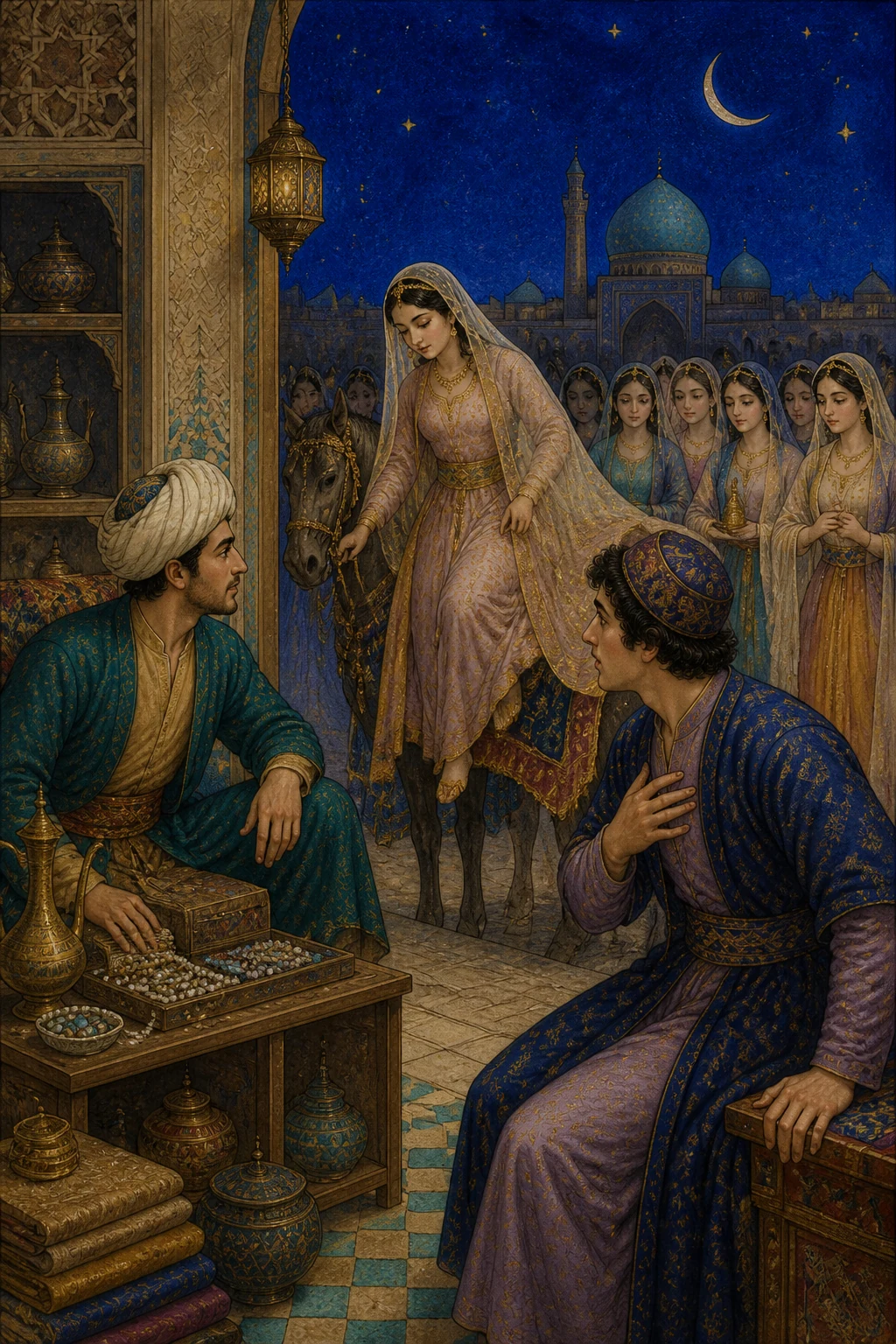
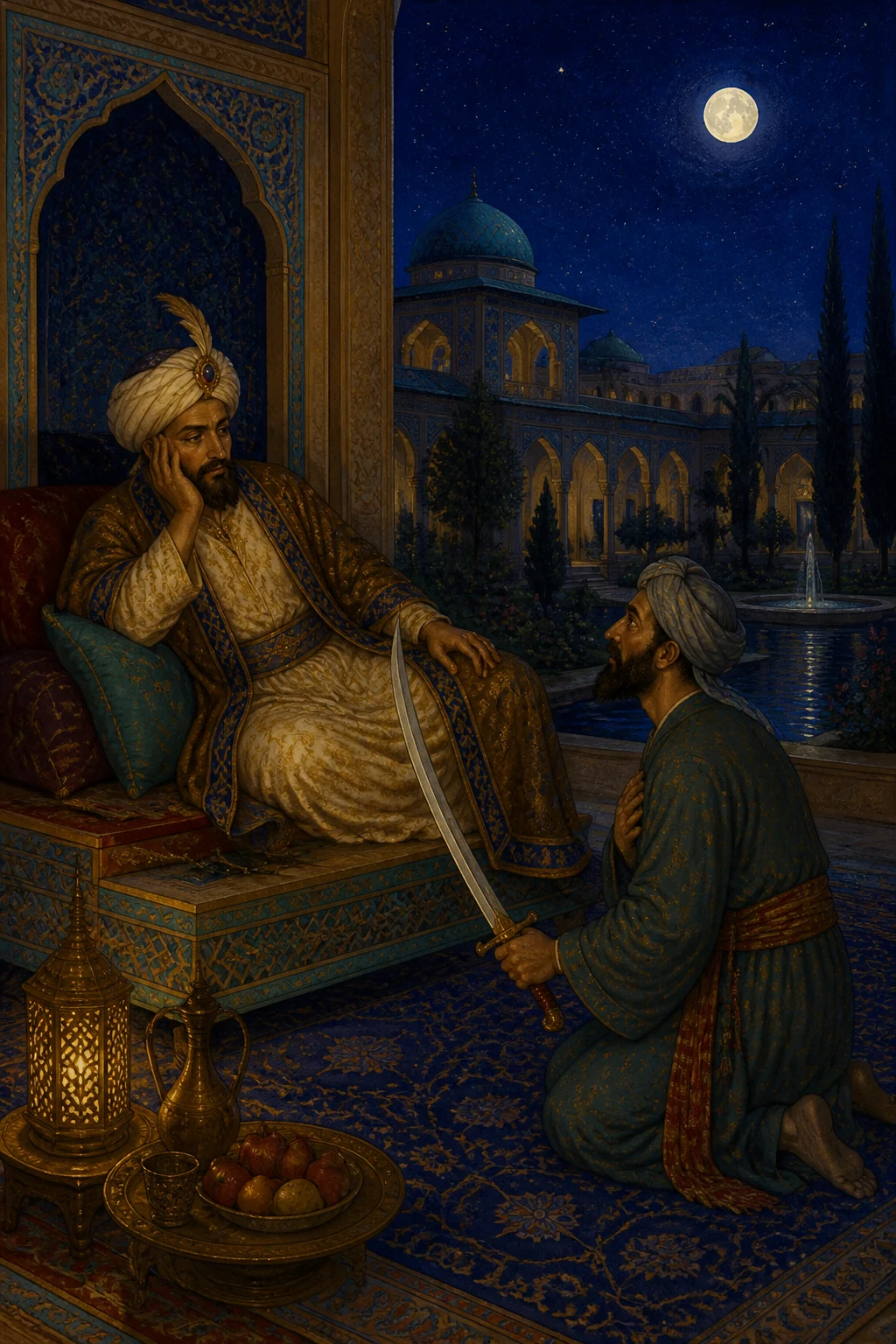
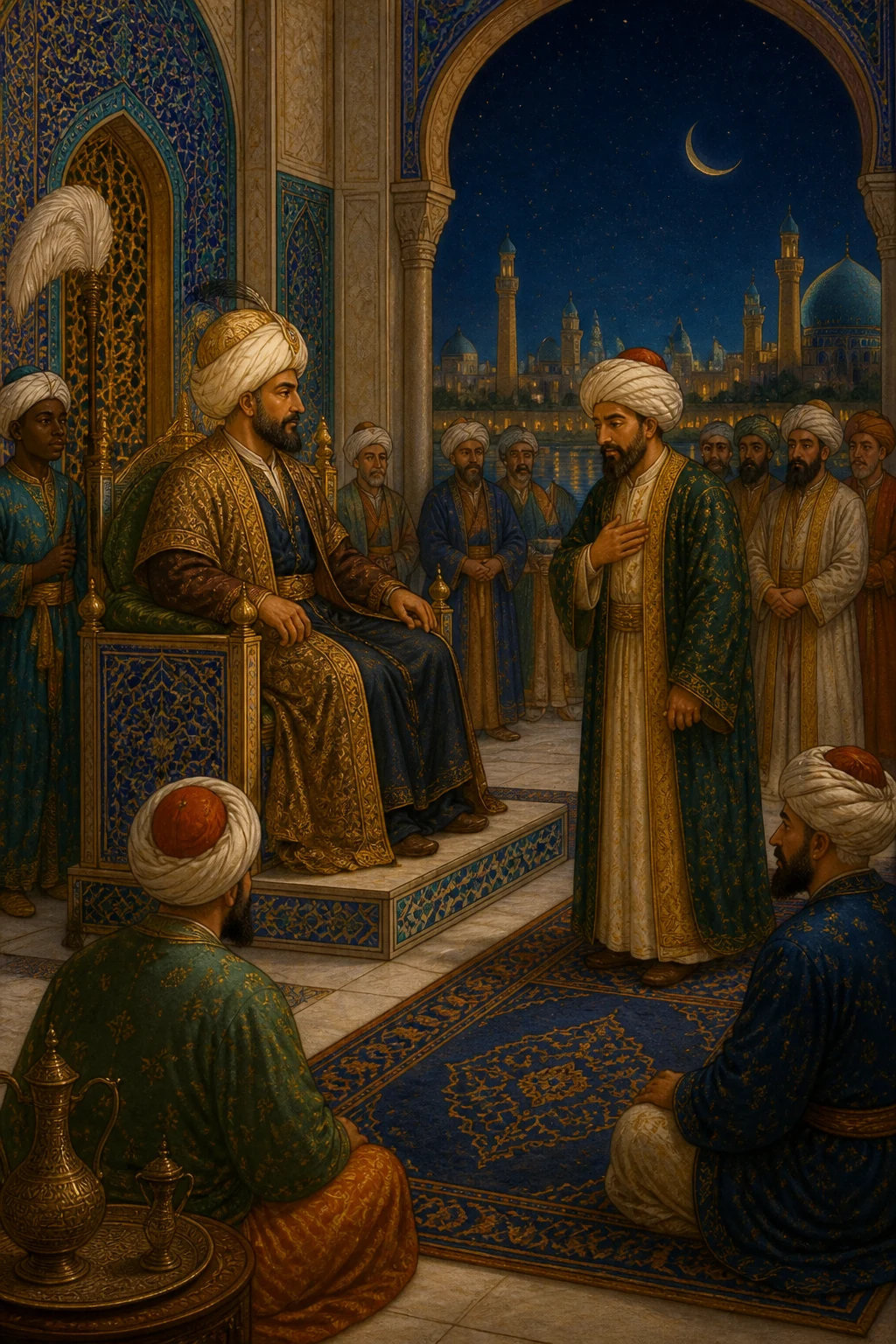
It is related that in the palace of the Commander of the Faithful, al-Mutawakkil ‘ala Allah, there were four thousand concubines, including two hundred Byzantine women and two hundred women of mixed parentage and Abyssinians. Ubayd ibn Tahir once presented al-Mutawakkil with four hundred slave girls: two hundred fair-skinned women and two hundred Abyssinians and women of mixed parentage. Among them was a girl of mixed parentage from Basra named Mahbuba, who surpassed the others in beauty, grace, wit, and charm. She played the lute, sang exquisitely, composed poetry, and wrote a fine hand. Al-Mutawakkil became so enamoured of her that he could not bear to be parted from her for even an hour. When she saw how deeply he favoured her, she grew haughty towards him and presumptuous in her good fortune. He became fiercely angry with her, forsook her, and forbade everyone in the palace to speak to her. She remained in this state for several days, though al-Mutawakkil still yearned for her. One morning he said to his companions, “Last night I dreamed that I had made peace with Mahbuba.” They replied, “We pray to Almighty God that it may come true in waking life.” While he was still speaking, a maidservant came and whispered something to him. He rose from the gathering and entered the women’s quarters. What she had whispered was this: “We heard singing and lute-playing from Mahbuba’s chamber, but we do not know the reason.” When he reached her chamber, he heard her singing to the lute, playing with great skill, and reciting these verses:
“I wander through the palace, finding none to whom I may complain, and none will speak to me; as though I had committed some offence for which no repentance could deliver me. Have we no intercessor with a king who came to me in sleep and made his peace with me? Yet when the morning’s light appeared to us, he turned again to coldness and abandoned me.” When al-Mutawakkil heard her words, he marvelled at the verses and at this strange coincidence, for Mahbuba had dreamed a dream that matched his own. He entered her chamber, and as soon as she became aware of him, she hurried to meet him, threw herself at his feet, and kissed them. “By God, my lord,” she said, “I saw this very thing in my dream last night, and when I awoke, I composed these verses.” Al-Mutawakkil replied, “By God, I too dreamed the same.” Then they embraced and were reconciled, and he stayed with her for seven days and nights. Mahbuba had written al-Mutawakkil’s name—his name was Ja‘far—in musk upon her cheek. When he saw his name written in musk high upon her cheek, he recited:
“She has written ‘Ja‘far’ upon her cheek in musk; my life be the ransom of her who traced the words I see! Though her fingers wrote a single line upon her cheek, that writing has inscribed many lines upon my heart. O you whom Ja‘far has guided among mankind, may God grant Ja‘far a draught of your wine!” When al-Mutawakkil died, all his slave girls forgot their grief for him except Mahbuba. And dawn overtook Shahrazad, and she fell silent, ceasing her permitted tale.
When it was the three hundred and fifty-third night
She said: It has reached me, O fortunate King, that when al-Mutawakkil died, all his slave girls forgot their grief for him except Mahbuba. She continued to mourn him until she died and was buried beside him. May God have mercy upon them all.