Waltey
Zgodba o lenem Abu Mohamedu
Tisoč in ena noč · arabska pripovedna tradicijaO besedilu
Zgodba o lenem Abu Mohamedu
- Vir
- Tisoč in ena noč
- Avtor
- arabska pripovedna tradicija
- Jezik branja
- English
- Jezik izvirnika
- Arabic
- Čas branja
- 31 min branja
- Obseg
- 25 strani
- Naslov izvirnika
- حكاية أبي محمد الكسلان - الليالي ٢٩٩ إلى ٣٠٥
O izvirniku
Tisoč in ena noč
Zgodbe v zgodbah, polne trgovcev, dvorov, preoblek in nočnih zapletov. Bralni jezik je English, izvirnik pa prihaja iz vira Tisoč in ena noč v jeziku Arabic.
Besedilo
Zgodba o lenem Abu Mohamedu
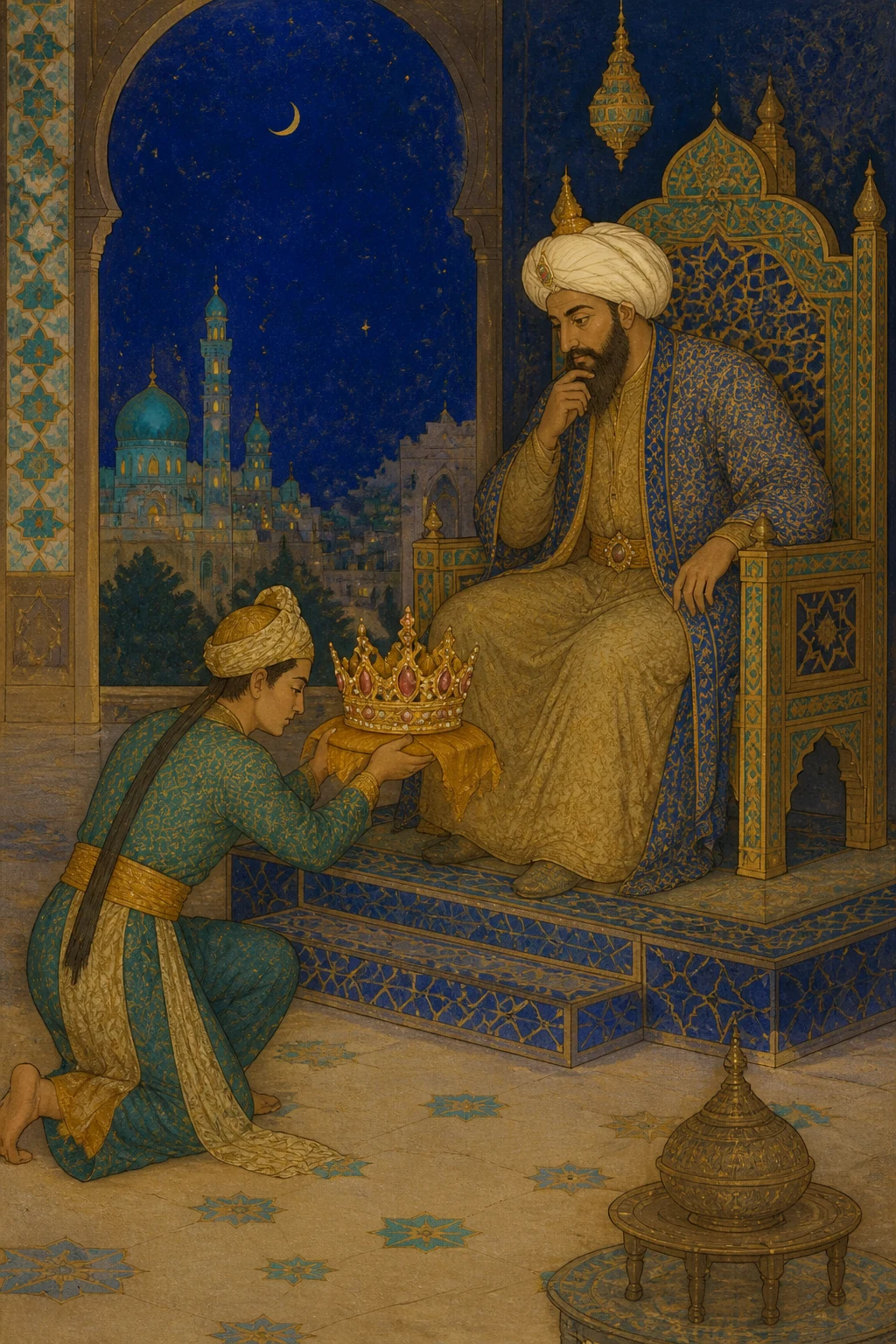
It is also told that Harun al-Rashid was seated one day upon the throne of the caliphate when a young eunuch entered bearing a crown of red gold, studded with pearls and precious stones and set with rubies and other jewels beyond all price. The man kissed the ground before the Caliph and said, “Commander of the Faithful, Lady Zubayda…” But morning overtook Shahrazad, and she fell silent, leaving her tale untold.
Her sister said to her, “How lovely your story is, how delightful, how sweet and pleasing!” She replied, “Yet what is this beside what I shall tell you tomorrow night, if I live and the king spares me!” And the king said to himself, “By Allah, I will not kill her until I have heard the rest of her tale.”
When it was the three hundredth night,
Her sister said, “Sister, finish your story for us.” She replied, “Gladly and with all my heart, if the king permits.” The king said, “Tell your tale, Shahrazad.” She said: It has reached me, O fortunate King, that the servant said to the Caliph, “Lady Zubayda kisses the ground before you and says: You know that she has had this crown made, but it needs a large jewel for its summit. She has searched her treasures and found no jewel large enough to suit her purpose.” The Caliph said to his chamberlains and deputies, “Search for a large jewel such as Zubayda desires.” They searched but found nothing to suit her, and reported this to the Caliph. He was troubled and said, “How can I be Caliph and king of the earth, yet be unable to procure a jewel? Woe to you! Ask the merchants.” They questioned the merchants, who told them, “Our lord the Caliph will find such a jewel only with a man of Basra called Abu Muhammad the Lazy.” They informed the Caliph, and he ordered his vizier Ja‘far to send a letter to Emir Muhammad al-Zubaydi, governor of Basra, instructing him to make ready Abu Muhammad the Lazy and bring him before the Commander of the Faithful. The vizier wrote a letter to this effect and sent it with Masrur.
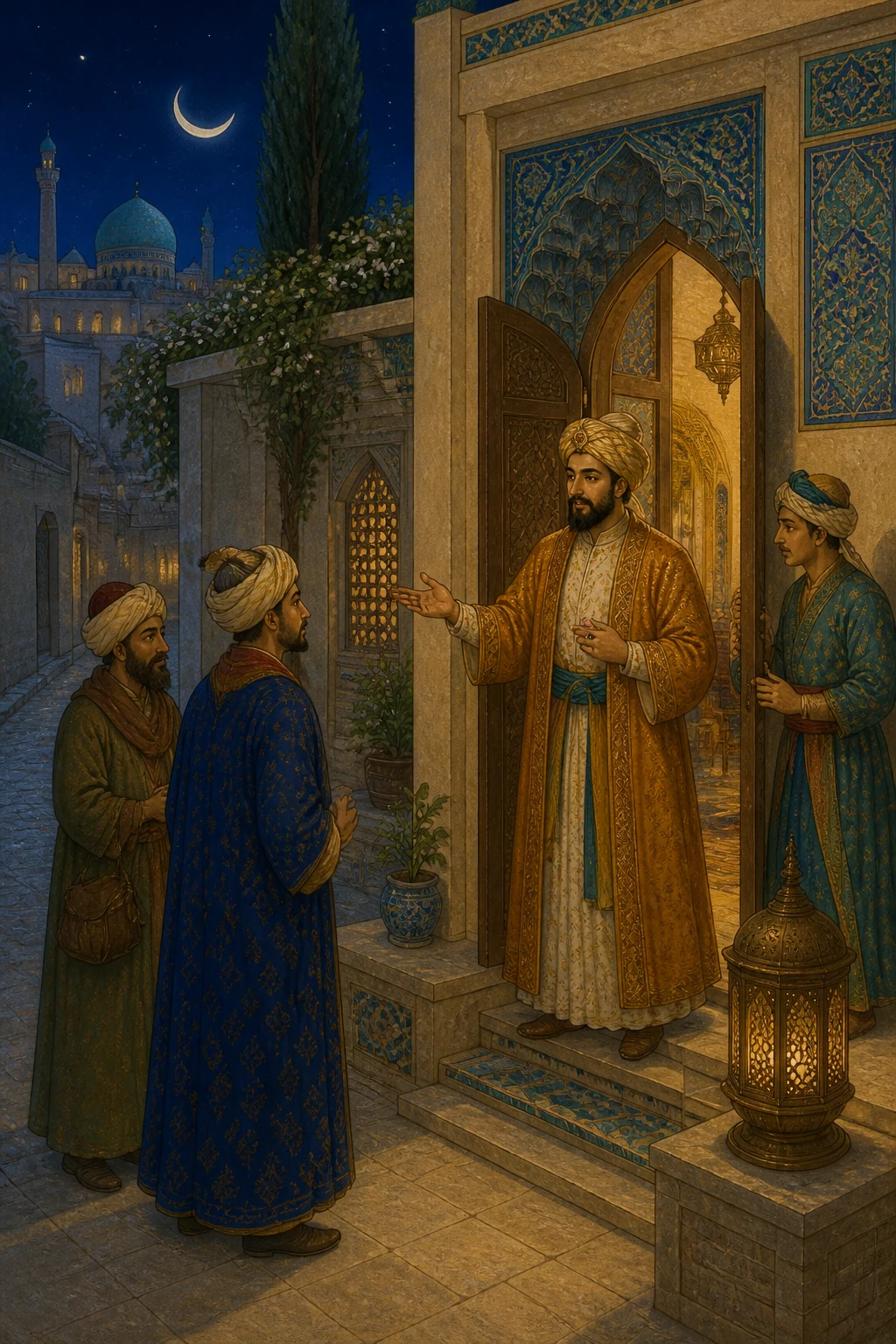
Masrur took the letter to the city of Basra and went before Emir Muhammad al-Zubaydi, who was delighted to see him and received him with the utmost honor. He then read him the letter from the Commander of the Faithful, Harun al-Rashid, and the emir replied, “I hear and obey.” He sent Masrur with a party of his followers to Abu Muhammad the Lazy. They went to his house and knocked at the door, and one of the servants came out. Masrur said to him, “Tell your master that the Commander of the Faithful summons him.” The servant went in and told him, and Abu Muhammad came out to find Masrur, the Caliph’s chamberlain, with the followers of Emir Muhammad al-Zubaydi. He kissed the ground before him and said, “I hear and obey the Commander of the Faithful. But pray, come inside.” They said, “We can do so only briefly, for the Commander of the Faithful has ordered us to make haste and awaits your arrival.” He replied, “Bear with me a little while I make my preparations.” After much entreaty they entered the house with him, and in the entrance hall they saw curtains of blue brocade embroidered with red gold. Abu Muhammad the Lazy then ordered some of his servants to accompany Masrur to the bathhouse within his home. They did so, and Masrur found its walls and marblework marvelous to behold, adorned with gold and silver, while its water was mingled with rosewater. The servants attended Masrur and his companions with the greatest care and served them to perfection. When they came out of the bath, they dressed them in robes of brocade woven with gold. Masrur and his companions then went in and found Abu Muhammad the Lazy seated in his palace, with curtains of gold-woven brocade set with pearls and jewels hanging above his head. The palace was furnished with cushions embroidered in red gold, and he sat upon a mattress laid on a jewel-studded couch.
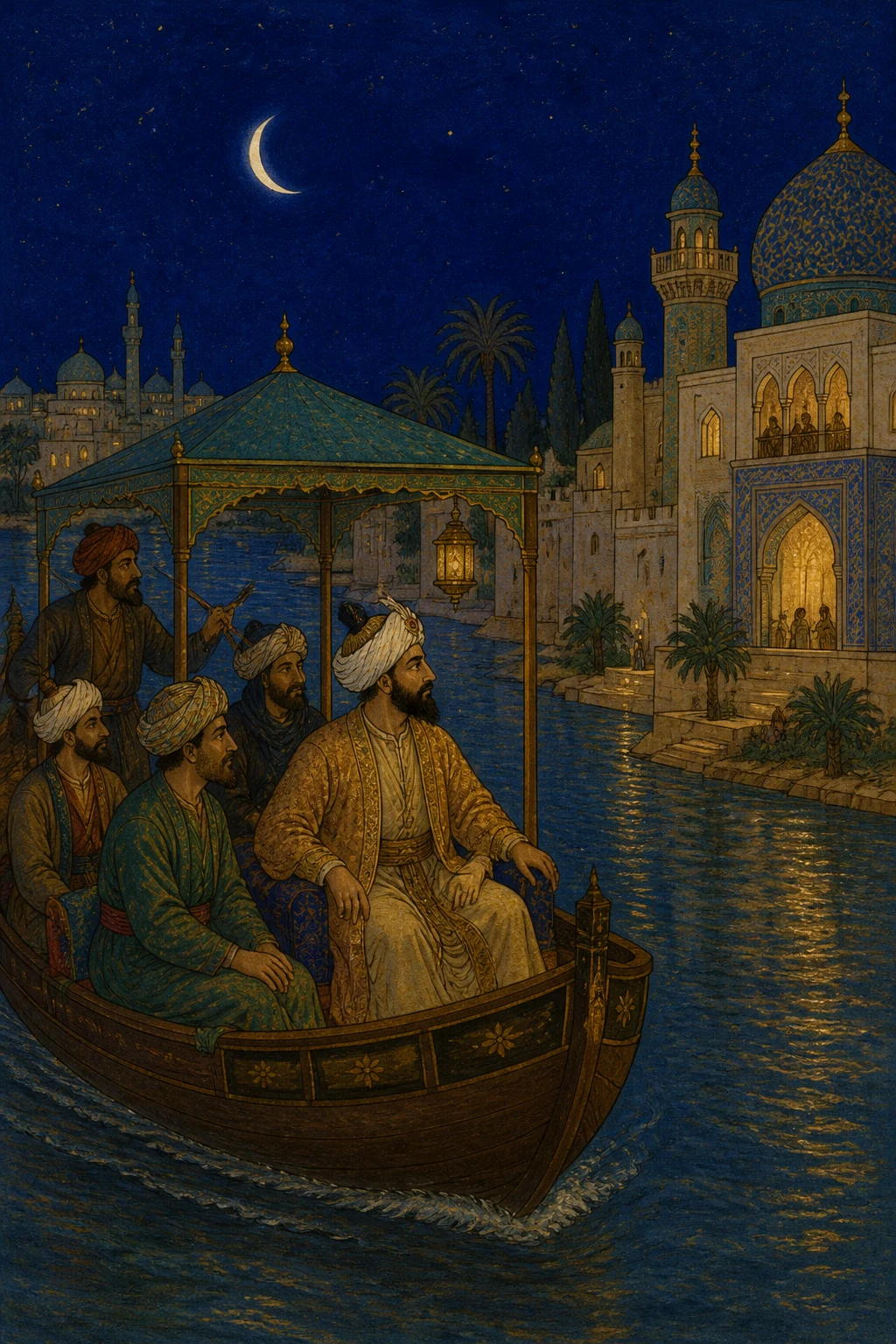
When Masrur entered, Abu Muhammad welcomed him warmly and seated him at his side, then ordered the meal to be brought. At the sight of it Masrur said, “By Allah, I have never seen such a table even in the presence of the Commander of the Faithful.” It held every sort of food, all served on gilded porcelain dishes. Masrur said, “We ate and drank and made merry until the end of the day, and then he gave each of us five thousand dinars.” On the second day they dressed them in green robes embroidered with gold and treated them with the greatest honor. Then Masrur said to him, “We dare not remain any longer, for fear of the Caliph.” Abu Muhammad the Lazy replied, “My lord, bear with us until tomorrow, so that we may make ready and set out with you.” They stayed that day and passed the night there. In the morning the servants saddled a mule for Abu Muhammad the Lazy with a saddle of gold set with every kind of pearl and jewel. Masrur said to himself, “I wonder whether, when Abu Muhammad appears before the Caliph in such splendor, he will ask him how he came by all this wealth.” Then they took leave of Abu Muhammad al-Zubaydi and set out from Basra, traveling on until they reached Baghdad. They entered the Caliph’s presence and stood before him, and he ordered Abu Muhammad to sit. He sat down and said courteously, “Commander of the Faithful, I have brought a gift as a token of my service. Have I your permission to present it?” Al-Rashid said, “Certainly.” Abu Muhammad called for a chest, opened it, and brought out rare treasures, among them trees of gold whose leaves were white emeralds and whose fruits were red and yellow rubies and white pearls. The Caliph marveled at them. Then Abu Muhammad had a second chest brought and took from it a tent of brocade adorned with pearls, rubies, emeralds, chrysolites, and all manner of precious stones. Its poles were of fresh Indian aloeswood, and its skirts were studded with green emeralds. It bore images of every kind of animal, bird, and wild beast, all encrusted with jewels, rubies, emeralds, chrysolites, spinels, and every sort of precious mineral.
When al-Rashid saw this, he was overjoyed. Then Abu Muhammad the Lazy said, “Commander of the Faithful, do not think that I brought you this from fear of anything or in hope of any reward. I am but a common man, and I judged these things fit for none but the Commander of the Faithful. If you permit me, I shall show you something of what I can do.” Al-Rashid said, “Do as you please, so that we may see.” He replied, “I hear and obey.” Then he moved his lips and beckoned to the battlements of the palace, and they inclined toward him. He gestured to them again, and they returned to their places. Then he made a sign with his eye, and chambers with locked doors appeared before him. He spoke to them, and the voices of birds answered him. Al-Rashid was utterly astonished and said, “How did you come by all this, when you are known only as Abu Muhammad the Lazy? I have been told that your father was a barber who worked in a bathhouse and left you nothing.” He replied, “Commander of the Faithful, hear my story.” But morning overtook Shahrazad, and she fell silent, leaving her tale untold.
When it was the three hundred and first night,
She said: It has reached me, O fortunate King, that Abu Muhammad the Lazy said to the Caliph, “Commander of the Faithful, hear my story, for it is wondrous and strange. Were it written with needles upon the inner corners of the eyes, it would be a lesson to all who take heed.” Al-Rashid said, “Tell me your story, Abu Muhammad, and let me hear it.” He said, “Know, Commander of the Faithful—may Allah preserve your glory and power—that what people tell you is true: I am known as the Lazy, and my father left me no money. He was indeed just as you have said, a barber in a bathhouse, and in my youth I was the laziest creature on the face of the earth. So great was my laziness that if I lay asleep in hot weather and the sun fell upon me, I was too lazy to rise and move from the sunshine into the shade. I continued thus for fifteen years. Then my father passed into the mercy of Allah Most High, leaving me nothing. My mother worked in other people’s houses and brought me food and drink while I lay upon my side. One day she came in carrying five silver dirhams and said, ‘My son, I hear that Sheikh Abu al-Muzaffar intends to travel to China.’ Now this sheikh loved the poor and was a charitable man. My mother said, ‘My son, take these five dirhams and come with me to him. We shall ask him to buy you something with them in China, and perhaps, by the grace of Allah Most High, you may make a profit.’ I was too lazy to get up and go with her, so she swore by Allah that unless I rose and accompanied her, she would neither feed me nor give me drink nor come near me, but would leave me to die of hunger and thirst.
“When I heard her words, Commander of the Faithful, I knew that she would do as she said, knowing my laziness as she did. So I said to her, ‘Sit me up.’ She sat me up, with tears streaming from my eyes, and I said, ‘Bring me my shoes.’ She brought them, and I said, ‘Put them on my feet.’ She put them on, and I said, ‘Lift me up off the ground.’ She did so, and I said, ‘Support me so that I can walk.’ She supported me, and I walked on, stumbling over the skirts of my robe, until we reached the seashore. We greeted the sheikh, and I said, ‘Uncle, are you Abu al-Muzaffar?’ He replied, ‘At your service.’ I said, ‘Take these dirhams and buy me something with them in China. Perhaps Allah will grant me a profit on it.’ Sheikh Abu al-Muzaffar said to his companions, ‘Do you know this young man?’ They replied, ‘Yes, he is known as Abu Muhammad the Lazy. We have never seen him leave his house until this moment.’ Sheikh Abu al-Muzaffar said, ‘My son, give me the dirhams, with the blessing of Allah Most High.’ He took the coins from me, saying, ‘In the name of Allah.’ Then I returned home with my mother, and Sheikh Abu al-Muzaffar set out on his journey with a party of merchants. They traveled on until they reached China, where the sheikh bought and sold. When he and his companions had completed their business, they set off homeward. After they had sailed for three days, the sheikh said to his companions, ‘Stop the ship.’ The merchants asked, ‘What do you need?’ He replied, ‘You must know that I forgot the errand entrusted to me by Abu Muhammad the Lazy. Let us return and buy him something useful with his money.’ They said, ‘We beg you by Allah Most High not to turn us back. We have already traveled a great distance and suffered terrible dangers and hardships.’ He replied, ‘We must return.’ They said, ‘Take from us many times the profit those five dirhams would have earned, but do not turn us back.’ He agreed, and they collected a considerable sum for him. They sailed on until they came in sight of an island with many inhabitants and anchored there. The merchants went ashore to buy merchandise: minerals, jewels, pearls, and other goods.
“Then Abu al-Muzaffar saw a man sitting with many monkeys before him. Among them was one whose fur had been plucked out. Whenever their owner looked away, the other monkeys seized this plucked monkey, beat it, and hurled it at their master. He would rise and beat them, bind them, and punish them for it. This made all the monkeys furious with the plucked one, and they beat it again. When Sheikh Abu al-Muzaffar saw the creature, his heart ached for it and he took pity on it. He said to its owner, ‘Will you sell me this monkey?’ The man replied, ‘Make an offer.’ He said, ‘I have five dirhams belonging to an orphan boy. Will you sell it to me for that?’ He replied, ‘It is yours. May Allah bless you in it.’ The sheikh took the monkey and paid him the dirhams. His slaves brought it aboard and tied it up in the ship. Then they weighed anchor and sailed to another island, where they anchored. The divers went down to search for minerals, pearls, jewels, and other things, the merchants paying them for their dives. When the monkey saw what they were doing, it untied itself, sprang from the ship, and dived with them. Abu al-Muzaffar said, ‘There is no power and no might save in Allah, the Most High, the Almighty! The monkey is lost to us. Such is the luck of the poor fellow for whom we bought it!’ They gave up hope of the monkey, but then a party of divers surfaced, and there it was among them, holding precious jewels in its hands. It threw them down before Abu al-Muzaffar, who marveled and said, ‘There is some great mystery in this monkey.’ They weighed anchor and sailed on until they reached an island called the Island of the Zanj, whose inhabitants were black people who ate human flesh. When the islanders saw them, they put out in boats, came alongside, and seized everyone aboard. They bound their arms and brought them before their king, who ordered a number of the merchants slaughtered. They killed them and ate their flesh, while the remaining merchants spent the night imprisoned in the deepest distress. During the night the monkey went to Abu al-Muzaffar and loosened his bonds. When the merchants saw that he was free, they said, ‘May Allah grant us deliverance through your hands, Abu al-Muzaffar!’ He replied, ‘Know that, by the will of Allah Most High, it was none but this monkey that freed me.’” But morning overtook Shahrazad, and she fell silent, leaving her tale untold.
When it was the three hundred and second night,
She said: It has reached me, O fortunate King, that Abu al-Muzaffar said, “‘By the will of Allah Most High, it was none but this monkey that freed me, and I have pledged it a thousand dinars.’ The merchants said, ‘We too will each give it a thousand dinars if it sets us free.’ The monkey went to them and began untying them one after another, until it had freed them all. They went to the ship and boarded her, finding her unharmed and nothing missing. Then they weighed anchor and set sail. Abu al-Muzaffar said, ‘Merchants, fulfill the promise you made to the monkey.’ They replied, ‘We hear and obey.’ Each paid him a thousand dinars, and Abu al-Muzaffar added a thousand dinars from his own money, so that the monkey amassed a great fortune. They sailed on until they reached Basra, where their friends met them as they disembarked. Abu al-Muzaffar asked, ‘Where is Abu Muhammad the Lazy?’ The news reached my mother, and while I lay asleep she came to me and said, ‘My son, Sheikh Abu al-Muzaffar has returned and is here in the city. Get up, go and greet him, and ask what he has brought you. Perhaps Allah Most High has granted you some good fortune.’ I said to her, ‘Lift me off the ground and support me so that I can go out and walk to the seashore.’ Then I walked on, stumbling over the skirts of my robe, until I reached Sheikh Abu al-Muzaffar. When he saw me, he said, ‘Welcome to the man whose dirhams, by the will of Allah Most High, brought deliverance to me and these merchants!’ Then he said, ‘Take this monkey, which I bought for you, and bring it home. I shall come to you there.’ I took the monkey and went off, saying to myself, ‘By Allah, what a splendid piece of merchandise!’ When I entered my house, I said to my mother, ‘Whenever I sleep, you order me to get up and trade. Look with your own eyes at the merchandise I have gained!’ Then I sat down.
“While I was sitting there, Abu al-Muzaffar’s slaves came to me and asked, ‘Are you Abu Muhammad the Lazy?’ I replied, ‘Yes.’ Then Abu al-Muzaffar himself appeared behind them. I rose and kissed his hands, and he said, ‘Come with me to my house.’ I replied, ‘I hear and obey.’ I went with him until we entered his house, where he ordered his slaves to bring the money. When they had brought it, he said, ‘My son, Allah has granted you this fortune as the profit on your five dirhams.’ They lifted the money in chests onto their heads, and he gave me the keys, saying, ‘Walk ahead of the slaves to your house, for all this money is yours.’ I returned to my mother, who rejoiced and said, ‘My son, Allah has blessed you with this great wealth. Give up your laziness now. Go down to the market, buy and sell.’ So I abandoned my laziness and opened a shop in the market. The monkey sat beside me on my cushion; when I ate, it ate with me, and when I drank, it drank with me. Every morning it would disappear until noon, then return with a purse containing a thousand dinars, set it beside me, and sit down. It continued thus for some time, until I had amassed a great fortune. I bought estates and houses, Commander of the Faithful, planted gardens, and purchased mamluks, slaves, and serving girls. One day, as I sat with the monkey beside me on the cushion, it began looking to right and left. I said to myself, ‘What can be the matter with it?’ Then Allah gave the monkey the power of eloquent speech, and it said, ‘Abu Muhammad!’ When I heard it speak, I was terribly frightened, but it said, ‘Do not be afraid. I shall tell you what I am. I am a marid of the jinn, and I came to you because of your poverty. Today you do not even know the extent of your wealth. Now I have a favor to ask of you, and it will be to your own advantage.’ I asked, ‘What is it?’ It said, ‘I wish to marry you to a girl as lovely as the full moon.’ I said, ‘How can that be?’ It replied, ‘Tomorrow, put on your finest clothes, mount your mule with the golden saddle, and go to the fodder merchants’ market. Ask for the Sharif’s shop, sit with him, and say, “I have come as a suitor for your daughter’s hand.” If he tells you, “You have neither wealth, standing, nor lineage,” give him a thousand dinars. If he says, “Give me more,” add to the sum and tempt him with money.’ I replied, ‘I hear and obey. Tomorrow I shall do so, if Allah Most High wills.’” Abu Muhammad continued, “When morning came, I dressed in my finest clothes, mounted the mule with the golden saddle, and went to the fodder merchants’ market. I asked for the Sharif’s shop and found him sitting there. I dismounted, greeted him, and sat beside him.” But morning overtook Shahrazad, and she fell silent, leaving her tale untold.
When it was the three hundred and third night,
She said: It has reached me, O fortunate King, that Abu Muhammad the Lazy said, “I dismounted, greeted him, and sat beside him. I had ten slaves and mamluks with me. The Sharif said, ‘Perhaps there is something we may have the pleasure of doing for you?’ I replied, ‘Yes, I have a request to make of you.’ He asked, ‘What is your request?’ I said, ‘I have come as a suitor for your daughter’s hand.’ He replied, ‘You have neither wealth, standing, nor lineage.’ I brought out a purse containing a thousand dinars of red gold and said, ‘Here are my standing and my lineage. The Prophet, Allah bless him and grant him peace, said, “Wealth is a noble pedigree.” And how well the poet put it:
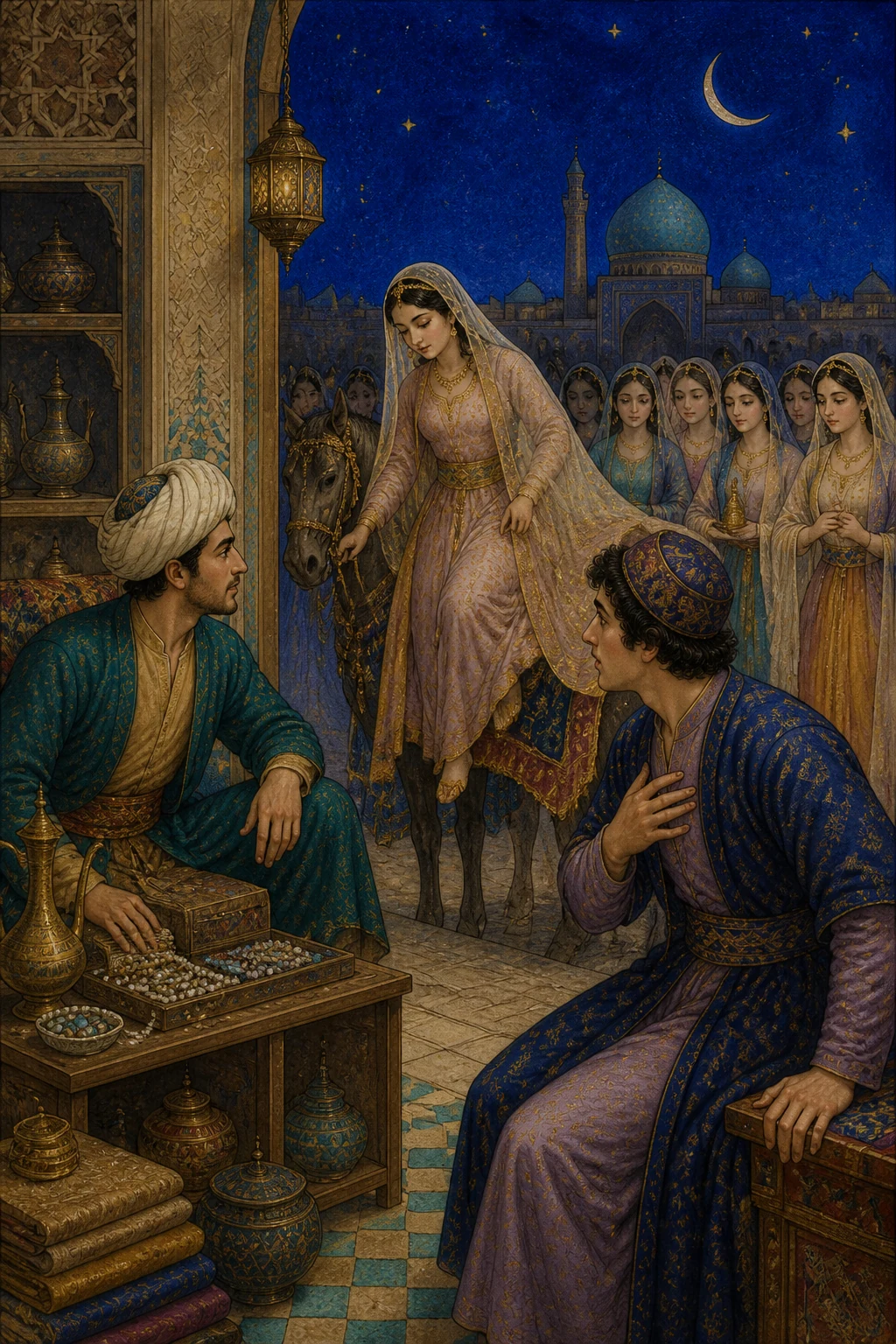
“‘The man who owns two dirhams finds his lips have learned all kinds of eloquence. His fellows draw near and listen as he speaks, and you see him strutting proudly among men. But for the coins in which he takes such pride, you would find him the most wretched of them all. When a rich man speaks in error, they say, “You speak the truth; there is no fault in what you say.” But when a poor man tells the truth, they say, “You lie,” and set his words at naught. In every place, money clothes a man in dignity and grace: it is a tongue for him who seeks eloquence, a weapon for him who wishes to fight.’ When the Sharif heard my words and understood the verse I had recited, he lowered his head toward the ground for a while, then raised it and said, ‘If you insist, I require another three thousand dinars.’ I replied, ‘I hear and obey.’ I sent one of my mamluks home, and he brought the sum requested. When the Sharif saw the money delivered to him, he rose from his shop and said to his servants, ‘Close it.’ Then he invited his friends from the market to his house, had my marriage contract with his daughter drawn up, and said, ‘In ten days I shall bring you to her.’ I went home rejoicing and, when I was alone with the monkey, told it what had happened. It said, ‘You have done well.’ As the day appointed by the Sharif drew near, the monkey said to me, ‘I have a favor to ask of you. If you grant it, you may ask of me whatever you please.’ I said, ‘What is your request?’ It replied, ‘At the far end of the hall where you will join the Sharif’s daughter stands a storeroom. On its door is a brass ring, and beneath the ring are the keys. Take them and open the door. You will find an iron chest, with four talismanic banners at its corners. In their midst is a basin full of money, with eleven snakes beside it. In the basin is a white cock with a divided comb, tied up. A knife lies beside the chest. Take the knife and slaughter the cock, cut down the banners, and overturn the chest. Then go out to your bride and take her maidenhead. That is the favor I ask of you.’ I replied, ‘I hear and obey.’ Then I went to the Sharif’s house and entered the hall, where I saw the storeroom the monkey had described. When I was alone with my bride, I marveled at her loveliness, her beauty, her figure, and her graceful proportions, for no tongue could describe her charms. I was filled with joy at the sight of her.
“At midnight, when the bride had fallen asleep, I rose, took the keys, and opened the storeroom. I picked up the knife and slaughtered the cock, cast down the banners, and overturned the chest. The girl awoke and saw that the storeroom stood open and the cock had been killed. She cried, ‘There is no power and no might save in Allah, the Most High, the Almighty! The marid has me!’ Scarcely had she finished speaking when the marid enveloped the house and snatched away the bride. An outcry arose, and the Sharif came in, beating his face. He said, ‘Abu Muhammad, what have you done to us? Is this how you repay us? I placed that talisman in the storeroom to protect my daughter from this accursed creature. For six years he has sought to carry her off, but could not. You have no place among us now. Go your way.’ I left the Sharif’s house and returned home, where I searched for the monkey but could find neither it nor any trace of it. Then I knew that it was the marid who had carried off my wife, and that it had tricked me into destroying the talisman and the cock that prevented it from taking her. In my remorse I tore my clothes and beat my face, and the whole earth seemed too narrow to contain me. I left at once and made for the wilderness, walking on until evening fell, with no idea where to go. While I was lost in thought, two snakes approached, one brown and the other white, fighting each other. I picked up a stone and struck the brown snake dead, for it was attacking the white one. The white snake went away and disappeared for a while, then returned with ten white snakes. They came to the dead snake and tore it to pieces until nothing remained but its head, then went their way. Exhausted, I lay down where I was. As I lay there pondering my plight, I heard an unseen voice reciting these two verses:
“‘Let destiny run with loosened reins, and never pass the night with a troubled mind. Between the closing of an eye and its opening, Allah changes one condition to another.’ When I heard this, Commander of the Faithful, I was overcome by anguish and thoughts beyond all measure. Then I heard a voice behind me reciting these lines:
“‘O Muslim, with the Quran before you, rejoice: through it, safety has come to you. Fear not the snares that Satan lays, for we are a people whose religion is faith.’ I said to the speaker, ‘By Him whom you worship, tell me who you are!’ Then the unseen speaker took human form and said, ‘Do not be afraid. Your kindness has reached us. We are a people of the believing jinn. If you have any need, tell us, so that we may have the pleasure of fulfilling it.’ I replied, ‘My need is great, for a grievous calamity has befallen me. Who has ever suffered a misfortune like mine?’ He said, ‘Perhaps you are Abu Muhammad the Lazy?’ I replied, ‘Yes.’ He said, ‘Abu Muhammad, I am the brother of the white snake whose enemy you killed. We are four siblings, born of the same father and mother, and all of us are grateful for your kindness. Know that the creature who took the form of a monkey and deceived you is one of the rebellious marids of the jinn. Had he not contrived this trick, he could never have carried her off. For a long time he had wished to take her, but the talisman prevented him. Had it remained intact, he could never have reached her. But do not despair over this affair. We shall bring you to her and kill the marid, for your kindness will not go unrewarded among us.’ Then he gave a mighty shout.” But morning overtook Shahrazad, and she fell silent, leaving her tale untold.
When it was the three hundred and fourth night,
She said: It has reached me, O fortunate King, that the ifrit said, “‘Your kindness will not go unrewarded among us.’ Then he gave a mighty shout in a terrible voice, and a company appeared before him. He asked them about the monkey, and one of them said, ‘I know where he dwells.’ He asked, ‘Where does he dwell?’ The other replied, ‘In the City of Brass, upon which the sun never rises.’ He said, ‘Abu Muhammad, take one of our slaves. He will carry you upon his back and tell you how to rescue the girl. Know that this slave is one of the rebellious marids. When he carries you, do not utter the name of Allah, for he will flee from beneath you, and you will fall to your death.’ I replied, ‘I hear and obey.’ I took one of their slaves, who bent down and said, ‘Mount.’ I climbed onto his back, and he flew with me through the air until the world vanished from sight. I saw the stars like firmly rooted mountains and heard the angels in heaven praising Allah. All the while the marid talked to me, showed me wonders, and distracted me from the remembrance of Allah Most High.
“While I was thus occupied, a figure approached me, dressed in green, with flowing locks and a radiant face, holding a spear from which sparks flew. He said, ‘Abu Muhammad, say, “There is no god but Allah, and Muhammad is the Messenger of Allah,” or I shall strike you with this spear.’ My heart had been torn by my silence and my failure to remember Allah Most High, so I said, ‘There is no god but Allah, and Muhammad is the Messenger of Allah.’ The figure struck the marid with his spear, and it dissolved into ashes. I fell from its back and plunged toward the earth, until I landed in a raging sea of clashing waves. There was a ship with five sailors aboard, and when they saw me they came and took me into their vessel. They spoke to me in words I did not understand, and I gestured that I could not understand their language. They sailed until the end of the day, then cast a net, caught a fish, roasted it, and gave me some to eat. They continued sailing until they brought me to their city, where they took me before their king. I kissed the ground, and he bestowed a robe of honor upon me. This king knew Arabic, and he said, ‘I have appointed you one of my attendants.’ I asked him, ‘What is the name of this city?’ He replied, ‘Its name is Hanad, and it is in the land of China.’ The king entrusted me to the city’s vizier and ordered him to show me its sights. In former times the people of that city had been unbelievers, and Allah Most High had turned them to stone. I wandered through it and saw nothing more abundant than its trees and fruits. I remained there for a month. Then I came to a river and sat on its bank. While I was sitting there, a horseman approached and asked, ‘Are you Abu Muhammad the Lazy?’ I replied, ‘Yes.’ He said, ‘Do not be afraid, for your kindness has reached us.’ I asked him, ‘Who are you?’ He said, ‘I am the snake’s brother, and you are near the place where the girl you seek is held.’ Then he took off his clothes and dressed me in them, saying, ‘Do not be afraid. The slave who perished beneath you was one of our servants.’ The horseman seated me behind him and rode with me into a wilderness. Then he said, ‘Dismount and walk between these two mountains until you see the City of Brass. Keep your distance and do not enter it until I return and tell you what to do.’ I replied, ‘I hear and obey.’ I dismounted and walked until I reached the city. I saw that its walls were of brass and began to circle them, hoping to find a gate, but found none.
“As I was walking around it, the snake’s brother came to me and gave me an enchanted sword so that no one could see me. Then he went his way. He had been gone only a short while when a great clamor arose, and I saw a multitude of creatures whose eyes were in their breasts. When they saw me, they asked, ‘Who are you, and what has cast you into this place?’ I told them what had happened, and they said, ‘The girl you speak of is with the marid in this city, but we do not know what he has done with her. We are the snake’s brothers.’ Then they said, ‘Go to that spring, see where its water flows into the city, and follow it. It will bring you inside.’ I did so, following the water into an underground passage. When I emerged, I found myself in the middle of the city. There I saw the girl seated upon a golden couch beneath a curtain of brocade. Around the curtain was a garden of golden trees whose fruits were precious jewels: rubies, chrysolites, pearls, and coral. When the girl saw me, she recognized me and greeted me first, saying, ‘My lord, who brought you to this place?’ I told her what had happened, and she said, ‘Know that this accursed creature, out of his great love for me, has told me what can harm him and what can benefit him. He has told me that in this city there is a talisman by which, if he wished, he could destroy everyone here. Whatever he commands the ifrits, they obey, and this talisman is in a pillar.’ I asked, ‘Where is the pillar?’ She told me where it stood. I asked, ‘What is the talisman?’ She replied, ‘It is the image of an eagle, bearing an inscription I cannot read. Take it in your hands, fetch a brazier of live coals, and cast some musk into it. Smoke will rise and draw the ifrits to you. When you do this, every one of them will appear before you, without exception, and obey your commands. Whatever you tell them, they will do. Rise, then, and do this with the blessing of Allah Most High.’ I replied, ‘I hear and obey.’ I rose, went to the pillar, and did everything she had told me. The ifrits came and stood before me, saying, ‘At your service, master. Whatever you command us, we shall do.’ I said, ‘Bind the marid who brought this girl from her home.’ They replied, ‘We hear and obey.’ They went to the marid, bound him tightly, then returned and said, ‘We have done as you commanded.’ I ordered them to withdraw, then went back to the girl and told her what had happened. I said, ‘My wife, will you come with me?’ She replied, ‘Yes.’ I brought her out through the underground passage by which I had entered, and we walked until we reached the people who had guided me.” But morning overtook Shahrazad, and she fell silent, leaving her tale untold.
When it was the three hundred and fifth night,
She said: It has reached me, O fortunate King, that he said, “We walked until we reached the people who had guided me to her. Then I said, ‘Show me a road that will take me to my own country.’ They showed me the way and accompanied me to the seashore, where they put us aboard a ship. A favorable wind arose, and the ship carried us to Basra. When the girl entered her father’s house, her family saw her and were overjoyed. Then I burned musk before the eagle, and the ifrits came to me from every quarter, saying, ‘At your service! What would you have us do?’ I ordered them to bring all the money, minerals, and jewels in the City of Brass to my house in Basra, and they did so. Then I commanded them to bring the monkey, and they brought him humbled and abject. I said to him, ‘Accursed creature, why did you betray me?’ Then I ordered them to put him into a brass bottle. They thrust him into a narrow bottle of brass and sealed it over him with lead. My wife and I settled down to a life of happiness and delight. Now, Commander of the Faithful, I possess such precious treasures, wondrous jewels, and great wealth that no reckoning can encompass them and no measure contain them. If you desire money or anything else, I shall order the jinn to bring it to you at once. All this is by the grace of Allah Most High.” The Commander of the Faithful was utterly astonished. Then, in return for his gift, he bestowed upon him gifts from the caliphal treasury and showered him with favors befitting his station.
Izvirnik
حكاية أبي محمد الكسلان - الليالي ٢٩٩ إلى ٣٠٥
Naslednje strani prikazujejo izvirno besedilo za primerjavo.
فلما كانت الليلة ٢٩٩
ومما يُحكَى أن هارون الرشيد كان جالسًا ذات يوم في تخت الخلافة، إذ دخل عليه غلام من الطواشية، ومعه تاج من الذهب الأحمر مرصَّع بالدر والجوهر، وفيه من سائر اليواقيت والجواهر ما لا يفي به مال، ثم إن ذلك الرجل قبَّل الأرض بين يدي الخليفة وقال له: يا أمير المؤمنين، إن السيدة زبيدة … وأدرك شهرزاد الصباح فسكتَتْ عن الكلام المباح.
فقالت لها أختها: ما أحسن حديثك، وأطيبه، وأحلاه، وأعذبه! فقالت: وأين هذا مما أحدثكم به الليلة القابلة إن عشت وأبقاني الملك! فقال الملك في نفسه: والله لا أقتلها حتى أسمع بقية حديثها.
فلما كانت الليلة ٣٠٠
قالت لها أختها: يا أختي أتممي لنا حديثك. قالت: حبًّا وكرامة إن أذن لي الملك. فقال الملك: احكي يا شهرزاد.
قالت: بلغني أيها الملك السعيد أن الغلام قال للخليفة: إن السيدة زبيدة تقبِّل الأرض بين يديك، وتقول لك: أنت تعرف أنها قد عملت هذا التاج، وأنه محتاج إلى جوهرة كبيرة تكون في رأسه، وفتشت دخائرها فلم تجد فيها جوهرة كبيرة على غرضها. فقال الخليفة للحجَّاب والنوَّاب: فتشوا على جوهرة كبيرة على غرض زبيدة. ففتشوا فلم يجدوا شيئًا يوافقها، فأعلموا الخليفة بذلك، فضاق صدره وقال: كيف أكون خليفة وملك الأرض وأعجز عن جوهرة؟! ويلكم! فاسألوا التجار. فسألوا التجار فقالوا لهم: لا يجد مولانا الخليفة الجوهرة إلا عند رجل من البصرة يُسمَّى أبا محمد الكسلان. فأخبروا الخليفة بذلك، فأمر وزيره جعفرًا أن يرسل بطاقة إلى الأمير محمد الزبيدي المتولِّي على البصرة أن يجهِّز أبا محمد الكسلان، ويحضر به بين يدي أمير المؤمنين، فكتب الوزير بطاقة بمضمون ذلك، وأرسلها مع مسرور.
ثم توجَّه مسرور بالبطاقة إلى مدينة البصرة، ودخل على الأمير محمد الزبيدي ففرح به، وأكرمه غاية الإكرام، ثم قرأ عليه بطاقة أمير المؤمنين هارون الرشيد فقال: سمعًا وطاعة. ثم أرسل مسرورًا مع جماعة من أتباعه إلى أبي محمد الكسلان، فتوجهوا إليه وطرقوا عليه الباب، فخرج لهم أحد الغلمان، فقال له مسرور: قل لسيدك إن أمير المؤمنين يطلبك. فدخل الغلام وأخبره بذلك، فخرج فوجده مسرورًا حاجب الخليفة، ومعه أتباع الأمير محمد الزبيدي، فقبَّل الأرض بين يديه، وقال: سمعًا وطاعة لأمير المؤمنين، ولكن ادخلوا عندنا. فقالوا: ما نقدر على ذلك إلا على عجل كما أمرنا أمير المؤمنين، فإنه ينتظر قدومك. فقال: اصبروا عليَّ يسيرًا حتى أجهِّز أمري. ثم دخلوا معه إلى الدار بعد استعطاف زائد، فرأوا في الدهليز ستورًا من الديباج الأزرق المطرز بالذهب الأحمر. ثم إن أبا محمد الكسلان أمر بعض غلمانه أن يدخلوا مع مسرور الحمام الذي في الدار ففعلوا، فرأى حيطانه ورخامه من الغرائب، وهو مزركش بالذهب والفضة، وماؤه ممزوج بماء الورد، واحتفل الغلمان بمسرور ومَن معه وخدموهم أتمَّ الخدمة، ولما خرجوا من الحمام ألبسوهم خلعًا من الديباج منسوجة بالذهب، ثم دخل مسرور وأصحابه فوجدوا أبا محمد الكسلان جالسًا في قصره، وقد عُلِّقت على رأسه ستور من الديباج المنسوج بالذهب المرصع بالدر والجوهر، والقصر مفروش بمساند مزركشة بالذهب الأحمر، وهو جالس على مرتبته، والمرتبة على سرير مرصع بالجواهر.
فلما دخل عليه مسرور رحَّبَ به وتلقَّاه وأجلسه بجانبه، ثم أمر بإحضار السماط، فلما رأى مسرور ذلك السماط قال: والله ما رأيت عند أمير المؤمنين مثل ذلك السماط أبدًا. وكان في ذلك السماط أنواع الأطعمة، وكلها موضوعة في أطباق صيني مذهبة، قال مسرور: فأكلنا وشربنا، وفرحنا إلى آخر النهار، ثم أعطانا كل واحد خمسة آلاف دينار، ولما كان اليوم الثاني ألبسونا خلعًا خضراء مذهبة، وأكرمونا غاية الإكرام، ثم قال له مسرور: لا يمكننا أن نقعد زيادة على تلك المدة خوفًا من الخليفة. فقال له أبو محمد الكسلان: يا مولانا، اصبر علينا إلى غدٍ حتى نتجهَّزَ ونسير معكم. فقعدوا ذلك اليوم وباتوا إلى الصباح، ثم إن الغلمان شدوا لأبي محمد الكسلان بغلة بسرج من الذهب مرصَّع بأنواع الدر والجواهر، فقال مسرور في نفسه: يا ترى إذا حضر أبو محمد بين يدي الخليفة بتلك الصفة، هل يسأله عن سبب تلك الأموال؟ ثم بعد ذلك ودَّعوا أبا محمد الزبيدي، وطلعوا من البصرة وساروا، ولم يزالوا سائرين حتى وصلوا إلى مدينة بغداد، فلما دخلوا على الخليفة ووقفوا بين يديه أمره بالجلوس فجلس، ثم تكلم بأدب وقال: يا أمير المؤمنين، إني جئت معي بهدية على وجه الخدمة، فهل أحضرها عن إذنك؟ قال الرشيد: لا بأس بذلك. فأمر بصندوق وفتحه وأخرج منه تحفًا، من جملتها أشجار من الذهب، وأوراقها من الزمرد الأبيض، وثمارها ياقوت أحمر وأصفر ولؤلؤ أبيض. فتعجَّبَ الخليفة من ذلك، ثم أحضر صندوقًا ثانيًا وأخرج منه خيمة من الديباج مكللة باللؤلؤ والياقوت والزمرد والزبرجد وأنواع الجواهر، وقوائمها من عود هندي رطب، وأذيال تلك الخيمة مرصعة بالزمرد الأخضر، وفيها تصوير كل الصور من سائر الحيوانات والطيور والوحوش، وتلك الصور مكللة بالجواهر واليواقيت والزمرد والزبرجد والبلخش وسائر المعادن.
فلما رأى الرشيد ذلك فرح فرحًا شديدًا، ثم قال أبو محمد الكسلان: يا أمير المؤمنين، لا تظن أني حملت لك هذا فزعًا من شيء، ولا طمعًا في شيء، وإنما رأيت نفسي رجلًا عاميًّا، ورأيت هذا لا يصلح إلا لأمير المؤمنين، وإن أذنت لي فرجتك على بعض ما أقدر عليه. فقال الرشيد: افعل ما شئت حتى ننظر. فقال: سمعًا وطاعة. ثم حرَّك شفتيه وأومأ إلى شراريف القصر فمالت إليه، ثم أشار إليها فرجعت إلى موضعها، ثم أشار بعينه فظهرت إليه مقاصير مقفلة الأبواب، ثم تكلم عليها وإذا بأصوات طيور تجاوبه؛ فتعجَّبَ الرشيد من ذلك غاية العجب وقال له: من أين لك هذا كله، وأنت ما تُعرَف إلا بأبي محمد الكسلان، وأخبروني أن أباك كان حجَّامًا يخدم في حمام، وما خلَّف لك شيئًا. فقال: يا أمير المؤمنين اسمع حديثي. وأدرك شهرزاد الصباح فسكتَتْ عن الكلام المباح.
فلما كانت الليلة ٣٠١
قالت: بلغني أيها الملك السعيد أن أبا محمد الكسلان قال للخليفة: يا أمير المؤمنين اسمع حديثي؛ فإنه عجيب وأمره غريب، لو كُتِب بالإبر على آماق البصر لَكان عبرةً لمَن اعتبر. فقال الرشيد: حدِّث بما عندك، وأخبرني به يا أبا محمد. فقال: اعلم يا أمير المؤمنين أدام الله لك العز والتمكُّن، من أخبار الناس بأني أُعرَف بالكسلان، وأن أبي لم يخلف لي مالًا صدق؛ لأن أبي لم يكن إلا كما ذكرت، فإنه كان حجَّامًا في حمام، وكنتُ أنا في صغري أكسل مَن يوجد على وجه الأرض، وبلغ من كسلي أني إذا كنتُ نائمًا في أيام الحر وطلعت عليَّ الشمس، أكسل عن أن أقوم وأنتقل من الشمس إلى الظل، وأقمت على ذلك خمسة عشر عامًا، ثم إن أبي توفي إلى رحمة الله تعالى، ولم يخلف لي شيئًا، وكانت أمي تخدم الناس وتطعمني وتسقيني وأنا راقد على جنبي. فاتفق أن أمي دخلت عليَّ في بعض الأيام ومعها خمسة دراهم من الفضة، وقالت لي: يا ولدي، بلغني أن الشيخ أبا المظفر عزم على أن يسافر إلى الصين. وكان ذلك الشيخ يحب الفقراء، وهو من أهل الخير، فقالت أمي: يا ولدي، خذ هذه الخمسة دراهم وامضِ بنا إليه، ونسأله أن يشتري لك بها شيئًا من بلاد الصين، لعله يحصل لك فيه ربح من فضل الله تعالى. فكسلت عن القيام معها، فأقسمَتْ بالله إنْ لَمْ أَقُمْ معها إنها لا تُطعِمني ولا تسقيني ولا تدخل عليَّ، بل تتركني أموت جوعًا وعطشًا.
فلما سمعت كلامها يا أمير المؤمنين علمت أنها تفعل ذلك لما تعلم من كسلي، فقلت لها: أقعديني. فأقعدتني وأنا باكي العين، وقلت: ائتيني بمداسي. فأتتني به، فقلت: ضعيه في رجليَّ. فوضعته فيهما، فقلت لها: احمليني حتى ترفعيني عن الأرض. ففعلَتْ ذلك، فقلت: اسنديني حتى أمشي. فصارت تسندني، وما زلت أمشي وأتعثر في أذيالي إلى أن وصلنا إلى ساحل البحر، فسلمنا على الشيخ، وقلت له: يا عم أنت أبو المظفر؟ قال: لبيك. قلت: خذ هذه الدراهم، واشترِ بها لي شيئًا من بلاد الصين، عسى الله أن يربحني فيه. فقال الشيخ أبو المظفر لأصحابه: أتعرفون هذا الشاب؟ قالوا: نعم، هذا يُعرَف بأبي محمد الكسلان، وما رأيناه قطُّ خرج من داره إلا في هذا الوقت. فقال الشيخ أبو المظفر: يا ولدي، هات الدراهم على بركة الله تعالى. ثم أخذ مني الدراهم وقال: باسم الله. ثم رجعت مع أمي إلى البيت، وتوجَّه الشيخ أبو المظفر إلى السفر، ومعه جماعة من التجار، ولم يزالوا مسافرين حتى وصلوا إلى بلاد الصين، ثم إن الشيخ باع واشترى، وبعد ذلك توجَّه إلى الرجوع هو ومَن معه بعد قضاء أغراضهم، وساروا في البحر ثلاثة أيام، فقال الشيخ لأصحابه: قفوا بالمركب. فقال التجار: ما حاجتك؟ فقال: اعلموا أن الرسالة التي معي لأبي محمد الكسلان نسيتها، فارجعوا بنا حتى نشتري له بها شيئًا ينتفع به. فقالوا له: سألناك بالله تعالى ألَّا تردنا؛ فإننا قطعنا مسافة طويلة زائدة، وحصل لنا في ذلك أهوال عظيمة ومشقة زائدة. فقال: لا بد لنا من الرجوع. فقالوا: خذ منا أضعاف ربح الخمسة دراهم ولا تردَّنا. فسمع منهم، وجمعوا له مالًا جزيلًا، ثم ساروا حتى أشرفوا على جزيرة فيها خلق كثير فأرسوا عليها، وطلع التجار يشترون منها متجرًا من معادن وجواهر ولؤلؤ وغير ذلك.
ثم رأى أبو المظفر رجلًا جالسًا وبين يديه قرود كثيرة، وبينهم قرد منتوف الشعر، وكانت تلك القرود كلما غفل صاحبهم يمسكون ذلك القرد المنتوف ويضربونه ويرمونه على صاحبهم، فيقوم ويضربهم ويقيِّدهم ويعذبهم على ذلك، فتغتاظ القرود كلها من ذلك القرد ويضربونه، ثم إن الشيخ أبا المظفر لما رأى ذلك القرد حزن عليه ورفق به، فقال لصاحبه: أتبيعني هذا القرد؟ قال: اشترِ. قال: إن معي لصبي يتيم خمسة دراهم، هل تبيعني إياه بها؟ قال له: بعتك، بارك الله لك فيه. ثم تسلَّمَه وأقبضه الدراهم، وأخذ القرد عبيد الشيخ وربطوه في المركب، ثم حلوا وسافروا إلى جزيرة أخرى فأرسوا عليها، فنزل الغطاسون الذين يغطسون على المعادن واللؤلؤ والجوهر وغير ذلك، فأعطاهم التجار دراهم أجرة على الغطاس فغطسوا، فرآهم القرد يفعلون ذلك فحلَّ نفسه من رباطه ونطَّ من المركب وغطس معهم، فقال أبو المظفر: لا حول ولا قوة إلا بالله العلي العظيم، قد عدم القرد منَّا بخت هذا المسكين الذي أخذناه له. ويئسوا من القرد، ثم طلع جماعة من الغطاسين، وإذا بالقرد طلع معهم، وفي يديه نفائس الجواهر، فرماها بين يدي أبي المظفر، فتعجَّبَ من ذلك وقال: إن هذا القرد فيه سر عظيم. ثم حلوا وسافروا إلى أن وصلوا جزيرةً تُسمَّى جزيرة الزنوج، وهم قوم من السودان يأكلون لحم بني آدم، ورآهم السودان فركبوا عليهم في القوارب وأتوا إليهم، وأخذوا كلَّ مَن في المركب، وكتفوهم وأتوا بهم إلى الملك، فأمرهم بذبح جماعة من التجار، فذبحوهم وأكلوا لحومهم، ثم إن بقية التجار باتوا محبوسين وهم في نكد عظيم، فلما كان وقت الليل قام القرد إلى أبي المظفر وحلَّ قيده، فلما رأى التجار أبا المظفر قد انحلَّ قالوا: عسى الله أن يكون خلاصنا على يدَيْك يا أبا المظفر. فقال لهم: اعلموا أنه ما خلَّصني بإرادة الله تعالى إلَّا هذا القرد. وأدرك شهرزاد الصباح فسكتَتْ عن الكلام المباح.
فلما كانت الليلة ٣٠٢
قالت: بلغني أيها الملك السعيد، أن أبا المظفر قال: ما خلَّصني بإرادة الله تعالى إلا هذا القرد، وقد خرجت له عن ألف دينار. فقال التجار: نحن كذلك، كل واحد منَّا خرج له عن ألف دينار إن خلَّصنا. فقام القرد إليهم وصار يحل واحدًا بعد واحد حتى حلَّ الجميع من قيودهم، وذهبوا إلى المركب وطلعوا عليها، فوجدوها سالمة ولم ينقص منها شيء، ثم حلُّوا وسافروا، فقال أبو المظفر: يا تجار، أوفوا بالذي قلتم عليه للقرد. فقالوا: سمعًا وطاعة. ودفع له كل واحد منهم ألف دينار، وأخرج أبو المظفر من ماله ألف دينار؛ فاجتمع للقرد من المال شيء عظيم، ثم سافروا حتى وصلوا إلى مدينة البصرة فتلقَّاهم أصحابهم حين طلعوا من المركب، فقال أبو المظفر: أين أبو محمد الكسلان؟ فبلغ الخبر إلى أمي، فبينما أنا نائم إذ أقبلت عليَّ أمي وقالت: يا ولدي، إن الشيخ أبا المظفر قد أتى ووصل إلى المدينة، فقم وتوجَّه إليه وسلِّم عليه، واسأله عن الذي جاء به لك، فلعل الله تعالى يكون قد فتح عليك بشيء. فقلت لها: احمليني عن الأرض، واسنديني حتى أخرج وأمشي إلى ساحل البحر. ثم مشيت وأنا أتعثر في أذيالي حتى وصلت إلى الشيخ أبي المظفر، فلما رآني قال لي: أهلًا بمَن كانت دراهمه سببًا لخلاصي وخلاص هؤلاء التجار بإرادة الله تعالى. ثم قال لي: خذ هذا القرد فإني اشتريته لك، وامضِ به إلى بيتك حتى أجيء إليك. فأخذت القرد بين يدي ومضيت، وقلت في نفسي: والله ما هذا إلَّا متجر عظيم. ثم دخلت بيتي وقلت لأمي: كلما أنام تأمريني بالقيام لأتَّجر، فانظري بعينك هذا المتجر. ثم جلستُ.
فبينما أنا جالس، وإذا بعبيد أبي المظفر قد أقبلوا عليَّ وقالوا لي: هل أنت أبو محمد الكسلان؟ فقلت لهم: نعم. وإذا بأبي المظفر أقبل خلفهم، فقمت إليه وقبَّلت يديه، فقال لي: سِرْ معي إلى داري. فقلت: سمعًا وطاعة. وسرت معه إلى أن دخلت الدار، فأمر عبيده أن يحضروا بالمال، فحضروا به، فقال: يا ولدي، لقد فتح الله عليك بهذا المال من ربح الخمسة دراهم. ثم حملوه في صناديق على رءوسهم، وأعطاني مفاتيح تلك الصناديق، وقال لي: امضِ قدَّام العبيد إلى دارك فإن هذا المال كله لك. فمضيت إلى أمي ففرحت بذلك، وقالت: يا ولدي، لقد فتح الله عليك بهذا المال الكثير، فدع عنك هذا الكسل، وانزل السوق، وبِعْ واشترِ. فتركت الكسل وفتحت دكانًا في السوق، وصار القرد يجلس معي على مرتبتي، فإذا أكلت يأكل معي، وإذا شربت يشرب معي، وصار كل يوم من بكرة النهار يغيب إلى وقت الظهر، ثم يأتي ومعه كيس فيه ألف دينار فيضعه في جانبي ويجلس، ولم يزل على هذه الحالة مدة من الزمان حتى اجتمع عندي مال كثير؛ فاشتريت يا أمير المؤمنين الأملاك والربوع، وغرست البساتين، واشتريت المماليك والعبيد والجواري. فاتفق في بعض الأيام أنني كنت جالسًا والقرد جالس معي على المرتبة، وإذا به التفت يمينًا وشمالًا، فقلت في نفسي: أي شيء خبر هذا؟ فأنطق الله القرد بلسان فصيح، وقال: يا أبا محمد. فلما سمعت كلامه فزعت فزعًا شديدًا، فقال لي: لا تفزع، أنا أخبرك بحالي، إني مارد من الجن، ولكن جئتُك بسبب ضعف حالك، وأنت اليوم لا تدري قدر مالك، وقد وقعت لي عندك حاجة، وهي خير لك. فقلت: ما هي؟ قال: أريد أن أزوجك بصبية مثل البدر. فقلت له: وكيف ذلك؟ فقال لي: في غد البس قماشك الفاخر، واركب بغلتك بالسرج الذهب، وامضِ إلى سوق العلَّافين، واسأل عن دكان الشريف، واجلس عنده وقل له: إني جئتك خاطبًا راغبًا في ابنتك. فإن قال لك: أنت ليس لك مال ولا حسب ولا نسب. فادفع له ألف دينار، فإن قال لك: زدني. فزده ورغِّبه في المال. فقلت: سمعًا وطاعة، في غد أفعل ذلك إن شاء الله تعالى. قال أبو محمد: فلما أصبحت لبست أفخر قماشي، وركبت البغلة بالسرج الذهب، ثم مضيت إلى سوق العلافين وسألت عن دكان الشريف، فوجدته جالسًا في دكانه، فنزلت وسلَّمت عليه وجلست عنده. وأدرك شهرزاد الصباح فسكتَتْ عن الكلام المباح.
فلما كانت الليلة ٣٠٣
قالت: بلغني أيها الملك السعيد، أن أبا محمد الكسلان قال: فنزلت وسلَّمت عليه وجلست عنده، وكان معي عشرة من العبيد والمماليك، فقال الشريف: لعل لك عندنا حاجة نفوز بقضائها. فقلت: نعم، لي عندك حاجة. قال: وما حاجتك؟ فقلت: جئتك خاطبًا راغبًا في ابنتك. فقال لي: أنت ليس لك مال ولا حسب ولا نسب. فأخرجت له كيسًا فيه ألف دينار ذهبًا أحمر، وقلت له: هذا حسبي ونسبي، وقد قال ﷺ : «نِعم الحسب المال.» وما أحسن قول مَن قال:
مَنْ كَانَ يَمْلُكُ دِرْهَمَيْنِ تَعَلَّمَتْ شَفَتَاهُ أَنْوَاعَ الْكَلَامِ فَقَالَا
وَتَقَدَّمَ الْإِخْوَانُ فَاسْتَمَعُوا لَهُ وَرَأَيْتَهُ بَيْنَ الْوَرَى مُخْتَالَا
لَوْلَا دَرَاهِمُهُ الَّتِي يَزْهُو بِهَا لَوَجَدْتَهُ فِي النَّاسِ أَسْوَأَ حَالَا
إِنَّ الْغَنِيَّ إِذَا تَكَلَّمَ بِالْخَطَا قَالُوا صَدَقْتَ وَمَا نَطَقْتَ مُحَالَا
أَمَّا الْفَقِيرُ إِذَا تَكَلَّمَ صَادِقًا قَالُوا كَذَبْتَ وَأَبْطَلُوا مَا قَالَا
إِنَّ الدَّرَاهِمَ فِي الْمَوَاطِنِ كُلِّهَا تَكْسُو الرِّجَالَ مَهَابَةً وَجَمَالَا
فَهْيَ اللِّسَانُ لِمَنْ أَرَادَ فَصَاحَةً وَهْيَ السِّلَاحُ لِمَنْ أَرَادَ قِتَالَا
فلما سمع الشريف مني هذا الكلام، وفهم الشعر والنظام، أطرق برأسه إلى الأرض ساعة، ثم رفع رأسه وقال لي: إن كان ولا بد فإني أريد منك ثلاثة آلاف دينار أخرى. فقلت: سمعًا وطاعة. ثم أرسلت بعض المماليك إلى منزلي، فجاء لي بالمال الذي طلبه، فلما رأى ذلك وصل إليه، قام من الدكان وقال لغلمانه: اقفلوها. ثم دعا أصحابه من السوق إلى داره، وكتب كتابي على بنته، وقال لي: بعد عشرة أيام أدخلك عليها. ثم مضيت إلى منزلي وأنا فرحان، فخلوت مع القرد وأخبرته بما جرى لي، فقال: نِعم ما فعلت. فلما قرب ميعاد الشريف، قال لي القرد: إن لي عندك حاجة إن قضيتها لي فلك عندي ما شئتَ. قلت: وما حاجتك؟ قال لي: إن في صدر القاعة التي تدخل فيها على بنت الشريف خزانة، وعلى بابها حلقة من نحاس، والمفاتيح تحت الحلقة، فخذها وافتح الباب تجد صندوقًا من حديد على أركانه أربع رايات من الطلسم، وفي وسط ذلك طشت ملآن من المال، وفي جانبه إحدى عشرة حية، وفي الطشت ديك أفرق أبيض مربوط، وهناك سكين بجنب الصندوق، فخذ السكين واذبح بها الديك، واقطع الرايات وكُب الصندوق، وبعد ذلك اخرج للعروسة وأَزِلْ بكارتها، فهذه حاجتي عندك. فقلت له: سمعًا وطاعة. ثم مضيت إلى دار الشريف فدخلت القاعة، ونظرت إلى الخزانة التي وصفها لي القرد، فلما خلوت بالعروسة تعجَّبْتُ من حُسْنها وجمالها، وقدِّها واعتدالها؛ لأنها لا تستطيع الألسن أن تصف حسنها وجمالها، ثم فرحت بها فرحًا شديدًا.
فلما كان نصف الليل ونامت العروسة، قمت أخذت المفاتيح وفتحت الخزانة، وأخذت السكين وذبحت الديك، ورميت الرايات وقلبت الصندوق، فاستيقظت الصبية فرأت الخزانة قد فُتِحت، والديك قد ذُبِح، فقالت: لا حول ولا قوة إلا بالله العلي العظيم، قد أخذني المارد. فما استتمَّتْ كلامها إلا وقد أحاط المارد بالدار وخطف العروسة، فعند ذلك وقعت الضجة، وإذا بالشريف قد أقبل وهو يلطم على وجهه، وقال: يا أبا محمد، ما هذا الفعل الذي فعلتَه معنا؟ هل هذا جزاؤنا منك؟ وأنا قد عملت هذا الطلسم في هذه الخزنة خوفًا على بنتي من هذا الملعون، فإنه كان يقصد أخذ هذه الصبية من منذ ست سنين، ولا يقدر على ذلك، ولكن ما بقي لك عندنا مقام، فامضِ إلى حال سبيلك. فخرجت من دار الشريف وجئت إلى داري، وفتَّشت على القرد فلم أجده، ولم أرَ له أثرًا؛ فعلمت أنه هو المارد الذي أخذ زوجتي، وتحيَّلَ عليَّ حتى فعلتُ ذلك بالطلسم والديك اللذين كانَا يمنعانه من أخذها، فندمتُ وقطَّعت أثوابي، ولطمت على وجهي، ولم تسعني الأرض؛ فخرجت من ساعتي وقصدت البرية، ولم أزل سائرًا إلى أن أمسى عليَّ المساء ولا أعلم أين أروح. فبينما أنا مشغول الفكر، إذ أقبل عليَّ حيَّتان؛ واحدة سمراء والأخرى بيضاء، وهما يتقاتلان، فأخذت حجرًا من الأرض، وضربت به الحية السمراء فقتلتُها؛ فإنها كانت باغية على البيضاء، ثم ذهبت الحية البيضاء فغابت ساعة، وعادت ومعها عشر حيَّات بيض، فجاءوا إلى الحية التي ماتت وقطَّعوها قطعًا حتى لم يَبْقَ إلا رأسها، ثم مضوا إلى حال سبيلهم، واضطجعت في مكاني من التعب. فبينما أنا مضطجع متفكِّر في أمري، وإذا أنا بهاتف أسمع صوته، ولم أرَ شخصه وهو يقول هذين البيتين:
دَعِ الْمَقَادِيرَ تَجْرِي فِي أَعِنَّتِهَا وَلَا تَبِيتَنَّ إِلَّا خَالِيَ الْبَالِ
مَا بَيْنَ طَرْفَةِ عَيْنٍ وَانْتِبَاهَتِهَا يُغَيِّرُ اللهُ مِنْ حَالٍ إِلَى حَالِ
فلما سمعتُ ذلك لحقني — يا أمير المؤمنين — أمرٌ شديد، وفِكْر ما عليه من مزيد، وإذا بصوت من خلفي أسمعه ينشد هذين البيتين:
يَا مُسْلِمًا أَمَامَهُ الْقُرْآنُ أَبْشِرْ بِهِ قَدْ جَاءَكَ الْأَمَانُ
وَلَا تَخَفْ مَا سَوَّلَ الشَّيْطَانُ فَنَحْنُ قَوْمٌ دِينُنَا الْإِيمَانُ
فقلت له: بحق معبودك أن تعرِّفني مَن أنت؟ فانقلب ذلك الهاتف في صورة إنسان وقال لي: لا تَخَفْ، فإن جميلك قد وصل إلينا، ونحن قوم من جن المؤمنين، فإن كان لك حاجة فأخبرنا بها حتى نفوز بقضائها. فقلت له: إن لي حاجة عظيمة؛ لأني أُصِبت بمصيبة جسيمة، ومَن الذي حصل له مثل مصيبتي؟ فقال لي: لعلك أبو محمد الكسلان. فقلت: نعم. فقال: يا أبا محمد، أنا أخو الحية البيضاء التي قتلتَ أنت عدوَّها، ونحن أربع إخوة من أب وأم، وكلنا شاكرون لفضلك، واعلم أن الذي كان على صورة القرد وفعل معك المكيدة مارد من مَرَدَة الجن، ولولا أنه تحيَّلَ بهذه الحيلة ما كان يقدر على أخذها أبدًا؛ لأن له مدة طويلة وهو يريد أخذها فيمنعه من ذلك هذا الطلسم، ولو بقي ذلك الطلسم ما كان يمكنه الوصول إليها، ولكن لا تجزع من هذا الأمر، فنحن نوصِّلك إليها، ونقتل المارد؛ فإن جميلك لا يضيع عندنا. ثم إنه صاح صيحة عظيمة. وأدرك شهرزاد الصباح فسكتَتْ عن الكلام المباح.
فلما كانت الليلة ٣٠٤
قالت: بلغني أيها الملك السعيد، أن العفريت قال: فإنَّ جميلك لا يضيع عندنا. ثم إنه صاح صيحة عظيمة بصوت هائل، وإذا بجماعة قد أقبلوا عليه، فسألهم عن القرد، فقال واحد منهم: أنا أعرف مستقرَّه. قال: أين مستقرُّه؟ قال: في مدينة النحاس التي لا تطلع عليها الشمس. فقال: يا أبا محمد، خذ عبدًا من عبيدنا وهو يحملك على ظهره ويعلمك كيف تأخذ الصبية، واعلم أن ذلك العبد مارد من المردة، فإذا حملك لا تذكر اسم الله وهو حاملك؛ فإنه يهرب منك فتقع وتهلك. فقلت: سمعًا وطاعة. وأخذت عبدًا من عبيدهم فانحنى وقال: اركب. فركبت، ثم طار بي في الجو حتى غاب عن الدنيا، ورأيت النجوم كالجبال الرواسي، وسمعت تسبيح الملائكة في السماء؛ كل هذا والمارد يحدِّثني ويفرِّجني ويلهيني عن ذكر الله تعالى.
فبينما أنا كذلك، وإذا بشخص عليه لباس أخضر، وله ذوائب شعر ووجه منير، وفي يده حربة يطير منها الشرر قد أقبل عليَّ وقال لي: يا أبا محمد، قل لا إله إلا الله محمد رسول الله، وإلا ضربتك بهذه الحربة. وكانت مهجتي قد تقطَّعت من سكوتي عن ذِكْر الله تعالى، فقلت: لا إله إلا الله محمد رسول الله. ثم إن ذلك الشخص ضرب المارد بالحربة فذاب وصار رمادًا، وسقطتُ من فوق ظهره، فصرت أهوي إلى الأرض حتى وقعت في بحرٍ عجاج متلاطم بالأمواج، وإذا بسفينة فيها خمسة أشخاص بحرية، فلما رأوني أتوا إليَّ وحملوني إلى السفينة، وجعلوا يكلمونني بكلام لا أعرفه، فأشرت لهم أني لا أعرف كلامهم، فساروا إلى آخر النهار، ثم رموا شبكة واصطادوا حوتًا، وشووه وأطعموني، ولم يزالوا سائرين حتى وصلوا بي إلى مدينتهم، فدخلوا بي إلى ملكهم وأوقفوني بين يدَيْه، فقبَّلت الأرض فخلع عليَّ، وكان ذلك الملك يعرف العربية، فقال: قد جعلتُكَ من أعواني. فقلتُ له: ما اسم هذه المدينة؟ قال: اسمها هناد، وهي من بلاد الصين. ثم إن الملك سلَّمني إلى وزير المدينة، وأمره أن يفرِّجني في المدينة، وكان أهل تلك المدينة في الزمن الأول كفارًا، فمسخهم الله تعالى حجارة، فتفرجت فيها ولم أرَ أكثر من أشجارها وأثمارها. فأقمت فيها مدة شهر ثم أتيت إلى نهر، وجلست على شاطئه، فبينما أنا جالس وإذا بفارس قد أتى وقال: هل أنت أبو محمد الكسلان؟ فقلت له: نعم. قال: لا تخف فإن جميلك وصل إلينا. فقلت له: مَن أنت؟ قال: أنا أخو الحيَّة، وأنت قريب من مكان الصبية التي تريد الوصول إليها. ثم خلع أثوابه وألبسني إياها، وقال لي: لا تخف؛ فإن العبد الذي هلك من تحتك بعض عبيدنا. ثم إن ذلك الفارس أردفني خلفه، وسار بي إلى برية، وقال: انزل من خلفي، وسر بين هذين الجبلين حتى ترى مدينة النحاس، فقف بعيدًا عنها ولا تدخلها حتى أعود إليك وأقول لك كيف تصنع. فقلت له: سمعًا وطاعة. ونزلت من خلفه ومشيت حتى وصلت إلى المدينة، فرأيت سورها من نحاس، فجعلت أدور حولها لعلي أجد لها بابًا فما وجدت لها.
فبينما أنا أدور حولها، وإذا بأخي الحية قد أقبل عليَّ، وأعطاني سيفًا مطلسمًا حتى لا يراني أحد، ثم إنه مضى إلى حال سبيله، فلم يغب عني إلا قليلًا، وإذا بصياح قد علا، ورأيت خلقًا كثيرًا وأعينهم في صدورهم، فلما رأوني قالوا: مَن أنت؟ وما الذي رماك في هذا المكان؟ فأخبرتهم بالواقعة فقالوا: إن الصبية التي ذكرتها مع المارد في هذه المدينة، وما ندري ما فعل بها، ونحن إخوة الحية. ثم قالوا: امضِ إلى تلك العين وانظر من أين يدخل الماء وادخل معه؛ فإنه يوصلك إلى المدينة. ففعلت ذلك ودخلت مع الماء في سرداب تحت الأرض، ثم طلعت منه فرأيت نفسي في وسط المدينة، ووجدت الصبيَّة جالسةً على سريرٍ من ذهب، وعليها ستارة من ديباج، وحول الستارة بستان فيه أشجار من الذهب، وأثمارها من نفيس الجواهر كالياقوت والزبرجد واللؤلؤ والمرجان، فلما رأتني تلك الصبية عرفتني، وابتدأتني بالسلام، وقالت لي: يا سيدي، مَن أوصلك إلى هذا المكان؟ فأخبرتها بما جرى، فقالت: اعلم أن هذا الملعون من كثرة محبته لي أعلمني بالذي يضره والذي ينفعه، وأعلمني أن في هذه المدينة طلسمًا إنْ شاء هلاك جميع مَن في المدينة أهلكهم به، ومهما أمر العفاريت فإنهم يمتثلون أمره، وذلك الطلسم في عمود. فقلت لها: وأين العمود؟ فقالت: في المكان الفلاني. فقلت: وأي شيء يكون ذلك الطلسم؟ قالت: هو صورة عُقاب، وعليه كتابة لا أعرفها، فخذه بين يديك، وخذ مجمرة نار وارمِ فيه شيئًا من المسك، فيطلع دخان يجذب العفاريت، فإذا فعلت ذلك فإنهم يحضرون بين يديك كلهم، ولا يغيب منهم أحد، ويمتثلون أمرك، ومهما أمرتهم به فإنهم يفعلونه، فقُمْ وافعل ذلك على بركة الله تعالى. فقلت لها: سمعًا وطاعة. ثم قمت وذهبت إلى ذلك العمود، وفعلت جميع ما أمرتني به؛ فجاءت العفاريت وحضرت بين يدي، وقالوا: لبيك يا سيدي، فمهما أمرتنا به فعلناه. فقلت لهم: قيِّدوا المارد الذي جاء بهذه الصبية من مكانها. فقالوا: سمعًا وطاعة. ثم ذهبوا إلى ذلك المارد وقيَّدوه وشدُّوا وثاقه ورجعوا إليَّ وقالوا: قد فعلنا ما أمرتنا به. فأمرتهم بالرجوع، ثم رجعت إلى الصبية وأخبرتها بما حصل، ثم قلت: يا زوجتي، هل تروحين معي؟ فقالت: نعم. ثم إني طلعت بها من السرداب الذي دخلت منه، وسرنا حتى وصلنا إلى القوم الذي كانوا دلُّوني. وأدرك شهرزاد الصباح فسكتَتْ عن الكلام المباح.
فلما كانت الليلة ٣٠٥
قالت: بلغني أيها الملك السعيد، أنه قال: وسرنا حتى وصلنا إلى القوم الذين كانوا دلُّوني عليها، ثم قلت: دلوني على طريق توصلني إلى بلادي. فدلوني ومشوا معي إلى ساحل البحر، وأنزلوني في مركب، وطاب لنا الريح وسار بنا ذلك المركب حتى وصلنا إلى مدينة البصرة، فلما دخلت الصبية دار أبيها رآها أهلها ففرحوا بها فرحًا شديدًا. ثم إني بخَّرت العقاب بالمسك، وإذا بالعفاريت قد أقبلوا عليَّ من كل مكان، وقالوا: لبيك، فما تريد أن نفعل؟ فأمرتهم أن ينقلوا كل ما في مدينة النحاس من المال والمعادن والجواهر إلى داري التي في البصرة، ففعلوا ذلك، ثم أمرتهم أن يأتوا بالقرد، فأتوا به ذليلًا حقيرًا، فقلت له: يا ملعون، لأي شيء غدرتَ بي؟ ثم أمرتهم أن يدخلوه في قمقم من نحاس، فأدخلوه في قمقم ضيِّق من نحاس، وسدوا عليه بالرصاص، وأقمت أنا وزوجتي في هناء وسرور، وعندي الآن يا أمير المؤمنين من نفائس الذخائر وغرائب الجواهر وكثير الأموال، ما لا يحيط به عدٌّ ولا يحصره حدٌّ، وإذا طلبتَ شيئًا من المال أو غيره أمرت الجن أن يأتوا لك به في الحال، وكل ذلك من فضل الله تعالى. فتعجَّبَ أمير المؤمنين من ذلك غاية العجب، ثم أعطاه من مواهب الخلافة عوضًا عن هديته، وأنعم عليه إنعامًا بما يليق به.
Nadaljuj z branjem