Prevod
The second slave said, “Know, my brothers, that I was eight years old when my story began. Every year I would tell the slave dealers one lie that set them against one another, until at last my dealer grew weary of me and handed me over to a broker, telling him to cry out, ‘Who will buy this slave with a fault?’ When asked what my fault was, he replied, ‘He tells one lie every year.’ A merchant came up to the broker and asked, ‘How much have you been offered for this slave, fault and all?’ ‘Six hundred dirhams,’ he replied. ‘And twenty for you,’ said the merchant. The broker brought him and the dealer together, collected the money, and took me to the merchant’s house, where he received his commission. The merchant clothed me as befitted my station, and I stayed with him for the rest of that year, until the new year dawned auspiciously. It was a blessed year, rich in growing things, and the merchants began giving feasts, each taking his turn. At last it was my master’s turn to entertain them in a garden outside the city. He went there with the merchants, taking all the food and other things they needed, and they sat eating, drinking, and making merry until noon. Then my master wanted something from the house and said, ‘Slave, ride the mule home, ask your mistress for such-and-such a thing, and come back quickly.’ I obeyed and went home, but as I drew near the house I began to scream and shed tears. The people of the neighborhood, young and old, gathered round me, and my master’s wife and daughters heard my voice, opened the door, and asked what had happened. I told them, ‘My master and his friends were sitting beneath an old wall when it fell on them. When I saw what had happened, I mounted the mule and hurried here to tell you.’
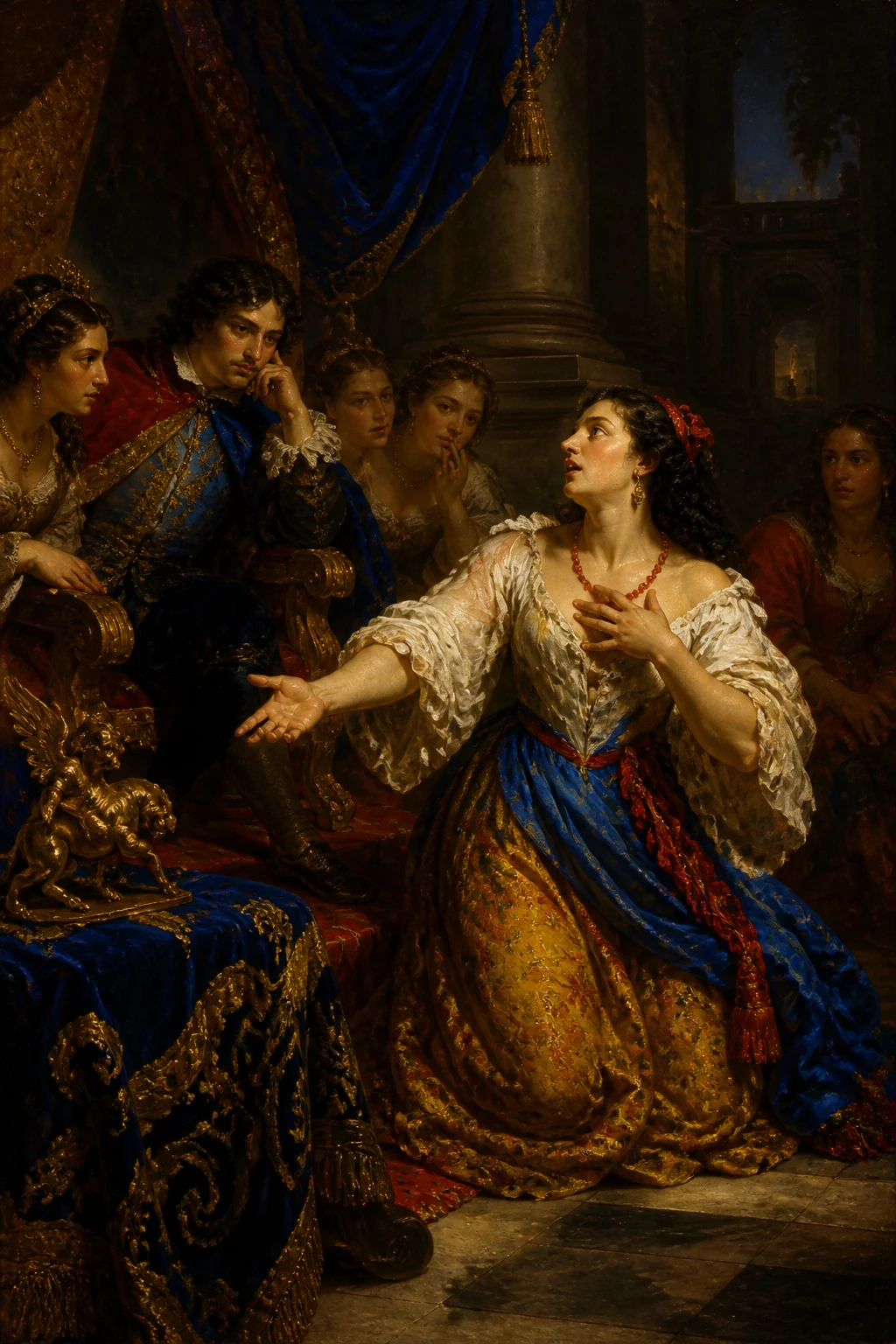
“When his children and his wife heard this, they screamed, tore their clothes, and beat their faces, and the neighbors came running. My master’s wife turned the household furnishings upside down, tore down the shelves, smashed the cupboards and windows, and smeared the walls with mud and indigo. ‘Confound you, Kafur!’ she cried. ‘Come and help me! Wreck these cabinets and break these vessels and this porcelain!’ I went to her and helped pull down the shelves and destroy everything on them, smashed the cabinets and all they held, and went about the ceilings and every corner until I had wrecked the whole place, crying all the while, ‘Alas, my master!’ Then my mistress went out with her face unveiled, wearing only her head covering, and the daughters and sons came with her. ‘Kafur,’ they said, ‘walk ahead and show us where your master lies dead beneath the wall, so that we may take him out from under the rubble, bear him home on a bier, and give him a fitting funeral.’ I walked before them, crying, ‘Alas, my master!’ and they followed with faces and heads uncovered, wailing, ‘Alas, our sorrow! Alas, our calamity!’ Not a man or woman, boy or girl, or old woman stayed behind; all came with us, beating themselves and weeping bitterly. I led them through the city, and when people asked what had happened, they repeated what they had heard from me. ‘There is no power and no strength save in God, the Most High, the Almighty,’ the people said. ‘We must go and inform the governor.’ So they went to the governor and told him.” Dawn overtook Shahrazad, and she fell silent, leaving her tale untold.
Then came the thirty-ninth night.
She said, “It has reached me, O fortunate King, that when they came to the governor and told him, he rose, mounted his horse, and took laborers with shovels and baskets. They followed in my tracks with a great crowd, while I went before them, weeping and wailing, throwing dust on my head and beating my face. When I entered the garden, my master saw me beating myself and crying, ‘Alas, my mistress! Who will care for me now that my mistress is gone? Would that I had died in her stead!’ He was stunned at the sight of me and turned pale. ‘What is the matter, Kafur?’ he asked. ‘Why are you in such a state? What has happened?’ I replied, ‘When you sent me home to fetch what you wanted, I went into the house and found that the wall in the hall had fallen, bringing the whole hall down upon my mistress and her children.’ ‘Did your mistress not escape?’ he asked. ‘No,’ I said, ‘not one of them escaped, and the first to die was my elder mistress.’ ‘And did my little daughter escape?’ ‘No,’ I answered. ‘And what of the mule I ride? Is she safe?’ ‘No, master. The walls of the house and the stable collapsed upon everything inside, even the sheep, geese, and chickens. They are all a heap of flesh beneath the rubble; not one remains alive.’ ‘Not even your elder master?’ he asked. ‘No,’ I said. ‘None of them escaped. At this moment neither house nor inhabitants remain; not a trace is left of any of it. As for the sheep, geese, and chickens, the cats and dogs have eaten them all.’
“When my master heard my words, the light in his face turned to darkness. He could command neither himself nor his senses and could no longer stand. His legs gave way and his back bowed; he tore his clothes, plucked out his beard, beat his face, and flung his turban from his head. He went on striking his face until the blood flowed, crying, ‘Ah, my children! My wife! Alas, my calamity! Who has ever suffered as I have?’ His fellow merchants cried out at his cries, wept with him, pitied his plight, and tore their clothes. My master left the garden, beating himself in his anguish, striking his face again and again, and staggering like a drunken man. As the company was passing through the garden gate, they saw a great cloud of dust and heard piercing cries. Looking that way, they saw the approaching crowd: the governor and his men, a multitude of onlookers, and behind them the merchant’s family, screaming and wailing in bitter grief. The first to meet my master were his wife and children. At the sight of them he stood amazed, then laughed and said, ‘How are you? What happened to you at home? What befell you?’ When they saw him, they cried, ‘Praise be to God that you are safe!’ They threw themselves upon him, and his children clung to him, crying, ‘Father! Praise be to God that you are safe, Father!’ His wife said, ‘Praise be to God, who has let us see you safe and sound!’ She was so astonished at the sight of him that she was quite beside herself. ‘How did you and your friends escape?’ she asked. ‘And how did you fare at home?’ he replied. ‘We are all well and in good health,’ they said, ‘and no harm befell our house. But your slave Kafur came to us bareheaded, with his clothes torn, crying, “Alas, my master! Alas, my master!” We asked him, “What has happened, Kafur?” and he said, “My master sat beneath a wall in the garden to relieve himself, and it fell on him and killed him.”’ My master said to them, ‘By God, he came to me this very moment crying, “Alas, my mistress! Alas, my mistress’s children!” and told me that my wife and children were all dead.’
“Then he looked to one side and saw me with my turban fallen from my head, wailing, weeping bitterly, and throwing dust upon myself. He shouted at me, and I went up to him. ‘Woe to you, you ill-omened slave, you son of a whore, you cursed creature!’ he said. ‘What is this havoc you have wrought? By God, I shall flay the skin from your flesh and cut the flesh from your bones!’ I replied, ‘By God, you can do nothing to me, for you bought me with this fault and on this condition. The witnesses will testify that you knew my fault when you bought me: I tell one lie each year. This is only half a lie. When the year is out, I shall tell the other half, and then it will be one whole lie.’ He shouted, ‘You most accursed of slaves! Is all this only half a lie? It is an utter catastrophe! Begone from me—you are free!’ I said, ‘By God, though you release me, I shall not release you until the year is over and I have told the remaining half of my lie. Once I have finished it, take me to the market and sell me for what you paid, fault and all, but do not set me free, for I have no trade by which to earn my bread. What I have told you is a matter of religious law, set down by the jurists in the chapter on the freeing of slaves.’
“While we were talking, the crowds and the people of the neighborhood, men and women alike, arrived to offer their condolences, and the governor and his men came too. My master and the merchants went to the governor and explained the affair, telling him that this was only half a lie. All who heard it thought the lie monstrous and were utterly astonished. They cursed and reviled me, while I stood laughing and saying, ‘How can my master kill me when he bought me with this fault?’ When my master went home, he found the house in ruins. I had done most of the damage and broken things worth a great deal of money. His wife told him, ‘It was Kafur who broke the vessels and the porcelain.’ His anger grew fiercer, and he said, ‘By God, never in my life have I seen a son of a whore like this slave! And he says it is only half a lie! What if it had been a whole one? He would have laid waste a city or two!’ In his fury he went to the governor, who had me beaten so severely that I lost all sense of the world and fainted. While I lay unconscious, he brought a barber, who castrated me and cauterized the wounds. When I came to my senses, I found myself a eunuch. My master said to me, ‘Just as you burned my heart over what was dearest to me, so I have burned yours over what was dearest to you.’ Then he took me and sold me at a high price, for I had become a eunuch. I continued to sow discord wherever I was sold, passing by purchase and sale from one emir to another, from one great lord to a greater, until I entered the palace of the Commander of the Faithful, my spirit broken, my strength diminished, and my manhood gone.” When the two slaves heard his story, they laughed at him and said, “You are a wicked fellow, the son of a wicked fellow! What an abominable lie you told!” Then they said to the third slave, “Tell us your story.”