Prevod
It is also told that Abu al-Abbas al-Mubarrad said: I once set out with a party of men for the post station on some business. We passed the monastery of Hiraql and stopped to rest in its shade. A man came up to us and said, “There are madmen in this monastery, and among them is one who speaks wisdom. If you were to see him, his words would astonish you.” So we all rose and entered the monastery. There we saw a man sitting on a leather mat in a small chamber, his head bare and his gaze fixed upon the wall. We greeted him, and he returned our greeting without so much as turning his eyes toward us. The man said, “Recite some poetry to him, for when he hears poetry, he speaks.” So I recited these two verses:
“O best of all the mortals Eve has borne, without you the world would have neither beauty nor delight. Whoever God allows to see your face attains eternal life, untouched by age or gray hair.” When he heard me, he turned toward us and recited these verses:
“God knows that I am sick with grief, unable to reveal the pain I feel. I have two souls: one dwells within this land, the other in a land far away. I think my absent soul is like the one here with me; I think it feels the very pain I feel.” Then he asked, “Have I spoken well or ill?” We replied, “Not ill at all, but well and beautifully.” He reached for a stone beside him and picked it up. Thinking he meant to throw it at us, we fled, but he began striking his breast hard with it, saying, “Do not be afraid. Come close and hear something from me that you may carry away.” So we drew near, and he recited these verses:
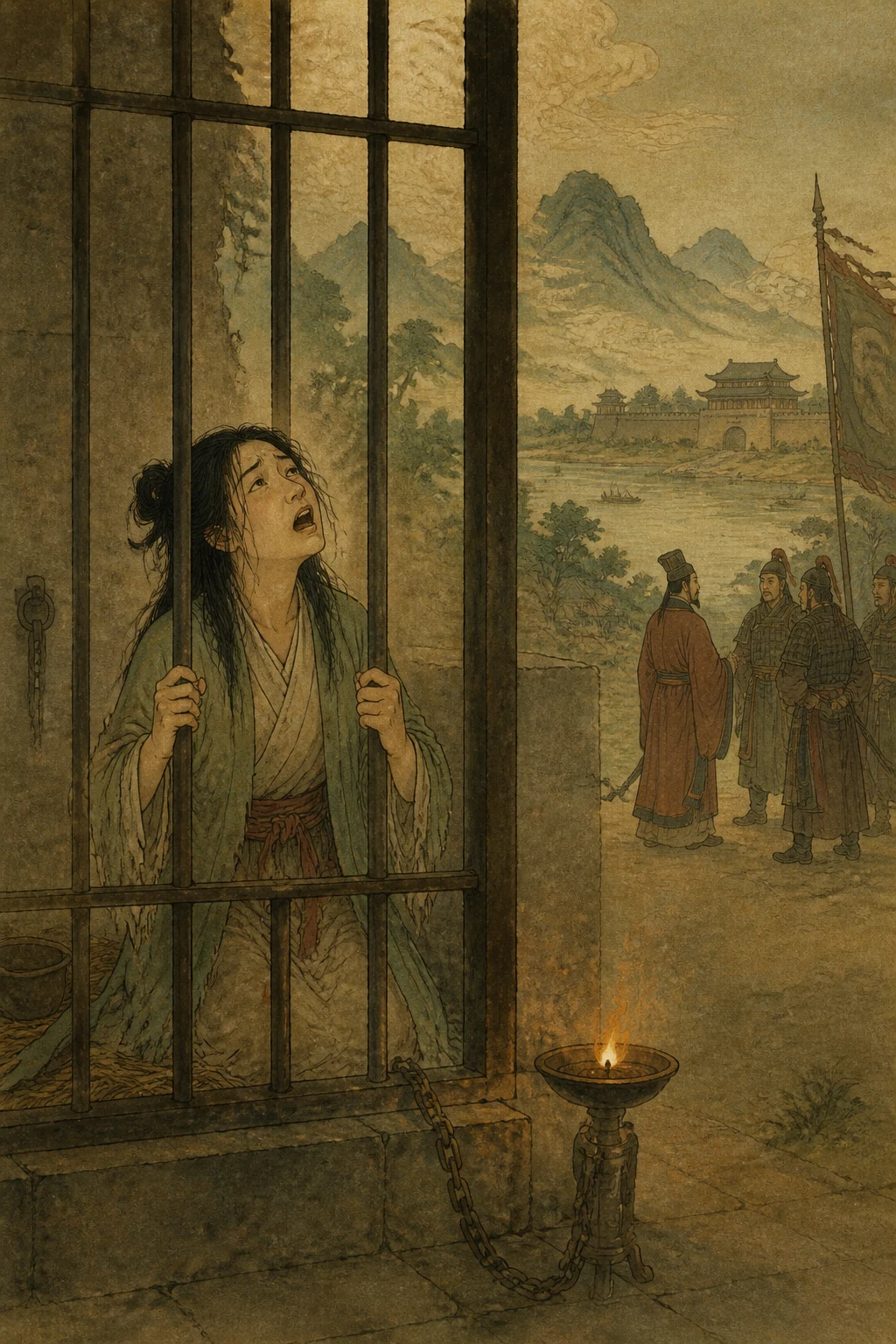
“When, just before dawn, they made their pale camels kneel, longing urged the beasts onward. Through my prison bars my eyes followed her, and in my anguish, while the tears streamed down, I cried: O driver of the pale camels, turn aside, that I may bid her farewell, for parting and farewell will be my death. I remain true to our pledge; I have not broken faith with her love. Would that I knew what they have done with that pledge!” Then he looked at me and said, “Do you know what has become of them?” I replied, “Yes. They have died—may God Most High have mercy on them.” His face changed, and he sprang to his feet, saying, “How do you know they are dead?” I answered, “Had they been alive, they would not have left you like this.” He said, “By God, you speak the truth. Nor do I wish to live after them.” Then his whole body trembled, and he fell upon his face. We hurried to him and shook him, but found him dead—may God Most High have mercy on him. We marveled at what had happened and grieved for him deeply, then prepared his body and buried him. And dawn overtook Shahrazad, and she fell silent, leaving her tale untold.
When it was the four hundred and twelfth night
She said: It has reached me, O fortunate King, that al-Mubarrad said: When the man fell dead, we mourned him, prepared his body, and buried him. On my return to Baghdad, I went to see al-Mutawakkil. He noticed the traces of tears upon my face and asked, “What is this?” I told him the story, and he was deeply distressed. “What possessed you to do such a thing?” he said. “By God, if I thought you were not grieving for him, I would hold you to account for his death.” And he mourned the man for the rest of that day.