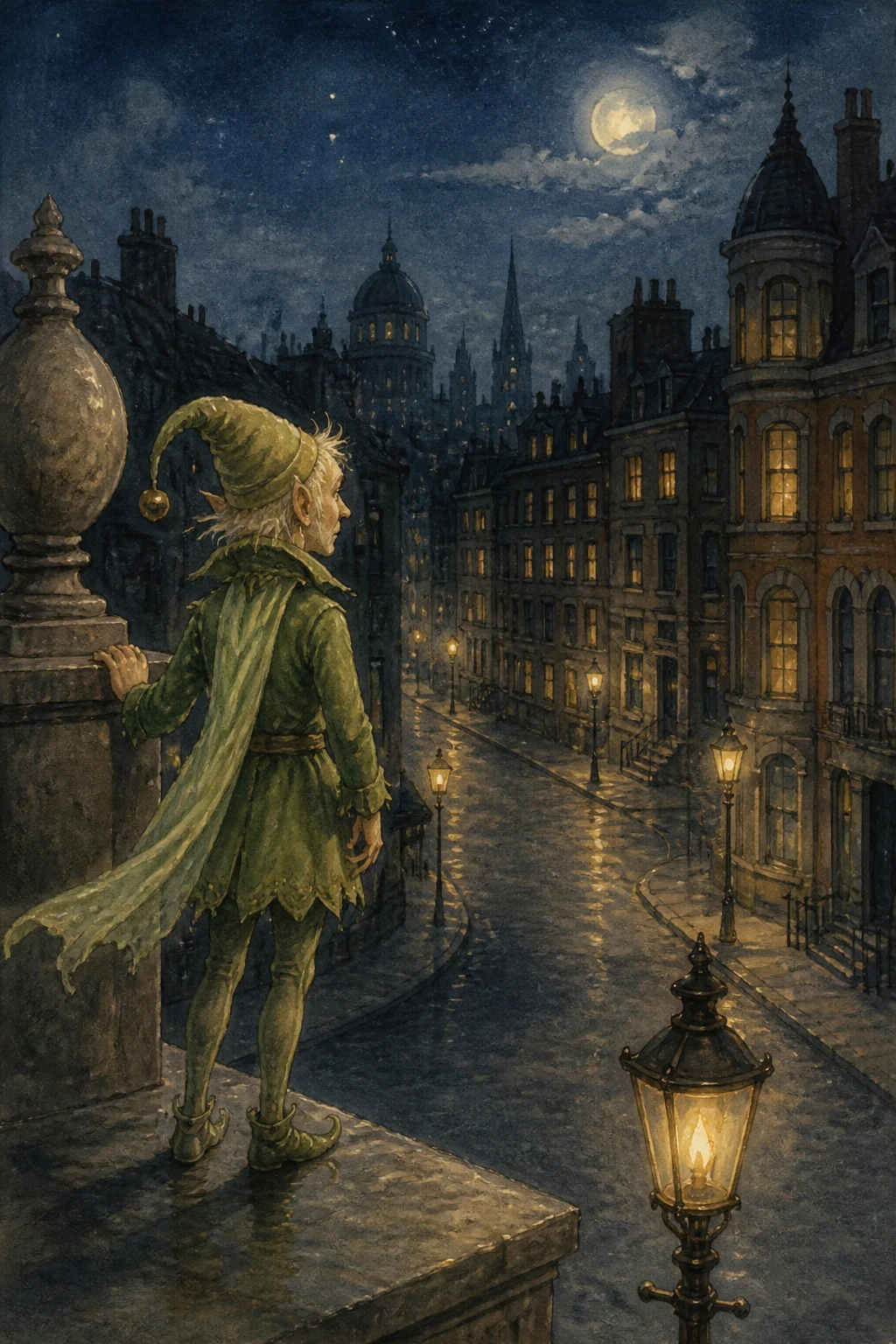
Waltey
Začarane tiskarske črke
005 The Enchanted Types
American Fairy Tales · L. Frank BaumO besedilu
Začarane tiskarske črke
- Vir
- American Fairy Tales
- Avtor
- L. Frank Baum
- Jezik branja
- Slovenščina
- Jezik izvirnika
- English
- Čas branja
- 11 min branja
- Obseg
- 9 strani
- Naslov izvirnika
- 005 The Enchanted Types
O izvirniku
American Fairy Tales
Dvanajst Baumovih avtorskih ameriških pravljic, igrivih, mestnih in zavestno modernih. Bralni jezik je Slovenščina, izvirnik pa prihaja iz vira American Fairy Tales v jeziku English.
Besedilo
Začarane tiskarske črke
Nekoč se je neki knuk naveličal svojega lepega življenja in si zaželel, da bi počel kaj novega. Knuki imajo več čudežnih moči kakor katerokoli drugo nesmrtno ljudstvo — razen morda vil in rilov. Človek bi torej mislil, da knuk, ki lahko z eno samo željo dobi vse, kar si poželi, ne more biti drugačen kakor srečen in zadovoljen. A s Popopom, knukom, o katerem pripovedujemo, ni bilo tako. Živel je že tisoče let in užil vsa čudesa, ki si jih je mogel zamisliti. Pa vendar mu je življenje postalo prav tako dolgočasno, kakor bi bilo komu, ki si ne bi mogel izpolniti niti ene same želje.
Naposled se je Popopo po naključju spomnil zemljanov, ki prebivajo v mestih, in sklenil, da jih obišče ter pogleda, kako živijo. To bo gotovo prijetna zabava in mu bo pomagala preživeti marsikatero pusto uro.
Tako se je nekega jutra po zajtrku, tako izbranem, da si ga komaj lahko predstavljate, Popopo odpravil na zemljo in se v hipu znašel sredi velikega mesta.
V njegovem domovanju je bilo tako tiho in mirno, da ga je mestni trušč povsem preplašil. Tako mu je razburkal živce, da se še tri minute ni dobro razgledoval, ko je že sklenil opustiti pustolovščino in se pri priči vrnil domov.
To je za nekaj časa potešilo njegovo željo po obiskovanju zemeljskih mest, toda enoličnost življenja mu je kmalu spet vzbudila nemir in porodila novo misel. Ponoči ljudje spijo in mesta bodo tiha. Obiskoval jih bo ponoči.
Ko je torej napočil pravi čas, se je Popopo v hipu prestavil v veliko mesto in začel tavati po ulicah. Vsi so že bili v posteljah. Po tlakovanih cestah niso ropotali vozovi, nikjer ni bilo množic zaposlenih ljudi, ki bi kričali in se klicali. Celo policisti so skrivaj dremali in po naključju tisto noč ni bilo na spregled nobenega tatu, ki bi se klatil naokrog.
Tišina mu je pomirila živce in Popopo se je začel zabavati. Vstopil je v številne hiše in si z veliko radovednostjo ogledoval njihove sobe. Ključavnice in zapahi knuku niso bili v nikakršno oviro, v temi pa je videl prav tako dobro kakor pri belem dnevu.
Čez čas je zašel v trgovski del mesta. Nesmrtna ljudstva ne poznajo trgovin, saj ne potrebujejo ne denarja ne kupčevanja in menjave; zato je Popopa silno zanimal nenavadni pogled na tolikšne zbirke najrazličnejšega blaga.
Med potepanjem je vstopil v prodajalno ženskih klobukov in v veliki stekleni vitrini presenečen zagledal množico klobukov, na vsakem pa je bila tu ali tam pritrjena nagačena ptica. Na nekaterih najbolj razkošnih klobukih sta bili celo po dve ali tri.
Knuki so posebni varuhi ptic in jih imajo nadvse radi. Pogled na toliko drobnih prijateljev, zaprtih v stekleni vitrini, je Popopa vznejevoljil in užalostil, saj ni niti slutil, da jih je modistka namenoma namestila na klobuke. Zato je odmaknil ena od drsnih vratc vitrine, požvižgal s tistim drobnim, žvrgolečim žvižgom knukov, ki ga vse ptice dobro poznajo, in zaklical:
»Pridite, prijateljice, vrata so odprta — zletite ven!« Popopo ni vedel, da so ptice nagačene; toda naj je nagačena ali ne, vsaka ptica mora ubogati knukov žvižg in njegov klic. Zato so zapustile klobuke, zletele iz vitrine in začele prhutati po sobi.
»Uboge revčice!« je dejal dobrosrčni knuk. »Gotovo hrepenite po tem, da bi bile spet na poljih in v gozdovih.« Nato jim je odprl zunanja vrata in vzkliknil: »Kar pojdite! Odletite, lepotice moje, in bodite spet srečne.«
Osuple ptice so ga nemudoma ubogale, in ko so odletele v nočni zrak, je knuk zaprl vrata ter nadaljeval potep po ulicah.
Do zore je videl še mnogo zanimivega, toda zdanilo se je, še preden si je ogledal vse mesto, zato je sklenil, da pride naslednji večer nekaj ur prej.
Naslednjega dne se je vrnil v mesto, brž ko se je stemnilo, in ko je šel mimo prodajalne klobukov, je v njej opazil luč. Vstopil je in našel dve ženski; ena je slonela z glavo na mizi in bridko ihtela, druga pa jo je skušala potolažiti.
Popopo je bil seveda neviden očem smrtnikov, zato je obstal ob njiju in poslušal pogovor. »Nikar ne obupuj, sestra,« je rekla ena. »Čeprav so ti ukradli vse lepe ptičke, so ti vsaj klobuki ostali.«
»Gorje mi!« je vzkliknila druga, ki je bila modistka. »Nihče ne bo kupoval napol okrašenih klobukov, saj je zdaj v modi, da na njih nosimo ptice. Če pa svojega blaga ne bom mogla prodati, bom povsem propadla.«
Nato je znova zaihtela, knuk pa se je tiho odkradel proč. Bilo ga je kar nekoliko sram ob spoznanju, da je v svoji ljubezni do ptic nehote storil krivico eni izmed zemljank in jo pahnil v nesrečo.
Ta misel ga je pozneje tisto noč, ko sta ženski že odšli domov, pripeljala nazaj v prodajalno klobukov. Želel je nekako nadomestiti ptice na klobukih, da bi bila uboga ženska spet srečna. Zato je iskal naokrog, dokler ni v bližini našel kleti, polne drobnih sivih miši, ki so tam živele povsem nemoteno in se preživljale tako, da so preglodale zidove do sosednjih hiš ter kradle hrano iz shramb.
»Prav ta bitjeca,« je pomislil Popopo, »bi se podala na ženine klobuke. Njihov kožušček je skoraj tako mehak kakor ptičje perje in zdi se mi, da so miši izredno ljubke in graciozne živalice. Povrhu zdaj vse življenje kradejo; če pa bi morale za vedno ostati na ženskih klobukih, bi se njihovo vedenje precej poboljšalo.«
Zato je izrekel čar, ki je vse miši privabil iz kleti in jih namestil na klobuke v stekleni vitrini. Tam so zasedle prostore, ki so jih izpraznile ptice, in bile videti prav lične — vsaj v očeh knuka, ki ni poznal človeškega sveta. Da ne bi tekale naokrog in zapuščale klobukov, jih je Popopo naredil negibne. Nato pa je bil s svojim delom tako zadovoljen, da je sklenil ostati v prodajalni in videti modistkino veselje, ko bo opazila, kako ljubko so zdaj okrašeni njeni klobuki.
Prišla je zgodaj zjutraj v spremstvu svoje sestre, z žalostnim in vdanim izrazom na obrazu. Ko je pometla prodajalno, pobrisala prah in odgrnila senčila, je odprla stekleno vitrino ter vzela iz nje klobuk.
Ko pa je med trakovi in čipkami zagledala drobno sivo miško, je glasno zakričala, izpustila klobuk in z enim samim skokom pristala na mizi. Sestra je po kriku spoznala, da jo je strah, zato je skočila na stol in vzkliknila:
»Kaj je? Ojoj! Kaj je?« »Miš!« je izdavila modistka in trepetala od groze. Ko je Popopo videl ta preplah, je spoznal, da so miši ljudem še posebej zoprne in da je napravil veliko napako, ko jih je namestil na klobuke. Zato je tiho požvižgal ukaz, ki so ga slišale samo miši.
V hipu so vse poskakale s klobukov, švignile skozi odprta vratca steklene vitrine in odbrzele v svojo klet. Toda to je modistko in njeno sestro tako prestrašilo, da sta še nekajkrat glasno zakričali, nato pa se zvrnili na hrbet na tla in omedleli.
Popopo je bil dobrosrčen knuk, toda ob pogledu na vso to nesrečo, ki jo je povzročil s svojim nepoznavanjem človeških navad, si je pri priči zaželel biti doma in tako prepustil ubogi ženski, da si opomoreta, kakor vesta in znata.
Vendar se ni mogel otresti mučnega občutka odgovornosti. Ko je zadevo premislil, je sklenil, da jo lahko popravi tako, da ptice vrne v stekleno vitrino, saj je modistkino nesrečo povzročil prav s tem, da jih je osvobodil. Ptice je imel rad in nerad bi jih znova obsodil na sužnost, toda zdelo se mu je, da je to edini način, kako napraviti konec težavam.
Zato se je odpravil iskat ptice. Odletele so daleč proč, a Popopu ni bilo prav nič težko priti do njih v eni sami sekundi. Našel jih je na vejah velikega kostanja, kjer so veselo prepevale.
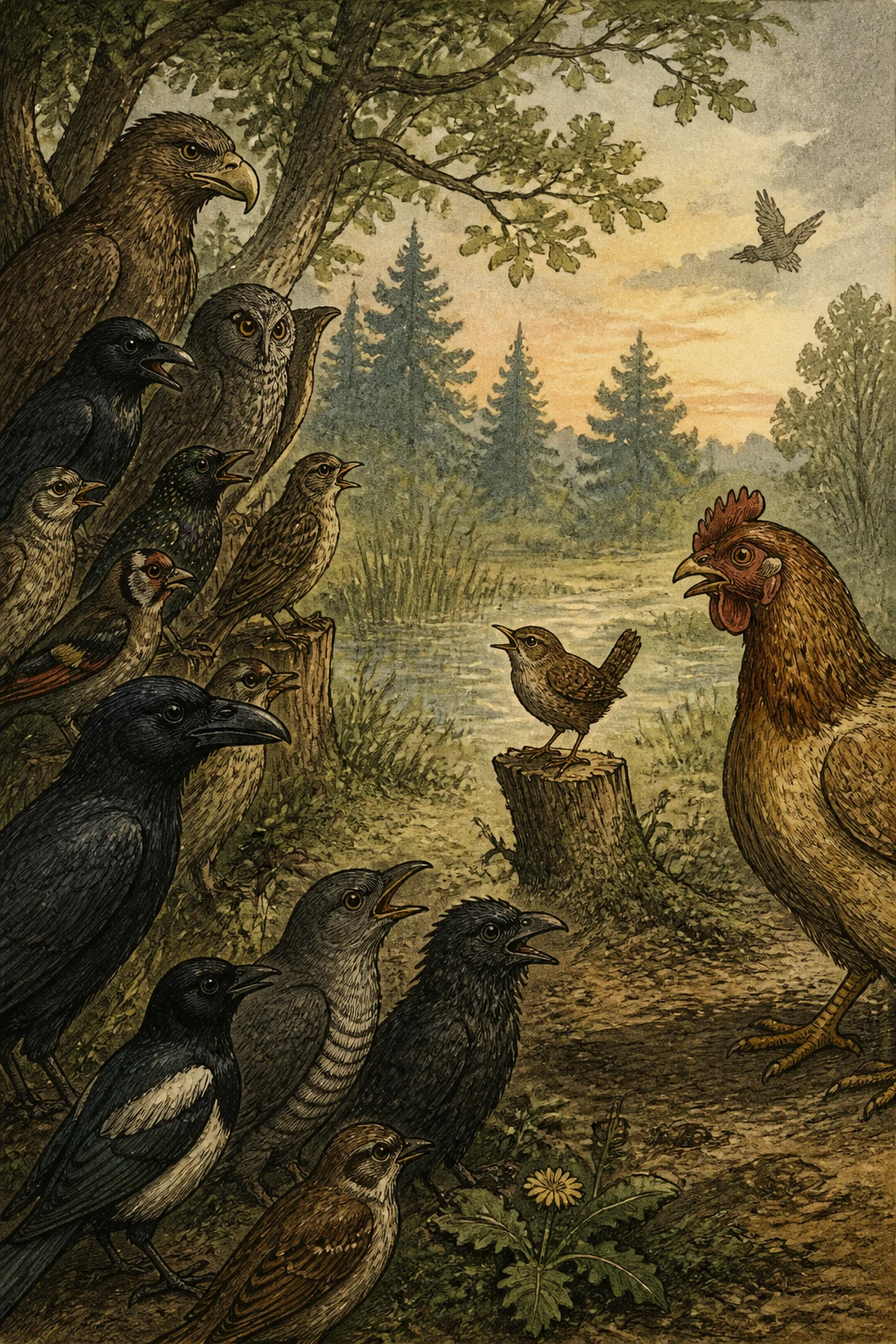
Ko so ptice zagledale knuka, so zaklicale: »Hvala ti, Popopo! Hvala, ker si nas osvobodil.« »Nikar se mi ne zahvaljujte,« je odvrnil knuk, »saj sem vas prišel poslat nazaj v prodajalno klobukov.«
»Zakaj?« je jezno vprašala modra šoja, druge pa so utihnile. »Ker sem izvedel, da vas ima tista ženska za svojo last in da jo je vaša izguba zelo onesrečila,« je odgovoril Popopo.
»Toda pomisli, kako nesrečne smo bile me v njeni stekleni vitrini,« je resno dejala taščica. »Kar pa zadeva to, da smo njena last — ti si knuk in prirojeni varuh vseh ptic, zato veš, da nas je Narava ustvarila svobodne. Resda so nas hudobni ljudje ustrelili, nagačili in prodali modistki, toda misel, da smo zato njena last, je nesmiselna!«
Popopo je bil v zadregi. »Če vas pustim na svobodi,« je dejal, »vas bodo hudobni ljudje spet ustrelili in ne bo se vam godilo nič bolje kakor prej.« »Pha!« je vzkliknila modra šoja. »Zdaj nas ne morejo več ustreliti, saj smo nagačene. Prav danes zjutraj sta dva človeka večkrat streljala na nas, pa so nam krogle samo razmršile perje in obtičale v polnilu. Zdaj se ljudi ne bojimo več.«
»Poslušajte!« je strogo dejal Popopo, saj je čutil, da ga ptice v prerekanju premagujejo. »Uboga modistka bo propadla, če vas ne vrnem v njeno prodajalno. Očitno brez vas klobukov ni mogoče primerno okrasiti. V modi je, da ženske na svojih pokrivalih nosijo ptice. Zato je blago uboge modistke, četudi je olepšano s čipkami in trakovi, brez vrednosti, če na njem ne čepite ve.«
»Modo,« je slovesno dejal kos, »si izmišljajo ljudje. Kateri zakon med pticami ali knuki pa nam nalaga, da moramo biti njene sužnje?«
»Kaj imamo sploh opraviti z modo?« je zavreščal repnik. »Če bi bilo v modi na ženskih klobukih nositi knuke, ali bi ti zadovoljno čepel tam? Odgovori mi, Popopo!«
Toda Popopo je obupaval. Ni mogel storiti krivice pticam in jih poslati nazaj k modistki, pa tudi ni hotel, da bi modistka trpela zaradi njihove izgube. Zato se je vrnil domov, da bi premislil, kaj je mogoče storiti.
Po dolgem premišljevanju se je odločil, da se posvetuje s kraljem knukov. Nemudoma je odšel k njegovemu veličanstvu in mu povedal vso zgodbo. Kralj se je namrščil.
»To naj te izuči, kako nespametno se je vmešavati v zadeve zemljanov,« je dejal. »Toda ker si povzročil vse te težave, je tvoja dolžnost, da jih odpraviš. Naših ptic ni mogoče zasužnjiti, to je gotovo; zato moraš doseči, da se moda spremeni in ne bo več zapovedovala ženskam, naj nosijo ptice na klobukih.«
»Kako naj to storim?« je vprašal Popopo. »Prav zlahka. Med zemljani se moda pogosto spreminja, saj se vsake reči hitro naveličajo. Ko v časopisih in revijah preberejo, da je zdaj v modi to in to, o tem nikoli ne podvomijo, temveč nemudoma ubogajo njene zapovedi. Zato moraš obiskati časopise in revije ter začarati tiskarske črke.«
»Začarati tiskarske črke!« je začudeno ponovil Popopo. »Natanko tako. Poskrbi, da bo pisalo, da ni več v modi nositi ptic na klobukih. S tem boš pomagal svoji ubogi modistki, obenem pa osvobodil na tisoče naših ljubih ptic, s katerimi tako kruto ravnajo.«
Popopo se je zahvalil modremu kralju in se ravnal po njegovem nasvetu. Obiskal je uredništvo vsakega časopisa in vsake revije v mestu, nato pa se odpravil še v druga mesta, dokler v deželi ni bilo več publikacije, ki na svojih straneh ne bi imela »nove modne novice«. Včasih je Popopo začaral tiskarske črke, tako da je vsakdo, ki je bral natisnjeno besedilo, videl le tisto, kar je hotel knuk. Včasih je obiskal zaposlene urednike in jim zmešal glave, dokler niso napisali natanko tega, kar je želel. Smrtniki se le redkokdaj zavedajo, kako močno nanje vplivajo vile, knuki in rili, ki jim pogosto polagajo v glave misli, kakršne si lahko izmislijo le ta modra mala nesmrtna bitja.
Ko je uboga modistka naslednje jutro prelistavala časopis, je vsa presrečna prebrala, da »nobena ženska ne more več nositi ptice na klobuku in biti obenem modno oblečena, saj najnovejša moda zahteva le trakove in čipke«.
Popopo je odtlej našel veliko veselja v obiskovanju vseh prodajaln klobukov, ki jih je mogel najti, in v obujanju nagačenih ptic, ki so jih kot neuporabne brezskrbno zmetali vstran. Te pa so odletele na polja in v gozdove ter v pesmih hvaležno opevale dobrega knuka, ki jih je rešil.
Včasih lovec ustreli na ptico, nato pa se čudi, zakaj je ni zadel. Toda zdaj, ko ste prebrali to zgodbo, boste vedeli, da je morala biti to nagačena ptica iz kake prodajalne klobukov, ki je s puško seveda ni mogoče ubiti.
Izvirnik
005 The Enchanted Types
Naslednje strani prikazujejo izvirno besedilo za primerjavo.
One time a knook became tired of his beautiful life and longed for something new to do. The knooks have more wonderful powers than any other immortal folk—except, perhaps, the fairies and ryls. So one would suppose that a knook who might gain anything he desired by a simple wish could not be otherwise than happy and contented. But such was not the case with Popopo, the knook we are speaking of. He had lived thousands of years, and had enjoyed all the wonders he could think of. Yet life had become as tedious to him now as it might be to one who was unable to gratify a single wish.
Finally, by chance, Popopo thought of the earth people who dwell in cities, and so he resolved to visit them and see how they lived. This would surely be fine amusement, and serve to pass away many wearisome hours.
Therefore one morning, after a breakfast so dainty that you could scarcely imagine it, Popopo set out for the earth and at once was in the midst of a big city.
His own dwelling was so quiet and peaceful that the roaring noise of the town startled him. His nerves were so shocked that before he had looked around three minutes he decided to give up the adventure, and instantly returned home.
This satisfied for a time his desire to visit the earth cities, but soon the monotony of his existence again made him restless and gave him another thought. At night the people slept and the cities would be quiet. He would visit them at night.
So at the proper time Popopo transported himself in a jiffy to a great city, where he began wandering about the streets. Everyone was in bed. No wagons rattled along the pavements; no throngs of busy men shouted and halloaed. Even the policemen slumbered slyly and there happened to be no prowling thieves abroad.
His nerves being soothed by the stillness, Popopo began to enjoy himself. He entered many of the houses and examined their rooms with much curiosity. Locks and bolts made no difference to a knook, and he saw as well in darkness as in daylight.
After a time he strolled into the business portion of the city. Stores are unknown among the immortals, who have no need of money or of barter and exchange; so Popopo was greatly interested by the novel sight of so many collections of goods and merchandise.
During his wanderings he entered a millinery shop, and was surprised to see within a large glass case a great number of women’s hats, each bearing in one position or another a stuffed bird. Indeed, some of the most elaborate hats had two or three birds upon them.
Now knooks are the especial guardians of birds, and love them dearly. To see so many of his little friends shut up in a glass case annoyed and grieved Popopo, who had no idea they had purposely been placed upon the hats by the milliner. So he slid back one of the doors of the case, gave the little chirruping whistle of the knooks that all birds know well, and called:
“Come, friends; the door is open—fly out!”
Popopo did not know the birds were stuffed; but, stuffed or not, every bird is bound to obey a knook’s whistle and a knook’s call. So they left the hats, flew out of the case and began fluttering about the room.
“Poor dears!” said the kind-hearted knook, “you long to be in the fields and forests again.”
Then he opened the outer door for them and cried: “Off with you! Fly away, my beauties, and be happy again.”
The astonished birds at once obeyed, and when they had soared away into the night air the knook closed the door and continued his wandering through the streets.
By dawn he saw many interesting sights, but day broke before he had finished the city, and he resolved to come the next evening a few hours earlier.
As soon as it was dark the following day he came again to the city and on passing the millinery shop noticed a light within. Entering he found two women, one of whom leaned her head upon the table and sobbed bitterly, while the other strove to comfort her.
Of course Popopo was invisible to mortal eyes, so he stood by and listened to their conversation.
“Cheer up, sister,” said one. “Even though your pretty birds have all been stolen the hats themselves remain.”
“Alas!” cried the other, who was the milliner, “no one will buy my hats partly trimmed, for the fashion is to wear birds upon them. And if I cannot sell my goods I shall be utterly ruined.”
Then she renewed her sobbing and the knook stole away, feeling a little ashamed to realized that in his love for the birds he had unconsciously wronged one of the earth people and made her unhappy.
This thought brought him back to the millinery shop later in the night, when the two women had gone home. He wanted, in some way, to replace the birds upon the hats, that the poor woman might be happy again. So he searched until he came upon a nearby cellar full of little gray mice, who lived quite undisturbed and gained a livelihood by gnawing through the walls into neighboring houses and stealing food from the pantries.
“Here are just the creatures,” thought Popopo, “to place upon the woman’s hats. Their fur is almost as soft as the plumage of the birds, and it strikes me the mice are remarkably pretty and graceful animals. Moreover, they now pass their lives in stealing, and were they obliged to remain always upon women’s hats their morals would be much improved.”
So he exercised a charm that drew all the mice from the cellar and placed them upon the hats in the glass case, where they occupied the places the birds had vacated and looked very becoming—at least, in the eyes of the unworldly knook. To prevent their running about and leaving the hats Popopo rendered them motionless, and then he was so pleased with his work that he decided to remain in the shop and witness the delight of the milliner when she saw how daintily her hats were now trimmed.
She came in the early morning, accompanied by her sister, and her face wore a sad and resigned expression. After sweeping and dusting the shop and drawing the blinds she opened the glass case and took out a hat.
But when she saw a tiny gray mouse nestling among the ribbons and laces she gave a loud shriek, and, dropping the hat, sprang with one bound to the top of the table. The sister, knowing the shriek to be one of fear, leaped upon a chair and exclaimed:
“What is it? Oh! what is it?”
“A mouse!” gasped the milliner, trembling with terror.
Popopo, seeing this commotion, now realized that mice are especially disagreeable to human beings, and that he had made a grave mistake in placing them upon the hats; so he gave a low whistle of command that was heard only by the mice.
Instantly they all jumped from the hats, dashed out the open door of the glass case and scampered away to their cellar. But this action so frightened the milliner and her sister that after giving several loud screams they fell upon their backs on the floor and fainted away.
Popopo was a kind-hearted knook, but on witnessing all this misery, caused by his own ignorance of the ways of humans, he straightway wished himself at home, and so left the poor women to recover as best they could.
Yet he could not escape a sad feeling of responsibility, and after thinking upon the matter he decided that since he had caused the milliner’s unhappiness by freeing the birds, he could set the matter right by restoring them to the glass case. He loved the birds, and disliked to condemn them to slavery again; but that seemed the only way to end the trouble.
So he set off to find the birds. They had flown a long distance, but it was nothing to Popopo to reach them in a second, and he discovered them sitting upon the branches of a big chestnut tree and singing gayly.
When they saw the knook the birds cried:
“Thank you, Popopo. Thank you for setting us free.”
“Do not thank me,” returned the knook, “for I have come to send you back to the millinery shop.”
“Why?” demanded a blue jay, angrily, while the others stopped their songs.
“Because I find the woman considers you her property, and your loss has caused her much unhappiness,” answered Popopo.
“But remember how unhappy we were in her glass case,” said a robin redbreast, gravely. “And as for being her property, you are a knook, and the natural guardian of all birds; so you know that Nature created us free. To be sure, wicked men shot and stuffed us, and sold us to the milliner; but the idea of our being her property is nonsense!”
Popopo was puzzled.
“If I leave you free,” he said, “wicked men will shoot you again, and you will be no better off than before.”
“Pooh!” exclaimed the blue jay, “we cannot be shot now, for we are stuffed. Indeed, two men fired several shots at us this morning, but the bullets only ruffled our feathers and buried themselves in our stuffing. We do not fear men now.”
“Listen!” said Popopo, sternly, for he felt the birds were getting the best of the argument; “the poor milliner’s business will be ruined if I do not return you to her shop. It seems you are necessary to trim the hats properly. It is the fashion for women to wear birds upon their headgear. So the poor milliner’s wares, although beautified by lace and ribbons, are worthless unless you are perched upon them.”
“Fashions,” said a black bird, solemnly, “are made by men. What law is there, among birds or knooks, that requires us to be the slaves of fashion?”
“What have we to do with fashions, anyway?” screamed a linnet. “If it were the fashion to wear knooks perched upon women’s hats would you be contented to stay there? Answer me, Popopo!”
But Popopo was in despair. He could not wrong the birds by sending them back to the milliner, nor did he wish the milliner to suffer by their loss. So he went home to think what could be done.
After much meditation he decided to consult the king of the knooks, and going at once to his majesty he told him the whole story.
The king frowned.
“This should teach you the folly of interfering with earth people,” he said. “But since you have caused all this trouble, it is your duty to remedy it. Our birds cannot be enslaved, that is certain; therefore you must have the fashions changed, so it will no longer be stylish for women to wear birds upon their hats.”
“How shall I do that?” asked Popopo.
“Easily enough. Fashions often change among the earth people, who tire quickly of any one thing. When they read in their newspapers and magazines that the style is so-and-so, they never question the matter, but at once obey the mandate of fashion. So you must visit the newspapers and magazines and enchant the types.”
“Enchant the types!” echoed Popopo, in wonder.
“Just so. Make them read that it is no longer the fashion to wear birds upon hats. That will afford relief to your poor milliner and at the same time set free thousands of our darling birds who have been so cruelly used.”
Popopo thanked the wise king and followed his advice.
The office of every newspaper and magazine in the city was visited by the knook, and then he went to other cities, until there was not a publication in the land that had not a “new fashion note” in its pages. Sometimes Popopo enchanted the types, so that whoever read the print would see only what the knook wished them to. Sometimes he called upon the busy editors and befuddled their brains until they wrote exactly what he wanted them to. Mortals seldom know how greatly they are influenced by fairies, knooks and ryls, who often put thoughts into their heads that only the wise little immortals could have conceived.
The following morning when the poor milliner looked over her newspaper she was overjoyed to read that “no woman could now wear a bird upon her hat and be in style, for the newest fashion required only ribbons and laces.”
Popopo after this found much enjoyment in visiting every millinery shop he could find and giving new life to the stuffed birds which were carelessly tossed aside as useless. And they flew to the fields and forests with songs of thanks to the good knook who had rescued them.
Sometimes a hunter fires his gun at a bird and then wonders why he did not hit it. But, having read this story, you will understand that the bird must have been a stuffed one from some millinery shop, which cannot, of course, be killed by a gun.
Nadaljuj z branjem