Prevod
Once upon a time there was a king who was ill, and no one thought he would survive. He had three sons, who were so distressed that they went down into the castle garden and wept. There they met an old man, who asked what troubled them. They told him their father was so ill that he would surely die, for nothing seemed to help him. Then the old man said, “I know of a remedy: the Water of Life. If he drinks it, he will be well again, but it is hard to find.” The eldest said, “I shall find it.” He went to the sick king and begged permission to set out in search of the Water of Life, for it alone could cure him. “No,” said the king, “the danger is too great. I would rather die.” But he begged so long that at last the king consented. In his heart the prince thought, “If I bring back the water, I shall be my father’s dearest son and inherit the kingdom.”
So he set out, and after he had ridden for some time, he found a dwarf standing in the road, who called out to him, “Where are you off to in such a hurry?” “You silly little runt,” said the prince haughtily, “that is none of your business,” and rode on. But the little man grew angry and laid a curse on him. Soon afterward the prince came into a mountain gorge, and the farther he rode, the closer the mountains drew together, until at last the way was so narrow that he could not move another step. He could neither turn his horse nor climb out of the saddle, and there he sat, as though imprisoned. The sick king waited a long time for him, but he did not return. Then the second son said, “Father, let me set out and search for the water,” thinking to himself, “If my brother is dead, the kingdom will fall to me.” At first the king would not let him go either, but at last he yielded. So the prince took the same road his brother had followed, and he too met the dwarf, who stopped him and asked where he was going in such haste. “You little runt,” said the prince, “that is none of your business,” and rode on without another glance. But the dwarf cursed him, and he too became trapped in a mountain gorge, unable to move either forward or back. Such is the fate of the proud.
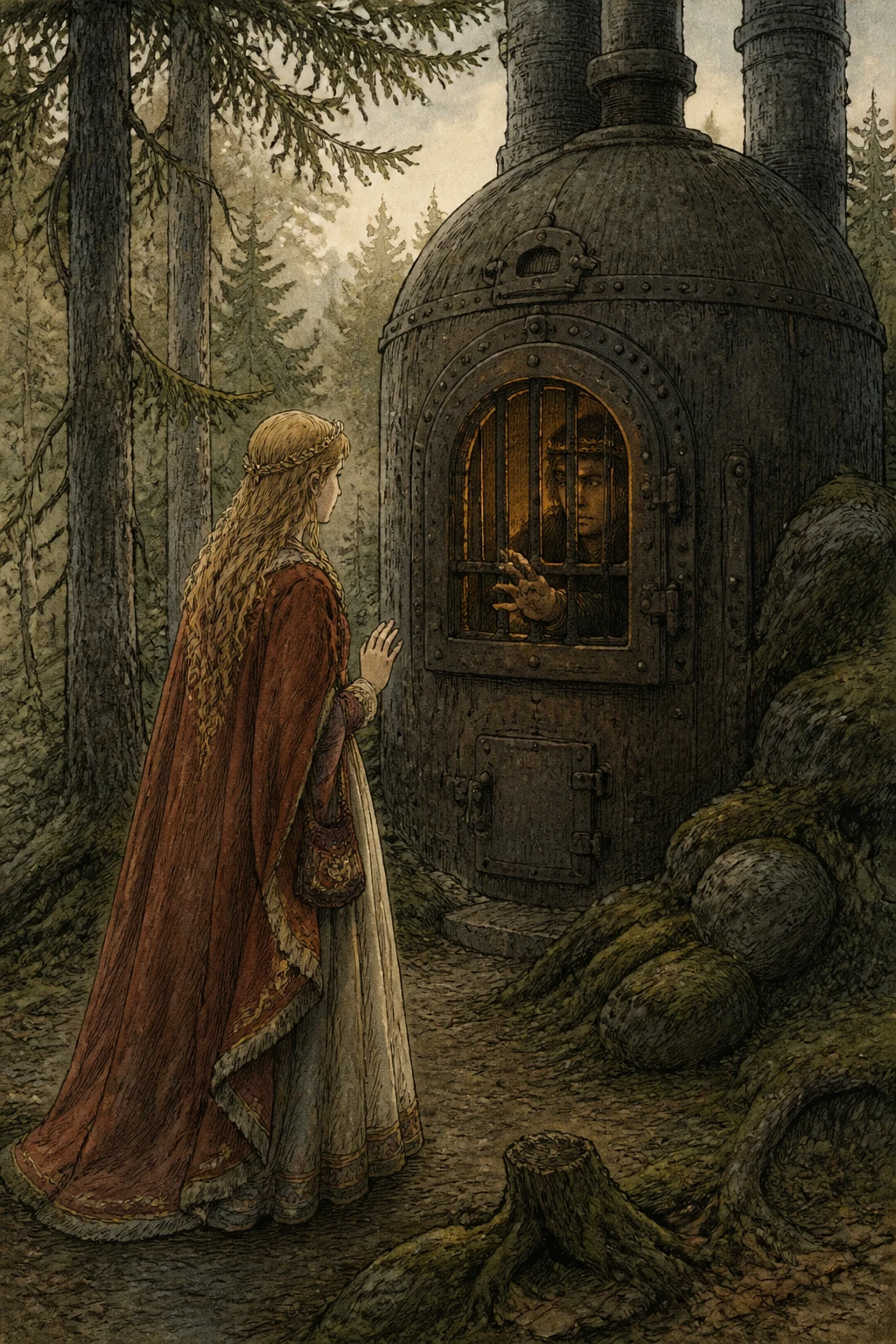
When the second son also failed to return, the youngest offered to set out and fetch the water, and at last the king had to let him go. When he met the dwarf and was asked where he was going in such haste, he stopped and answered him, saying, “I am searching for the Water of Life, for my father is deathly ill.” “Do you know where it is to be found?” “No,” said the prince. “Since you have behaved as you ought, and have not been arrogant like your wicked brothers, I will help you and tell you how to reach the Water of Life. It flows from a fountain in the courtyard of an enchanted castle, but you cannot enter unless I give you an iron rod and two small loaves of bread. Strike the castle’s iron gate three times with the rod, and it will spring open. Inside lie two lions with their jaws gaping wide, but if you throw a loaf into each lion’s mouth, they will be quiet. Then hurry and fetch some of the Water of Life before the clock strikes twelve, or the gate will slam shut again and you will be trapped.” The prince thanked him, took the rod and the bread, and went on his way. When he arrived, everything was just as the dwarf had said. At the third stroke of the rod, the gate sprang open, and after he had quieted the lions with the bread, he entered the castle and came into a great and beautiful hall. There sat enchanted princes, and he drew the rings from their fingers. A sword and a loaf of bread lay there too, and he took them with him. Going farther, he came into a room where a beautiful maiden stood. She rejoiced at the sight of him, kissed him, and said that he had freed her from the enchantment and should have her whole kingdom. If he returned in a year’s time, their wedding would be celebrated. Then she told him where to find the fountain of the Water of Life, but said he must hurry and draw some before the clock struck twelve. He went on and at last came into a room where there stood a beautiful, freshly made bed. As he was tired, he thought he would rest a little first. So he lay down and fell asleep. When he awoke, the clock was striking a quarter to twelve. He sprang up in alarm, ran to the fountain, and drew water in a cup that stood beside it, then hurried to escape. Just as he was passing through the iron gate, the clock struck twelve, and the gate slammed shut so violently that it cut off a piece of his heel.
But he was glad to have obtained the Water of Life, and he set off home, passing the dwarf once more. When the dwarf saw the sword and the bread, he said, “You have won great treasures there. With that sword you can defeat whole armies, and that bread will never run out.” The prince did not wish to return to his father without his brothers, and said, “Dear dwarf, can you tell me where my two brothers are? They set out in search of the Water of Life before I did, and have not returned.” “They are trapped between two mountains,” said the dwarf. “I put them there under a curse because they were so arrogant.” The prince pleaded until at last the dwarf released them, but he warned him, saying, “Beware of them. They have wicked hearts.”
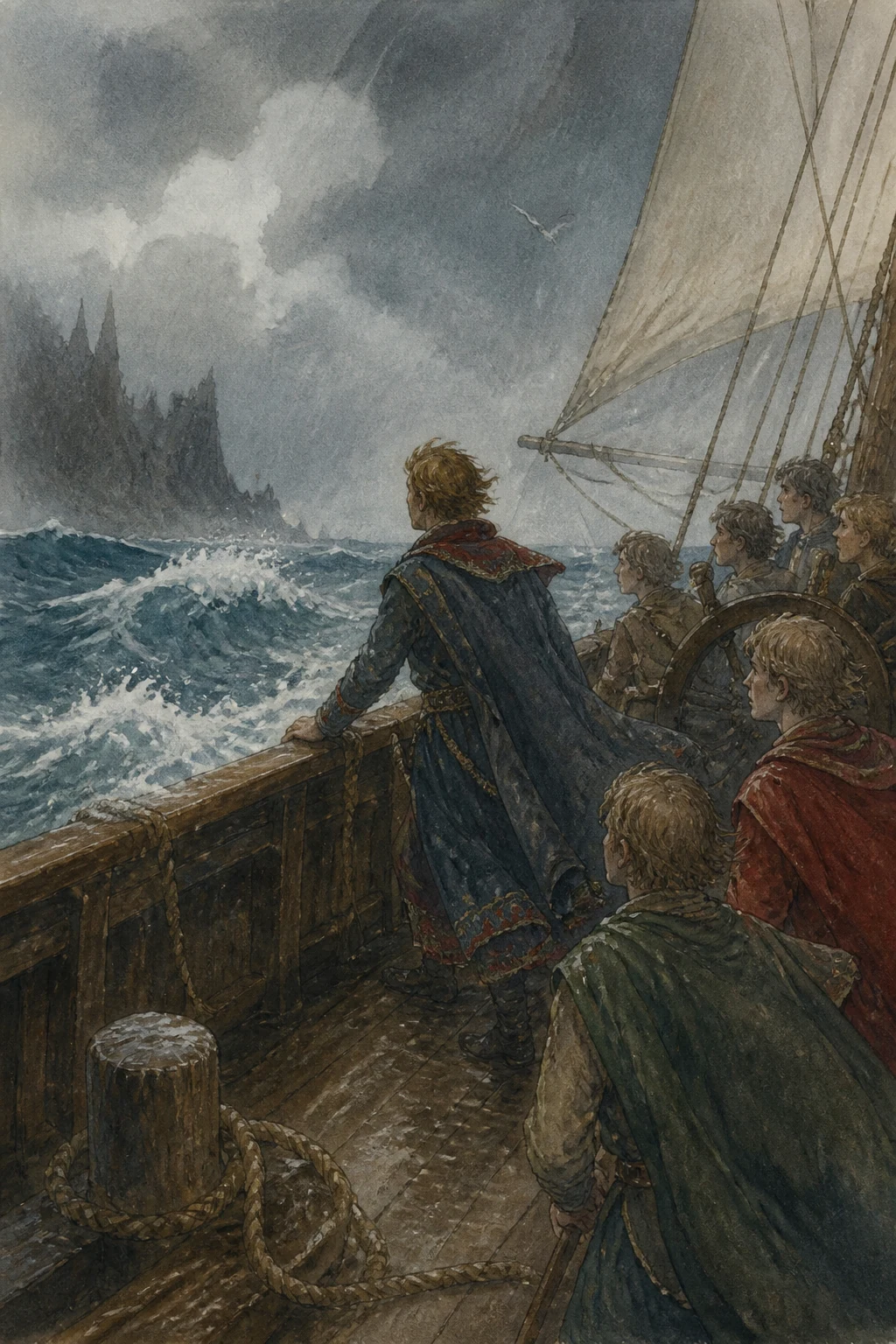
When his brothers came, he rejoiced and told them all that had happened to him: how he had found the Water of Life and brought away a cupful, and how he had freed a beautiful princess from an enchantment. She would wait for him for a year, then they would be married and he would receive a great kingdom. After that they rode on together and came to a land plagued by famine and war. The distress was so great that its king had given himself up for lost. The prince went to him and gave him the bread, with which he fed his whole kingdom until everyone had enough. Then the prince gave him the sword as well, and with it he defeated his enemies’ armies and could now live in peace and quiet. The prince took back his bread and sword, and the three brothers rode on. They came to two more lands where famine and war were raging, and each time the prince lent the kings his bread and sword, so that he had now saved three kingdoms. Afterward they boarded a ship and sailed across the sea. During the voyage, the two elder brothers said to one another, “The youngest has found the Water of Life, and we have not. Our father will give him the kingdom that belongs to us, and he will rob us of our good fortune.” Their hearts filled with spite, and they plotted together to bring about his ruin. They waited until he was fast asleep, then poured the Water of Life out of his cup and kept it for themselves, filling his cup with bitter seawater instead.
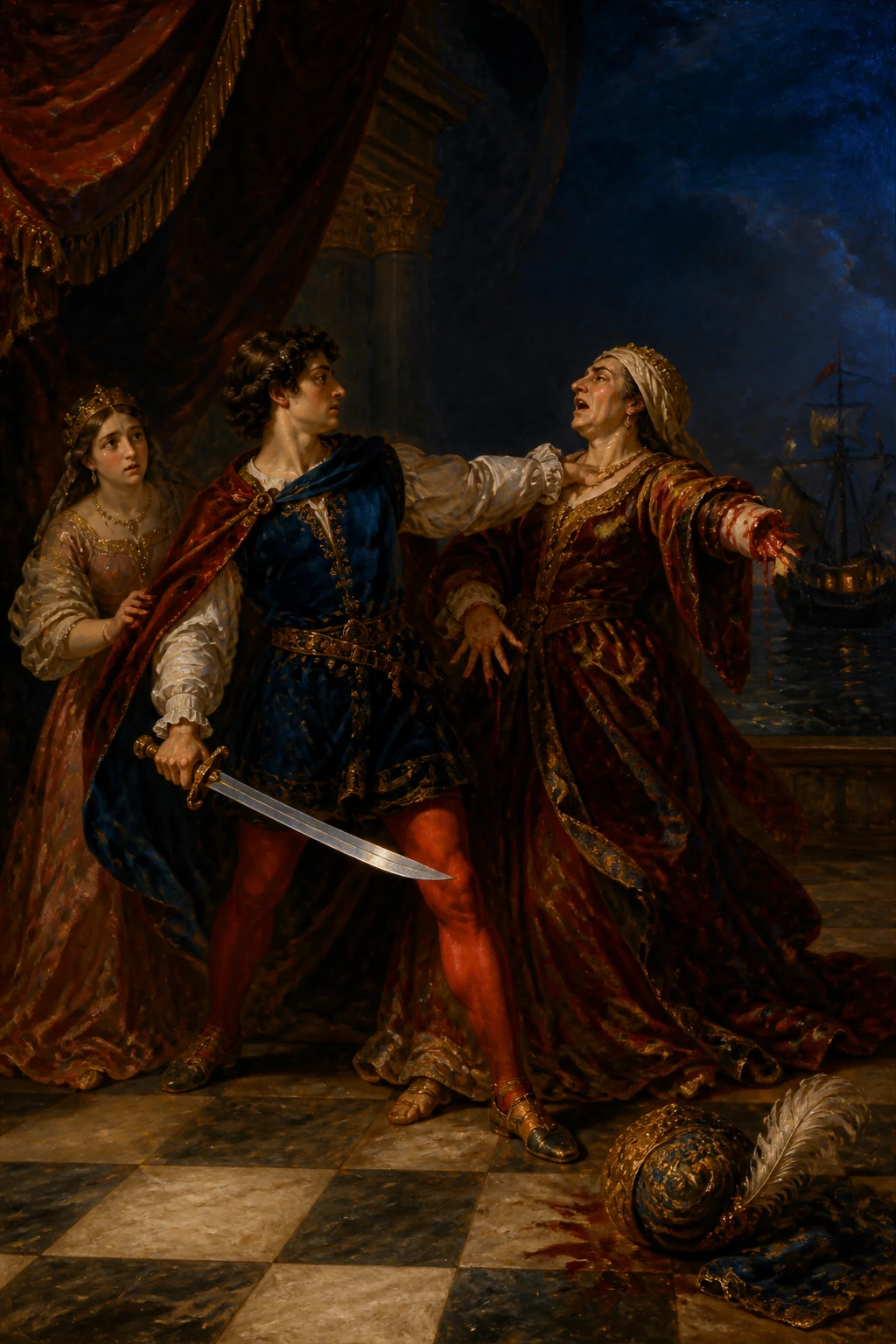
When they arrived home, the youngest brought his cup to the sick king so that he might drink from it and recover. But scarcely had he swallowed a little of the bitter seawater when he grew even sicker than before. While he was lamenting this, the two elder sons came in and accused the youngest of trying to poison him. They said they had brought the true Water of Life, and handed it to him. No sooner had he drunk it than he felt his illness leave him, and he was as strong and healthy as in his youth. Afterward the two went to the youngest and mocked him, saying, “You may have found the Water of Life, but you have had the trouble and we have the reward. You should have been cleverer and kept your eyes open. We took it from you while you were asleep at sea, and when the year is up, one of us will fetch the beautiful princess. But take care not to tell a soul. Father will not believe you anyway, and if you say a single word, you shall lose your life into the bargain. If you keep quiet, however, we will spare you.”
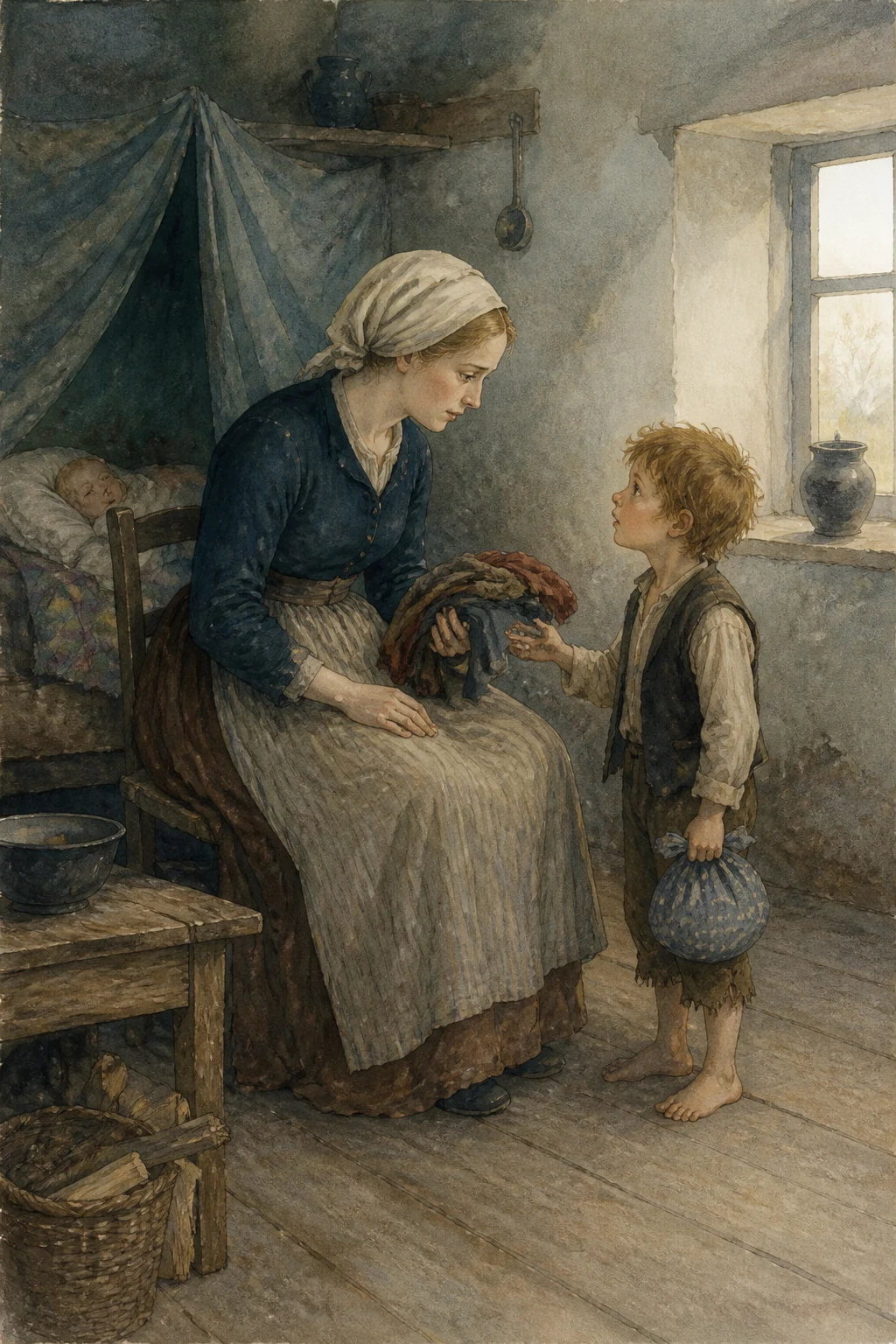
The old king was angry with his youngest son and believed he had tried to take his life. So he summoned his court and had sentence passed upon him: he was to be secretly shot. One day, when the prince rode out hunting, suspecting no harm, the king’s huntsman was ordered to go with him. When they were alone in the forest, the huntsman looked so sad that the prince said to him, “Dear huntsman, what troubles you?” The huntsman replied, “I cannot tell you, and yet I must.” Then the prince said, “Tell me what it is. I will forgive you.” “Alas,” said the huntsman, “I am to shoot you dead. The king has commanded it.” The prince was horrified and said, “Dear huntsman, spare my life. I will give you my royal clothes, and you can give me your poor ones in return.” The huntsman said, “Gladly. I could never have brought myself to shoot you.” So they exchanged clothes, and the huntsman went home, while the prince went deeper into the forest.
Some time later, three wagons laden with gold and precious stones arrived at the old king’s court for his youngest son. They had been sent by the three kings who had defeated their enemies with the prince’s sword and fed their lands with his bread, and who wished to show their gratitude. Then the old king thought, “Could my son have been innocent?” He said to his people, “If only he were still alive! How bitterly I regret having him killed.” “He is still alive,” said the huntsman. “I could not find it in my heart to carry out your command,” and he told the king what had happened. A great weight fell from the king’s heart, and he had it proclaimed throughout all the kingdoms that his son might return and would be welcomed back into his favor.
Meanwhile, the princess had a road made in front of her castle, all of shining gold, and told her servants that whoever rode straight along it to her was the true bridegroom, and they must let him in. But whoever rode beside it was not the right man, and they must refuse him entry. When the year was nearly up, the eldest brother thought he would hurry to the princess and pass himself off as her deliverer; then he would win her as his wife, and the kingdom as well. So he rode off, and when he reached the castle and saw the beautiful golden road, he thought, “It would be a terrible shame to ride over that.” He turned aside and rode along its right-hand edge. But when he came to the gate, the servants told him he was not the right man and must go away. Soon afterward the second prince set out, and when he reached the golden road and his horse had placed one hoof upon it, he thought, “It would be a terrible shame—some of the gold might wear away.” He turned aside and rode along its left-hand edge. But when he came to the gate, the servants told him he was not the right man and must go away. When the full year had passed, the third prince wished to leave the forest and ride to his beloved, hoping to forget his sorrows with her. So he set out, thinking only of her and longing to be at her side, and he did not even notice the golden road. His horse rode straight along the middle of it, and when he reached the gate, it was opened. The princess welcomed him joyfully and said that he was her deliverer and the lord of the kingdom, and their wedding was celebrated with great happiness. When it was over, she told him that his father had sent for him and forgiven him. So he rode to his father and told him everything: how his brothers had deceived him, and how he had nevertheless kept silent. The old king wished to punish them, but they had put to sea and sailed away, and never returned for the rest of their lives.